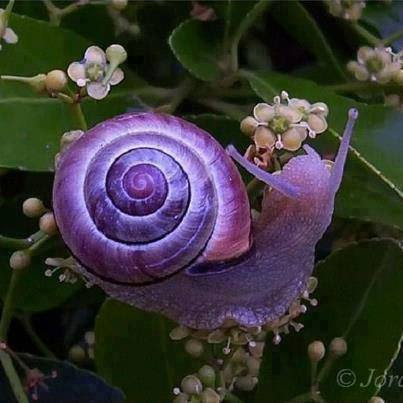
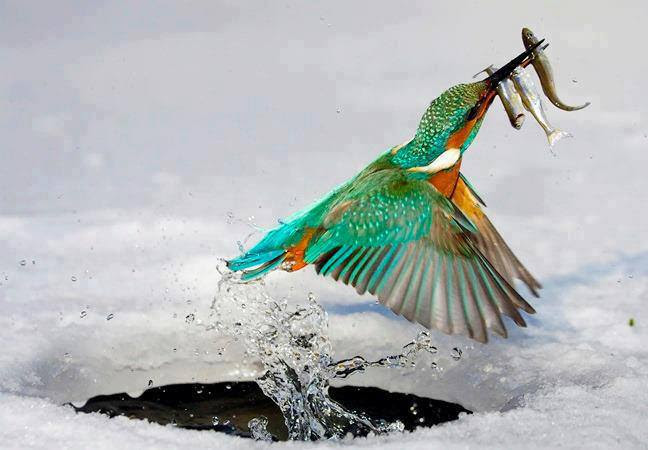
Yet another group of those wonderful photographs sent in by Dan Gomez.
oooo

oooo

oooo

oooo
oooo

oooo

oooo

oooo
There are still another twelve of these incredible pictures to share with you, in other words sufficient for two more picture parades.
Dogs are animals of integrity. We have much to learn from them.
Year: 2015
Yet another group of those wonderful photographs sent in by Dan Gomez.
oooo
oooo
oooo
oooo
oooo
oooo
oooo
oooo
There are still another twelve of these incredible pictures to share with you, in other words sufficient for two more picture parades.
Just love some of the stuff that gets shared on social media sites!
My son, Alex, shared this cartoon that, in turn, had been presented on Amanda Charlotte’s Facebook page.
It seems very appropriate for this first week of September.
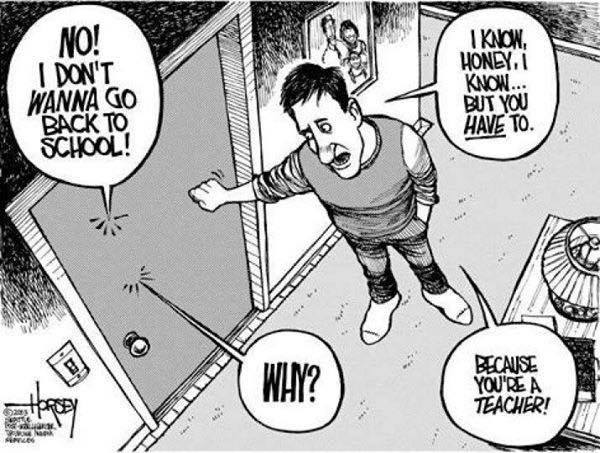
Enjoy your weekend, everyone!
“The price of greatness is responsibility.”
So said Sir Winston Churchill. It applies equally to the price of power.
There was an essay recently written and published by Hariod Brawn over on her blog Contentedness.net that was incredibly thought-provoking and very beautiful besides. Hariod has given me permission to republish it and it follows shortly.
I have no doubt that Hariod’s essay was, in part, inspired by that terrible photograph that has been circulated and commented upon by thousands around the world.
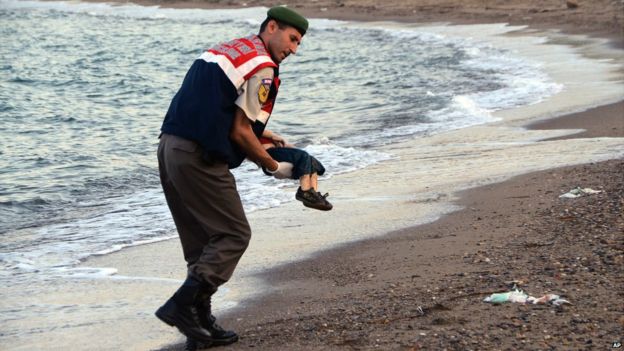
In the words of the BBC, “The pictured boy is reported to be three-year-old Aylan, who drowned along with his five-year-old brother Galip and their mother, Rihan. Their father, Abdullah Kurdi, survived.”
The emotions created by this and other tragic photographs are disturbing, and I am no exception to having those same emotions. But as friend, Chris Snuggs, mentioned in a telephone call between us yesterday morning, what has been happening in Syria is no less terrible, perhaps even more so when one looks at the blood that is, metaphorically, on the hands of a number of western governments. The old saying of reaping what we sow comes to mind.
None of which takes away the intense beauty of Hariod’s essay: Empathetic apes.
ooOOoo
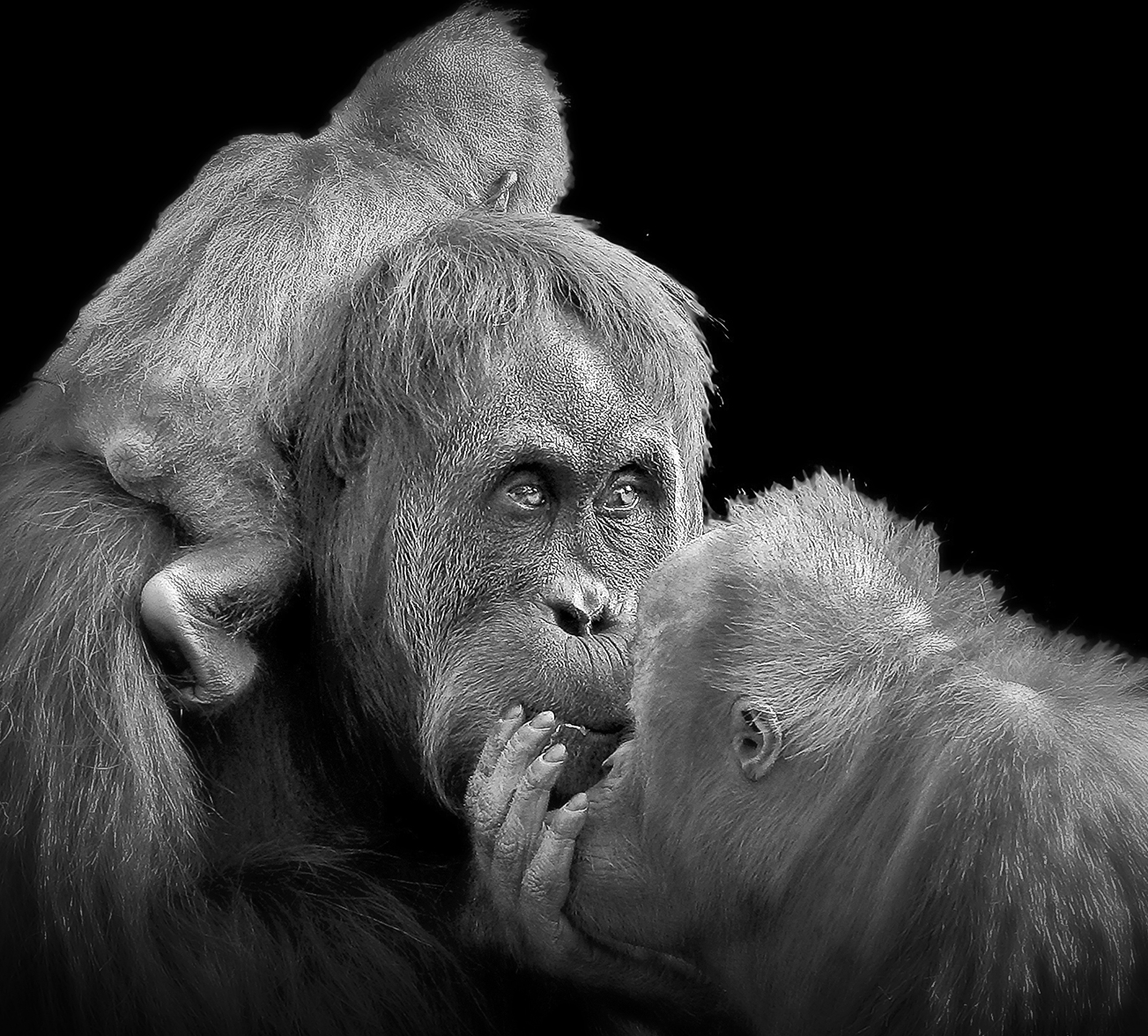
The year is 1955, and far from the nearest village, somewhere within the Northwestern jungle region of Thailand, a 48 year-old Englishman and ordainee to the Buddhist monkhood sits quietly in studious attention. A few feet away, a female ape sits, arms carefully wrapped around some precious possession. The monk first chanced upon her the previous day, and due to the curiosity roused in observing her melancholic countenance, has remained respectfully nearby to her. A trust has developed, the ape sensing the monk’s gentle disposition and harmlessness. He really ought to be making his way to the village for alms, yet somehow senses that he should stay. A silent, palpable communication has developed between the two, and slowly, carefully and deliberately, the ape, her sadness still etched upon her face, finally unfolds her arms and offers a first sight of what she has been protecting. The monk slowly approaches to within a pace or two, sensing the invitation, only to catch sight of her lifeless and terribly deformed baby.
Two empathic apes, ancestrally and psychologically speaking, separated by little more in this moment than a distant, lineage-splitting, speciation event. Opposable thumbs, one hers and one his, in turn chase away a monk’s tear and a delicately mottled butterfly as it alights from the baby’s forehead, though cannot do the same for their conjoined feelings. Eyes meet, evincing as they do a deepening rush of sadness. Nothing can be done – is this what she is thinking in her way? In his unknowing, the saffron-robed wanderer radiates compassion, yet knows he has nothing to do with it; an offering from wisdom, not from the self. All that need be known arrives in the fullest of measures. What use now the venerable elder’s sagacity, his knowledge of emptiness, renunciation, equanimity, the void? She inhabits the void, is the void, her bleak knowing piercing its veils. Without turning, the monk slowly retreats, still reverently holding her gaze alongside a shared understanding. A slight suggestion of a bowing head betokens what passes between them.
It is the ability to empathise which in part distinguishes the psychopathic mind from its otherwise healthy state, and the primary orbit of empathy is that of feeling, not the mere gyrations of intellect. This is why many species of sentience can empathise, and we human animals are but one of them. We may erroneously presume that an ability to reflect upon others’ situations facilitates human empathic capacity; yet the state of those others and their situations need not be known as verbally abstracted objects in the mind – little stories packaged in words. We may just as well occupy others’ frames of reference by intuited means; and vitality, morbidity, distress and joy may all be recognised across species in differing ways; one need not indulge any anthropomorphisation, for clear evidence abounds. What is intuited here, or instinctively known, is the nature of the other’s felt emotional condition; and in this way, 60 years ago, the grieving mother ape and mendicant monk shared that intense experience – a wordless world of deep, primate feeling.

Was the mother ape empathic? Well, she came to appreciate the monk’s amity; she felt able to extend trust; she intuited the monk’s concern for her as well as his desire for understanding as to the reasons for, and significance of, her sadness; and finally, she recognised that the monk would feel something of that sadness in revealing its causes to him. This is all to say that she significantly placed herself within the monk’s frame of reference and innately understood that emotions can be matched in shared experience – the personal does not expire at the boundary of the body. Her empathic appreciation was sophisticated, certainly moreso than any psychopathic human ape. Now, one way to cheat the system is to mimic expressions and gestures, which results in a like proprioceptive sense. This means our feelings echo the other’s, so affecting an emotional contagion of sorts, whether volitionally induced or not. Yet neither jungle dweller did so, their empathic link being forged in mind purely intuitively, and silently.
Empathy subsists in knowledge; it is in part to know the mind of the other, and whilst its currency is both cognitive (knowing) and emotional (feeling) in nature, it is the latter that strengthens the connective link to altruistic and prosocial leanings, as well as ameliorating aggressive traits. Primates’ mirror-neuron systems help forge innate empathic leanings, with research suggesting that empathy evolved in part as a survival mechanism. Right now, tens of thousands of refugees are fleeing war-torn regions of Africa and the Middle East so as to seek sanctuary, and survival, in Europe. A few hours ago, a three year-old Syrian boy, Aylan Kurdi, drowned and was washed up on the shores of the Greek island of Kos. Equally tragically, his five year-old brother met a similar fate. Whilst Europe’s politicians exhibit an ongoing empathy gap, innocent children are dying. We live, not literally, though metaphorically, in a jungle, sharing the empathic faculties of the monk and bereaved mother ape. Are we wise enough to nurture the same?
ooOOoo
We need leaders who understand the integrity that is required from them. We need leaders that accept and understand the responsibilities that they have embraced, indivisible from the power that society has lent to them. We need leaders that understand a different aspect of their power, the power of those unanticipated consequences from their actions.
Until we the people understand that electing leaders who do not embrace integrity then Aylan Kurdi and thousands of others in those ‘hot spots’ around the world will continue dying in vain.
Integrity equates to being truthful, to being honest. It doesn’t mean being right all the time, of course not, but integrity does mean accepting responsibility for all our actions, for feeling remorse and apologising when we make mistakes. Integrity means learning, being reliable, being a builder rather than a destroyer. It means being authentic. That authenticity is precisely and exactly what we see in our dogs.
The starting point for what we must learn from our dogs is integrity.
Then get a dog!
Even before I met Jean back in 2007 and came out from England to be with her in 2008 (with Pharaoh), I had learnt that one of the many joys in having a dog was being able to share so much of one’s life with your loving canine companion.

Thus you will not be surprised in the slightest that walking with your dog is another joyous activity. Plus the benefit of living a few more years, as the following article from Mother Nature News illustrates.
ooOOoo
Hint: Get ready to lace up your sneakers.
By: Jenn Savedge, August 31, 2015

It’s easier than you might think to add another seven years to your life. Researchers have found that adding a simple 25-minute walk to your daily routine could give you several more years of healthy living.
Researchers found that participants in their 50s and 60s who took a brisk daily walk that lasted for at least 25 minutes had half the risk of dying from a heart attack than their couch-potato peers. The study, conducted at Saarland University in Germany, evaluated the health of 69 healthy non-smokers, aged between 30 and 60, who were not regular exercisers before the study began.
Participants were asked to complete various types of daily exercise — from simple aerobics to high-intensity interval training to strength training over a six-month period. Meanwhile, researchers took blood samples that allowed them to measure the increase of telomerase activity and the decrease of senescence markers, two indicators of cellular aging found in the blood. Using these measurements, researchers found that daily aerobic exercise triggers the anti-aging process.
Researchers presented their findings at the European Society of Cardiology conference with the suggestion that people add regular exercise to their daily routine to add years to their lives. They also noted that it’s never too late to start. A 70-year-old woman who has never exercised before can still gain tremendous mental and physical health benefits by adding a brisk daily walk to her routine.
Heart disease is the number one killer of men and women in the U.S. According to the Centers for Disease Control and Prevention, more than 600,000 Americans will lose their lives to the disease this year, but exercise could slash that figure in half, bringing more years to millions of Americans.
Do you have your sneakers laced yet?
ooOOoo
So there you are! Just twenty-five minutes a day with your favourite person and your favourite dog or two and you will all live forever.
Carry on sharing!

P.S. When I showed Jean this post yesterday evening she remarked that I still had, and wore at times, the same green T-shirt and cap that I featured in the photograph above some 13 years ago. I guess I’m not a fashion plate!
A sombre reflection on the killing abilities of man.
I was in two minds as to whether to post this today for it is certainly a grim reminder of the less desirable aspects of our species.
In the end, I decided to so do because it needs to be shared and if it changes the mindset of just one person it will have been worthwhile. I was originally seen by me on the EarthSky blogsite.
ooOOoo
Our efficient killing technologies have given rise to the human super predator. Our impacts are as extreme as our behavior, says study.

Extreme human predatory behavior is responsible for widespread wildlife extinctions, shrinking fish sizes and disruptions to global food chains, according to research published in the August 21 edition of the journal Science these are extreme outcomes that non-human predators seldom impose, according to the article.
Lead researcher Chris Darimont is a professor of geography at the University of Victoria. Darimont said:
Our wickedly efficient killing technology, global economic systems and resource management that prioritize short-term benefits to humanity have given rise to the human super predator. Our impacts are as extreme as our behavior and the planet bears the burden of our predatory dominance.

The team’s global analysis indicates that humans typically exploit adult fish populations at 14 times the rate than do marine predators. Humans also hunt and kill large land carnivores such as bears, wolves and lions at nine times the rate that these predatory animals kill each other in the wild.
Researchers noted that in some cases, dwindling species of predatory land carnivores are more aggressively hunted for trophies, due to the premium placed on rare prey.
The result of human activity on wildlife populations is far greater than natural predation. Research suggests that socio-political factors can explain why humans repeatedly overexploit. Technology explains how: Humans use advanced killing tools, cheap fossil fuel, and professional harvesters – like high-volume commercial fishing fleets – to overcome the defensive adaptations of prey.
Humanity also departs fundamentally from predation in nature by targeting adult quarry.Co-author Tom Reimchen is a biology professor at University of Victoria. He said:
Whereas predators primarily target the juveniles or ‘reproductive interest’ of populations, humans draw down the ‘reproductive capital’ by exploiting adult prey.
During four decades of fieldwork on Haida Gwaii, an archipelago on the northern coast of British Columbia, Reimchen looked at how human predators differ from other predators in nature. Reimchen’s predator-prey research revealed that predatory fish and diving birds overwhelmingly killed juvenile forms of freshwater fish. Collectively, 22 predator species took no more than five per cent of the adult fish each year. Nearby, Reimchen observed a stark contrast: fisheries exclusively targeted adult salmon, taking 50 per cent or more of the runs.
The authors conclude with an urgent call to reconsider the concept of “sustainable exploitation” in wildlife and fisheries management. A truly sustainable model, they argue, would mean cultivating cultural, economic and institutional change that places limits on human activities to more closely follow the behavior of natural predators. Darimont said:
We should be protecting our wildlife and marine assets as an investor would in a stock portfolio.
Enjoying EarthSky? Sign up for our free daily newsletter today!
Bottom line: According to research published in the August 21, 2015 edition of Science, extreme human predatory behavior is responsible for widespread wildlife extinctions, shrinking fish sizes and disruptions to global food chains.
Read more from the University of Victoria
ooOOoo
Chris Darimont really put his finger on the spot in my opinion when he was quoted,”We should be protecting our wildlife and marine assets as an investor would in a stock portfolio.”
Going to close today’s post by repeating what is presented on the Welcome page of Learning from Dogs, namely:
As man’s companion, protector and helper, history suggests that dogs were critically important in man achieving success as a hunter-gatherer. Dogs ‘teaching’ man to be so successful a hunter enabled evolution, some 20,000 years later, to farming, thence the long journey to modern man. But in the last, say 100 years, that farming spirit has become corrupted to the point where we see the planet’s plant and mineral resources as infinite. Mankind is close to the edge of extinction, literally and spiritually.
Dogs know better, much better! Time again for man to learn from dogs!
My argument rests!
Why we turn to dogs when disaster strikes.
With the memory of Hurricane Katrina refreshed in our minds as we acknowledge the recent passing of the tenth anniversary of that ghastly disaster, a link to an item from May, 2013 that was published on Mother Nature Network seems perfect for this place.
ooOOoo
From aiding search-and-rescue missions to lending a shoulder to cry on, man’s best friend can often be found at the site of tragedy.
By: Laura Moss, May 21, 2013.
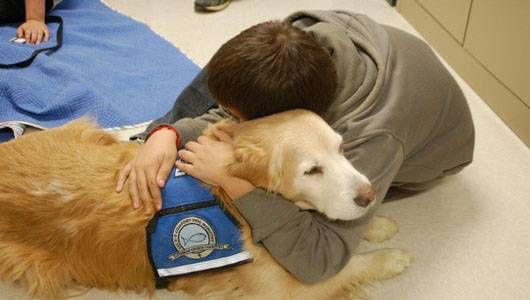
Disaster relief is flooding into Moore, Okla., but along with volunteers and supplies, there are dogs.
Some, including the 11 canine disaster search teams trained by the Search Dog Foundation or SDF, are scouring tornado debris for survivors. Others are en route to comfort the devastated city’s residents. Lutheran Church Charities, whose therapy dogs have worked with victims of the Boston bombings and the Newtown, Conn., shootings, is sending six dogs from its Chicago headquarters.
When disaster strikes, man’s best friend is often there, working on the frontlines of rescue efforts, as well as behind the scenes, helping people cope with trauma and loss.
Super sniffers
Experts estimate that one search-and-rescue (SAR) dog can accomplish the work of 20 to 30 human searchers. Because of these unparalleled abilities, the number of trained SAR dogs has been rising across the United States.
Dogs make efficient searchers due to their superior vision, hearing and sense of smell. A dog’s nose is about 100 times more sensitive than a human nose, and SAR dogs are trained to locate human scents amid countless other smells. They track our scents by the 30,000 to 40,000 dead skin cells we drop every minute.
“Dogs aren’t miracle workers, but their noses are so precious,” said SDF founder Wilma Melville. “They can find those people who survived a horrific ordeal.”
Air-scent dogs are trained to work in specific types of terrain. Some search in wilderness settings while others search urban environments, which often can involve scouring  collapsed buildings.
Because they must navigate unstable terrain, urban SAR dogs are some of the most highly trained canines. The only national standards for such dogs are the Federal Emergency Management Agency’s certification standards for urban disaster work. Currently, fewer than 100 dog-handler teams in the U.S. have this certification.
In addition to air-scent dogs, there are dogs taught to seek out both skin cells and the smell of human decomposition. During major disasters, such as the 1995 Oklahoma City bombing and the 2001 collapse of the World Trade Center, both air-scent dogs and cadaver dogs were used to search for people.
This caused problems for SAR dogs because they became discouraged when they found only dead bodies. At both Oklahoma City and Ground Zero, handlers hid in rubble so that dogs could occasionally find a living person. The dogs’ desire to elicit a response from a found person may be a result of their training, which involves seeking feedback and rewards, but experts say it could also speak to a deeper connection with humans.
Man’s best friend
When disasters occur, dogs do much more than just aid search-and-rescue missions. They’re often there to provide a source of comfort for us in ways that only an animal can.
In an interview with American Thinker, Debra Tosch, executive director of SDF, explained how her SAR dog Abby was able to console a firefighter at Ground Zero. “When someone was found, work would stop, and I watched as the tears rolled down the firefighters’ faces. I remember one firefighter who hugged Abby and buried his face in her neck after just finding out a fellow firefighter was found,” she said.
Research show that petting dogs can lower anxiety, regulate breathing and decrease blood pressure, and a Japanese study found that simply looking at a dog can increase  oxytocin levels. Oxytocin is a chemical released by the pituitary gland that’s associated with human bonding and affection.
But while the firefighter may have found comfort in Abby’s presence, was the dog able to empathize? Research says it’s very likely.
A 2012 study at Portugal’s University of Porto found that dogs yawn even when they hear only the sound of a person yawning, providing strong evidence that dogs are able to empathize with us.
And a study at the University of London Goldsmiths College found that dogs comforted people — both their owners and strangers — when the person pretended to cry.
“I think there is good reason to suspect dogs would be more sensitive to human emotion than other species,” Custance told Discovery News. “We have domesticated dogs over a long period of time. We have selectively bred them to act as our companions. Thus, dogs that responded sensitively to our emotional cues may have been the individuals that we would be more likely to keep as pets and breed from.”
ooOOoo
Time and time again, the facts support what the vast majority of those who care for and love dogs truly know: the bond between dog and human is the most special that there has ever been between an animal and mankind.
A guest post all the way from Australia.
A few days ago I received a friendly email from Alex in Sydney, Australia.
My name is Alex and I work for Spoilt Rotten Dogs, a boutique dog care centre in Sydney.
In an effort to improve community awareness and knowledge about dog care, we are looking at contributing to high profile blogs like Learning From Dogs by sharing tips and information provided by professional carers, vets, and groomers. I’ve learned from your site that you are looking for guest contributors.
I’ve recently written a post that I think fits pretty well with your site especially that you are based in Australia. It’s about the best places in Sydney to walk your dog. I’m sure your readers will find it really helpful.
I politely replied to Alex pointing out that Learning from Dogs was based in Southern Oregon and not Australia and thus a guest essay on walking one’s dog in Sydney was unlikely to have huge reader appeal! 😉
Unperturbed, Alex then replied with a guest essay that seemed much more pertinent to dog lovers right across the world. It now follows but not before I declare that there is no connection between this blog and Alex’s dog care centre. The following image is taken from the home page of the website for Spoilt Rotten Dogs.
ooOOoo

Regardless of the fact that you really love your dogs, you cannot keep your eyes on them and supervise their activities all the time. However, this doesn’t set you free from the responsibilities that you have towards your pets either.
In order to ensure that they are living in a safe, secure, and hygienic environment, it is necessary to observe some basic safety precautions. These safety measures will not only ensure that your pets are far away from all types of risks and dangers but will also put an end to the complaints that you have been receiving for their ill behaviour when they start barking when someone passes by or stands near the backyard fence.
For your assistance, here we present you 5 useful tips to dog proof your backyard.
Creating a boundary around your backyard is the first and foremost step to ensuring your pets’ safety. It keeps your dog inside your property and safe from other animals roaming around the neighbourhood. It is suggested that you choose the material of the fence, depending on the temperament of your dog. If your dog gets excited or furious when it sees someone around the yard, use opaque fences. You can opt for reed fencing that is neat, cheap, and also helps in maintaining privacy. On the other hand, if your dog has a calm nature, you can use regular wooden fences to surround your yard.
It has been observed that dogs are very sensitive to climatic changes. Whether it’s the scorching heat of the summers or chilly winds of the winter, your dogs need an appropriate home to maintain their body temperature. Instead of considering the entire open yard as their home, you should place a small yet spacious doghouse for them to live in.
It’s not just external dangers or outsiders that can cause harm to your dog, as there are several things inside your backyard that can put your pet into trouble. Wondering about those? Sharp and pointed tools, pest traps and pest treating chemicals, as well as pools, toxic plants, and so on; can all cause harm to your beloved dogs. Therefore, keep all such items and areas, out of your dogs’ reach.
Airlocks are not very common around homes but you must have seen them in dog parks. These are additional fences that are set in front of the gates to ensure that even if the main gates are not closed properly, dogs cannot leave the premises and are thus, kept inside.
Last but certainly the most essential tip is to supervise your dog as much as possible. You cannot expect them to maintain discipline and follow your set of rules. Instead, you can spend more time with them and train them to keep themselves safe from such troubles.
So, check on your pets timely to ensure they are away from all types of dangers and take the measures necessary to safeguard their well being.
ooOOoo
Seems like sound advice.
 Learning from Dogs