More naughtiness courtesy of Chris Snuggs.

oooo

oooo

oooo

oooo

oooo

oooo
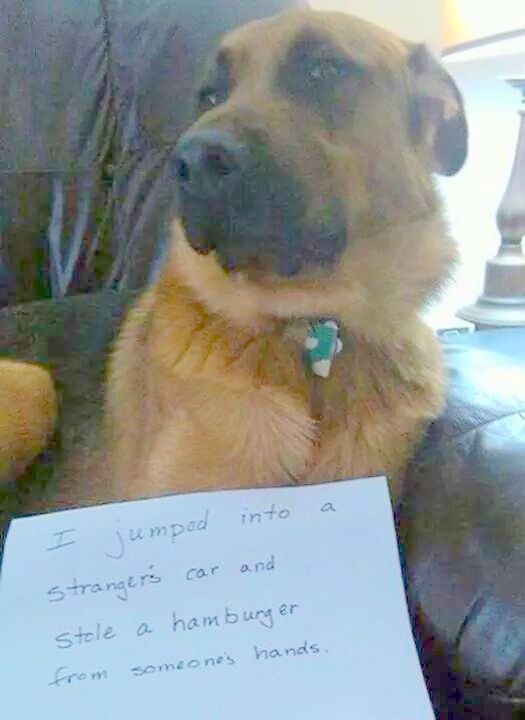
oooo
Difficult to pick out a favourite but the dog that poops rainbows is a close front-runner for me.
How about you?
Dogs are animals of integrity. We have much to learn from them.
Year: 2014
More naughtiness courtesy of Chris Snuggs.
oooo
oooo
oooo
oooo
oooo
oooo
oooo
Difficult to pick out a favourite but the dog that poops rainbows is a close front-runner for me.
How about you?
As demonstrated by cats and dogs.
Wonderful video brought to my attention by neighbour, Larry.
Have a great week-end.
The second of George Monbiot’s essays on Scotland.
In yesterday’s post Alba an Aigh or Scotland the Brave, I closed it by saying, “Since preparing this post, I see that George Monbiot has published a second essay on the subject of the Scottish referendum. I’m pondering republishing that second essay next Monday.”
Upon further reflection, it struck me that Mr. Monbiot’s second essay was better appreciated being republished in this place the following day; i.e. today.
Thus with no further ado, here it is.
ooOOoo
September 9, 2014
The rest of the UK doesn’t need to be rescued by Scottish votes: independence could inspire transformation everywhere.
By George Monbiot, published in the Guardian 9th September 2014
Of all the bad arguments urging the Scots to vote no – and there are plenty – perhaps the worst is the demand that Scotland should remain in the Union to save England from itself. Responses to last week’s column suggest that this wretched, snivelling, apron-strings argument has some traction among people who claim to belong to the left.
Consider what it entails: it asks a nation of 5.3 million to forgo independence to exempt a nation of 53 million from having to fight its own battles. In return for this self-denial, the five million must remain yoked to the dismal politics of cowardice and triangulation which have caused the problems from which we ask them to save us.
“A UK without Scotland would be much less likely to elect any government of a progressive hue”, the former Labour minister Brian Wilson claimed in the Guardian last week(1). We must combine against the “forces of privilege and reaction” (as he lines up with the Conservatives, UKIP, the LibDems, the banks, the corporations, almost all the rightwing columnists in Britain and every UK newspaper except the Sunday Herald) – in the cause of “solidarity”.
There’s another New Labour weasel word to add to its dreary lexicon (other examples include reform, which now means privatisation, and partnership, which means selling out to big business). Once solidarity meant making common cause with the exploited, the underpaid, the excluded. Now, to these cyborgs in suits, it means keeping faith with the banks, the corporate press, cuts, a tollbooth economy and market fundamentalism.
Here, to Wilson and his fellow flinchers, is what solidarity meant while they were in office. It meant voting for the Iraq war, for Trident, for identity cards, for 3,500 new criminal offences(2), including the criminalisation of most forms of peaceful protest(3). It meant being drafted in as political mercenaries to impose on the English policies to which the Scots were not subject, such as university top-up fees and foundation hospitals(4,5). It meant supporting every destructive and injust proposition advanced by their leaders: the brood parasites who hatched in the Labour nest then flicked its dearest principles over the edge. It’s no surprise that the more the Scots see of their former Labour ministers, the more inclined they are to vote for independence.
So now Better Together has brought in Gordon Brown, scattering bribes in a desperate, last-ditch effort at containment. They must hope the Scots have forgotten that he boasted of setting “the lowest rate in the history of British corporation tax, the lowest rate of any major country in Europe and the lowest rate of any major industrialised country anywhere”(6). That he pledged to the City of London “in budget after budget I want us to do even more to encourage the risk takers”(7). That, after 13 years of Labour government, the UK had higher levels of inequality than after 18 years of Tory government(8). That his government colluded in kidnapping and torture(9). That he helped cause the deaths of hundreds of thousands through his support for the illegal war on Iraq.
He roams through Scotland, still badged with blood, promising what he never delivered when he had the chance, this man who helped unravel the social safety net his predecessors wove; who marketised and dismembered public services; who enriched the wealthy and shafted the poor; who pledged money for Trident but failed to reverse the loss of social housing(10); whose private finance initiative planted a series of timebombs now exploding throughout the NHS and other public services(11); who greased and wheedled and slavered his way into the company of bankers and oligarchs while trampling over the working people he was elected to represent. This is the progressive Prester John who will ride to the rescue of the No campaign?
Where, in Scotland’s Labour party, are the Keir Hardies and Jimmy Reids of our time? Where is the vision, the inspiration, the hope? The shuffling, spineless little men with whom these titans have been replaced offer nothing but fear. Through fear they seek to shove Scotland back into its box, as its people rebel against the dreary, closed future mapped out for them – and the rest of us – by the three main Westminster parties.
Sure, if Scotland becomes independent, all else being equal, Labour would lose 41 seats at Westminster and Tory majorities would become more likely(12). But all else need not be equal. Scottish independence can galvanise progressive movements across the rest of the United Kingdom. We’ll watch as the Scots engage in the transformative process of writing a constitution. We’ll see that a nation of these islands can live and – I hope – flourish with a fully elected legislature (no House of Lords), with a fair electoral system (proportional representation), and with a parliament in which only representatives of that nation can vote (no cross-border mercenaries).
Already, the myth of political apathy has been scotched by the tumultuous movement north of the border. As soon as something is worth voting for, people will queue into the night to add their names to the register(13). The low turn-outs in Westminster elections reflect not an absence of interest but an absence of hope.
If Scotland becomes independent, it will be despite the efforts of almost the entire UK establishment. It will be because social media has defeated the corporate media. It will be a victory for citizens over the Westminster machine, for shoes over helicopters. It will show that a sufficiently inspiring idea can cut through bribes and blackmail, through threats and fearmongering. That hope, marginalised at first, can spread across a nation, defying all attempts to suppress it. That you can be hated by the Daily Mail and still have a chance of winning.
If Labour has any political nous, any remaining flicker of courage, it will understand what this moment means. Instead of suppressing the forces of hope and inspiration, it would mobilise them. It would, for example, pledge, in its manifesto, a referendum on drafting a written constitution for the rest of the United Kingdom.
It would understand that hope is the most dangerous of all political reagents. That it can transform what appears to be a fixed polity, a fixed outcome, into something entirely different. That it can summon up passion and purpose we never knew we possessed. If Scotland becomes independent, England – if only the potential were recognised – could also be transformed.
References:
3. http://www.legislation.gov.uk/ukpga/2005/15/contents#pt4-pb1-l1g125
4. http://news.bbc.co.uk/1/hi/scotland/3432767.stm
5. http://news.bbc.co.uk/1/hi/scotland/3054562.stm
6. http://www.parliament.the-stationery-office.co.uk/pa/cm199899/cmhansrd/vo990309/debtext/90309-06.htm
7. http://www.theguardian.com/politics/2004/jun/17/economy.uk
8. http://www.poverty.org.uk/09/index.shtml
9. http://www.theguardian.com/politics/2013/dec/19/mi5-mi6-questions-torture-terrorism-rendition
10. http://data.gov.uk/dataset/house-building-dwellings-completed-total
12. http://www.bbc.co.uk/news/uk-politics-27129813
13. http://www.bbc.co.uk/news/uk-scotland-scotland-politics-29024311
ooOOoo
By this day next week, we shall know the outcome.
My hope for a ‘yes’ vote for Scottish Independence.
“Alba an Aigh” is Scottish Gaelic for the Scottish patriotic song, Scotland the Brave. It was one of several songs considered an unofficial national anthem of Scotland.
Before the main purpose of today’s post, I want to republish three comments to a recent post from Patrice Ayme, Free Scotland From Thieves.
First Alex Jones, he of The Liberated Way, commented:
I hope that “yes” is the outcome in the Scottish vote. I believe Scotland is part of a trend away from globalism and centralism to a new devolved form of localism.
To which I added:
Delighted to agree with Alex and for exactly the reasons he offers. All around the globe we are seeing countless examples of the failure, to put it mildly, of BIG GOVERNMENT.
Just as much in my new home country as it was in my old one.
On Sunday evening, neighbours Janell and Larry threw a short-notice BBQ. Thirty minutes after Larry’s phone call, we walked across our fields to their place, to join three other neighbours. It was a wonderful evening and the majority of the talk was about local issues: when is it going to rain, we are all short of hay, that sort of stuff.
Towards the end, there was a general rant about the state of the world. I hesitated, aware of my ‘new boy’ status, and then quietly remarked that Jean and I were overwhelmed by the friendship and cooperation of all those living nearby. And went on to add that the contrast between how our community worked and how the American government failed to work was stark.
Everyone signalled by grunts, words and body language their agreement.
Bon chance, New Scotland.
Patrice then offered:
Dear Paul: 100% agree. The strength of the USA is that the average state is 6 million people. The state of Massachusetts has excellent results on the PISA tests, in stark distinction with most of Euramerica. That’s entirely due to localism.
In my more or less native Bay Area, governance is extremely local, and there is the secret of Silicon Valley: most deals are made with handshakes, or people who argue with each other, while knowing they will have to keep on living with each other. Silicon Valley exists, because it’s 3,000 miles from Washington and New York.
They signaled with grunts and body language because of these low PISA tests, but, right now in the Bay Area, the PISA rising movement is engaged (having a 4 year old, I am in the middle of it).
Bonne Chance Scotland, indeed. Independence (from London’s plutocracy) ought to be easy as pie for Scotland.
BTW, the “City” is technically a plutocracy: voting there depends upon the money…
So it’s already clear where I stand!
As is the stance from The Automatic Earth Please Scotland, Blow Up The EU. Or try The London School of Economics: The ‘domino effect’ from Scotland’s referendum is increasing demands for independence in Italian regions. Then The Daily Telegraph weighs in with Britain faces storm as giant global investors awaken to break-up dangers. All great fun!
However, the most eloquent and powerful argument read in recent days comes from George Monbiot in his essay Someone Else’s Story. It is republished here with Mr. Monbiot’s kind permission.
ooOOoo
September 2, 2014
Scots voting no to independence would be an astonishing act of self-harm
By George Monbiot, published in the Guardian 3rd September 2014
Imagine that the question was posed the other way round. An independent nation is asked to decide whether to surrender its sovereignty to a larger union. It would be allowed a measure of autonomy, but key aspects of its governance would be handed to another nation. It would be used as a military base by the dominant power and yoked to an economy over which it had no control.
It would have to be bloody desperate. Only a nation in which the institutions of governance had collapsed, which had been ruined economically, which was threatened by invasion or civil war or famine might contemplate this drastic step. Most nations faced even with such catastrophes choose to retain their independence – in fact will fight to preserve it – rather than surrender to a dominant foreign power.
So what would you say about a country that sacrificed its sovereignty without collapse or compulsion? That had no obvious enemies, a basically sound economy and a broadly functional democracy, and chose to swap it for remote governance by the hereditary elite of another nation, beholden to a corrupt financial centre?(1)
What would you say about a country that exchanged an economy based on enterprise and distribution for one based on speculation and rent?(2) That chose obeisance to a government which spies on its own citizens, uses the planet as its dustbin, governs on behalf of a transnational elite which owes loyalty to no nation, cedes public services to corporations, forces terminally ill people to work(3) and can’t be trusted with a box of fireworks, let alone a fleet of nuclear submarines? You would conclude that it had lost its senses.
So what’s the difference? How is the argument altered by the fact that Scotland is considering whether to gain independence, rather than whether to lose it? It’s not. Those who would vote no – now, a new poll suggests, a rapidly diminishing majority(4) – could be suffering from system justification.
System justification is defined as the “process by which existing social arrangements are legitimised, even at the expense of personal and group interest”(5). It consists of a desire to defend the status quo, regardless of its impacts. It has been demonstrated in a large body of experimental work, which has produced the following surprising results.
System justification becomes stronger when social and economic inequality is more extreme. This is because people try to rationalise their disadvantage by seeking legitimate reasons for their position(6). In some cases disadvantaged people are more likely than the privileged to support the status quo. One study found that US citizens on low incomes were more likely than those on high incomes to believe that economic inequality is legitimate and necessary(7).
It explains why women in experimental studies pay themselves less than men, why people in low status jobs believe their work is worth less than those in high status jobs, even when they’re performing the same task, and why people accept domination by another group(8). It might help to explain why so many people in Scotland are inclined to vote no.
The fears the no campaigners have worked so hard to stoke are – by comparison to what the Scots are being asked to lose – mere shadows. As Adam Ramsay points out in his treatise Forty-Two Reasons to Support Scottish Independence, there are plenty of nations smaller than Scotland which possess their own currencies and thrive(9). Most of the world’s prosperous nations are small: there are no inherent disadvantages to downsizing(10).
Remaining in the UK carries as much risk and uncertainty as leaving. England’s housing bubble could blow at any time. We might leave the EU. Some of the most determined no campaigners would take us out: witness Ukip’s intention to stage a “pro-Union rally” in Glasgow on September 12(11). The Union in question, of course, is the UK, not Europe. This reminds us of a crashing contradiction in the politics of such groups: if our membership of the EU represents an appalling and intolerable loss of sovereignty, why is the far greater loss Scotland is being asked to accept deemed tolerable and necessary?
The Scots are told they will have no control over their own currency if they leave the UK. But they have none today. The monetary policy committee is based in London and bows to the banks. The pound’s strength, which damages the manufacturing Scotland seeks to promote, reflects the interests of the City(12).
To vote no is to choose to live under a political system that sustains one of the rich world’s highest levels of inequality and deprivation. This is a system in which all major parties are complicit, which offers no obvious exit from a model that privileges neoliberal economics over other aspirations(13). It treats the natural world, civic life, equality, public health and effective public services as dispensable luxuries, and the freedom of the rich to exploit the poor as non-negotiable.
Its lack of a codified constitution permits numberless abuses of power. It has failed to reform the House of Lords, royal prerogative, campaign finance(14) and first-past-the-post voting (another triumph for the no brigade). It is dominated by a media owned by tax exiles, who, instructing their editors from their distant chateaux, play the patriotism card at every opportunity. The concerns of swing voters in marginal constituencies outweigh those of the majority; the concerns of corporations with no lasting stake in the country outweigh everything. Broken, corrupt, dysfunctional, retentive: you want to be part of this?
Independence, as more Scots are beginning to see, offers people an opportunity to rewrite the political rules. To create a written constitution, the very process of which is engaging and transformative. To build an economy of benefit to everyone. To promote cohesion, social justice, the defence of the living planet and an end to wars of choice(15).
To deny this to yourself, to remain subject to the whims of a distant and uncaring elite, to succumb to the bleak, deferential negativity of the no campaign; to accept other people’s myths in place of your own story: that would be an astonishing act of self-repudiation and self-harm. Consider yourselves independent and work backwards from there, then ask why you would sacrifice that freedom.
References:
1. http://www.theguardian.com/commentisfree/2011/oct/31/corporation-london-city-medieval
2. http://www.theguardian.com/commentisfree/2014/jul/29/rich-wealth-good-inequality-green-party
3. http://www.theguardian.com/society/2014/feb/28/minister-apologise-woman-coma-find-work
4. http://www.theguardian.com/politics/2014/sep/02/scottish-independence-yes-campaign-poll-boost
5. John T. Jost and Mahzarin R. Banaji, 1994. The role of stereotyping in system-justification and the production of false consciousness. British Journal of Social Psychology, 33, 1–27.
6. John T. Jost, Mahzarin R. Banaji and Brian A. Nosek, 2004. A Decade of System Justification Theory: Accumulated Evidence of Conscious and Unconscious Bolstering of the Status Quo . Political Psychology, Vol. 25, No. 6, 2004. http://www.psych.nyu.edu/jost/Jost,%20Banaji,%20&%20Nosek%20%282004%29%20A%20Decade%20of%20System%20Justificati.pdf
7. John T. Jost et al, 2003. Social inequality and the reduction of ideological dissonance on behalf of the system: evidence of enhanced system justification among the disadvantaged. European Journal of Social Psychology, 33, 13–36.
8. John T. Jost, Mahzarin R. Banaji and Brian A. Nosek, 2004, see above.
9. http://commonwealth-publishing.com/?p=255
11. http://www.bbc.co.uk/news/uk-scotland-scotland-politics-29003017
12. See also, on these questions, the Common Weal report by the Jimmy Reid Foundation: http://reidfoundation.org/wp-content/uploads/2013/05/The-Common-Weal.pdf
15. There’s more on all this at http://commonwealth-publishing.com/?p=255
ooOOoo
Since preparing this post, I see that George Monbiot has published a second essay on the subject of the Scottish referendum. I’m pondering republishing that second essay next Monday.
Sorry, couldn’t resist this.
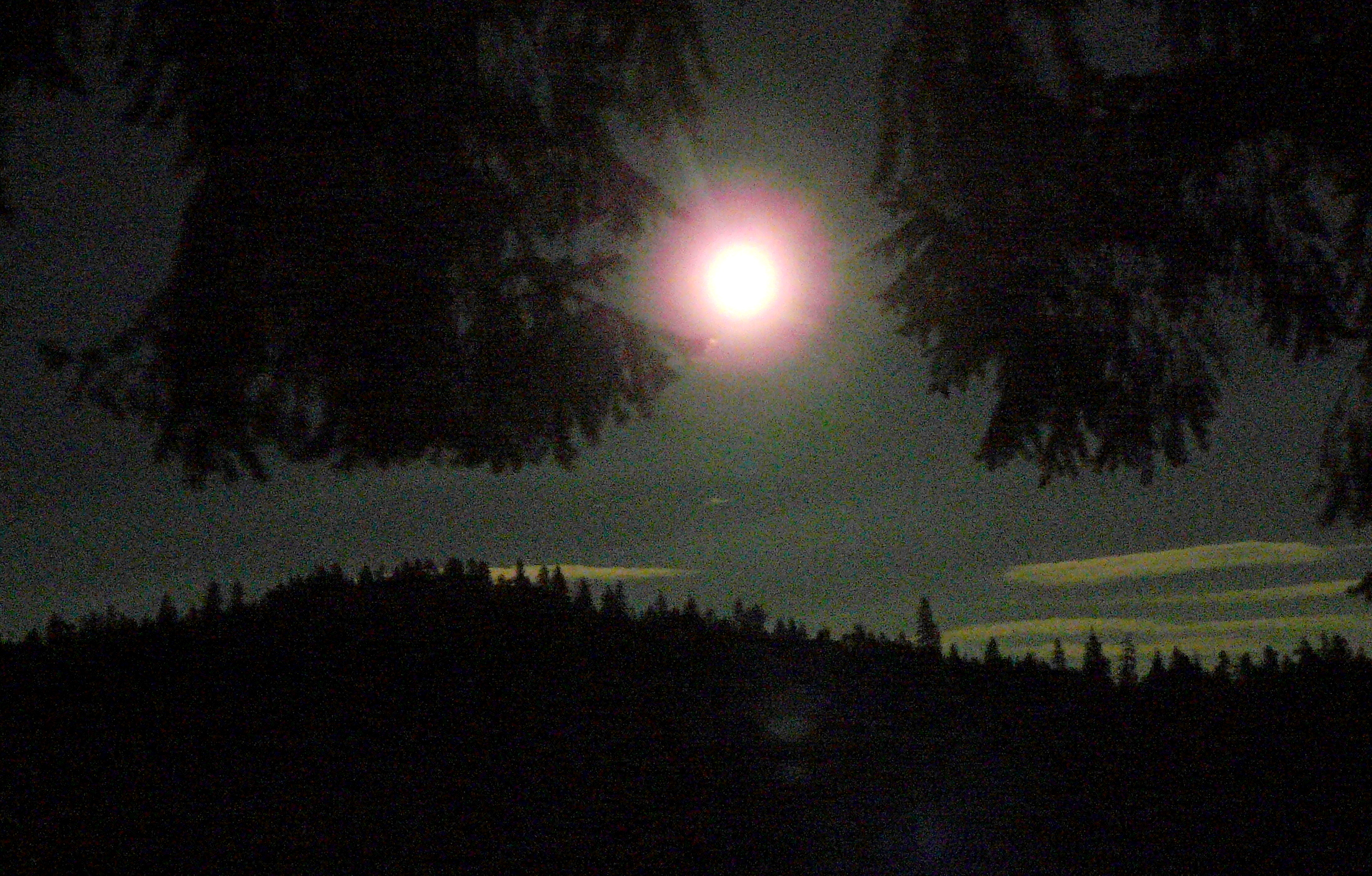
The following photograph was taken around 9pm (PDT) on the evening of the 8th September; i.e. Monday evening.
The image has been tweaked to display the picture more clearly but, nonetheless, shows the most beautiful Harvest Moon. The camera was pointing to the East; I was standing on the deck at the back of our house.
Anything to do with dogs?
You bet! There’s this ….

oooo
and this:
Uploaded on Nov 9, 2010
During Bob and Jan Shaw’s Annual fall training session outside of Newberry, MI in the beautiful Upper Peninsula, I had the opportunity to record over 100 huskies howling at a full moon.
“We all shine on…like the moon and the stars and the sun…we all shine on…come on and on and on…” John Lennon.
Please be aware of the threat to the original concept of the Internet.
As received from WordPress at 14:30 PDT today; September 9th, 2014.
(Even if you are not a ‘blogger’, please read the following and sign by using the link right at the end of the post.)
ooOOoo
“Net Neutrality” is the simple but powerful principle that cable and broadband providers must treat all internet traffic equally. Whether you’re loading a blog post on WordPress.com, streaming House of Cards on Netflix, or browsing handcrafted tea cozies on Etsy, your internet provider can’t degrade your connection speed, block sites, or charge a toll based on the content that you’re viewing.
Net neutrality has defined the internet since its inception, and it’s hard to argue with the results: the internet is the most powerful engine of economic growth and free expression in history. Most importantly, the open internet is characterized by companies, products, and ideas that survive or fail depending on their own merit — not on whether they have preferred deals in place with a broadband service provider. Unfortunately, the principle of net neutrality, and the open internet that we know and love, is under attack.
Net Neutrality under attack
The Federal Communications Commission has proposed rules that would, for the first time, expressly allow internet providers — like Comcast, Verizon and AT&T — to charge internet companies like Automattic, Netflix or Etsy for access to their subscribers. This means there could be “fast lanes” for companies who are able to pay providers for preferred internet access, while everyone else gets stuck in the “slow lane”…which means applications won’t perform as quickly, webpages will load slowly, and of course, buffering. A slow “still loading” spinner will be an unfortunate, but common sight on the new, closed internet that the big providers want.
Unsurprisingly, the large telecom companies who stand to benefit from the FCC’s proposed rules fully support their passage. They have nearly unlimited funds and hundreds of lobbyists in Washington to promote these harmful new rules.
But what they don’t have is you.
What can we do to fight back?
Automattic strongly supports a free and open internet. After all, WordPress.com, and the WordPress open source project are living examples of what is possible on an unthrottled internet, open for creation, collaboration, and expression. Over the last few months, we’ve joined 150 major tech companies in sending a letter to Washington in support of net neutrality, and met with FCC Chairman Tom Wheeler to urge him to preserve the internet we’ve always known.
Now it’s your turn.
Automattic, along with many other companies and digital rights organizations, is proud to participate in the Internet Slowdown on September 10. For this day of action, we’ve built a “Fight for Net Neutrality” plugin that you can enable now on your WordPress.com blog to show support for this important cause.
You can turn the plugin on by going to your Dashboard, Settings → Fight for Net Neutrality.
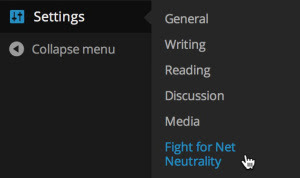
When you enable the plugin, we’ll replace a few of the posts on your site with a “Still Loading” spinner…to show what life will be like on an internet that features dreaded slow lanes.

The plugin will also display a banner that shows your support for Net Neutrality, and links to battleforthenet.com, where visitors to your site can sign a letter to the FCC about this important issue.
Please take a few minutes to enable the Fight for Net Neutrality on your site today, and visit battleforthenet.com to send a message to Washington that net neutrality must be preserved. Together we can make a difference, and we hope you’ll join us in this important battle for the open internet!
ooOOoo
Note: When I turned on the plugin and ran the preview for this new post, it made it very confusing in my opinion. Thus as much as I support the campaign, and have signed accordingly, I have turned off the plugin for the time being.
So please all readers and followers of Learning from Dogs go to the BattleForTheNet website and sign to indicate your support for this important campaign.
Oh, and please click Like if you support the campaign. Thank you very much.
As topic changes go, this takes some beating!
I am referring, of course, to the contrast to yesterday’s post title: Wisdom, nature and philosophy.
The drought that this part of Oregon has been experiencing has had one obvious effect: the availability of good hay is rapidly diminishing. With four horses to feed and our own pasture just about eaten out, we need a few more tons before the rains arrive around the end of the year: fingers crossed! We have been frantically trying to find some.
What, you may ask, has this to do with Learning from Dogs? Only that by the time I sat down yesterday to write today’s post, I was squeezed in terms of writing a longer post, and had less than an hour to spare before driving up to Glendale to look at some second-cutting hay for sale.
Then a recent email from a long-term friend in Australia saved the day. It was from Amanda Smith and is reproduced just as she sent it to me; that in turn had been sent to Amanda from a friend of hers. It’s a delightful tale.
ooOOoo
This occurred on a walk along Flinders Beach on North Stradbroke Island in Queensland a couple of days ago.
The Koalas seem fairly tame over here. We passed two sitting in she-oak trees each about two metres off the ground. They were not spooked at all by the attention we gave them.
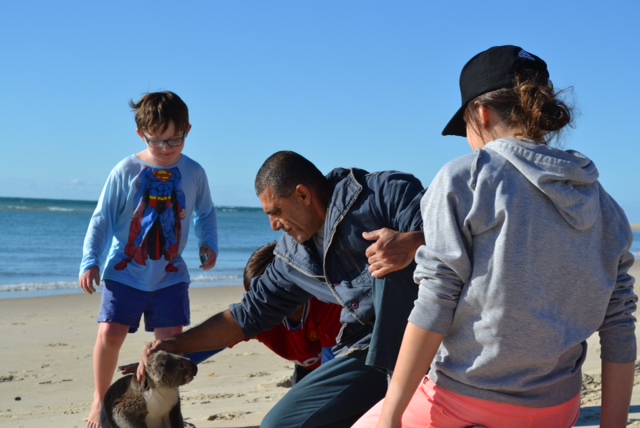
Then, about half way along the beach, we saw this young fellow actually running up and down the beach and playing around the kids like a puppy.

oooo

oooo
oooo
After the koala allowed itself to be stroked and petted by us humans, it decided to go for a swim!

oooo
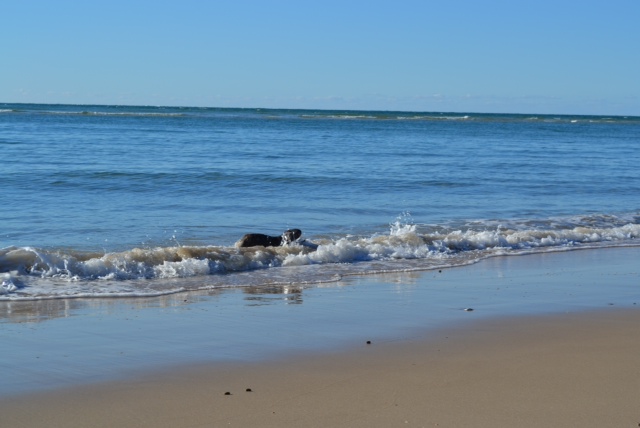
oooo
Then the little chap went about twenty metres into the sea, swam around for a good half-hour fascinating onlookers, before coming back to the beach.
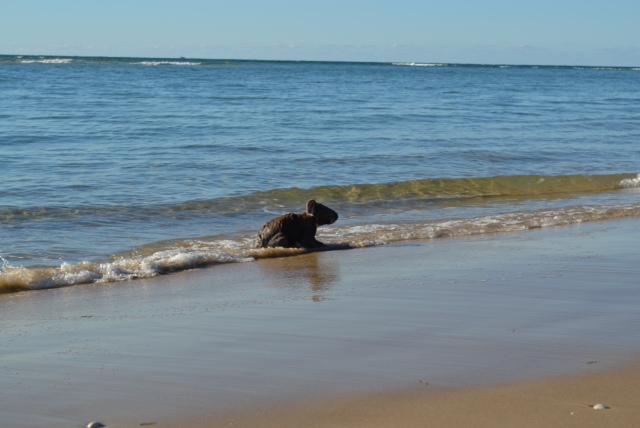
oooo

oooo
The little chap then took a while to recover from his swim.
We have never heard of or seen this behaviour before: a koala who likes to “play” with humans, and swim in the ocean.
Unbelievable stuff, something we will always remember.
(Credit Allan Duncan)
ooOOoo
Makes finding hay for horses seem mundane! 🙂
The hidden gifts of nature.
I have been a follower of Alex Jones’ blog The Liberated Way for many months; possibly much longer. Frequently, I republish one of Alex’s posts here.
Nearly six months ago, I read a lovely essay of his and made a mental note to republish that in the next few days. Then the world overtook me and now April 30th, when Alex published this piece, has become September 8th!
Yet it hasn’t lost a heartbeat of meaning.
Read on and you will agree.
ooOOoo
The western education system ignores nature.

The holidays are over in the UK, the students return to school, some to their exams. I reflect upon the sad treatment of creativity, wisdom, nature and natural philosophy in education, and in Western society as a whole, treated as worthless and unworthy of consideration.
On most days I walk past the former home of William Gilbert, some consider the father of electricity and magnetism. Born to a wealthy merchant family in my town of Colchester, Gilbert invested his personal wealth in an extensive study of magnetism with view to assisting the explorers of the Elizabethan age when Britain was building an empire in a period of great prosperity and confidence. Gilbert invented the term electricity. Gilbert wrote De Magnete, considered possibly the first work using the scientific method. In addition to being a scientist, a doctor to Elizabeth I, Gilbert was also a natural philosopher who used the empirical method of observation, demonstration and experience of nature to form his theories.
Each day I watch and interact with nature, like Gilbert I am a natural philosopher, and this forms the basis of my business ideas, my scientific understanding and my personal philosophies. Rather than a worthless study nature opens the door to the philosophy of the understanding of self, the world, and the relationship of self to the world. Wisdom is born of action and experience, the interactions with nature gives birth to wisdom. Nature encourages people to do new things in new ways, so rerouting electric signals in the brain causing new connections to form of creativity. The philosophy emerges from nature by causing the mind to question, observe and experiment, the basis of science and success in any discipline.
ooOOoo
Colchester, in the English county of Essex, goes way back to Roman times when the town was called Camulodunon (which was latinised as Camulodunum). That name is believed to date back to the Celtic fortress of “Camulodunon”, meaning Stronghold of Camulos. It served as the first capital of Roman Britain making a claim to be the oldest town in Britain.
It is where Alex Jones lives, the author of The Liberated Way, and where during the 1980’s I ran a business under the name of Dataview Ltd. In fact, the business was located in a very old, listed building known as The Portreeve’s House. It was at the bottom of town near Hythe Quay on the River Colne and the name “Portreeve” is old English for harbour master, i.e. it was originally the harbour master’s house.
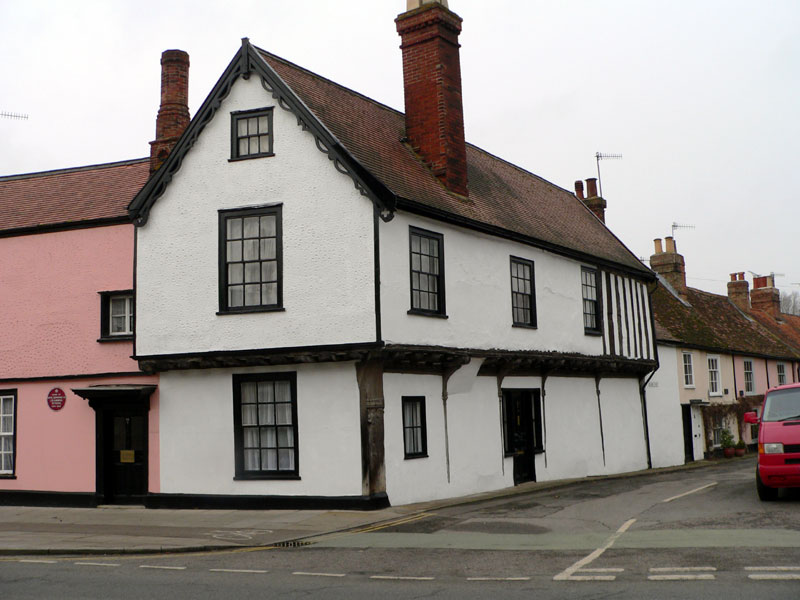
All seems a long way from Southern Oregon!
 Learning from Dogs