But first of all I should pass on a Very Happy Thanksgiving to you all. I apologise for forgetting to write this yesterday when I was preparing this post.
I came across the Dog Training Academy site the other day and found it full of tips. I trust that with the link in place in this post I can republish articles that are found on it.
For example, on July 14th, 2023 Laura Brown published a post on the philosophy of dog training. Here is the article.
ooOOoo
Developing a Effective Dog Training Philosophy: Techniques and Strategies
Dog training philosophy refers to the underlying principles and beliefs that guide how dog owners train and interact with their furry companions. Different dog owners have different philosophies when it comes to training their dogs, and each approach can have a significant impact on the dog’s behavior and well-being.
In this article, we’ll explore the different dog training philosophies and the benefits and drawbacks of each approach.
Positive Reinforcement
Positive reinforcement is a popular dog training philosophy that involves rewarding desired behaviors with treats, praise, or other positive stimuli. The idea is to encourage dogs to repeat behaviors that lead to positive outcomes while discouraging behaviors that lead to negative outcomes.
Positive reinforcement is a humane and effective way to train dogs. It builds trust and strengthens the bond between the owner and the dog. It’s also an enjoyable and rewarding experience for both the dog and the owner.
One potential drawback of positive reinforcement is that it can be time-consuming. Owners must be patient and consistent in rewarding desired behaviors, and it may take longer for some dogs to learn new behaviors than others.
Punishment-Based Training
Punishment-based training is a dog training philosophy that involves punishing undesirable behaviors with negative stimuli, such as physical correction or verbal scolding. The idea is to discourage dogs from repeating behaviors that lead to negative outcomes while encouraging behaviors that lead to positive outcomes.
Punishment-based training can be effective in stopping unwanted behaviors quickly. However, it can also have negative consequences for the dog’s emotional well-being. Dogs that are punished frequently may become fearful or aggressive, and their trust in their owners may be damaged.
Moreover, punishment-based training can result in a negative relationship between the owner and the dog. Dogs may learn to fear their owners, which can lead to a breakdown in communication and a lack of trust.
Dominance-Based Training
Dominance-based training is a dog training philosophy that is based on the belief that dogs are pack animals that instinctively seek to establish a social hierarchy. The idea is to assert dominance over the dog and establish the owner as the pack leader.
Dominance-based training can be effective in certain situations, such as when dealing with aggressive dogs. However, it can also be harmful to the dog’s emotional well-being. Dogs that are subjected to dominance-based training may become fearful, anxious, or aggressive, and their trust in their owners may be damaged.
Moreover, the concept of dominance in dog behavior has been debunked by many dog behaviorists and trainers. While dogs do live in social groups and establish hierarchies, the idea that dogs constantly seek to establish dominance over their owners is not supported by scientific evidence.
Relationship-Based Training
Relationship-based training is a dog training philosophy that is based on the belief that dogs are social animals that thrive on positive interactions with their owners. The idea is to build a strong, positive relationship between the owner and the dog, which will lead to a well-behaved and happy dog.
Relationship-based training is a humane and effective way to train dogs. It emphasizes positive reinforcement and building a strong bond between the owner and the dog. It also encourages owners to understand their dog’s behavior and to communicate effectively with their furry companion.
One potential drawback of relationship-based training is that it can be time-consuming. It requires a significant amount of effort and dedication on the part of the owner to build a strong relationship with their dog. Moreover, some dogs may require more time and effort to establish a strong bond with their owner.
Balanced Training
Balanced training is a dog training philosophy that combines elements of positive reinforcement, punishment-based training, and dominance-based training. The idea is to use a variety of training methods to achieve the desired behavior in the dog.
Balanced training can be effective in certain situations, such as when dealing with complex behavior issues. However, it can also be confusing and overwhelming for dogs. They may not understand what behavior is being rewarded or punished, and their trust in their owner may be compromised.
Moreover, balanced training can lead to a lack of consistency in the training approach, which can confuse the dog and make it difficult for them to learn new behaviors.
Conclusion
In conclusion, there are different dog training philosophies, and each approach can have a significant impact on the dog’s behavior and well-being. Positive reinforcement and relationship-based training are generally considered to be the most humane and effective ways to train dogs. Punishment-based and dominance-based training can have negative consequences for the dog’s emotional well-being and may damage the relationship between the owner and the dog.
Balanced training can be effective in certain situations, but it requires a significant amount of skill and knowledge to implement properly. Moreover, it can be confusing and overwhelming for dogs, and their trust in their owner may be compromised.
As a dog owner, it’s essential to understand the different dog training philosophies and choose the approach that best suits your dog’s needs and personality. It’s also essential to seek the advice of a professional dog trainer or behaviorist if you’re experiencing issues with your dog’s behavior. A trained professional can help you identify the underlying causes of your dog’s behavior and develop a training plan that will address those issues effectively.
In the end, the goal of dog training should be to build a strong, positive relationship between the owner and the dog. When dogs are well-trained, happy, and healthy, they make wonderful companions and enrich our lives in countless ways. By choosing the right dog training philosophy and approach, you can help your furry friend become the best possible version of themselves.
ooOOoo
As I said at the beginning, I hope republishing this text is alright. Because I think it is a very good article from a very useful website.
Astronomers have known for decades that the universe is expanding. When they use telescopes to observe faraway galaxies, they see that these galaxies are moving away from Earth.
To astronomers, the wavelength of light a galaxy emits is longer the faster the galaxy is moving away from us. The farther away the galaxy is, the more its light has shifted toward the longer wavelengths on the red side of the spectrum – so the higher the “redshift.”
Because the speed of light is finite, fast, but not infinitely fast, seeing something far away means we’re looking at the thing how it looked in the past. With distant, high-redshift galaxies, we’re seeing the galaxy when the universe was in a younger state. So “high redshift” corresponds to the early times in the universe, and “low redshift” corresponds to the late times in the universe.
But as astronomers have studied these distances, they’ve learned that the universe is not just expanding – its rate of expansion is accelerating. And that expansion rate is even faster than the leading theory predicts it should be, leaving cosmologists like me puzzled and looking for new explanations.
Dark energy and a cosmological constant
Scientists call the source of this acceleration dark energy. We’re not quite sure what drives dark energy or how it works, but we think its behavior could be explained by a cosmological constant, which is a property of spacetime that contributes to the expansion of the universe.
Albert Einstein originally came up with this constant – he marked it with a lambda in his theory of general relativity. With a cosmological constant, as the universe expands, the energy density of the cosmological constant stays the same.
Imagine a box full of particles. If the volume of the box increases, the density of particles would decrease as they spread out to take up all the space in the box. Now imagine the same box, but as the volume increases, the density of the particles stays the same.
It doesn’t seem intuitive, right? That the energy density of the cosmological constant does not decrease as the universe expands is, of course, very weird, but this property helps explain the accelerating universe.
A standard model of cosmology
Right now, the leading theory, or standard model, of cosmology is called “Lambda CDM.” Lambda denotes the cosmological constant describing dark energy, and CDM stands for cold dark matter. This model describes both the acceleration of the universe in its late stages as well as the expansion rate in its early days.
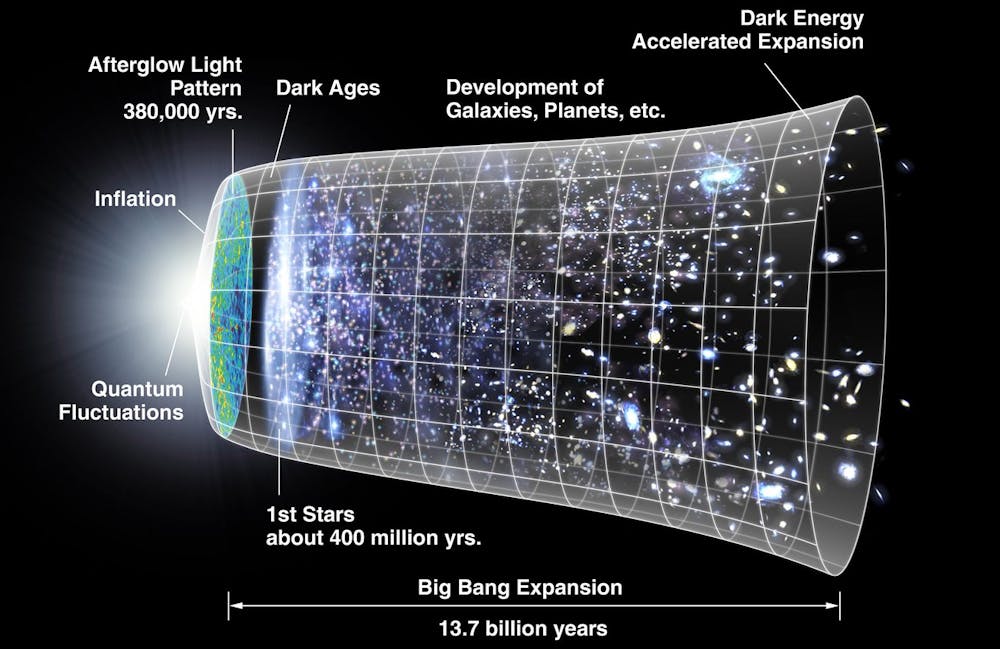
Specifically, the Lambda CDM explains observations of the cosmic microwave background, which is the afterglow of microwave radiation from when the universe was in a “hot, dense state” about 300,000 years after the Big Bang. Observations using the Planck satellite, which measures the cosmic microwave background, led scientists to create the Lambda CDM model.
Fitting the Lambda CDM model to the cosmic microwave background allows physicists to predict the value of the Hubble constant, which isn’t actually a constant but a measurement describing the universe’s current expansion rate.
But the Lambda CDM model isn’t perfect. The expansion rate scientists have calculated by measuring distances to galaxies, and the expansion rate as described in Lambda CDM using observations of the cosmic microwave background, don’t line up. Astrophysicists call that disagreement the Hubble tension.
The universe is expanding faster than predicted by popular models in cosmology. NASA
The Hubble tension
Over the past few years, I’ve been researching ways to explain this Hubble tension. The tension may be indicating that the Lambda CDM model is incomplete and physicists should modify their model, or it could indicate that it’s time for researchers to come up with new ideas about how the universe works. And new ideas are always the most exciting things for a physicist.
One way to explain the Hubble tension is to modify the Lambda CDM model by changing the expansion rate at low redshift, at late times in the universe. Modifying the model like this can help physicists predict what sort of physical phenomena might be causing the Hubble tension.
For instance, maybe dark energy is not a cosmological constant but instead the result of gravity working in new ways. If this is the case, dark energy would evolve as the universe expands – and the cosmic microwave background, which shows what the universe looked like only a few years after its creation, would have a different prediction for the Hubble constant.
But, my team’s latest research has found that physicists can’t explain the Hubble tension just by changing the expansion rate in the late universe – this whole class of solutions falls short.
Developing new models
To study what types of solutions could explain the Hubble tension, we developed statistical tools that enabled us to test the viability of the entire class of models that change the expansion rate in the late universe. These statistical tools are very flexible, and we used them to match or mimic different models that could potentially fit observations of the universe’s expansion rate and might offer a solution to the Hubble tension.
The models we tested include evolving dark energy models, where dark energy acts differently at different times in the universe. We also tested interacting dark energy-dark matter models, where dark energy interacts with dark matter, and modified gravity models, where gravity acts differently at different times in the universe.
But none of these could fully explain the Hubble tension. These results suggest that physicists should study the early universe to understand the source of the tension.
There you go! Gorgeous creatures. As Thomas Wickman recently said: “I read there are 900 million dogs in the world and 76,811,305 dogs in the US (American Veterinary Medical Association.)”
I read recently a review of the most popular dog names by State.
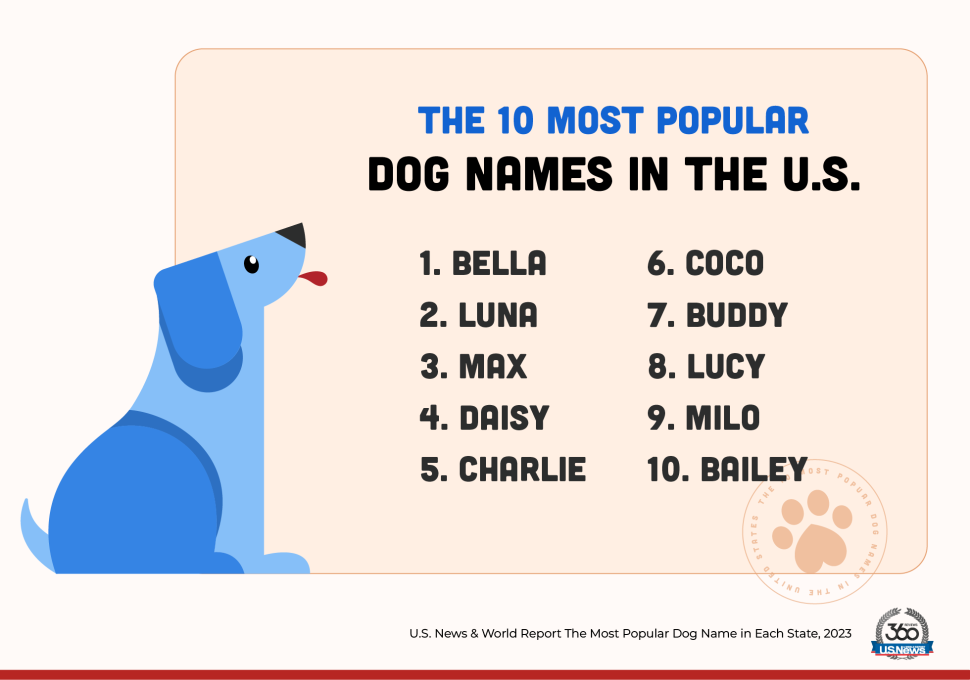
This was an article on US News dated November 6th. It showed the names for our dogs in the U.S. in a table:
The article also reported that dogs and puppies were living in more than half of the nation’s households. That is one heck of a lot of dogs and it just shows how great dogs are as companions to us humans.
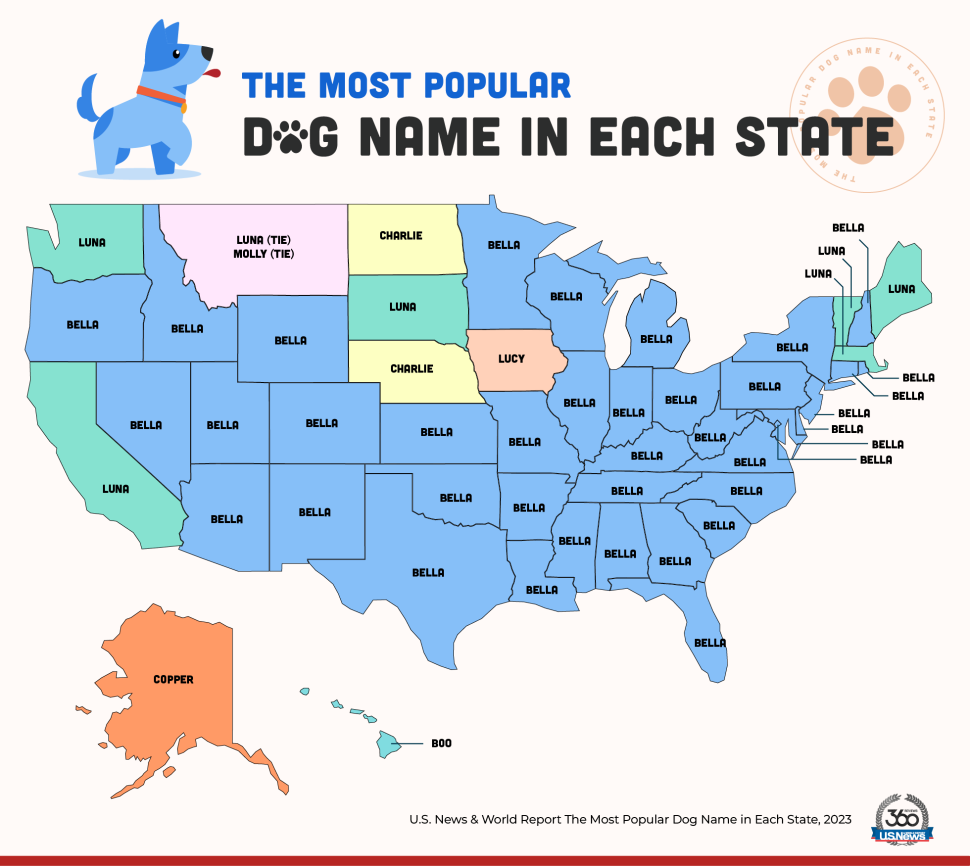
Then the article went on to declare the most popular dog name by State, and there was another graphic:
So much for the names of our three remaining dogs: Brandy; Cleopatra; Oliver.
We take it for granted! Of that I am sure. But the question of how oxygen first came to be built up in our atmosphere is fascinating. There was a recent article written by Elizabeth Swanner, who is Associate Professor of Geology, Iowa State University that was published in The Conversation. It makes for a very interesting read.
ooOOoo
A layered lake is a little like Earth’s early oceans − and lets researchers explore how oxygen built up in our atmosphere billions of years ago
Researchers sample water from various layers to analyze back in the lab. Elizabeth Swanner, CC BY-ND
Little Deming Lake doesn’t get much notice from visitors to Itasca State Park in Minnesota. There’s better boating on nearby Lake Itasca, the headwaters of the Mississippi River. My colleagues and I need to maneuver hundreds of pounds of equipment down a hidden path made narrow by late-summer poison ivy to launch our rowboats.
But modest Deming Lake offers more than meets the eye for me, a geochemist interested in how oxygen built up in the atmosphere 2.4 billion years ago. The absence of oxygen in the deep layers of Deming Lake is something this small body of water has in common with early Earth’s oceans.
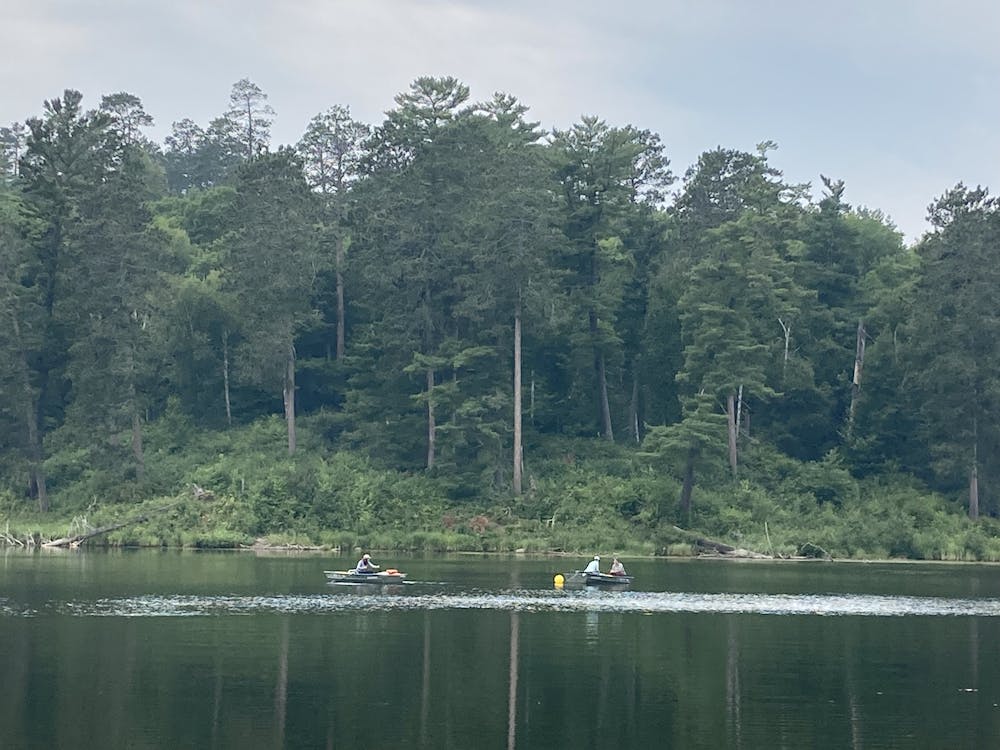
On each of our several expeditions here each year, we row our boats out into the deepest part of the lake – over 60 feet (18 meters), despite the lake’s surface area being only 13 acres. We drop an anchor and connect our boats in a flotilla, readying ourselves for the work ahead.
Researchers’ boats on Deming Lake. Elizabeth Swanner, CC BY-ND
Deming Lake is meromictic, a term from Greek that means only partially mixing. In most lakes, at least once a year, the water at the top sinks while the water at the bottom rises because of wind and seasonal temperature changes that affect water’s density. But the deepest waters of Deming Lake never reach the surface. This prevents oxygen in its top layer of water from ever mixing into its deep layer.
Less than 1% of lakes are meromictic, and most that are have dense, salty bottom waters. Deming Lake’s deep waters are not very salty, but of the salts in its bottom waters, iron is one of the most abundant. This makes Deming Lake one of the rarest types of meromictic lakes.
Postdoc researcher Sajjad Akam collects a water sample for chemical analysis back in the lab. Elizabeth Swanner, CC BY-ND
The lake surface is calm, and the still air is glorious on this cool, cloudless August morning. We lower a 2-foot-long water pump zip-tied to a cable attached to four sensors. The sensors measure the temperature, amount of oxygen, pH and amount of chlorophyll in the water at each layer we encounter. We pump water from the most intriguing layers up to the boat and fill a myriad of bottles and tubes, each destined for a different chemical or biological analysis.
My colleagues and I have homed in on Deming Lake to explore questions about how microbial life adapted to and changed the environmental conditions on early Earth. Our planet was inhabited only by microbes for most of its history. The atmosphere and the oceans’ depths didn’t have much oxygen, but they did have a lot of iron, just like Deming Lake does. By investigating what Deming Lake’s microbes are doing, we can better understand how billions of years ago they helped to transform the Earth’s atmosphere and oceans into what they’re like now.
Chlorophyll colors water from the lake slightly green. Elizabeth Swanner, CC BY-ND
At Deming Lake, my colleagues and I pay special attention to the water layer where the chlorophyll readings jump. Chlorophyll is the pigment that makes plants green. It harnesses sunlight energy to turn water and carbon dioxide into oxygen and sugars. Nearly 20 feet (6 meters) below Deming’s surface, the chlorophyll is in cyanobacteria and photosynthetic algae, not plants.
But the curious thing about this layer is that we don’t detect oxygen, despite the abundance of these oxygen-producing organisms. This is the depth where iron concentrations start to climb to the high levels present at the lake’s bottom.
This high-chlorophyll, high-iron and low-oxygen layer is of special interest to us because it might help us understand where cyanobacteria lived in the ancient ocean, how well they were growing and how much oxygen they produced.
We suspect the reason cyanobacteria gather at this depth in Deming Lake is that there is more iron there than at the top of the lake. Just like humans need iron for red blood cells, cyanobacteria need lots of iron to help catalyze the reactions of photosynthesis.
A likely reason we can’t measure any oxygen in this layer is that in addition to cyanobacteria, there are a lot of other bacteria here. After a good long life of a few days, the cyanobacteria die, and the other bacteria feed on their remains. These bacteria rapidly use up any oxygen produced by still photosynthesizing cyanobacteria the way a fire does as it burns through wood.
We know there are lots of bacteria here based on how cloudy the water is, and we see them when we inspect a drop of this water under a microscope. But we need another way to measure photosynthesis besides measuring oxygen levels.
Long-running lakeside laboratory
The other important function of photosynthesis is converting carbon dioxide into sugars, which eventually are used to make more cells. We need a way to track whether new sugars are being made, and if they are, whether it’s by photosynthetic cyanobacteria. So we fill glass bottles with samples of water from this lake layer and seal them tight with rubber stoppers.
We drive the 3 miles back to the Itasca Biological Station and Laboratories where we will set up our experiments. The station opened in 1909 and is home base for us this week, providing comfy cabins, warm meals and this laboratory space.
In the lab, we inject our glass bottle with carbon dioxide that carries an isotopic tracer. If cyanobacteria grow, their cells will incorporate this isotopic marker.
We had a little help to formulate our questions and experiments. University of Minnesota students attending summer field courses collected decades worth of data in Itasca State Park. A diligent university librarian digitized thousands of those students’ final papers.
My students and I pored over the papers concerning Deming Lake, many of which tried to determine whether the cyanobacteria in the chlorophyll-rich layer are doing photosynthesis. While most indicated yes, those students were measuring only oxygen and got ambiguous results. Our use of the isotopic tracer is trickier to implement but will give clearer results.
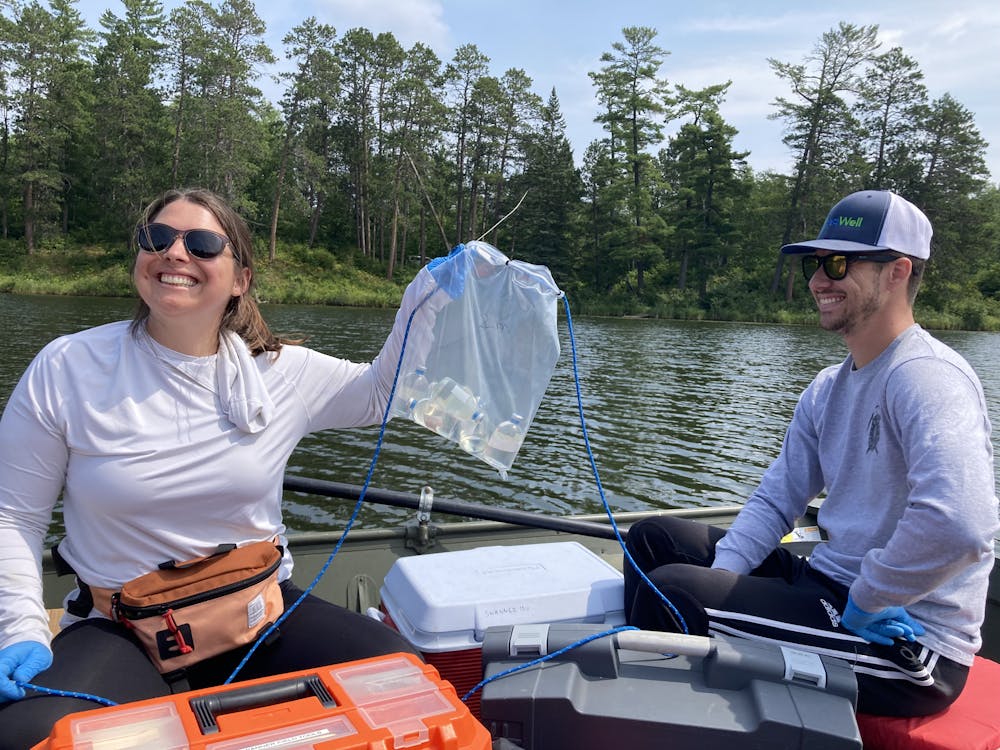
Graduate students Michelle Chamberlain and Zackry Stevenson about to sink the bottles for incubation in Deming Lake. Elizabeth Swanner, CC BY-ND
That afternoon, we’re back on the lake. We toss an anchor; attached to its rope is a clear plastic bag holding the sealed bottles of lake water now amended with the isotopic tracer. They’ll spend the night in the chlorophyll-rich layer, and we’ll retrieve them after 24 hours. Any longer than that and the isotopic label might end up in the bacteria that eat the dying cyanobacteria instead of the cyanobacteria themselves. We tie off the rope to a floating buoy and head back to the station’s dining hall for our evening meal.
Iron, chlorophyll, oxygen
The next morning, as we wait for the bottles to finish their incubation, we collect water from the different layers of the lake and add some chemicals that kill the cells but preserve their bodies. We’ll look at these samples under the microscope to figure out how many cyanobacteria are in the water, and we’ll measure how much iron is inside the cyanobacteria.
That’s easier said than done, because we have to first separate all the “needles” (cyanobacteria) from the “hay” (other cells) and then clean any iron off the outside of the cyanobacteria. Back at Iowa State University, we’ll shoot the individual cells one by one into a flame that incinerates them, which liberates all the iron they contain so we can measure it.
Biogeochemist Katy Sparrow rows a research vessel to shore. Elizabeth Swanner, CC BY-ND
Our scientific hunch, or hypothesis, is that the cyanobacteria that live in the chlorophyll- and iron-rich layer will contain more iron than cyanobacteria that live in the top lake layer. If they do, it will help us establish that greater access to iron is a motive for living in that deeper and dimmer layer.
These experiments won’t tell the whole story of why it took so long for Earth to build up oxygen, but they will help us to understand a piece of it – where oxygen might have been produced and why, and what happened to oxygen in that environment.
Deming Lake is quickly becoming its own attraction for those with a curiosity about what goes on beneath its tranquil surface – and what that might be able to tell us about how new forms of life took hold long ago on Earth.
I cannot easily put my words together about this iconic British rock band formed in 1960; I was 16 then.
‘Now and Then’
The final song from the iconic English rock band The Beatles was released yesterday, a track that relies on AI-enhanced vocals from former co-frontman John Lennon. Listen to the song, titled “Now and Then,” here. Regarded as one of the most influential bands of all time, The Beatles are the bestselling artists in music history, having shipped more than 180 million albums. Lennon, Paul McCartney, George Harrison, and (for most of the time) Ringo Starr, were nominated for 21 Grammys in the span of six years beginning in 1965. The group broke up in 1970, and Lennon was tragically killed by an angry fan in 1980. The new song was originally written by Lennon in 1977 and surfaced in 1994 by McCartney but was shelved due to Lennon’s voice being muffled by a piano. New technology reportedly allowed Lennon’s vocals to be isolated and enhanced to the point of being usable.
Now for some reason I cannot play that YouTube link but hopefully it will be alright when I publish it.



























 Learning from Dogs