More dog pictures.
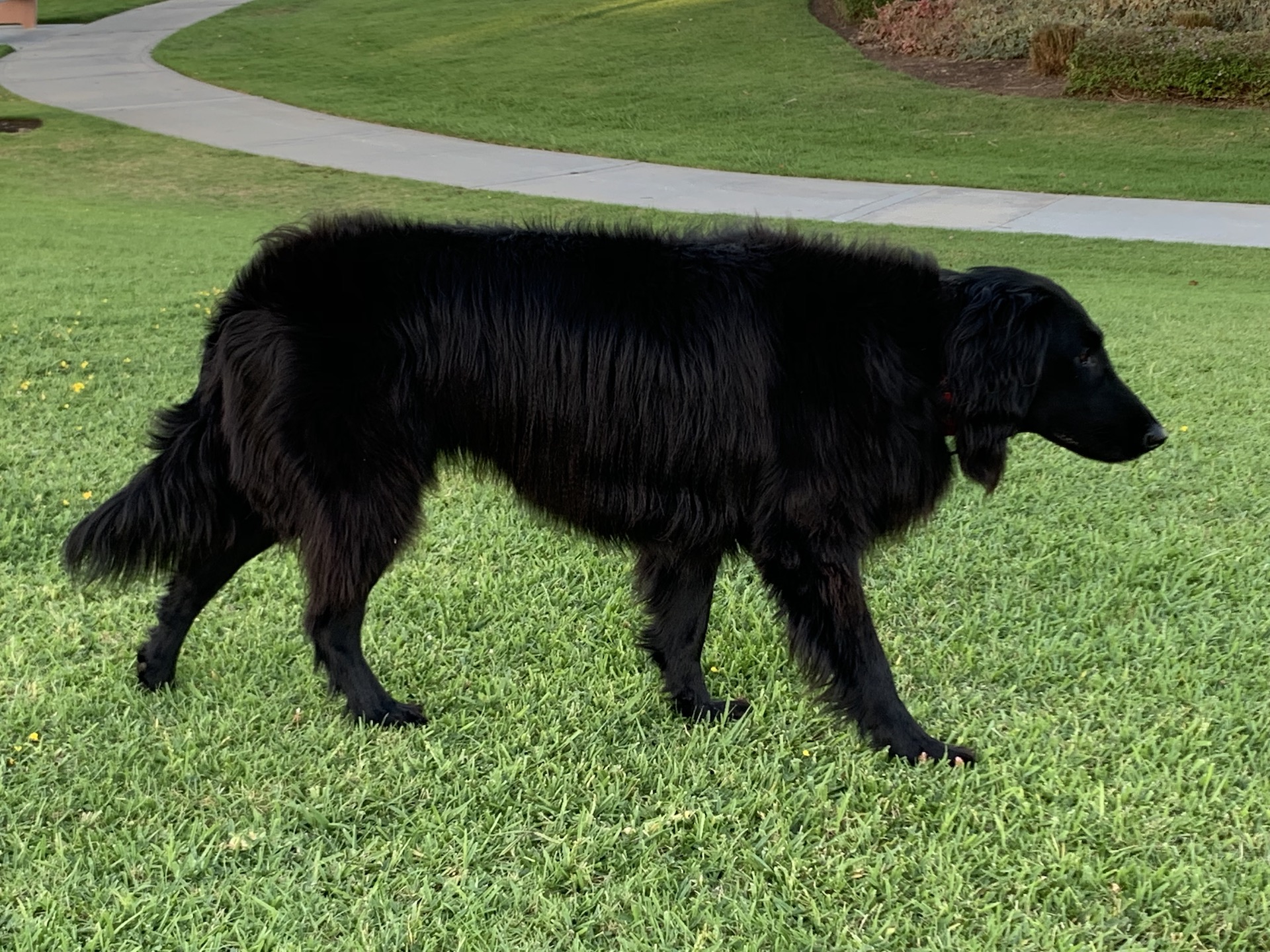
But with a difference as these are from my very good and long-standing friend, Dan and his dog Lexi.
oooo

oooo

oooo

oooo

oooo

oooo

oooo

Perfect!
Dogs are the perfect companions!
Dogs are animals of integrity. We have much to learn from them.
Year: 2021
More dog pictures.
But with a difference as these are from my very good and long-standing friend, Dan and his dog Lexi.
oooo
oooo
oooo
oooo
oooo
oooo
oooo
Perfect!
Dogs are the perfect companions!
Wonderful video sent across by my son, Alex!
We were out much of the day yesterday so I didn’t have huge time for the blog.
But nevertheless I could let the day go by without sharing this video with you.
Yes, it is an advertising video but so what. It is the most delightful combination of mountain biking and dogs. Alex is a great mountain biking enthusiast.
Here it is!
How about plants!
Yes, a deeply interesting post from The Conversation website shows how plants thrive by communicating and much more.
Now this post doesn’t have a dog within sniffing distance but I still wanted to share it with you.
ooOOoo
Plants thrive in a complex world by communicating, sharing resources and transforming their environments
April 14, 2021.
Professor of Biochemistry and Molecular Biology & Microbiology and Molecular Genetics; Interim Assistant Vice President of Research & Innovation, Michigan State University.
As a species, humans are wired to collaborate. That’s why lockdowns and remote work have felt difficult for many of us during the COVID-19 pandemic.
For other living organisms, social distancing comes more naturally. I am a plant scientist and have spent years studying how light cues affect plants, from the very beginning of a plant’s life cycle – the germination of seeds – all the way through to leaf drop or death. In my new book, “Lessons from Plants,” I explore what we can learn from the environmental tuning of plant behaviors.
One key takeaway is that plants have the ability to develop interdependence, but also to avoid it when being connected could be damaging. Generally, plants are constantly communicating and engaged with other organisms in their ecosystems. But when these ongoing connections threaten to cause more harm than good, plants can exhibit a form of social distancing.
The power of connection and interdependence
When conditions are good, most plants are networkers. The vast majority of plants have fungi that live on or within their roots. Together, the fungi and roots form structures known as mycorrhizae, which resemble a netlike web.
Mycorrhizae increase their host plants’ ability to absorb water and nutrients, such as nitrogen and phosphate, through their roots. In return, the plants share sugars that they produce through photosynthesis with their fungal partners. Thus, the fungi and host plants are powerfully interconnected, and depend on one another to survive and thrive.
Mycorrhizal connections can link multiple plants in a functioning network. When plants produce more sugars than they need, they can share them via this interconnected root-fungal network. By doing so, they ensure that all plants in the community have access to the energy they need to support their growth.
Put another way, these connections extend beyond a single host plant and its fungal partner. They create communitywide relationships and interdependent networks of plants and fungi. Factors in the external environment, such as the amount of light available for photosynthesis and the composition of soil around the plants, fine-tune the connections in these networks.
Mycorrhizhae also serve as communication channels. Scientists have documented that plants pass defensive chemicals, such as substances that promote resistance against insect pests, to other plants via fungal networks. These connections also allow a plant that has been attacked by aphids or other such pests to signal to neighboring plants to preemptively activate their own defense responses.
When it’s safer to keep your distance
Sharing resources or information that helps other plants ward off danger is a valuable example of the power of connectedness and interdependence in plant ecosystems. Sometimes, however, surviving requires plants to disconnect.
When environmental cues such as light or nutrients become scarce enough that a host plant can produce enough sugars through photosynthesis to support only its own growth, staying actively interconnected in a larger community network could be dangerous. Under such conditions, the host plant would lose more from sharing limited sugar supplies than it would gain from the network in water and nutrients.
At times like these, plants can limit mycorrhizal connections and development by restricting how many materials they exchange with their fungal partners and avoiding making new connections. This is a form of physical distancing that protects the plants’ ability to support themselves when they have limited energy supplies so they can survive for the long term.
When conditions improve, plants can resume sharing with their fungal partners and establish additional connections and interdependence. Once again, they can benefit from sharing resources and information about the ecosystem with their extended plant and fungal communities.
Recognizing kin and collaboration
Social distancing isn’t the only trick plants use to make their way in the world. They also recognize related plants and tune their abilities to share or compete accordingly. When the plants that are interconnected by a fungal network are close genetic relatives, they share more sugars with the fungi in that network than they do when the other plants are more distantly related.
Prioritizing kin may feel highly familiar to us. Humans, like other biological organisms, often actively contribute to help our kin survive. People sometimes speak of this as working to ensure that the “family name” will live on. For plants, supporting relatives is a way to ensure they carry on their genes.
Plants can also transform aspects of their environment to better support their growth. Sometimes essential nutrients that are present in soil are “locked up” in a form that plants can’t absorb: For example, iron can become bound up with other chemicals in forms very similar to rust. When this happens, plants can excrete compounds from their roots that essentially dissolve these nutrients into a form that the plants can readily use.
Plants can transform their environments in this way either individually or collectively. Plant roots can grow in the same direction, in a collaborative process known as swarming that is similar to bee swarms or bird flocks. Such swarming of roots enables the plants to release a lot of chemicals in a particular soil region, which frees up more nutrients for the plants’ use.
Behaviors like mycorrhizal symbiosis, kin recognition and collaborative environmental transformation suggest that overall, plants are better together. By staying in tune with their external environment, plants can determine when working together and fostering interdependence is better than going it alone.
When I reflect on these tunable connections and interdependence between plants and fungi, I draw constant inspiration – especially during this pandemic year. As we make our way in a constantly changing world, plants offer all kinds of lessons for humans about independence, interdependence and supporting each other.
ooOOoo
I agree with Professor Montgomery. Who would have though it! Plants do indeed offer strong social lessons for us humans. Maybe that explains why trees, especially trees, have such a profound, beautiful appeal to yours truly as well as many other people.
Going to close with a photograph taken of our trees and pond here at home.

A little coyote pup is rescued by a policeman.
I am republishing a post from The Dodo. It is dated May, 2019 but the actions, feelings and results are timeless.
Have a read of it yourself.
ooOOoo
Published on 5/9/2019
Stop in the name of the awww.
This week, a Massachusetts State Police trooper did just that — coming to the aid of a helpless young coyote pup who’d been found stranded all alone along a busy roadway.

Seeing that the pup’s mother was nowhere in sight, trooper Carlo Mastromattei contacted Lisa Cutting, owner of Ocean View Kennels, for help in safely removing the animal from that perilous spot.
The pup was now out of immediate danger, but Mastromattei’s kindhearted actions didn’t end there.

At that late hour, all nearby wildlife rehab facilities were apparently closed. So, the trooper then decided to go above and beyond his call of duty in order to keep the little coyote safe until morning.
Mastromattei brought the pup home, where he and his girlfriend kept him cozy and fed through the night.
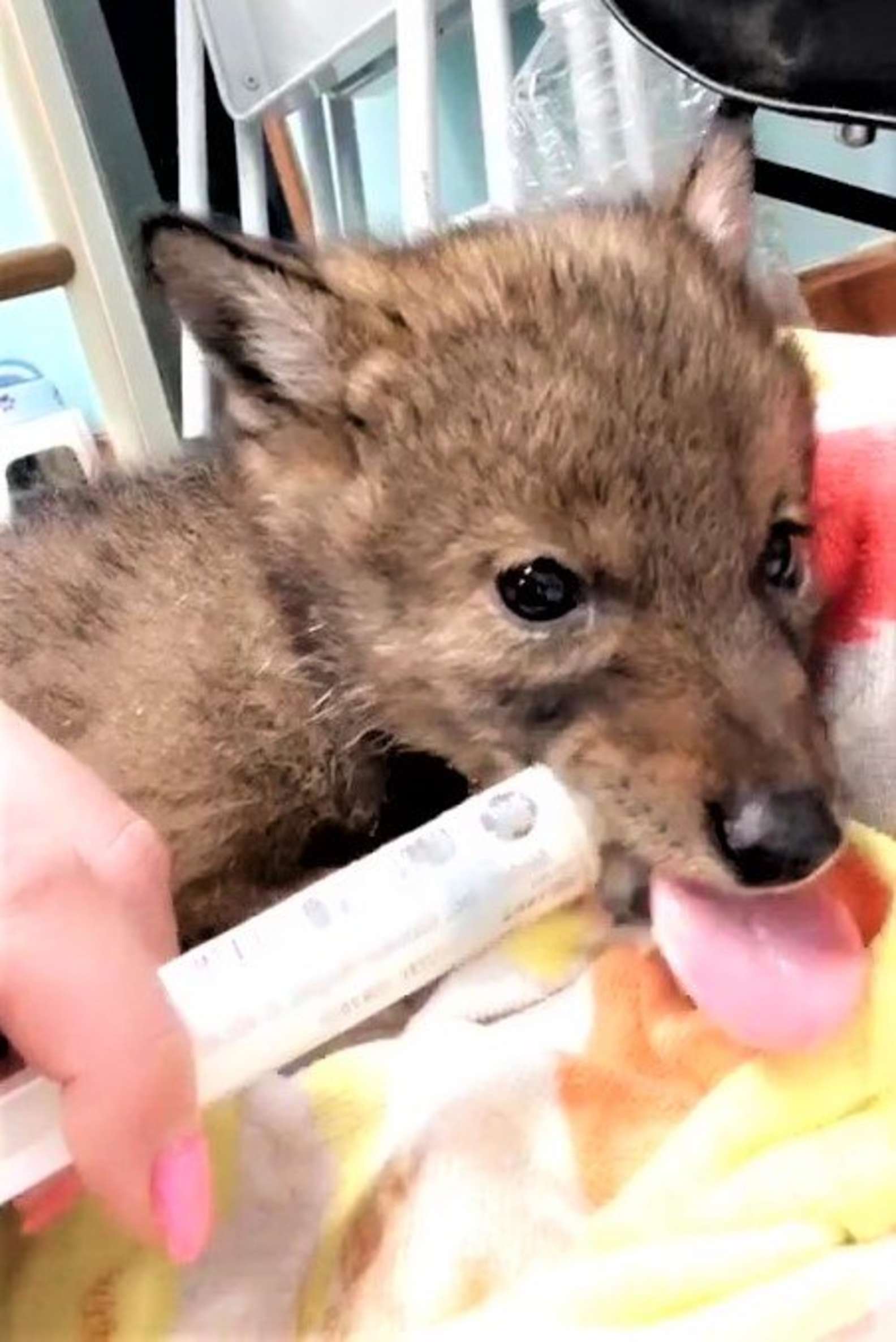
The next day, Mastromattei brought the coyote to the Tufts Wildlife Clinic for a checkup. Fortunately, he was found to be in good health — thanks in no small part to the trooper having rescued him in time.
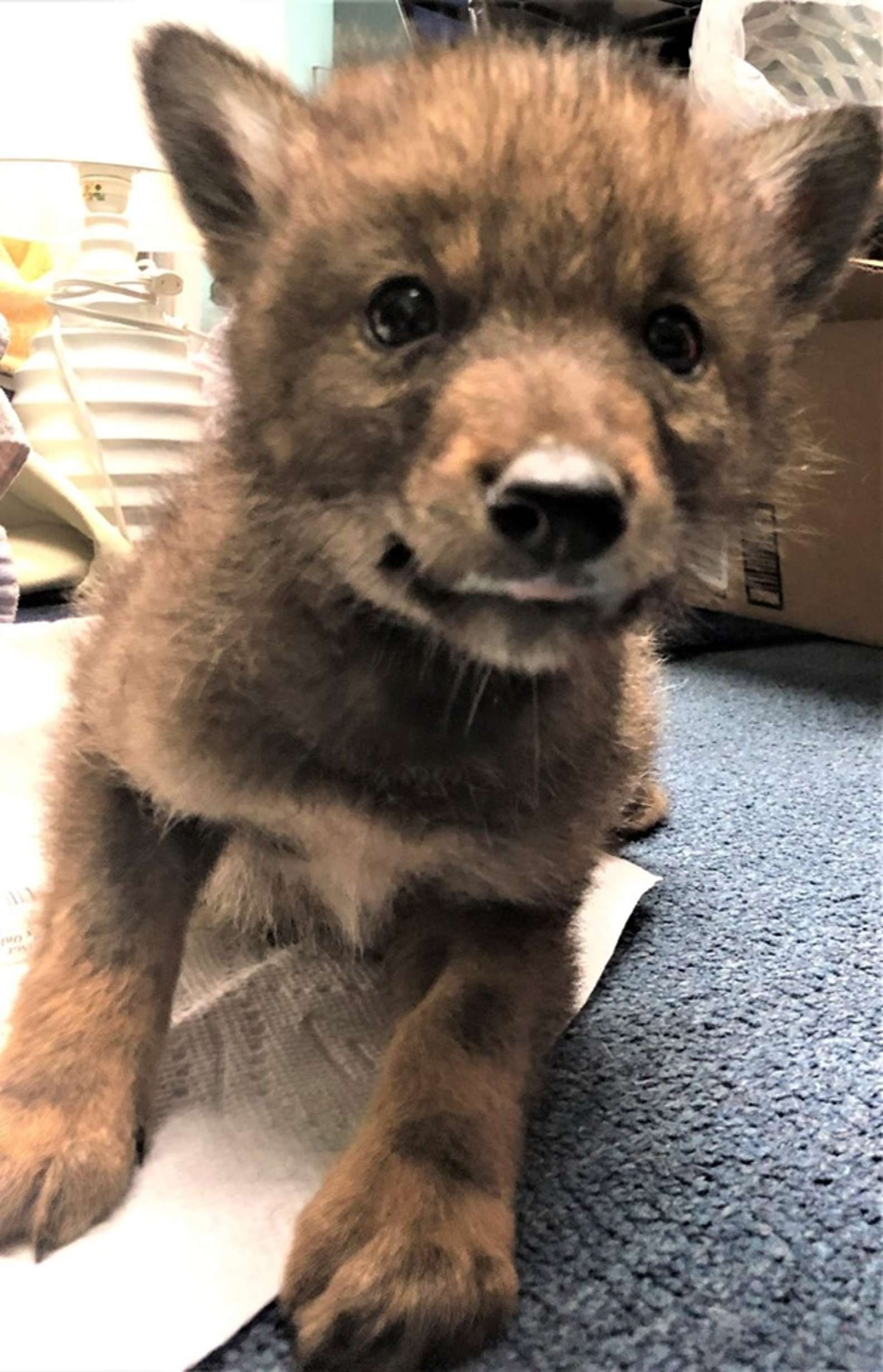
According to the Massachusetts State Police, the young coyote has since been placed under the care of a wildlife rehabilitator. With any luck, he’ll continue gaining his strength until he’s old enough to be released back into the wild to live life as nature intended.
For their efforts, those involved in the pup’s rescue are getting some much-deserved praise from police officials, who wrote in a post:
“The Department offers its sincere thanks to Trooper Mastromattei, his girlfriend, Ocean View Kennels, and Tufts for their compassionate care for this beautiful little creature.”
ooOOoo
I would like to bet that Carlo Mastromattei has a dog at home. For this compassion shown by Carlo Mastromattei is surely brought about by having a dog or two in his life.
I guess we will never know but my bet stands.
 Learning from Dogs