A repeat of Picture Parade Fifty
Some fabulous pictures sent in by Amanda Smith from Australia.
Dogs of Shame

oooo
 oooo
oooo
 oooo
oooo
 oooo
oooo
 oooo
oooo
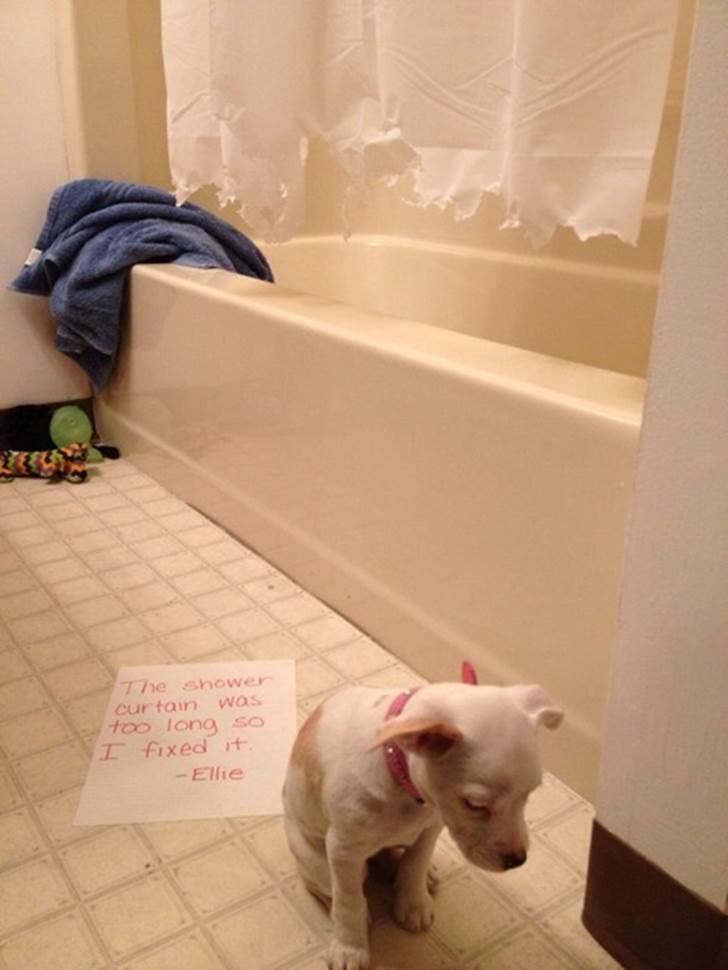 oooo
oooo
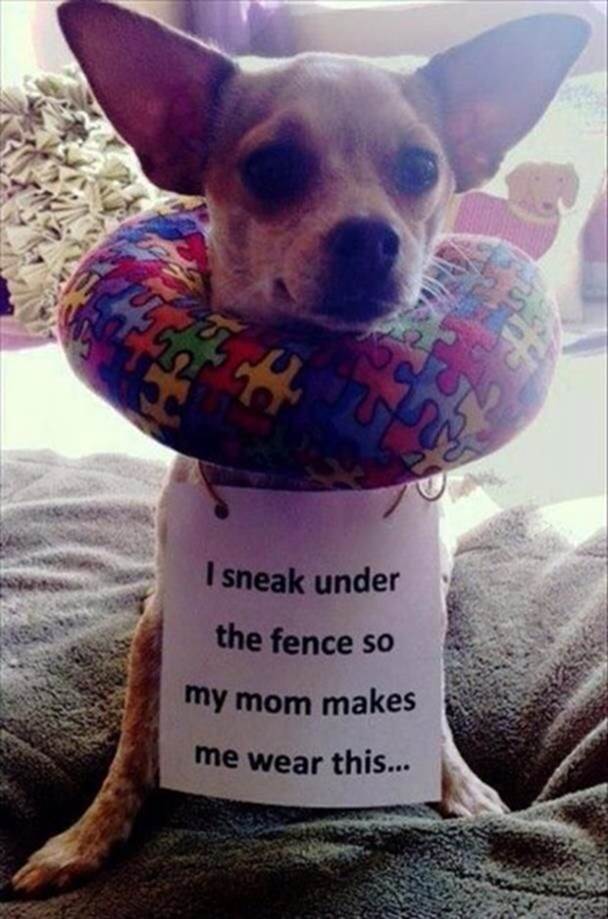 oooo
oooo

Aren’t they wonderful!
Another set coming along in a week’s time!
Dogs are animals of integrity. We have much to learn from them.
Year: 2019
A repeat of Picture Parade Fifty
Some fabulous pictures sent in by Amanda Smith from Australia.
oooo
oooo
oooo
oooo
oooo
oooo
oooo
Aren’t they wonderful!
Another set coming along in a week’s time!
Science has maybe found a clue to the ancestor of the dog and the wolf.
For an animal that means so much to us humans, the origins of the dog are still uncertain. Indeed, as this interesting article shows, the origins of the wolf are uncertain.
ooOOoo

By Jason Daley, smithsonianmag.com
Dec. 3, 2019, 10 a.m.”>December 3, 2019
Meet Dogor, an 18,000-year-old pup unearthed in Siberian permafrost whose name means “friend” in the Yakut language. The remains of the prehistoric pup are puzzling researchers because genetic testing shows it’s not a wolf or a dog, meaning it could be an elusive ancestor of both.
Locals found the remains in the summer of 2018 in a frozen lump of ground near the Indigirka River, according to the North-Eastern Federal University in Yakutsk. Parts of the animal are incredibly well-preserved, including its head, nose, whiskers, eyelashes and mouth, revealing that it still had its milk teeth when it died. Researchers suggest the animal was just two months old when it passed, though they do not know the cause of death.
The pup is so well-preserved that researchers at the Centre for Palaeogenetics in Sweden were able to sequence the animal’s DNA using a piece of rib bone. The results found that Dogor was male, but even after two rounds of analysis the team could not determine whether he was a dog or a wolf.
“It’s normally relatively easy to tell the difference between the two,” David Stanton, a Centre for Palaeogenetics research fellow, tells Amy Woodyatt at CNN. “We have a lot of data from it already, and with that amount of data, you’d expect to tell if it was one or the other. The fact that we can’t might suggest that it’s from a population that was ancestral to both—to dogs and wolves.”
The find is exciting, regardless of whether Dogor turns out to be a common canine ancestor, an early dog, or an early wolf. Hannah Knowles at The Washington Post reports that Dogor comes from an interesting time in canine evolution, when wolf species were dying out and early dogs were beginning to emerge.
“As you go back in time, as you get closer to the point that dogs and wolves converge, [it becomes] harder to tell between the two,” Stanton tells Knowles.

The history of just how and when dogs split from wolves is unresolved. There’s a general agreement among scientists that modern gray wolves and dogs split from a common ancestor 15,000 to 40,000 years ago, explains Brian Handwerk previously for Smithsonian.com. How dogs became dogs, however, is contested. Some research suggests that dogs were domesticated by humans once, while other studies have found dogs were domesticated multiple times. Exactly where in the world wild canines became man’s best friend is also disputed. The origin of the human-animal bond has been traced to Mongolia, China and Europe.
Scientists disagree about how dogs ended up paired with people, too. Some suspect humans captured wolf pups and actively domesticated them. Others suggest that a strain of “friendly,” less aggressive wolves more or less domesticated themselves by hanging out near humans, gaining access to their leftover food.
Dorgor’s DNA could help unravel these mysteries. The team plans to do a third round of DNA testing that may help definitively place Dogor in the canine family tree, report Daria Litvinova and Roman Kutuko at the Associated Press.
ooOOoo
This is incredibly interesting, don’t you think?
Hopefully I will hear of that third round of DNA testing and, if so, will most definitely share it with you.
From a discussion on Ugly Hedgehog
As regular readers know, I subscribe to Ugly Hedgehog, a photography forum.
Once again, I want to share with you all a most stunning photograph.
It is this:
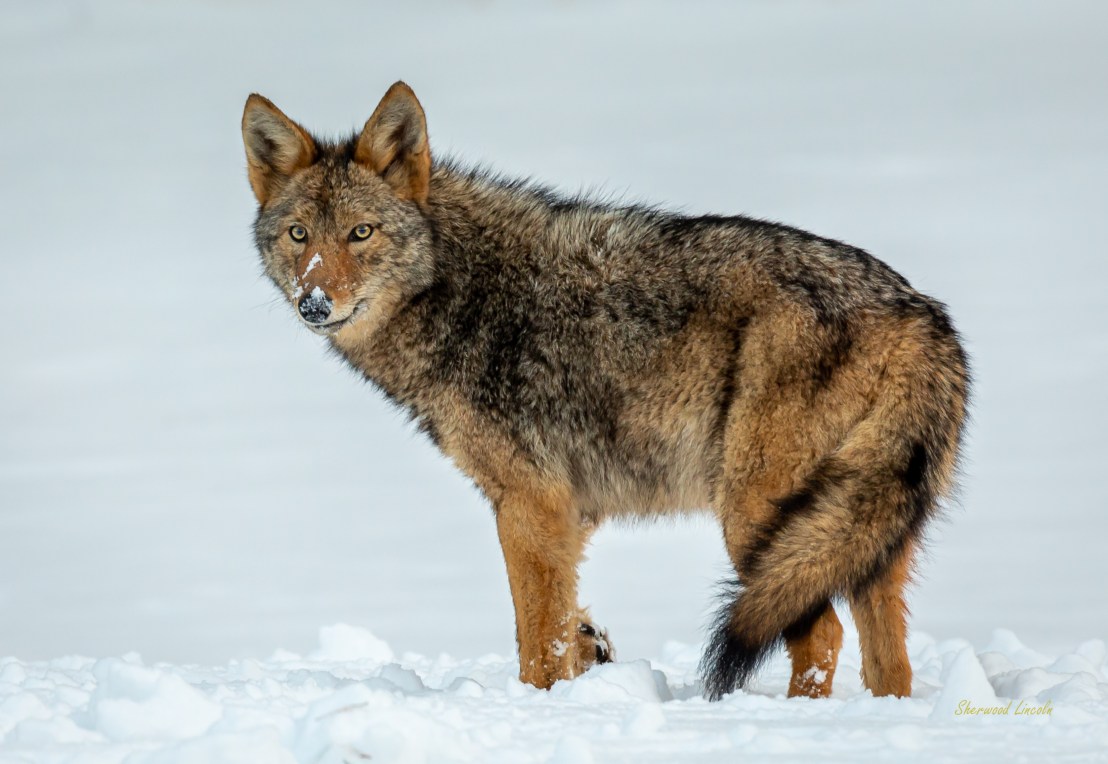
So what animal is it?
Back to that item on Ugly Hedgehog:
Whistletown Wilds, the author of the post, said:
Good boy! Call it what you will; Coydog, Eastern Coyote, or Coymolf. Up close and personal, Taken in East Lyme Ct.
Ecologist and evolutionary biologist Javier Monzón analyzed the DNA of eastern coyotes and found the genes contain all three canids — dog, wolf, and coyote.
According to Monzón’s research, about 64% of the eastern coyote’s genome is coyote (Canis latrans), 13% gray wolf (Canis lupus), 13% Eastern wolf (Canis lycaon), and 10% dog (Canis familiaris).
Later on he added:
All my bird and nature photos are taken in South Eastern Ct. most with a Canon 7D Mark II or 5D Mark IV and Canon 100 to 400II THANK YOU. About 20 yards.
Then followed in response to my request for permission to republish:
Feel free, no problem!
Whatever happens to me in the next year, I truly hope I can continue to share such incredibly photographs with you.
Nature in all her glory!
Tomorrow is Christmas Day and I will be taking a short break, probably back on December 27th.
You all have a wonderful, peaceful holiday.
A brilliant photograph!
On Saturday, our local pet food store, Lulu’s, held a free photography session. In that if we went along between noon and 4pm we could have our photographs taken of our dogs. I took my Nikon not really being sure if I could use it. We took Brandy and Pedy.
But Maria, the co-owner of the business together with her husband Rob, at one stage took my Nikon, I had set it to ‘auto’ rather than the usual RAW, and ran off some pictures.
Here’s one:

Enjoy!
 Learning from Dogs