“A dog is the only thing on earth that will love you more than you will love yourself.” – Josh Billings
oooo
“You can live without a dog, but it is not worthwhile.”
oooo
“If a dog does not come to you after looking you in the face, it is better that you go home and examine your conscience“ – Woodrow Wilson
oooo
“Buying a dog may be the only opportunity that a human being has to choose a relative”. – Mordecai Siega
oooo
“You can say any foolish thing to a dog and the dog will look at you in a way that seems to say: ‘My God, he is right!!! That would have never occurred to me’ “. – Dave Barry
oooo
“Sitting back in the evening, stargazing and stroking your dog, is an infallible remedy.“ – Ralph Waldo Emerson
oooo
“To exercise, walk with someone who will accompany you willingly, preferably a dog.“ – David Brown
oooo
It breaks my heart to advise you that the Picture Parade in a week’s time will be the last of the most glorious and touching photographs that came from Marg down in Tasmania.
ooOOoo
Not only are the photographs to die for but the sayings are exquisite as well!
The Edinburgh Fringe, or perhaps a small portion of it!
The reason that I going there, albeit in topic rather than in person, is that they had a funniest joke award.
A joke about vegetables has made it to the top of the menu as this year’s funniest at the Edinburgh Fringe.
Swedish comedian Olaf Falafel has won Dave’s “Funniest Joke of The Fringe” award with the niche culinary pun.
In its 12th year, the prize rewards the funniest one-liner to grace the venues of the festival and celebrates the pool of talent the Fringe has to offer.
And the winning one-liner was:
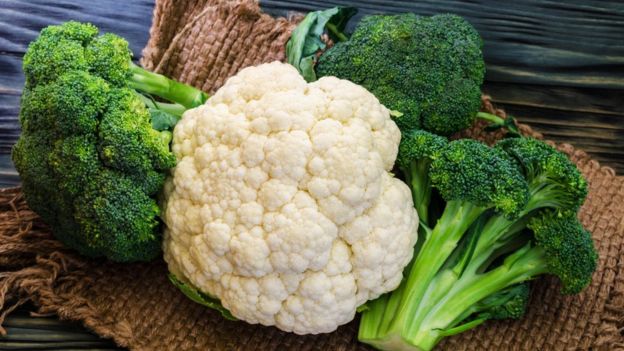
“I keep randomly shouting out ‘Broccoli’ and ‘Cauliflower’ – I think I might have florets”.
Vegetable inspiration: cauliflower and broccoli – Getty Images.
I’m going to offer the rest in future Saturday posts. Enjoy!
A short while ago I was emailed by Holli Burch who asked me if I was ready for another guest post. Was I! I love to receive guest posts. From regular contributors, such as Holli, and people who are new to Learning from Dogs.
There was a quick exchange of emails and then yesterday in came Holli’s latest. It’s brilliant!
ooOOoo
How Dogs are Good For Kids
By Holli Burch. 22nd August, 2019 Many kids dream of having a dog.
While we know that dogs teach kids loyalty and unconditional love, there are also many other reasons that dogs are good for kids! I feel so grateful to be able to have both human and canine kids at home. I have always had dogs around me as a child also. My dad had hunting dogs and my mom liked the smaller poodle terrier dog breeds.
According to an article in the Washington Post, a recent study found that children who had strong bonds with their dog also had more secure stronger bonds with their parents and with their (human) best friends. I find this so extremely important, especially in adolescent age when kids struggle the most!
They had another study regarding how dogs effect children’s emotions during stressful times. They found that when the children had their dog with them, they were much more calm. Suggesting that the contact they have with their dog enhances positive affect.
More reasons dogs are good for our kids…
Dogs can help kids with behavioral problems – A dog can calm a hyperactive child and have been shown to be especially beneficial to those with special needs. Having a therapy dog can help ease parent worries a little by knowing the dog will protect them and can be trained to react to certain behaviors, including wandering.
Dogs can help ease anxiety- Petting your dog or cuddling with them releases the “feel good” hormones in their body called oxytocin. This soothes the anxiety mind and helps to calm them down
Dogs teach kids responsibility- Dogs need to be fed, walked and given love daily. When a child gets a dog they learn to take care of something other than themselves. This also creates empathy and self confidence.
Dogs keep kids in better health- Dogs can help overweight children and help get kids active. Parents need to make sure both are getting daily exercise. A study from Psychology today found that children who walked their dogs were 50% less likely to become obese. Not only that but according to LiveScience, kids that grow up around dog dust have less chance of developing allergies and asthma! It helps them develop a strong immune system.
Protection- A dog will always protect those it feels are family. This can mean protecting your child from bullies or helping them to feel safe while home alone. Kids often feel more safe during scary events if they have their dog by their side.
Dogs are best friends- They are always willing to play with your child and lift their spirit. Dogs can help with loneliness and depression because they won’t go away, they give unconditional love no matter what, so kids feel wanted and loved. They don’t fight with them, hit or yell. Kids can share anything with them with no judgement. Dogs often can help kids recover from trauma because they can confide in them.
We rescued Tuffy (above) from a shelter, as a puppy, after my daughter lost her horse in a traumatic accident. It’s been a couple years now and Tuffy has also helped her through more. We are blessed to have her and she follows my daughter everywhere. I know she will always keep her safe. Their bond is so strong and if she is ever feeling down, Tuffy knows and is right there to lift her spirit.
Each of my children have one of our dogs that they call theirs, except my 5 year old. Although, he did just ask me the other day if he can get his own dog. He is good at helping me walk them everyday and loves to cuddle with them. When we recently lost Jesse in April, it was also a hard lesson for the kids on loss. We miss her everyday. That’s her below. One last thing I want to mention is how important it is to teach your child to respect their dog. First few things to teach is to respect their boundaries, how dogs communicate and how to interact when the dog is new to the family.
I would love to hear your comments and stories about how your dogs have helped your kids!
Dog Bless!~ The Dog Connection
oooo
A little bit about Holli.
As a mother of 4 canines and 4 humans, I am here to help the connection between dogs and humans; mind, body & soul. My purpose is providing inspiration and information to dog lovers on health, training and bonding.
Time and time again we see a bonding between a human and a dog. It’s precious and the need to involve children from a young age is crucial. Young people growing up today will be facing a whole raft of issues, many of them extremely serious. All the more reason to have a young person bond with a dog, because that’s so important for that young person.
One of the most frequent questions dog and cat owners get asked is how old is he or she. The pet that is!
And one of the most frequent concerns we have for our pets is how long will they live, as in what is their natural life span. Certainly, most of us realise that the larger dogs live slightly shorter lives but is that borne out in practice.
Well a recent professional article on The Conversation blogsite answered those questions.
ooOOoo
How old is my pet in dog years or cat years? A veterinarian explains
Clinical Instructor of Veterinary Medicine, Mississippi State University
July 23rd, 2019
“Just how old do you think my dog is in dog years?” is a question I hear on a regular basis. People love to anthropomorphize pets, attributing human characteristics to them. And most of us want to extend our animal friends’ healthy lives for as long as possible.
It may seem like sort of a silly thing to ponder, born out of owners’ love for their pets and the human-animal bond between them. But determining a pet’s “real” age is actually important because it helps veterinarians like me recommend life-stage specific healthcare for our animal patients.
There’s an old myth that one regular year is like seven years for dogs and cats. There’s a bit of logic behind it. People observed that with optimal healthcare, an average-sized, medium dog would on average live one-seventh as long as its human owner – and so the seven “dog years” for every “human year” equation was born.
Not every dog is “average-sized” though so this seven-year rule was an oversimplification from the start. Dogs and cats age differently not just from people but also from each other, based partly on breed characteristics and size. Bigger animals tend to have shorter life spans than smaller ones do. While cats vary little in size, the size and life expectancy of dogs can vary greatly – think a Chihuahua versus a Great Dane.
Human life expectancy has changed over the years. And vets are now able to provide far superior medical care to pets than we could even a decade ago. So now we use a better methodology to define just how old rule of thumb that counted every calendar year as seven “animal years.”
Based on the American Animal Hospital Association Canine Life Stages Guidelines, today’s vets divide dogs into six categories: puppy, junior, adult, mature, senior and geriatric. Life stages are a more practical way to think about age than assigning a single number; even human health recommendations are based on developmental stage rather than exactly how old you are in years.
Canine life stages
Veterinarians divide a dog’s expected life span into six life stages based on developmental milestones. These age ranges are for a medium-sized dog; smaller dogs tend to live longer, while larger dogs tend to have shorter life expectancies.
STAGE
AGE (YEARS)
CHARACTERISTICS
Puppy
0 – 0.5
Birth to sexual maturity
Junior
0.5 – 0.75
Reproductively mature, still growing
Adult
0.75 – 6.5
Finished growing, sexually and structurally mature
There seem to be more than normal just at present.
But anyway let’s go directly to the recall.
ooOOoo
Dog Goods USA Recalls Chef Toby Pig Ears Dog Treats
August 16, 2019 — Dog Goods USA LLC of Tobyhanna, PA, is recalling its Chef Toby Pig Ears Treats due to possible contamination with Salmonella bacteria and its associated health risks.
Chef Toby Pig Ears Treats Product Images
The images below represent the labels of the recalled products:
What Caused the Recall?
Dog Goods bought the affected products from a single supplier in Brazil from September 2018 through August 2019 and distributed them nationwide in retail stores.
The FDA sampled pig ears manufactured by its supplier in Brazil and one sample tested positive for Salmonella.
As previously reported on this website, the U.S. Food and Drug Administration (FDA), together with the Centers for Disease Control and Prevention (CDC) and State partners, is investigating a suspected link between pig ear pet treats and human cases of salmonellosis.
What’s Being Recalled?
Dog Goods USA LLC is conducting a voluntary recall of the following bulk and packaged pig ears branded Chef Toby Pig Ears.
Healthy people infected with Salmonella should monitor themselves for some or all of the following symptoms: nausea, vomiting, diarrhea or bloody diarrhea, abdominal cramping and fever.
Rarely, Salmonella can result in more serious ailments, including arterial infections, endocarditis, arthritis, muscle pain, eye irritation, and urinary tract symptoms.
Consumers exhibiting these signs after having contact with this product should contact their healthcare providers.
Pets with Salmonella infections may be lethargic and have diarrhea or bloody diarrhea, fever and vomiting.
Some pets will have only decreased appetite, fever and abdominal pain. Infected but otherwise healthy pets can be carriers and infect other animals and humans.
If your pet has consumed the recalled product and has these symptoms, please contact your veterinarian.
Dog Goods has also launched an internal investigation to determine if, when and where the Products may have been contaminated.
To date, this internal investigation has not indicated any vulnerability in the company’s practices, including but not limited to the inspection, handling and storage of the Products.
No illnesses have been linked to the products to date.
Nonetheless, Dog Goods will continue to investigate the matter, collaborate fully with the FDA and the CDC, and provide further information to its customers and the public as appropriate.
What to Do?
Consumers who have purchased the products are urged to return them to the place of purchase for a full refund.
Consumers with questions may contact the company at 786-401-6533 (ext 8000) from 9 am ET through 5 pm ET.
U.S. citizens can report complaints about FDA-regulated pet food products by calling the consumer complaint coordinator in your area.
“Organic” is more than just a passing fad. Organic food sales totaled a record US$45.2 billion in 2017, making it one of the fastest-growing segments of American agriculture. While a small number of studies have shown associations between organic food consumption and decreased incidence of disease, no studies to date have been designed to answer the question of whether organic food consumption causes an improvement in health.
I’m an environmental health scientist who has spent over 20 years studying pesticide exposures in human populations. Last month, my research group published a small study that I believe suggests a path forward to answering the question of whether eating organic food actually improves health.
What we don’t know
According to the USDA, the organic label does not imply anything about health. In 2015, Miles McEvoy, then chief of the National Organic Program for USDA, refused to speculate about any health benefits of organic food, saying the question wasn’t “relevant” to the National Organic Program. Instead, the USDA’s definition of organic is intended to indicate production methods that “foster cycling of resources, promote ecological balance, and conserve biodiversity.”
While some organic consumers may base their purchasing decisions on factors like resource cycling and biodiversity, most report choosing organic because they think it’s healthier.
Sixteen years ago, I was part of the first study to look at the potential for an organic diet to reduce pesticide exposure. This study focused on a group of pesticides called organophosphates, which have consistently been associated with negative effects on children’s brain development. We found that children who ate conventional diets had nine times higher exposure to these pesticides than children who ate organic diets.
Our study got a lot of attention. But while our results were novel, they didn’t answer the big question. As I told The New York Times in 2003, “People want to know, what does this really mean in terms of the safety of my kid? But we don’t know. Nobody does.” Maybe not my most elegant quote, but it was true then, and it’s still true now.
Studies only hint at potential health benefits
Health-conscious people want to buy organic for its health benefits, but it’s not yet clear whether such benefits exist. Goran Bogicevic/Shutterstock.com
Since 2003, several researchers have looked at whether a short-term switch from a conventional to an organic diet affects pesticide exposure. These studies have lasted one to two weeks and have repeatedly shown that “going organic” can quickly lead to dramatic reductions in exposure to several different classes of pesticides.
Still, scientists can’t directly translate these lower exposures to meaningful conclusions about health. The dose makes the poison, and organic diet intervention studies to date have not looked at health outcomes. The same is true for the other purported benefits of organic food. Organic milk has higher levels of healthy omega fatty acids and organic crops have higher antioxidant activity than conventional crops. But are these differences substantial enough to meaningfully impact health? We don’t know. Nobody does.
Some epidemiologic research has been directed at this question. Epidemiology is the study of the causes of health and disease in human populations, as opposed to in specific people. Most epidemiologic studies are observational, meaning that researchers look at a group of people with a certain characteristic or behavior, and compare their health to that of a group without that characteristic or behavior. In the case of organic food, that means comparing the health of people who choose to eat organic to those who do not.
Several observational studies have shown that people who eat organic food are healthier than those who eat conventional diets. A recent French study followed 70,000 adults for five years and found that those who frequently ate organic developed 25% fewer cancers than those who never ate organic. Other observational studies have shown organic food consumption to be associated with lower risk of diabetes, metabolic syndrome, pre-eclampsia and genital birth defects.
The problem with drawing firm conclusions from these studies is something epidemiologists call “uncontrolled confounding.” This is the idea that there may be differences between groups that researchers cannot account for. In this case, people who eat organic food are more highly educated, less likely to be overweight or obese, and eat overall healthier diets than conventional consumers. While good observational studies take into account things like education and diet quality, there remains the possibility that some other uncaptured difference between the two groups – beyond the decision to consume organic food – may be responsible for any health differences observed.
What next?
Often, new medical and health knowledge comes from carefully designed clinical trials, but no such trial has been conducted for organic food. Anyaivanova/Shutterstock.com
When clinical researchers want to figure out whether a drug works, they don’t do observational studies. They conduct randomized trials, where they randomly assign some people to take the drug and others to receive placebos or standard care. By randomly assigning people to groups, there’s less potential for uncontrolled confounding.
My research group’s recently published study shows how we could feasibly use randomized trial methods to investigate the potential for organic food consumption to affect health.
We recruited a small group of pregnant women during their first trimesters. We randomly assigned them to receive weekly deliveries of either organic or conventional produce throughout their second and third trimesters. We then collected a series of urine samples to assess pesticide exposure. We found that those women who received organic produce had significantly lower exposure to certain pesticides (specifically, pyrethroid insecticides) than those who received conventional produce.
On the surface, this seems like old news but this study was different in three important ways. First, to our knowledge, it was the longest organic diet intervention to date – by far. It was also the first to occur in pregnant women. Fetal development is potentially the most sensitive period for exposures to neurotoxic agents like pesticides. Finally, in previous organic diet intervention studies, researchers typically changed participants’ entire diets – swapping a fully conventional diet for a fully organic one. In our study, we asked participants to supplement their existing diets with either organic or conventional produce. This is more consistent with the actual dietary habits of most people who eat organic food – occasionally, but not always.
Even with just a partial dietary change, we observed a significant difference in pesticide exposure between the two groups. We believe that this study shows that a long-term organic diet intervention can be executed in a way that is effective, realistic and feasible.
The next step is to do this same study but in a larger population. We would then want to assess whether there were any resulting differences in the health of the children as they grew older, by measuring neurological outcomes like IQ, memory and incidence of attention-deficit disorders. By randomly assigning women to the organic and conventional groups, we could be sure any differences observed in their children’s health really were due to diet, rather than other factors common among people who consume organic food.
The public is sufficiently interested in this question, the organic market is large enough, and the observational studies suggestive enough to justify such a study. Right now, we don’t know if an organic diet improves health, but based on our recent research, I believe we can find out.


 While we know that dogs teach kids loyalty and unconditional love, there are also many other reasons that dogs are good for kids! I feel so grateful to be able to have both human and canine kids at home. I have always had dogs around me as a child also. My dad had hunting dogs and my mom liked the smaller poodle terrier dog breeds.
 We rescued Tuffy (above) from a shelter, as a puppy, after my daughter lost her horse in a traumatic accident. It’s been a couple years now and Tuffy has also helped her through more. We are blessed to have her and she follows my daughter everywhere. I know she will always keep her safe. Their bond is so strong and if she is ever feeling down, Tuffy knows and is right there to lift her spirit.
 One last thing I want to mention is how important it is to teach your child to respect their dog. First few things to teach is to respect their boundaries, how dogs communicate and how to interact when the dog is new to the family.
 I would love to hear your comments and stories about how your dogs have helped your kids!



 Learning from Dogs