I found it very interesting and wanted to share it with you.
ooOOoo
Scientists have been drilling into the ocean floor for 50 years – here’s what they’ve found so far
September 26, 2018
By Professor Suzanne O’Connell, Professor of Earth & Environmental Sciences, Wesleyan University
The scientific drilling ship JOIDES Resolution arrives in Honolulu after successful sea trials and testing of scientific and drilling equipment. IODP, CC BY-ND
It’s stunning but true that we know more about the surface of the moon than about the Earth’s ocean floor. Much of what we do know has come from scientific ocean drilling – the systematic collection of core samples from the deep seabed. This revolutionary process began 50 years ago, when the drilling vessel Glomar Challenger sailed into the Gulf of Mexico on August 11, 1968 on the first expedition of the federally funded Deep Sea Drilling Project.
I went on my first scientific ocean drilling expedition in 1980, and since then have participated in six more expeditions to locations including the far North Atlantic and Antaractica’s Weddell Sea. In my lab, my students and I work with core samples from these expeditions. Each of these cores, which are cylinders 31 feet long and 3 inches wide, is like a book whose information is waiting to be translated into words. Holding a newly opened core, filled with rocks and sediment from the Earth’s ocean floor, is like opening a rare treasure chest that records the passage of time in Earth’s history.
Over a half-century, scientific ocean drilling has proved the theory of plate tectonics, created the field of paleoceanography and redefined how we view life on Earth by revealing an enormous variety and volume of life in the deep marine biosphere. And much more remains to be learned.
Technological innovations
Two key innovations made it possible for research ships to take core samples from precise locations in the deep oceans. The first, known as dynamic positioning, enables a 471-foot ship to stay fixed in place while drilling and recovering cores, one on top of the next, often in over 12,000 feet of water.
Anchoring isn’t feasible at these depths. Instead, technicians drop a torpedo-shaped instrument called a transponder over the side. A device called a transducer, mounted on the ship’s hull, sends an acoustic signal to the transponder, which replies. Computers on board calculate the distance and angle of this communication. Thrusters on the ship’s hull maneuver the vessel to stay in exactly the same location, countering the forces of currents, wind and waves.
Another challenge arises when drill bits have to be replaced mid-operation. The ocean’s crust is
The re-entry cone is welded together around the drill pipe, then lowered down the pipe to guide reinsertion before changing drill bits. IODP, CC BY-ND
composed of igneous rock that wears bits down long before the desired depth is reached.
When this happens, the drill crew brings the entire drill pipe to the surface, mounts a new drill bit and returns to the same hole. This requires guiding the pipe into a funnel shaped re-entry cone, less than 15 feet wide, placed in the bottom of the ocean at the mouth of the drilling hole. The process, which was first accomplished in 1970, is like lowering a long strand of spaghetti into a quarter-inch-wide funnel at the deep end of an Olympic swimming pool.
Confirming plate tectonics
When scientific ocean drilling began in 1968, the theory of plate tectonics was a subject of active debate. One key idea was that new ocean crust was created at ridges in the seafloor, where oceanic plates moved away from each other and magma from earth’s interior welled up between them. According to this theory, crust should be new material at the crest of ocean ridges, and its age should increase with distance from the crest.
Part of a core section from the Chicxulub impact crater. It is suevite, a type of rock, formed during the impact, that contains rock fragments and melted rocks. IODP, CC BY-ND
The only way to prove this was by analyzing sediment and rock cores. In the winter of 1968-1969, the Glomar Challenger drilled seven sites in the South Atlantic Ocean to the east and west of the Mid-Atlantic ridge. Both the igneous rocks of the ocean floor and overlying sediments aged in perfect agreement with the predictions, confirming that ocean crust was forming at the ridges and plate tectonics was correct.
Reconstructing earth’s history
The ocean record of Earth’s history is more continuous than geologic formations on land, where erosion and redeposition by wind, water and ice can disrupt the record. In most ocean locations sediment is laid down particle by particle, microfossil by microfossil, and remains in place, eventually succumbing to pressure and turning into rock.
Microfossils (plankton) preserved in sediment are beautiful and informative, even though some
are smaller than the width of a human hair. Like larger plant and animal fossils, scientists can use these delicate structures of calcium and silicon to reconstruct past environments.
The resulting acidification of the ocean from the release of carbon into the atmosphere and ocean caused massive dissolution and change in the deep ocean ecosystem.
This episode is an impressive example of the impact of rapid climate warming. The total amount of carbon released during the PETM is estimated to be about equal to the amount that humans will release if we burn all of Earth’s fossil fuel reserves. Yet, an important difference is that the carbon released by the volcanoes and hydrates was at a much slower rate than we are currently releasing fossil fuel. Thus we can expect even more dramatic climate and ecosystem changes unless we stop emitting carbon.
Enhanced scanning electron microscope images of phytoplankton (left, a diatom; right, a coccolithophore). Different phytoplankton species have distinct climatic preferences, which makes them ideal indicators of surface ocean conditions. Dee Breger, CC BY-NC-ND
Today scientists from 23 nations are proposing and conducting research through the International Ocean Discovery Program, which uses scientific ocean drilling to recover data from seafloor sediments and rocks and to monitor environments under the ocean floor. Coring is producing new information about plate tectonics, such as the complexities of ocean crust formation, and the diversity of life in the deep oceans.
This research is expensive, and technologically and intellectually intense. But only by exploring the deep sea can we recover the treasures it holds and better understand its beauty and complexity.
ooOOoo
Did the phrase in the first paragraph of the article jump out for you as it did for me?
This one: “…we know more about the surface of the moon than about the Earth’s ocean floor.”
Doesn’t Mr. Neptune hold his cards close to his chest.
Your oceans of the world are truly breath-taking. The power you can display in the odd wave or million through to the tranquility you so often also display defy rational explanations.
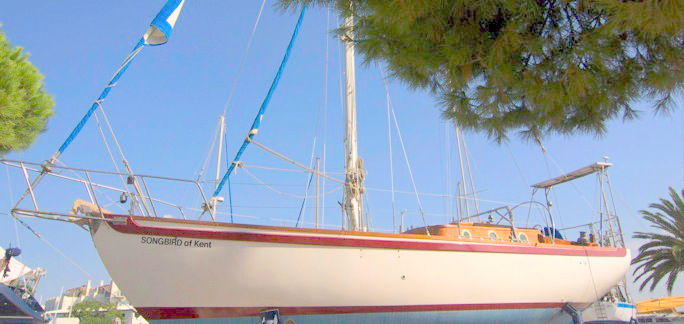
I have had the profound experience of sailing upon your waters, dear Mr. Neptune, over a number of years sailing back and forth between Cyprus and Turkey. Not a long distance but still sufficient to experience being solo on a yacht day and night.
Tradewind 33 – Songbird of Kent. My home for five years.
Then on my way sailing back to Plymouth, SW England, the magical, almost primeval, feeling of being alone on the Atlantic Ocean. Looking up at the night sky, feeling so insignificant, so infinitesimally minute with 500 miles of open ocean in all directions and those stars above my head.
No question, that practically everything about your oceans is beyond the understanding of us humans. Indeed, I had to look up online how much water there is on Earth to discover there is:
It’s roughly 326 million cubic miles (1.332 billion cubic kilometers), according to a recent study from the U.S. Geological Survey.
Because I simply didn’t have a clue.
And knowing there are approximately 326 million cubic miles of water doesn’t help because I am still left not having a clue as to what that means!
So, thank goodness, Mr. Neptune this is all a ‘walk in the park’ for you!
But I do have a question for you.
What do you make of this?
The image is cropped from the following:
The description of these figures is:
Figure. (upper) Change in global upper-level (0–2000 m) ocean heat content since 1958. Each bar shows the annual mean relative to a 1981–2010 baseline. (lower) Annual mean ocean heat content anomaly in 2017 relative to a 1981–2010 baseline.
And it was taken from research undertaken by Lijing Cheng and Jiang Zhu and found on the web here.
Ocean Heat Content
Owing to its large heat capacity, the ocean accumulates the warming derived from human activities; indeed, more than 90% of Earth’s residual heat related to global warming is absorbed by the ocean (IPCC, Cheng et al. 2017). As such, the global ocean heat content record robustly represents the signature of global warming and is impacted less by weather-related noise and climate variability such as El Niño and La Niña events (Cheng et al. 2018). On the other hand, ocean thermal expansion due to ocean temperature change contributes substantially (30%~50%) to the sea level change, which can considerably influence human populations in coastal and island regions and marine ecosystems. Therefore, monitoring the OHC changes and understanding its variation are crucial for climate change.
Is it possible, Mr. Neptune, that even you as the master of all our oceans is worried about the future?
I shall cut my waffling and just say that I saw this item on The Smithsonian ‘Smart News’ section last week and just knew it should be shared with you!
ooOOoo
Who’s a Good Archaeologist? Dog Digs Up Trove of Bronze Age Relics
While on a walk outside a small Czech village, Monty the dog and his owner found nearly two dozen 3,000-year-old artifacts
Monty, the dog that found the Bronze Age relics, unearthed 13 sickles, two spear points, three axes and several bracelets. (Hradec Králové Region)
Some archaeologists carry tools and painstakingly chip away at historic sites. Others might have fluffy bodies, keen senses of smell and an affinity for digging stuff up.
As Tom McEnchroe reports for Radio Praha, a very good dog named Monty recently unearthed a rare trove of Bronze Age artifacts near the Czech village of Kostelecké Horky. Monty was walking with his human, identified as “Mr. Frankota,” in a field when he began pawing frenetically at the ground. Soon, thanks to Monty’s hard work, metallic objects began to emerge in the soil.
The cache of relics includes 13 sickles, two spear points, three axes and several bracelets. The objects have been dated to the Urnfield period around 3,000 years ago. This late European Bronze Age culture is marked by the transition from inhumation burials to cremations; the remains of the dead were interred in urns, giving the era its name. According to Encyclopaedia Britannica, Urnfield culture first appeared in east-central Europe and northern Italy, but eventually spread “to Ukraine, Sicily, Scandinavia, and across France to the Iberian peninsula.”
It is rare to find a cluster of intact Urnfield objects, according to a press release. “The culture that lived here at the time normally just buried fragments, often melted as well,” Martina Beková, an archaeologist at the Museum and Gallery of Orlické who studied the artifacts after they were discovered by Monty, tells McEnchroe. So she suspects that the relics were tied to a ritual—“most likely a sacrifice of some sorts,” Beková says.
Additional evidence could help pin down the function of the objects, and according to Michelle Starr of Science Alert, local archaeologists have been searching the area in the hopes of finding more relics. They haven’t uncovered anything yet, but Sylvie Velčovská, a spokeswoman for the region, tells McEnchroe that there have been, “considerable changes to the surrounding terrain over the centuries, so it is possible that the deeper layers are still hiding some secrets.”
The newly uncovered objects will be on display at the Museum and Gallery of Orlické Mountains in the town of Rychnov until October 21, after which point they will undergo conservation and be moved to a permanent exhibition in the village of Kostelec.
Frankota, Monty’s owner, was awarded 7860 Czech Koruna (around $360) for his role in alerting archaeologists to the ancient treasures. One can only hope that Monty was given many treats and pets for his superb fieldwork
Brigit Katz is a freelance writer based in Toronto. Her work has appeared in a number of publications, including NYmag.com, Flavorwire and Tina Brown Media’s Women in the World.
To be honest, dear friends, I really agonised over whether or not to republish an item that I saw on The Conversation blogsite last Friday. For it has nothing to do with dogs, nothing to do with learning from dogs, and everything to do with being the ‘wrong’ side of 65 years old.
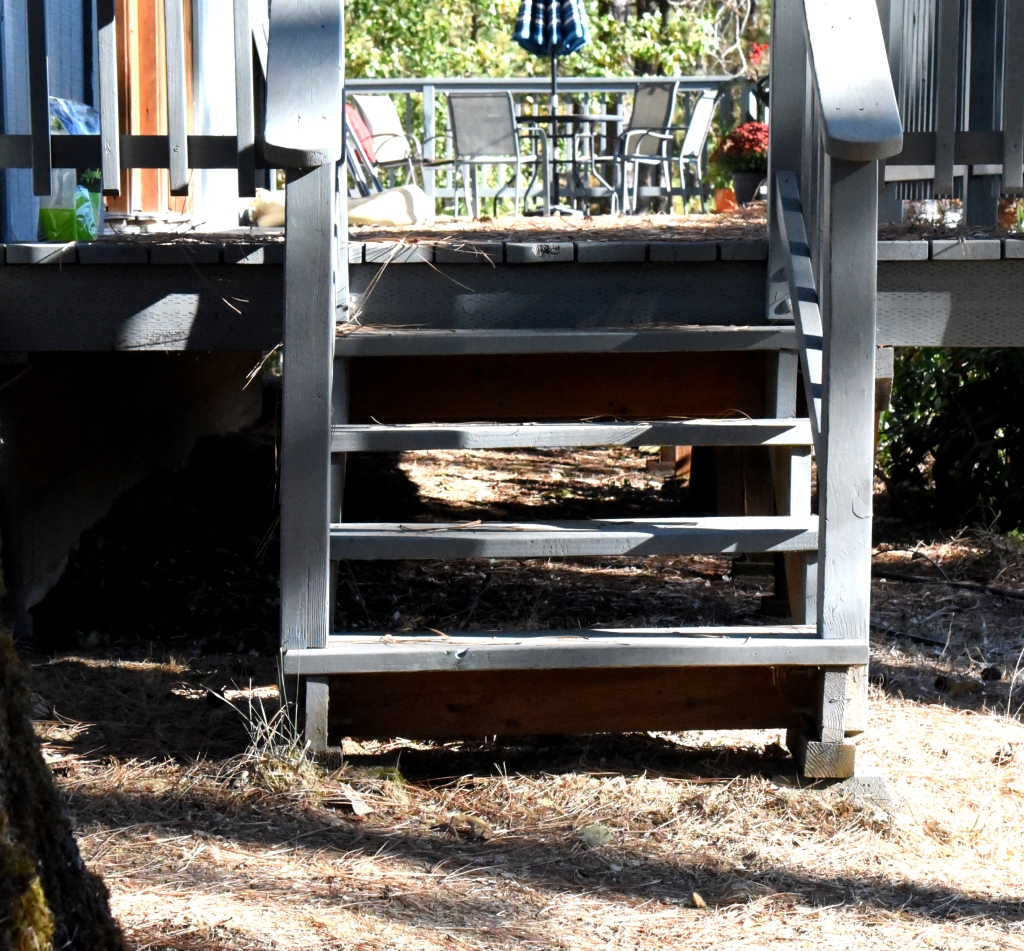
But then one day last week I was out watching some tree cutting being undertaken by Jimmy Gonzales and his crew and heard the phoning ringing in the house.
I ran for the steps leading up to the deck and missed the bottom step.
I fell but luckily managed to grab the handrails seconds before I could have smacked my head into the steps. However, it did scare me especially when I reflected that it wasn’t even 9 months since my medical emergency following my fall from my bicycle.
It confirmed the sense in republishing the item. Republished within the terms of The Conversation site.
ooOOoo
Before the fall: How oldsters can avoid one of old age’s most dangerous events
September 21, 2018
By four authors:
Matthew Lee SmithCo-Director of Texas A&M Center for Population Health and Aging, Texas A&M University
Ellen SchneiderResearch Scientist, University of North Carolina at Chapel Hill
Marcia G. OryRegents and Distinguished Professor, Associate Vice President for Strategic Partnerships and Initiatives, Texas A&M University
Tiffany ShubertAdjunct Assistant Professor, Public Health, University of North Carolina at Chapel Hill
Baby boomers, who once viewed themselves as the coolest generation in history, are now turning their thoughts away from such things as partying and touring alongside rock bands to how to they can stay healthy as they age. And, one of the most important parts of healthy aging is avoiding a fall, the number one cause of accidental death among people 65 and older.
The issue is growing more pressing each day. More adults than ever – 46 million – are 65 and older, and their numbers are increasing rapidly.
People who fall can lose their physical mobility for life, go into a hospital never to be discharged, require skilled nursing or other caregiver support, or become so fearful about falling again that they dramatically limit their daily activities.
The good news is that most falls are preventable, research has identified many modifiable risk factors for falls, and older adults can empower themselves to reduce their falls risks. This means there are opportunities to intervene in clinical and community settings to promote protective behaviors and improve safety.
A life-changing event
Falls can cause fractures, traumatic brain injuries and other conditions that require an emergency room visit or hospitalization. An older adult dies from a fall every 19 minutes, and every 11 seconds an older adult is treated in an emergency room for a fall-related injury. About one in four falls results in needed medical attention, and falls are responsible for about 95 percent of all hip fractures. In addition to the physical and mental trauma associated with the fall itself, falls often result in fear of falling, reduced quality of life, loss of independence and social isolation.
shutterstock. Astrid Gast/Shutterstock.com
There is no single cause for falling. Falls can result from issues related to biological aging, such as balance problems, loss of muscle strength, changes in vision, arthritis or diabetes. Taking a combination of several prescription drugs can also contribute to falls. Lifestyle behaviors such as physical inactivity, poor nutrition and poor sleep quality can also increase the risk for falling. Environmental hazards inside the home, such as poor lighting and throw rugs, and outside, such as bad weather, standing water and uneven sidewalks, can create situations where falls are more likely to occur.
It takes a careful village
Because falls can be caused by many things, the solutions must also include a diverse set of systems, organizations and professionals. Toward that end, 42 active or developing state fall prevention coalitions, which coordinate initiatives and serve as advocates for policy development and community action, are in place. Their activities foster collaboration across the aging services network, public health and health care system. They do such things as host health fairs and fall risk screening events, fall prevention programs, and awareness-raising events to inform decision-makers and legislators about ways to make communities safer for older adults.
Here are some of the key objectives that the coalitions are working on to reduce hazards from falling:
Enhance clinical-community collaboration for programming.
There are many fall prevention programs offered in communities to promote healthful behaviors and to reinforce positive mental perspectives about falls being preventable.
People concerned about falling should contact their local Area Agency on Aging to find out where these programs are offered and which can be most beneficial. Also, seniors should ask their doctors about fall-related risk factors and what they can do to reduce risk. Communicate your concerns about falls with your health care team and social network, tell them about what you learn during your fall prevention programs, and report back about how they are making a difference in your life.
Manage chronic conditions.
About 70 percent of older adults have one or more chronic conditions, many of which can increase the risk for falling. For example, people with diabetes may have vision problems and problems with sensation in their feet. Also, the medications used to treat these conditions can increase fall risk. And, taking five or more medications has been identified with increased frailty and higher risk for falling.
Being physically active can help seniors have better balance and reduce the risk of falls. wavebreakmedia/Shutterstock.com
While health care access and utilization are important for chronic disease diagnosis and management, 90 percent of health care happens outside the health care setting. Therefore, older adults need to manage their diseases better. To do this, however, they often need help. For starters, they should discuss the side effects of all medications with their doctors and also how best to adhere to prescribed treatment regimens, such as when to take medications, whether to take with food and whether there are possible interactions of one medication with another. Seniors also can consider enrolling in evidence-based disease self-management programs to improve their knowledge and confidence to manage their conditions as well as enhance lasting skills for goal setting and action planning, such as being physically active for 30 minutes a day for five days a week.
Alter the physical environment.
About 44 percent of falls occur inside the home. In-home risk factors for falls can include dim lighting, clutter on floors, throw rugs and ottomans, missing railings, uncovered wires and extension cords, children and pets underfoot and unsafe bathrooms. A unsafe bathroom is one with an inappropriate toilet height, high shower or bathtub walls and no grab rails.
To identify possible risks in the home, the CDC created a user-friendly safety checklist that can safeguard older adults by eliminating environmental hazards.
Maintain healthful behaviors.
Daily lifestyle behaviors such as physical activity, nutrition and sleep quality can influence fall risk, and these are never too late to change. Interventions can be successful for people of all ages. Among the most important is physical activity, namely safely performing lower-body exercises to increase strength, balance and flexibility. Additionally, seniors should work with their health care team to have medications reviewed and eyes checked regularly. Also, they should ask about their vitamin D levels and possible nutritional supplementation.
ooOOoo
Yes, when it comes to being more careful on our feet once again our dear dogs offer us a much better way: Have four of them!!
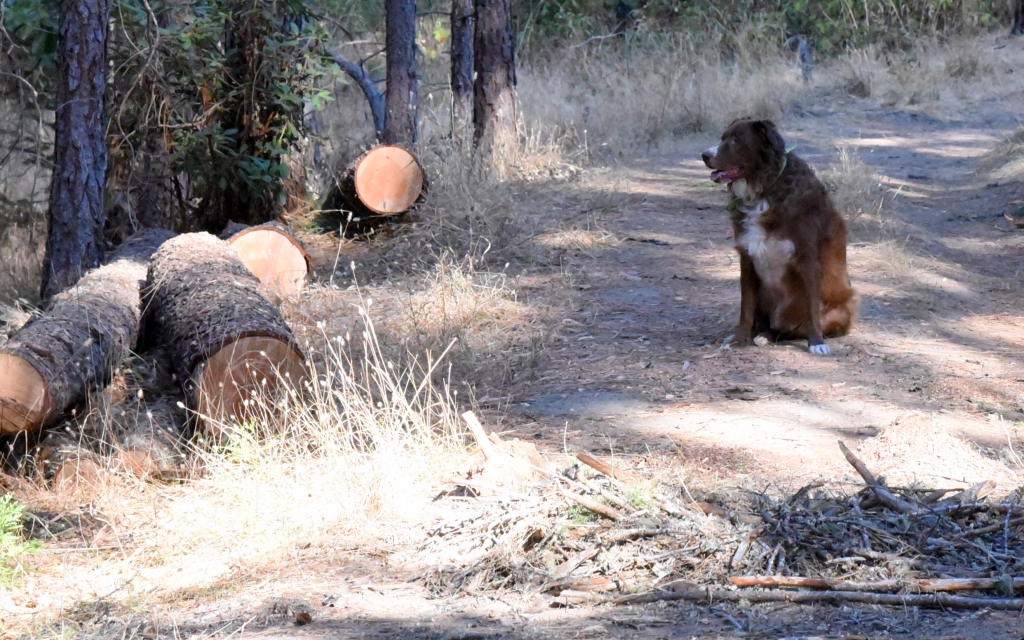
Just look at the ease of our dear Brandy scampering through the woods yesterday morning!
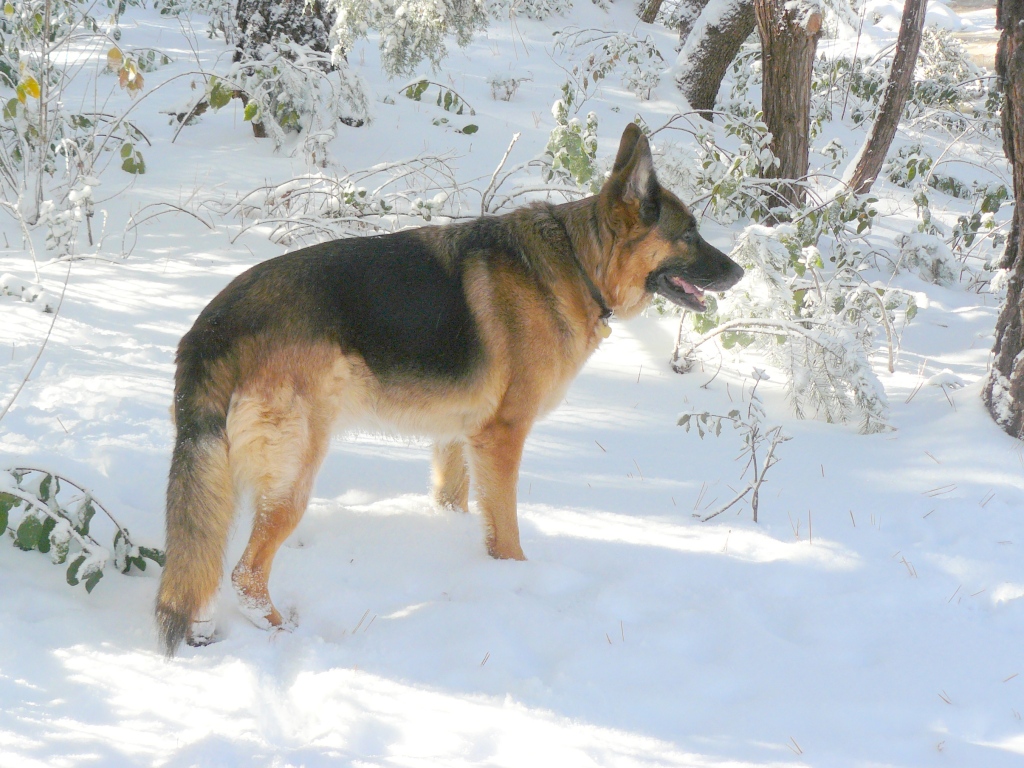
Our dear, sorely-missed Pharaoh demonstrating the advantages of four feet!


















 Learning from Dogs