More from Janet ….
But first a couple from closer to home.


oooo
oooo

oooo

oooo
oooo

oooo
Yet more to come in a week’s time.
You and your lovely animals please take care out there!
Dogs are animals of integrity. We have much to learn from them.
Year: 2017
More from Janet ….
But first a couple from closer to home.
oooo
oooo
oooo
oooo
oooo
oooo
Yet more to come in a week’s time.
You and your lovely animals please take care out there!
This was issued a little over two hours ago!
It concerns possible contamination of food with Salmonella so please read and share as widely as you can.
ooOOoo
May 5, 2017 — Smallbatch Pets Inc. of Portland, OR, is voluntarily recalling two lots of its Smallbatch frozen chicken blend for dogs and cats due to the potential to be contaminated with Salmonella.

Salmonella can affect animals eating the products and there is risk to humans from handling contaminated pet products, especially if they have not thoroughly washed their hands after having contact with the products or any surfaces exposed to these products.
Symptoms of infection in people include nausea, vomiting, diarrhea or bloody diarrhea, abdominal cramping and fever.
Rarely, Salmonella can result in more serious ailments, including arterial infections, endocarditis, arthritis, muscle pain, eye irritation, and urinary tract symptoms.
Consumers exhibiting these signs after having contact with this product should contact their healthcare providers.
Pets with Salmonella infections may be lethargic and have diarrhea or bloody diarrhea, fever, and vomiting.
Some pets will have only decreased appetite, fever and abdominal pain.
Infected but otherwise healthy pets can be carriers and infect other animals or humans.
If your pet has consumed the recalled product and has these symptoms, please contact your veterinarian.
No pet or consumer illnesses from this product have been reported to date. However, because of their commitment to safety and quality, Smallbatch Pets is conducting a voluntary recall of this product.
Consumers should also follow the Simple Handling Tips published on the Smallbatch Pets package when disposing of the affected product.
The affected lots of 2 pound bags of Smallbatch Chicken Blend were distributed to retail pet food stores in the following states:
Two hundred eighty-two cases of this product were sold between the dates of 2/1/17 and 5/5/17.
The affected products are sold frozen in 2 pound bags.
The products affected by this recall are identified with the following manufacturing codes and “Best By” dates, located on the back of the package.
The recall was initiated after routine testing by the Food and Drug Administration of a 2 pound bag of Smallbatch Chicken Blend that was collected at a distributor revealed the presence of Salmonella.
This recall is being made with the knowledge of the U.S. Food and Drug Administration.
Consumers who have purchased the above lots of Smallbatch Chicken Blend are urged to stop feeding the product to their dogs or cats and to return product to place of purchase for a full refund.
Or dispose of them immediately.
Consumers with questions are asked to call the company at 888-507-2712, Monday through Friday, 9:00 AM to 4:00 PM PST.
Or via email at info@smallbatchpets.com.
U.S. citizens can report complaints about FDA-regulated pet food products by calling the consumer complaint coordinator in your area.
Or go to http://www.fda.gov/petfoodcomplaints.
Canadians can report any health or safety incidents related to the use of this product by filling out the Consumer Product Incident Report Form.
Get free dog food recall alerts sent to you by email. Subscribe to The Dog Food Advisor’s emergency recall notification system.
ooOOoo
Once again, good people, read and share.
Just relax and go and paddle a boat!
I was speaking to Angus the dog, by the way!
Sorry! Did you say the beauty of mathematics?
Those of you that read this blog fairly regularly know that from time to time I drift away from all things dog and potter in the garden of simply fascinating ideas.
Such is the case today.
It is an article on mathematics that was sent to me by Jim Goodbrod. He had read it in The New York Times in April.
Read it and see if you, too, find it as fascinating as I did!
ooOOoo
The World’s Most Beautiful Mathematical Equation
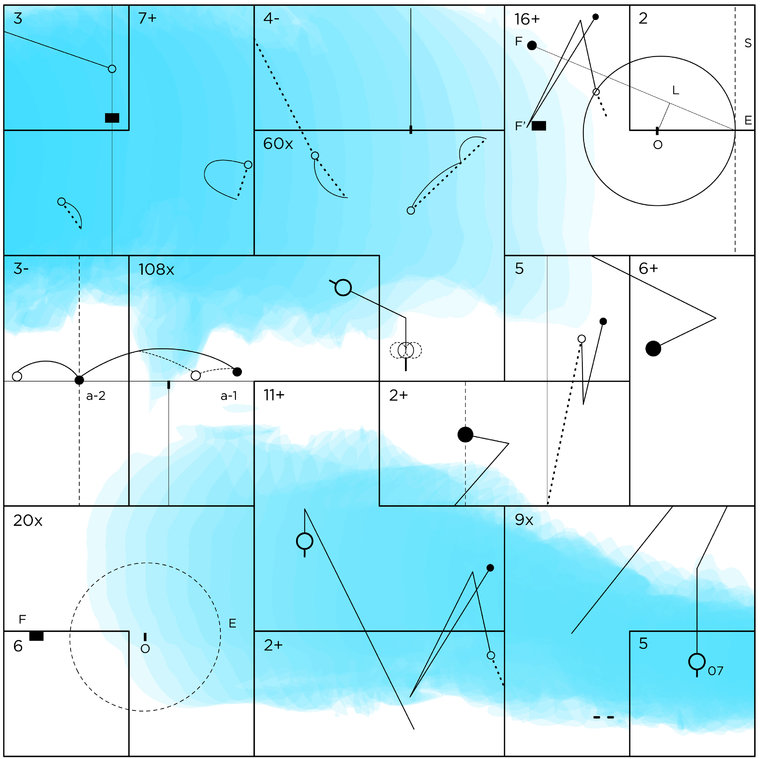
I was doing KenKen, a math puzzle, on a plane recently when a fellow passenger asked why I bothered. I said I did it for the beauty.
O.K., I’ll admit it’s a silly game: You have to make the numbers within the grid obey certain mathematical constraints, and when they do, all the pieces fit nicely together and you get this rush of harmony and order.
Still, it makes me wonder what it is about mathematical thinking that is so elegant and aesthetically appealing. Is it the internal logic? The unique mix of simplicity and explanatory power? Or perhaps just its pure intellectual beauty?
I’ve loved math since I was a kid because it felt like a big game and because it seemed like the laziest thing you could do mentally. After all, how many facts do you need to remember to do math?
Later in college, I got excited by physics, which I guess you could say is just a grand exercise in applying math to understand the universe. My roommate, a brainy math major, used to bait me, saying that I never really understood the math I was using. I would counter that he never understood what on Earth the math he studied was good for.
We were both right, but he’d be happy to know that I’ve come around to his side: Math is beautiful on a purely abstract level, quite apart from its ability to explain the world.
We all know that art, music and nature are beautiful. They command the senses and incite emotion. Their impact is swift and visceral. How can a mathematical idea inspire the same feelings?
Well, for one thing, there is something very appealing about the notion of universal truth — especially at a time when people entertain the absurd idea of alternative facts. The Pythagorean theorem still holds, and pi is a transcendental number that will describe all perfect circles for all time.
But our brains also appear to respond to mathematical beauty as they do to other beautiful experiences.
In a 2014 study, Semir Zeki, a neuroscientist at University College London, and other researchers used fM.R.I. scanners to observe the brains of 15 mathematicians while they were thinking about various equations. The subjects were shown 60 mathematical formulas two weeks before they were scanned and during and after the scan. They were also asked to rate their level of understanding of each equation and their subjective emotional response to it, from ugly to beautiful.
The researchers found a strong correlation between finding an equation beautiful and activation of the medial orbitofrontal cortex, a region of the prefrontal cortex just behind the eyes. This is the same area that has been shown to light up when people find music or art beautiful, so it seems to be a common neural signature of aesthetic experience.
Geeks, take heart: While you can’t see or hear mathematical ideas, they too are capable of arousing a sense of beauty.
No doubt you’d like to know which equation won the beauty contest. It was the so-called Euler’s identity, which is a deceptively spare but profound equation that links five fundamental mathematical constants: a mix of real and imaginary numbers that combine to make zero. And the ugliest? Ramanujan’s infinite series for the reciprocal of pi — a clunky equation, even to this non-mathematician.
While mathematicians were more likely to find formulas beautiful if they understood them well, the correlation was not perfect, so the researchers were able to show that the observed brain activation was a result of the experience of beauty apart from meaning. This makes sense, in that there were equations that subjects understood completely yet found ugly.
Now, the medial orbitofrontal cortex is also active when we find something pleasurable or rewarding, which isn’t surprising either, since you’d expect beautiful experiences to be both.
My love of math originated in the physical world. My father, an insatiably curious guy and electrical engineer, used to build things with me — crystal radios, electric generators, all kinds of exciting contraptions.
One summer evening I found him tinkering with a mysterious metal box in the garage. It was a prototype of a ruby laser. When he flicked the switch, a brilliant thin red light shot out of the laser and up into the night sky.
“How far does it go?” I asked. “To infinity,” he said and added, smiling, “or further.”
I was awe-struck. I still am.
Richard A. Friedman is a professor of clinical psychiatry and the director of the psychopharmacology clinic at the Weill Cornell Medical College, and a contributing opinion writer.
ooOOoo
While my understanding of mathematics is average, to say the best, I did identify with the idea spelt out a few paragraphs above. This one:
….. so the researchers were able to show that the observed brain activation was a result of the experience of beauty apart from meaning.
Because it took me back to looking up at the night sky out at sea well away from land.
Did I understand the meaning of what I was looking up at? Of course not! Did I experience beauty? Beyond what I could put into words!

What dogs mean to us whatever our age!
I chose the title for today’s post deliberately. Wanting it to act as a metaphor for our senior years, as the dear Americans like to put it, or leaning on my English roots, preferring the metaphor of the sinking sun for the Autumnal years of our lives.
We live in a part of the world where “The median age was 47.3 years.”
Josephine County, Oregon
As of the 2010 United States Census, there were 82,713 people, 34,646 households, and 22,498 families residing in the county.[20] The population density was 50.4 inhabitants per square mile (19.5/km2). There were 38,001 housing units at an average density of 23.2 per square mile (9.0/km2).[21] The racial makeup of the county was 92.4% white, 1.4% American Indian, 0.8% Asian, 0.4% black or African American, 0.2% Pacific islander, 1.5% from other races, and 3.2% from two or more races. Those of Hispanic or Latino origin made up 6.3% of the population.[20] In terms of ancestry, 26.3% were German, 15.6% were Irish, 15.5% were English, 5.5% were Italian, and 5.5% were American.[22]
Of the 34,646 households, 25.5% had children under the age of 18 living with them, 49.2% were married couples living together, 11.0% had a female householder with no husband present, 35.1% were non-families, and 28.3% of all households were made up of individuals. The average household size was 2.34 and the average family size was 2.82. The median age was 47.3 years.[20]
Yet in the rural areas of this County one does see a fair number of people who, as with Jean and me, are the wrong side of 65!!
But one very frequent observation of those ‘senior’ people is that they have a dog in their lives.
On April 10th, I posted a guest article written by Jessica Brody. It was very well received and I closed that post by saying: “I know many will agree with me when I say that it would be good to receive some more articles from Jessica.”
Our wishes have been granted. Here is Jessica’s second guest article.
ooOOoo
by Jessica Browdy. May 3rd., 2017
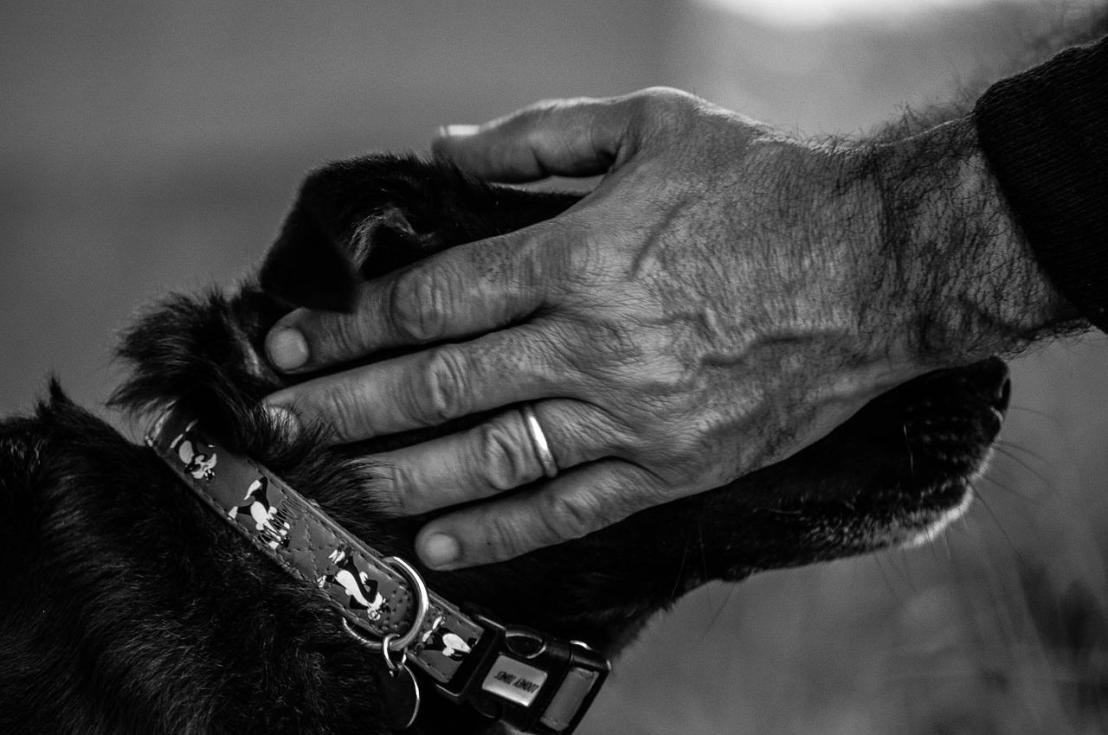
It’s no mystery that pet ownership can bring joy to people’s lives, but it turns out that having a pet may benefit seniors in ways that reach far beyond the pleasures of companionship. For elderly people who live alone or in senior care facilities, owning a pet can improve mental and physical health, paving the way for longer, healthier, and happier lives. Here are five ways that having a critter companion can benefit senior health.
Pets Improve Senior Mental Health
One of the greatest benefits of pet ownership for people of any age is the unconditional friendship and love that a pet provides. This support is especially important for elderly people, who are prone to loneliness and isolation as they leave the workforce, children move away, and friends and loved ones begin to pass on. Isolation is one of the biggest risks to senior health; isolation can cause depression (and related issues), cognitive decline, and even early death. The company of a beloved pet can help seniors stave off loneliness and preserve their mental health. Caring for a pet can also give seniors something to focus on other than negative thoughts about grief, physical ailments, and aging, thereby reducing their overall stress levels.
Pets Keep Seniors Social
Pets do more than provide a social outlet for seniors — they can actually lead the elderly to be more social with their peers as well. People are naturally drawn to dogs, and a senior who is out walking a pet is more likely to meet new people than if walking alone. Pets can help bring people together in senior living facilities, too. Dogs, cats, and other animals give people a common interest over which they can come together, share stories, and develop friendships.
Pets Reduce Heart Attack Risk
Companion animals like dogs, cats, birds, and even fish can improve heart health by lowering blood pressure. One study showed that being in the presence of your dog can even have a greater impact on your blood pressure than some medications. And by lowering blood pressure, pets can reduce heart attack risk in seniors.
Pets Keep Seniors Active
The daily routine of caring for a pet helps seniors maintain functional mobility. Giving food and water, cleaning a litter box, and letting the dog outside makes a sedentary senior get up and get moving. These simple activities can support an elderly person’s ability to complete the activities of daily living like bending, preparing meals, bathing, and dressing. Older people who own dogs are also more likely to stay active into their later years. Not only do they get out to walk the dog, but they’re also more likely to be involved in other active hobbies like gardening.
Pets Improve Senior Personal Care
A senior who has a daily pet care routine is more likely to adhere to a daily personal care routine. Having a routine gives structure to a senior’s days, making it easier to adhere to medication schedules, meal times, and personal care. Maintaining a daily routine can even help seniors sleep better.
Seniors can be saviors to pets, too. When older people adopt adult or senior pets, they provide a loving, stable home to an animal that may not have found a home otherwise. Dogs and cats aged seven and older are adopted at staggeringly low rates, even though they still have years of love to give. Many shelters and rescues even offer discounts for seniors adopting senior pets, so be sure to ask if you might be able to adopt your new friend at a reduced rate.
Image viaPixabay by marmax
Author: Jessica Brody
ooOOoo
Keep them coming, Jessica. (Well that’s the view from this senior!)
This is almost too beautiful for words.
Recently Jean was sent a link to an item on Mother Nature Network by Trish, a close friend living down in Tucson, AZ. It shows the strength of character of one particular dog but easily serves as a reminder of the power of love, commitment, endurance and loyalty that thousands of dogs exhibit so many times. Qualities that we humans may so easily overlook because our dogs fit so comfortably into the relationship with us.
The article, on Mother Nature Network, was originally published in 2014 and, as the Editor explains:
Editor’s note: This story has been updated since it was originally published in November 2014.
The article is also presented with the enclosed video at the end of the text. But when Jean and I watched the video last night we were so taken by it that I am making an ‘executive’ decision to present the article slightly differently.
In that I think that watching this beautiful, incredible, video first is better.
Now on to the full article that was published on Mother Nature Network.
ooOOoo
The harrowing story of how the dog finished the race with his adopted companions will melt your heart
Bryan Nelson March 6, 2017

The Adventure Racing World Series might be the most fraught and challenging sports event in the world. It usually involves teams of four navigating through a vast wilderness terrain while utilizing adventure skills from a range of disciplines including trekking, adventure running, mountain biking, paddling and climbing.
During the 2014 competition, for the first time ever, an exception was made so that one team could finish the race with five members instead of four. That fifth member? A stray dog, named Arthur by his adopted companions, who decided to follow one team for 430 harrowing miles through the Amazon jungle, according to the Daily Mail. If this story doesn’t warm your heart, you don’t have one.
Team Peak Performance, hailing from Sweden, happened upon Arthur while sharing a meal in advance of a 20-mile race stage through rough terrain in Ecuador. Mikael Lindnord, one of the team’s members, felt sorry for the scruffy, lonely stray, and decided to share a meatball with him. It was an innocent gesture — Lindnord had no intention but to lift the poor pooch’s spirits — but it was a gesture that would earn him a friend for life.
As the team got up to continue their race, Arthur tagged along. The team suspected he would eventually turn back around, but Arthur kept following them. He trailed them through muddy jungle, across vast distances of the Amazon river, all the way to the finish line.
The sport of adventure racing is not for the faint of heart — no more for dogs than for humans. During the most harrowing stages of the race, the team tried to shrug off their canine companion over concerns for his safety, but Arthur would have none of it. He was determined to stick with his adopted companions.
For instance, one crucial stage of the race requires the team to kayak along the coast for 36 miles. Understandably, the team was required to leave Arthur behind on the shore. But as they paddled away, Arthur broke free and leaped into the water and began swimming after the team. Realizing that the dog was willing to drown in order to stay with his friends, the team lifted Arthur onto the kayak so the dog could complete the race with them, to sounds of ovation from bystanders watching from the shore.
Arthur’s loyalty paid off in the end; Lindnord was able to adopt him and bring him back to his home in Sweden, where the dog is currently living, healthy and happy.
“I almost cried in front of the computer, when receiving the decision from Jordbruksverket (Board of Agriculture) in Sweden!” reported Lindnord when he first heard that his request to adopt Arthur was granted. “I came to Ecuador to win the World Championship. Instead, I got a new friend.”
ooOOoo
Loyalty with a capital “L”.
Love with a capital “L”.

This picture of Arthur speaks for itself.
A story about the death of a very dear dog.
This is a guest post coming up today. A reflection on what any dog lover feels when their beloved dog dies. (I don’t even want to think about the end of Pharaoh that can’t be too many weeks off!) But as has been said before it is one the key lessons that we learn from our dogs.
Not too many days ago I received an email from Liz Nelson.
I wanted to submit a synopsis of how our fur babies have dealt with the loss of a friend and the addition of another one to see if you wanted to use it as a guest post.
There was no question that I wanted to publish Liz’s synopsis so it could be shared with you. Here it is.
ooOOoo

A little over a year ago we lost our precious Rottweiler, Zeke, to bone cancer.
Zeke, a rescue who still had remnants of buckshot in his torso from his days living in the woods of Mississippi, was with our family for about 8 years. A gentler giant there never was. He and our cat were friends and Zeke frequently bathed the cat’s head and ears. Zeke and our Chow-mix (Fiona) were also very close. We joked he was in love with her because he let her collect all the toys and win at tug-a-war, despite the size difference.
Losing Zeke was a tremendous blow for our household. Both dogs and our 2 cats were visibly impacted by Zeke’s loss. Fiona took it the hardest. She became listless, fatigued, and generally out of sorts. She wasn’t interested in playing and she became an even pickier eater. She would skip several meals in a row and then eat everybody’s food at one time (including the cats’). She and the other animals refused to touch the dog bed in the living room that Zeke had used. She also refused to chew on a large rawhide we found that had once been Zeke’s. It felt like she was saving his things for when he came back to claim them. We noticed the hair under her eyes starting to go gray. She started to show and act all 9 of her years (she’s a rescue and special needs dog so we’re amazed we’ve had 9 years with her).
The vet said we could explore antidepressants but I wanted to see if we could let her try to work through it without medication. Though they remain an option if needed.
In January, my husband said he was ready to think about getting a puppy and several weeks later we adopted an adorable rescue named Pierce. The rescue told us he was part Husky and part Lab. Now that he’s older we think there’s a hefty dose of hound in there. After a few days of wariness and some growling, the older dogs decided to accept the puppy as part of the household. Fiona regained her energy and she was often seen in the yard with the puppy, teaching Pierce how to play fight or stalk birds. She would chase the puppy until they were both exhausted (which we were grateful for). Sometimes she got annoyed with the puppy but for the most part she took on a big sister role.
Fast forward a few months and the puppy is now the biggest dog in the house. While he really is a good dog, he’s still a puppy. Now when he is too energetic there is a lot more of him bouncing around a room. Fiona spends much of her time reinforcing her dominance by taking his toys and putting them under her chin where Pierce is afraid to attempt to retrieve them. She’s stopped running around the yard to play with him. Perhaps because it hurts when you collide with 45 lbs of speeding, clumsy puppy (just ask my husband)? She has gone back to spending most of her time looking pitiful. She will let me pet her though she acts as if it is an imposition.
We’re hoping that when the puppy matures a little more Fiona will regain interest in playing with him. Or at least his behavior won’t annoy her as much. I know that the puppy can never replace Zeke’s place in the family but I really hope Fiona doesn’t spend the rest of her dog life mourning Zeke and ignoring the new dog!
Liz Nelson
Footnote (re the photo above):
I have a great picture of our family with Zeke and Fiona in it (and my third dog). It’s one of our engagement photos and I’m so glad we included the pups. As you can see Zeke was super cuddly! It’s one of my favorite pictures. You can use any of the information in my about section for an introduction. I don’t have it very detailed (I only started this blog this week) so if there is any additional info you want to include please let me know. I looked around for a more recent photo of myself but all of my recent ones are from Halloweens and involve costumes. Not really an everyday look!
So I guess let’s stick with the family photo. Thank you Paul!
ooOOoo
Liz’s website is Supervising With Social Anxiety. Her About page opens with:
I am a supervisor at a small non-profit agency. I’m also in school part-time working on a doctorate. I’m a social worker so I’ve been working in non-profit agencies since I got my master’s degree around 8 years ago. I’ve been in management for around 5 years. I have had to deal with pretty intense social anxiety for as long as I can remember.
Another great connection if you ask me!!
For all my life this has felt like a very special month.
And, dear friends, at the risk of repeating myself to many of you, this is why the month of May is special for me.
Simply that I was born in London during the closing months of the Second World War. Inevitably, I was unaware of the number of German bombs that were falling on London during those last few months. But there were thousands.
On May 8th. 1945, the day that WWII ended and six months to the day from when I was born, my mother looked down at me and said aloud to me: “You are going to live”. Despite the fact that I don’t recall my mother saying that, it was verified many times later when I was growing up.
Now here we are approaching May 8th. 2017 and in a very real sense it seems that we are in another war.
A war of consequence.
A war that we have been engaged in for many, many years.
A war where we are inadvertently fighting on a global battlefield.
A war where 99.99% of us don’t consciously identify the weapons we are using. Weapons that are incredibly effective. So much so that we are in sight of winning the last battle; winning the war.
Yet a war where winning is no win at all. Indeed, where winning this war, this global war, spells the end. The end of life for 99.99% of us humans (and much else besides).
Now what on earth has got me so fired up?
Two things have:
The first is that I am living in my 73rd year of life. I have no idea of when my life comes to an end. But that death is a guarantee. Indeed, if one takes note of the average life expectancy of a male today in the USA (75.6 years) , it may not be that far away.
The second thing is that before my death I truly want to know that humankind has laid down its weapons of war against our planet and that there really is an unstoppable mission, a united wave of passion, to live in peace on this planet. Perhaps better put to live in peace with this planet.
Or in the words of an organization that I now want to introduce:
A mission which will require the hard work and dedication of each and every one of us as we do everything in our power as individuals, but also as we galvanize businesses, entrepreneurs, innovators, city planners, communities, people and politicians—all those who share our purpose.
OK! Thank you if you are still reading this! (Someone give Fred in that soft arm-chair over there a nudge; I can hear his snores from here!)
In the last Smithsonian electronic newsletter that I was reading yesterday morning there was a reference to an organization that I hadn’t previously come across. Here is the link to that item on The Smithsonian website. I am republishing it in full in this place. As you read it you will understand why I am republishing it.
ooOOoo
A new tool aims to bypass governments and put the power of climate action in the people’s hands

By Anne Glusker Smithsonian.com April 28, 2017
Olafur Grimsson, who was president of Iceland from 1996 to 2016 and saw his country through the worst economic crisis in its history, making headlines all over the world as banks collapsed and the country fell into a depression, is the very picture of an urbane statesman. Collected and poised, with a striking full head of white hair, as comfortable in English as in his native Icelandic, he seems an unlikely revolutionary, not the sort of person you’d look at and immediately find yourself thinking: “Power to the People.”
He and several other veterans of the historic 2015 Paris Agreement on climate change were in Washington, D.C., last year, just before COP22, the climate meeting held in Marrakesh in 2016. They were pondering next steps when the conversation took a new and interesting turn, Grimsson says, addressing the question: “Was it possible to have the success of Paris without governments necessarily being in the leading role?”
The group included movers and shakers such as Peter Seligmann, the chairman of Conservation International; Laurene Powell Jobs, president of the philanthropic organization the Emerson Collective; and Andy Karsner, an assistant energy secretary during the administration of George W. Bush. Galvanized by their own query, they decided to try to answer it—to set about creating a new tool to aid in achieving the goals of the Paris accord.
At the Smithsonian’s Earth Optimism Summit, a gathering this past weekend of conservation-minded citizens, scientists and activists, Grimsson explained: “You get governments that are opposed or even hostile to climate action. We decided to bring together in Marrakesh a gathering of thinkers and scientists and innovators and policymakers from different countries in order to discuss a new model of securing the success of the future of the climate movement.”
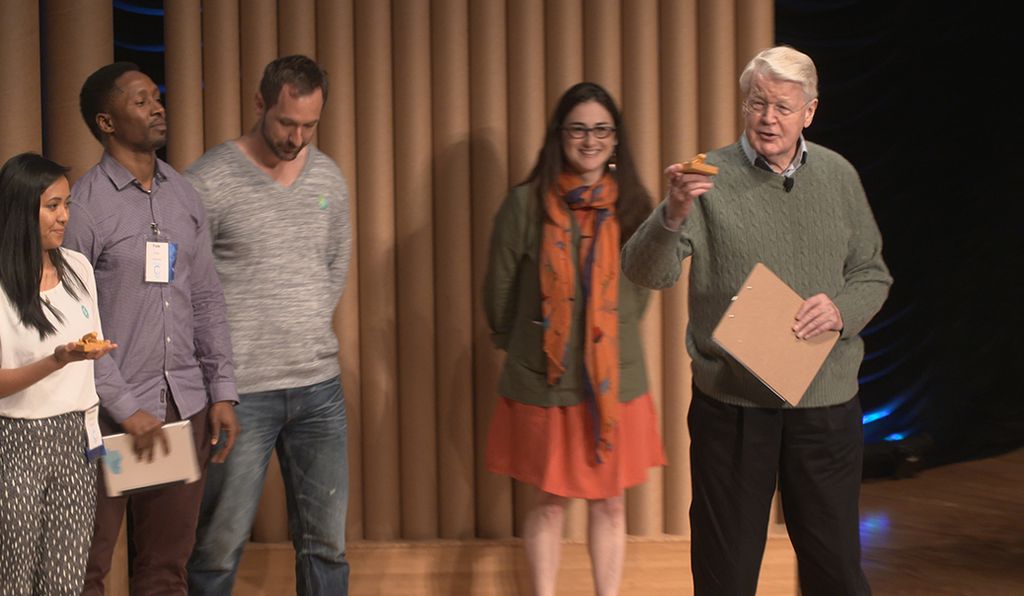
Grimsson’s group felt that due to changes in information technology and social transformations, the large organizations and structures that used to be necessary to effect change were now not needed. And thus was born Roadmap, a new crowdsourcing tool for anyone and everyone interested in climate action. Still in its very early stages, Roadmap’s founders envision it as a platform for those working on climate issues—from scientist and policymaker to farmer and fisherman—to facilitate the sharing of knowledge and ideas, methods and techniques.
“A new political model is possible—where everyone can be a doer, where you no longer need big government or big enterprises to bring about success,” Grimsson says.
This new model for social change that skips the usual cumbersome channels and processes has been seen everywhere from public health, where the Bill & Melinda Gates Foundation has redefined the sector, to the hospitality industry, which is working to combat the human trafficking that plagues its businesses, to perhaps most famously the Arab Spring, where the role of social media in bringing about political change is still being debated today.
And this new model is complemented by technological changes. “The innovation in energy technology is such that we no longer have to wait for the big energy breakthrough,” Grimsson says. “We already have the available technologies. Every individual, home, village, community, town and region can execute change. The good news from the climate point of view is that, in addition to the information technology revolution, there has now also taken place an energy revolution. A house can be a power station: If the people who live in that house have extra energy, they can sell their energy through the smart grid. The notion that every house can be a power station is as revolutionary as saying that every mobile phone can be a media company.”
Grimsson admits that it may seem odd for someone in his position to be advocating that ordinary citizens take action apart from the conventional corridors of governmental power.
“For me to say that these traditional political organizations and positions are somewhat outdated is perhaps a strange statement: I was a professor of political science, I’ve been a member of parliament, I’ve been a minister of finance, I was president for 20 years,” he says.
It was during Iceland’s financial meltdown that he first experienced this new kind of social change: “I saw this very strongly through the financial crisis in my own country, which led to a big social economic uprising. All those activities were engineered by unknown people, people who were not part of a big organization, who used Facebook and the information media to bring thousands of people together in one day.”
Right now, Roadmap consists of a website and a lofty manifesto that speaks of raising the value of “moral currency” and creating a “best practices warehouse.” Visitors to the site can fill out a form if they want to become part of its community of “doers.” The practical part of the manifesto speaks of identifying the best methodologies and models; implementing a “real-time system of measurement” and a way to “gauge and understand what is working, what is not, and exactly what is being achieved.” As the platform develops, it will be interesting to see exactly what form these gauges, measurement systems, and warehouses take.
After the Paris Agreement, Grimsson says of himself and his Roadmap co-founders, “We were all optimistic, but we are all also realists.” It is his belief that if you “give people the tools, they can execute the transformation and the change—without governmental leadership.” Perhaps Roadmap will be one of those tools.
ooOOoo
Here’s a video that spells it out in ways that I find impossible to ignore. (And, yes, I signed up, as in joining, yesterday afternoon.)
Because in hundreds of years time I want others to look at the following picture of Troutbeck Valley in England and know how precious is this one and only planet we live on.
Or in the words of Sue Dreamwalker that I read yesterday evening:
We are witnessing more storms, more unseasonal weather patterns, and I just hope that we wake up soon to the damage we are doing to our beloved Mother that has held us in her eternal arms for so long..

Enjoy the month of May wherever you are in the world!
Closing by repeating a key pronouncement in that RoadMap video above:
Why We? Who Else!
 Learning from Dogs