Another delightful travel account from Natalie Derham-Weston.
Albeit perhaps travels of a more inward nature.
ooOOoo
Travel Blog: Installment 3: Living on a boat.
Simple Peace
I fancied an interlude this week to share a morning I enjoyed over the weekend. It isn’t often that the chance arises to enjoy our local surroundings without time limits, overdue deadlines or inconvenient meetings. However, I had a day off Saturday; a concept becoming more and more valued having since started a new full-time job, which is quite demanding on my time. I have requested this high load of hours but after months of travelling and not having regular work, it is taking a while for me to adjust to the mental and physical demands.
Anyway, without going into the irrelevant details, I have been spending my time living on a boat in a marina in Lymington, a small sea side town in the New Forest on the South Coast of England. This means my commute to work is a 2 minute walk and although I do not know the first notion about sailing, I have quickly fallen for the lifestyle of boats and water. I have found it to be extremely sociable and relaxing and I have all I need around me. This includes a bicycle, a car, swimming facilities, work, grocery shops and a very modest yet comfortable boat.
So last Saturday, I woke up early, as I was already in the routine of being awake from my work shifts and saw the sun streaming in through the port hole windows. This immediately buoyed me and I pulled the curtains and opened the hatch to let in the fresh air. I had a few items on a to do list but I certainly didn’t intend on wasting the valuable time I had.
I did have an appointment I couldn’t shirk but made it as quick as possible and on the way back picked up some lunch items. Back on the boat, I had a quick tidy and clean as I firmly believe an orderly workspace leads to a clearer mind.
I pre-empt this by saying I am usually accompanied by my father on the boat but this specific day was the first time I had been left in solo charge and this gave me somewhat of an independent free feeling. So my next mission was to cook some eggs which I did on our very small gas camping stove. I took some cushions out on deck and had my lunch in the warm April sunshine. Our pontoon seems to be quite an active mooring site and there were people constantly wandering along it all day, carrying tools, bags and equipment back and forth. So although I was alone, I did not feel isolated.
I then left everything behind on the boat, including my phone and took my bicycle around the headland on a trail I had never been on before. The channel was extremely clear and I had a wonderful view over to the Isle of Wight and watched the bustle of boats going to and fro. I passed lots of families, dogs, bird watchers and couples but kept going at a steady pace along the gravel track headed towards Keyhaven, the next fishing village along.
There is no specific reason why I enjoyed this so much, just the whole atmosphere and surroundings made for a very encompassing uplifting day. I continued along the path, and had no care as to where I was or where I was going. I was confident enough that I knew I’d always find my way back somehow and so without that pre-conditioned feeling of panic, I cycled on along the back roads and hauled my bicycle over fences and gates.
Two hours later I cycled back in to the marina and abandoned the bike next to the boat. The boat is never locked, another aspect I really appreciate. I don’t think this would be possible everywhere, but it allows for a very open way of life. So I grabbed a cushion and headed to the bow of the boat, lying in the sun, drinking a beer, watching the world go by.
This just proved to me how easy it is to be happy sometimes. We need very little but that day will stay in my memory for a long time as a point in time where I was 100% content.
ooOOoo
I had the great fortune of living on a yacht Songbird of Kent, a Tradewind 33, for five years in the late ’80s early ’90s based out of Larnaca on the Greek side of Cyprus. I can fully vouch for the peace that Natalie has written about.
Are you a dog owner? Then here’s something else that you gain from your wonderful friend.
I was rather short on time yesterday so apologies for cutting my introduction to a minimum. But you will still love this item that appeared on the Care2 site three days ago.
ooOOoo
People Who Talk to Their Pets Are Actually Quite Intelligent
If you’ve ever owned a pet, you’ve probably talked to it at one point or another. And even though you may have been fully aware that your pet couldn’t talk back or even really comprehend what you were saying, you still did it anyway.
Why do we do this? Why do we talk to our pets like human friends when we know their little minds just aren’t built to think or feel the same way we do?
When we talk to our pets, we subconsciously create a human-like bond in our own minds with non-human creatures. We’re built for connection — and we feel more connected to things when we recognize that they’re just like us.
Talking to animals (and even to inanimate objects, such as house plants) is called anthropomorphism. We usually call it “cute” when kids do it, but when adults do it, we tend to view it as a little weird and immature.
According to behavioral science professor at the University of Chicago and anthropomorphism expert Nicholas Epley, talking to animals and objects is actually a sign of intelligent social cognition. Humans are very social creatures, so our brains are wired to see faces and perceive minds everywhere.
Epley explains that we anthropomorphize the things that we love as opposed to the things that we hate. The more we like something, the more likely we are to want to engage with its mind — even if it doesn’t actually have a mind.
In a 2011 study where a group of participants were shown photos of baby animals and adult animals, most admitted to liking the baby animals better and were more likely to anthropomorphize them. If the participants could own one of the baby animals, they said that they would name it, talk to it and refer to it by its appropriate gender pronoun.
The most common way we anthropomorphize animals and objects is by giving them names, but it can apply to character traits, too. For example, a person may describe their cat as “sassy” or their car as a “rickety old man.” These human-like character traits given to non-human things reflect our relationship with them and perhaps even symbolize extensions of ourselves.
Anthropomorphizing only benefits us when inanimate objects are involved, but when it comes to anthropomorphizing domesticated animals like dogs and cats, both ourselves and our pets can benefit. Since these animals evolved over thousands of years to become human companions, they are biologically designed to bond with us.
Studies have shown that when we talk to dogs, they can distinguish between the meaning of the words and the emotional cues we give them. Cats may not be as responsive to human language as dogs are, but they do have the ability to recognize their owners’ voices and they also have 16 different types of vocalizations they use to communicate.
So you can let go of the widely held belief that talking to your pet, your houseplants, your car or anything else is childish or even a little bit crazy. From a scientific viewpoint, it turns out that quite the opposite is true.
ooOOoo
Let me close by reminding all you good people of yet another wonderful aspect of the relationship between humans and dogs. In that we all know the dog evolved from the grey wolf. But had you pondered on the fact that wolves don’t bark! Yes, they howl but they do not bark.
There is good science to underpin the reason why dogs evolved barking; to have a means of communicating with us humans.
Every person who has a dog in their life will instinctively understand the meaning of most, if not all, of the barks their dog utters.
Jean and I went to a conference down in Medford last Saturday. It was a conference to do with Parkinson’s Disease and was arranged by the group Parkinson’s Resources of Oregon (PRO).
Almost immediately upon our arrival at 1pm we saw a gentleman in his wheel chair accompanied by his service dog. That gentleman soon identified himself as Ken Schiff and his wonderful service dog was named Lacey. It was clear within moments how beautifully behaved was Lacey and, by implication, how well trained he had been to perform his role as a service dog to Ken.
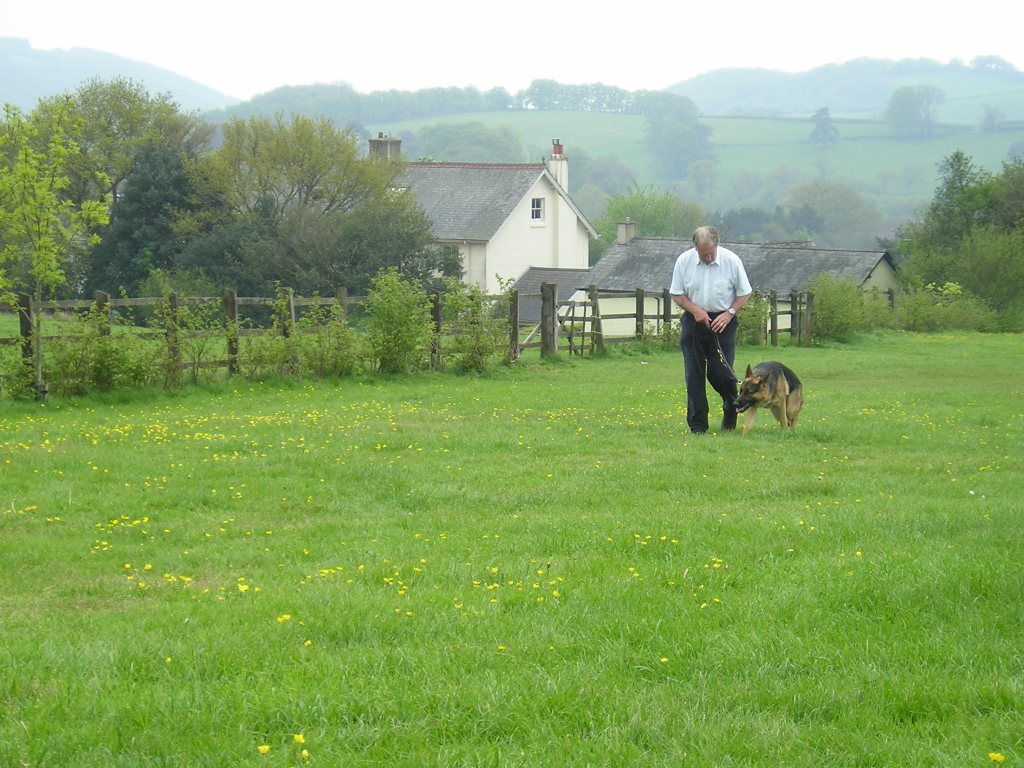
That took me way back to my days of working with Pharaoh back in Devon; before Jean and I met. Living in a very rural part of England with, reputedly, there being more sheep than people, one of the early requirements was to train Pharaoh to behave properly in the vicinity of sheep. Here are a couple of pictures from that training day in Devon.
Pharaoh’s training the afternoon of the 11th May, 2004.
oooo
Luckily the training paid off! Pharaoh was fabulous in and around sheep!
Needless to say, Pharaoh also received professional training for his general behaviours.
So treat all of the above as my introduction to a guest post by Robert Michael. On dog training. So who is Robert Michael?
Robert Michael
Robert is professional dog trainer having an experience of almost 8 years now. And he loves to contribute to the pets blogs to enjoy his passion. Plus, I write free of cost for those pets blogs: do you have one? Contact me rob.michael47@gmail.com
ooOOoo
A Comprehensive Visual Guide on Dog Training Schedule to Get 100% Outcomes
by Robert Michael. April 26th. 2017
There are a number of acts to follow on time, when your dog is on a training with you! So, if it is said that, you can get no any effective outcomes of the dog training, without making a proper schedule; it would not be wrong at all.
So, you must be aware of the fact that:
Making an appropriate dog training scheduleis necessary for a super effective output. Now you might be thinking that:
How to make a dog training schedule?
So, it is not a tough task to do so! You just can make a schedule by following the tips given below:
Take a pen and diary specified in writing and following the schedule.
Save notes in your mobile phone, and set the reminders.
Make an Excel sheet containing the schedule.
Make an MS Word document to file the training schedule.
Make a training schedule chart and attach to one of the walls of your home.
So, these are the super easy ways, you can make and follow the training schedule of your dogs.
You will be habituated by the training schedule.
Your dog will get habituated by the schedule timings.
You will get a punctual routine.
Your training sessions will prove to be more effective.
You will be able to train your dog by an organized manner.
What can you include in the schedule?
The feeding timings.
The playing timings.
The walk timings.
The toilet timings.
The training sessions’ timings.
The exercise timings.
The sleeping and waking up timings.
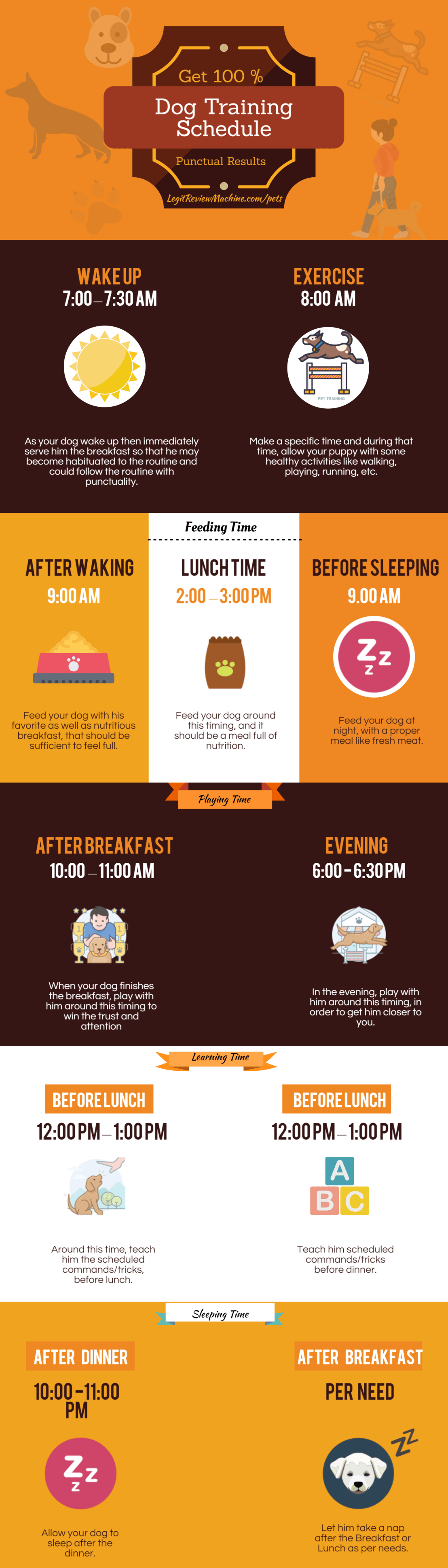
You can see the Legit Review Machine infographic to better understand the dog training schedule ways and steps.
ooOOoo
And here is that infographic that Robert included as a separate image in his email to me.
Puppy Training Schedule
I’m sure many of you will have found this very useful and I do hope there will be more guest posts from Robert.
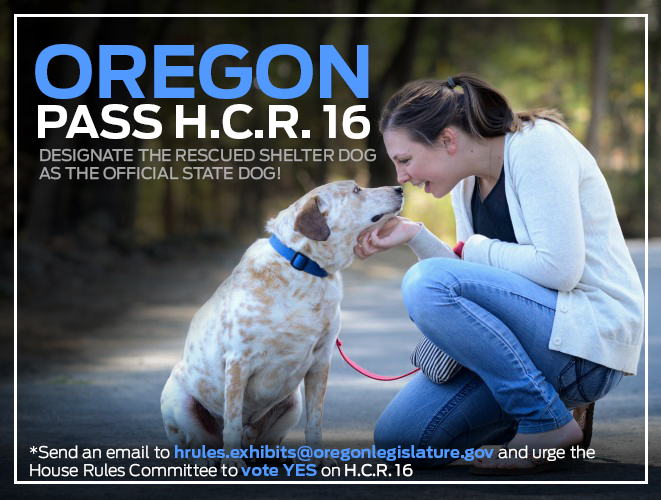
Recognize Rescued Shelter Dogs as Oregon’s State Dog
A couple of hours ago I received an email from Scott Beckstead. Scott is the Senior Oregon Director and the Rural Outreach Director for The Humane Society of the United States (HSUS).
Scott and his wife are two people that Jeannie and I have met and they know that we are committed to supporting the HSUS. Scott was asking in his email that we promote his plea, on behalf of HSUS’s great work in Oregon, for all Oregon residents to support a proposal that comes with the catchy title of Proposal H.C.R. 16.
Because of the immediacy of this campaign, tomorrow is the deadline, I was pleased to publish what Scott sent me without delay.
ooOOoo
In Support of H.C.R. 16
Recognize Rescued Shelter Dogs as Oregon’s State Dog
Dogs are man’s best friend, providing many benefits to their families such as love, loyalty and an improved sense of well-being. Yet many people are surprised to learn that nationwide, millions of healthy, adoptable dogs are euthanized in shelters annually due to a lack of critical resources and public awareness.
The number of euthanized dogs could be reduced dramatically if more people adopted pets instead of buying them. When families choose to adopt, they save a loving animal by making them part of their family and open up shelter space for another animal who might desperately need it. If more families looking for a pet dog this year would adopt their new furry friend from a shelter, we could put an end to this tragedy.
Animal shelters and rescue groups are brimming with happy, healthy dogs of every breed, shape, size, age, and color, just waiting for someone to take them home. With the help of legislation like H.C.R. 16, we can spread the word about the benefits of adoption and work to end the senseless euthanasia of homeless dogs nationwide.
Shelter dogs make great pets. Please pass this legislation to emphasize the importance of animal adoption with the support of state and national animal sheltering leaders.
oooo
MY TESTIMONY IN SUPPORT OF H.C.R. 16
From: SCOTT BECKSTEAD, SENIOR OREGON DIRECTOR, RURAL OUTREACH DIRECTOR
THE HUMANE SOCIETY OF THE UNITED STATES
This Testimony presented to the HOUSE COMMITTEE ON RULES, APRIL 27, 2017
Chair Williamson, Co-Chairs Rayfield and McLane, and Members of the Committee:
Thank you for the opportunity to comment on H.C.R. 16, the bill to designate the rescued shelter dog as the official state dog of Oregon. The Humane Society of the United States strongly supports this legislation and urges you to vote YES.
First it is important to recognize this bill is not intended to denigrate reputable breeders of purebred dogs. Rather, it celebrates dogs of all stripes, be they purebred or mutt- and encourages Oregon citizens to consider adopting a dog in need of a home.
With regard to the claim that many Oregon shelter dogs originated in other parts of the country, transporting dogs from areas of over-population into areas where the population of adoptable dogs does not meet the demand is an activity that has been taking place for many years, and has saved countless lives, and created many happy families across the state. The Society of Animal Welfare Administrators (SAWA) has produced best practice guidelines for transport programs to ensure that both sending and receiving shelters are adhering to the highest standards of animal welfare and health considerations, including but not limited appropriate health certificates and veterinary inspection.
Shelters across Oregon adhere to industry best practices and appropriate oversight. Contrary to scare-mongering from the National Animal Interest Alliance, there is no data to show that dogs within the Oregon shelter system have higher incidences of temperament issues, health concerns, or that dogs from out of state are displacing Oregon dogs in need.
When a prospective owner buys a dog from a pet store, online seller or flea market, they’re almost certainly getting a dog from a puppy mill. Puppy mills are factory-style breeding facilities that put profit above the welfare of dogs. Animals from puppy mills are housed in shockingly poor conditions with improper medical care, and are often very sick and behaviorally troubled as a result. The mothers of these puppies are kept in cages to be bred over and over for years, without human companionship and with little hope of ever joining a family. And after they’re no longer profitable, breeding dogs are simply discarded—either killed, abandoned or sold at auction.
These puppy mills continue to stay in business through deceptive tactics — their customers are unsuspecting consumers who shop in pet stores, over the Internet or through classified ads. Puppy mills will continue to operate until people stop supporting them. But by visiting your local shelter or rescue and adopting a homeless pet, you can be certain you aren’t giving them a dime.
Dogs and cats share the homes of 65% of U.S. households, providing many benefits to their families such as love, loyalty and an improved sense of well-being. Yet many people are surprised to learn that nationwide, millions of healthy, adoptable dogs are euthanized in shelters annually due to a lack of critical resources and public awareness.
The number of euthanized animals could be reduced dramatically if more people adopted pets instead of buying them. When families choose to adopt, they save a loving animal by making them part of their family and open up shelter space for another animal who might desperately need it.
Animal shelters and rescue groups are brimming with happy, healthy pets just waiting for someone to take them home. With the help of legislation like HCR 16, we can spread the word about the benefits of adoption and work to end the senseless euthanasia of homeless pets nationwide.
Usually when you adopt a pet, the cost of spay/neuter, first vaccinations (and sometimes even microchipping!) is included in the adoption price, which can save you some of the up-front costs of adding a new member to your family. Furthermore, pets are screened for good health and behavior.
Not only do animals give you unconditional love, but they have been shown to be psychologically, emotionally and physically beneficial to their companions. Caring for a pet can provide a sense of purpose and fulfillment and lessen feelings of loneliness. And when you adopt instead of buying a pet, you can also feel proud about helping an animal in need!
Thank you for considering our position, and for your service to the people and animals of Oregon.
ooOOoo
Let me close with this graphic that Scott also sent me.
Please, please, if you wish to support this proposed measure then, without delay, send an email now to hrules.exhibits@oregonlegislature.gov asking for a YES vote on H.C.R. 16
Jean and I have just done so.
Chair Williamson, Co-Chairs Rayfield and McLane, and Members of the Committee,
I write to you all on behalf of myself and my wife.
When we moved to Oregon in 2012 we came with 12 dogs many of which were rescue dogs and from animal shelters. We still have 7 dogs.
Shelter dogs make wonderful pets and they always know when they have been rescued from a shelter. They offer such love and gratitude to their loving owners.
Please, Jean and I ask for this measure, Measure H.C.R. 16, to be supported.
Thank you.
Paul & Jean Handover
4000 Hugo Road, Merlin, OR 97532
Last week, under the post title of Group Goodness, I put out a plea for anyone who felt so minded to make a donation to this fund. That donate page for this fund being here.
Now it’s very fair to say that there wasn’t a rush of donations. It would be more accurate to say that there were no donations for several days. In fact it is only in the last twenty-four hours that the amount donated has gone from 216 to 244 Australian dollars. (The fund will be transferring those Aussie dollars across to assist John Zande and his lovely wife soon. The currency being used is because it is the sister of John’s wife who is raising the money and she lives in Australia.)
Now it would be very wrong of me to seek the reasons why not a single follower or reader of this place chose not to make a donation. But I will offer this perspective. In that Jean and I wanted to make a second donation and it has taken several days to figure out why our gift wasn’t being processed; the reason being a rather cautious (our) bank attitude to debit card payments being made overseas. So if anyone else has tried to make a donation and the system has got in the way then please do find a solution.
Here’s why!
Because John and his wife, Dionete, are totally immersed in doing their best to help the homeless and abandoned dogs in Sao Paulo, Brazil.
Here are copies of recent emails that John and Dionete have sent me over the last few days.
20th. April
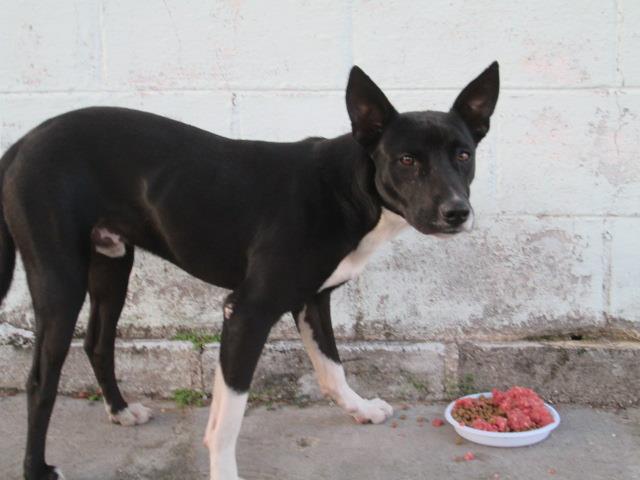
Morning Paul, I took a camera this morning just to show you the new boy I’m helping. Gorgeous fellow, and young. It never stops. They never stop showing up… which is something I’m sure Jean understands all too well from her work in Mexico.
Again, thank you for your help and posting the campaign.
I queried if this new boy had a name?
No name yet. Can you think of one? I found him on the corner of a street where I feed two (sometimes 3) cats every morning. G’s mum and dad used to live in that street and her dad would feed them. He loved cats, and after he died (and G’s mum moved closer to us) I’ve kept going back. It’s been over a year now that I go there every day, and despite every effort to capture them, I’ve failed. They’re quite feral, but I can’t bring myself to letting them to fend for themselves.
And these are those photos.
oooo
John then continued that same day:
Anyway, the boy showed up about 9 days ago, so on my daily run I feed and water him. G put his pictures on Facebook this morning and a girl (Luiza) responded saying she knows of another lady who’s also feeding him. I saw food there once, on day 2 I think, but none since, so I’m not sure what that’s all about. The girl who actually responded is a part of this loose Vista Verde group. I’ve never met her, but I know of her. We’re helping her as she took in a dog a few months ago that had been hit by a car and is paralysed, but, to her credit, she’s refused to give in and has him in physio (including water treadmills), which is actually showing some positive signs. That’s sort of how it all works. Here’s some pictures and video of that case. Gorgeous dog.
The boy is relatively safe where he is. He has shelter, and doesn’t appear to be in any mood to move on, which is good. If he stays put we can help. Finding a home for him is not easy, but after we can find some place as a temporary shelter we’ll get him into the vet, neutered, treated for whatever, then settled. The huge problem is, there simply aren’t any shelters we can just take him to, so we can’t get him off the street and into the vet immediately. Every shelter is over-full, and that makes rescues just that much harder. It’s not the case of simply finding a dog (or cat) and getting them to safety… which is heartbreaking. You just have to hope they stay put. A few times I’ve put a dog in the car and taken them from danger (like near a main road) and brought them up to our area where there are parks and plenty of shelter and people to help. It’s a safe place, and if they stay put we often have successes… But that takes time. But, as I said, he doesn’t seem to want to move on, and he’s starting to put on weight. He was desperately thin, but 500g of mince and a big bowl of dry food every day seems to be doing the trick.
Here’s hoping to a good ending for him.
In speaking with Jeannie about this poor dog she very quickly suggested the name of Socks. John happily went with Jean’s suggestion.
21st April
Hi Paul, just a quick update on socks. Luiza (the girl I mentioned yesterday) has found temporary shelter for Socks for one month. It’s not long, but will give us the chance to neuter him and do all necessary blood work. Finding him a home is the next hill, but I spent time with him this morning, just sitting with him, and he’s really a lovely, gentle fellow, so here’s hoping.
24th April
Socks update: His shelter home is ready today, we’ve been told. That, however, might now not be needed. Sunday I saw he now has a huge dog house on the footpath, with blankets, food and water. He wasn’t interested in the mince I brought him, so I just left some chewing treats. Same thing this morning (I’ve just gotten back). So, we’ll go back later today just to speak (again) to the people in the street (we don’t know who exactly put the dog house there), and it might be the case that he just goes straight to the vet for neutering, maybe a few days in the shelter for recovery, then back to his house while (if still needed) we look for a permanent home/family.
April 25th.
Hello Paul – I can see you’ve been playing “email tennis” with the gofundme staff – good to read they (finally) managed to sort it out.
We saw Socks today. Apparently a bunch of neighbours got together to feed and take care of him, albeit on the street (he was given a 2nd-hand doghouse & doona (oops, duvet)). One of the guys has been thinking of taking him to his country house; an acquaintance of mine knows of somebody who might adopt him. Yes, everything’s still in the air, but he has it much much better than other dogs we’ve found and helped.
Now we can book his neutering/vaccine.
As for me, I don’t have enough words to thank you & Jean. Truth to be told it feels a bit weird to be the beneficiary of a campaign. We’ve always helped others and suddenly seeing ourselves in this position is a tad uncomfortable, actually – which doesn’t mean this money is not welcome, considering all the cases we’ve had so far this year.
Fingers crossed it all works out for Socks. We’ll keep you posted.
So, good people, this is why I beseech you to please support what John, Dionete and his close group are doing on behalf of those dogs down in Brazil. Please make a donation!
That quote was one uttered by Harold Macmillan, the British Conservative politician and publisher, who served six years as Prime Minister from 1957 to 1963. It was in response to a question regarding what sort of thing was most likely to blow a government off course.
Why did that quotation come to my mind? Simply because all my grand plans for writing a post for you good people were stymied by our internet connection being down for much of the weekend.
So rather than get cut off half-way through a new post, I decided to re-post what I published on this blog five years ago to the day: on April 24th. 2012. Here it is.
ooOOoo
How lady luck brought joy for a ‘down-and-out’ Londoner and a cat called Bob!
I was chatting with my son yesterday and he happened to mention that perhaps I should write about a cat for a change! Alex mentioned a book recently published in the UK called A Street Cat Named Bob: How One Man and His Cat Found Hope on the Streets.
This is how the book is described on Amazon (UK site),
When James Bowen found an injured, ginger street cat curled up in the hallway of his sheltered accommodation, he had no idea just how much his life was about to change. James was living hand to mouth on the streets of London and the last thing he needed was a pet. Yet James couldn’t resist helping the strikingly intelligent tom cat, whom he quickly christened Bob. He slowly nursed Bob back to health and then sent the cat on his way, imagining he would never see him again. But Bob had other ideas. Soon the two were inseparable and their diverse, comic and occasionally dangerous adventures would transform both their lives, slowly healing the scars of each other’s troubled pasts. A Street Cat Named Bob is a moving and uplifting story that will touch the heart of anyone who reads it.
A quick web search found volumes of material.
As in the local London newspaper the Islington Tribune wrote this back in 2010,
Two cool cats… the Big Issue seller and a stray called Bob
Inseparable: musician James Bowen with Bob
Down-on-his-luck musician teams up with ‘wonderful loyal friend’ he rescued from streets
Published: 24 September, 2010
by PETER GRUNER
NOT since the legendary Dick Whittington has a man and his cat become such unlikely celebrities on the streets of Islington.
Big Issue seller James Bowen and his docile ginger cat Bob, who go everywhere together, have been attracting comments since they first appeared outside Angel Tube station.
The story of how they met – widely reported in blogs on the internet – is one of such extraordinary pathos that it seems only a matter of time before we get a Hollywood film.
James, 31, who lives off Seven Sisters Road, Holloway, is a musician who has fallen on hard times.
He ekes out a basic living selling the homeless people’s magazine Big Issue at Angel and Covent Garden.
Bob was a stray discovered by James outside his accommodation one day.
The cat was limping after apparently being attacked by another animal, possibly a fox.
After failing to discover the cat’s owner, James took him to the RSPCA hospital at Finsbury Park, which prescribed a course of antibiotics.
“I kept him for two weeks until he was well enough to go on his way,” said James. “But when I opened the front door to let him out Bob wouldn’t move. He seemed to me to be saying: ‘I want to stay with you.’
“Now we go everywhere together. I even have a cat harness when we go out and Bob gets really excited when I show it to him.”
Read the rest of the article here and if you want more information, a web search on Bob the Cat will finds loads more.
It’s a fabulous story with a great message of hope for not just for James and Bob but for all of us that find ourselves ‘up a creek without a paddle’ at points in our lives.
Here’s how the newspaper The Daily Mail wrote about it on their website,
[last half of the story]
But then Bob started following him and it became increasingly difficult to shoo him away, especially as there were dangerous roads to be crossed. One day there was nothing for it but to put Bob on a makeshift lead and take him along. Bob travelled sitting on James’s shoulders.
The trouble was, so many cat-mad passers-by stopped him to stroke the animal that James arrived late at his pitch, secretly cursing Bob for thereby costing him some of his usual £25-a-day takings. He couldn’t have been more wrong.
Within minutes, people who would normally have walked by without giving James a second glance were lingering to make a fuss of the cat sitting sedately in his guitar case, and most made a donation. By the end of the day, he’d racked up more than £60.
It was the beginning of a phenomenon as tourists and commuters befriended Bob and James, many bringing titbits for the cat. People were amazed at how placidly Bob would sit all day, quite happily watching the world go by while James earned a living. Not that it was always without a hitch; on a couple of occasions Bob bolted when startled, leading to a frantic chase through the crowded streets.
Bob’s popularity continued when James switched from busking to selling the Big Issue, the magazine produced and sold by homeless people. This change in direction was part of James’s growing sense of a need to get his life in order, which he puts down to the responsibility of looking after Bob, and the example the cat offered of the possibility of a second chance.
It enabled James to make the final push to end his drug dependency, going through the necessary cold turkey to get off heroin substitutes, and to mend broken contacts with his family. The final result of Bob’s influence came when a literary agent who passed the duo every day and had seen them on YouTube suggested James tell their story in a book. The result is this heart-warming tale with a message of hope that will appeal especially to the many cat obsessives out there.











 Learning from Dogs