Year: 2014

Picture parade thirty-eight.

The second set of photographs from Elena Shumilova.

A week ago I introduced Elena Shumilova and am delighted to stay with her fabulous pictures.  I’m repeating the introduction from last week.

ooOOoo

A MOTHER FROM RUSSIA TOOK THESE PICTURES AT HER FARM

ALONG WITH HER TWO SMALL BOYS, A CAT AND A DOG.

These wonderful photographs by Elena Shumilova plunge the viewer into a beautiful world that revolves around her two boys and their adorable dog, cat, duckling and rabbit friends.

Taking advantage of natural colors, weather conditions and her enchanting surroundings, the gifted Russian artist creates cozy and heartwarming photography that leaves you amazed. Elena said, “Children and animals – it’s my life. I’m a mom with two sons and we spend a lot of time on the farm.”

meta9

oooo

meta10

oooo

meta11

oooo

meta12

oooo

meta13

oooo

meta14

oooo

meta15

ooOOoo

Final set for you in a week’s time.  You all take care of yourselves.

Things not as they quite seem.

Two videos that end up very differently to how they started!

The common link between Ed Scalpello, Dan Gomez and me is that Ed and Dan are good friends.

Coincidentally, both of them sent me links that matched today’s theme.

So with no further blathering from yours truly here’s the first video from Ed.

and here’s the second that Dan sent me.

You all have a great weekend.

Cutest, or smartest? You decide.

Misa Minnie being promoted as the world’s smartest puppy.

After getting up at 3am to let Dhalia out for a pee and then waking to find that George had died, I wasn’t really in the mood for a deep and meaningful post for today.

So I have used an item emailed to me by our neighbours, Dordie and Bill, that seemed fun to share with you.

First, watch the video.

then want to know more?

Well you could drop into Misa’s Facebook page or read what appeared in the Huffington Post in the middle of January:

We’ve seen dogs doing tricks you wouldn’t believe — but we’ve never seen a dog look this cute while doing them.

Misa Minnie is a 1-year-old Yorkie pup who has been trained by her owner. At just 18 weeks old, she began performing a wide array of tricks and has now racked up more than 15,000 YouTube fans.

A video from last June resurfaced on Yahoo! this week showing Misa at 31 weeks mastering over two dozen commands.

Misa could easily get by on her looks alone — but with her talent, this little Yorkie really is the whole package.

See you tomorrow, I hope!

Dear George.

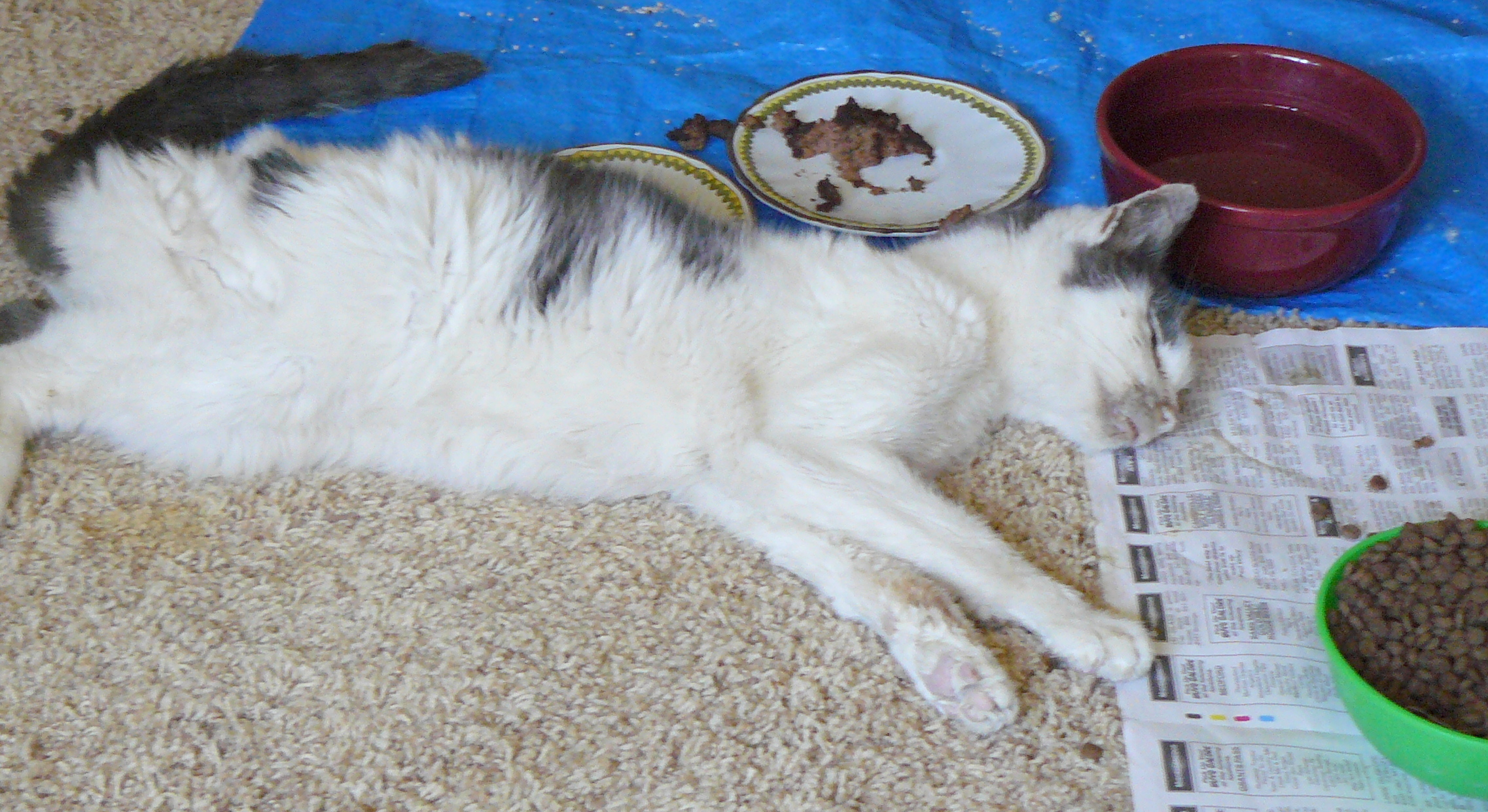
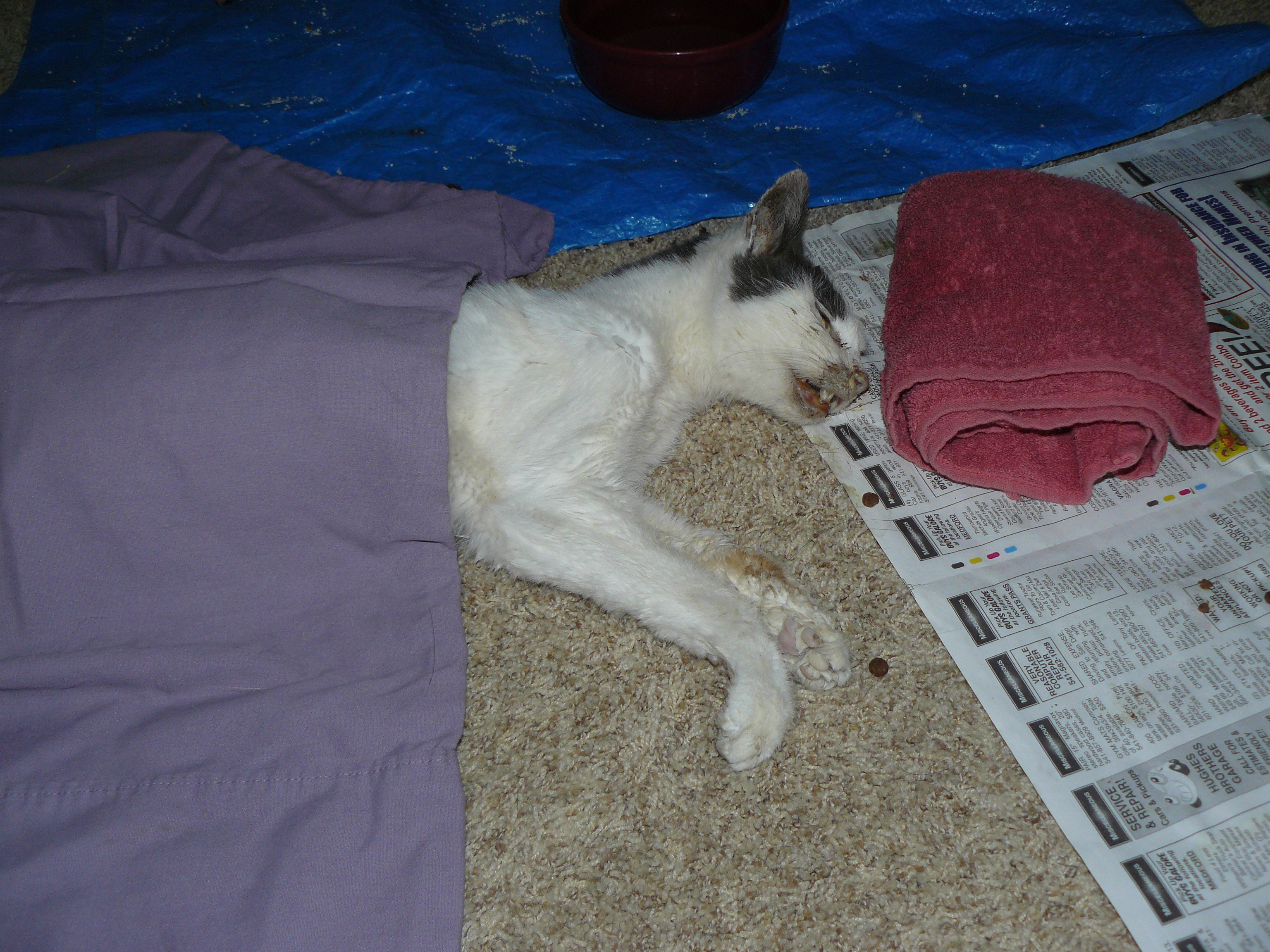
A few hours ago, our cat George died.

Just some words to celebrate his life. You may recall my post Life, and mortality was published a week ago.

George was a street cat that Jean found in San Carlos, Mexico, close to where she was then living.  He just turned up on Jean’s doorstep one day back in 2003, perhaps a little over a year old.  Just typical of the many cats struggling to live on the streets.

George became ill a few weeks ago with feline leukaemia.  He was made comfortable in our guest bedroom.

Late last night he was barely alive but not in any pain.  This morning we found that he had died during the night.


One
George sleeping very peacefully yesterday evening.


oooo

George this morning, having passed away overnight.


oooo

Resting in peace.
Resting in peace.


oooo

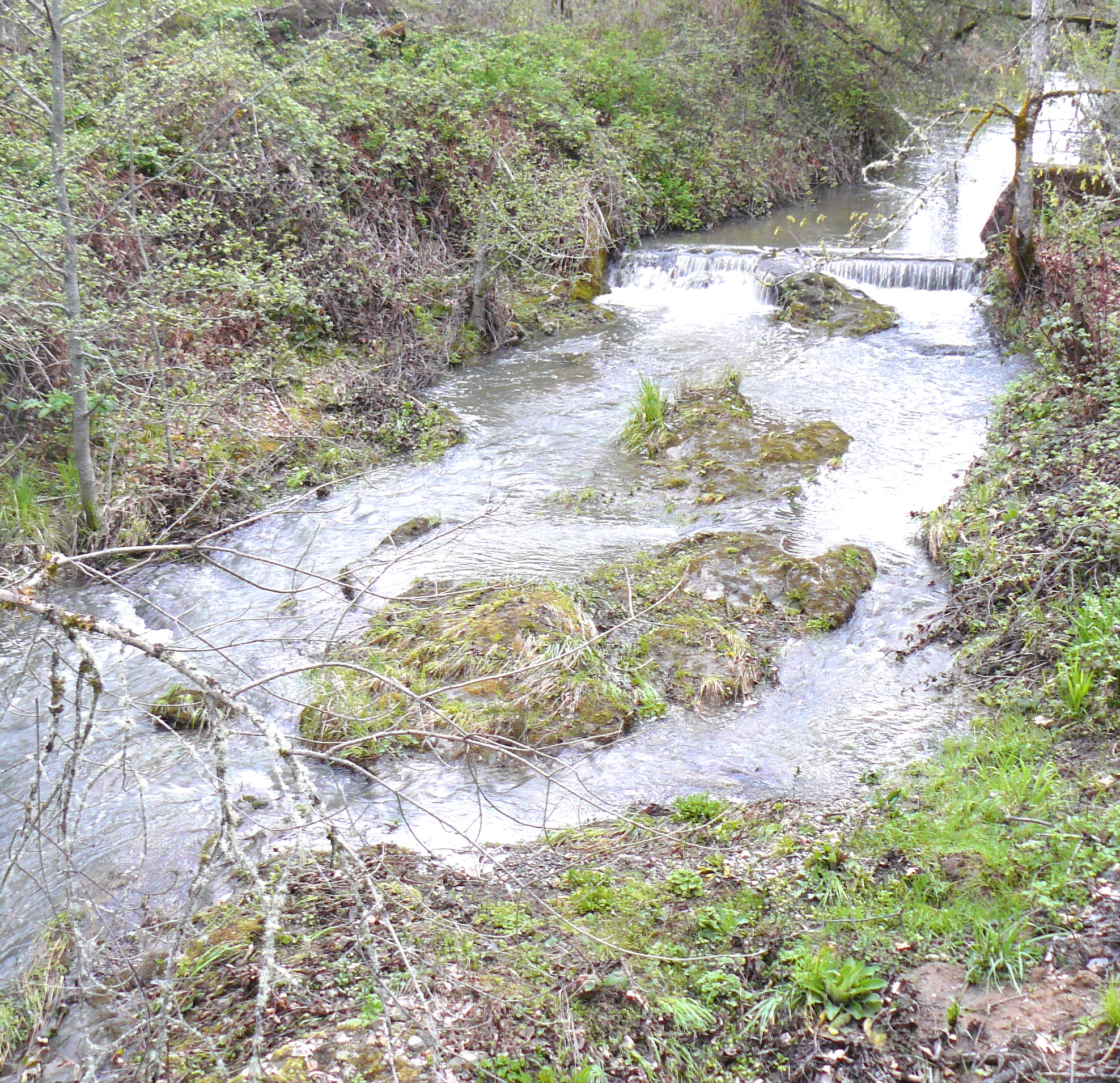
Meanwhile, the grass continues to grow, and ..


oooo

The waters continue to flow ...
The waters continue to flow …


I included the last two photographs simply because they seemed to express the reality of death; in the sense that the world continues to revolve long after we have gone.

Immediate concern? Try this!

Talk about extreme ends of the spectrum!

Yesterday, I posted about the prediction that in four billion years the Milky Way galaxy would collide with the Andromeda galaxy.  I called the post Not of immediate concern.

Today, I am writing about something that is of immediate concern. That is if you regard the next couple of decades as ‘immediate’.

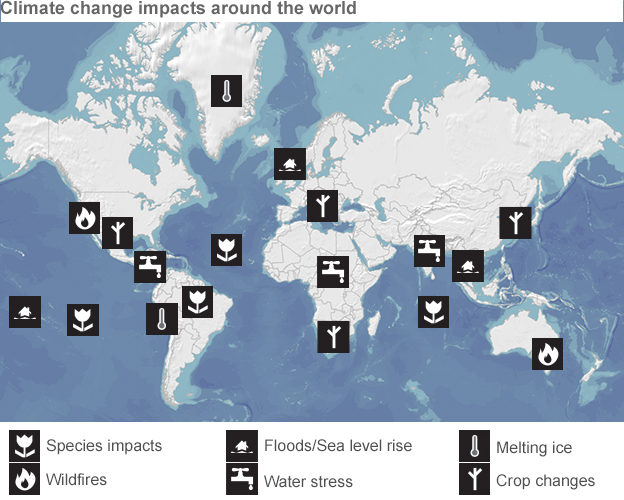
The post is prompted by an item that was published on the BBC News website two days ago.  It carried the title Climate inaction catastrophic – US

Climate inaction catastrophic – US

By Matt McGrath
Environment correspondent, BBC News, Yokohama, Japan

The costs of inaction on climate change will be “catastrophic”, according to US Secretary of State John Kerry.

Mr Kerry was responding to a major report by the UN which described the impacts of global warming as “severe, pervasive and irreversible”.

He said dramatic and swift action was required to tackle the threats posed by a rapidly changing climate.

Our health, homes, food and safety are all likely to be threatened by rising temperatures, the report says.

Scientists and officials meeting in Japan say the document is the most comprehensive assessment to date of the impacts of climate change on the world.

In a statement, Mr Kerry said: “Unless we act dramatically and quickly, science tells us our climate and our way of life are literally in jeopardy. Denial of the science is malpractice. There are those who say we can’t afford to act. But waiting is truly unaffordable. The costs of inaction are catastrophic.”

Putting to one side the mild irony of a representative of the US Government wringing his hands about what mankind is doing to our climate, the report is valuable and potentially significant.

The report was from the Intergovernmental Panel on Climate Change (IPCC) which is, as their website explains:

The Intergovernmental Panel on Climate Change (IPCC) was established by the United Nations Environmental Programme (UNEP) and the World Meteorological Organization (WMO) in 1988 to assess the scientific, technical and socio-economic information relevant for the understanding of human induced climate change, its potential impacts and options for mitigation and adaptation.

Watch this 5-minute video of Stanford professor Dr. Chris Field, co-chair of that IPCC working group, addressing some of the key questions raised by this latest report.  In particular, focus on Dr. Field discussing the potential of the loss of the Greenland ice cap around 3 min 30 seconds.

Back to the BBC report (which you should read in full!).  Back to Dr. Chris Field being quoted as saying:

I think the really big breakthrough in this report is the new idea of thinking about managing climate change as a problem in managing risks. Climate change is really important but we have a lot of the tools for dealing effectively with it – we just need to be smart about it.

BBC climate-change-impacts_v2

It would be easy to get into the mindset that humanity is not going to change its ways in time.

But, then again, the pace of growing awareness about what the changes are that we all need to make, and make relatively soon, is dramatic.

Maybe, just maybe, this will turn out alright!

Fingers-crossed1

For all the young people in the world, I do so hope!


Not of immediate concern!

Milky Way galaxy heading for a collision – in about 4,000,000,000 years!

As with huge numbers of others who come to this blog, the night sky has always been of incredible fascination to me.  To reinforce that fact, one of the favourite posts on Learning from Dogs for the last three years has been The night sky above published back on the 27th March, 2011.  If you haven’t read it, do pop across and do so as the title is misleading in terms of the post.

Thus it was unavoidable not to pick up on an item recently referred to by Naked Capitalism that had been published by the EarthSky blog.  This particular item was called Night sky as Milky Way and Andromeda galaxies merge.  It began thus:

As seen on Cosmos … the collision and merger between our Milky Way galaxy and the nearby Andromeda galaxy 4 billion years from now.

The video below illustrates what NASA scientists announced in 2012 – and what the Cosmos TV series featured in 2014 – that the nearby Andromeda galaxy will collide and merge with our Milky Way galaxy 4 billion years from now. The video (from the Hubble Space Telescope news center) is from a series of photo illustrations, showing the predicted merger between our two titan spiral galaxies, as seen in Earth’s sky. Will Earth as a planet survive long enough to see this? A word about that at the end of this post.

The video lost a lot for me by not carrying a commentary.  But no problem as one was found that did have a ‘voice-over’.  However, the article photographs were stunning.  For example:

merger-milky-way-andromeda-NASA-e1395662599173
This series of photo illustrations shows the predicted merger between our Milky Way galaxy and the neighboring Andromeda galaxy. Via NASA; ESA; Z. Levay and R. van der Marel, STScI; T. Hallas, and A. Mellinger

A description of what’s happening in the images above:

First Row, Left: Present day.
First Row, Right: In 2 billion years the disk of the approaching Andromeda galaxy is noticeably larger.
Second Row, Left: In 3.75 billion years Andromeda fills the field of view.
Second Row, Right: In 3.85 billion years the sky is ablaze with new star formation.
Third Row, Left: In 3.9 billion years, star formation continues.
Third Row, Right: In 4 billion years Andromeda is tidally stretched and the Milky Way becomes warped.
Fourth Row, Left: In 5.1 billion years the cores of the Milky Way and Andromeda appear as a pair of bright lobes.
Fourth Row, Right: In 7 billion years the merged galaxies form a huge elliptical galaxy, its bright core dominating the nighttime sky.

The sequence is inspired by dynamical computer modeling of the inevitable future collision between the two galaxies.

Further on in the article one reads:

This illustration shows the collision paths of our Milky Way galaxy and the Andromeda galaxy. The galaxies are moving toward each other under the inexorable pull of gravity between them. Also shown is a smaller galaxy, Triangulum, which may be part of the smashup. Via NASA; ESA; A. Feild and R. van der Marel, STScI.

Will Earth survive long enough to see this merger of galaxies, as depicted in the video above? Earth as a planet might, but life on Earth – probably not. Astronomers say that the luminosity, or intrinsic brightness, of our sun will steadily increase over the next 4 billion years. As the sun’s luminosity increases, the amount of solar radiation reaching the Earth will also increase. It’s possible that – around 4 billion years from now – the increase in the Earth’s surface temperature will cause a runaway greenhouse effect, perhaps similar to that going on now on the planet next door, Venus, whose surface is hot enough to melt lead. No one expects to find life on Venus. Likewise, life on Earth will probably not exist 4 billion years from now. What’s more, our sun is expected to become a red giant star eventually. A probable fate of the Earth is absorption by the sun in about 7.5 billion years, after our sun has entered the red giant phase and expanded to cross Earth’s current orbit.

Anyhow, I mentioned that I found a better video on YouTube than the one included in the original article, and that is now presented.

Rather puts the grunt and grind of daily life into perspective! 😉

We are what we eat!

But being careful about what our dogs eat is another story!

This is not the first time that I have used this title for a blog post.  The previous time was almost eighteen months ago when I highlighted a fascinating talk about the green revolution by Raj Patel, the award-winning writer, activist, and academic.

However, today is a first in that it looks at what our dogs eat.  It was inspired by a recent article by Brady Dennis in the Washington Post.  Here’s how that article opened:

Mystery of pet deaths related to jerky treats made in China continues to stump FDA

By Brady Dennis, Published: March 28

Andy lost his appetite. Then came the vomiting, the unquenchable thirst, the constant need to urinate. Over several days last year, the spunky 4-year-old West Highland white terrier grew lethargic and lost more than 10 percent of his weight.

“It got bad,” said Andy’s owner, Alfredo Gude, a retiree in Cape Coral, Fla. “I knew that he was in trouble.”

Gude and his wife rushed Andy to their veterinarian, who referred him to a clinic 15 miles away. Doctors there sent a urine sample to a specialized metabolic lab at the University of Pennsylvania. Days later, test results confirmed the diagnosis: Fanconi syndrome, a rare, often fatal illness that affects the kidneys. The suspected cause: chicken jerky pet treats manufactured in China.

The incident is part of a troubling mystery lasting more than seven years, with reports of at least 600 dogs dying and thousands of others sickened. It has outraged unsuspecting pet owners, confounded the Food and Drug Administration and put the pet food industry’s manufacturing practices under a microscope.

A little later on in the article, Brady Dennis writes:

Bernadette Dunham, director of the FDA’s Center for Veterinary Medicine, has called it “one of the most elusive and mysterious outbreaks we’ve encountered,” a sentiment echoed by others at the agency.

“We are frustrated,” said Martine Hartogensis, who oversees the FDA’s ongoing investigation. “It’s been a long, winding, twisting road . . . [But] we haven’t given up.”

The FDA says it has tested more than 1,200 jerky treats in recent years, looking for salmonella, mold, pesticides, toxic metals, outlawed antibiotics, nephrotoxins and other contaminants. Federal officials have inspected factories in China that manufacture chicken jerky products for U.S. companies and sought input from academics, state and university research labs, foreign governments and the pet food industry. The agency even made its own jerky treats to try to duplicate the commercial process.

This is not some minor issue reinforced by the huge increase in dog food imports into the USA from China.  Back to Brady:

The long-running investigation has paralleled a striking increase in the amount of pet food China exports to the United States. That volume increased from barely 1 million pounds in 2003 to an estimated 86 million pounds by 2011, according to the FDA.

Pet treats, including the jerky treats at the heart of the current investigation, have made up a fast-growing sliver of the pet food market. Part of the reason many U.S. companies have looked to China to produce chicken jerky treats, industry officials say, is that unlike in America, people in China overwhelmingly prefer dark meat. That leaves a larger supply of the white meat used in pet treats available for exporting.

Then a few paragraphs later, he adds:

“It’s maddening that it has gone on this long,” said Susan Thixton, who runs the Web site TruthAboutPetFood.com, which has repeatedly demanded that the agency do more. “If this were humans dying, and they couldn’t figure out a cause for seven years, members of Congress would be screaming at them.”

The home page of her site displays a clock tracking how long jerky treats from China have been killing and sickening pets. It asks: “When will FDA make this clock stop?” As of Friday, the count stood at 2,643 days.

“My job is to point out that they aren’t doing their job,” Thixton said. “I have a lot of respect for what they have to accomplish. They have huge responsibilities, but this is one of them.”

When I read out the article to Jean what then jumped ‘off the page’ was this paragraph [my emphasis]:

Angry pet owners also have heaped criticism on U.S. companies that continue to manufacture jerky treats with ingredients from China. The backlash includes everything from skepticism over the industry’s assurances that the treats have never posed health risks to lawsuits alleging harm.

As Susan Thixton was reported earlier: “If this were humans dying, and they couldn’t figure out a cause for seven years, members of Congress would be screaming at them.”  Quite so!

Luckily, owners are responding as Brady highlights in these paragraphs:

Nina Leigh Krueger, head of the Waggin’ Train brand, said most retailers and customers have welcomed the treats back. “Thousands of consumers have been calling and asking us for Waggin’ Train treats to be back on the market,” she said.

Terry Safranek is not one of them.

“It’s a kick in the gut to see them back on the shelf,” said Safranek, whose 9-year-old fox terrier, Sampson, who had eaten jerky treats, died of kidney failure in 2012. Since then, Safranek has become a plaintiff in a class-action lawsuit against Nestlé Purina and retailers including Target and Wal-Mart. She helped create Animal Parents Against Pet Treats and Food Made in China, a group that has petitioned the FDA to do better in alerting people about the potential dangers of jerky treats produced in Chinese factories.

The link in the last paragraph takes the reader to the Facebook page for that group.  Do go there and ‘Like’ the page.

I will close by recommending you read the Washington Post article in full and then spend some time perusing the website Truth about Pet Food. This is not just about ‘Made in America’ but fighting to ensure that animal treats made in the USA are also using ingredients from the USA!

Remember how Brady opened his article?  With Alfredo Gude learning that their dog, Andy, had been diagnosed with Fanconi syndrome, a rare and often fatal illness that affects the kidneys of dogs.

Well last words left with Brady Dennis:

For now, on Florida’s west coast, Andy the terrier has returned to normal after months of treatments — about $3,500 worth — to restore his kidney function. “We feel very lucky,” said Gude, who has taken the advice of many vets around the country to steer clear of pet jerky treats altogether. “It could have gone another way.”

Our dogs (and cats) have a right to be fed to the same standards as us humans!

Nostalgia isn’t what it used to be!

The sirens of past lives take some silencing.

Going to relate to you a true story.

In 1968 I emigrated to Australia; to the city of Sydney.  It was an easy move in many ways.  For before I left I was working in the sales office of British Visqueen Ltd in Stevenage in Hertfordshire. ‘BVL’ were part of Imperial Chemical Industries (ICI).

On Day Three of my new life in Sydney I noticed that ICIANZ (Australia & New Zealand) had their headquarters building on Macquarie Street near North Circular Quay.  On impulse I went in and two hours later had been offered a job in the sales office of ICI’s Inorganic Chemicals Division.

From the window of my office I had a stupendous view of the Sydney Harbour Bridge. This is a picture taken the other side of the Bridge looking back at the office complex to the right of the Sydney Opera House; the office block partially obscured by the top curve of the bridge.

Sydney_Harbour_Bridge

Anyway, back to the story.

I was dating a Finnish woman who with her sister and parents had emigrated from Finland some years previously.  That woman’s name was Britta and later we were married and then upon returning to England in 1970 we had two children; a son and a daughter. In Australia I didn’t miss England and when back in England I didn’t miss Australia.

I was 26 when we returned to England.

Fast forward forty-four years to now.

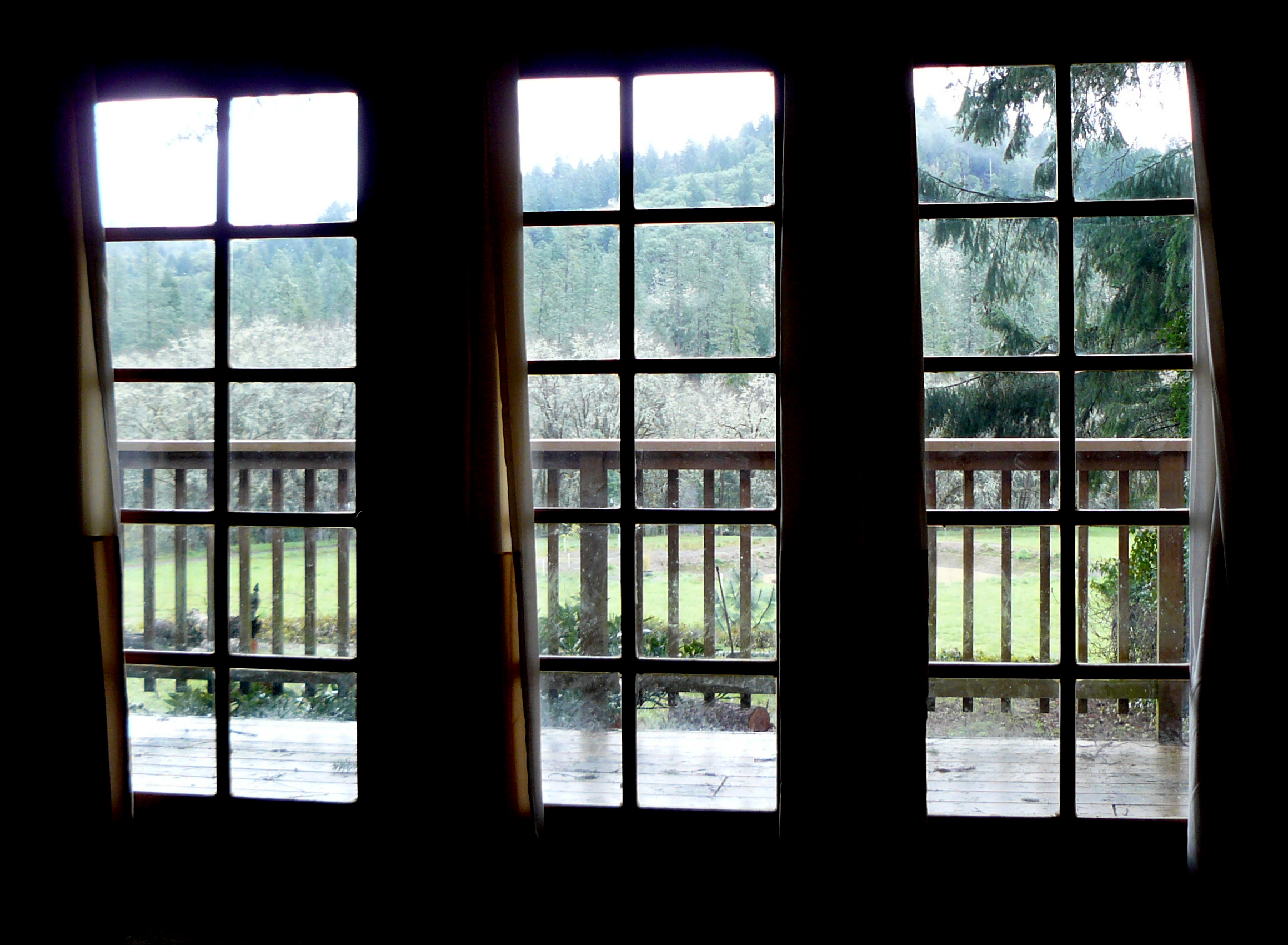
This is the view through our bedroom window in the morning when Jean and I awake.

Morning

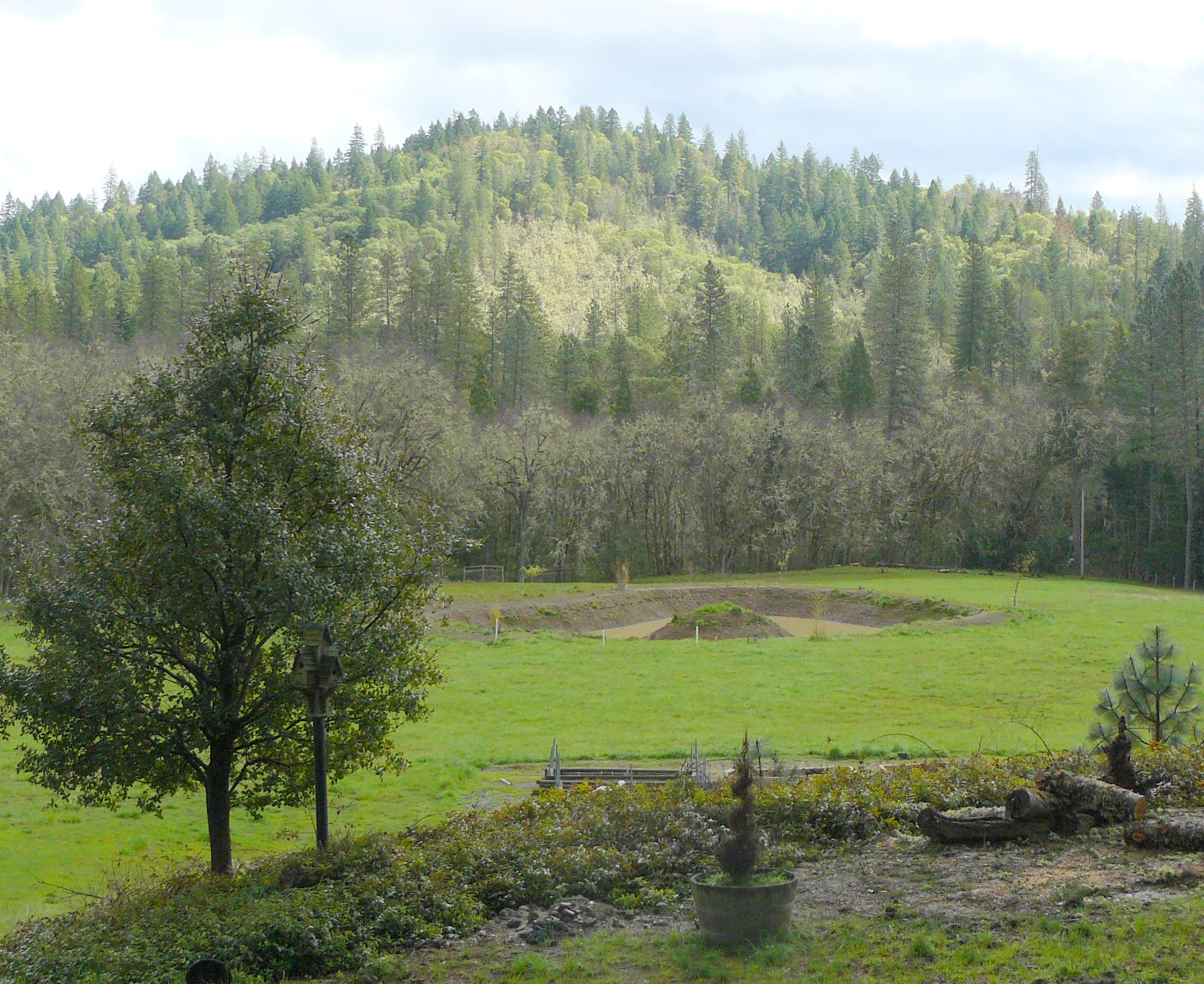
This is another view of the same scene but taken from outside the windows.

Morning2

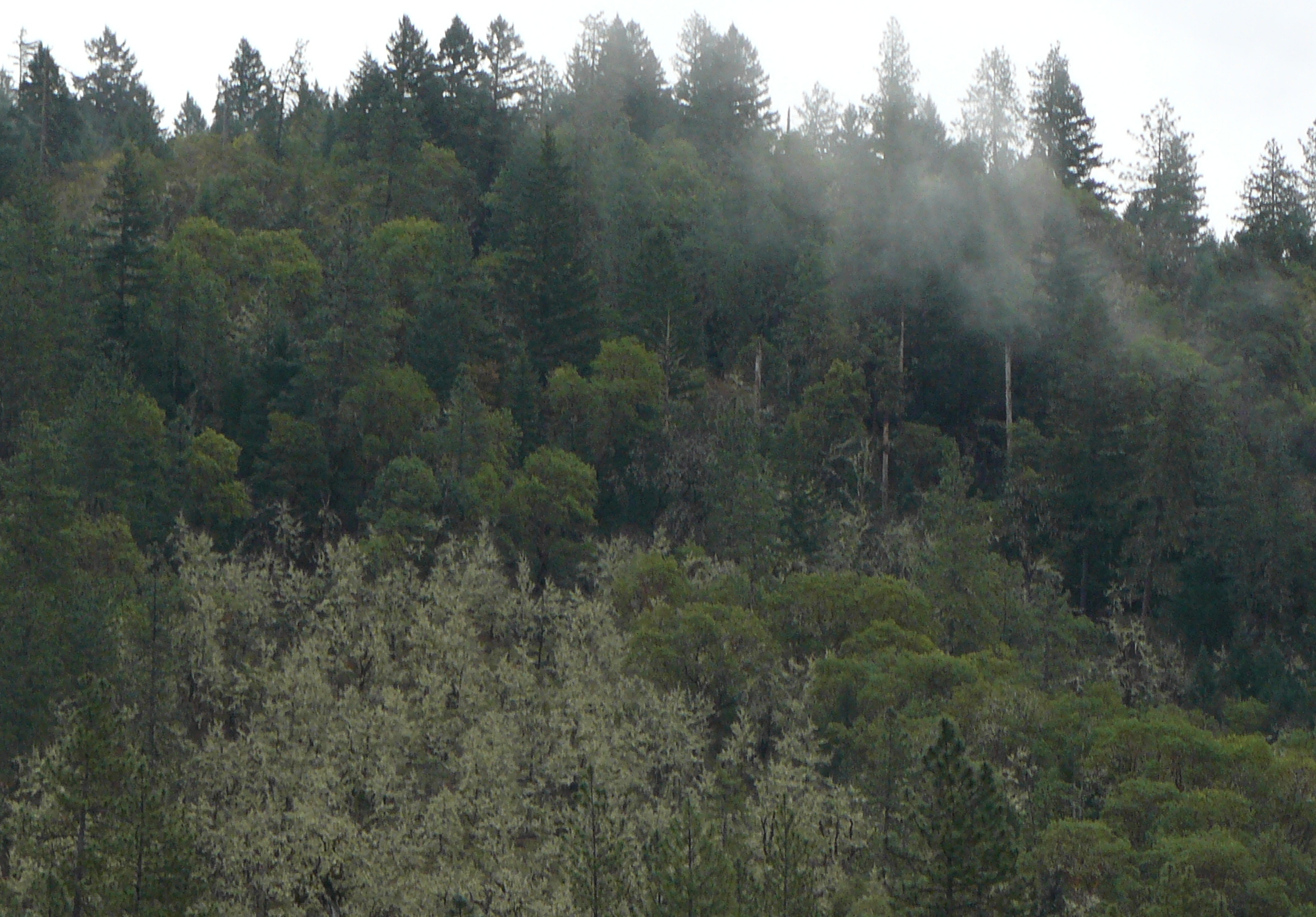
When the air is really moist and there are clouds hanging low over the ridge, it’s common to see mist swirling through the trees.

Morning mist

It is a beautiful place to live, for us and for all our animals …. yet …. we don’t feel perfectly settled.

Back to Britta’s parents.  After they had been living in Australia for quite a few years, in Brisbane in those days, and all settled with jobs and their own house, they still didn’t feel perfectly settled.  So they gave up their jobs, sold the house and transported themselves and their belongings all the way back to Helsinki, Finland.

Only to find that in less than three months that they had made a ghastly mistake and so, yes you know what’s coming, they transported themselves and all their belongings all the way back to Australia; this time settling in Sydney.

OK, to the point of this tale.

In many, many ways this life that Jean and I have here in Oregon is better than anything we have previously experienced.

Yet, there are times when I hear the sirens of Devon calling out to me and for Jean there are times when she hears the sirens of Mexico calling out to her; Jean lived in San Carlos, Mexico for twenty-five years, off and on, with her late American husband, Ben, who died in 2005.

I’m 70 in November this year.

What does it all mean?

When Jean and I were living in Payson, Arizona we were talking one day to a woman who in previous times had been a personal counsellor.  She asked how we were settling in.  We mentioned that we were not yet settled.  The woman went on to say that people over the age of 60 frequently had a much more difficult time adjusting to major moves and changes in their lives than younger persons.

Jean and I wouldn’t rewind our lives for all the tea in China but what, dear reader, do you think?

Anyone out there the ‘wrong’ side of 60 who can relate to this?