Kaycee joins the fold taking us back up to ten dogs.
Many of you read and commented on the loss of Phoebe that I wrote about on the 17th February.
Phoebe used to be one of a group of three dogs that lived in our large basement room, the other two being Loopy and Ruby. Well, it wasn’t long after Phoebe’s death that we noticed Loopy was, how can I say it, just a bit off. She had previously suffered from Valley Fever that had affected her when we were living in Mexico, (useful website on Valley Fever is here) and Jean thought that the fever had returned. In order to keep a closer eye on Loopy, she came up from the basement and joined the three dogs that made up the ‘kitchen’ group. Those three dogs being Lilly, Paloma and Chester. It made sense any way as Phoebe was a great play friend for Ruby and it was clear that Ruby was both missing Phoebe and not finding Loopy as an effective substitute play friend.
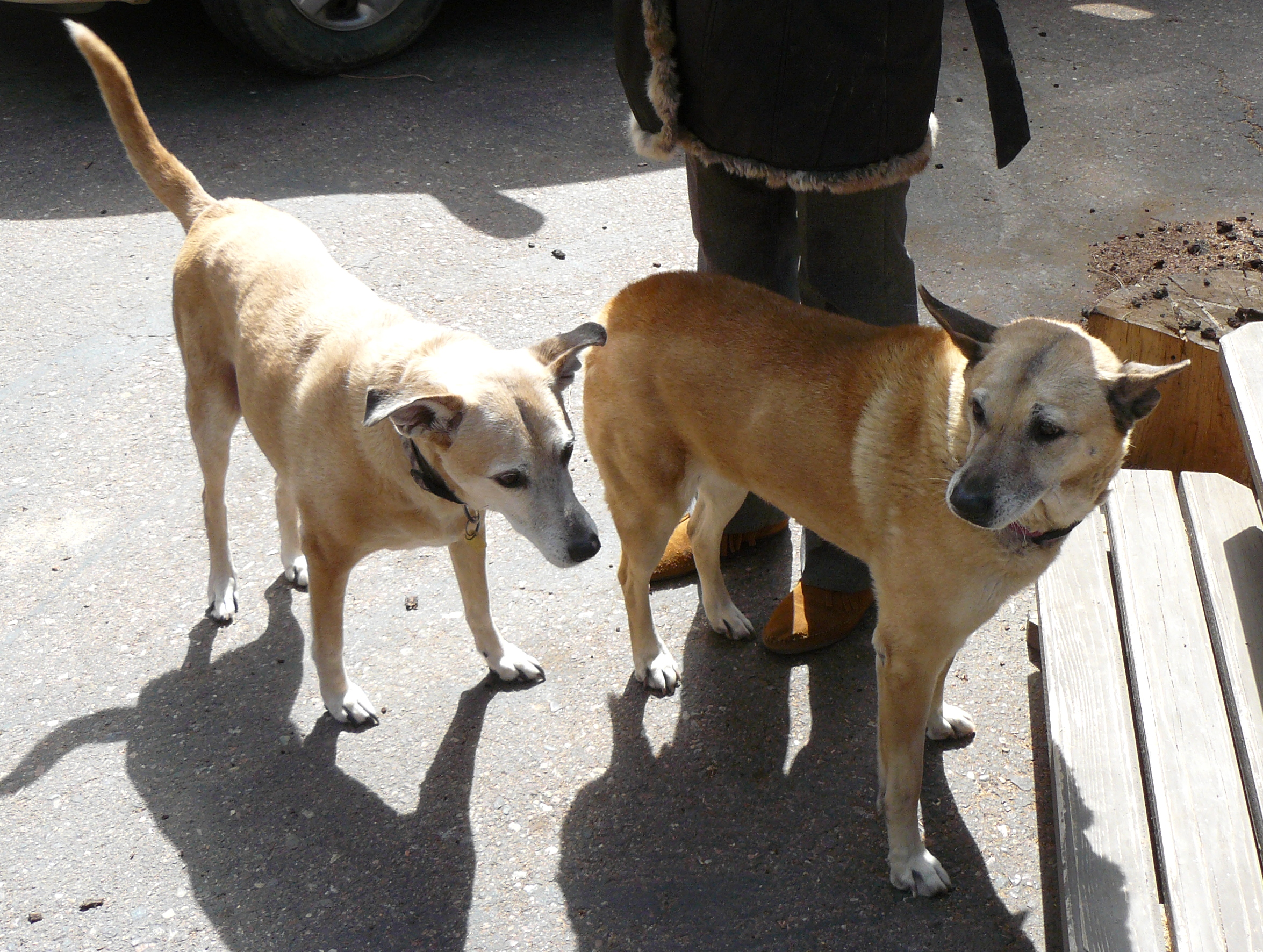
Lilly, from the 'kitchen' group, checking Loopy out!
So on Tuesday, Jean and I, together with Ruby and little Sweeny, who also came from the local Humane Society, went back to the Society to find a companion for Ruby.
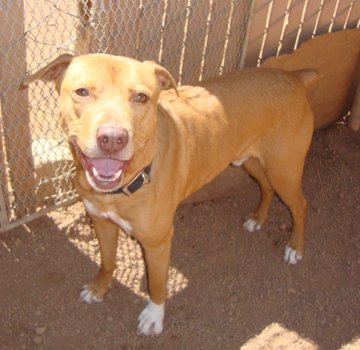
Jean had had her eye on a male dog, Kaycee, that had appeared in the list of available dogs that is featured each week in the local Payson Roundup newspaper. Indeed, here is the list of dogs for February that has Kaycee’s details, from which I reproduce below,
Kaycee
My name is Kaysee and I’m a 5-year-old Heeler/Pit mix. I have been with HSCAZ since 23rd March, 2011. I’m a flirty boy, who loves to have his butt scratched. I’m super smart too and I know all sorts of basic commands. Did I mention I like to play ball? My song choice is Brian Adams’ “Everything I Do,” because I will do it for you.
Anyway, Ruby and Kaycee took to each other without any issues and he came home with us later on the morning of the 28th. Now over 24 hours later, as I write this, it’s clear that he is a bright, loving dog with no obvious personality challenges and already Ruby is relishing his company; they slept curled up together last night. So that’s wonderful for all concerned.
What follows are some photographs of Kaycee’s arrival. To be honest, when Jean and I walked around the dogs at the Humane Society, it was very hard to fight back the tears – I wanted to take them all!
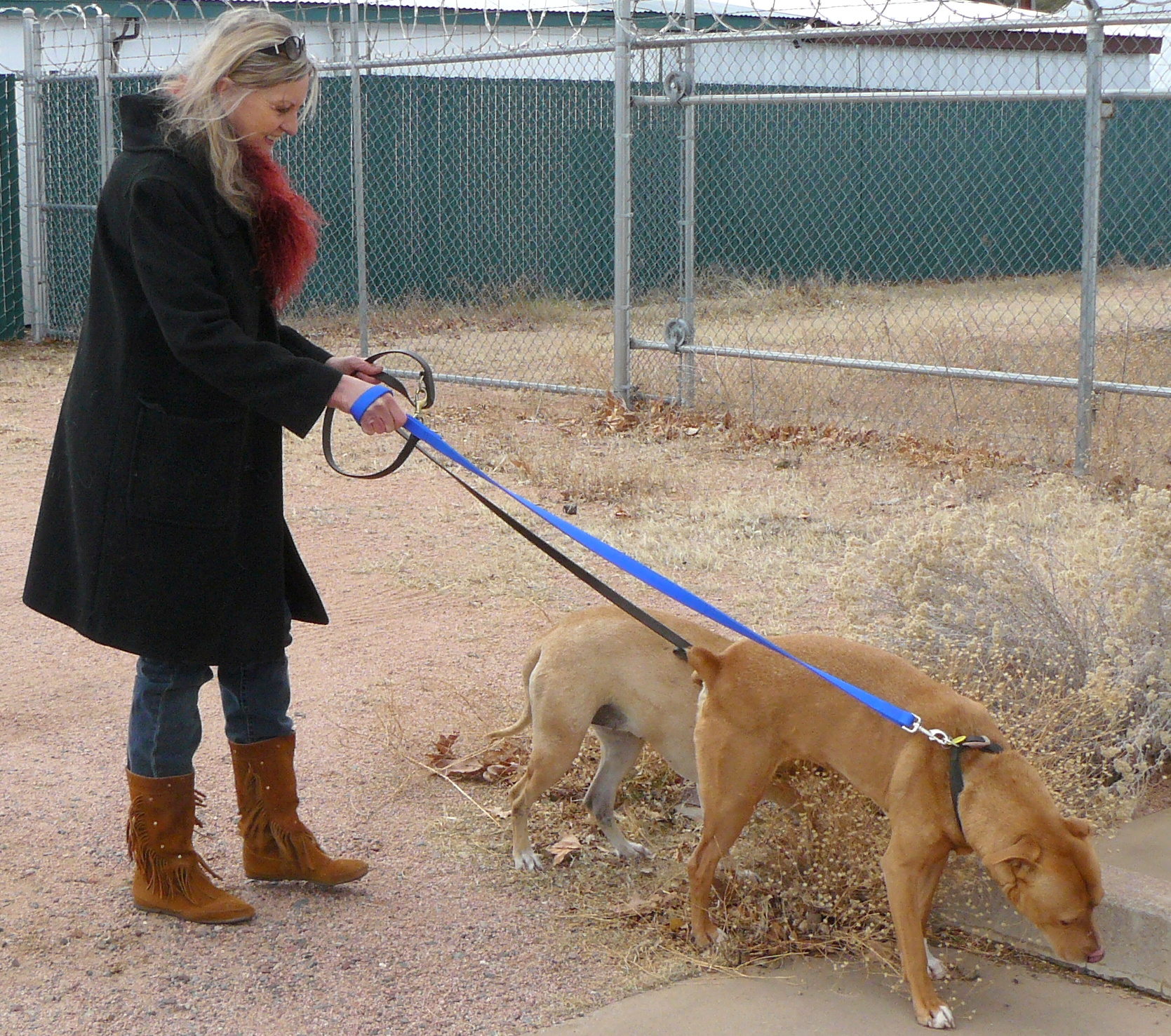
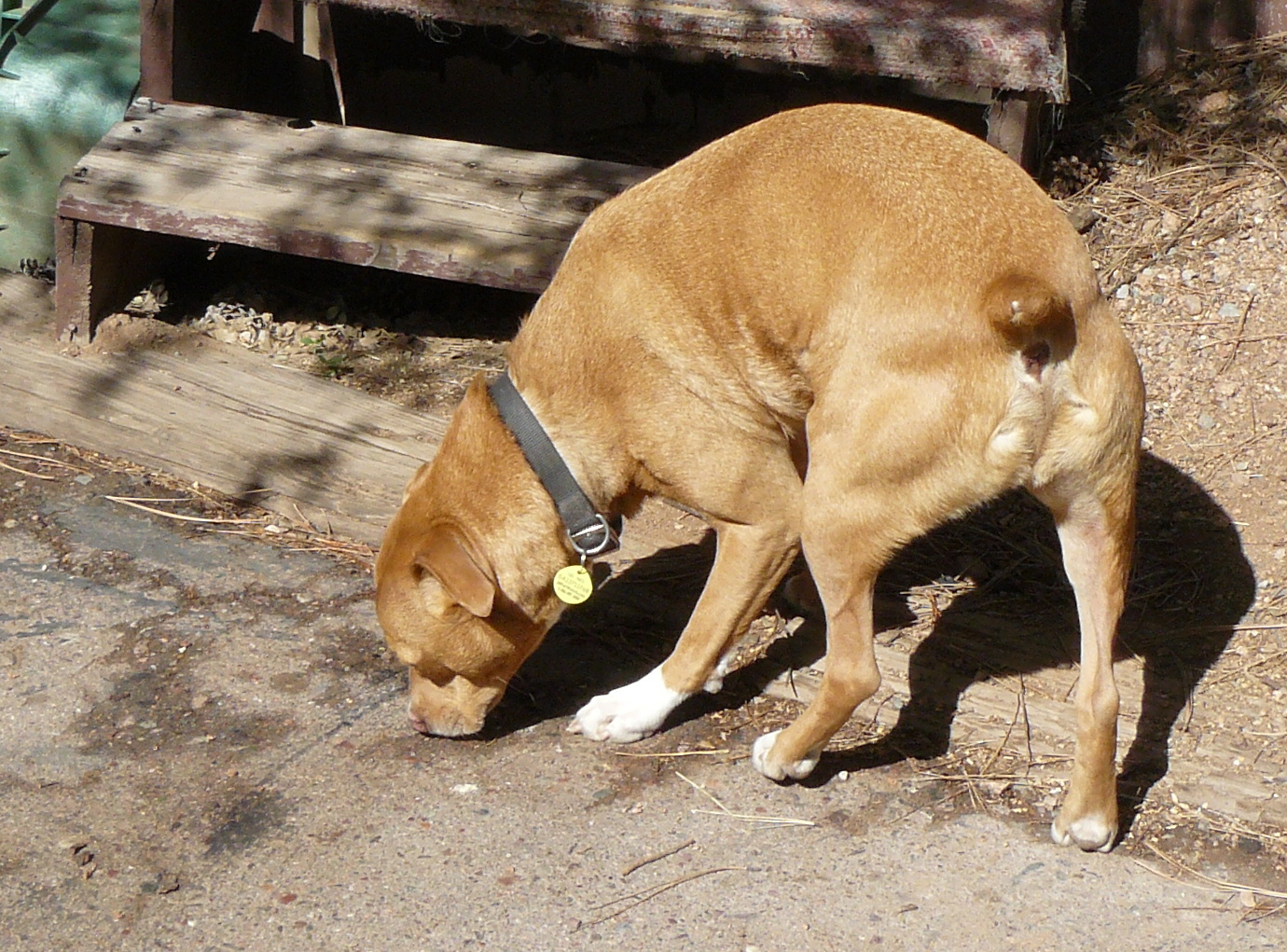
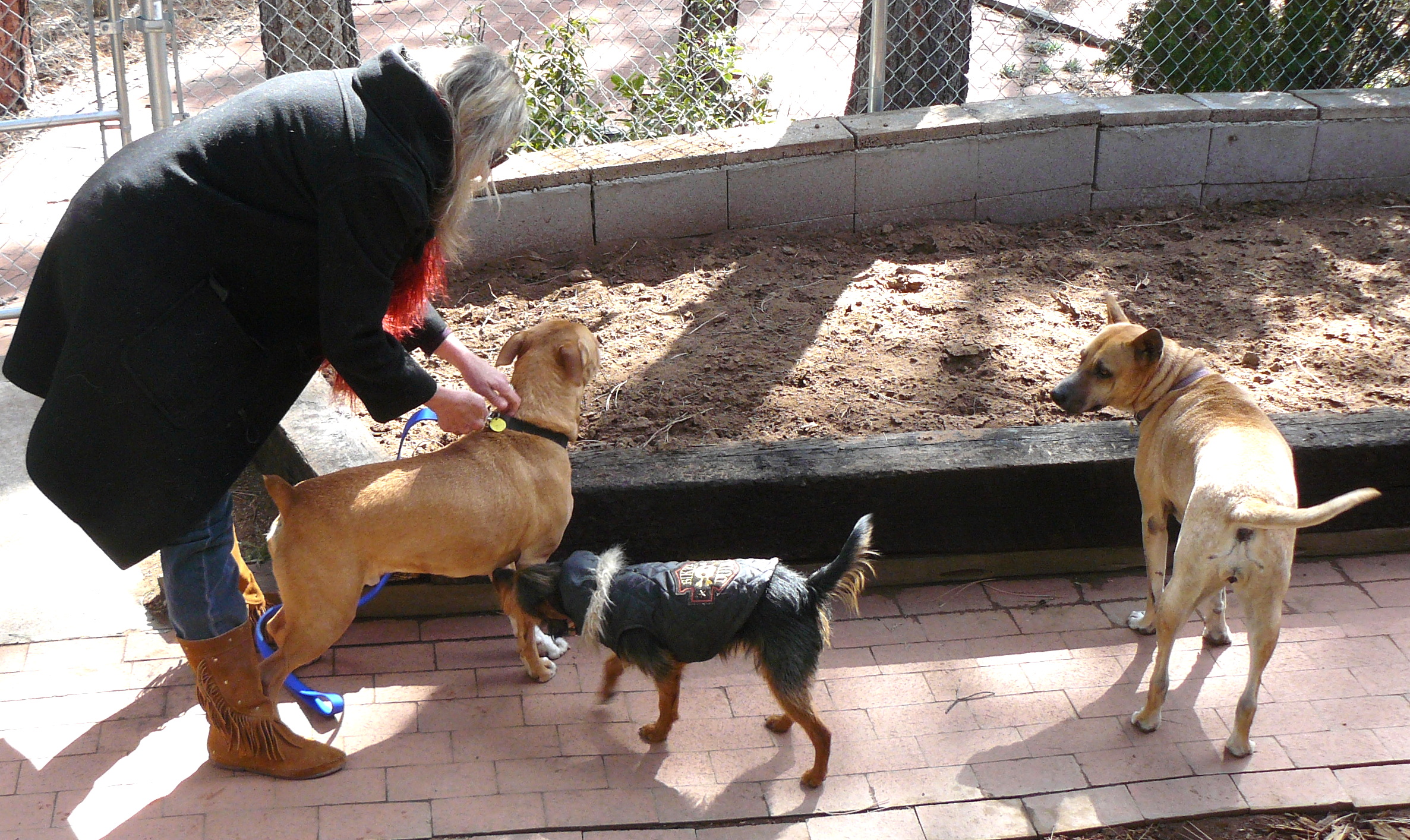
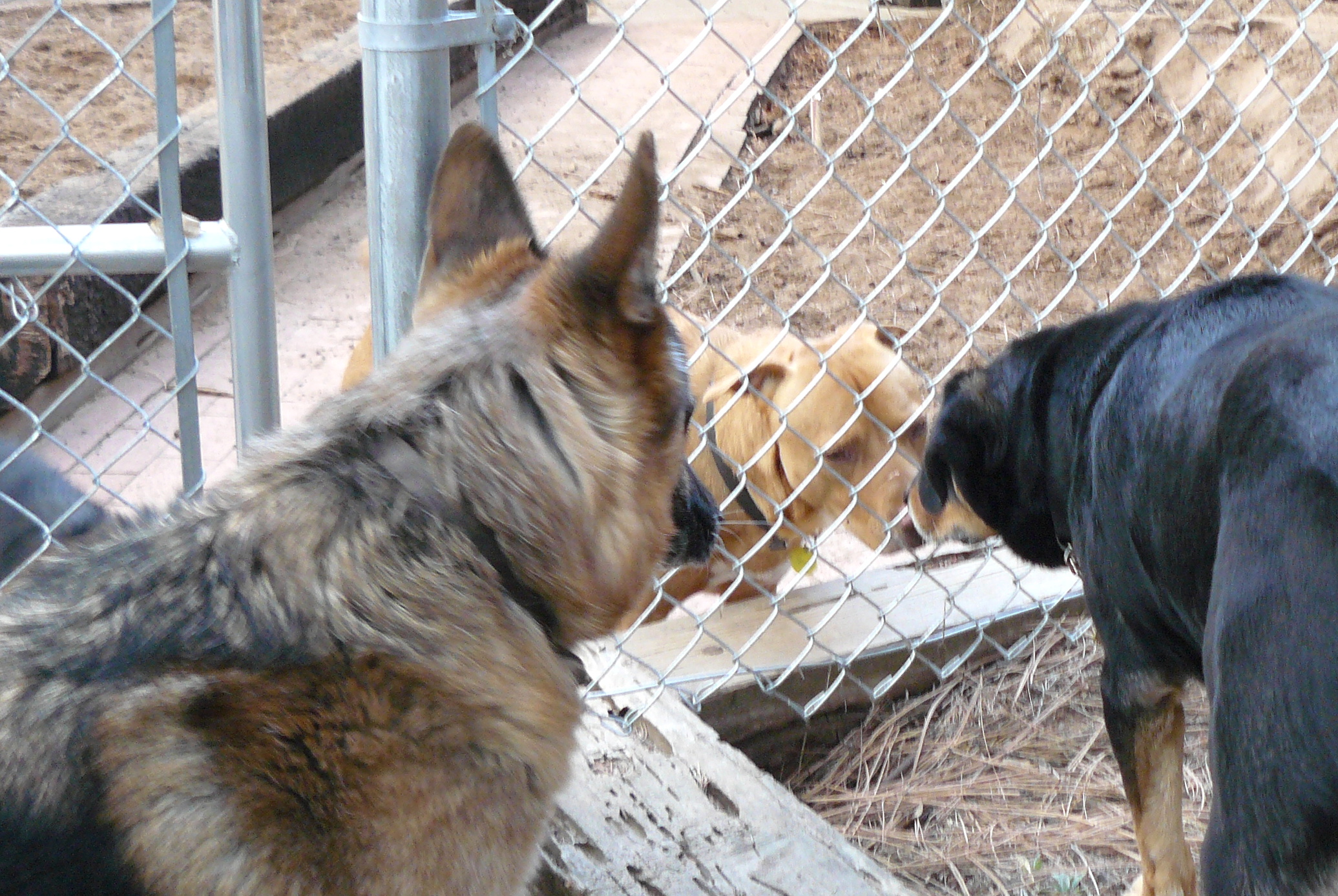
Ruby, partially hidden, and Kaycee outside the humane shelter.Checking out the new garden!Kaycee seconds away from freedom in his new home, Ruby and Sweeny looking on.Pharaoh and Hazel saying 'Hi' through the fence to Kaycee.
There has been a wealth of information going past my ‘desk’ in the last couple of days that gives plenty of cause to worry. But I’m going to spend a few days mulling it all over rather than react in some ‘knee-jerk’ fashion.
However, a couple of stories caught my eye a few days ago on the BBC News website and seemed worthy of sharing with you.
Mild drought caused Maya collapse in Mexico, Guatemala
Relatively mild drought conditions may have been enough to cause the collapse of the Classic Maya civilisation, which flourished until about AD950 in what is now southern Mexico and Guatemala.
Scientists have long thought that severe drought caused its collapse.
But Mexican and British researchers now think that a sustained drop in rainfall of only 25-40% was enough to exhaust seasonal water supplies in the region.
The findings were published in the journal Science.
The research was conducted by the Yucatan Centre for Scientific Research in southern Mexico and the University of Southampton in the UK.
The second piece published by the BBC within 24 hours went as follows,
Drought conditions in England ‘set to widen’
Ongoing dry weather over the spring and summer threatens to place more areas of England in a state of drought, the Environment Agency (EA) has warned.
It singled out parts of western, central and south western England and parts of south east Yorkshire.
The agency said time was running out for rain to restore groundwater levels before the new growing season begins.
Earlier this week the South East joined most of East Anglia in a state of official drought.
In parts of south-east England groundwater levels are lower than in the infamously dry summer of 1976.
Again, read the full article on the BBC website here.
And closer to home?
The historical (30-year average) precipitation for Payson up here in the Rim Country is 2.30 inches for January, and 2.41 inches for February. Today, February 29th 2012, we have had less than 0.5 inches for the whole of 2012 so far! Interesting times!
My post yesterday generated quite a lot of heat so here’s a respite.
I saw the following video on Naked Capitalism but was sure that previously I had included it on Learning from Dogs. So if you have seen it before, apologies, and if not, enjoy. Here’s a comment left on YouTube to give you a flavour.
It’s so moving to see how everything we humans think we know about flight and took so long to learn completely and flawlessly executed by such a majestic bird as this owl. Note the fact that the head never moves, only the body. Note the adjustments made in each wingstroke, then compare the end of the flight to what a pilot must do to facilitate a landing. Humans deploy the plane’s flaps; the owl does everything with the subtlest of adjustments. Absolutely gorgeous!
A plea to those who understand climate science so much better than I do!
Background to this Post.
Among my friends, two go way back. One of them, Dan Gomez, a lively, ebullient Californian, was indirectly responsible for me and Jean meeting in Mexico back on December 17th, 2007. I first met Dan at a dealers’ conference in Boston way back in the early days of Commodore Computers. That was the Spring of 1979 and I had flown to Boston as the owner of the 8th Commodore Computer dealership to be appointed in the UK, based in Colchester, Essex. Later, I became the global distributor of an English word processing program known as Wordcraft, written by Pete Dowson in the UK, and appointed Dan as my US West Coast Wordcraft distributor. It gave me a wonderful reason to come out to Southern California several times a year; on business, of course!
Dan and I therefore go back 33 years! Dan’s sister Suzann has a house down in San Carlos, Mexico. Suzann invited me out to Mexico for Christmas 2007 which is where I first met Jean and, bingo, Jean and I then fell in love with each other! How life flows! (Two years ago yesterday, Jean and I moved into our house in Payson with our, then, 13 dogs and 6 cats!)
Paul & Dan Jan. 15th 2008
OK, to the Post!
Dan has been a climate change skeptic, as in caused by man, for many years. Regular readers of Learning from Dogs will know I see things very differently. But Dan and I agree fundamentally on getting to the truth. This Blog proudly claims to seek “The underlying theme of Learning from Dogs is about truth, integrity, honesty and trust in every way.”
So when the other day Dan sent me a number of links supporting his view that “My point remains that climate change is an enormous, complex process that no computer model is going to predict and no human activity modify significantly. Big money is now at stake here and as the article shows, even trusted scientists will produce fraudulent information to further their goals as well as fill politician’s coffers.” I found my faith in my own views slighted dented. Dan is a smart guy, a good thinker and not beholden to any firm or organisation with a vested interest in denying anthropogenic global warming.
IPCC Scientist Admits Fake Data Used To Pressure World Leaders
A scientist responsible for a key 2007 United Nations Intergovernmental Panel on Climate Change report warning Himalayan glaciers would be completely melted by 2035 has admitted that the claim was made to put political pressure on world leaders.
Such was revealed by the British Daily Mail Sunday in an article destined to further reduce the credibility of the world’s so-called leading authority on manmade global warming.
As NewsBusters reported Saturday, the IPCC acknowledged earlier this week that its claim concerning these glaciers was based on junk science.
Anthropogenic (Human Caused) Global Warming – Is This The Greatest Scientific Myth of our Generation?”
January 25th, 2012, Portland, Oregon
First Speaker – Gordon Fulks, PhD Physics, University of Chicago
[Extract]
Dr. Fulks said: “My thesis tonight is simple: virtually ALL of what climate alarmists put forth as science is not. Some is half correct, some is incorrect, and too much is just plain nonsense or worse.”
This led him into what he called “one of the central problems with Anthropogenic Global Warming,” “the integrity of the data.” He discussed a variety of temperature data from land surface data that shows various manipulations and biases to the best global data from NASA satellites to the excellent ice core temperature proxies going back 450,000 years.
Second Speaker – Chuck Wiese, Meteorologist – Oregon State University
[Extract]
Mr. Wiese finished his presentation with the following conclusions:
1. There is nothing in the REAL atmospheric record that supports the recent temperature rise of the last century to carbon dioxide induced anthropogenic warming.
2. The tropospheric water vapor optical depth is remarkably stable but has declined recently over the last 70 years of record as carbon dioxide rose substantially in the atmosphere during the same period. This is a consistent outcome as expected by the first principle founding physics and inconsistent with atmospheric climate models.
3. Without water vapor acting as a positive feedback ( growth pattern ) to increasing carbon dioxide concentrations, the projected radiative forcing on the earth’s surface is but a grossly exaggerated calculation of what the earth’s temperature will actually do in response to carbon dioxide.
4. The earth’s “greenhouse effect” is NOT controlled by atmospheric carbon dioxide. It is modulated and governed by atmospheric water vapor and clouds, where the warming modulation is controlled by the amount of vapor and optical depth. Clouds with the hydrological cycle act to trim out water vapor into a hydrostatic, convective equilibrium. The stable atmospheric optical depth likes the earth mean temperature of 59 deg F without further solar or planetary modulation.
5. The Anthropogenic warming hypothesis by atmospheric CO2 is falsified by the real record and radiation physics.
Third Speaker – George Taylor, former Oregon State Climatologist
[Extract]
His presentation finished with his conclusions:
1. Human activities DO affect climate, in a variety of ways. Greenhouse gases are just one parameter.
2. Natural variations affect climate. I believe that they have been more significant influences on climate because they do a much better job of explaining observed variations.
3. Effects of future changes in CO2 are likely to be modest and manageable.
4. Many aspects of climate remain poorly understood.
The full transcripts and supporting materials may be seen here.
Then, in stark contrast, this week’s edition of The Economist has a leader about the problem of overfishing. “Of all the sea’s many problems, overfishing should be the most fixable. ” What jumped off the page at me was how that leader article started,
ACIDIFICATION, warming, the destruction of coral reefs: the biggest problems facing the sea are as vast, deep and seemingly intractable as the oceans themselves. So long as the world fails to cut its emissions of greenhouse gases, cause of the global warming behind these troubles, they will grow.
So a newspaper of the standing of The Economist is clear, “So long as the world fails to cut its emissions of greenhouse gases, cause of the global warming behind these troubles”
So if, dear reader, you can offer good supporting evidence as to why the Oregon Chapter of the American Meteorological Society seems to contradict what so many now believe, that mankind is changing the Earth’s climate, please comment or, better still, consider writing a guest post.
I have to thank Michelle of Dogkisses’s Blog for alerting me to this short, but beautiful video from the National Geographic series on Great Migrations that Michelle recent featured. And the critical point that she mentioned,
It’s almost time to start thinking about what you might plant in your garden. I encourage you to plant a few larval food plants so that you may get to watch a butterfly happen in your own backyard.
So do watch the video below and be enthralled as so many others have.
Now go to the Monarch Butterfly USA website and check out what you can do to ensure this great migration goes on for evermore.
A review of Michael Mann’s new book The Hockey Stick and the Climate Wars: Dispatches from the Front Lines.
I’m republishing in full a recent Post on Kate’s fabulous blogsite Climate Change. As a degree student, Kate is a fantastic representative of the generation that is going to have to deal in full with all the crap that my generation (born 1944) has brought about! Learn more about her here. Anything that can spread the word to those, especially in my age group, that are climate change denialists is no bad thing.
Throughout all the years of public disputes about climate change, arguably no scientist has taken as much flak as Dr. Michael Mann. This mild-mannered paleoclimatologist is frequently accused of fraud, incompetence, scientific malpractice, Communism, and orchestrating a New World Order. These charges have been proven baseless time and time again, but the accusations continue. Dr. Mann’s research on climate change is inconvenient for those who wish to deny that current global temperatures are unusual, so he has become the bulls-eye target in a fierce game of “shoot the messenger”. In “The Hockey Stick and the Climate Wars: Dispatches from the Front Lines”, a memoir of his experiences, Michael Mann finally speaks out.
The story begins quite harmlessly: an account of how he became a scientist, from childhood curiosity to graduate work in theoretical physics to choosing climate science on a whim out of the university course calendar. For those who have followed Dr. Mann’s research over the years, there is some great backstory – how he met his coauthors Ray Bradley and Malcolm Hughes, the formation of the IPCC TAR chapter about paleoclimate, and how the RealClimate blog operates. This book also filled in some more technical gaps in my understanding with a reasonably accessible explanation of principal component ananlysis, a summary of millennial paleoclimate research before 1998, and an explanation of exactly how Mann, Bradley and Hughes’ 2008 paper built on their previous work.
Dr. Mann’s 1998 paper – the “hockey stick” – was a breakthrough because it was the first millennial reconstruction of temperature that had global coverage and an annual resolution. He considered the recent dramatic rise in temperatures to be the least interesting part of their work, because it was already known from instrumental data, but that part of the paper got the most public attention.
It seems odd for a scientist to downplay the importance of his own work, but that’s what Dr. Mann does: he stresses that, without the hockey stick, the case for climate change wouldn’t be any weaker. Unfortunately, his work was overemphasized on all sides. It was never his idea to display the hockey stick graph so prominently in the IPCC TAR, or for activists to publicize his results the way they did. Soon the hockey stick became the holy grail of graphs for contrarians to destroy. As Ben Santer says, “There are people who believe that if they can bring down Mike Mann, they can bring down the IPCC,” and the entire field of climate science as a result.
Michael Mann is an eloquent writer, and does a fabulous job of building up tension. Most readers will know that he was the target of countless attacks from climate change deniers, but he withholds these experiences until halfway through the book, choosing instead to present more context to the story. The narrative keeps you on your toes, though, with frequent allusions to future events.
Then, when the full story comes out, it hits hard. Death threats, and a letter full of suspicious white powder. Lobby groups organizing student rallies against Mann on his own campus, and publishing daily attack ads in the campus newspaper. Discovering that his photo was posted as a “target” on a neo-Nazi website that insisted climate change was a Jewish conspiracy. A state politician from the education committee threatening to cut off funding to the entire university until they fired Mann.
Throughout these attacks, Dr. Mann consistently found trails to the energy industry-funded Scaife Foundation. However, I think he needs to be a bit more careful when he talks about the links between oil companies and climate change denial – the relationship is well-known, but it’s easy to come off sounding like a conspiracy theorist. Naomi Oreskes does a better job of communicating this area, in my opinion.
Despite his experiences, Michael Mann seems optimistic, and manages to end the book on a hopeful note about improvements in climate science communication. He is remarkably well-adjusted to the attacks against him, and seems willing to sacrifice his reputation for the greater good. “I can continue to live with the cynical assaults against my integrity and character by the corporate-funded denial machine,” he writes. “What I could not live with is knowing that I stood by silently as my fellow human beings, confused and misled by industry-funded propaganda, were unwittingly led down a tragic path that would mortgage future generations.”
“The Hockey Stick and the Climate Wars” leaves me with a tremendous empathy for Dr. Mann and all that he has gone through, as well as a far better understanding of the shouting match that dominates certain areas of the Internet and the media. It is among the best-written books on climate science I have read, and I would highly recommend it to all scientists and science enthusiasts.
“The Hockey Stick and the Climate Wars” will be released on March 6th, and the Kindle version is already available.
As I mentioned on February 14th, Jean and I are attending a creative writing class at our local extension college and on that day I published a story from me called Messages from the Night. Now it’s Jean’s turn.
The Kiss
by
Jean Handover
She sat at the end of the bar. Her misery was palpable. An invisible shroud that hunched her shoulders and bent her head over the glass of wine. She peered into the pale liquid like it were a pool to drown in.
She was pretty in a faded way. Trying hard; skirt a little too short, blouse a little too low and blood red lipstick. Dark for a pinched mouth. A slim body the way I liked it! All around were drunken revellers whilst she remained in a bubble. I wanted to take her in my arms and crush her to my body and burst that bubble.
Hoisting my beer, I ambled to the stool beside her. She didn’t stir. Seemed unaware of my presence. I looked at our reflections in the mirror opposite. Then at Rose the barmaid. Rose of the buzzcut and tattoos. The tattoo on her neck. Then a small voice, “Why would anyone have lips tattooed on their neck?”
“Guess that’s where Rose likes to be kissed,” I said, taking a gulp of my beer and casting a glance in her direction.
“Yeah, that is a nice place for a kiss.”
She turned and a small smile twitched her lips. “I shouldn’t have come here. I’m not used to this scene,” she said.
“How long have you been divorced?” I asked.
“How can you tell I’m divorced?” she replied.
“Your ring finger has a wide indent.”
She fanned her fingers and looked. “Dead giveaway, isn’t it,” she wanely replied.
“What happened?” I asked.
“He came home one night and said he’d found someone else!”
“Younger woman?” I asked.
“No worse, a younger man!”
“Oops!” I said.
She swivelled in the stool and faced the crowd. The shroud was slipping perceptively. I finished my beer and beckoned for Rose to bring us another round. The divorcee was prettier that I thought at first. Her hand pushed a lock of hair behind an ear and trailed down her neck, then smoothing her skirt rested on a rounded knee. A fluid sensuous motion. I wanted to touch that hand.
“Oh God, no,” she gasped. Eyes large and face suddenly flushed. “It’s him with the boyfriend. They’ve just come in.”
“Don’t worry, Babe. Let’s just walk right past and get out of here.”
I took her hand and as we strolled past the two men I gently leaned over and kissed her on the neck. On the same place as Rose’s tattoo.
My lips lingered and with my arm around her waist, we drifted out into the night.
About a week ago, via the blogsite Paleo Works, a couple of comments brought me into contact with Amy. Of course being an Englishman any woman with the name of Amy Johnson is going to cause a double-take on the name. This Amy shared the same name as the English pioneering aviator Amy Johnson, albeit from an earlier era, the aviator that is!
An exchange of emails between Amy and myself revealed an experience that Amy had when she was very young, and I asked Amy if she would like to write a guest post. This, then, is Amy’s story about overcoming a fear of dogs.
Amy J.
I have a cousin who is about the same age as me. My cousin’s mom, my aunt, used to babysit me and the dog in question, a big female, reddish golden retriever was always around and like any retriever was a loving, and lovable, happy-go-lucky dog.
The event goes back to when both my cousin and I were about four-years-old, maybe just five. For some inexplicable reason the dog attacked my cousin. I grew up believing the dog may have been frightened, startled, but I don’t think it was provoked. Certainly, the dog didn’t have any history of biting.
Anyway, that attack on my cousin caused a ton of stitches, 15 or 17, and scarred us both. Physical scars for my cousin and emotional scars for me. As an aside, I don’t remember the dog ever being around again so am fairly confident the dog was put to sleep.
Thus ever since that event, I’ve moved through life with this crippling fear of dogs. Throughout the remainder of my childhood and into my teen years I masked my fear pretending not to be afraid of dogs. It seemed like the whole world loved dogs, and my fear made me feel oddly isolated.
Of course, dogs always sensed my fear and they would usually bark like crazy around me – or jump. I ended up equating dog barking as screaming or yelling, and it was quite disturbing. I would tense up frozen in fear.
Dogs, like humans, come with all kinds of personalities, from one extreme where they are so calm and laid back you wonder whether they even have a pulse to the another extreme of being so ferocious sounding with snarly barky faces and totally tensed bodies.
When a dog was approaching me on the sidewalk, just minding his own business and ignoring me, I would walk far away into the street or grass to be at a safe distance. I avoided dogs at all costs, because like any human, I tried my best to avoid negative emotions; anxiety, fear, worry.
Thus I avoided dogs my whole life, that is, until my niece Emma came into the world. Emma loves dogs, all dogs. Barky dogs, jumpy dogs, big dogs, little dogs, scrappy dogs, arrogant dogs. If you had a dog, Emma would literally stalk you until you allowed her to pet and offer love to your dog.
Barking and jumping dogs never ever deterred Emma; she lights up with love and openness to all dogs. And via her openness and pure love, compassion and joy for dogs Emma has helped me understand that most dogs are a-ok. They aren’t barking screaming, they are barking excitement! They aren’t jumping to chomp my cheek, they are jumping to lick my lips – eewww, but oh what a light bulb that was turned on in me! I feel immense gratitude for Emma helping me move beyond this debilitating fear and for me being open to accepting her help.
It is so true that we can learn from dogs, indeed we can learn from everyone and everything, if we are open to learning and absorbing new information, open to reflection and inner stillness, open to course-corrections along our way.
Thank you Amy, I have no doubt that will reach out to many readers.
Today’s Post was prompted by a recent email, here it is in full,
Dear Brian et al,
I know it’s really tough, but we have to figure out a way to take the message of the Steady State Economy viral.
We HAVE to.
Every time I look at who has signed the petition at www.steadystate.org, I am inspired, because the signers come from all over the world. But two or three a day?
Certainly, I’m not telling you anything you don’t know. I’ve tried on my own, and when I talk to folks one-on-one, they often enthusiastically sign, but they don’t “pay it forward.”>What can we do together to break through this wall of apathy?
Very best regards,
Carla Rautenberg
Cleveland, Ohio
I was one of the 8 addressees, for reasons that I am not really sure about. But it doesn’t matter. Here are my thoughts.
There is no doubt in my mind that the present course of mankind on this planet is not sustainable. There is much on Learning from Dogs from my ‘pen’ and others that supports that view. As Carla writes, when one speaks to others, the majority seem to share that view.
So what is it about change that is so difficult? Well, I’m not competent to give a reliable answer to that but a web search on change delivers yards of material and even more quotations. Just as a random example, here is a website that offers ‘The 45 Most Inspiring Quotes on Change.‘ But do you know what? There’s only one which, to my mind, hits at the real heart of change. It was this one,
“All great changes are preceded by chaos.” -Deepak Chopra
Last week I published a short story that ended,
The message from the night, as clear as the rays of this new day’s sun, the message to pass to all those he loved. If you don’t get lost, there’s a chance you may never be found.
‘Chaos’, ‘getting lost’ are expressions of, to use a relatively modern phrase, ‘tipping points’ ! It seems to me that real motivation to change can only come when one’s present world is falling apart in spades.
Then, and only then, those that offer clear ways forward will be held up as saviours.
So there’s my thought for the day! And if any of you wonderful readers have further thoughts and contributions, please offer them as comments. Big thank-you.




 Learning from Dogs