The Unemployment Rate: how it’s measured; what it means.
The unemployment rate is often used as a signal of how well an economy uses its resources.
The social costs of involuntary unemployment are evidence of a poorly functioning economy. The unemployment rate
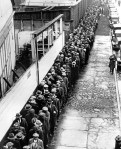
in the U.S. currently stands at about 9.7%, causing deep concern about the overall health and viability of our economy.
Let’s first make sure we know how this reported unemployment statistic is measured.
An economy’s population is divided into two mutually exclusive and exhaustive groups:
Population = Those in Labor Force (L) + Those Not in the Labor Force (NL)
The Labor Force, L, is composed of the Employed (E) and the Unemployed (U)
The Unemployment Rate, u, is the Number Unemployed, U, over the Labor Force, L
You are generally considered unemployed only if you self-report that you are looking for work but have not yet found any.
If you are employable and currently unemployed, but have stopped looking for work, you move from the Labor force into “those not in the Labor Force.”
As people move out of the labor force, the measured Unemployment rate actually falls. For example, if the Labor Force is 100, and 4 of the 100 are unemployed, the unemployment rate u = 4/100 = 4%.
If one person leaves the labor force, u now falls to 3/99 = 3%.
Is this fall in the unemployment rate good news or bad news?
It depends on why the individual left the labor force. If they simply gave up trying to become gainfully employed, the drop in the Unemployment rate is not a good thing. If the person left because they met the love of their life who could support them in comfort, and they now devote their time volunteering in the community, the fall in the unemployment rate is a positive development.
In the next installments, I will talk about the “natural rate of unemployment,” and what it means and how it is calculated. I will discuss why it is optimal to have some positive level of unemployment in an economy, and why our government policies should focus on the structurally unemployed. Finally, I will lay out the remarkable amount of movement into and out of the labor force in any given period that is masked by the unemployment rate that is reported on the national and local news, and how the unemployment rates vary between regions, states, even counties across the country.
By Sherry Jarrell

 Learning from Dogs