A pet‑friendly homeless shelter pilot reduced the rate of homelessness among the people it helped in California.
This was an article published on the 16th March by The Conversation. It shows how the homeless shelters benefit from being pet-friendly. It’s sort of obvious but then again not common-sense.
ooOOOO
A pet‑friendly homeless shelter pilot reduced the rate of homelessness among the people it helped in California
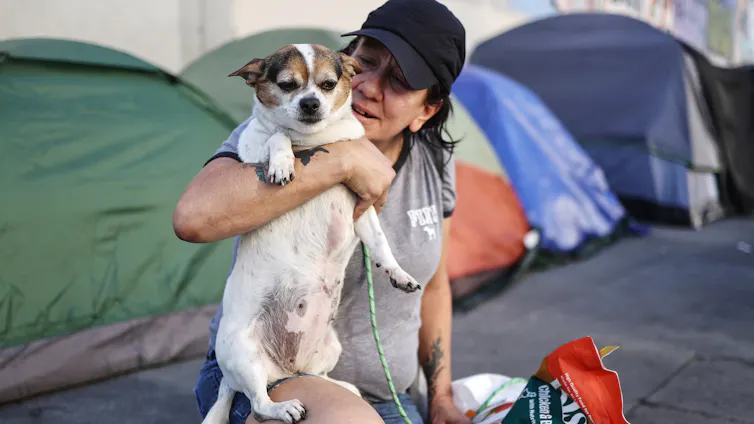
A homeless woman in Los Angeles holds her dog after a free veterinary visit in 2024. Mario Tama/Getty Images
California’s Department of Housing and Community Development established this pilot program in 2019. Its goals were straightforward: to make homeless shelters more accommodating to people with pets – mostly dogs – so that people living on the streets don’t have to choose between staying in shelters or abandoning their pets.
The program disbursed US$15.75 million between 2020 and 2024 to 37 organizations across the state. The funding allowed shelters to build kennels or other pet-friendly spaces, provide pet food and supplies, and offer basic veterinary care. It also covered the costs of staffing and maintaining insurance required to operate pet-friendly shelters.
We found that the program helped 4,407 people experiencing homelessness keep their pets while getting support. Many were able to enter shelters, and their animals received needed veterinary care. A total of 886 people ultimately moved into permanent housing with their pets – a higher success rate than the statewide average for homeless people in California.
Theoretically, this funding should have reduced the number of pet owners living on the streets. Yet since 2019, the year the program began, the number of homeless people in Los Angeles with dogs and other pets has increased.
Since 2017, I’ve led the USC research team that produces the annual homeless count estimates for Los Angeles. The U.S. Department of Housing and Urban Development requires this exercise for any city seeking federal funding for homelessness services.
Before the pandemic, we generally found that roughly 1 in 8 people did. We also found that nearly half of homeless pet owners had been turned away from a homeless shelter because it couldn’t accommodate their animal.
Despite programs like California’s Pet Assistance and Support program, my research team has found that the share of people living on the streets of Los Angeles who say they have a pet increased to roughly 1 in 5 by 2025.
Share of homeless people in LA with pets is rising
The percentage of homeless people in Los Angeles with pets rose from 12% in 2017 to 20% in 2024 and 2025, according to an annual census.
Bar chart showing that the percentage of homeless people in Los Angeles with pets has grown since 2017.
5101520%201720182019202020212022202320242025
Need for more pet-friendly programs
We still don’t know why the share of homeless people with pets has gotten so much larger.
The Weingart Tower, where some of Los Angeles’ formerly homeless people reside and receive social services, has a small dog park. Grace Hie Yoon/Anadolu via Getty Images
The number of homeless people in Los Angeles has fallen by more than 4% since 2023 to just over 72,000 people in 2025. But based on my research findings, I would expect the number of people living on the city’s streets – with and without pets – to rise over time unless more affordable housing becomes available.
And growth in the homeless population may be hard to avoid without more efforts like California’s Pet Assistance and Support Program – on a larger scale than the pilot we studied.
This past Christmas, I helped my parents choose a water filter. The latest “smart” models all came with a smartphone app that promised to monitor filter life, track water quality and automatically request service. Yet my father, age 75, and mother, 67, were quick to reject them in favor of a nondigital model.
“Every time it updates or I forget how to use it, we’ll have to call you,” my dad said.
As an only child living 8,000 miles (12,875 kilometers) away, I didn’t need convincing. My parents are aging in place and don’t need traditional caregiving – they cook, drive and manage their home just fine. Instead, I provide what I call technology caregiving: helping them with their digital activities of daily living, from online banking to booking theater tickets.
But as the tech industry shifts toward artificial intelligence agents and generative user interfaces – promising to make devices smarter than ever – I am bracing for this invisible workload to become heavier, not lighter. In addition to being a technology caregiver, I’m a computer scientist who studies human-computer interaction.
Technology caregiving
Technology caregiving is the act of helping someone use digital tools. While this isn’t entirely new – people have long helped grandparents program VCRs and connect parents’ desktop computers to the internet – the stakes have changed.
Today, digitization is ubiquitous. Helping with these tools is no longer just occasional unpaid tech support – it is a form of continuous caregiving essential for maintaining independence. For example, even the simple act of clipping coupons has gone digital – marginalizing older adults who are unable to navigate store apps to access these discounts.
People often view older adults as resistant to technology, but recent years – particularly since the COVID-19 pandemic – have shattered that myth. While gaps in internet access and device ownership remain, they are no longer major barriers to technology access.
Today’s seniors are not tech-averse, but constant updates and interface changes make using technology more difficult for them. Jose Luis Raota/Moment via Getty Images
The emerging crisis is not about access, but effective use. Many older adults are now online and willing to use these tools, but they require frequent help from family, friends or communities.
The innovation tax
The problem isn’t just that devices and apps are getting complex; it’s that they are constantly changing. Frequent software updates and shifting interfaces can be frustrating for all users, but they turn familiar tools into foreign concepts for older adults.
This unpredictability is about to accelerate. Take generative user interfaces, which designers can use to dynamically generate an interface in minutes. Pair them with AI agents, and the system can assume the designer’s role, taking independent actions based on how it perceives a user’s intent or need.
If the “Pay Bill” button is in a different place every third time you open a particular app because an AI decided to optimize the interface, you might feel perpetually incompetent if you can’t quickly locate it. While the industry calls this personalization, for an older adult it is a moving target.
This relentless pace of change – even when intended to be helpful – is directly at odds with age-related cognitive changes. And this dynamic is continuing with the new generation of seniors. They may be more eager to adopt new tools than the last, but wanting to use technology is not the same as being able to use it when the rules are constantly changing.
To navigate a brand new or shifting interface, your brain relies on fluid intelligence: the ability to reason, solve novel problems and ignore distractions on the fly. Unlike the knowledge that people accumulate over time, fluid intelligence naturally declines with age.
When an app updates or an AI optimizes a layout, it forces the user to discard their hard-won mental models and start over. For an older adult, this isn’t just a minor inconvenience; it is a taxing job for their working memory.
As an older adult participant in a study my colleagues and I conducted put it:
“I had a computer on my desk in 1980, OK, when nobody else did. So this is not a foreign language, but the changes that are made with little to no explanation and then things that you knew how to do have either changed or disappeared completely, that is the stuff that absolutely drives me, and I will tell you, every other older adult in America nuts.”
Help the helper
I believe that the way forward is to stop treating tech support as an afterthought and start designing for the technology caregiver. Digital literacy training for seniors and encouraging designing technologies for all users are important but not enough; it’s important to build tools that share the burden.
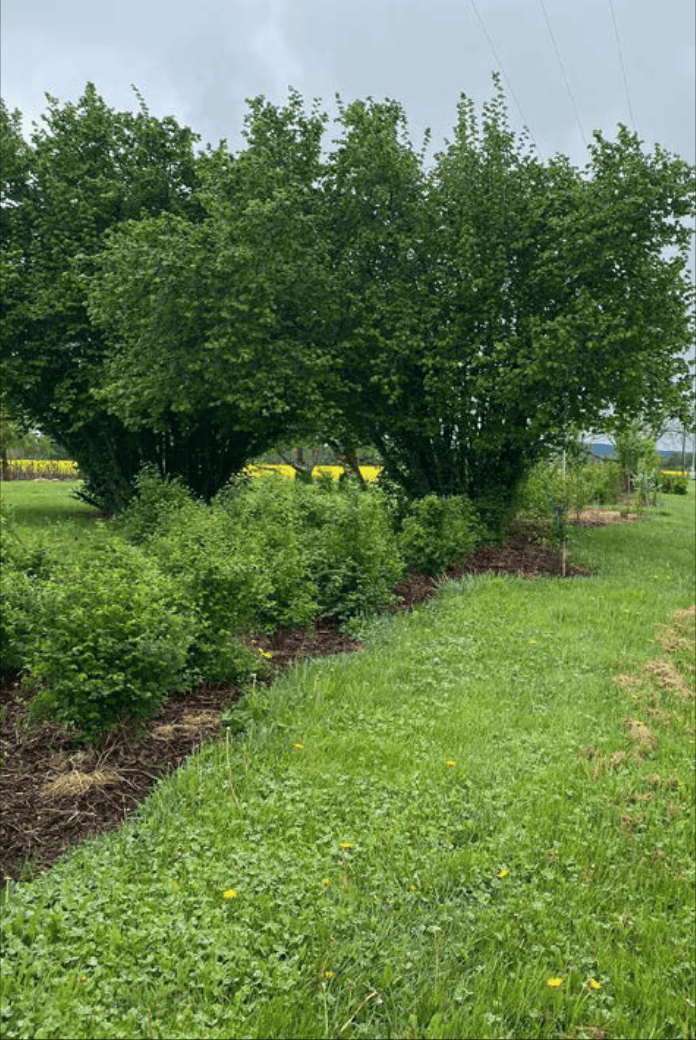
For many years I lived in South Devon, England. I never thought twice about hedgerows because they were so common.
Then today I read an article in The Economist about Brexit and the one thing that was favourable was this “Brexit delivers a win for British wildlife.“
Here’s a small extract from the magazine:
No other country matches the rich heritage of hedgerows that weave across the damp (ideal for hedges) British Isles. Since the Bronze Age, Britons have reared sheep and cattle and have used hedges to mark the boundaries of fields and keep livestock in place. Some of these ancient bushes still stand. In West Penwith, one such prehistoric hedge, a gurgoe, might be over 4,000 years old. Most, though, were planted in the 18th century, when landowners enclosed the commons, an event that turned the country into a chequerboard of small, irregular fields. America, by contrast, passed a law prohibiting private landowners from enclosing public land in 1885, protecting its open ranges.
Here in Oregon hedges are not so common. But I did some research as to the cause and came upon this article by Oregon State University.
I trust it may be shared with you.
ooOOoo
A Guide to Hedgerows: Plantings That Enhance Biodiversity, Sustainability and Functionality
We see them at the edges of farm fields or along roads: long rows of trees, shrubs, flowers and grasses known as hedgerows. They are living fences with the ability to grow food, shelter wildlife, save water, manage weeds and look beautiful all year round.
Hedgerows are sometimes called shelter belts, windbreaks or conservation buffers. These layers of plant life enhance the beauty, productivity and biodiversity of a landscape.
Hedgerows originated in medieval Europe and are enjoying a modern resurgence. People in England planted hawthorn cuttings and allowed them to grow about 6 feet. They were bent and trained to fill gaps in the trees, yielding a living fence. They called these fences “hagas” or hedges, form the word “hawthorn.” As the birds settled in the hawthorns and dropped seeds. more plants sprung up. Today, many farms in England are surrounded by ancient hedgerows that shelter beneficial organisms and conserve soil and water.
Hedgerow plantings were uncommon in the early United States. In the 1930s, the U.S. Department of Agriculture’s Shelterbelt Program briefly supported planting trees for windbreaks to prevent soil erosion in the Midwest. Today, as interest surges in sustainable farming methods, more people are turning to this age-old practice.
Hedgerows can serve several ecological functions. Among their many benefits, hedgerows:
Enhance ecological biodiversity.
Offer food for livestock, humans and wildlife.
Provide habitat for beneficial insects and pollinators.
Facilitate water conservation.
Provide windbreaks.
Help manage invasive weeds.
Provide erosion control and improve soil health.
Support the health of aquatic habitats.
Enhance carbon sequestration.
Create borders and privacy screens.
Reduce noise, dust, chemical drift and other types of pollution.
Diversify farm income.
Generate year-round beauty.
Let’s look at these benefits in detail.
Benefits of hedgerows
Enhance ecological biodiversity
Biodiversity describes the variety of life forms within a specific ecosystem and the relationship of these organisms to one another and the broader environment. Hedgerows can be designed to attract a wide variety of mammals, birds, reptiles, amphibians, insects and plants, many of which offer beneficial relationships to each other. They also create more edges, or “ecotones,” between different habitats, which increases species diversity. Trees and shrubs provide shelter for larger mammals, and nesting sites and perches for raptors, which are important predators of rodents. Dense or thorny shrub thickets can offer songbirds a refuge to escape predators as well as a place to nest. The diverse composition and structure of a hedgerow creates a functional habitat where species experience vital interconnections with one another and the environment.
Offer food for livestock, humans and wildlife
Hedgerows provide undisturbed refuge for species of all kinds, creating wildlife corridors, travel lanes or habitat islands. Hedgerows help protect wildlife from predators and provide sheltered access to riparian zones or other water sources. These corridors are especially important in fragmented landscapes, such as fields where only a single crop is grown. Hedgerows provide shade to reduce heat stress and help to block wind currents. These measures support a healthier wildlife population. Berry-producing plants encourage insectivores, such as birds, that also prey upon common crop pests. The hedgerow habitat creates cover for wildlife so they can feed, nest and care for their young.
Provide habitat for beneficial insects and pollinators
Planting a variety of flowering trees, shrubs, forbs and perennial plants provides insect habitat, and nectar and pollen sources throughout the year for beneficial insects and pollinators. Plants in the family Umbelliferae attract parasitic wasps; predator flies such as hover flies, lacewings and ladybeetles; and true bugs, like ambush or minute pirate bugs. Flowering plants in this family include coriander, dill, fennel, parsnip, parsley and carrots. These plants are useful in the kitchen and are also very attractive to pollinators. Over 75% of successful production of food requires pollination. Increasing plant habitat for pollinator species improves fruit set, size and quality, as well as general biodiversity. Pollinator habitat also attracts beneficial insects, which prey on many crop pests. Increasing the numbers of beneficial insects can help farmers manage crop pests and cut down on insecticide use.
Facilitate water conservation
Hedgerows retain water and reduce evaporation by reducing wind speed and providing cover over the ground surface. Plants also catch and store water in their root systems, leaves and branches, slowing the rate of excess rainwater entering waterways and reducing the risk of flooding. Decaying matter from the roots, stems and branches of hedgerow plants increase the organic matter in the soil over time. This increases the soil’s ability to absorb and retain water. Planting hedgerows on hillsides helps conserve water and soil by reducing erosion. If planting near adjacent cropland, periodic root pruning can reduce competition for nutrients and water.
Provide windbreaks
Properly designed hedgerows can reduce wind speed by as much as 75% and improve crop performance. This is especially effective when plantings reach a density of 40%–50% and are planted perpendicular to the prevailing wind. Wind-resistant trees usually have flexible, wide-spreading, strong branches and low centers of gravity. Wind-tolerant shrubs often have small, thick or waxy leaves or very narrow leaves or needles, to help control moisture loss. Wind can disturb pollination and damage fruit and flowers when plant parts thrash against each other. During times when soil is exposed, a windbreak can protect topsoil from erosion. Crops under wind stress also put energy into growing stronger roots and stems, resulting in smaller yields and delayed maturity. Strong winds also cause lodging of grain and grass crops, bending the stems and making harvest more difficult. Winds dry out crops on the field edges, increasing pests such as two-spotted spider mites.
Help manage invasive weeds
Hedgerows planted along roads or between crop fields may prevent weed seeds from blowing into the field. The weed seed pods collect on hedgerow plants, where a farmer could remove and burn them. Hedges can prevent millions of weed seeds from entering the crop field. As hedgerows mature, these plantings displace invasive weeds. If well maintained, this weed management lasts the lifetime of the hedgerow.
Provide erosion control and improve soil health
Rain, irrigation, clean cultivation and vacant field borders can all increase erosion potential in an agricultural system.
Hedgerow plantings can significantly reduce the amount of soil erosion on a landscape. They can also provide a barrier to filter out pollutants, such as pesticides, and slow down sediments and organic material that can flow from farm fields into waterways. This is accomplished by increasing the surface water infiltration rate and improving soil structure around the root zone. This, in turn, decreases fertilizer runoff from farm fields. The biomass that plants shed acts as a soil conditioner and can enhance plant growth. In urban or suburban environments, hedges similarly reduce pollutants from neighboring sites.
Support aquatic habitat
Hedgerows can provide shade to riparian areas. Shade reduces water temperatures, prevents water evaporation and improves watershed quality. Though many factors influence watershed temperatures, studies have proven that lowland streams bordered by trees and tall shrubs exhibit cooler temperatures. The hedgerow’s latitude, stream aspect, leaf density and the height of its vegetation from the water surface all affect water temperature.
Enhance carbon sequestration
During photosynthesis, trees, shrubs and grasses absorb carbon dioxide from the atmosphere, allowing the carbon to become part of the plant’s tissue. As plants die or shed tissue — either through natural processes or pruning — the carbon that was stored in the plant breaks down and enters the soil. Plants store relatively large amounts of carbon in their biomass, helping to offset some of the effects of climate change. A tree can absorb as much as 48 pounds of carbon dioxide per year and can sequester, or store, 1 ton of carbon dioxide by the time it reaches 40 years old.
Create borders and privacy screens along roads and between properties
Hedgerows are attractive borders and can block undesirable views. Evergreens offer year-round screening. When selecting plants, consider the height at maturity for optimum screening. Evergreens can be pruned to control height and density. Plant a diverse mix of species to help protect against damage from a single pest or disease.
Reduce noise, dust, chemical drift and other types of pollution
As hedgerows mature and become dense, they can create barriers to reduce noise, dust, chemical drift and other pollutants. Open canopy trees are effective barriers to dust and pesticides; air and particles slowly filter through them instead of depositing clouds of pollutants on the other side of the hedge.
Plant hedges as close as possible to any areas where pollutants are a concern. This can help alleviate neighborhood conflicts where agriculture intersects with urban areas.
Hedgerows can act to contain contaminants from urban or suburban environments and keep them from entering agricultural areas.
Diversify farm income
Trees, shrubs and herbaceous plants in a hedgerow can also serve as sources of income. Potential products include nuts, fruits, berries, leaves, flowers, seeds, bark and medicinal herbs. You can grow plants to be propagated as seeds, rootstock, cuttings and transplants. Other potential crops are nursery stock and floral materials, including ferns, broadleaf evergreens, flowers and willows grown for craft material and furniture. You can grow fruits, berries and nuts for food. Hedgerows can shelter bees and encourage a higher pollination rate. Consider planting trees for secondary wood products such as lumber, veneer, firewood, chips for bedding and mulch. Game birds such as quail, pheasant and sage grouse are attracted to hedgerows. Managed hunting can provide a potential source of food and off-season revenue for landowners.
Generate year-round beauty
Hedgerows in the landscape add continuous beauty. You can design a hedge for year-round interest, considering the color and texture of leaves and bark, bloom color and timing, and the general growth habit or form of plants.
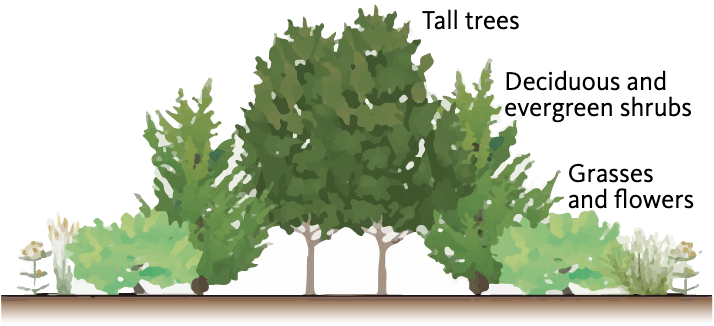
Hedgerow design Graphic: Kerry Wixted with graphics from Tracey Saxby, IAN Image Library, courtesy of the Integration and Application Network, University of Maryland Center for Environmental Science
Whether in rural or urban settings, the principles of planning a hedgerow are the same: Evaluate the site, determine what you would like to accomplish with the plantings, match the right plant with the right place, and properly prepare the site.
Design
There are many essential components to consider when designing a multifunctional hedgerow. The first step is to observe the site where the hedge is to be planted and take into consideration the ecological and environmental conditions listed below. These elements influence the design, plant selection, location and the size of the area to be planted. Although a single line of trees will provide some benefits, four or more rows of plants are optimal for windbreaks, water and soil conservation, wildlife habitat and general biodiversity. When it works for the situation, place plants tallest at maturity in the center row, with shorter ones inter-planted between and along the edges. A diverse selection of plant sizes and characteristics is most beneficial. When possible, orient rows perpendicular to prevailing winds.
Hedgerows following land contours create meandering lines on the landscape, producing a natural appearance and larger buffer for wildlife habitat. If the goal is to attract pollinator species, reserve approximately one half-acre for every 40 acres planted in crops.
Plant selection
Plant a wide variety of multi-tiered plants for maximum habitat. Avoid varieties that are susceptible to common pests and diseases and choose plants that are non-invasive. Some perennial species such as blackberry can provide excellent wildlife habitat and food crops but are highly invasive and require frequent maintenance. See the plant lists on page 7 for plantings suited to the Pacific Northwest.
When selecting plants, consider the conditions plants need to survive in specific habitats:
Range: place of origin (indigenous, native/non-native).
Hardiness zones: frost dates.
Light requirements: sun or shade.
Size of plants at maturity, growth.
Soil type (pH, fertility, erosion concerns).
Drainage.
Water movement and moisture needs.
Planting time.
Bloom time: seasonal interest.
Day length.
Productivity.
Tolerance to heat, cold, salt, drought, pollution, wind and wild or domestic animals.
Evergreen or deciduous.
Plant structure: form or shape, texture, leaf and bark type.
Edible or poisonous: what parts.
Insect and disease resistance.
Plant size, costs and availability.
Maintenance needed.
Allellopathy: a chemical inhibitor of one plant to another which can impact germination or plant growth.
Ultimately, place plants together that have similar soil, water, sun and drainage needs.
General planting recommendations:
Plant trees and shrubs about 6 to 8 feet apart in rows 8 to 10 feet apart.
Plant one or two rows of tall trees flanked by a row or two of shrubs. A 20-foot wide hedgerow can have two rows of shrubs flanking a row of trees.
Hedgerows work best for wildlife when they are wider than 20 feet.
Depending on the site’s prevailing winds, a winter windbreak could have at least two rows of evergreen trees and a row of deciduous trees or shrubs. A summer windbreak could have at least one row of tall deciduous trees and a row of deciduous shrubs.
Make sure the planting holes are deep and wide enough to accept and cover the roots of each plant. Be sure to water in each new planting.
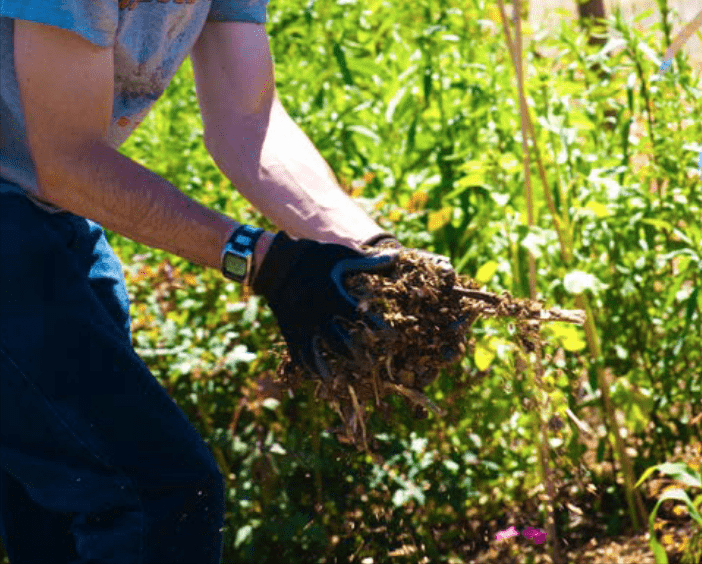
In a small area, place a 3-inch layer of straw mulch or cardboard around each tree and shrub after planting to discourage weeds and encourage plant survival.
Soil preparation
Soil preparation is one of the keys to plant survival. On a smaller site, an easy way to establish planting areas in existing grass or pasture is to apply a thin layer of compost or manure, followed by several layers of cardboard, and mulch such as straw or leaves. Worms are attracted to the manure and will work over the winter to decompose grasses and fertilize the soil. However, this method may not be practical on a large scale. In this instance, prepare the area for planting by tilling the ground in spring and planting an early cover crop such as crimson clover, followed by buckwheat. In late summer, till or disc in the cover crop and replant an overwintering cover crop such as crimson clover, field peas or vetch. Cover crops improve soil fertility, reduce weeds, stabilize the soil and attract beneficial insects. Till again the following spring and install the first set of plantings for the hedgerow.
Another option for sites with high weed pressure is solarization. Closely mow the ground and put down UV-stabilized anti-condensation greenhouse plastic in midsummer for several weeks to kill the weeds. After solarization, remove the plastic and follow with a fall planting.
Planting time
In more temperate environments, fall planting allows roots to become established before foliage emerges and gives plants the benefit of winter rains. In extreme cold climates, early spring may be the ideal time for planting. At the time of planting, apply amendments such as compost or manure as a top dressing.
Irrigation
To increase the success rate of your hedgerow planting, provide supplemental water for the first two or three years. Irrigate once a week during the heat of the summer during the first year. For the second year, water every two weeks. In the third year, irrigate once a month. Irrigation needs depend on the location and the plants selected. Be sure to water deeply to encourage deep root growth. Most hedgerow plantings may not survive if they do not get supplemental water in the first few years. Water can be supplied by swales, furrows, flood, drip irrigation or hand watering. If the hedgerow is next to cropland, overhead irrigation from the crop can be extended to water the hedge.
Keeping out weedy plants and destructive wildlife
One of the biggest challenges in establishing a hedgerow is keeping unwanted plants from taking over the new plantings. There are a variety of techniques to inhibit these weedy plants. The simplest method is to leave alleys between plant rows for mowing, cultivation or mulching until plants are well established. Ideally, an area 6 to 8 feet wide around the hedgerow should be mowed, flailed or tilled for weed management, fire protection and rodent control. It is also important to mulch heavily with a minimum of 3 inches of leaves, straw, sawdust or cardboard around each plant. As plants mature, they will eventually shade out most annual weeds. This is the ideal time to infill with low-growing, shade-tolerant plants.
If needed, protect plants from beaver and nutria with hardware cloth, and use partially buried plastic-coated cardboard or tubing around tree trunks to protect from voles and mice. If applying pesticides, follow the label in order to protect riparian zones along rivers, creeks and ponds from contamination.
Managing a hedgerow in the first few years is similar to managing a crop. Good weed management during establishment results in less labor to control weeds in seasons to come.
Cost of establishment
Planting hedgerows does not have to be expensive. Seedling plants are available at low cost, and you can propagate new plants from existing plantings. The larger the plant, the sooner it will reach maturity, which is especially important in creating a fast-growing privacy screen. This can be achieved by purchasing dormant bareroot plants and 1-gallon potted plants or larger. Remember, these larger plants will most likely require summer irrigation. Government programs are available to assist landowners with hedgerow development. Many counties have tax exemption programs for riparian lands, along with wildlife habitat conservation and management programs. See “Incentive programs to help with hedgerow establishment” and Estimated Costs To Establish Pollinator Hedgerows, in “Resources,” pages 9–10.
Conclusion
A hedgerow is a long-term commitment. With proper planning and care, it will take approximately four to eight years to establish a hedgerow and 30 or more years for it to reach maturity. To encourage success, draft a plan with planting installments for each year, depending on your goals and budget.
Hedgerows in rural agricultural or urban settings provide many benefits that increase over time, including the opportunity for supplemental income. With benefits for wildlife, humans and the planet, hedgerows are a practice that has stood the test of time.
Hedgerow plants
Hedgerows can contain native and non-native plants, although plants should not be invasive. The following trees, shrubs, groundcovers and perennial plants are appropriate for hedgerows in the Pacific Northwest. Remember to consider proper site selection and plant requirements. Plants that tolerate wet soil are indicated by an asterisk (*).
Sun-tolerant plants under 25 feet
Arbutus unedo Strawberry tree
Aronia Chokeberry Schubert
Baccharis pilularis consanguinea Coyote brush
Ceanothus velutinus Tobacco brush
Cornus stolonifera Red twig dogwood
Diospyros kaki Japanese persimmon
Diospyros virginiana American persimmon
Elaeagnus multiflora Goumi
Elaeagnus umbellata Autumn olive
Ficus carica Fig
Fuchsia magellanica Hardy fuschia
Lonicera caerulea Blue honeyberry
Lonicera involucrata Twinberry
Malus fusca West Coast crabapple
Malus sp. Apple
Morus Mulberry
Myrica pensylvanica Bayberry
Oemleria cerasiformis Osoberry
Philadelphus lewisii Mock orange
Prunus avium Cherry
Prunus domestica Plum
Pyrus pyrifolia Asian pear
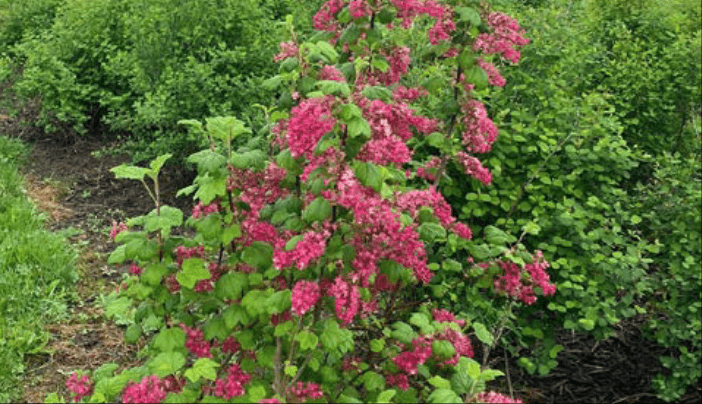
Ribes sanguineum Red-flowering currant
Ribes divaricatum Black gooseberry*
Ribes nigrum Black currant*
Rosa nutkana Nootka rose
Salix fluviatilis Columbia River willow*
Salix hookeriana Hooker’s willow*
Sambucus cerulea Blue elderberry*
Spiraea douglasii Western spiraea*
Vaccinium corymbosum Blueberry*
Vaccinium ovatum Evergreen huckleberry
Viburnum opulus Highbush cranberry
Sun-tolerant plants 25+ feet tall
Abies grandis Grand fir
Acer macrophyllum Bigleaf maple
Alnus rubra Red alder*
Arbutus menziesii Madrone
Asimina Pawpaw
Calocedrus decurrens Incense-cedar
Castanea Chestnut
Chrysolepis chrysophylla Golden chinkapin
Diospyros virginiana Persimmon
Fraxinus latifolia Oregon ash*
Juglans regia English walnut
Picea species Spruce
Pinus ponderosa Ponderosa pine
Populus trichocarpa Black cottonwood
Prunus subcordata Klamath plum*
Pseudotsuga menziesii Douglas-fir
Quercus garryana Oregon white oak
Robinia pseudoacacia Black locust
Thuja plicata Western redcedar
Groundcovers
Fragaria chiloensis Strawberry
Gaultheria shallon Salal
Mahonia nervosa Oregon grape
Polystichum munitum Sword fern
Vaccinium vitis idaea Lingonberry
Vines
Lonicera Honeysuckle
Akebia Five-fingered akebia*
Plants for pond edges
Typha latifolia Cattail*
Ledum glandulosum Labrador tea
Plants that tolerate shade
Chrysolepis chrysophylla Golden chinkapin
Cornus nuttallii Western flowering dogwood*
Corylus cornuta Hazel*
Physocarpus capitatus Ninebark
Polystichum munitum Sword fern
Sambucus racemosa Red elderberry*
Prunus virginiana Chokecherry
Plants for partial shade to shade
Acer circinatum Vine maple *
Amelanchier alnifolia Serviceberry
Berberis aquifolium Oregon grape
Gaultheria shallon Salal
Cornus stolonifera Red-osier dogwood
Holodiscus discolor Oceanspray
Lonicera involucrata Twinberry
Oemleria cerasiformis Indian plum
Philadelphus lewisii Mock orange
Rhamnus purshiana Cascara sagrada
Taxus brevifolia Western yew*
Vaccinium ovatum Evergreen huckleberry
Edge plantings
Achillea millefolium Yarrow
Arctostaphylos uva-ursi Kinnikinnick
Berberis nervosa Cascade Oregon grape
Calendula officinalis Calendula
Cichorium intybus Chicory
Foeniculum vulgare Fennel
Fragaria chiloensis Wild strawberry
Gaultheria shallon Salal
Lavandula angustifolia English lavender
Medicago sativa Alfalfa
Nuts
Carya illinoinensis Northern pecans
Carya ovata Shagbark hickory
Castanea Chestnuts
Ginkgo biloba Gingko
Juglans ailantifolia Heartnut
Juglans regia English Walnut
Xanthoceras sorbifolium Yellowhorn
Plants for arid environments
Plantings around vineyards
Some flowering plants attract specific kinds of beneficials, for example, carnivorous flies (Oregon sunshine), predatory bugs (stinging nettle) and Anagrus wasps (sagebrush). Research shows trends of reduced pest abundance and increased beneficial insect diversity and abundance in vineyards with a diversity of native flowering plants compared to vineyards lacking native plants.
Incentive programs to help with hedgerow establishment
Conservation Reserve Enhancement Program
In exchange for removing environmentally sensitive land from production and establishing permanent resource-conserving plant species, farmers and ranchers are paid an annual rental rate along with other federal and state incentives. This program is administered through the USDA Farm Service Agency and local Soil and Water Conservation districts.
Environmental Quality Incentives Program
This program provides financial and technical assistance to agricultural producers in order to address natural resource concerns and deliver environmental benefits such as improved water and air quality, conserved ground and surface water, reduced soil erosion and sedimentation or improved or created wildlife habitat. The program is administered through the USDA Natural Resources Conservation Service via local field offices.
Guard, J.B. Wetland Plants of Oregon and Washington. 2010. Lone Pine Publishing.
Imhoff, D. and R. Carra. Farming With The Wild: Enhancing Biodiversity on Farms and Ranches. 2011. Sierra Club Books.
Kruckenberg, A. Gardening With Natives of the Pacific Northwest. 1982. University of Washington Press.
Lee-Mäder, E., J. Hopwood, M. Vaughan, S. Hoffman Black and L. Morandin. Farming with Native Beneficial Insects: Ecological Pest Control Solutions. 2014. Storey Publishing.
Link, R. Landscaping for Wildlife in the Pacific Northwest. 1999. University of Washington Press,
Mader, E., M. Shepherd, M. Vaughan, S. Black, G. LeBuhn, Attracting Native Pollinators. 2011. The Xerces Society for Invertebrate Conservation.
Martin, A., H.S. Zim, A.L. Nelson. American Wildlife and Plants: A Guide To Wildlife Food Habits. 1951. Dover Publications.
Pendergrass, K., M. Vaughan and J. Williams. Plants for Pollinators in Oregon.2007. USDA Natural Resources Conservation Service and The Xerces Society for Invertebrate Conservation,
We have never thought of this before but the question is a valid one.
The article, which was presented by The Conversation, raised the question. As you will see the article starts with the sentence “Americans love dogs.” To my mind, it is many more people than Americans who love dogs. Let’s read the article.
It all seems part of what Mark Cushing, a lawyer and lobbyist for veterinary issues, calls “the pet revolution”: the more and more privileged place that pets occupy in American society. In his 2020 book “Pet Nation,” he argues that the internet has caused people to become more lonely, and this has made them focus more intensely on their pets – filling in for human relationships.
I would argue that something different is happening, however, particularly since the COVID-19 lockdown: Loving dogs has become an expression not of loneliness but of how unhappy many Americans are with society and other people.
And I am no different. I live with three dogs, and my love for them has driven me to research the culture of dog ownership in an effort to understand myself and other humans better. By nature, dogs are masters of social life who can communicate beyond the boundaries of their species. But I believe many Americans are expecting their pets to address problems that they cannot fix.
Rescuing shelter animals grew in popularity, and on social media people celebrated being at home with their pets. Dog content on Instagram and Pinterest now commonly includes hashtags like #DogsAreBetterThanPeople and #IPreferDogsToPeople.
One 2025 study found that dog owners tend to rate their pets more highly than their human loved ones in several areas, such as companionship and support. They also experienced fewer negative interactions with their dogs than with the closest people in their lives, including children, romantic partners and relatives.
Today, millennials make up the largest percentage of pet owners. Some cultural commentators argue dogs are especially important for this generation because other traditional markers of stability and adulthood – a mortgage, a child – feel out of reach or simply undesirable. According to the Harris Poll, a marketing research firm, 43% of Americans would prefer a pet to a child.
Amid those pressures, many people turn to the comfort of a pet – but the expectations for what dogs can bring to our lives are becoming increasingly unreasonable.
For some people, dogs are a way to feel loved, to relieve pressures to have kids, to fight the drudgery of their job, to reduce the stress of the rat race and to connect with the outdoors. Some expect pet ownership to improve their physical and mental health.
But expecting that dogs will fill the social and emotional gaps in our lives is actually an obstacle to dogs’ flourishing, and human flourishing as well.
In philosophical terms, we could call this an extractive relationship: Humans are using dogs for their emotional labor, extracting things from them that they cannot get elsewhere or simply no longer wish to. Just like natural resource extraction, extractive relationships eventually become unsustainable.
The late cultural theorist Lauren Berlant argued that the present stage of capitalism creates a dynamic called “slow death,” a cycle in which “life building and the attrition of life are indistinguishable.” Keeping up is so exhausting that, in order to maintain that life, we need to do things that result in our slow degradation: Work becomes drudgery under unsustainable workloads, and the experience of dating suffers under the unhealthy pressure to have a partner.
Similarly, today’s dog culture is leading to unhealthy and unsustainable dynamics. Veterinarians are concerned that the rise of the “fur baby” lifestyle, in which people treat pets like human children, can harm animals, as owners seek unnecessary veterinary care, tests and medications. Pets staying at home alone while owners work suffer from boredom, which can cause chronic psychological distress and health problems. And as the number of pets goes up, many people wind up giving up their animal, overcrowding shelters.
So what should be done? Some philosophers and activists advocate for pet abolition, arguing that treating any animals as property is ethically indefensible.
Perhaps we can reconfigure aspects of home, family and society to be better for dogs and humans alike – more accessible health care and higher-quality food, for example. A world more focused on human thriving would be more focused on pets’ thriving, too. But that would make for a very different America than this one.
I do not recognise the unhealthy culture as mentioned four paragraphs above. But Jeannie and me do understand and believe the alternative: “Some scientists argue that dogs made us human, not the other way around.”
I’ve said it many times before but perhaps some of our newer readers haven’t heard the fact that when I met Jean in 2007 she was looking after twenty-three dogs, and numerous cats, and it was pure magic. In 2008 I went to Mexico, where Jean lived, with Pharaoh. Then in 2010 we came north to Arizona to be married. We had sixteen dogs and seven cats with us.
There was something really special about the last full moon. We watched as the moon rose on the very early nights of February, 2026 and I wished I had taken some photos. But no problem as YouTube had captured the images of the moon taken by others.
The Snow Moon in 2026 was the full moon that lit up the night sky on February 1, 2026, reaching its peak illumination around 5:09 p.m. EST (around 22:09 UTC) that evening. Because the moon appears full for a couple of nights around that moment, it was visible as a bright, full lunar disk on the nights of February 1 and 2. It’s traditionally called the “Snow Moon” because February is usually one of the snowiest months in the Northern Hemisphere. Here are some gorgeous images from our talented community of photographers. Enjoy them!
The science of looking at other worlds is amazing.
With so much going wrong, primarily politically, in the world, I just love turning to news about distant places; and by distant I mean hugely so. That is why I am republishing this item from The Conversation about other stars.
ooOOoo
NASA’s Pandora telescope will study stars in detail to learn about the exoplanets orbiting them
Exoplanets are worlds that orbit other stars. They are very difficult to observe because – seen from Earth – they appear as extremely faint dots right next to their host stars, which are millions to billions of times brighter and drown out the light reflected by the planets. The Pandora telescope will join and complement NASA’s James Webb Space Telescope in studying these faraway planets and the stars they orbit.
I am an astronomy professor at the University of Arizona who specializes in studies of planets around other stars and astrobiology. I am a co-investigator of Pandora and leading its exoplanet science working group. We built Pandora to shatter a barrier – to understand and remove a source of noise in the data – that limits our ability to study small exoplanets in detail and search for life on them.
Observing exoplanets
Astronomers have a trick to study exoplanet atmospheres. By observing the planets as they orbit in front of their host stars, we can study starlight that filters through their atmospheres.
These planetary transit observations are similar to holding a glass of red wine up to a candle: The light filtering through will show fine details that reveal the quality of the wine. By analyzing starlight filtered through the planets’ atmospheres, astronomers can find evidence for water vapor, hydrogen, clouds and even search for evidence of life. Researchers improved transit observations in 2002, opening an exciting window to new worlds.
When a planet passes in front of its star, astronomers can measure the dip in brightness, and see how the light filtering through the planet’s atmosphere changes.
For a while, it seemed to work perfectly. But, starting from 2007, astronomers noted that starspots – cooler, active regions on the stars – may disturb the transit measurements.
In 2018 and 2019, then-Ph.D. student Benjamin V. Rackham, astrophysicist Mark Giampapa and I published a series of studies showing how darker starspots and brighter, magnetically active stellar regions can seriously mislead exoplanets measurements. We dubbed this problem “the transit light source effect.”
Most stars are spotted, active and change continuously. Ben, Mark and I showed that these changes alter the signals from exoplanets. To make things worse, some stars also have water vapor in their upper layers – often more prominent in starspots than outside of them. That and other gases can confuse astronomers, who may think that they found water vapor in the planet.
In our papers – published three years before the 2021 launch of the James Webb Space Telescope – we predicted that the Webb cannot reach its full potential. We sounded the alarm bell. Astronomers realized that we were trying to judge our wine in light of flickering, unstable candles.
The birth of Pandora
For me, Pandora began with an intriguing email from NASA in 2018. Two prominent scientists from NASA’s Goddard Space Flight Center, Elisa Quintana and Tom Barclay, asked to chat. They had an unusual plan: They wanted to build a space telescope very quickly to help tackle stellar contamination – in time to assist Webb. This was an exciting idea, but also very challenging. Space telescopes are very complex, and not something that you would normally want to put together in a rush.
Pandora breaks with NASA’s conventional model. We proposed and built Pandora faster and at a significantly lower cost than is typical for NASA missions. Our approach meant keeping the mission simple and accepting somewhat higher risks.
What makes Pandora special?
Pandora is smaller and cannot collect as much light as its bigger brother Webb. But Pandora will do what Webb cannot: It will be able to patiently observe stars to understand how their complex atmospheres change.
By staring at a star for 24 hours with visible and infrared cameras, it will measure subtle changes in the star’s brightness and colors. When active regions in the star rotate in and out of view, and starspots form, evolve and dissipate, Pandora will record them. While Webb very rarely returns to the same planet in the same instrument configuration and almost never monitors their host stars, Pandora will revisit its target stars 10 times over a year, spending over 200 hours on each of them. https://www.youtube.com/embed/Inxe5Bgarj0?wmode=transparent&start=0 NASA’s Pandora mission will revolutionize the study of exoplanet atmospheres.
With that information, our Pandora team will be able to figure out how the changes in the stars affect the observed planetary transits. Like Webb, Pandora will observe the planetary transit events, too. By combining data from Pandora and Webb, our team will be able to understand what exoplanet atmospheres are made of in more detail than ever before.
After the successful launch, Pandora is now circling Earth about every 90 minutes. Pandora’s systems and functions are now being tested thoroughly by Blue Canyon Technologies, Pandora’s primary builder.
About a week after launch, control of the spacecraft will transition to the University of Arizona’sMulti-Mission Operation Center in Tucson, Arizona. Then the work of our science teams begins in earnest and we will begin capturing starlight filtered through the atmospheres of other worlds – and see them with a new, steady eye.
Over the course of 2025, deepfakes improved dramatically. AI-generated faces, voices and full-body performances that mimic real people increased in quality far beyond what even many experts expected would be the case just a few years ago. They were also increasingly used to deceive people.
For many everyday scenarios — especially low-resolution video calls and media shared on social media platforms — their realism is now high enough to reliably fool nonexpert viewers. In practical terms, synthetic media have become indistinguishable from authentic recordings for ordinary people and, in some cases, even for institutions.
And this surge is not limited to quality. The volume of deepfakes has grown explosively: Cybersecurity firm DeepStrike estimates an increase from roughly 500,000 online deepfakes in 2023 to about 8 million in 2025, with annual growth nearing 900%.
I’m a computer scientist who researches deepfakes and other synthetic media. From my vantage point, I see that the situation is likely to get worse in 2026 as deepfakes become synthetic performers capable of reacting to people in real time.
Dramatic improvements
Several technical shifts underlie this dramatic escalation. First, video realism made a significant leap thanks to video generation models designed specifically to maintain temporal consistency. These models produce videos that have coherent motion, consistent identities of the people portrayed, and content that makes sense from one frame to the next. The models disentangle the information related to representing a person’s identity from the information about motion so that the same motion can be mapped to different identities, or the same identity can have multiple types of motions.
These models produce stable, coherent faces without the flicker, warping or structural distortions around the eyes and jawline that once served as reliable forensic evidence of deepfakes.
Second, voice cloning has crossed what I would call the “indistinguishable threshold.” A few seconds of audio now suffice to generate a convincing clone – complete with natural intonation, rhythm, emphasis, emotion, pauses and breathing noise. This capability is already fueling large-scale fraud. Some major retailers report receiving over 1,000 AI-generated scam calls per day. The perceptual tells that once gave away synthetic voices have largely disappeared.
Third, consumer tools have pushed the technical barrier almost to zero. Upgrades from OpenAI’s Sora 2 and Google’s Veo 3 and a wave of startups mean that anyone can describe an idea, let a large language model such as OpenAI’s ChatGPT or Google’s Gemini draft a script, and generate polished audio-visual media in minutes. AI agents can automate the entire process. The capacity to generate coherent, storyline-driven deepfakes at a large scale has effectively been democratized.
This combination of surging quantity and personas that are nearly indistinguishable from real humans creates serious challenges for detecting deepfakes, especially in a media environment where people’s attention is fragmented and content moves faster than it can be verified. There has already been real-world harm – from misinformation to targeted harassment and financial scams – enabled by deepfakes that spread before people have a chance to realize what’s happening. https://www.youtube.com/embed/syNN38cu3Vw?wmode=transparent&start=0 AI researcher Hany Farid explains how deepfakes work and how good they’re getting.
The future is real time
Looking forward, the trajectory for next year is clear: Deepfakes are moving toward real-time synthesis that can produce videos that closely resemble the nuances of a human’s appearance, making it easier for them to evade detection systems. The frontier is shifting from static visual realism to temporal and behavioral coherence: models that generate live or near-live content rather than pre-rendered clips.
Identity modeling is converging into unified systems that capture not just how a person looks, but how they move, sound and speak across contexts. The result goes beyond “this resembles person X,” to “this behaves like person X over time.” I expect entire video-call participants to be synthesized in real time; interactive AI-driven actors whose faces, voices and mannerisms adapt instantly to a prompt; and scammers deploying responsive avatars rather than fixed videos.
As these capabilities mature, the perceptual gap between synthetic and authentic human media will continue to narrow. The meaningful line of defense will shift away from human judgment. Instead, it will depend on infrastructure-level protections. These include secure provenance such as media signed cryptographically, and AI content tools that use the Coalition for Content Provenance and Authenticity specifications. It will also depend on multimodal forensic tools such as my lab’s Deepfake-o-Meter.
Simply looking harder at pixels will no longer be adequate.
This is another republication of a George Monbiot post. The title of his post is Total Futility Rate.
It is another great article!
ooOOoo
Total Futility Rate
Posted on15th December 2025
Let’s focus our campaigning on things we can actually change.
By George Monbiot, published as a BlueSky thread, 15th December 2025
Because the issue of population change is so widely misunderstood, I’ll seek to lay it out simply. This note explains why there is almost nothing anyone can do to change the global population trajectory, both as numbers rise, then as they fall.
The residual rise is due to:
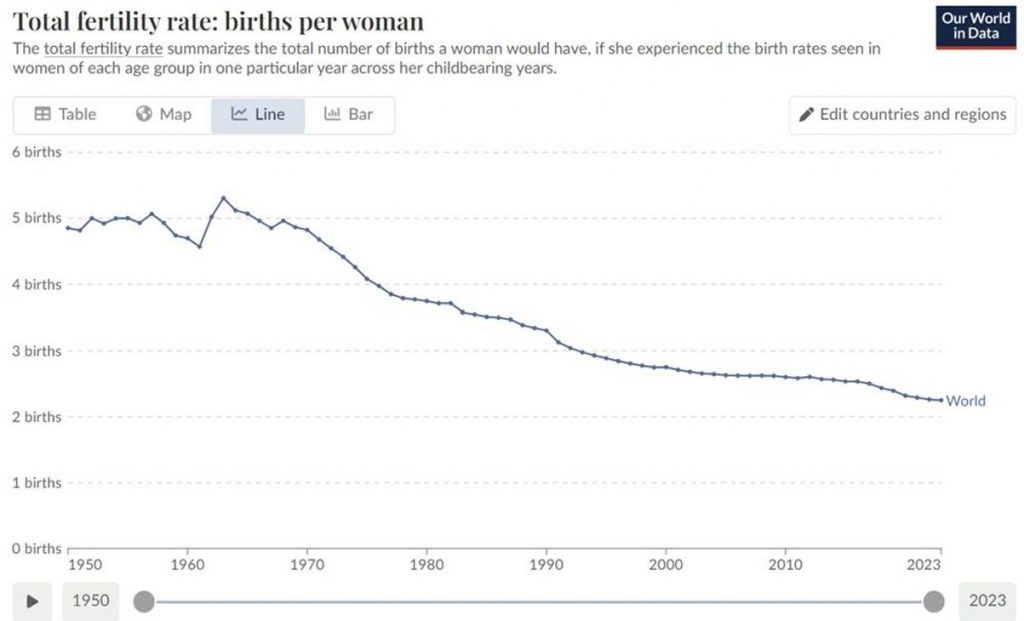
A. The birth rate 60-100 years ago, which created a larger current base population. This means more children being born even as birth rates are in radical decline. The global total fertility rate, by the way, is now 2.2, just above the replacement rate of 2.1.
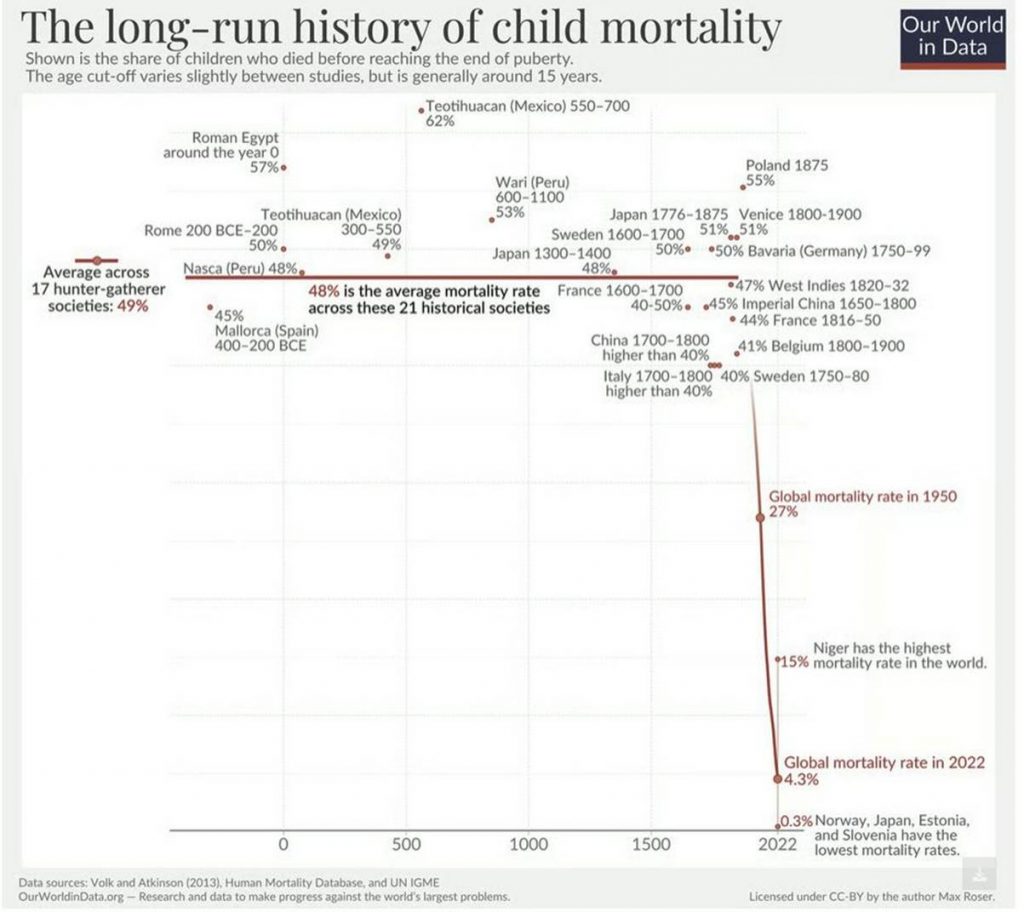
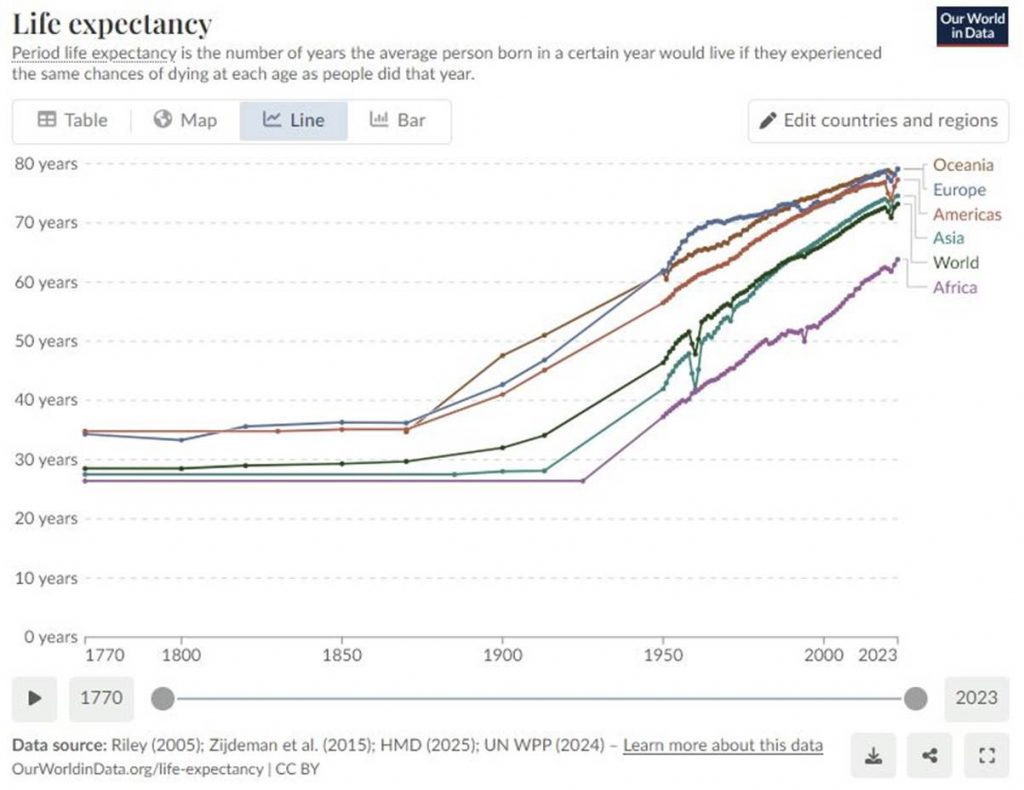
B. Infant mortality has declined very fast and longevity has risen very fast. Again, there’s nothing you can do about either of those things and, I hope, nothing you would want to.
All women should have total reproductive freedom and full access to modern birth control. Because it’s a fundamental right. Not because old men on other continents want them to have fewer children. Even if total reproductive freedom became universal now, it would scarcely nudge the curve, due to the factors mentioned above.
Before long, people will be fretting instead about the downwave, a very rapid decline in populations as the impact of 60+ years of falling birth rates overtakes the effects mentioned above. There’s almost nothing we can do about that either. It’s about as locked in as any human behaviour can be. As the opportunity costs of childcare rise (i.e. as prosperity increases), the birth rate declines.
Of course, if economic and social life collapsed, the process might go into reverse, and birth rates could be expected to rise again. But is that really what you want? For my part, I’m heartily sick of people who think collapse is the answer to anything.
In the short run, we can survive the decline in wealthy countries by reopening the door to immigrants, which would also offer sanctuary to people fleeing from the climate breakdown and conflict we’ve caused overseas. Two wins, in other words. In the long run, we’ll steadily shuffle away.
Whether you think that’s good or bad will not affect the outcome. I see demographic change as an underlying factor, like gravity, we simply have to adapt to as well as we can. If you want to pick a fight with a mathematical function, be my guest. But it seems to me as if you’re wasting your time.
But surely there’s no harm in it? Surely we can seek, however hopelessly, to change the population trajectory while also campaigning against environmental breakdown, inequality, injustice? Some people who worry about population do. But in my experience, most fixate on population to the exclusion of other issues.
Something must be done about them breeding too fast, rather than us consuming too fast. All too often, residual population growth is used as a scapegoat to shift blame from rich-world impacts, which means that the people in places where growth is still occurring are themselves scapegoated. The result, broadly speaking, is wealthy white people pointing the finger at much poorer Black and Brown people and saying, “You’re the problem.” It’s more than a distraction, it’s a grim and sometimes racist alternative to effective action. It’s an excuse for inaction.
So yes, do both if you want to, while being aware that one activity is useful and the other is futile. But be aware that for most population obsessives, it’s either/or, and is used to avoid moral responsibility and effective citizenship.
If you read this you will understand why Mr Monbiot explains clearly the changes in the global demographics: That the global population is falling. My own guess is that in the lifespans of those who today are in their teens, the global population will be remarkably lower. I can’t forecast the changes that will bring about but I’m certain they will be significant.
George’s last point is key “(It) is used to avoid moral responsibility and effective citizenship.“
I’m indebted to George Monbiot for this article, and ‘Tolly’ as a nickname for Iain Tolhurst.
Many articles from people that I follow online pass through my ‘inbox’.
But there was something special about a recent article by George Monbiot that was published in the Guardian on December 5th and I have great pleasure in republishing it here, with George’s permission.
ooOOoo
Shaking It Up
Posted on 7th December 2025
A eureka moment in the pub could help transform our understanding of the ground beneath our feet.
By George Monbiot, published in the Guardian 5th December 2025
It felt like walking up a mountain during a temperature inversion. You struggle through fog so dense you can scarcely see where you’re going. Suddenly, you break through the top of the cloud, and the world is laid out before you. It was that rare and remarkable thing: a eureka moment. For the past three years, I’d been struggling with a big and frustrating problem. In researching my book Regenesis, I’d been working closely with Iain Tolhurst (Tolly), a pioneering farmer who had pulled off something extraordinary. Almost everywhere, high-yield farming means major environmental harm, due to the amount of fertiliser, pesticides and (sometimes) irrigation water and deep ploughing required. Most farms with apparently small environmental impacts produce low yields. This, in reality, means high impacts, as more land is needed to produce a given amount of food. But Tolly has found the holy grail of agriculture: high and rising yields with minimal environmental harm.
He uses no fertiliser, no animal manure and no pesticides. His techniques, the result of decades of experiment and observation, appear to enrich the crucial relationships between crops and microbes in the soil, through which soil nutrients must pass. It seems that Tolly has, in effect, “trained” his soil bacteria to release nutrients when his crops require them (a process called mineralisation), and lock them up when his crops aren’t growing (immobilisation), ensuring they don’t leach from the soil.
So why the frustration? Well, Tolly has inspired many other growers to attempt the same techniques. Some have succeeded, with excellent results. Others have not. And no one can work out why. It’s likely to have something to do with soil properties. But what?
Not for the first time, I had stumbled into a knowledge gap so wide that humanity could fall through it. Soil is a fantastically complex biological structure, like a coral reef, built and sustained by the creatures that inhabit it. It supplies 99% of our calories. Yet we know less about it than any other identified ecosystem. It’s almost a black box.
Many brilliant scientists have devoted their lives to its study. But there are major barriers. Most soil properties cannot be seen without digging, and if you dig a hole, you damage the structures you’re trying to investigate. As a result, studying even basic properties is cumbersome, time-consuming and either very expensive or simply impossible at scale. To measure the volume of soil in a field, for example, you need to take hundreds of core samples. But as soil depths can vary greatly from one metre to the next, your figure relies on extrapolation. This makes it very hard to tell whether you’re losing soil or gaining it. Measuring bulk density (the amount of soil in a given volume, which shows how compacted it might be), or connected porosity (the tiny catacombs created by lifeforms, a crucial measure of soil health), or soil carbon – at scale – is even harder.
So farmers must guess. Partly because they cannot see exactly what the soil needs, many of their inputs – fertilisers, irrigation, deep ploughing – are wasted. Roughly two-thirds of the nitrogen fertiliser they apply, and between 50% and 80% of their phosphorus, is lost. These lost minerals cause algal blooms in rivers, dead zones at sea, costs for water users and global heating. Huge amounts of irrigation water are also wasted. Farmers sometimes “subsoil” their fields – ploughing that is deep and damaging – because they suspect compaction. The suspicion is often wrong.
Our lack of knowledge also inhibits the development of a new agriculture, which may, as Tolly has done, allow farmers to replace chemical augmentation with biological enhancement.
So when I came to write the book, I made a statement so vague that it reads like an admission of defeat: we needed to spend heavily on “an advanced science of the soil”, and use it to deliver a “greener revolution”. While we know almost nothing about the surface of our own planet, billions are spent on the Mars Rover programme, exploring the barren regolith there. What we needed, I argued, is an Earth Rover programme, mapping the world’s agricultural soils at much finer resolution.
I might as well have written “something must be done!” The necessary technologies simply did not exist. I sank into a stygian gloom.
At the same time, Tarje Nissen-Meyer, then a professor of geophysics at the University of Oxford, was grappling with a different challenge. Seismology is the study of waves passing through a solid medium. Thanks to billions from the oil and gas industry, it has become highly sophisticated. Tarje wanted to use this powerful tool for the opposite purpose – ecological improvement. Already, with colleagues, he had deployed seismology to study elephant behaviour in Kenya. Not only was it highly effective, but his team also discovered it could identify animal species walking through the savannah by their signature footfall.
By luck we were both attached, in different ways, to Wolfson College, Oxford, where we met in February 2022. I saw immediately that he was a thoughtful man – a visionary. I suggested a pint in The Magdalen Arms.
I explained my problem, and we talked about the limits of existing technologies. Was seismology being used to study soil, I asked. He’d never heard of it. “I guess it’s not a suitable technology then?” No, he told me, “soil should be a good medium for seismology. In fact, we need to filter out the soil noise when we look at the rocks.” “So if it’s noise, it could be signal?” “Definitely.”
We stared at each other. Time seemed to stall. Could this really be true?
Over the next three days, Tarje conducted a literature search. Nothing came up. I wrote to Prof Simon Jeffery, an eminent soil scientist at Harper Adams University, whose advice I’d found invaluable when researching the book. I set up a Zoom call. He would surely explain that we were barking up the wrong tree.
Simon is usually a reserved man. But when he had finished questioning Tarje, he became quite animated. “All my life I’ve wanted to ‘see’ into the soil,” he said. “Maybe now we can.” I was introduced to a brilliant operations specialist, Katie Bradford, who helped us build an organisation. We set up a non-profit called the Earth Rover Program, to develop what we call “soilsmology”; to build open-source hardware and software cheap enough to be of use to farmers everywhere; and to create, with farmers, a global, self-improving database. This, we hope, might one day incorporate every soil ecosystem: a kind of Human Genome Project for the soil.
We later found that some scientists had in fact sought to apply seismology to soil, but it had not been developed into a programme, partly because the approaches used were not easily scalable.
My role was mostly fixer, finding money and other help. We received $4m (£3m) in start-up money from the Bezos Earth Fund. This may cause some discomfort, but our experience has been entirely positive: the fund has helped us do exactly what we want. We also got a lot of pro-bono help from the law firm Hogan Lovells.
Tarje, now at the University of Exeter, and Simon began assembling their teams. They would need to develop an ultra-high-frequency variant of seismology. A big obstacle was cost. In 2022, suitable sensors cost $10,000 (£7,500) apiece. They managed to repurpose other kit: Tarje found that a geophone developed by a Slovakian experimental music outfitworked just as well, and cost only $100. Now one of our scientists, Jiayao Meng, is developing a sensor for about $10. In time, we should be able to use the accelerometers in mobile phones, reducing the cost to zero. As for generating seismic waves, we get all the signal we need by hitting a small metal plate with a welder’s hammer.
On its first deployment, our team measured the volume of a peat bog that had been studied by scientists for 50 years. After 45 minutes in the field, they produced a preliminary estimate suggesting that previous measurements were out by 20%. Instead of extrapolating the peat depth from point samples, they could see the wavy line where the peat met the subsoil. The implications for estimating carbon stocks are enormous.
We’ve also been able to measure bulk density at a very fine scale; to track soil moisture (as part of a wider team); to start building the AI and machine learning tools we need; and to see the varying impacts of different agricultural crops and treatments. Next we’ll work on measuring connected porosity, soil texture and soil carbon; scaling up to the hectare level and beyond; and on testing the use of phones as seismometers. We now have further funding, from the UBS Optimus Foundation, hubs on three continents and a big international team.
Eventually, we hope, any farmer anywhere, rich or poor, will be able to get an almost instant readout from their soil. As more people use the tools, building the global database, we hope these readouts will translate into immediate useful advice. The tools should also revolutionise soil protection: the EU has issued a soil-monitoring law, but how can it be implemented? Farmers are paid for their contributions “to improve soil health and soil resilience”, but what this means in practice is ticking a box on a subsidy form: there’s no sensible way of checking.
We’re not replacing the great work of other soil scientists but, developing our methods alongside theirs, we believe we can fill part of the massive knowledge gap. As one of the farmers we’re working with, Roddy Hall, remarks, the Earth Rover Program could “take the guesswork out of farming”. One day it might help everyone arrive at that happy point: high yields with low impacts. Seismology promises to shake things up.
George Monbiot puts his finger precisely on the point of his article: “While we know almost nothing about the surface of our own planet, billions are spent on the Mars Rover programme.“
An incredible fact, as in the truth, that almost nobody will accept.
Until the 22nd November, 2025, that is last Saturday, I believed this lie. A lie that spoke of the dangers, the hazards, the imminent end of the world as I believed it; as in Climate Change!
Very few of you will change your minds, of that I’m sure.
Nonetheless, I am going to republish a long article that was sent to me by my buddy, Dan Gomez.
ooOOoo
Latest Science Further Exposes Lies About Rising Seas
By Vijay Jayaraj
It’s all too predictable: A jet-setting celebrity or politician wades ceremoniously into hip-deep surf for a carefully choreographed photo op, while proclaiming that human-driven sea-level rise will soon swallow an island nation. Of course, the water is deeper than the video’s pseudoscience, which is as shallow as the theatrics.
The scientific truth is simple: Sea levels are rising, but the rate of rise has not accelerated. A new peer-reviewed study confirms what many other studies have already shown – that the steady rise of oceans is a centuries-long process, not a runaway crisis triggered by modern emissions of carbon dioxide (CO2).
For the past 12,000 years, during our current warm epoch known as the Holocene, sea levels have risen and fallen dramatically. For instance, during the 600-year Little Ice Age, which ended in the mid-19th century, sea levels dropped quite significantly.
The natural warming that began in the late 1600s got to a point around 1800 where loss of glacial ice in the summer began to exceed winter accumulation and glaciers began to shrink and seas to rise. By 1850, full-on glacial retreat was underway.
Thus, the current period of gradual sea-level increase began between 1800-1860, preceding any significant anthropogenic CO2 emissions by many decades. The U.S. Department of Energy’s 2025 critical review on carbon dioxide and climate change confirms this historical perspective.
“There is no good, sufficient or convincing evidence that global sea level rise is accelerating –there is only hypothesis and speculation. Computation is not evidence and unless the results can be practically viewed and measured in the physical world, such results must not be presented as such,” notes Kip Hansen, researcher and former U.S. Coast Guard captain.
New Study Confirms No Crisis
While activists speak of “global sea-level rise,” the ocean’s surface does not behave like water in a bathtub. Regional currents, land movements, and local hydrology all influence relative sea level. This is why local tide gauge data is important. As Hansen warns, “Only actually measured, validated raw data can be trusted. … You have to understand exactly what’s been measured and how.”
In addition, local tide-gauge data cannot be extrapolated to represent global sea level. This is because the geographic coverage of suitable locations for gauges is often poor, with the majority concentrated in the Northern Hemisphere. Latin America and Africa are severely under-represented in the global dataset. Hansen says, “The global tide gauge record is quantitatively problematic, but individual records can be shown as qualitative evidence for a lack of sea-level rise acceleration.”
A new 2025 study provides confirmation. Published in the Journal of Marine Science and Engineering, the study systematically dismantles the narrative of accelerating sea-level rise. It analyzed empirically derived long-term rates from datasets of sufficient length – at least 60 years – and incorporated long-term tide signals from suitable locations.
The startling conclusion: Approximately 95% of monitoring locations show no statistically significant acceleration of sea-level rise. It was found that the steady rate of sea-level rise – averaging around 1 to 2 millimeters per year globally – mirrors patterns observed over the past 150 years.
The study suggests that projections by the Intergovernmental Panel on Climate Change (IPCC), which often predicts rates as high as 3 to 4 millimeters per year by 2100, overestimate the annual rise by approximately 2 millimeters.
This discrepancy is not trivial. It translates into billions of dollars in misguided infrastructure investments and adaptation policies, which assume a far worse scenario than what the data support. Because we now know that local, non-climatic phenomena are a plausible cause of the accelerated sea level rise measured locally.
Rather than pursuing economically destructive initiatives to reduce greenhouse gas emissions on the basis of questionable projections and erroneous climate science, money and time should be invested in supporting coastal communities with accurate data for practical planning to adapt to local sea level rise.
Successful adaptation strategies have existed for centuries in regions prone to flooding and sea-level variations. The Netherlands is an excellent example of how engineering solutions can protect coastal populations even living below sea level.
Rising seas are real but not a crisis. What we have is a manageable, predictable phenomenon to which societies have adapted for centuries. To inflate it into an existential threat is to mislead, misallocate, and ultimately harm the communities that policymakers claim to protect.
This commentary was first published by PJ Media on September 10, 2025.
Vijay Jayaraj is a Science and Research Associate at the CO₂ Coalition, Fairfax, Virginia. He holds an M.S. in environmental sciences from the University of East Anglia and a postgraduate degree in energy management from Robert Gordon University, both in the U.K., and a bachelor’s in engineering from Anna University, India.
ooOOoo
I shall be returning to this important topic soon. Probably by republishing that 2025 Study referred to in the above article.











 Learning from Dogs