Archive for December 2009
Ode to a Church Organ
What comes around goes around!
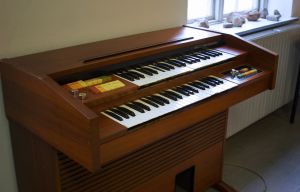
A few years ago I saw an advert for a small piano sized electric organ in our local shop window.
Great I thought, that will be a good way to introduce some music into the home, and see if I can add pedals to the idea of playing the piano.
It didn’t take long to track down the owner, but unfortunately the organ was in a back room, down two sets of stairs, round a corner, in a house which was isolated and difficult to find. Whereas I should have gone along with a team of
people, there were only three of us to move the instrument, but we eventually managed to move the thing out of the house, and into a trailer which we used to transport it to our house.
My wife thought I was mad, but I really liked it because it only had the sound of an organ, not a choice of sounds. It even had stops, not buttons to choose the different pipes you wanted to use.
Actually we were undertaking a great deal of building work at the time thus when our local church’s organ came to the end of it’s life, it seemed a good idea to offer them the chance to have this piece. It was ten times better than the original and sounded wonderful: job done!
However, last year some kind soul left money to the church and it was decided that the churcch could afford a new organ.
It duly arrived and our old one was moved to an alcove at the back of the church: I was asked to remove it.
Where was I going to put it? By chance we had acquired an almost new one ourselves and nobody seemed to want this old but wonderful piece.
We tried Ebay – no luck. Adverts – again no interest. The pressure started to grow.
People were asking me to move that old organ of mine. Letters started to arrive. Could I please take it away – I became the bad guy.
Eventually, I made contact with a man in London who would be happy to take it away for free, but he wanted to hear it play. Whoops! It was already loaded on my trailer!
But I managed to position trailer and load near an electric socket and in broad daylight, with the aid of the mobile phone, I stood and played a range of music! Our customer was happy.
He agreed to come at about eight o’clock one Saturday morning, but actually arrived two hours ahead of time at six in the morning!

The man brought his wife, dressed in her national dress, explaining that they wanted the organ for a church in their village back in Ghana. They had never ventured outside London, so this visit to the country was a major event. They joined us for breakfast and we showed our children a map depicting where the organ would eventually go.
The man was built like an ox and he and his wife together were quite happy to lift the instrument and put it in the back of their vehicle.
Funny old life!
By Bob Derham

Remarkable people: Kevin Richardson
Trust is both taught and learnt!
Thanks to Naked Capitalism, we posted an item on the 19th December about an unknown wild-life ranger working in the wildlife refuge area of Lanseria, South Africa. Here was one of the pictures included in that Post:
The Post finished with an appeal to anyone that knew the name of this Ranger. Many of you did and responded; thank you!
Government Spending is like a Hamburger Store
THERE IS ONLY ONE. 100% TAX. BIG GOVERNMENT!
(with apologies to McDonald’s Big Mac packaging)
At times when money is tight and our resources are stretched to the limit, it pays to spend our money wisely. That is why it makes so much more sense to reduce the costs imposed on private industry instead of increasing spending by government. Industry takes their earnings and reinvests them to create sustainable wealth creation: they hire and train workers, conduct research, build and perfect machinery and robotics, and develop brand equity and a reputation for quality. All of these endeavors represent lasting value creation. What is spent on these things this year will continue to create revenues, wages, and profits for years to come.
Government spending is pure consumption. Think of a hamburger store. While it may taste good at the time, it is temporary and fleeting, and will likely do more harm than good in the end. It keeps the beast alive for one period, and then the process has to start all over again next period.
When we approve a massive spending bill, it covers government purchases of goods and services for the next year, maybe less. In one end; out the other, with nothing left to show for it, except a hungry program that needs to be fed again next year, and the next and the next.
Government programs in and of themselves never produce lasting value; only in conjunction with private industry is any wealth or value created. And even then the government purchases have pushed aside, prevented, crowded out, or priced out purchases that would have been made by the private economy.
So, please, keep this in mind whenever you think of any type of government spending or tax increase: it is here today, gone tomorrow. Oh, and skip the fries!
Speechless!
Maybe it’s me but at any level this appears to be very wrong!
The US Government put huge amounts of taxpayer’s money into the two huge US Mortgage companies Fannie Mae (Federal National Mortgage Association) and Freddie Mac (Federal Home Loan Mortgage Corporation).
Now the BBC has reported that:
The heads of US mortgage giants Fannie Mae and Freddie Mac may each receive pay packages of up to $6m (£3.7m) for 2009, depending on company performance.
Now I’m not an American nor do I really understand the issues BUT when taxpayers put in $111,000,000,000 of THEIR money into these organisations (that’s $365 for every man, woman and child on the US Census!) and so many of those same US taxpayers are up the proverbial financial creek without a paddle, there has to be a better way of rewarding top bosses (of US publicly owned corporations) than the option of $6,000,000 each!
But the regulator which decided the pay levels said the awards were 40% lower than before the government bailout.
The sums involved reflected the need to attract and retain talent, it argued.
Frankly, I just don’t believe that there aren’t many other incredibly capable business leaders who would do these jobs for a fraction of six million dollars. (The present incumbents are Michael Williams at Fannie Mae and Charles E. Haldeman Jr. at Freddie Mac who will receive a base of $900,000 in 2010 with the opportunity to earn $5.1 more if “certain targets are met“.)
Read the article here – I’m going to lay down in a dark, quiet room for a while!
By Paul Handover
Banks are being paid to NOT LEND!
It’s a funny old world just now!
The President of the United States recently pressured the heads of the nations’ largest banks to increase lending to
small business and home-owners. Obama claimed that the banks, as recipients of federal bailout funds, had an unusually heavy responsibility to take such measures in order to create more jobs and help nurse the economy back to health. All of this was done very publicly and with much fanfare. Worldwide press coverage was universally favorable.
Seems reasonable, doesn’t it?
But it is not. You are being duped. I can’t tell whether whoever writes this stuff for Obama knows the truth and skilfully skirts it, or just writes flowing prose with no connection to the truth that curries voter buy-in by blaming Wall Street and Corporate America for all that’s wrong in the world.
The Future of Video Stores
Economics in the real world!
Tim Clodfelter of the local Winston-Salem Journal wrote a very interesting piece on the future of brick-and-mortar
video stores and video rental places such as NetFlix and Red Hat.
I happened to be quoted in the article as an economist (the comment about “reducing the average cost every time we watch a purchased video” was supposed to be a joke!), but actually met up with Tim in my role as mom and pseudo-agent! Let me explain.
My 15-year-old daughter was standing in a very long line of young ladies waiting to audition for the Coen Brother’s remake of True Grit. Tim was there to get the story on the open casting. I asked him over hoping he would talk to my daughter. He and I got to talking instead; he found out that I was an economics teacher, and pulled out his notes on the Video Store story. He ended up talking to me and several other parents in line, all of whom had a different approach to viewing movies. The resulting article follows with permission to publish on Learning from Dogs.
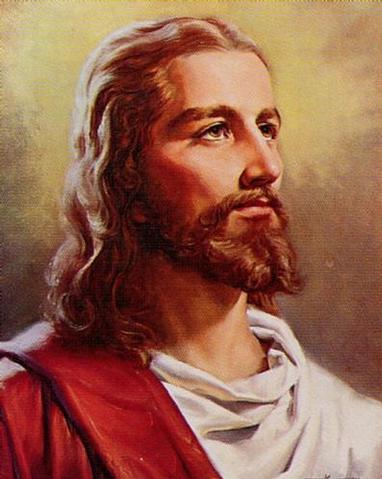
What Jesus means to me.
I was recently asked this question:
“If you don’t believe in God, why will you be celebrating the birth of his son on 25th December?”
This was my answer:
Christmas was, I believe, celebrated long before Christ appeared. But quite apart from that, the story of Christ is totally and absolutely wonderful and inspirational. He is a sublime role model. He encapsulates all that is most pure and admirable about the human spirit.
He understood our frailty and did not condemn us for it but tried to show us a better way through his own example. He shied not from difficult questions, but always spoke what I take to be “the truth”, and he taught it with astonishing examples, in particular through his own actions and relations with others, friends or strangers.
He was not greedy or selfish in any way; he truly loved people and treated them all as his beloved brothers.
Personally, I love Jesus and I am more than happy to celebrate his life, to remember how remarkable he was, to get once more inspiration from his selflessness, purity and love for his fellow men. I celebrate his life also for his ability to inspire others to to write such wonderful stories, even if all are not totally true (who knows?).
Sadly, it’s just the extra-terrestrial bit that is a problem. But I can celebrate his life without that, can’t I?
I wish there were a God, that he’d sort the mess out, that he’d end our pain, that he’d speak to me. I wish this quite deeply. But that doesn’t mean I should invent him if he isn’t there, does it?
What IS completely clear to me is that if we could all follow Jesus’ example, (which can be summed up in the sublime message “Love thy neighbour as thyself.”) then we would indeed enjoy “Heaven on Earth”. That would be more than enough to be going on with ….
Does that answer your question?
By Chris Snuggs
The Singular Importance of Good Writing
“The time to begin writing an article is when you have finished it to your satisfaction. By that time you begin to clearly and logically perceive what it is you really want to say.” ~Mark Twain
It is a bit intimidating to try to write a piece on the importance of good writing. I feel self-conscious about my writing as I write about good writing. After all, a post on good writing should be written especially well. Then again, maybe a poorly written post will do even more to illustrate the importance of good writing. I will have to leave that up to you, the reader.
I have been teaching graduate and undergraduate students for over twenty years now. I have read and graded thousands of papers and essays during that time. I can count on two hands the number that were exceptionally well written. In each case, I sought out the students to compliment their writing, and to encourage them to keep honing their writing skills.
I doubt my words of encouragement had much effect. This, I know from personal experience.
Years ago, in my third year of graduate school, I got a paper back from a professor with the words “You write well” written in the margin. I was crushed. I had worked so hard on that paper: reviewing the existing literature, developing the research design, and trying to make a substantive contribution to my field. I yearned to hear something tangible about the quality of the research, the cleverness of the method, or the importance of the findings. Instead, I got “you write well.” I honestly thought that the professor had said that because he couldn’t think of anything positive to say about the content of the paper.
Years later, something happened that made me realize how wrong I was. I had taken a teaching job at Southern Methodist University in Dallas, Texas, even though I had yet to defend my doctoral thesis; it’s called “ABD,” or “all but
dissertation.” I had traveled to Chicago to meet with Merton Miller, my thesis chairman, about polishing up my dissertation and scheduling the defense. As I waited outside his office door, I couldn’t help but notice how distracted Professor Miller seemed. He had always stood at a tall wooden lectern to write, but this day he paced to and from that lectern, rubbing his head, adjusting his shirt sleeves, writing, erasing, then erasing some more.
He was at the lectern when I entered his office for our meeting. I congratulated him again for winning the first Nobel Prize in financial economics and asked him about the upcoming trip to Stockholm. He was taking his wife and daughters on the trip, who were very excited. He, on the other hand, was not ready for the trip. He was worried, he said, because he was not going to have sufficient time to revise his acceptance speech. He had only edited it seven times thus far, and his magic number was eight. Not six, not seven, but eight rewrites were what he needed to be satisfied with his writing.
Professor Miller was known as one of the most gifted writers in all of economics. His writing was disarmingly simple and clear. It flowed like a piece of music. It seemed effortless. Everyone, myself included, assumed that he was just a naturally talented writer, lucky to have been blessed with that skill. Everyone was wrong. I learned that day that Professor Miller worked hard at writing well. He was well into his 60’s, had written hundreds of articles and had won the Nobel Prize, but he was still working at writing well.
Then I remembered the comment that a teacher had written in the margin of my paper years earlier. The teacher was Merton Miller. And now I knew how much it really meant, coming from him. So now when I see the rare student who writes really well, I make it a point to tell them. Not that it means as much coming from me as it did coming from Professor Miller. But it still means something, because good writing is very important, and it’s worth working for.
Dark Matter
Not really understanding but knowing it’s important!
I recently read a glowing review of the latest book by Sir Roger Penrose, the eminent mathematical physicist, called The Road To Reality. Having previously read his book The Emperors’ New Mind and just understanding it, I thought
his next one would be a welcome companion for long winter evenings. Wrong!
I managed to the bottom of the third page of the preface before “According to the mathematician’s “equivalence class” notion …..” had me grasping for meaning. Well over a 1,000 pages of content was destined to gather dust on the bookshelf.
But wrong again!
The idea of matter out there in the universe that is essential to the universe as we know it but is unseen has been sufficiently fascinating for the popular media to refer to it from time to time. Most people are familiar with the term even if like me don’t really have a clue as to what dark matter is all about.
So a recent press release in a popular English newspaper suggesting that dark matter has been ‘discovered’, if discover is the appropriate term, had me reaching out for Penrose’s book again. There under the chapter headed Speculative theories of the early universe was, on page 773, a few sentences that almost made sense. Let me quote them:
For many years, it had become clear that the dynamics of stars within galaxies does not make sense, according to standard theory unless there is a good deal of more material in the neighbourhood of the galaxy than is directly seen in stars. A similar comment applies to the dynamics of individual galaxies within clusters. Overall, there seems to be about 10 times more matter than is perceived in ordinary baryonic form. This is the mysterious dark matter whose actual nature is still not agreed upon by astronomers, and which may even be of some material different from any that is definitely known to particle physicists – though there is much speculation about this at the present time.
Fractional Reserves of the U.S. Banking System Explained
What are Fractional Reserves?
The US Federal Reserve, or Central Bank, is the banking system’s bank. It is the lender of last resort.
It is through the Central Bank that banks settle their accounts with each other. The central bank serves as a clearinghouse for checks written by depositors, and it holds the commercial banks’ reserves.
Bank reserves (vault cash, and deposits by banks at the Central Bank or the Fed) are monies held out of circulation by banks to satisfy the Fed’s reserve requirements and the currency demand by the public. Excess reserves are those held above the legal reserve requirements to handle uncertain demand. Bank deposits not held in (required plus excess) reserves are used to make loans and earn interest.
When banks make loans, they do not actually lend out the equivalent in cash but instead create on their balance sheet a loan asset and an equal liability called a demand deposit. Such lending by banks is limited only by reserve requirements (set by the Fed) and the cash they need to satisfy cash withdrawal demand by their customers.
As these loans are then re-deposited by the borrower, the multiplier process continues as fractional reserves are held back and the balance is “lent” out again.