Tag: YouTube

Making politics more fun!

Another pearl sent in by Neil Kelly.

If you are unfamiliar with who Mr. Clegg is then this website will explain all.

Integrity, part two.

A lifting of the importance of integrity is the key to our survival.

Let me start by reflecting on the difference between ‘truth’ and ‘integrity’.

Here’s one of the definitions of Truthconformity with fact or reality; verity: the truth of a statement.

Here’s one of the definitions of Integrityadherence to moral and ethical principles; soundness of moral character; honesty.

So while in yesterday’s article, I frequently referred to the word ‘truth‘, determining the ‘fact or reality‘ of a wide range of issues associated with anthropogenic climate change is not always straightforward.  Many of us probably have a strong intuition of the ’cause and effect’ of man’s footprint on this planet but a strong intuition is not the same as truth.

Then let’s turn to the notion of integrity. This is a much bigger issue, to my mind, the appalling lack of integrity!  Illustrated by one simple example.  How many leading politicians from any number of countries have demonstrated soundness of moral character; honesty with regard to the changing climate, even offering something as simple as “I don’t know!

There’s a saying that pilots use, “If there’s any doubt, there’s no doubt!”  Come on, politicians and leaders, at the very least there is doubt!

OK, let me move on!

If integrity is partly defined as honesty, then while it’s easy to take a pot-shot at the world’s politicians maybe we need to look closer at home; ourselves.  Are we as honest with our own self as we now need to be?

Here’s an example that supports that question.

A few days ago there was a report on the website The Daily Impact about the crash of US fisheries.  Let me show you how that report opens,

Report: US Fisheries Crashing

We live in a country in which every household has two TV sets, most of them receiving hundreds of channels, and two cell phones, many of them “smart.” One of every two households has a computer connected to the Internet. This country is currently in the middle of a hotly contested presidential election. And yet among the things that have almost completely escaped public attention is this: last week the US government declared fisheries disasters on four coasts.

Reflect on that paragraph.  Surely it’s a reflection about the lack of integrity, of honesty, about our society?

The report ends thus,

The disaster declaration covering all these dire situations makes them eligible for Congressional aid, along with drought-stricken farmers in the Midwest and Southwest, flooded-out homeowners in New Orleans and along the Gulf, the fire-ravaged states of the far West, and the derecho-pounded Northeast. Congress will no doubt be delighted by the opportunity to help.

We eat nearly five billion pounds of seafood every year — about 16 pounds for each of us — and 85 per cent of it is imported (according to NOAA). Yet in the wake of this grim assessment of a large proportion of the domestic industry, and the questions it raises about the future sources of seafood, there is no discussion of “fisheries independence” or “peak fish” in politics or the media. Only in such outposts as this website and Mother Jones will the dire warning from the Commerce Department be reported as what it is — a dire warning.

Then there was a recent article on the Australian Permaculture news website about the US food and dairy industry.  Here’s how that opened,

Americans’ right to access fresh, healthy foods of their choice is under attack. Farmageddon tells the story of small, family farms that were providing safe, healthy foods to their communities and were forced to stop, sometimes through violent action, by agents of misguided government bureaucracies, and seeks to figure out why.

Filmmaker Kristin Canty’s quest to find healthy food for her four children turned into an educational journey to discover why access to these foods was being threatened. What she found were policies that favor agribusiness and factory farms over small family-operated farms selling fresh foods to their communities. Instead of focusing on the source of food safety problems — most often the industrial food chain — policymakers and regulators implement and enforce solutions that target and often drive out of business small farms that have proven themselves more than capable of producing safe, healthy food, but buckle under the crushing weight of government regulations and excessive enforcement actions.

I’m not going to insert that YouTube video into this post but you can link to both the full article and the film here.  For anyone interested in the fate of the family farm in the USA, the film is a ‘must see’!  Once again, the theme of integrity, of adherence to moral and ethical principles; honesty, comes to mind!

How I do want to close this rather personal reflection on present times (some may call it an indulgent reflection!) is by including a video from this seasons TED Talks.  It was brought to my attention by Christine over at her excellent blog 350 or bust.  The video is about resolving conflict,

William Ury, author of “Getting to Yes,” offers an elegant, simple (but not easy) way to create agreement in even the most difficult situations — from family conflict to, perhaps, the Middle East.

The reason why this seems like a very appropriate way to close this is because the way things are going at the moment, avoiding conflict could become rather important, rather soon!

More reflection on being human!

The voice of reason from James Howard Kunstler.

Yesterday, I published a Post that I called What it is to be human.  It was inspired and based on the compelling film I AM‘ by Tom Shadyac.  As so often seems to happen, shortly after completing yesterday’s Post, an item from Chris Martensen’s Blog caught my eye.

Chris publishes the blog Peak Prosperity and on July 14th Chris had an item featuring James Howard Kunstler.

Let me give you an idea of that item from Chris.

Author and social critic James Howard Kunstler has been one of the earliest, most direct, and most articulate voices to warn of the consequences — economic and otherwise — of modern society’s profligate wasting of the resources that underlie its growth.

In his new book, Too Much Magic, Jim attacks the wishful thinking dominant today that with a little more growth, a little more energy, a little more technology — a little more magic — we’ll somehow sail past our current tribulations without having to change our behavior.

Such self-delusion is particularly dangerous because it is preventing us from taking intelligent, constructive action at the national level when the clock is fast ticking out of our favor. In fact, Jim claims that we are past the state where solutions are possible. Instead, we need a response plan to help us best brace for the impact of the coming consequences. And we need it fast.


James Howard Kunstler

Mr. Kunstler is the author of the very successful book The Long Emergency and his latest book, as mentioned above, Too Much Magic expands on his alarming argument that our oil-addicted, technology-dependent society is on the brink of collapse, ergo that the long emergency has already begun.  His website is here.

Anyway, back to the Chris Martenson’s piece.  Chris goes on to quote Mr. Kunstler, as follows:

[We now live in] this weird, peculiar period in American history when the delusional thinking has risen to astronomical levels — predictably, really — in response to the stress levels that our society feels. And it is expressing itself as sort of “waiting for Santa Claus and the Tooth Fairy” to deliver a set of rescue remedies to us so that we can continue running Wal-Mart, Walt Disney World, Suburbia, the U.S. Army, and the Interstate Highway System by other means. That is the great wish out there. It is kind of understandable, because that is the stuff that we have, and people tend to defend the stuff that they have in any given society and the systems and platforms that they run on. But it is probably a form of collective behavior that is not really going to benefit us very much and really amounts to simply wasting our time, and wasting our dwindling resources, and even our spiritual resources when we could be doing things that are a lot more intelligent.

Here is something I have detected as I travel around the country: There is a clamor for “solutions.” Everywhere I go, people say “Don’t be a doomer; give us solutions.” And I discovered that the subtext to all that is they really want solutions for allowing them to keep on living exactly the way they are living now. To keep on running Wal-Mart, and keep on running Suburbia, and keep on running the highway system, and the whole kit of parts. And what that really means is that they are looking for ways to add on additional complexity to a society that is already suffering from too much complexity.

(Read the full article here.)

There is a podcast of the interview with James Kunstler here and also on YouTube, as below.

My own reflection on this item, as with so many other articles, essays and items available to read online, is that the power of the Web is informing and educating millions of people around the world in a way that Governments and the media have failed to so do.

That promises change and, maybe, sooner than we might expect.

What it is to be human.

A powerful and compelling film by Tom Shadyac.

Background.

I have recently started subscribing to the website of The Permaculture Research Institute of Australia.  Information about them is here, from which I offer,

Permaculture (the word, coined by Bill Mollison, is a portmanteau of permanent agriculture and permanent culture) is the conscious design and maintenance of agriculturally productive ecosystems which have the diversity, stability, and resilience of natural ecosystems. It is the harmonious integration of landscape and people — providing their food, energy, shelter, and other material and non-material needs in a sustainable way. Without permanent agriculture there is no possibility of a stable social order.

Read the full article here.

Tom Shadyac. Photograph by Kevin Parry/WireImage

Anyway, in a recent post there was a link to a video by Tom Shadyac.  Tom’s biographical details are here.

Here’s what was written about Tom in that post,

I think you’ll find this documentary highly watchable. At least, I did. So, be warned — if you click play ten minutes before heading off to work, you may well be late…

I am, written and directed by Tom Shadyac, stands in stark contrast to his previous productions. Tom is well known for hit comedy films, like Ace Ventura: Pet Detective (Jim Carrey), and many others. He was hugely ’successful’ — as judged by the contemporary money-oriented measure of success — with an antique-filled mansion, private jet, etc., but, after a bicycle accident, and the severe physical suffering he experienced for months afterwards, Tom started to think a little more deeply about life and where we’re all headed. His thoughts about consumer society, where it’s taking us and its inability to satisfy us, despite all the damage done, lead him to ask himself two simple, but profound, questions: what’s wrong with the world, and what can we do to make it better?

After Tom’s physical problems finally started to fade, he decided to take a crew of four people and put those questions to some noteworthy individuals around the world — academics, environmentalists, philosophers, spiritual leaders, writers and scientists. It’s an interesting peek at humanity.

I personally like that Tom is trying to get beyond the symptoms of the world’s problems, to look more at the root issues from which they spring. The aspect that becomes central to the movie is whether man (and nature in general, for that matter) is inherently competitive, or inherently cooperative — whether man instinctively wants to live only for his own individualistic advancement, even if he must do so aggressively, or if he is more hard-wired to live for the good of others, collaboratively. My own subjective opinion is that both aspects are part of our makeup, but that one can override the other, depending on the choices we make. I also think these choices can become easier for us, depending on what we make the focus of our attention, and depending on the choices made by others around us — our family, friends, colleagues, etc. (i.e. we all influence each other). But, whatever your own opinion, I think most will find some valuable food for thought with this production.

The video at that URL wasn’t available for copyright reasons but here it is on YouTube.  Settle down for an hour and a quarter and be deeply embraced by Tom’s message.

No let me say a little more. The theme of the film is one of immense hope in the face of what, to millions and millions of people, must seem like a scary and bleak future.  As I have written before on Learning from Dogs, the truth about change is that it starts with the self: to change the world first change oneself.  We can grumble, complain and be outspoken about so many aspects of the societies in which we live but it doesn’t alter the incontrovertible fact that change starts within.

So watch this film!

I AM is an utterly engaging and entertaining non-fiction film that poses two practical and provocative questions: what’s wrong with our world, and what can we do to make it better? The filmmaker behind the inquiry is Tom Shadyac, one of Hollywood’s leading comedy practitioners and the creative force behind such blockbusters as “Ace Ventura,” “Liar Liar,” “The Nutty Professor,” and “Bruce Almighty.” However, in I AM, Shadyac steps in front of the camera to recount what happened to him after a cycling accident left him incapacitated, possibly for good. Though he ultimately recovered, he emerged with a new sense of purpose, determined to share his own awakening to his prior life of excess and greed, and to investigate how he as an individual, and we as a race, could improve the way we live and walk in the world.

Towards a better understanding of this strange species – man!

Trip down memory lane

The amazing development of electronics over 50 years.

(A republication of a post first shown on the 13th August, 2009)

The calendar reliably informs me that this is my 65th year.  My brain, of course, lags somewhat in accepting this!

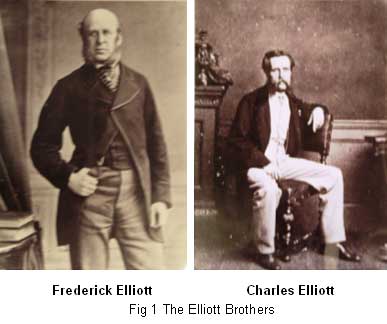
My step-father during my early teenage years worked for Elliott Brothers (the link goes to an interesting history of the firm that started in 1804) in Borehamwood, just north of London.  He encouraged me to fiddle with ‘steam’ radios and

try and understand how these basic circuits worked.  It was then a small step to deciding to become a radio amateur, popularly known as a radio ham!  In those days it was a case of some pretty intensive studying to pass a Theory exam as well as being able to pass an exam in sending and receiving Morse code.

So joining the local radio society seemed like a sensible idea.  That was (and still is!) called the Radio Society of Harrow.  That it is still in existence after all these years is truly delightful.  Those Friday night sessions at the Society and extra-curricular classes on Sunday morning at Ron Ray’s  (G2TA) house, an hour’s bicycle ride away from home, ensured that shortly after my 16th birthday I was granted a Licence, G3PUK.  It was a very proud moment.

Anyway, once granted a licence it was time to build my own radio transmitter.  Most of the details have been lost in the mists of time but what is recalled was that the final amplifier was a pair of 803s driving an 813 (These are radio valve numbers).  It sounds like something from the ark!  But again ploughing the inexhaustible files of the Web, it’s possible to see what these radio valves looked like.  Thanks to the National Valve Museum.

Here are pictures, courtesy of the National Valve Museum of those two radio valves:

803 – The substantial wide glass tube envelope is 58 mm in diameter (2 1/4 in) and, excluding the special five pin base pins, is 216 mm tall (8 1/2 in).

813 The classic envelope is substantial at 60 mm diameter (2 1/3 in) and 170 mm (6 2/3 in) long excluding the special base pins. The anode is 53 mm long and 48 mm wide. The metal is 1 mm thick.

803 radio valve
803 radio valve
813 radio valve
813 radio valve

It’s difficult, today, to imagine devices which are essentially diodes (well, technically the 803 was a pentode and the 813 a tetrode) being between 6 and 8 inches tall!

My own self-build transmitter had not really been successful emitting more heat than light, so to speak.  Literally, in the sense that these large radio valves kept me warm in my converted garden shed at the bottom of the garden.  They also completely wiped out TV reception for those households with a 1/4 mile range that had invested in early television sets!  It was time to move on to the R1155.

Around this era, less than 20 years after the end of the War in Europe in 1945, war-surplus equipment was widely available including ‘compact’ transmitter-receiver units.

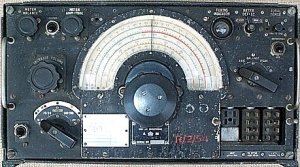
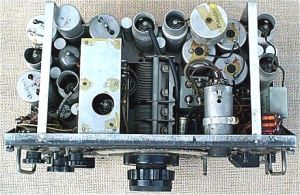
One popular one was the RAF R1155 which had been fitted to RAF Lancaster bombers and RAF marine craft.  It was also fitted to the Sunderland flying boat.  This information plus the photos below is from this fascinating web site for those wishing to be ‘geeky’ about this.

RAF R1155B transreceiver
Internal view of the R1155B

Just compare the view on the right to the inside of your domestic radio or your cell phone.

A lot happens in 50 years!

My personal journey now leaps to 1978 and I have just left IBM UK having had 8 fabulous years with them as an Office Products salesman.  My fledging company, Dataview Ltd, has just become the 8th Commodore Computer (CBM) dealer in the UK, based in a small office in Colchester, Essex, about 50 miles north-east of London.

The CBM PET (Personal Electronic Transactor) released in 1977 initially with a calculator type keyboard was useless for any business application but soon came out with a typewriter sized keyboard, making it a more viable business

CBM computer, circa 1978

machine.  Today, as this is typed on an ‘old’ laptop with 2GB RAM, it seems unbelievable that these CBMs were sold with between 4k and 96k of RAM (memory) and no hard disk, although one could purchase an add-on that comprised dual 5 1/2 inch floppy disk drives.

YouTube obligingly finds  a short video on the Commodore PET for those really wishing to enjoy the nostalgia!

So to turn to the 21st century and to run out of understanding.  We appear to live in a world of multi-later printed circuit boards of unimaginable (to me) component density, assuming that the word ‘component’ is even relevant today.

Haven't a clue what this is but it's very modern.
Haven’t a clue what this is but it’s very modern.

What an amazing period it has been!

A long way from yesterday!

Now let me see was it Pin 920 to Pin 140, or Pin14 to Pin 860 connected to Pin 56 ………?

And now for something completely different!

Keeping a balance on one’s state of mind.

Don’t know about you but I find that it is all too easy to get wound up by so much that is going on in this crazy world.  That’s not to marginalise the threats to society that are all around us and there are some powerful writers out there who work so hard to inform the world as to the truth of those threats.  (As an aside, one of my favourite authors is this context is Patrice Ayme, just see this recent Post of his as an example of his depth of analysis.)

But my dear friend of over 40 years, Dan Gomez, recently sent me a link to a video of the 10 most extreme airports in the world.  That stirred some memories from my own flying days.

First settle back and enjoy 7 minutes of reasons why you don’t want to think about flying! 😉

The YouTube video has this information, which I republish below,

Pictures and videos of the top 10 most extreme airports in the world!

San Diego: Busy airspace lots of buildings on approach
Madeira: Difficult approach and did have a short runway
Eagle Vail: High altitude, short runway & mountainous approach & departure
Courchevel: Short runway, bumpy runway, high altitude
Kai Tak: Difficult approch, fly through tall buildings, short runway
Gibraltar: Short runway, building on approach, winds from the Gibraltar rock
St Maarten: Short runway, has to fly over the beach with alot of people on there, steep takeoff because of mountains
St Barts: Short runway, has to dive.
St Barts: To land, the low approach on that hill thingy
Toncontin: Difficult approach, short runway
Lukla, short runway, only was cemented a few years ago, no go around, if land too low you land into a cliff

First song: La Perla by Kobojsarna

Second song: Feel It – Explicit Album Version by Three 6 Mafia vs Tiesto with Sean Kingston and Flo Rida

Now to a personal recollection.

I was a private pilot for many years, first learning to fly at the Suffolk Aero Club at Ipswich Airport in Suffolk, England.  My first lesson was on the 3rd March, 1984!

Some twenty years later, on the 13th August 2004 to be exact, I was checked out to land at Courchevel Airport in an aircraft type known as a TB20, a French-built aircraft.  Here’s the page from my log book with the necessary authorisation stamp affixed.

Cleared to land at Courchevel, LFLJ!

The following year, 19th July, 2005, I added my wonderful Piper Super Cub to that authorisation.  (See here for a part picture of the aircraft.)

So thanks to YouTube as someone has uploaded a film of a light aircraft operating into Courchevel.  It really is rather thrilling!

Finally, back to Dan.  Here’s his recollections included in the email that he sent with that first film.

Just found this.  I’ve landed at two of these.  Eagle Vail was a piece of cake compared to Toncontin as Marty and Bruce know. BAE146 and small Boeing jets.  I flew in and out of Toncontin 5 times in the 90’s and had no idea it was as scary as it was.  That is to say, I knew it was scary because my palms sweated and heartbeat was about 140 but when I look at it now I go “what was I thinking?”

Take offs were like Orange County, Full brake power straight up. The big difference was you were shuttling along the runway and then down the runway and finally, up the runway to get the wheels up.

One time, on a connecting flight from Medellin, we taxied in, were boarded by military police with drug dogs who sniffed their way through the aisle.  Bags were searched while everyone waited in intense heat. It took about 2 hours, three time longer than necessary. Then the interior was fumigated with everyone aboard. All the big machine guns too. Nobody said a word!

There’s one thing about flying a light aircraft, especially into ‘interesting’ airfields, you don’t have a moment to worry about the state of the world!

Inequality, a rich man speaks!

A personal reflection offered by Nick Hanauer.

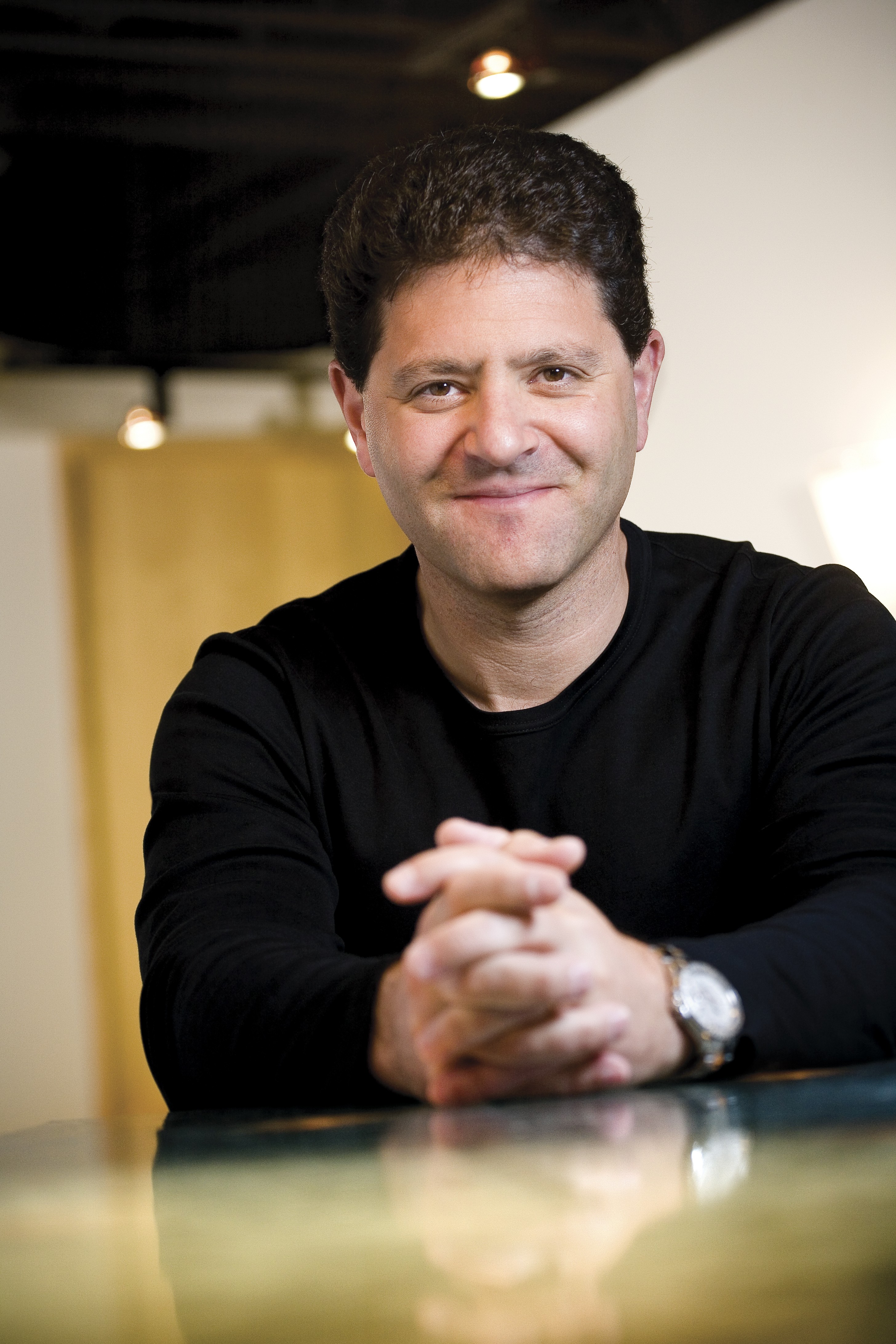
Mr. Nick Hanauer

I hadn’t come across Mr. Hanauer before but thanks to some Facebook comments by Patrice Ayme found this YouTube video that is well-worth watching.  That’s an understatement!

The fundamental message that is contained in this short video seems critical, well to me it does, to society (that’s all of us, by the way) understanding why so many things seem to be going so very wrong for so many people.  But let me stop there before it becomes another of my rants!

Who is Nick Hanauer?  Here is a small extract from Nick Hanauer’s website,

Nicolas J Hanauer is a partner with Second Avenue Partners, a Seattle venture capital partnership specializing in early state startups and emerging technology. He has had a hand in such companies as Amazon.com and aQuantive among others.

Hanauer’s career began with a position as executive VP of Sales and Marketing at Pacific Coast Feather Company, a family owned manufacturer of basic bedding. In his time in that role, he helped grow Pacific Coast from several million dollars to more than $300 million in sales. Hanauer subsequently served as the company’s Co-Chairman and Chief Strategy Officer and remains Chief Executive Officer.

In 1988, Hanauer co-founded Museum Quality Framing Company, a company that has emerged the largest of its kind on the west coast with 60 locations. Hanauer was also one of the first investors in Amazon.com in 1995, where he served as a Board Advisor until January of 2000.

In 1996, he founded and served as CEO of internet media company Avenue A Media (later re-named aQuantive, Inc.) and became Chairman of the Board upon the first public offering in 2000. aQuantive was purchased by Microsoft in August of 2007 for 6.4 billion dollars; the largest acquisition in Microsoft history.

Now the video; less than 6 minutes long – do watch it!

As  a one-time entrepreneur back in the 80’s I can vouch for much of what Mr. Hanauer proclaims in his video.  The essence of successful marketing for any business, large and small, is understanding your market. Seeing the customer’s world through the customer’s eyes would be another way of putting that.

In plain language that means carefully and closely understanding what your customers, both actual and prospective, require, objectively and subjectively, and providing it to them profitably.  As the middle-classes (don’t like the term but it will have to do) are often the largest market opportunity, then it does follow that a healthy and vibrant middle-class is going to be best overall for the health and vibrancy of a country.  Indeed, in this very inter-connected world, that really equates to the health and vibrancy of our planet.

Which so easily leads on to a core truth. This one.  If all the Governments democratically elected on this planet truly acknowledged the democratic foundation, as Lincoln so ably put it, “government of the people, by the people, for the people” then those governments would be united in the one most important task facing the people – creating a sustainable way for us to live on the only planet we have!

Apologies, it did turn into a rant!

You may also want to read this TED and inequality: The real story.

It’s the way you tell it!

Humour at its best!

Take a couple of minutes off and bury our crazy world with a laugh.  With big thanks to Dan Gomez for forwarding on what had been sent to him by Greg H.

The love of a cool cat!

How lady luck brought joy for a ‘down-and-out’ Londoner and a cat called Bob!

I was chatting with my son yesterday and he happened to mention that perhaps I should write about a cat for a change!  Alex mentioned a book recently published in the UK called A Street Cat Named Bob: How One Man and His Cat Found Hope on the Streets.

This is how the book is described on Amazon (UK site),

When James Bowen found an injured, ginger street cat curled up in the hallway of his sheltered accommodation, he had no idea just how much his life was about to change. James was living hand to mouth on the streets of London and the last thing he needed was a pet. Yet James couldn’t resist helping the strikingly intelligent tom cat, whom he quickly christened Bob. He slowly nursed Bob back to health and then sent the cat on his way, imagining he would never see him again. But Bob had other ideas. Soon the two were inseparable and their diverse, comic and occasionally dangerous adventures would transform both their lives, slowly healing the scars of each other’s troubled pasts. A Street Cat Named Bob is a moving and uplifting story that will touch the heart of anyone who reads it.

A quick web search found volumes of material, so let’s start with this video,

The local London newspaper the Islington Tribune wrote this back in 2010,

Two cool cats… the Big Issue seller and a stray called Bob

Inseparable: musician James Bowen with Bob

Down-on-his-luck musician teams up with ‘wonderful loyal friend’ he rescued from streets

Published: 24 September, 2010
by PETER GRUNER

NOT since the legendary Dick Whittington has a man and his cat become such unlikely celebrities on the streets of Islington.

Big Issue seller James Bowen and his docile ginger cat Bob, who go everywhere together, have been attracting comments since they first appeared outside Angel Tube station.

The story of how they met – widely reported in blogs on the internet – is one of such extraordinary pathos that it seems only a matter of time before we get a Hollywood film.

James, 31, who lives off Seven Sisters Road, Holloway, is a musician who has fallen on hard times.

He ekes out a basic living selling the homeless people’s magazine Big Issue at Angel and Covent Garden.

Bob was a stray discovered by James outside his accommodation one day.

The cat was limping after apparently being attacked by another animal, possibly a fox.

After failing to discover the cat’s owner, James took him to the RSPCA hospital at Finsbury Park, which prescribed a course of antibiotics.

“I kept him for two weeks until he was well enough to go on his way,” said James. “But when I opened the front door to let him out Bob wouldn’t move. He seemed to me to be saying: ‘I want to stay with you.’

“Now we go everywhere together. I even have a cat harness when we go out and Bob gets really excited when I show it to him.”

Read the rest of the article here and if you want more information, a web search on Bob the Cat will finds loads more.

It’s a fabulous story with a great message of hope for not just for James and Bob but for all of us that find ourselves ‘up a creek without a paddle’ at points in our lives.

Here’s how the newspaper The Daily Mail wrote about it on their website,

[last half of the story]

But then Bob started following him and it became increasingly difficult to shoo him away, especially as there were dangerous roads to be crossed. One day there was nothing for it but to put Bob on a makeshift lead and take him along. Bob travelled sitting on James’s shoulders.

The trouble was, so many cat-mad passers-by stopped him to stroke the animal that James arrived late at his pitch, secretly cursing Bob for thereby costing him some of his usual £25-a-day takings. He couldn’t have been more wrong.

Within minutes, people who would normally have walked by without giving James a second glance were lingering to make a fuss of the cat sitting sedately in his guitar case, and most made a donation. By the end of the day, he’d racked up more than £60.

It was the beginning of a phenomenon as tourists and commuters befriended Bob and James, many bringing titbits for the cat. People were amazed at how placidly Bob would sit all day, quite happily watching the world go by while James earned a living. Not that it was always without a hitch; on a couple of occasions Bob bolted when startled, leading to a frantic chase through the crowded streets.

Bob’s popularity continued when James switched from busking to selling the Big Issue, the magazine produced and sold by homeless people. This change in direction was part of James’s growing sense of a need to get his life in order, which he puts down to the responsibility of looking after Bob, and the example the cat offered of the possibility of a second chance.

It enabled James to make the final push to end his drug dependency, going through the necessary cold turkey to get off heroin substitutes, and to mend broken contacts with his family. The final result of Bob’s influence came when a literary agent who passed the duo every day and had seen them on YouTube suggested James tell their story in a book. The result is this heart-warming tale with a message of hope that will appeal especially to the many cat obsessives out there.

Read the full story here.

Let me close with another video, this one from a recent UK This Morning TV show with James Bowen and his cat being interviewed by Eamonn and Ruth.

Thank you, Alex; great story!

The unconscious

A Biological Basis for the Unconscious? Surely not?

Ten days ago or thereabouts, I saw a piece on Big Think about the unconscious.  The title of the piece was as the sub-heading: A Biological Basis for the Unconscious?  I was intrigued, to say the least, and wanted to write about that on Learning from Dogs.

The article started thus:

What’s the Big Idea?

Eric Richard Kandel

Today, the question of how people make decisions is an animated and essential one, capturing the attention of everyone from neuroscientists to lawyers to artists. In 1956, there was one person in all of New York known for his work on the brain: Harry Grundfest. An aspiring psychiatrist who was born in Austria in the 1930’s, Eric Kandel took an elective in brain science during medical school and found himself studying alongside Grudfest at Columbia University.

“What is it you want to study?” Grundfest asked Kandel. “I want to know where the id, the ego, and the super-ego are located in the brain,” Kandel replied. Grundfest looked at him as if he was crazy. “I haven’t got the foggiest notion whether these constructs exist,” he said. “But the way to approach the brain is to study it one cell at a time. Why don’t you study how the cells work?”

Now it would be improper to republish the whole article, not having permission to so do, and I thoroughly recommend you going to the article here and reading it completely from the Big Think website.

But there are a number of interesting videos on YouTube and the one I have selected is a great example of Kandel’s power of mind.  As the short description of the video reveals, “A Conversation With Nobel Laureate Eric Kandel, Who Continues to Look Forward at 80.”