Tag: William James

Change out of hope.

Making a difference is the only way forward!

Don’t worry, this is not going to be some chest-banging Post!  I leave those for Monday to Friday. 😉  No, I just wanted to offer a couple of examples of the power of goodness and how making a positive difference is no more than wanting it.  As Perfect Stranger commented last Tuesday, “A single candle may light a thousand others and they in turn many thousands more” – Buddha

The first example is about how a group of upstanding citizens rescue a school of dolphins that became stuck on a beach in Brazil.

The second example comes from closer to home.  Ginger I. is a Board Member of the Humane Society of Central Arizona and is based at Payson.  Jean has been a volunteer at the Society’s Thrift Store for some time and has got to know Ginger well.

Ginger recently emailed me this; it has already done the rounds of the WWW, and quite rightly so.  It reminds me of the book Dogs Never Lie About Love, written by Jeffrey Masson, from which comes the following,

This ambiguity, which includes a certain ambivalence as well, has been memorialized in our speech, in our sayings, and in our tributes to and about dogs. Sir John Davies, in his epigram In Cineam (written in 1594), observed:

Thou sayest thou art as weary as a dog,
As angry, sick, and hungry as a dog,
As dull and melancholy as a dog,
As lazy, sleepy, idle as a dog.
But why dost thou compare thee to a dog?
In that for which all men despise a dog,
I will compare thee better to a dog.
Thou art as fair and comely as a dog,
Thou art as true and honest as a dog,
Thou art as kind and liberal as a dog,
Thou art as wise and valiant as a dog.

Ever since Madame Roland said in the eighteenth century “Plus je vois les hommes, plus j’admire les chiens” (The more I see of men, the more I admire dogs), generally what has been written about dogs tends to be positive. Sometimes it is even wonderful, as in William James’s statement “Marvelous as may be the power of my dog to understand my moods, deathless as is his affection and fidelity, his mental state is as unsolved a mystery to me as it was to my remotest ancestor.” Or it may be delicious, like Ambrose Bierce’s definition in his Devil’s Dictionary, “Dog, n. A kind of additional or subsidiary Deity designed to catch the overflow and surplus of the world’s worship.” Samuel Coleridge, in Table-Talk (May 2, 1830), was one of the first to note that “the best friend a man has in the world may turn against him and become his enemy. His son or daughter … may prove ungrateful. Those who are nearest and dearest to him … may become traitors to their faith…. The one absolutely unselfish friend that man can have in this selfish world, the one that never deserts him, the one that never proves ungrateful or treacherous, is his dog.”
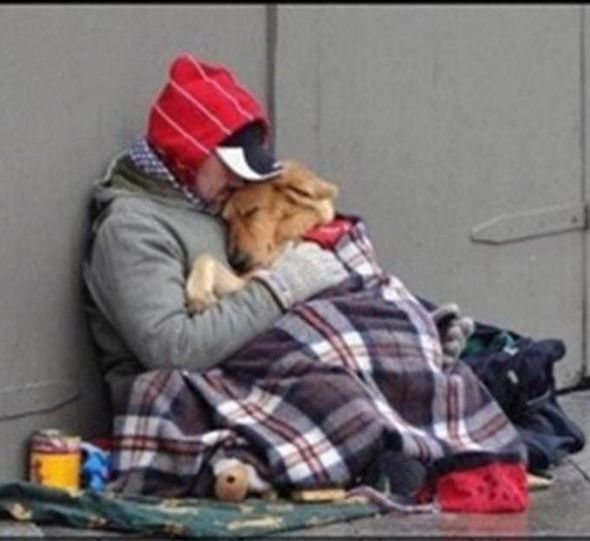
Just read that last sentence again from Samual Coleridge as you look at the photograph below, “The one absolutely unselfish friend that man can have in this selfish world, the one that never deserts him, the one that never proves ungrateful or treacherous, is his dog.


Consequences

Acceptance of what has happened is the first step to overcoming the consequences of any misfortune. 

William James, January 11th, 1842 - August 26th, 1910

The above is a quotation attributed to the late American philosopher, William James, comprehensively written about on the Stanford Encyclopaedia of Philosophy.

When drafting this post last Wednesday, I used the quotation and reference to William James to soften, as it were, me reproducing an item on Yves Smith’s fabulous blog, Naked Capitalism.

I did have second thoughts about including the video below and the summary of what was written by Yves.  The second thoughts were around me not wanting Learning from Dogs to stray into sensationalism or hot pop topics.

The reason I did publish this post was that maybe, just maybe, young Mr. Alessio Rastani is saying it how it really is.  How we all have been lulled over the years into believing so much rubbish from so many movers and shakers in the world of power and politics.  Whereas, in truth, most people who stop and reflect on the world we are presently living in, intuitively sense, that something has broken.

The good news that may be interpreted from Mr. Rastani’s predictions is that we are now living through a period of change, the end of an era, and that the opportunity for a better, more caring world is wide open.

Introduced on the Naked Capitalism site, as follows,

This segment on BBC may not go viral, but it seems to be getting traction, based on the e-mails (hat tip readers Paul S and Marcus) and alerts in the comments section.

This is not an entertaining Rick Santelli-style rant, it’s a cool assessment of how the Euromarket crisis is likely to end, which he thinks is very badly. The flummoxed reaction of the BBC host suggests that the trader, Alessio Rastani, was a booking mistake.

But consider his second message: that Goldman and people rule the world and like him don’t care about what happens to the real economy. A depression is just a great investment opportunity if you see it coming and position yourself accordingly. Rastani is the bland, reasonable face of predatory capitalism.

But in the best interests of scepticism and balance, I also reproduce what was published in the UK’s Telegraph newspaper on the 27th September,

11:50PM BST 27 Sep 2011

The soundbites won Mr Rastani instant fame. He became a viral hit and was trending on Twitter. BBC business editor Robert Peston was among the fans. “A must watch if you want to understand the euro crisis and how markets work,” he told his army of 82,000 followers on Twitter on Tuesday.

The interview contained such gems as “Governments don’t rule the world, Goldman Sachs rules the world [and] Goldman Sachs does not care about the rescue package.”

But on Tuesday night the BBC was left facing questions about just how qualified Mr Rastani is to speak about the markets.

In the interview Mr Rastani described himself as an independent trader. Elsewhere he claims he’s an “investment speaker”. Instead of operating from a plush office in Canary Wharf Mr Rastani works and lives with his partner Anita Eader in a £200,000 semi in Bexleyheath, south London. The house, complete with a mortgage from Royal Bank of Scotland, belongs to her not him.

He is a business owner, a 99pc shareholder in public speaking venture Santoro Projects. Its most recent accounts show cash in the bank of £985. After four years trading net assets are £10,048 – in the red.

How a man who has never been authorised by the Financial Services Authority and has no discernible history working for a City institution ended up being interviewed by the BBC remains a mystery.

The incongruity led to some commentators speculating Mr Rastani was a professional hoaxer. The BBC denied the allegation: “We’ve carried out detailed investigations and can’t find any evidence to suggest that the interview with Alessio Rastani was a hoax.”

However, the BBC declined to comment on what checks, if any, it had done prior to the interview.

Mr Rastani was a little more forthcoming.

“They approached me,” he told The Telegraph. “I’m an attention seeker. That is the main reason I speak. That is the reason I agreed to go on the BBC. Trading is a like a hobby. It is not a business. I am a talker. I talk a lot. I love the whole idea of public speaking.”

So he’s more of a talker than a trader. A man who doesn’t own the house he lives in, but can sum up the financial crisis in just three minutes – a knack that escapes many financial commentators.

“I agreed to go on because I’m attention seeker,” he said on Tuesday. “But I meant every word I said.”

We shall see.