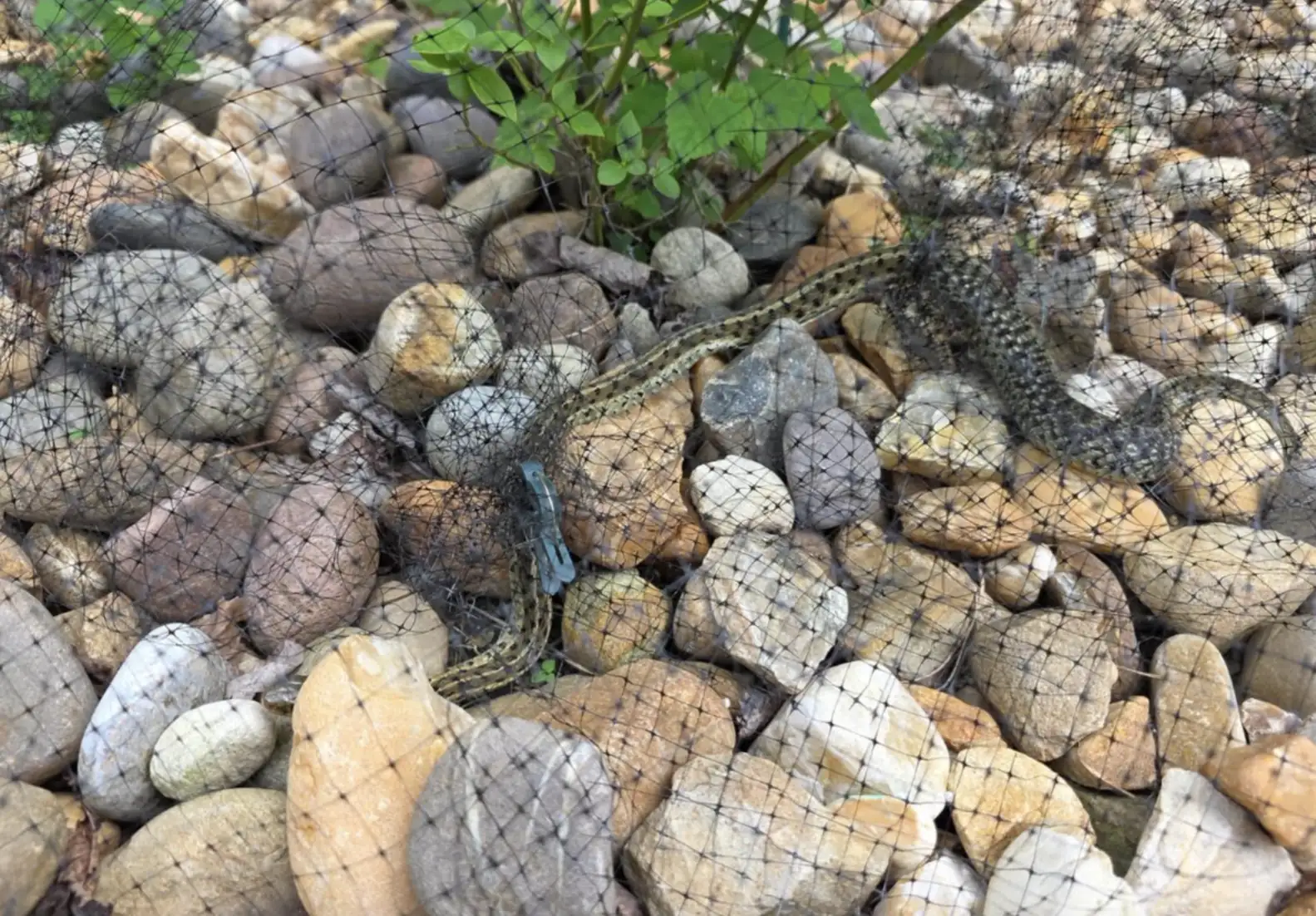
Earlier this month, a homeowner called Tidewater Wildlife Rescue with an urgent request. A common garter snake was hopelessly tangled in a piece of netting in their yard. Could someone come help?
Rescue volunteer Serenity Reiner quickly headed to the scene.
TIDEWATER WILDLIFE RESCUE
Reiner and her rescue partner, Daniel, used scissors to cut away big pieces of the net. Then, Daniel gently held the snake as Reiner snipped away netting closer to the animal’s body.
“We were very focused,” Reiner told The Dodo. “We wanted to be as fast as possible to limit [her] stress.”
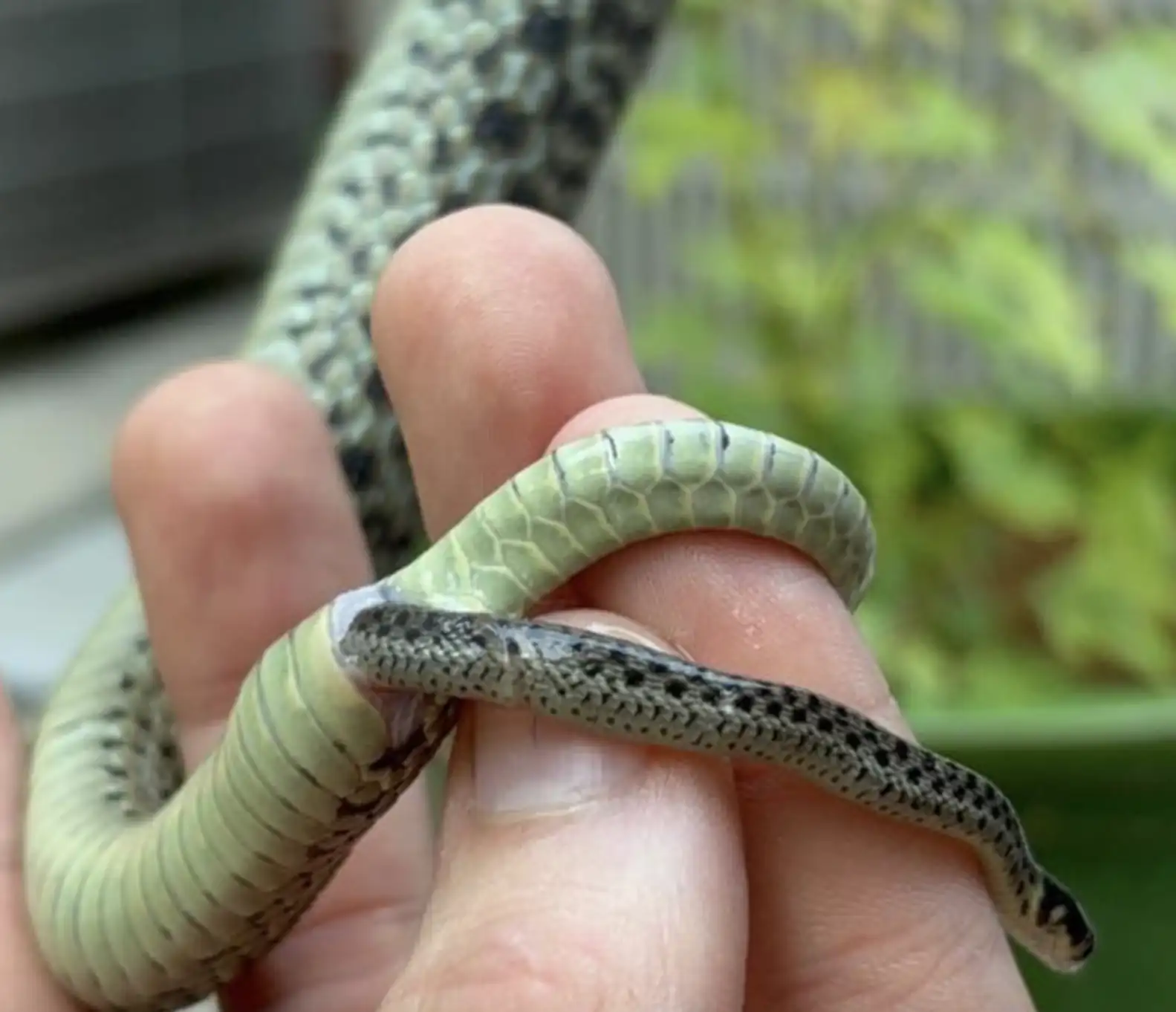
The rescuers were almost finished when they noticed something amazing — the snake was giving birth in their hands.
TIDEWATER WILDLIFE RESCUE
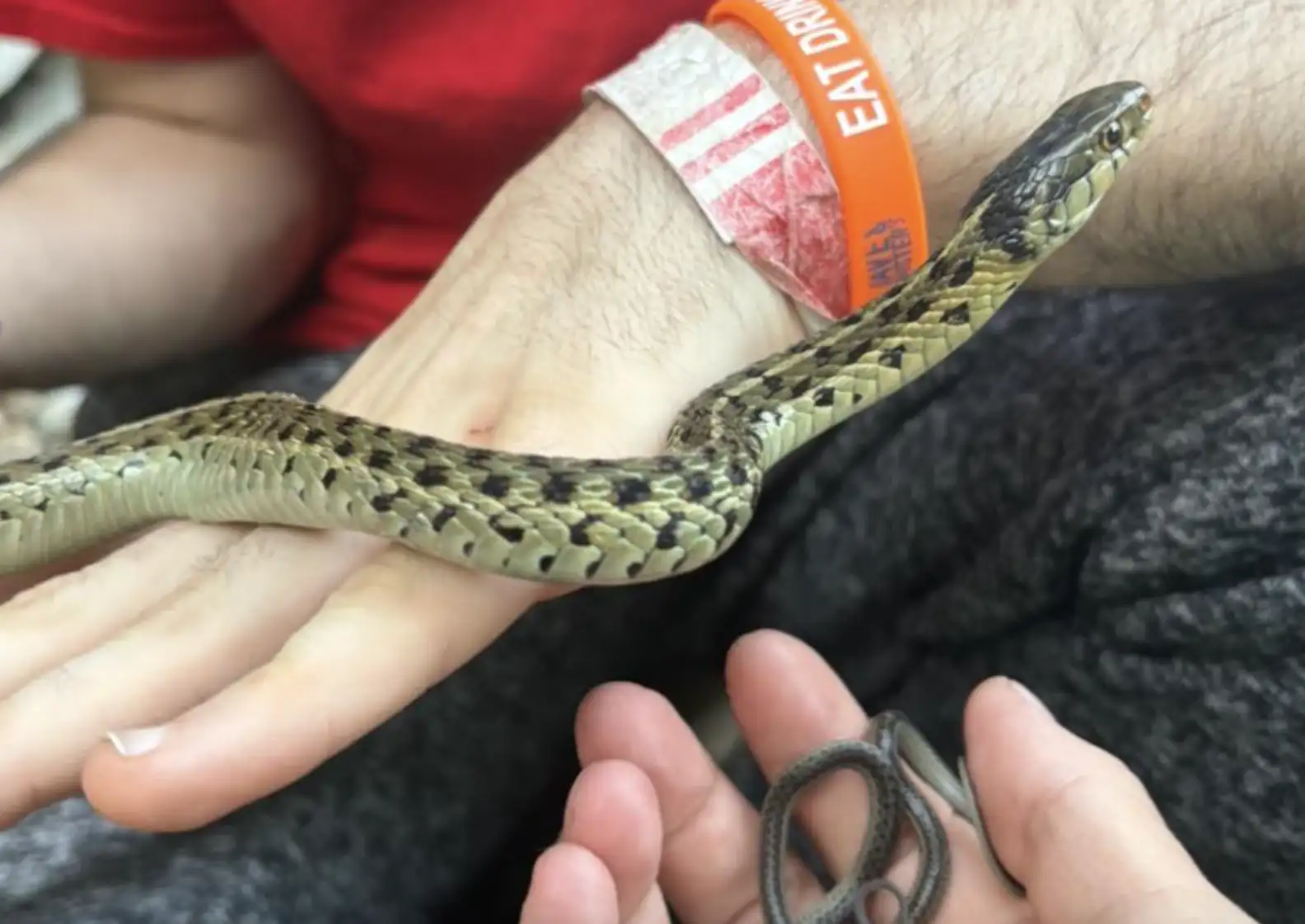
Reiner hastily removed the remaining netting as the mama snake birthed two babies. Then, she took the snake and her little ones to a wooded area behind the house and released them back into the wild.
Surprisingly, despite their size, baby garter snakes don’t need to live with their mom for very long. In fact, as the rescue notes, these young snakes are completely independent from the moment they’re born and can immediately find food on their own.
TIDEWATER WILDLIFE RESCUE
According to the U.S. National Park Service, garter snakes typically give birth to 15-40 babies at a time. Reiner suspects this mama welcomed many more little ones into the world once she was safe in the forest.
The rescuer encouraged the homeowners to use animal-safe netting next time. She’s grateful that, in this case, everything turned out OK.
“I felt so much joy knowing that she was able to go back to her normal life unharmed,” Reiner said.
A trip to the Oregon Caves National Monument & Preserve.
A week ago when our family guests were staying with us we decided it would be a treat for all of us to visit the very famous Oregon Caves – it was not a disappointment.
Morten and Marius gathering information.
The history of the caves does involve a dog.
Apparently Elijah Davidson discovered the caves in 1874 when he was out with Bruno, his dog, and it disappeared. The dog had fallen down a fissure that Elijah managed to squeeze into and, bingo!, there was the most incredible deep cave ahead of him. (Watch the video below for a fuller description of how the cave was discovered.)
Joaquin Millers Chapel This is a room seen on the cave tour. It is called Joaquin Miller’s Chapel and it is named after the author, Joaquin Miller because he wrote about Oregon Caves in Sunset magazine.
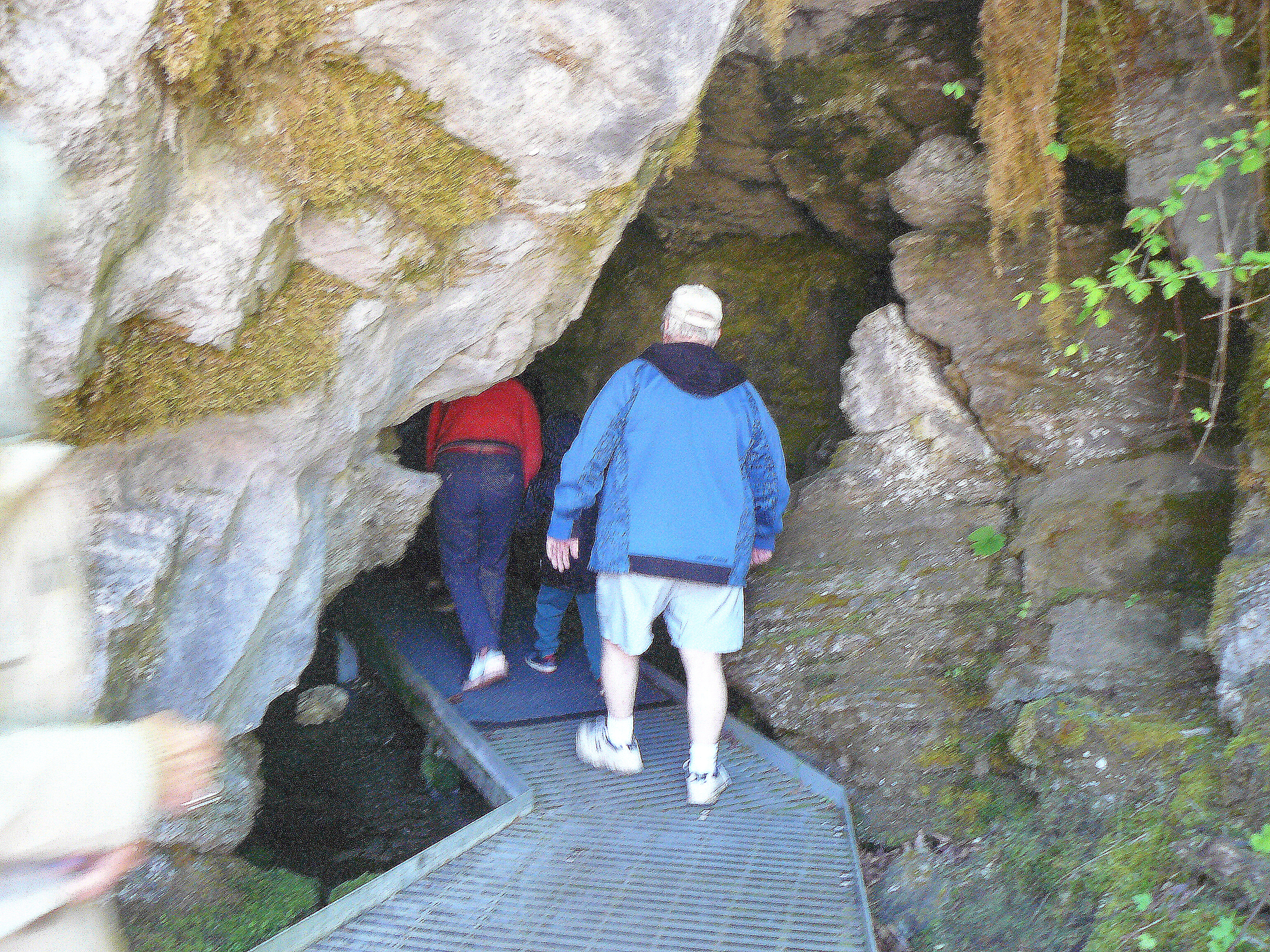
Clearly today’s visitors to the cave enter in a more gentle fashion!
Oregon Caves National Monument and Preserve is a National Monument and Preserve in the northern Siskiyou Mountains of southwestern Oregon in the United States. The main part of the 4,558-acre (1,845 ha) park, including the marble cave and a visitor center, is located 20 miles (32 km) east of Cave Junction, on Oregon Route 46. A separate visitor center in Cave Junction occupies 4 acres (1.6 ha) of the total. Both parts of the monument, managed by the National Park Service, are in southwestern Josephine County, near the Oregon–California border. The climate is generally mild even at the cave’s elevation of about 4,000 feet (1,200 m) above sea level, but icicles can form at the cave entrance, and winter snow sometimes blocks the park highway.
Elijah Davidson, a resident of nearby Williams, discovered the cave in 1874. Over the next two decades, private investors failed in efforts to run successful tourist ventures at the publicly owned site. After passage of the Antiquities Act by the United States Congress, President William Howard Taft established Oregon Caves National Monument, to be managed by the United States Forest Service, in 1909. The popularity of the automobile, construction of paved highways, and promotion of tourism by boosters from Grants Pass led to large increases in cave visitation during the late 1920s and thereafter. Among the attractions at the remote monument is the Oregon Caves Chateau, a six-story hotel built in a rustic style in 1934. It is a National Historic Landmark and is part of the Oregon Caves Historic District within the monument. The Park Service, which assumed control of the monument in 1933, offers tours of the cave from mid-April through early November. In 2014, the monument was expanded by about 4,000 acres (1,600 ha) and re-designated a National Monument and Preserve. In addition, the River Styx, which flows through the cave and emerges as Cave Creek, was named to the National Wild and Scenic Rivers System.
Oregon Caves is a solutional cave, with passages totaling about 15,000 feet (4,600 m), that formed in marble. The parent rock was originally limestone that metamorphosed to marble during the geologic processes that created the Klamath Mountains, including the Siskiyous. Although the limestone formed about 190 million years ago, the cave itself is no older than a few million years. Valued as a tourist cave, the cavern also has scientific value; sections of the cave that are not on tour routes contain fossils of national importance.
Daughter Maija, grandson Morten and yours truly just having exited the cave.
Between Marius and myself we took a great number of photographs but many of them can’t compare to the quality of photos found on the web.
These are formations known as soda straws and like soda straws they are hollow tubes. They are made up of the mineral calcite.
Won’t go on! (But I will post a collection of photographs, both from me and Marius and found online in a future Picture Parade.)
What I will do is to close with this YouTube video. It is 17 minutes long but very interesting and, hopefully, an inspiration to others to come and visit this incredible geological site.




 Learning from Dogs