Freedom as something one must endeavor to gain and maintain!

There is a quiet self-contradiction developing in the Tea Party movement that needs addressing, for it is a contradiction that, if left uncorrected, could turn a force with truly revolutionary potential into one more element of an oligarchic political stasis.
This movement, which as a culture attempts in many ways to be an imitation of the founders, is steering away from its origins and failing to take hold of perhaps the single most important insight of the entire American Revolution – that national change is the result of local change, not its cause.
It was not homesickness that led Thomas Jefferson to return to his home state of Virginia and decline a re-election to
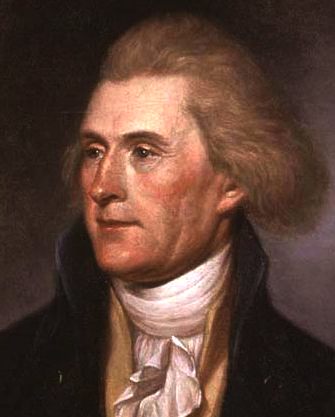
Congress after penning the Declaration of Independence. At the forefront in Jefferson’s mind on July 5, 1776, was not the welfare of the new nation as a whole, but rather the welfare of his home state of Virginia.
For Jefferson, Virginia was not simply one part of the ultimate goal of the United States, but in fact an ultimate goal in itself. It was at the local level that Jefferson knew provisions for the future freedom of his fellow Virginians had to be made.
Voltairine de Cleyre, an anarchist who lived in the late 19th and early 20th centuries, greatly admired the founding generation and Jefferson in particular.
In her essay “Anarchism and American Traditions,” she wrote that one of the greatest traits of the American revolutionaries was their recognition “that the little must precede the great; that the local must be the basis of the general; that there can be a free federation only when there are free communities to federate; that the spirit of the latter is carried into the councils of the former.”
“Anarchism” today is often employed as a pejorative term rather than as a description of the political and economic philosophy taken seriously by such great minds as J.R.R. Tolkien, Henry David Thoreau, Thomas Jefferson and William Lloyd Garrison. In fact, de Cleyre’s political philosophy had many similarities with modern libertarianism and traditional conservatism.
 Learning from Dogs