Tag: The Guardian

‘Tolly’ finds something really special

I’m indebted to George Monbiot for this article, and ‘Tolly’ as a nickname for Iain Tolhurst.

Many articles from people that I follow online pass through my ‘inbox’.

But there was something special about a recent article by George Monbiot that was published in the Guardian on December 5th and I have great pleasure in republishing it here, with George’s permission.

ooOOoo

Shaking It Up

Posted on 7th December 2025

A eureka moment in the pub could help transform our understanding of the ground beneath our feet.

By George Monbiot, published in the Guardian 5th December 2025

It felt like walking up a mountain during a temperature inversion. You struggle through fog so dense you can scarcely see where you’re going. Suddenly, you break through the top of the cloud, and the world is laid out before you. It was that rare and remarkable thing: a eureka moment.
For the past three years, I’d been struggling with a big and frustrating problem. In researching my book Regenesis, I’d been working closely with Iain Tolhurst (Tolly), a pioneering farmer who had pulled off something extraordinary. Almost everywhere, high-yield farming means major environmental harm, due to the amount of fertiliser, pesticides and (sometimes) irrigation water and deep ploughing required. Most farms with apparently small environmental impacts produce low yields. This, in reality, means high impacts, as more land is needed to produce a given amount of food. But Tolly has found the holy grail of agriculture: high and rising yields with minimal environmental harm.

He uses no fertiliser, no animal manure and no pesticides. His techniques, the result of decades of experiment and observation, appear to enrich the crucial relationships between crops and microbes in the soil, through which soil nutrients must pass. It seems that Tolly has, in effect, “trained” his soil bacteria to release nutrients when his crops require them (a process called mineralisation), and lock them up when his crops aren’t growing (immobilisation), ensuring they don’t leach from the soil.

So why the frustration? Well, Tolly has inspired many other growers to attempt the same techniques. Some have succeeded, with excellent results. Others have not. And no one can work out why. It’s likely to have something to do with soil properties. But what?

Not for the first time, I had stumbled into a knowledge gap so wide that humanity could fall through it. Soil is a fantastically complex biological structure, like a coral reef, built and sustained by the creatures that inhabit it. It supplies 99% of our calories. Yet we know less about it than any other identified ecosystem. It’s almost a black box.

Many brilliant scientists have devoted their lives to its study. But there are major barriers. Most soil properties cannot be seen without digging, and if you dig a hole, you damage the structures you’re trying to investigate. As a result, studying even basic properties is cumbersome, time-consuming and either very expensive or simply impossible at scale. To measure the volume of soil in a field, for example, you need to take hundreds of core samples. But as soil depths can vary greatly from one metre to the next, your figure relies on extrapolation. This makes it very hard to tell whether you’re losing soil or gaining it. Measuring bulk density (the amount of soil in a given volume, which shows how compacted it might be), or connected porosity (the tiny catacombs created by lifeforms, a crucial measure of soil health), or soil carbon – at scale – is even harder.

So farmers must guess. Partly because they cannot see exactly what the soil needs, many of their inputs – fertilisers, irrigation, deep ploughing – are wasted. Roughly two-thirds of the nitrogen fertiliser they apply, and between 50% and 80% of their phosphorus, is lost. These lost minerals cause algal blooms in rivers, dead zones at sea, costs for water users and global heating. Huge amounts of irrigation water are also wasted. Farmers sometimes “subsoil” their fields – ploughing that is deep and damaging – because they suspect compaction. The suspicion is often wrong.

Our lack of knowledge also inhibits the development of a new agriculture, which may, as Tolly has done, allow farmers to replace chemical augmentation with biological enhancement.

So when I came to write the book, I made a statement so vague that it reads like an admission of defeat: we needed to spend heavily on “an advanced science of the soil”, and use it to deliver a “greener revolution”. While we know almost nothing about the surface of our own planet, billions are spent on the Mars Rover programme, exploring the barren regolith there. What we needed, I argued, is an Earth Rover programme, mapping the world’s agricultural soils at much finer resolution.

I might as well have written “something must be done!” The necessary technologies simply did not exist. I sank into a stygian gloom.

At the same time, Tarje Nissen-Meyer, then a professor of geophysics at the University of Oxford, was grappling with a different challenge. Seismology is the study of waves passing through a solid medium. Thanks to billions from the oil and gas industry, it has become highly sophisticated. Tarje wanted to use this powerful tool for the opposite purpose – ecological improvement. Already, with colleagues, he had deployed seismology to study elephant behaviour in Kenya. Not only was it highly effective, but his team also discovered it could identify animal species walking through the savannah by their signature footfall.

By luck we were both attached, in different ways, to Wolfson College, Oxford, where we met in February 2022. I saw immediately that he was a thoughtful man – a visionary. I suggested a pint in The Magdalen Arms.

I explained my problem, and we talked about the limits of existing technologies. Was seismology being used to study soil, I asked. He’d never heard of it. “I guess it’s not a suitable technology then?” No, he told me, “soil should be a good medium for seismology. In fact, we need to filter out the soil noise when we look at the rocks.” “So if it’s noise, it could be signal?” “Definitely.”

We stared at each other. Time seemed to stall. Could this really be true?

Over the next three days, Tarje conducted a literature search. Nothing came up. I wrote to Prof Simon Jeffery, an eminent soil scientist at Harper Adams University, whose advice I’d found invaluable when researching the book. I set up a Zoom call. He would surely explain that we were barking up the wrong tree.

Simon is usually a reserved man. But when he had finished questioning Tarje, he became quite animated. “All my life I’ve wanted to ‘see’ into the soil,” he said. “Maybe now we can.” I was introduced to a brilliant operations specialist, Katie Bradford, who helped us build an organisation. We set up a non-profit called the Earth Rover Program, to develop what we call “soilsmology”; to build open-source hardware and software cheap enough to be of use to farmers everywhere; and to create, with farmers, a global, self-improving database. This, we hope, might one day incorporate every soil ecosystem: a kind of Human Genome Project for the soil.

We later found that some scientists had in fact sought to apply seismology to soil, but it had not been developed into a programme, partly because the approaches used were not easily scalable.

My role was mostly fixer, finding money and other help. We received $4m (£3m) in start-up money from the Bezos Earth Fund. This may cause some discomfort, but our experience has been entirely positive: the fund has helped us do exactly what we want. We also got a lot of pro-bono help from the law firm Hogan Lovells.

Tarje, now at the University of Exeter, and Simon began assembling their teams. They would need to develop an ultra-high-frequency variant of seismology. A big obstacle was cost. In 2022, suitable sensors cost $10,000 (£7,500) apiece. They managed to repurpose other kit: Tarje found that a geophone developed by a Slovakian experimental music outfitworked just as well, and cost only $100. Now one of our scientists, Jiayao Meng, is developing a sensor for about $10. In time, we should be able to use the accelerometers in mobile phones, reducing the cost to zero. As for generating seismic waves, we get all the signal we need by hitting a small metal plate with a welder’s hammer.

On its first deployment, our team measured the volume of a peat bog that had been studied by scientists for 50 years. After 45 minutes in the field, they produced a preliminary estimate suggesting that previous measurements were out by 20%. Instead of extrapolating the peat depth from point samples, they could see the wavy line where the peat met the subsoil. The implications for estimating carbon stocks are enormous.

We’ve also been able to measure bulk density at a very fine scale; to track soil moisture (as part of a wider team); to start building the AI and machine learning tools we need; and to see the varying impacts of different agricultural crops and treatments. Next we’ll work on measuring connected porosity, soil texture and soil carbon; scaling up to the hectare level and beyond; and on testing the use of phones as seismometers. We now have further funding, from the UBS Optimus Foundation, hubs on three continents and a big international team.

Eventually, we hope, any farmer anywhere, rich or poor, will be able to get an almost instant readout from their soil. As more people use the tools, building the global database, we hope these readouts will translate into immediate useful advice. The tools should also revolutionise soil protection: the EU has issued a soil-monitoring law, but how can it be implemented? Farmers are paid for their contributions “to improve soil health and soil resilience”, but what this means in practice is ticking a box on a subsidy form: there’s no sensible way of checking.

We’re not replacing the great work of other soil scientists but, developing our methods alongside theirs, we believe we can fill part of the massive knowledge gap. As one of the farmers we’re working with, Roddy Hall, remarks, the Earth Rover Program could “take the guesswork out of farming”. One day it might help everyone arrive at that happy point: high yields with low impacts. Seismology promises to shake things up.

http://www.monbiot.com

ooOOoo

George Monbiot puts his finger precisely on the point of his article: “While we know almost nothing about the surface of our own planet, billions are spent on the Mars Rover programme.

Emergency event.

It may not be so rare as one thinks.

Last Sunday the BBC (Radio 4) broadcast a programme entitled Are You Ready. The programme was presented by Lucy Easthope: “Lucy Easthope is on a mission to find out how we can become better prepared as individuals and as a society.”

It was thirty-minutes long and contained very useful information. I wanted to share further information found online.

Firstly on YouTube.


Be prepared for a blackout with this emergency kit! Don’t get caught in the dark – watch this video to see what essentials you need to have on hand. In this video I want to help you be prepared for when the power goes OUT. Your emergency kit can be a lifeline when the lights go out. With these preps, you can help keep you and your loved one’s safe. Don’t wait until it’s too late – start preparing now for peace of mind in 2024 and beyond. Watch till the end and I’ll share with you 3 ADDITIONAL items that are non-nucket items but can be a HUGE blessing in a power outage.

LIST OF GEAR IN THIS VIDEO: 5 gallon buckets: https://amzn.to/3L6crXS (If you want one, here’s a label maker I use: https://amzn.to/3VYnqca)

BUCKET #1:

Freeze-dried food: https://amzn.to/4bnFPUu

Canned food – get this at your local grocery store

Pepperoni sticks: https://amzn.to/3VWAAqi

Clif Bars: https://amzn.to/45G25aG

Powerade: https://amzn.to/45YtPI5

Gatorade: https://amzn.to/45YtPI5

Mentos: https://amzn.to/3xziLEl

Starburst: https://amzn.to/3zvkuLi

BUCKET #2:

Toilet paper: https://amzn.to/3XIFOXU

Exotac 16 Hour Candle: https://amzn.to/4bgaxyM

Bag of rice: https://amzn.to/4ckwwFW

Bottled Water: https://amzn.to/3XHaSY6

BUCKET #3:

3M Duct Tape: https://amzn.to/4bBN1MZ

Anker battery: https://amzn.to/3L0Qf1r

Batteries: https://amzn.to/3xLvZxI

Bleach: https://amzn.to/4eCJ659

Soap: https://amzn.to/3znY3rK

MyMedic First Aid Kit: https://tinyurl.com/3nfbz9bs

Plugs, instructions for electronics, and cash

Lantern – a batter one from UCO: https://amzn.to/4ciik06

Hybridlight Lantern: https://amzn.to/3L2x5Z0

Candles: https://amzn.to/4bkuynR

Energizer headlamps: https://amzn.to/4ciUHor

Huge flashlight: https://amzn.to/4eFB3o4

Emergency radio: https://amzn.to/3XFCrBd

Meat thermometer: https://amzn.to/3xwj7M1

BONUS RECOMMENDATIONS: Blankets and a fan

+ Power Bank from Anker: https://amzn.to/3zlFcgV

Solar panels for power bank: https://amzn.to/3znYTVq

Secondly, from The Guardian newspaper.

As a former Red Cross emergency volunteer in London, I have experienced that events such as blackouts, gas leaks and floods aren’t as uncommon as we would like to think. I have a camping bag as a “go bag” containing:
 * toilet roll
 * soap
 * toothbrush and toothpaste
 * a change of clothes, walking shoes and a raincoat
 * a blanket
 * a first-aid kit with added blister plasters and water filtration tablets
 * 2 large bottles of water
 * four days’ worth of non-perishable snacks (cereal bars, crackers, flapjack type things)
 * a battery and solar-powered radio
 * a battery and solar-powered torch
 * a map and compass
 * a small address book containing my loved ones’ home addresses.

There you are.

I thought we had a ‘go bag’ prepared but it must have been me thinking of it and nothing more.

Time to turn ideas into actions! Plus we have two dogs plus two caged birds that would not be left behind.

P.S. I have found the two large boxes we had purchased a while ago plus a list of the items to be taken in the event of an emergency. However these were in the garage and had been forgotten. So now they are in the home and will be prepared for use in that emergency.

Breaches of trust.

A riveting article from George Monbiot.

George Monbiot published an article in The Guardian recently that was as hard-hitting as I have ever read from him.

I found it very powerful even though I have not been living in England since 2008. Mr Monbiot has previously given me permission to republish his articles and here it is.

ooOOoo

Four-Year Plan

Posted on 3rd June 2025

Keir Starmer has accidentally given us four years in which to build a new political system. We should seize the chance.

By George Monbiot, published in the Guardian 27th May 2025

This feels terminal. The breaches of trust have been so frequent, so vast and so decisive that the voters Labour has already lost are unlikely to return. In one forum after another, I hear the same sentiments: “I voted for change, not the same or worse.” “I’ve voted Labour all my life, but that’s it for me.” “I feel I’ve been had.”

It’s not dissatisfaction. It’s not disillusionment. It’s revulsion: visceral fury, anger on a level I’ve seldom seen before, even towards Tory cruelties. Why? Because these are Tory cruelties, delivered by a party that claimed to be the only alternative, in our first-past-the-post electoral system.

Everyone can name at least some of the betrayals:

 cutting disability benefitssupplying weapons and, allegedly, intelligence to the Israeli government as it pursues genocide in Gaza; channelling Reform UK and Enoch Powell in maligning immigrants; slashing international aidtrashing wildlife and habitats while insulting and abusing people who want to protect them; announcing yet another draconian anti-protest law; leaving trans people in legal limbo; rigidly adhering to outdated and socially destructive fiscal rules; imposing further austerity on government departments and public services. Once the great hope of the oppressed, Labour has become the oppressor.

Like many people, I was wary of Keir Starmer. I had limited expectations, but I willed Labour to succeed. So I’ve watched aghast as he and his inner circle have squandered one of the greatest opportunities the party has ever been granted. They seem to despise people who voted for them, while courting and flattering those who didn’t and won’t.

The results? Last week, the polling company Thinks Insight & Strategy found that 52% of those who voted Labour in the 2024 general election are considering switching to the Liberal Democrats or the Greens. That’s more than twice as many as might migrate to Reform UK. The research group Persuasion UK estimates that Labour could lose 250 seatsas a result of this flight to more progressive parties (again, more than twice as many as it could lose through voters shifting to Reform). Figures compiled by the progressive thinktank Compass show that Labour would lose its majority on just a 6% swing. Already, while it won a massive majority on a measly 34% vote at the election, it now polls at just 22%.

Labour’s strategy is incomprehensible. Experience from the rest of Europe shows that when centrist parties adopt far-right rhetoric and policies, they empower the far right while shedding their own supporters.

What explains this idiocy? Labour has succumbed, quickly and hard, to the defining sickness of our undemocratic political system: the sofa cabinet system of close advisers. Opaque and unaccountable government favours opaque and unaccountable power. Ever receptive to the demands of rentiersoligarchsnon-doms and corporations, Labour’s oh-so-clever strategists are moronically giftwrapping the country for Nigel Farage.

Governments don’t start conservative and turn radical. The cruelty will set like concrete. The likely result is annihilation in 2029. On this trajectory, it might not be surprising if Labour were left with seats in only double figures.

Perhaps it’s a blessing that Starmer has shown his hand so soon, as we now have four years in which to prepare. I’m not a party person: for me, it’s a question of what works. And now we can clearly see the shape of it.

The Compass analysis, published in December, reveals extreme electoral volatility. This is caused by a combination of public fury towards austerity, exclusion, rip-off rents and startlingly low rates of wellbeing, and the “democratic mayhem” resulting from a first-past-the-post system in which five parties are now polling at 10% or more. Small vote shifts in this situation can cause wild fluctuations in the allocation of seats.

The report points out that the UK is an overwhelmingly progressive nation: in all but one election since 1979 most voters have supported left or centre-left parties. Of 15 nations surveyed, the UK has the extraordinary distinction of being both the furthest to the left and the most consistent elector of rightwing governments. Why? Because of our first-past-the-post system, which is grossly unfair not by accident but by design. Labour refuses to change it, as it wants to rule alone. The result is that most of the time it doesn’t rule at all.

The thinktank was hoping to mobilise the progressive majority around a revitalised Labour party, but that moment has passed. What the figures show, however, is massive potential for more radical change. A YouGov survey reveals that almost twice as many people want proportional representation in this country as those who wish to preserve the current system. So let’s build a government of parties that will introduce it.

Here’s the strategy. Join the Lib Dems, Greens, SNP or Plaid Cymru. As their numbers rise, other voters will see the tide turning. Encourage troubled Labour MPs to defect. Most importantly, begin the process in each constituency of bringing alienated voters together around a single candidate. This is what we did before the last election in South Devon, where polls had shown the anti-Tory vote evenly split between Labour and the Lib Dems. Through the People’s Primary designed by locals, the constituency decided to back the Lib Dems. The proof of the method can be seen less in the spectacular routing of the Conservatives (as similar upsets occurred elsewhere) than in the collapse in Labour’s numbers, which fell from 17% in 2019, and 26% in a poll before the primary began, to 6% in the 2024 election. The voters took back control, with startling results.

Whether you fully support any of these parties is beside the point. This coalition would break for ever the lesser-of-two-evils choice that Starmer has so cruelly abused, and which has for so long poisoned politics in this country. Game the system once and we’ll never have to game it again.

No longer will we be held hostage, no longer represented by people who hate us. It will be a tragedy if, as seems likely, Keir Starmer has destroyed the Labour party as a major political force. But it will be a blessing if he has also destroyed the two-party system.

http://www.monbiot.com

ooOOoo

Proportional representation is explained in detail here. There is also an explanation on WikiPedia here. From which I quote a small section:

Proportional representation (PR) refers to any electoral system under which subgroups of an electorate are reflected proportionately in the elected body. The concept applies mainly to political divisions (political parties) among voters. The aim of such systems is that all votes cast contribute to the result so that each representative in an assembly is mandated by a roughly equal number of voters, and therefore all votes have equal weight. Under other election systems, a bare plurality or a scant majority in a district are all that are used to elect a member or group of members. PR systems provide balanced representation to different factions, usually defined by parties, reflecting how votes were cast. Where only a choice of parties is allowed, the seats are allocated to parties in proportion to the vote tally or vote share each party receives.

That is a timely and powerful article from George Monbiot.

The end maybe in sight!

A rather gloomy analysis about the next few years!

One makes decisions all one’s life. But too few of us are making decisions that will prevent our planet from over-heating.

Patrice Ayme wrote a comment in a recent post that said (in part): “However we are tracking to a much higher temperature: + 7 (seven) Celsius in some now temperate parts… imminently. That is going to be catastrophic.”

There is a terrible change going on right now. From the deforestation in the Amazon rainforest to the unseasonable heat in Europe, as reported in the Guardian newspaper: “The result of this advection has been anomalously warm temperatures across large parts of Europe – in particular across France and Spain, where temperatures soared to over 10C above normal. Maximum temperatures widely exceeded 30C in parts of Spain on Thursday, with 35.2C measured at Morón de la Frontera, south-east of Seville.

One would think that our governments would be pulling together in order to have a co-ordinated global plan. But there’s no sight of that yet. What we do have is a sort of craziness of Governments that causes me to lament over our, as in a global ‘our’, distractions. We are running out of time!

To this end I am republishing in full the latest George Monbiot essay. I hasten to add with Mr Monbiot’s permission.

ooOOoo

The Oligarch’s Oligarch

Published 30th October 2022.

Just as we need to get the money out of politics, we have been gifted a Prime Minister who represents the ultra-rich.

By George Monbiot, published in the Guardian 26th October 2022

Before we decide what needs to change, let’s take stock of what we have lost. I want to begin with what happened last week. I don’t mean the resignation of the prime minister. This is more important.

Almost all the media reported a scripted comment by the newly reinstated home secretary, Suella Braverman, about the “Guardian-reading, tofu-eating wokerati”. Astonishingly, scarcely any of them reported what she was doing at the time. She was pushing through the House of Commons the most repressive legislation of the modern era.

Under the public order bill, anyone who has protested in the previous five years, or has encouraged other people to protest, can be forced to “submit to … being fitted with, or the installation of, any necessary apparatus” to monitor their movements. In other words, if you attend or support any protest in which “serious disruption to two or more individuals or to an organisation” occurs, you can be forced to wear an electronic tag. “Serious disruption” was redefined by the 2022 Police Act to include noise.

This is just one of a series of astounding measures in the bill, which has been hardly remarked upon in public life as it passes through Britain’s legislature. What we see here is two losses in one moment: the final erasure of the right to protest, and political journalism’s mutation from reporting substance to reporting spectacle. These are just the latest of our losses.

So extreme has inequality become, and so dangerous is the combination of frozen wages, lagging benefits, rising rents and mortgage repayments, soaring bills and food inflation, that millions of people are being pushed towards destitution. Unless something changes, many will soon lose their homes. In the midst of this crisis, we have been gifted a prime minister who owns four luxury “homes”. One of them is an empty flat in Kensington that he reserves for visiting relatives.

While Rishi Sunak was chancellor, the government repeatedly delayed its manifesto promise to ban no-fault evictions. Landlords are ruthlessly exploiting this power to throw their tenants on to the street or use the threat to force them to accept outrageous rent rises and dismal conditions. Had Sunak’s “help to buy” mortgage scheme succeeded (it was a dismal flop), it would have raised house prices, increasing rents and making ownership less accessible: the opposite of its stated aim. But this, as with all such schemes, was surely its true purpose: to inflate the assets of existing owners, the Conservative party’s base.

Public services are collapsing at breathtaking speed. Headteachers warn that 90% of schools in England could run out of money next year. NHS dentistry is on the verge of extinction. Untold numbers are now living in constant pain and, in some cases, extracting their own teeth. The suspicion that the NHS is being deliberately dismembered, its core services allowed to fail so that we cease to defend it against privatisation, rises ever higher in the mind.

But Sunak appears determined only to hack ever further. Sitting on a family fortune of £730m, he seems unmoved by the plight of people so far removed from him in wealth that they must seem to exist on another planet. He is the oligarch’s oligarch, ever responsive to the demands of big capitaland the three offshore plutocrats who own the country’s biggest newspapers, oblivious of the needs of the 67 million people who live here.

After 12 years of Conservative austerity and chaos, the very rich have taken almost everything. They have even captured virtue. They now appropriate the outward signs of an ethical life while continuing – despite or because of their organic cotton jackets and second homes, their electric cars and pasture-fed meat, their carbon offsets and ayahuasca retreats, philanthropy and holidays in quiet resorts whose palm-thatched cabins mimic the vernacular of the people evicted to make way for them – to grasp the lion’s share of everything.

Corruption is embedded in public life. Fraud is scarcely prosecuted. Organised crime has been so widely facilitated, through the destruction of the state’s capacity to regulate everything from money laundering to waste dumping, that you could almost believe it was deliberate. Our rivers have been reduced to sewers, our soil is washing off the land, the planning system is being dismantled, and hundreds of environmental laws are now under threat. We hurtle towards Earth systems oblivion, while frenetically talking about anything but.

In other words, it’s not just a general election we need, it’s a complete rethink of who we are and where we stand. It’s not just proportional representation we need, but radical devolution to the lowest possible levels at which decisions can be made, accompanied by deliberative, participatory democracy. It’s not just new lobbying laws we require, but a comprehensive programme to get the money out of politics, ending all private political donations, breaking up the billionaire press and demanding full financial transparency for everyone in public life. We should seek not only the repeal of repressive legislation, but – as civil disobedience is the bedrock of democracy – positive rights to protest.

All this now feels far away. Jeremy Corbyn offered some (though by no means all) of these reforms. Keir Starmer offers none. Though Labour MPs voted against the public order bill, his only public comment so far has been to endorse its headline policy: longer sentences for people who glue themselves to roads. But if the Labour party or its future coalition partners can persuade him to agree to just one aspect of this programme, proportional representation, we can start work on the rest, building the political alliances that could transform the life of this nation. Without PR, we’re stuck with a dysfunctional duopoly, in hock to the billionaire press and the millionaires it appoints to govern us. We cannot carry on like this.

http://www.monbiot.com

ooOOoo

So much is really telling but I just want to draw your attention to this sentence: In other words, it’s not just a general election we need, it’s a complete rethink of who we are and where we stand.

It is not just in England and Wales but also in the USA. Indeed, most of the countries in the world.

Here is an excerpt from the latest email from The Economist. It presages the COP27 to be held in Egypt next week.

By burning fossil fuels, humans have altered Earth’s atmosphere, which has consequences for almost everything on the planet. It is reshaping weather systems and coastlines, transforming where crops can be grown, which diseases thrive, and how armies fight . Rising temperatures affect geopolitics, migration, ecosystems and the economy. Over the next century and beyond, climate change—and the responses to it—will remake societies and the world.

And a paragraph later:

This week I wrote about the seven texts I recommend as an introduction to the climate crisis—and explained why each is worth turning to—as a part of our “Economist reads” series. They range from Bill Gates’s assessment of technological solutions to a discussion of international justice by the former UN High Commissioner on Human Rights. One book I find myself recommending over and over again is “What We Know About Climate Change” by Kerry Emanuel, an atmospheric scientist at MIT. At 88 pages, it is a blessedly short, readable primer on the science, history and economics of climate change. The climate crisis touches everything. Understanding it, even a little, is essential for anyone who is engaged with the world and its future. This is a good place to start

Please follow this advice because it is an excellent place to start.

I wish with all my heart that I am wrong and maybe, just maybe, I am having a ‘down in the dumps’ day. Whatever, my judgement is that we have a few more years at most to find out.

Twelve on twelve!

A look, courtesy of my daughter, at Sarah Nicolls’s 12 Years project.

Again, this is not about dogs, well not in a direct way. But, indirectly, it affects all of us, young and old, and, inevitably, it affects our dear dogs.

I’m writing this in response to something that came my way as an email sent from my daughter’s company, SOUND UK. The company holds to the view that: Sound UK produces extraordinary musical encounters for all.

Sarah Nicolls has her own website and on her About page this is what she presents.

My name is Sarah Nicolls. I am a visual artist who makes pictures with language, books with pictures, prints with type, and animations with words. I combine image, visual narrative, and time in prints, books, and ephemera that are often research-based. I am interested in urbanization, local history, climate change, the history of science and technology, alternative economies, found language, and the history of publishing. I have written a collection of self-help aphorisms, I publish a series of informational pamphlets, and I organize a range of participatory walks and programs around the series.

My recent books include an examination of the history of greenhouses, and a study of the stories we tell ourselves about disappearing islands, both real and imagined. My  limited edition artist books are in the collections of the Brooklyn Museum, Stanford, UCLA, and the University of Pennsylvania, among others.

For twelve years, I ran the studio programs at the Center for Book Arts in NYC, organizing classes, public programs, readings, and talks, coordinating publications, running residency programs, and teaching interns. I learned everything I know about letterpress and bookmaking while I was there. Now I teach at Pratt Institute and Parsons School of Design, and work on a variety of projects.

I also do illustration and design work for individuals and institutions. Do you have an interesting project in mind? Contact me here, I welcome commissions and collaborations.

Well back to Sound UK. This is Sarah.

ooOOoo

“What she does should be happening every week of the year” The Guardian

Acclaimed pianist and composer Sarah Nicolls’ new Inside-Out Piano project 12 Years was inspired by the 2018 IPCC Special Report saying we had just 12 years to radically change our behaviour to save the planet. Starting on the second anniversary of the report, 8 October, Sarah launches 12 nights of online performances.

With her striking vertical grand piano, Nicolls combines original music and recorded speech in an absorbing performance. Piano melodies and textures interweave with phone calls between three fictional characters challenging each other to either worry less or do more. We hear from environmental experts, survivors escaping from a wildfire and a glacier melting, eloquent speeches from Greta Thunberg and finally the sound of hope emerging. There is humour and humanity as well as time for reflection.

On selected nights leading climate scientists will also join Sarah for exclusive post-show discussions online, specifically to talk about what we can all do.

See list of speakers below.

“This should be prescribed viewing/watching/listening for anyone even remotely concerned with the welfare of our planet.” Ciaran Ryan, Galway Jazz Festival

ooOOoo

Plus, if you would care to listen to a track on Sarah playing her piano, then feel free:

I’m bound to say that I am reasonably hopeful of living another twelve years but, at the same time, reasonably expectant that life could become very interesting indeed!

Is there no end to their companionship!

A recent item in The Guardian suggests there isn’t!

I hang on to emails and files about dogs and dog stories for a very long time. For one reason that they make brilliant blog post topics. Such as this item that was published in The Guardian recently.

Have a read of it now and then see my closing comment.

ooOOoo

Experience: my dog is a champion surfer

By Judy Fridono

Fri 19th July, 2019

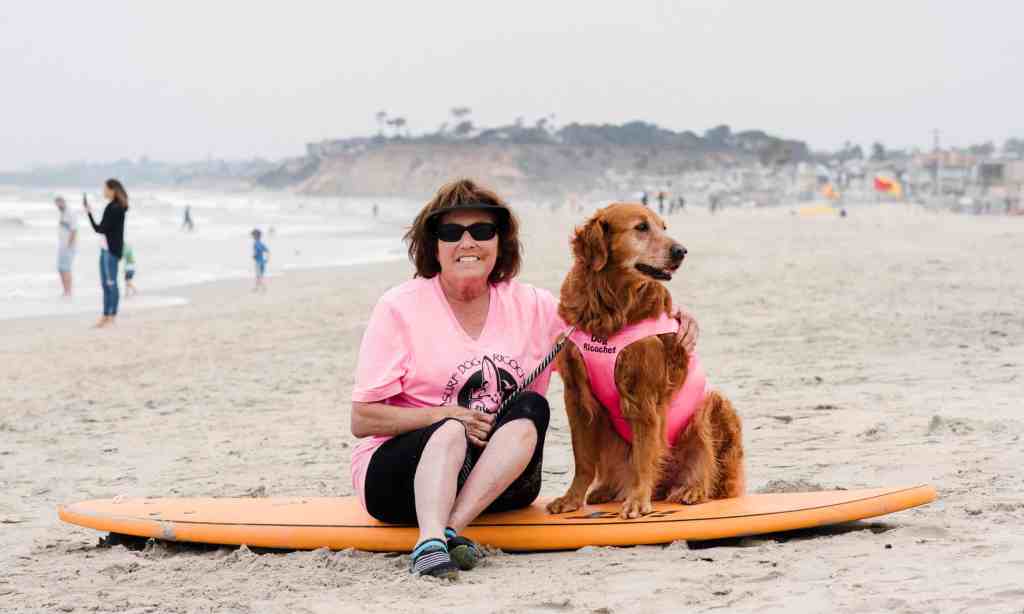
Judy Fridono and her dog Ricochet, who has won nine gold medals. Photograph: John Francis Peters/The Guardian

The dogs have 10 minutes to catch as many waves as they can. Judges look at length of ride, whether they make it back to shore, and how many tricks they do.

When my golden retriever, Ricochet, was born, on 20 January 2008, she took her first breath in my hands. I had launched a non-profit organisation called Puppy Prodigies, to train service dogs for people with disabilities, and I supported her mother while she had her litter. Ricochet was the ninth of 10.

She was a brilliant puppy – high energy and lots of fun; she got her name because she was literally bouncing off the walls. She began service dog training at a few days old and started off well, but at 16 weeks she began to shut down; she was more interested in chasing birds. Luckily she found something else to do.

We live in San Diego, California, half an hour from the ocean. I never planned to raise a surf dog, but she had been in a kids’ pool at eight weeks old and showed great balance on a boogie board. We progressed to a bigger pool, then the bay, then the ocean.

I got her a 6ft foam board and a pink lifejacket. I don’t surf so, as she improved, she got a water handler. Surf dog contests were becoming popular in southern California and someone suggested she take part in one, at Ocean Beach in San Diego. Ricochet was placed third of about 15 dogs. I felt so proud – not because she had a medal but because she had shown what she was capable of.

Typically in contests, the dogs have 10 minutes to catch as many waves as they can. Judges look at the length of the ride, whether they make it back to shore, and how many tricks or turns they do, such as riding a wave backwards. A big wave scores higher in the judging stakes. Breeds with shorter legs, such as bulldogs or corgis, tend to do well because they have lower centres of gravity, but all sorts of dogs have won. It all comes down to balance. There’s always a crowd of spectators on the beach.

On the board, she looks pretty serious and focused. Dogs wag their tails on the sand, but not so much on the water, where they need them for balance. She’s 11 years old now and has taken part in about 20 contests. She has nine gold medals and has been placed second or third in most of the others.

Soon after she started surfing, Ricochet started doing something more meaningful with her talent. She began to accompany children with disabilities for surf therapy, and we have used her profile to fundraise for them, working first with Patrick, a 14-year-old quadriplegic boy. Patrick enjoyed the independence and Ricochet was joyful when they shared a board.

In 2009, a video of Patrick and Ricochet went viral. It’s had more than 6.5m views. She now has 230,000 Facebook followers and 100,000 on Instagram. We get messages every week from people wanting to work with or meet her. One teenage boy with a brain tumour asked to surf with her for his Make A Wish. She’s now raised more than $500,000 for humans and animals in need.

She is a certified therapy dog, and also works with service members and veterans suffering from post-traumatic stress disorder. She connects with people on an extremely deep level and helps them express their feelings. Recently, she placed herself up against a wall to demonstrate how a naval officer she was working with was struggling inside. There is something about her that makes her excel.

Ricochet is one of only three competitive surf dogs from the original circuit still alive, but she doesn’t compete any more. Her last contest was at Imperial Beach in 2014, and she won first place. These days, competitions happen all over the world and up to 100 dogs compete for medals and bragging rights. Some dogs are sponsored, but there’s usually a charity element.

She’s in the last quarter of her life now and doesn’t have the energy for long rides on the board; but she still surfs for fun and does surf therapy work. Judges think it’s her ability to ride a wave that qualifies her as a winner. But, to me, it is her healing power that makes Ricochet a champion.

ooOOoo

Firstly, I want to thank The Guardian, well the online version, for making their content reusable.

Secondly, this article shows yet another example of the bonding that can take place between a dog and their ‘owner’. I have no doubt that there will be many more.

Finally, dogs in the main are the perfect companions to us humans. It’s such a shame that so many are homeless, humans as well as dogs!

Picture Parade Two Hundred and Ninety-Three

These photographs are a few that were carried by The Guardian.

Thanks to Neil.

A selection of works at the exhibition Photographic Dog Show includes images from some of the world’s finest photographers, including Elliott Erwitt, Bruce Weber, Martin Usborne among others, who all happen to have a love of canines

  • Christ Church & St Stephen, Battersea Park Road, London, from 20-23 June. Proceeds go to Battersea Dogs

Maus
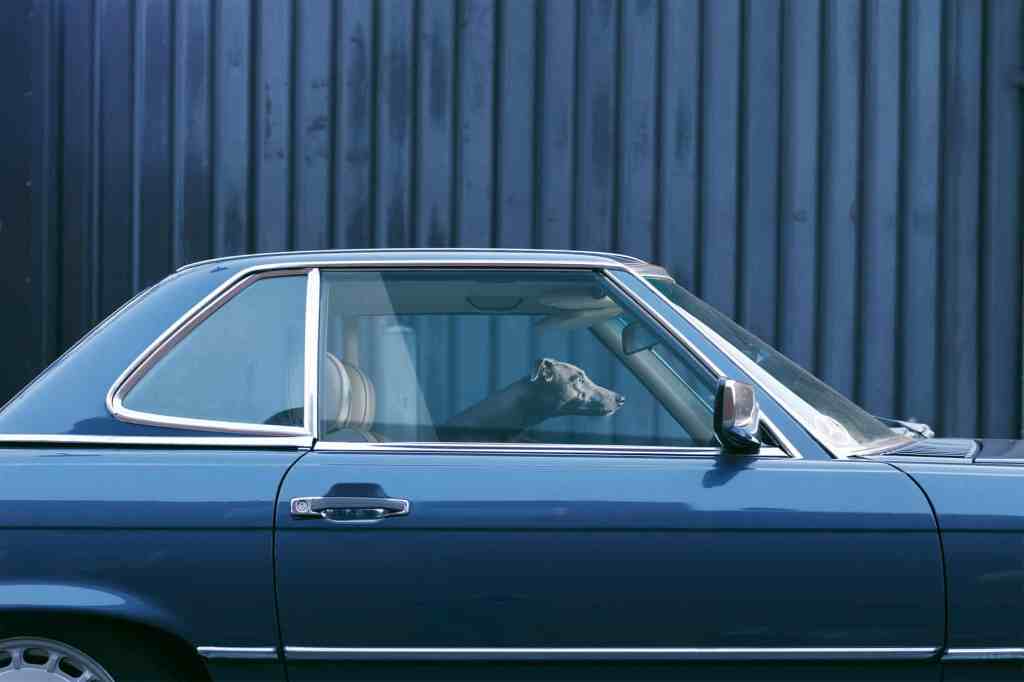
Photograph: Martin Usborne

oooo

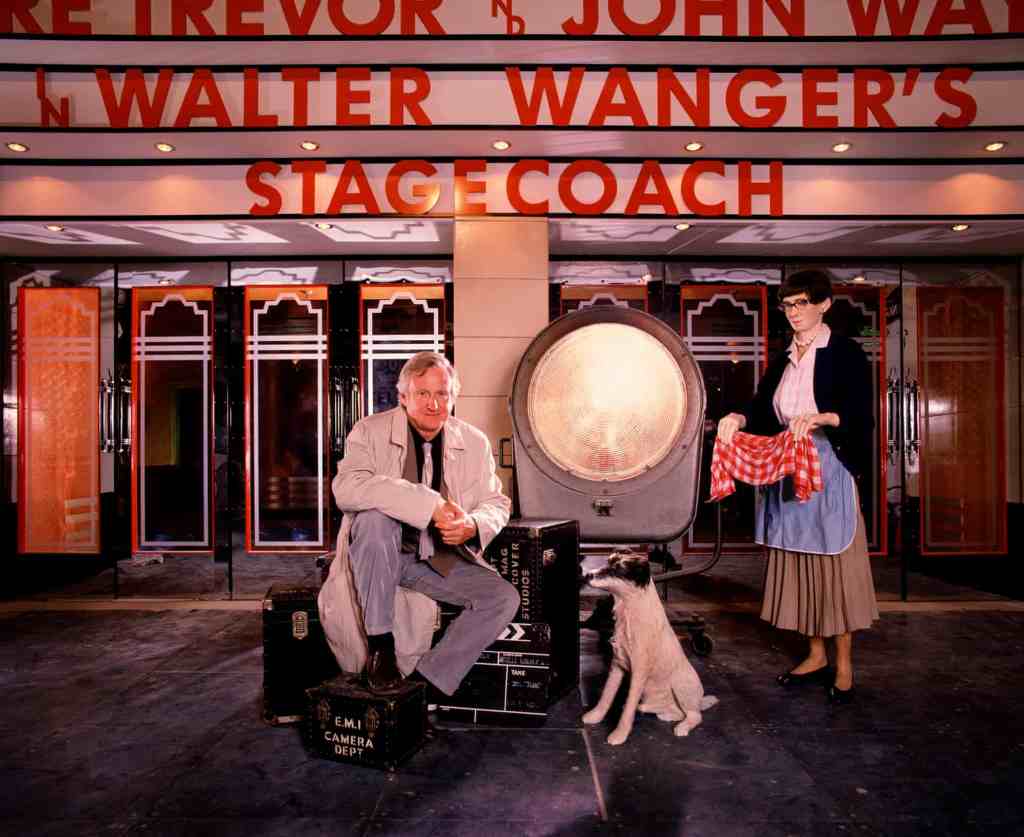
John Boorman at the Museum of the Moving Image
Photograph: Barry Lewis

oooo

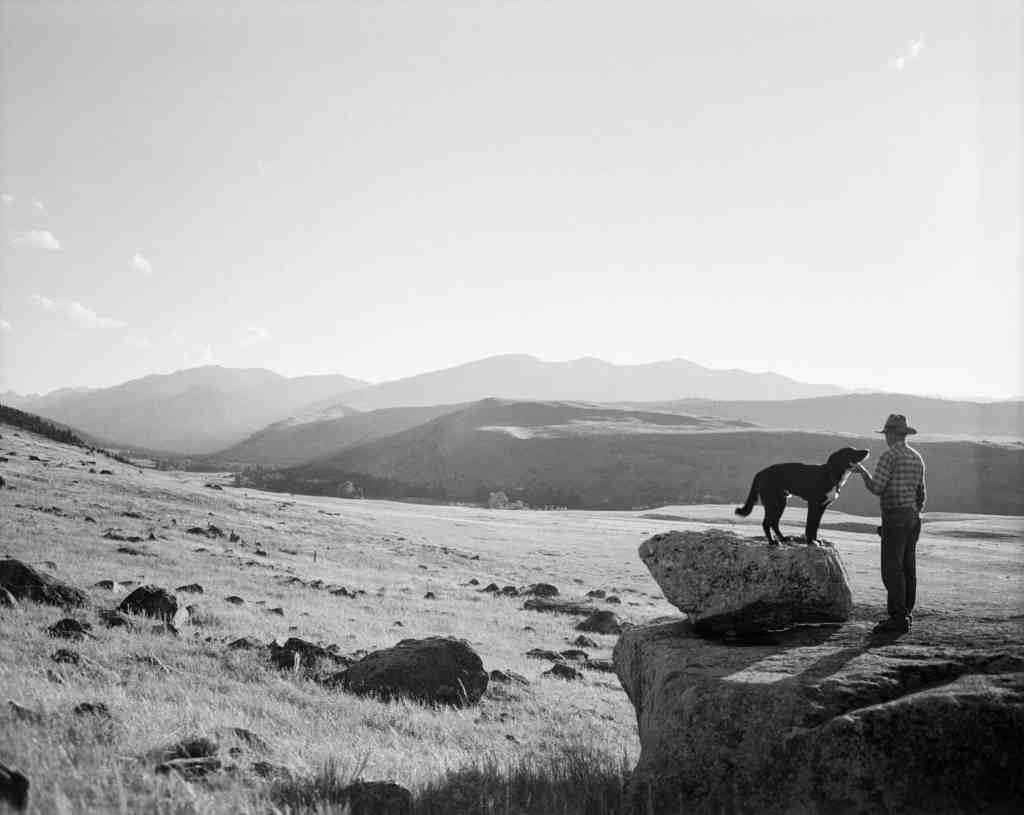
My neighbor John Hoiland and his dog, Zippy, McLeod, Montana 1997
Photograph: Bruce Weber

oooo

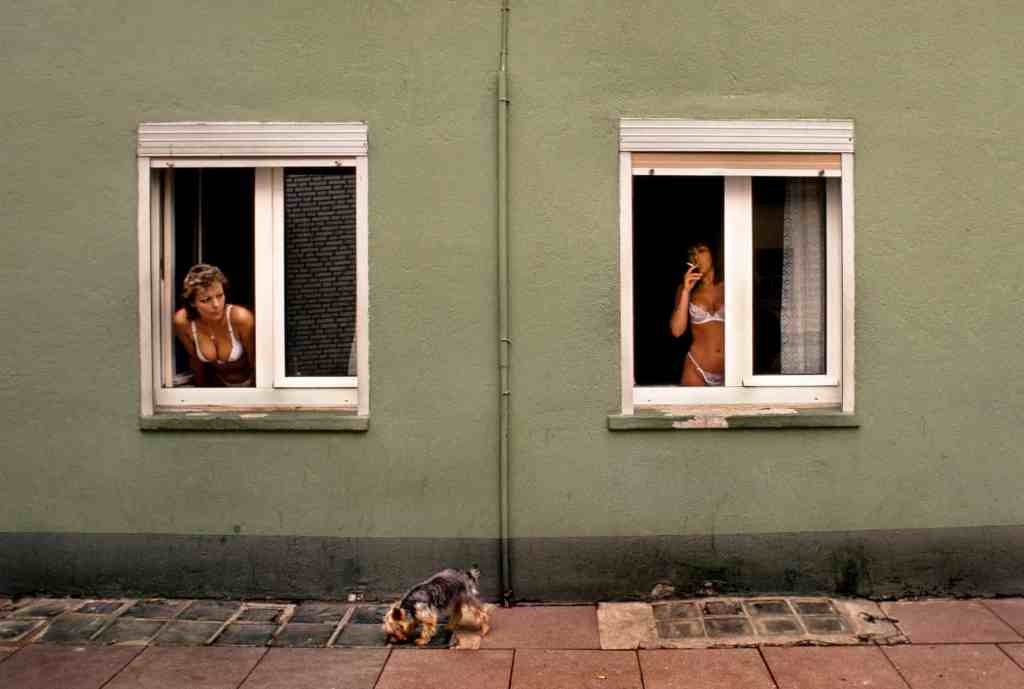
Sex workers keeping a lookout for their pet terrier playing outside their brothel which faced the Krupp works, Rhur Valley, Germany, 1985
Photograph: Barry Lewis

oooo

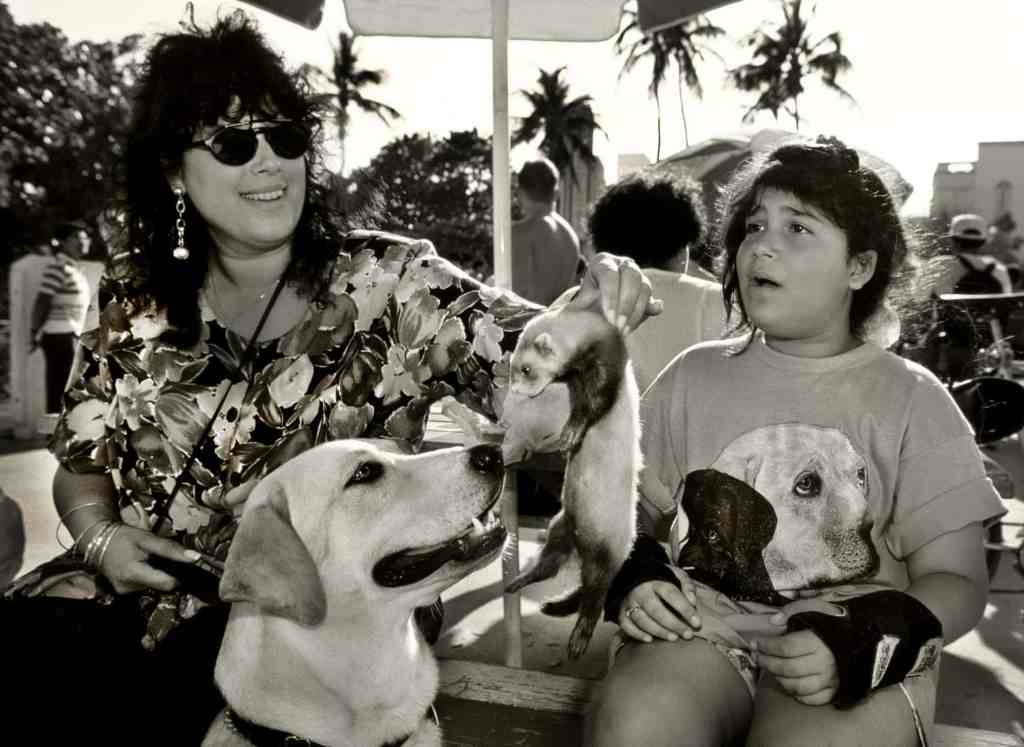
South Beach, Miami: a polecat is held up to a labrador by a woman as her daughter looks on
Photograph: Barry Lewis/Network

oooo

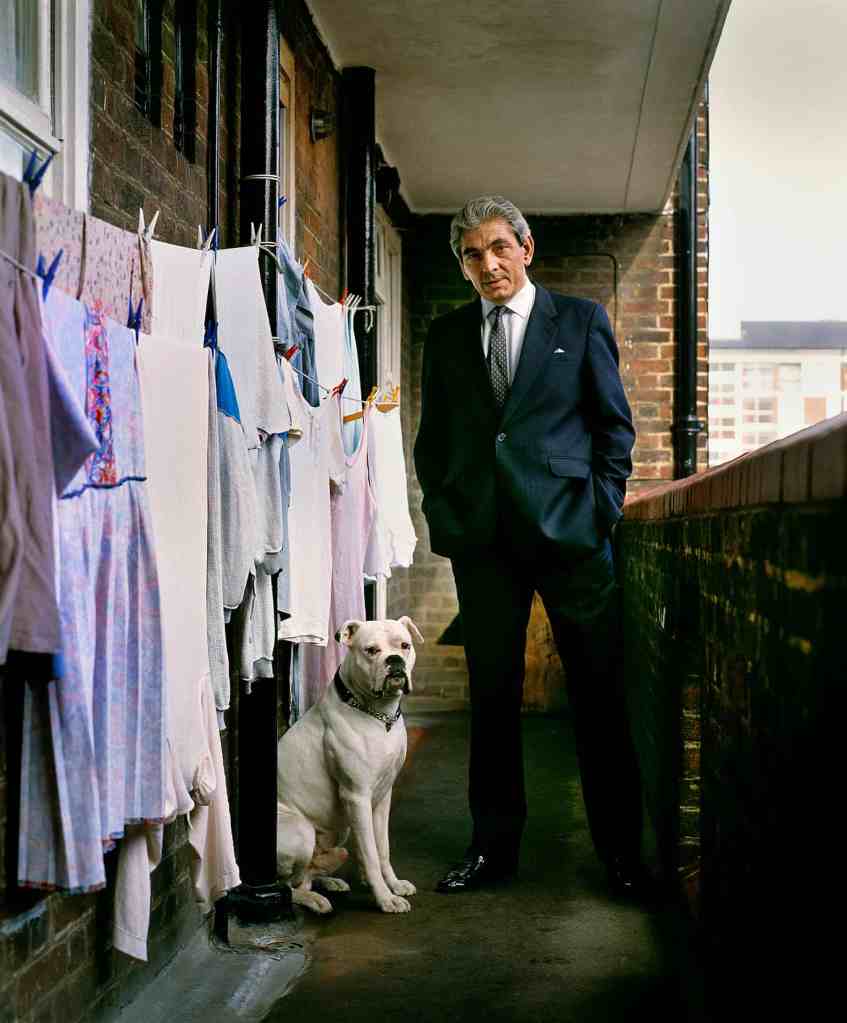
Tony Lambrianou, enforcer for the Krays with his dog outside his mum’s flat in the Elephant & Castle where he was staying in 1983 after his release from 15 years in prison
Photograph: Barry Lewis

oooo

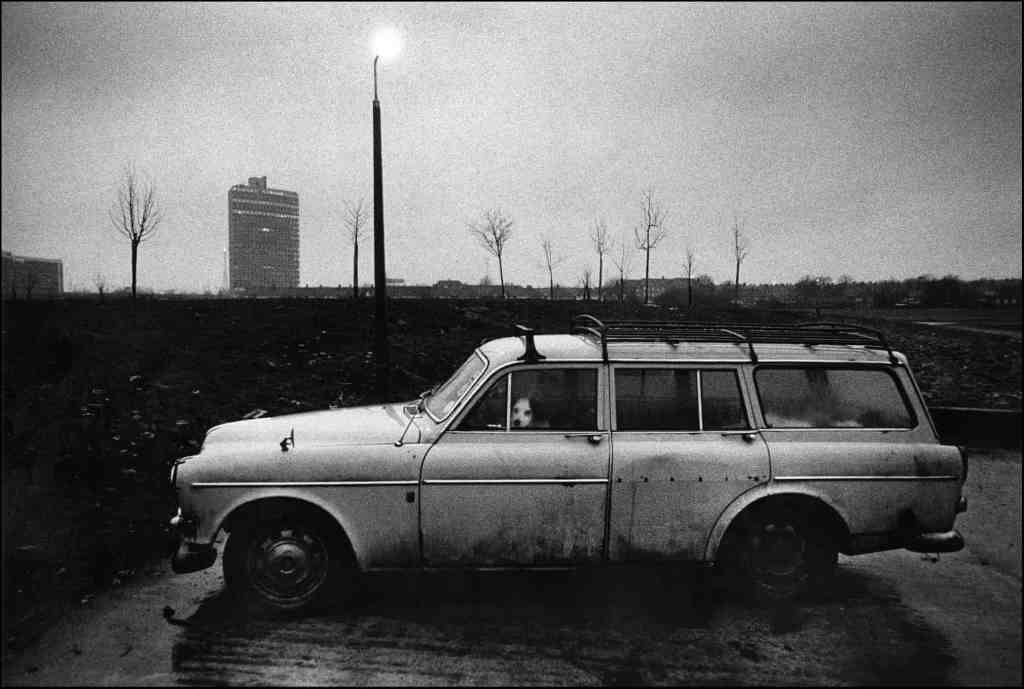
Dog waiting in car, North Circular Road, Wembley, 1979
Photograph: Barry Lewis

oooo

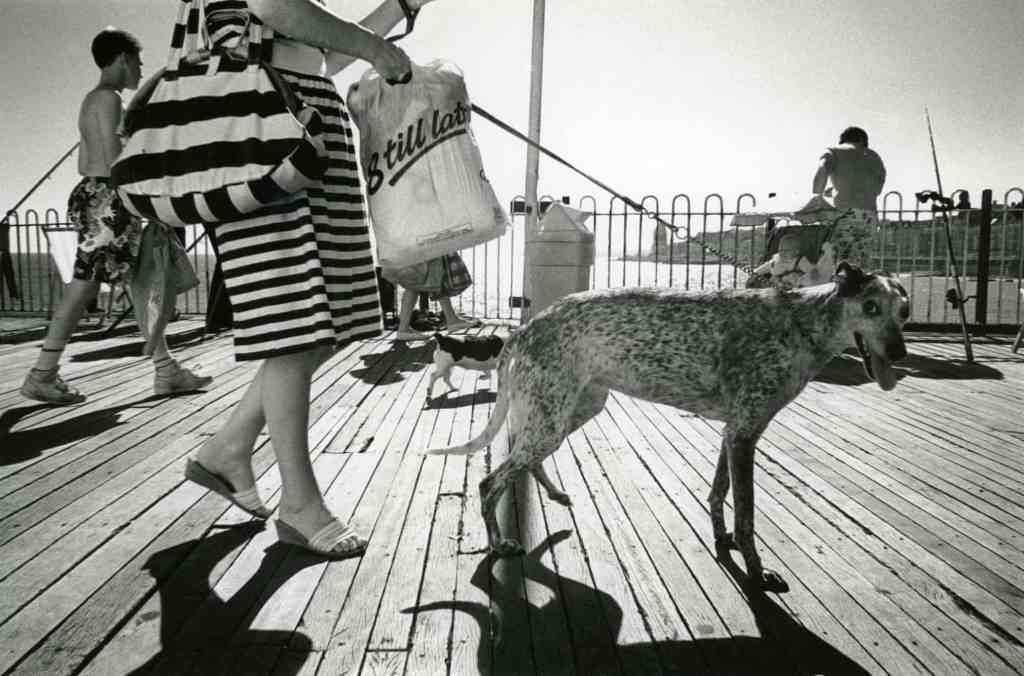
Old Hastings pier
Photograph: Richard Hamilton

oooo

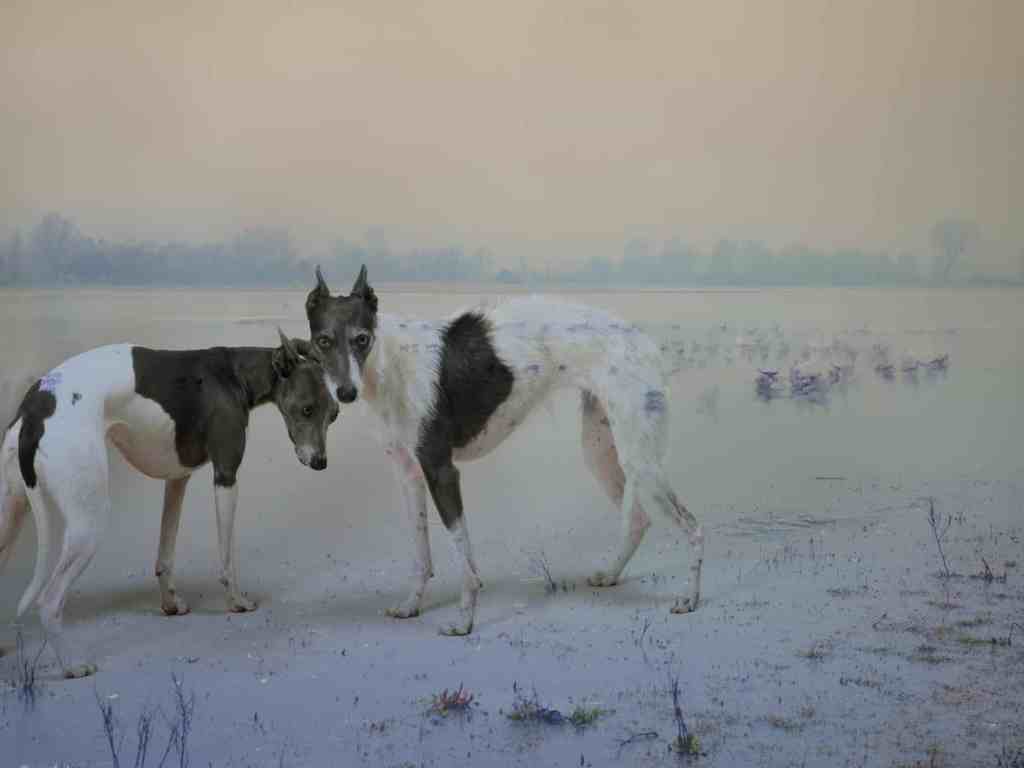
Dolly and Nora
Photograph: Rory Carnegie

Beautiful photographs!

“It is real, so we must act.”

Another dramatic essay from George Monbiot.

I read this a few moments ago (10am PST Monday, 18th.) and, without question, knew that I had to republish it. It is done with George Monbiot’s kind permission.

ooOOoo

Re: generation

Why older people must stand in solidarity with the youth climate strikes.

By George Monbiot, published in the Guardian 15th February 2019

The Youth Strike 4 Climate gives me more hope than I have felt in 30 years of campaigning. Before this week, I believed it was all over. I thought, given the indifference and hostility of those who govern us, and the passivity of most of my generation, that climate breakdown and ecological collapse were inevitable. Now, for the first time in years, I think we can turn them around.

My generation and the generations that went before have failed you. We failed to grasp the basic premise of intergenerational justice: that you cannot apply discount rates to human life. In other words, the life of someone who has not been born will be of no less value than the life of someone who already exists. We have lived as if your lives had no importance, as if any resource we encountered was ours and ours alone to use as we wished, regardless of the impact on future generations. In doing so, we created a cannibal economy: we ate your future to satisfy our greed.

It is true that the people of my generation are not equally to blame. Broadly speaking, ours is a society of altruists governed by psychopaths. We have allowed a tiny number of phenomenally rich people, and the destructive politicians they fund, to trash our life support systems. While some carry more blame than others, our failure to challenge the oligarchs who are sacking the Earth and to overthrow their illegitimate power, is a collective failure. Together, we have bequeathed you a world that – without drastic and decisive action – may soon become uninhabitable.

Every day at home, we tell you that if you make a mess you should clear it up. We tell you that you should take responsibility for your own lives. But we have failed to apply these principles to ourselves. We walk away from the mess we have made, in the hope that you might clear it up.

Some of us did try. We sought to inspire our own generations to do what you are doing. But on the whole we were met with frowns and shrugs. For years, many people of my age denied there was a problem. They denied that climate breakdown was happening. They denied that extinction was happening. They denied that the world’s living systems were collapsing.

They denied all this because accepting it meant questioning everything they believed to be good. If the science was right, their car could not be right. If the science was right, their foreign holiday could not be right. Economic growth, rising consumption, the entire system they had been brought up to believe was right had to be wrong. It was easier to pretend that the science was wrong and their lives were right than to accept that the science was right and their lives were wrong.

A few years ago, something shifted. Instead of denying the science, I heard the same people say “OK, it’s real. But now it’s too late to do anything about it.” Between their denial and their despair, there was not one moment at which they said “It is real, so we must act.” Their despair was another form of denial; another way of persuading themselves that they could carry on as before. If there was no point in acting, they had no need to challenge their deepest beliefs. Because of the denial, the selfishness, the short-termism of my generation, this is now the last chance we have.

The disasters I feared my grandchildren would see in their old age are happening already: insect populations collapsing, mass extinction, wildfires, droughts, heat waves, floods. This is the world we have bequeathed to you. Yours is among the first of the unborn generations we failed to consider as our consumption rocketed.

But those of us who have long been engaged in this struggle will not abandon you. You have issued a challenge to which we must rise, and we will stand in solidarity with you. Though we are old and you are young, we will be led by you. We owe you that, at least.

By combining your determination and our experience, we can build a movement big enough to overthrow the life-denying system that has brought us to the brink of disaster – and beyond. Together, we must demand a different way, a life-giving system that defends the natural world on which we all depend. A system that honours you, our children, and values equally the lives of those who are not born. Together, we will build a movement that must – and will – become irresistible.

http://www.monbiot.com

ooOOoo

I can do no better than to repeat the closing sentence of George Monbiot’s essay.

Together, we will build a movement that must – and will – become irresistible.

This is the reality, folks, for us all.

A very sombre read from George Monbiot.

I read this essay first thing in the morning last Wednesday while still in bed. It struck me with a whole range of feelings and emotions; not positive ones I should add. Then I read it aloud to Jeannie with the feeling that this speaks of what it is, what it’s going to be, and how little time we have to make the sorts of gigantic changes that we all need.

Sorry to be down-in-the-dumps about the following; published with George Monbiot’s kind permission.

ooOOoo

Hopeless Realism

No effective means of stopping climate breakdown is deemed “politically realistic”. So we must change political realities.

By George Monbiot, published in the Guardian 14th November 2018.

It was a moment of the kind that changes lives. At a press conference held by Extinction Rebellion last week, two of us journalists pressed the activists on whether their aims were realistic. They have called, for example, for carbon emissions in the UK to be reduced to net zero by 2025. Wouldn’t it be better, we asked, to pursue some intermediate aims?

A young woman called Lizia Woolf stepped forward. She hadn’t spoken before, and I hadn’t really noticed her, but the passion, grief and fury of her response was utterly compelling. “What is it that you are asking me as a 20-year-old to face and to accept about my future and my life? … this is an emergency – we are facing extinction. When you ask questions like that, what is it you want me to feel?”. We had no answer.

Softer aims might be politically realistic, but they are physically unrealistic. Only shifts commensurate with the scale of our existential crises have any prospect of averting them. Hopeless realism, tinkering at the edges of the problem, got us into this mess. It will not get us out.

Public figures talk and act as if environmental change will be linear and gradual. But the Earth’s systems are highly complex, and complex systems do not respond to pressure in linear ways. When these systems interact (because the world’s atmosphere, oceans, land surface and lifeforms do not sit placidly within the boxes that make study more convenient) their reactions to change become highly unpredictable. Small perturbations can ramify wildly. Tipping points are likely to remain invisible until we have passed them. We could see changes of state so abrupt and profound that no continuity can be safely assumed.

Only one of the many life support systems on which we depend – soils, aquifers, rainfall, ice, the pattern of winds and currents, pollinators, biological abundance and diversity – need fail for everything to slide. For example, when Arctic sea ice melts beyond a certain point, the positive feedbacks this triggers (such as darker water absorbing more heat, melting permafrost releasing methane, shifts in the polar vortex) could render runaway climate breakdown unstoppable. When the Younger Dryas period ended 11,600 years ago, Greenland ice cores reveal temperatures rising 10°C within a decade.

I don’t believe that such a collapse is yet inevitable, or that a commensurate response is either technically or economically impossible. When the US joined the Second World War in 1941, it replaced a civilian economy with a military economy within months. As Jack Doyle records in his book Taken for a Ride, “In one year, General Motors developed, tooled, and completely built from scratch 1000 Avenger and 1000 Wildcat aircraft … Barely a year after Pontiac received a Navy contract to build antishipping missiles, the company began delivering the completed product to carrier squadrons around the world.” And this was before advanced information technology made everything faster.

The problem is political. A fascinating analysis by the social science professor Kevin Mackay contends that oligarchy has been a more fundamental cause of the collapse of civilisations than social complexity or energy demand. Oligarchic control, he argues, thwarts rational decision-making, because the short-term interests of the elite are radically different to the long-term interests of society. This explains why past civilizations have collapsed “despite possessing the cultural and technological know-how needed to resolve their crises.” Economic elites, that benefit from social dysfunction, block the necessary solutions.

The oligarchic control of wealth, politics, media and public discourse explains the comprehensive institutional failure now pushing us towards disaster. Think of Trump and his cabinet of multi-millionaires, the influence of the Koch brothers, the Murdoch empire and its massive contribution to climate science denial, the oil and motor companies whose lobbying prevents a faster shift to new technologies.

It is not just governments that have failed to respond, though they have failed spectacularly. Public sector broadcasters have deliberately and systematically shut down environmental coverage, while allowing the opaquely-funded lobbyists that masquerade as thinktanksto shape public discourse and deny what we face. Academics, afraid to upset their funders and colleagues, have bitten their lips. Even the bodies that claim to be addressing our predicament remain locked within destructive frameworks.

For example, last Wednesday I attended a meeting about environmental breakdown at the Institute for Public Policy Research. Many of the people in the room seemed to understand that continued economic growth is incompatible with sustaining the Earth’s systems. As the author Jason Hickel points out, a decoupling of rising GDP from global resource use has not happened and will not happen. While 50 billion tonnes of resources used per year is roughly the limit the Earth’s systems can tolerate, the world is already consuming 70 billion tonnes. Business as usual, at current rates of economic growth, will ensure that this rises to 180 billion tonnes by 2050. Maximum resource efficiency, coupled with massive carbon taxes and some pretty optimistic assumptions, would reduce this to 95 billion tonnes: still way beyond environmental limits. A study taking account of the rebound effect (efficiency leads to further resource use) raises the estimate to 132 billion tonnes. Green growth, as members of the Institute appear to accept, is physically impossible.

On the same day, the same Institute announced a major new economics prize for “ambitious proposals to achieve a step-change improvement in the growth rate.” It wants ideas that will enable economic growth rates in the UK at least to double. The announcement was accompanied by the usual blah about sustainability, but none of the judges of the prize has a discernible record of environmental interest.

Those to whom we look for solutions trundle on as if nothing has changed. They continue to behave as if the accumulating evidence has no purchase on their minds. Decades of institutional failure ensures that only “unrealistic” proposals – the repurposing of economic life, with immediate effect – now have a realistic chance of stopping the planetary death spiral. And only those who stand outside the failed institutions can lead this effort.

Two tasks need to be performed simultaneously: throwing ourselves at the possibility of averting collapse, as Extinction Rebellion is doing, slight though this possibility may appear. And preparing ourselves for the likely failure of these efforts, terrifying as this prospect is. Both tasks require a complete revision of our relationship with the living planet. Because we cannot save ourselves without contesting oligarchic control, the fight for democracy and justice and the fight against environmental breakdown are one and the same. Do not allow those who have caused this crisis to define the limits of political action. Do not allow those whose magical thinking got us into this mess to tell us what can and cannot be done.

www.monbiot.com

ooOOoo

I have a son and daughter who live in England. My daughter and her husband have a seven-year-old boy, my grandson, and I hope that I live long enough to have some decent conversations with him.  Now whether or not those conversations will turn to his future and what fears he has only time will tell.

But that doesn’t stop me from worrying, worrying big time, just what world we are leaving for him and the thousands of others of his age as they grow up. I truly fear that it is going to be a very different planet than the one we have at present.

I hope with all my heart that I am wrong!

Just say “No!”

We have to keep banging this drum on behalf of our wildlife!

OK! This new essay from George Monbiot applies specifically to the United Kingdom. But there’s no question in my mind that awareness of what is going in the U.K. will be important for readers in many other countries.

ooOOoo

Incompetence By Design

As state bodies are dismantled, corporations are freed to rip the living world apart

By George Monbiot, published in the Guardian 4th July 2018

It feels like the collapse of the administrative state – and this is before Brexit. One government agency after another is losing its budget, its power and its expertise. The result, for corporations and the very rich, is freedom from the restraint of law, freedom from the decencies they owe to other people, freedom from democracy. The public protections that constrain their behaviour are being dismantled.

An example is the cascading decline in the protection of wildlife and environmental quality. The bodies charged with defending the living world have been so enfeebled that they now scarcely exist as independent entities. Natural England, for example, has been reduced to a nodding dog in the government’s rear window.

Its collapse as an autonomous agency is illuminated by the case that will be heard next week in the High Court, where two ecologists, Tom Langton and Dominic Woodfield, are challenging its facilitation of the badger cull. That the cull is a senseless waste of life and money is well established, but this is only one of the issues being tested. Another is that Natural England, which is supposed to assess whether the shooting of badgers causes wider environmental harm, appears incapable of discharging its duties.

As badger killing spreads across England, it intrudes upon ever more wildlife sites, some of which protect animals that are highly sensitive to disturbance. Natural England is supposed to determine whether allowing hunters to move through these places at night and fire their guns has a detrimental effect on other wildlife, and what the impact of removing badgers from these ecosystems might be. The claimants allege that it has approved the shooting without meaningful assessments.

Some of its decisions, they maintain, are farcical. In Dorset, for example, Natural England assumed that overwintering hen harriers and merlins use only one out of all the sites that have been designated for their protection, and never stray from it. It makes the same assumption about the Bewick’s swans that winter around the Severn estuary. That birds fly, enabling them to move from one site to another, appears to have been overlooked.

Part of the problem, the claimants argue, is that staff with specialist knowledge have been prevented from making decisions. The location of the badger cull zones is such a closely guarded secret that Natural England’s local staff are not allowed to see the boundaries. As a result, they can make no meaningful assessment of what the impact might be. Instead, the decisions are made in distant offices by people who have not visited the sites.

I wanted to ask Natural England about this, but its external communications have been shut down by the government: any questions now have to be addressed to Michael Gove’s environment department, Defra. Defra told me “staff carrying out this work have all the necessary information. It would be inappropriate to comment on an ongoing legal matter.” How can Natural England be an independent body when the government it is supposed to monitor speaks on its behalf?

Another example of how far Natural England has fallen is the set of deals it has struck with grouse moor owners, allowing them to burn protected habitats, kill protected species and build roads across sites that are supposed to be set aside for wildlife. For several years, the redoubtable conservationist Mark Avery has been fighting these decisions. This May, Natural England conceded, in effect, that he was right. The agency that is meant to protect our wild places has been colluding in their destruction.

A correspondent from within Natural England tells me its staff are so demoralised that it has almost ceased to function. “Enforcement, for example, is close to non-existent … Gove seems to have somehow both raised the profile of environmental issues whilst simultaneously stripping the resources … it has never been as bad as this.”

In March, the House of Lords reported that Natural England’s budget has been cut by 44% since it was founded in 2006. The cuts have crippled both its independence and its ability to discharge its duties. It has failed to arrest the catastrophic decline in our wildlife, failed to resist the housebuilders trashing rare habitats and abandoned its regulatory powers in favour of useless voluntary agreements. As if in response, the government cut the agency’s budget by a further 14%.

Dominic Woodfield, one of the claimants in the court case next week, argues that Natural England has been “on death row” since it applied the law at Lodge Hill in Kent, where the Ministry of Defence was hoping to sell Britain’s best nightingale habitat to a housing developer. Natural England had no legal choice but to designate this land as a site of scientific interest, hampering the government’s plans. As the government slashed its budget and curtailed its independence, the agency’s disastrous response has been to try to save itself through appeasement. But all this has done is to alienate its defenders, reduce its relevance and hasten its decline. “There are still good people in Natural England. But they’re broken. They talk very slowly because they’re thinking very carefully about everything they say.”

If this is happening before we leave the European Union, I can only imagine where we will stand without the protection of European law. The environmental watchdog that, according to Michael Gove, will fill the role now played by the European Commission, will know, like Natural England, that its budget is provided by the government and can be cut at the government’s discretion. What is to prevent it from being nobbled as other agencies have been?

Already, the deliberate mutilating of the administrative state, delivering incompetence by design, has released landowners, housebuilders and assorted polluters from regulatory restraint. Only through European law have government agencies been forced to discharge their duties. Brexit strips away this defence. And if, as some propose, it paves the way for One Nation Under Gove, we should, the evidence so far suggests, be even more alarmed.

But some of us are now mobilising to turn the great enthusiasm for wildlife and natural beauty in this country into political action, and to fight the dismantling of the laws that protect our precious wild places. Watch this space.

http://www.monbiot.com

ooOOoo

On George Monbiot’s blog home page is this quote:

“I love not man the less, but Nature more.”

We must all love Nature more!