Tag: The Conversation

When dark shadows fall across our hearts.

One of the most important lessons we can learn from our dogs: coping with death.

In writing about the lesson of death that we can learn from our dogs I am, of course, speaking of our own death, of the inevitability of our death. That largely unspoken truth that Sharon Salzberg described in her book Faith: “What does it mean to be born in a human body, vulnerable and helpless, then to grow old, get sick and die, whether we like it or not?” [page 34.]

Anyone who has loved a dog has most likely been intimately involved in the end of that dog’s life. It is, to my mind, the ultimate lesson that dogs offer us: how to be at peace when we die and how to leave that peace blowing like a gentle breeze through the hearts of all the people who loved us.

Our beloved dogs have much shorter life spans than us, thus almost everyone who has loved a dog will have had to say goodbye to that gorgeous friend at some point in their lives. Very sadly, perhaps, saying goodbye to more than one loved dog.

All of which is my introduction to a recent essay published on The Conversation blogsite. The essay is written by Bernard Rollin, Professor of Philosophy, Animal Sciences and Biomedical Sciences at Colorado State University. The essay is called: When is it ethical to euthanise your pet?

ooOOoo

When is it ethical to euthanize your pet?

August 12, 2015 6.18am EDT

In the 1960s, I knew people who, before going on vacation, would take their dogs to a shelter to be euthanized. They reasoned that it was cheaper to have a dog euthanized – and buy a new one upon returning – than pay a kennel fee.

Two decades later, I was working at Colorado State’s veterinary hospital when a group of distraught bikers on Harley-Davidsons pulled up carrying a sick chihuahua. The dog was intractably ill, and required euthanasia to prevent further suffering. Afterwards, the hospital’s counselors felt compelled to find the bikers a motel room: their level of grief was so profound that the staff didn’t think it was safe for them to be riding their motorcycles.

These two stories illustrate the drastic change in how animals have been perceived. For thousands of years, humans have kept animals as pets. But only during the past 40 years have they come to be viewed as family.

While it’s certainly a positive development that animals are being treated humanely, one of the downsides to better treatment mirrors some of the problems the (human) health care system faces with end-of-life care.

As with humans, in many cases the lives of pets are needlessly prolonged, which can cause undue suffering for the animals and an increased financial burden for families.

The growth of veterinary medicine and ethics

In 1979, I began teaching veterinary medical ethics at Colorado State University’s veterinary school, the first such course ever taught anywhere in the world.

A year later, the veterinary school hired an oncologist to head up a new program on animal oncology. Soon, our clinic was applying human therapeutic modalities to animal cancer. The visionary head of the veterinary program also hired a number of counselors to help pet owners manage their grief – another first in veterinary circles.

I’d been under the impression that people would be reluctant to spend much money on animal treatments, so I was genuinely shocked when the following April, the Wall Street Journal reported individuals spending upwards of six figures on cancer treatments for their pets.

As a strong advocate for strengthening concern for animal welfare in society, I was delighted with this unprecedented turn of events. I soon learned that concern for treating the diseases of pets besides cancer had also spiked precipitously, evidenced by a significant increase in veterinary specialty practices.

One of the family

So what’s behind the shift in how pets are perceived and treated?

For one, surveys conducted over the last two decades indicate an increasing number of pet owners who profess to view their animals as “members of the family.” In some surveys, the number is as high as 95% of respondents, but in nearly all surveys the number is higher than 80%.

In addition, the breakdown of nuclear families and the uptick of divorce rates have contributed to singles forming tighter bonds with companion animals.

Such attitudes and trends are likely to engender profound changes in societal views of euthanasia. Whereas before, many owners didn’t think twice about putting down a pet, now many are hesitant to euthanize, often going to great lengths to keep sick animals alive.

Vets caught in the middle

However, veterinarians continue to experience extensive stress as they experience two opposite – but equally trying – dilemmas: ending an animal’s life too soon, or waiting too long.

In a paper that I published entitled Euthanasia and Moral Stress, I described the significant stress experienced by veterinarians, veterinary technicians and humane society workers. Many chose their profession out of a desire to improve the lot of animals; instead, they invariably ended up euthanizing large numbers of them, often for unethical reasons.

These ranged from “I got the dog to jog with me, and now it’s too old to run,” to “If I die, I want you to euthanize the animal because I know it can’t bear to live without me.”

In other cases, the animal is experiencing considerable suffering, but the owner is unwilling to let the animal go. With owners increasingly viewing pets as family members, this has become increasingly common, and many owners fear the guilt associated with killing an animal too soon.

Ironically this, too, can cause veterinarians undue trauma: they know the animal is suffering, but there’s nothing they can do about it unless the owner gives them permission.

The consequences are manifest. One recent study showed that one in six veterinarians has considered suicide. Another found an elevated risk of suicide in the field of veterinary medicine. Being asked to kill healthy animals for owner convenience doubtless is a major contribution.

How to manage the decision to euthanize

Here is my suggestion to anyone who is thinking about getting a pet: when you first acquire it, create a list of everything you can find that makes the animal happy (eating a treat, chasing a ball, etc). Put the list away until the animal is undergoing treatment for a terminal disease, such as cancer. At that point, return to the list: is the animal able to chase a ball? Does the animal get excited about receiving a treat?

If the animal has lost the ability to have positive experiences, it’s often easier to let go.

This strategy can be augmented by pointing out the differences between human and animal consciousness. As philosopher Martin Heidegger has pointed out, for humans much of life’s meaning is derived from balancing past experiences with future aspirations, such as wishing to see one’s children graduate or hoping to see Ireland again.

Animals, on the other hand, lack the linguistic tools to allow them to anticipate the future or create an internal narrative of the past. Instead, they live overwhelmingly in the present. So if a pet owner is reluctant to euthanize, I’ll often point out that the animal no longer experiences pleasant “nows.”

In the end, managing euthanasia represents a major complication of the augmented status of pets in society. Ideally, companion animal owners should maintain a good relationship with their general veterinary practitioner, who has often known the animal all of its life, and can serve as a partner in dialogue during the trying times when euthanasia emerges as a possible alternative to suffering.

ooOOoo

So much to learn from these beautiful creatures and so many ways to return the unlimited love we receive from them.

The male of the species, Part One

Dogs, women and men.

I did warn you, my dear reader, at the end of yesterday’s post that my introspective mood continues!

Over today and tomorrow, I want to explore why we humans can be so incredibly clever, especially in a group sense, yet the males of our species find it so difficult to express themselves, and what that means for the future of humanity (at the risk of sounding a tad pompous).

More or less at random, a dip into yesterday’s selection of blogs brought to light some deeply disturbing items.

Professor William Even, Professor of Economics at the Farmer School of Business at Miami University was reported in The Conversation saying that:

As of 2014, there were approximately 39 million people aged 16-24 in the US, and 5.4 million of them were neither employed nor in school. That’s almost 14% of the age cohort, or more than two-and-a-half times the national rate of unemployment.

In that same bulletin from The Conversation, John Shepherd, a Professorial Research Fellow in Earth System Science at the University of Southampton in England, in writing about the challenges of directly removing CO2 from the atmosphere, stated (my emphasis):

A new paper in Nature Communications shows just how big the required rates of removal actually are. Even under the IPCC’s most optimistic scenario of future CO2 emission levels (RCP2.6), in order to keep temperature rises below 2℃ we would have to remove from the atmosphere at least a few billion tons of carbon per year and maybe ten billion or more – depending on how well conventional mitigation goes.

We currently emit around eight billion tonnes of carbon per year, so the scale of the enterprise is massive: it’s comparable to the present global scale of mining and burning fossil fuels.

Then Raúl Ilargi Meijer authored an item on The Automatic Earth blog, a blog that usually writes almost exclusively about money matters. His article was called: Power and Compassion. He opens his essay:

Time to tackle a topic that’s very hard to get right, and that will get me quite a few pairs of rolling eyes. I want to argue that societies need a social fabric, a social contract, and that without those they must and will fail, descend into chaos.

Then after referring to the European Union, he goes on to write (my emphasis):

Though it may look out of far left field for those of us -and there are many- who think in economic and political terms only, we cannot do without a conscious definition of a social contract. We need to address the role of compassion, morals, even love, in our societies. If Jesus meant anything, it was that.

There have been times through history when this subject would have been much easier to breach, but we today almost seem to think they are irrelevant, that we can do without them. We can’t. But in the US, people get killed at traffic stops every day, and in Europe, they die of sheer negligence. Developments like these will lead to ‘centers that cannot hold’.

In that part of the media whirlwind that we at the Automatic Earth expose ourselves to, virtually all discussions about our modern world, and what goes wrong with it, which is obviously a whole lot, are conducted in rational terms, in financial and political terminology.

But that’s exactly what we should not be doing. Because it’s never going to get us anywhere. In the end, let alone in the beginning too, we are not rational creatures. And if and when we resort to only rational terms to define ourselves, as well as our world and the societies we create in that world, we can only fail.

For a society to succeed, before and beyond any economic and political features are defined, it must be based solidly on moral values, a moral compass, compassion, humanity and simple decency among its members. And those should never be defined by economists or lawyers or politicians, but by the people themselves. A social contract needs to be set up by everyone involved, and with everyone’s consent. Or it won’t last.

How and why that most basic principle got lost should tell us a lot about where we are today, and about how we got here. Morals seem to have become optional. The 40-hour death struggle of Cecil the lion exemplifies that pretty well. And no, his is not some rare case. The lack of morals involved in killing Cecil is our new normal.

Let me now set the stage for what I want to write about tomorrow. And I’m going to do that by referring to a TED Talk that was recorded by historian and author Yuval Noah Harari. Here’s how that TED Talk was introduced:

Seventy thousand years ago, our human ancestors were insignificant animals, just minding their own business in a corner of Africa with all the other animals. But now, few would disagree that humans dominate planet Earth; we’ve spread to every continent, and our actions determine the fate of other animals (and possibly Earth itself). How did we get from there to here? Historian Yuval Noah Harari suggests a surprising reason for the rise of humanity.

Yuval Harari’s talk is based firmly on his thesis presented in his book: Sapiens: A Brief History of Humankind. (There’s a review of his book in The Guardian newspaper.) Namely:

The book surveys the history of humankind from the evolution of archaic human species in the Stone Age up to the twenty-first century. Its main argument is that Homo sapiens dominates the world because it is the only animal that can cooperate flexibly in large numbers. The book further argues that Homo sapiens can cooperate flexibly in large numbers, because it has a unique ability to believe in things existing purely in its own imagination, such as gods, nations, money and human rights. The author claims that all large scale human cooperation systems – including religions, political structures, trade networks and legal institutions – are ultimately based on fiction.

Other salient arguments of the book are that money is a system of mutual trust; that capitalism is a religion rather than only an economic theory; that empire has been the most successful political system of the last 2000 years; that the treatment of domesticated animals is among the worst crimes in history; that people today are not significantly happier than in past eras; and that humans are currently in the process of upgrading themselves into gods.

It is my contention that humankind’s evolution, our ability to “cooperate flexibly in large numbers”, is rooted in the gender differences between man and woman. A contention that I expand upon tomorrow.

Understanding animals and pain.

Do animals feel pain in the way that we humans do?

Last week, shortly after Paloma had been let out for a ‘call of nature’, she emitted the most terrible of screams. No other dog had gone near her and there was no immediate explanation for the heart-rending cry.

While this was not the first time that Paloma had suddenly cried out for no apparent reason this was by far the worst cry that Paloma had made so Jean and I thought that an immediate visit to our local vet practice was sensible, that being Lincoln Road Veterinary Clinic. We were seen by Dr. Goodbrod and he came to the conclusion that she had a spinal disc problem: Paloma is thirteen years old.

Paloma, December 29th 2011

All of which serves as a relevant introduction to a recent essay over on The Conversation blogsite. The essay was written by Professor Andrea Nolan, who became Principal and Vice-Chancellor of Edinburgh Napier University in July 2013. (Andrea graduated as a veterinary surgeon from Trinity College Dublin, Ireland.)  Her essay is called Do animals feel pain like we do? and is republished here within the terms of The Conversation blogsite.

ooOOoo

Do animals feel pain like we do?

July 7, 2015 6.35am EDT

Not hard to read. Eddy Van 3000, CC BY-SA

Pain is a complex experience involving sensory and emotional components: it is not just about how it feels, but also how it makes you feel. And it is these unpleasant feelings that cause the suffering we humans associate with pain.

The science of suffering is well documented in the book of the same name by Patrick Wall. We know that animals certainly feel physical pain, but what is less clear is whether this emotional suffering that we feel can be said to be true of animals. And if it is, how we go about measuring it.

As a subjective emotion, pain can be experienced even in the absence of physical tissue damage, and the level of feeling can be modified by other emotions including fear, memory and stress. Pain also has different dimensions – it is often described in terms of intensity but it also has “character”, for example the pain of a pin-prick is very different from that of a toothache, a slipped disc or labour pain. Nearly all of us have experienced pain in our lives, but for each person, the experience is uniquely individual.

To understand or appreciate others’ pain we mostly rely on what they report. But there are many who either cannot communicate their pain verbally, babies for example, or effectively, like those with dementia or learning disabilities. In these situations, others must use a range of factors to judge the presence of pain and its impact on the individual.

Pain is not all bad – it serves a protective function, to keep us away from further danger, to help us heal, for example by stopping us from putting weight on a sprained ankle. But if it isn’t managed effectively it can have a major negative impact on our lives inducing fear, anger, anxiety or depression – all emotions which may in turn exacerbate it. And chronic pain is a major concern to millions of individuals and to our societies around the world.

Pain in animals

The nature of pain is perhaps even more complex in animals. How pain is sensed and the physical processes behind this are remarkably similar and well conserved across mammals and humans. There are also many similarities in pain behaviours across the species, for example they may stop socialising with people and/or other animals, they may eat less, they may vocalise more and their heart rate may rise. The capacity of animals to suffer as sentient creatures is well established and enshrined in law in many countries, however we don’t understand well how they actually experience pain.

Some aspects of the experience and expression of pain are not likely to be the same as in humans. First, animals cannot verbally communicate their pain. Dogs may yelp and you may notice behaviour change but what about your pet rabbit, cat, tortoise or horse? Animals rely on human observers to recognise pain and to evaluate its severity and impact. Without the ability to understand soothing words that explain that following surgery to repair a bone fracture, their pain will be managed (hopefully) and will subside, animals may also suffer more when in pain than we do.

Loud and clear.  William Heron, CC BY-SA
Loud and clear. William Heron, CC BY-SA

The debate around animals’ capacity to experience pain and suffer raged in the 20th century, but as we developed a greater understanding of pain, and studied its impact on the aspects of animal life that we could measure, we veterinary surgeons, along with many behavioural and animal scientists, recognised the significant impact of untreated pain, and we now believe this experience causes them to suffer.

For example, we know that animals and indeed birds with clinical signs of pain (limping) will choose to eat food containing pain-killing drugs (analgesics) over untreated food, and by measures of behaviour, they will improve.

Similarly many studies in a range of domestic animals have indicated that animals who have had surgery but not had adequate pain relief demonstrate behaviours reflective of pain which are alleviated when they are treated with analgesics such as morphine.

We also know that it is not just our dogs and cats that can suffer pain – there is an equally strong evidence base for the presence and negative impact of pain in sheep, cattle, pigs and horses among other species. But recognising pain in these different species is part of the complexity associated with animal pain. Managing it in animals that we rear for food and those that we keep as companions is equally challenging.

Behavioural disturbances have long been recognised as potential indicators of the presence of pain in animals. However it is important to recognise that each species manifests its own sometimes unique pain-related behaviours or behavioural disturbances in different ways, often rooted in the evolutionary process, so prey species, for example, are less likely to “advertise” an increased vulnerability to predators. Dogs may become aggressive, or quiet, or may stop socialising with “their” humans and other dogs. Sheep, on the other hand, may appear largely the same when casually observed.

Some expressions of pain however may be conserved. A recent paper suggested commonality in some features of facial expression during acute pain experiences in several animal species and humans.

These findings and much other work are being incorporated into tools to evaluate animal pain, because in the words of Lord Kelvin, the great Glaswegian scientist behind the Kelvin temperature scale, said: “When you cannot measure it, when you cannot express it in number … you have scarcely, in your thoughts, advanced to the stage of science, whatever the matter may be”.

So in order to treat and manage pain effectively we must measure it.

And there is a huge demand for these tools. The Glasgow Composite Pain Scale, a simple tool to measure acute pain in dogs and first published in 2007, has been translated into six languages. It is used in veterinary practices to measure pain to treat it effectively. It has also been used to evaluate the effectiveness of new analgesic drugs that are being developed by animal health companies. Tools to measure the impact of chronic pain, such as osteoarthritis, on the quality of life of dogs are now available and are a significant advance in managing chronic conditions.

There is now a global effort to raise awareness of pain in animals. Recently the World Small Animal Veterinary Association launched the Global Pain Council and published a treatise for vets and animal keepers worldwide to promote pain recognition, measurement and treatment. Dogs may be man’s best friend, but for all those who work with, care for and enjoy the company of animals, understanding how their pain feels is essential to improving the quality of their lives.

ooOOoo

Back to Paloma. Dr. Goodbrod prescribed muscle relaxers and a mild pain killer.

Dear, sweet Paloma. Found by Jean on a Mexican street in Guaymas in 2005 with her eight puppies. Jean found homes for all the eight puppies in the USA and adopted Paloma because she was very wild.

Paloma, Oregon, January 26th, 2014.

Just doing one thing at a time.

The way a dog focuses on the immediate task holds a very important lesson for us.

It’s a safe bet to claim that any dog owner has, from time to time, envied the way a dog so perfectly lives in the present. Then let’s not even go to the comparison between dogs and humans when it comes to relaxing!

Hazel taking a mid-morning break yesterday.
Hazel taking a mid-morning break on Tuesday.

These opening thoughts were prompted by a recent article that was published on The Conversation. The article criticised, rightly in my opinion, the madness (my word) of how many of us live these days, and with particular respect to ‘multi-tasking’. It’s a sobering reminder of the value of letting go and is republished here within the terms of essays published on The Conversation.

ooOOoo

The value of unplugging in the Age of Distraction

July 7, 2015 4.59am EDT

Author: John Rennie Short – Professor, School of Public Policy at University of Maryland, Baltimore County.

Small device, but very demanding. aciej_ie/flickr, CC BY-NC-ND

A common experience: you are walking down the street and someone is walking in the opposite direction toward you. You see him but he does not see you. He is texting or looking at his cellphone. He is distracted, trying to do two things at the same time, walking and communicating.

There is also the telltale recognition of a car driver on a phone; she’s driving either too slowly or too fast for the surrounding conditions, only partly connected to what is going on around her. Connected to someone else in another place, she is not present in the here and now.

These types of occurrences are now common enough that we can label our time as the age of distraction.

A dangerous condition

The age of distraction is dangerous. A recent report by the National Safety Council showed that walking while texting increases the risk of accidents. More than 11,000 people were injured last year while walking and talking on their phones.

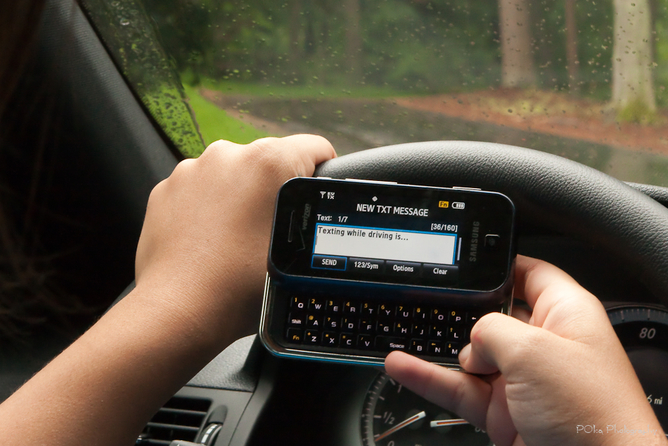
Really bad idea: texting while driving.  Paul Oka/flickr, CC BY-NC
Really bad idea: texting while driving. Paul Oka/flickr, CC BY-NC

Even more dangerous is the distracted car driver. Distracted drivers have more fluctuating speed, change lanes fewer times than is necessary and in general make driving for everyone less safe and less efficient.

Texting while driving resulted in 16,000 additional road fatalities from 2001 to 2007. More than 21% of vehicle accidents are now attributable to drivers talking on cellphones and another 5% were text messaging.

Cognitive impairment

Multitasking relatively complex functions, such as operating handheld devices to communicate while walking or driving, is not so much an efficient use of our time as a suboptimal use of our skills.

We are more efficient users of information when we concentrate on one task at a time. When we try to do more than one thing, we suffer from inattention blindness, which is failing to recognize other things, such as people walking toward us or other road users.

Digital devices, which are proliferating in our lives, encourage multitasking, but does this really help our performance?  Thomas Hawk/flickr, CC BY-NC-SA
Digital devices, which are proliferating in our lives, encourage multitasking, but does this really help our performance? Thomas Hawk/flickr, CC BY-NC-SA

Multitaskers do worse on standard tests of pattern recognition and memory recall. In a now classic study, researchers at Stanford University found that multitaskers were less efficient because they were more susceptible to using irrelevant information and drawing on inappropriate memories.

Multitasking may not be all that good for you either. A 2010 survey of over 2,000 8- to 12-year-old girls in the US and Canada found that media multitasking was associated with negative social indicators, while face-to-face contact was associated with more positive social indicators such as social success, feelings of normalcy and hours of sleep (vital for young people).

Although the causal mechanism has yet to be fully understood – that is, what causes what – the conclusion is that media multitasking is not a source of happiness.

Distraction-seeking creatures?

There are a number of reasons behind this growing distraction.

One often-cited reason is the pressure of time. There is less time to accomplish all that we need to do. Multitasking then is the result of the pressure to do more things in the same limited time. But numerous studies point to the discretionary use of time among the more affluent, and especially more affluent men. The crunch of time varies by gender and class. And, paradoxically, it is less of an objective constraint for those who often articulate it most.

Although the time crunch is a reality, especially for many women and lower-income groups, the age of distraction is not simply a result of a time crunch. It may also reflect another form of being. We need to reconsider what it means to be human, not as continuous thought-bearing and task-completing beings but as distraction-seeking creatures that want to escape the bonds of the here-and-nowness with the constant allure of someone and somewhere else.

Media theorist Douglas Rushkoff asserts that our sense of time has been warped into a frenzied present tense of what he calls “digiphrenia,” the social media-created effect of being in multiple places and more than one self all at once.

There is also something sadder at work. The constant messaging, emailing and cellphoning, especially in public places, may be less about communicating with the people on the other end as about signaling to those around that you are so busy or so important, so connected, that you exist in more than just the here and now, clearly a diminished state of just being.

There’s greater status in being highly connected and constantly communicating. This may explain why many people speak so loudly on their cellphones in public places.

Reactions

The age of distraction is so recent we have yet to fully grasp it. Sometimes art is a good mediator of the very new.

A video art installation by Siebren Verstag is entitled Neither There nor There. It consists of two screens. On one side a man sits looking at his phone; slowly his form loosens as pixels move to the adjacent screen and back again. The man’s form moves from screen to screen, in two places at one time but not fully in either.

One study that looked at the effect of banning cellphones in schools found that student achievement improved when cellphones were banned, with the greatest improvements accruing to lower-achieving students, who gained the equivalent of an additional hour of learning a week.

On many college campuses, faculty now have a closed-laptop policy after finding students would use their open laptops to skim their emails, surf the web and distract their neighbors. This was confirmed by studies that showed that students with open laptops learned less and could recall less than students with their laptops closed.

We are witnessing a cultural shift occurring with the banning of devices, cellphone usage being curtailed in certain public places and policies banning texting while driving. This is reactive. We also need a new proactive civic etiquette so that the distracted walker, driver and talker have to navigate new codes of public behaviors.

Many coffee stores in Australia, for example, do not allow people to order at the counter when they are on the cellphone, more golf clubs are banning the use of cellphones while on the course and it is illegal in 38 states in the US for novice drivers to use a cellphone while driving.

There is also the personal decision available to us all, one foreshadowed by writer and social critic Siegfried Kracauer, who lived from 1889 to 1966. In a newspaper article on the impact of modernity, first published in 1924, he complained of the constant stimulation, the advertising and the mass media that all conspired to create a “permanent receptivity” that prefigures our own predicament in a world of constant texting, messaging and cellphones.

One response, argued Kracauer, is to surrender yourself to the sofa and do nothing, in order to achieve a “kind of bliss that is almost unearthly.”

One radical response is to unplug and disconnect, live in the moment and concentrate on doing one important thing at a time. Try it for an hour, then for a day. You can even call your friends to tell them about your success – just not while walking or driving, or working on your computer screen or speaking loudly in a public place.

ooOOoo

Oh, did someone mention unplugging and disconnecting?

P1150708
Cleo – unplugged and disconnected.

Lessons in contentment.

Welcome to July!

A young Pharaoh already embracing contentment. September, 2003.

Sidney Bloch, who is Emeritus Professor in Psychiatry at the University of Melbourne, recently published an essay over on the blogsite The Conversation. (Greatly recommended, by the way.)

His essay was about happiness versus contentment and certainly touched a few spots in this old Englishman’s psyche, contented as I am in this rural part of Oregon. However, until now I had never stopped to think about the difference between being happy and being contented.

So, I think you are going to enjoy Professor Bloch’s views, that now follow. His essay is republished, with permission, just as it was presented on The Conversation.

ooOOoo

Happiness is an illusion, here’s why you should seek contentment instead.

June 29, 2015 4.07pm EDT

Feeling content means having a deep-seated, abiding acceptance of oneself and one’s worth, together with a sense of self-fulfilment, meaning and purpose. James Theophane/Flickr, CC BY-SA

I want to share a personal view of what it is to be happy and how it differs from feeling content. Let me begin with a clinical story.

They met at a party; it was love at first sight just like one reads about in romantic novels. They married following an exhilarating courtship, and since they shared an eagerness to raise a family, Jennifer soon announced the joyful news of her pregnancy. They called their baby Annie after Adam’s late mother.

They felt blessed; every moment since their first encounter had been nothing but pleasurable. Everyone who knew them concurred that their lives as a couple had been replete with happiness.

Tragically, it was not to endure. Their first setback occurred only days after Annie’s birth. She was sleeping fitfully and her colic stubbornly persisted. Jennifer felt utterly demoralised as a new mother. Her mounting sense of guilt and melancholy led to her admission to a psychiatric ward (her first ever encounter with psychiatry); the fear of her harming Annie or herself spread through the family and circle of friends.

And then, quite shockingly, despite the most diligent medical and nursing care, Jennifer met her death after jumping off a second floor balcony. Her family and friends plunged into deep grief; the medical professionals who had looked after her were similarly bereft.

An elusive goal

Having worked as a psychiatrist for over four decades and got to know dozens of men, women, and children of diverse backgrounds and with unique life stories, I have witnessed many a sad narrative, although suicide has mercifully been a rare event.

These experiences, in tandem with a lifelong fascination with what makes people tick, have led me most reluctantly to the judgement that while we may savour happiness episodically, it will invariably be disrupted by unwelcome negative feelings. Still, most of humankind will continue to harbour the expectation of living happily and remain oblivious that this wishful fantasy is an unconscious way of warding off the threat of psychic pain.

Rather than confront and demoralise those who have sought my help, I have gently but honestly responded to their plaintive yearning (“all I want is just to be happy”), by highlighting an inherent human sentiment. Namely that clinging to the fiction of being able to avoid suffering and enjoying a continuing state of pleasure is tantamount to self-deception.

I have offered them the hope – but not a guarantee – that they have the potential to lead a more fulfilling life than hitherto by participating in a challenging, and at times even distressing process of self-exploration whose purpose is to enhance self understanding and acceptance of the reality-bound emotional state I call contentment.

You may retort: “But you treat people who are miserable, pessimistic and self-deprecating, surely you must be hopelessly biased.” I would readily understand your reaction but suggest that all of us, not just those in treatment, crave happiness and are repeatedly frustrated by its elusiveness.

Most of humankind continues to harbour the expectation of living happily and remains oblivious that this wishful fantasy is an unconscious way of warding off the threat of psychic pain.  Kate Ter Haar/Flickr, CC BY-SA
Most of humankind continues to harbour the expectation of living happily and remains oblivious that this wishful fantasy is an unconscious way of warding off the threat of psychic pain. Kate Ter Haar/Flickr, CC BY-SA

As the father of psychoanalysis Sigmund Freud emphasised in his 1930 essay, Civilization and Its Discontents, we are much more vulnerable to unhappiness than its opposite. That’s because we are constantly threatened by three forces: the fragility of our physical self, “doomed” by ageing and disease; the external world, with its potential to destroy us (through floods, fires, storms and earthquakes, for example); and our unpredictably complicated relationships with other people (regarded by Freud as the most painful source of unhappiness).

So, am I simply a misanthrope? I hope not but I am inclined to agree with Elbert Hubbard, the American artist and philosopher, who said, “Life is just one damn thing after another“.

We only have to think about the 50 million people who are currently displaced and unlikely to find a secure haven anytime soon, or the 2.2 billion people – including millions of children – who live on less than US$2 a day to appreciate the validity of that remark.

A better option

Given the formidable obstacles to chasing after happiness or promoting its sustainability if we are lucky enough to come by it, what options do human beings have? I have not come across any meaningful approach to this question, even from the unswervingly confident proponents of the contemporary school of positive psychology.

So, I espouse the following: given that we have the means to distinguish between happiness and contentment, we can examine how they differ and, in so doing, identify an alternative to the futile pursuit of happiness.

Happiness, derived from the Norse word hap, means luck or chance; the phrase happy-go-lucky illustrates the association. Many Indo-European languages similarly conflate the feeling of happiness and luck. Glück in German, for instance, can be translated as either happiness or chance, while eftihia, the Greek word for happiness, is derived from ef, meaning good, and tixi, luck or chance.

Thus, a mother may have the good fortune to feel ecstatic when responding to her infant’s playfulness, only to see it evaporate a couple of years later and be replaced by the initial features of autism. In the story we started this article with, Jennifer may have persevered had her baby slept peacefully and not been assailed by colicky pain in her first few weeks of life.

Contentment is derived from the Latin contentus and usually translated as satisfied. No multiple meanings here to confuse us. In my view, feeling content refers to a deep-seated, abiding acceptance of one’s self and one’s worth together with a sense of self-fulfilment, meaning and purpose.

And, most critically, these assets are valued and nurtured whatever the circumstances, or even especially when they are distressing or depressing.I have had the privilege of knowing men and women who suffered grievously as children in the ghettoes and concentration camps of Nazi Europe but emerged from their nightmare to face the challenge of seeking strengths, emotional and spiritual, within themselves. With the passage of time, many succeeded in achieving a sense of deep-seated contentment.

What these survivors have clearly demonstrated is that accepting and respecting oneself, coupled with determining what is personally meaningful, stand a greater chance of accomplishment, even if never completed, than a relentless and ultimately futile pursuit of happiness. What’s more, contentment has the potential to serve as a robust foundation upon which episodes of joy and pleasure can be experienced and cherished.

ooOOoo

I read the essay on The Conversation out aloud to Jeannie yesterday morning and we both found it a very wise and insightful reflection.

Seems to me that there’s another aspect of life that we could learn from our wonderful dogs!

Hazle and Cleo demonstrating mutual contentment!

Lies, Damn lies, and ….

What is so terrible about integrity!

I don’t know if my title to today’s post is part of a saying that is well-known in the USA. But back in dear old England the expression is widely used; the full expression being, “Lies, Damn Lies, and Politicians“.

So what’s got my ‘knickers in a twist’ about the various hues of ‘truth’ that we find amongst our politicians?

Before answering that question, perhaps I should answer a more fundamental question that might be arising in the minds of those followers who are relatively new to this place. (And each and every one of you has to understand the very great privilege you offer me by being a follower.) That question being what have integrity and politicians got to do with a blog about dogs?

Easily answered in the words over at About this Blog:

The underlying theme of Learning from Dogs is about truth, integrity, honesty and trust in every way. We use the life of dogs as a metaphor.

I subscribe to the blogsite The Conversation (US arm). Back on May 18th, they published an item under the title of How many ways can politicians ‘lie’?

The article seemed to articulate, in a measured and responsible fashion, what huge numbers of us sense subjectively: truth is rare to see in the world of power and politics.

I’m not going to republish it in full, including the tables, but will offer the first half with a link to the rest of the article. The author of the article is Dr. Ellis Jones, Assistant Professor of Sociology at the College of the Holy Cross in Worcester, MA.

How many ways can politicians ‘lie’? How a class led to a ‘truth’ report card for the 2016 election.

I regularly teach a course called The Sociology of Television & Media in which my students and I critically explore newscasts, entertainment programming and (both commercial and political) advertising. The theme that I use as a touchstone throughout the class is: What happens when, as a society, we begin to mix fantasy and reality together in mass media?

We discuss how a range of troubling outcomes emerge for a public that has difficulty telling truth from fiction. Max Horkheimer, a German-Jewish sociologist, argued that this is part of what led to the rise of Nazism in Germany.

Once we lose our ability to detect lies, we become vulnerable to demagogues.

Six categories of rhetoric

About halfway through the semester, I have students deconstruct political ads, and we discuss practical resources for navigating the web of truths, half-truths and outright lies that proliferate unhindered during each election cycle.

One resource that I offer is Politifact.org’s Truth-o-Meter. Students fact-check politicians’ statements to determine how much, if any, truth is contained therein (they actually won a Pulitzer Prize for their work fact-checking the 2008 election).

The first, and perhaps most important, takeaway from their work is that modern political statements cannot accurately be rated as simply “true” or “false.” So sophisticated has the art of mixing truth and lies become that the scale Politifact currently uses includes six separate categories of political rhetoric: true, mostly true, half true, mostly false, false and “pants on fire” (for statements that aren’t just false but also completely ludicrous – and yet still stated as truth).

In essence, while there is still but one way to tell the truth, there are now at least five times as many acceptable ways to lie.

For example, John Boehner’s May 3 2015 statement on Meet The Press that “we spend more money on antacids than we do on politics” is rated simply “false.” Fact-checking reveals that in the US, we spent somewhere between US$3 billion and US$7 billion on elections in 2014 (depending on what money streams you include), while we spent less than $2 billion on antacids in the same year.

Boehner’s team was apparently trying to compare global sales of antacids (including all seven billion people on the planet) to US spending on elections (about 320 million of us) – a false comparison.

On April 23 2015, Hillary Clinton provided a good illustration of a statement that rates as a “half truth.” When addressing the Women in the World Summit in New York City, Clinton asserted that the US ranks “65th out of 142 nations” when it comes to equal pay for women. The statistic comes from the World Economic Forum’s 2014 Global Gender Gap Report.

However, the primary measure generated by this report ranks the US 20th in gender equity. The ranking of 65th is taken from a subcategory in the report that relies on a survey of perceptions of executives rather than hard numbers. So, while it is technically true, it may actually be overstating the severity of the gender pay gap comparison.

Whom can we trust?

The second takeaway, though it may not be much of a surprise, is that there are no politicians in this country that exclusively tell the truth. Every single one, to a greater or lesser extent, spins, bends, twists or breaks the truth.

Perhaps this is the price of power in our modern democracy, but we should find it at least a little troubling.

So where does this leave us? Well, knowing that every one of our politicians lies, the most important question, in my mind, becomes: Who is most often telling the truth and who is lying to us repeatedly in order to gain our support?

In other words, whom can and whom can’t we trust?

With this question in mind, I had my students add up the raw numbers for 25 major politicians (based on Politifact’s fact-checking over the past eight years) and write the results up on the board in rank order from most to least honest based on the data. The results were intriguing.

While the prototype point system was not particularly sophisticated (two points for each true statement, one point for each mostly true statement, zero for half-truths, etc.), the numbers revealed that many well-known politicians were abusing the truth far more than they were embracing it.

When I asked the class what they thought of the results, one student raised her hand and replied, “I’m not shocked.” Many of the others immediately nodded their heads in agreement.

I wondered if we’ve become so accustomed to the bending and breaking of the truth that we no longer expect truth from our leaders. Now we’re teaching the next generation not to expect it either.

After seeing these preliminary results, I was hooked.

Please do read the rest of this fascinating and hugely helpful report. It names names in terms of the ‘good, bad and ugly’!

However, the closing paragraphs of Dr. Jones’ article are so wonderful that I can’t resist republishing them!

As teachers, caught up in our own subject matter, we easily forget that our students are hungry to apply what they’re being taught in our classes to something meaningful in their own lives.

It is our obligation to offer each generation a sense of social responsibility, hope for the future and the practical tools that will allow them to build it for themselves.

Something like a yearly Honesty Report Card might serve us well at this point in our democracy’s evolution. At the very least, let’s use this idea as a starting point for some kind of political unity in this country.

Whether you are liberal or conservative, can’t we at least agree that our politicians should start telling us the truth?

At this point in preparing today’s post, I wanted, wanted so much, something to take me away into some dreamy corner of my mind. For just a few minutes to be distracted from the present day realities of life.

I chose to do it by listening to this track from Chris Rea.

Oh, nearly forgot to mention that dogs don’t lie!

Sharing Ideas.

There’s no limit to learning.

I can’t recall how but recently I came across an online source of analysis, ideas and research that calls itself The Conversation. In their folder How we’re different, (in part) they explain:

The Conversation US launched as a pilot project in October 2014. It is an independent source of news and views from the academic and research community, delivered direct to the public.

Our team of professional editors work with university and research institute experts to unlock their knowledge for use by the wider public.

Access to independent, high quality, authenticated, explanatory journalism underpins a functioning democracy. Our aim is to promote better understanding of current affairs and complex issues. And hopefully allow for a better quality of public discourse and conversation.

We aim to help rebuild trust in journalism. All authors and editors sign up to our Editorial Charter. All contributors must abide by our Community Standards policy. We only allow authors to write on a subject on which they have proven expertise, which they must disclose alongside their article. Authors’ funding and potential conflicts of interest must also be disclosed. Failure to do so carries a risk of being banned from contributing to the site.

The Conversation launched in Australia in March 2011 and​ the UK in May 2013.

So with no further ado, and within the terms of The Conversation, may I share:

What does it mean to preserve nature in the Age of Humans?

Ben A Minteer, Arizona State University and Stephen Pyne, Arizona State University

Is the Earth now spinning through the “Age of Humans?” More than a few scientists think so. They’ve suggested, in fact, that we modify the name of the current geological epoch (the Holocene, which began roughly 12,000 years ago) to the “Anthropocene.” It’s a term first put into wide circulation by Nobel-Prize winning atmospheric chemist Paul Crutzen in an article published in Nature in 2002. And it’s stirring up a good deal of debate, not only among geologists.

The idea is that we needed a new planetary marker to account for the scale of human changes to the Earth: extensive land transformation, mass extinctions, control of the nitrogen cycle, large-scale water diversion, and especially change of the atmosphere through the emission of greenhouse gases. Although naming geological epochs isn’t usually a controversial act, the Anthropocene proposal is radical because it means that what had been an environmental fixture against which people acted, the geological record, is now just another expression of the human presence.

It seems to be a particularly bitter pill to swallow for nature preservationists, heirs to the American tradition led by writers, scientists and activists such as John Muir, Aldo Leopold, David Brower, Rachel Carson and Edward Abbey. That’s because some have argued the traditional focus on the goal of wilderness protection rests on a view of “pristine” nature that is simply no longer viable on a planet hurtling toward nine billion human inhabitants.

Given this situation, we felt the time was ripe to explore the impact of the Anthropocene on the idea and practice of nature preservation. Our plan was to create a salon, a kind of literary summit. But we wanted to cut to the chase: What does it mean to “save American nature” in the age of humans?

We invited a distinguished group of environmental writers – scientists, philosophers, historians, journalists, agency administrators and activists – to give it their best shot. The essays appear in the new collection, After Preservation: Saving American Nature in the Age of Humans.

Getting the chronology right, it turns out, matters less than we might think. The historian J R McNeill recounts the difficulty in fixing a clear start date for the Anthropocene. (Should it coincide with the late Pleistocene megafaunal extinctions? The rise of agriculture? The birth of the industrial era in the 19th century? The mid-20th century uptick in carbon emissions?) Wherever we peg it, McNeill argues, the future of nature preservation in America will increasingly be shaped by environmental traditions more congruent with notions of a human-driven world.

Is humanity now ‘too big for nature?’ (Photo by Mark Klett)
Trails of Weekend Explorers, near Hanksville, CC BY-NC-ND

It’s a view shared by ecologist Erle Ellis. We’ve simply “outgrown” nature, Ellis argues, and so we have to become more comfortable within the “used and crowded planet” we’ve made. Andrew Revkin, author of the Dot Earth environmental blog for the New York Times, sounds a similar theme, arguing that the whole idea of “saving” a nature viewed outside the human presence is an anachronism. What we need instead, he suggests, is to focus on restoring a bipartisan politics able to cope with the challenges of living in and managing a human-driven world.

But all this talk of a more human-driven world and a species that is now “too big for nature” is dismissed by wilderness activist Dave Foreman, who spies a dark future awaiting us if we continue on the current path. Foreman condemns the vision of the “Anthropoceniacs” who he argues are promoting nothing less than the technological takeover of life on the planet. We need to remind ourselves, he writes, “that we are not gods.”

The need for humility courses throughout After Preservation. But it’s joined by an equally strong plea for pragmatism and more intelligent control. As science journalist Emma Marris writes, the desire to restrain ourselves in nature may ironically prove self-defeating if it means we can’t intervene to prevent present and future species extinctions. The biologist Harry Greene echoes this view with his manifesto to “rewild” the Anthropocene by actively introducing cheetahs, elephants, camels and lions to North America as proxies for the long-lost megafauna of the Pleistocene. It’s a rebooting of the wilderness idea – or maybe a wilderness 2.0 – for the technological age.

Regardless of how the Anthropocene debate plays out, environmental science and policy experts Norm Christensen and Jack Ward Thomas remind everyone how hard it is to implement whatever we want on the ground without unexpected consequences. Thomas, a former chief of the US Forest Service, describes how the unpredictability of ecosystems can result in cases in which the preservationist agenda becomes complicated as ecosystems change in surprising ways (for instance, when an unplanned growth in the barred owl population starts to displace the protected northern spotted owl in the Pacific Northwest).

The Anthropocene has become an environmentalist Rorshach. (Photo by Mark Klett)
Computer Monitor Washed Down Stream by Flood Waters, Salt River, CC BY-NC-ND

Much of the discussion of the Anthropocene must hinge on values. But many of our authors conclude that it also needs grounding in a deeper and more nuanced understanding of history. As historians Donald Worster and Curt Meine point out, even if purist notions of the wilderness may no longer be realistic in the Anthropocene, it would be a grave mistake to jettison our environmental traditions and the commitment to protecting as much wildness as we can.

Even so, many suggest that nature conservation will have to evolve in order to reflect a more diverse constituency, an urban population not well served by the older preservationist values and images. Or, as ecologist Michelle Marvier and The Nature Conservancy’s Hazel Wong sum it up, “Move over, Grizzly Adams.”

The debate wasn’t settled at the end of After Preservation but we didn’t expect it to be. The argument has deep roots, as the writer and climate activist Bill McKibben reminds us in his coda to the book. And in one way or another, pragmatists and preservationists have been at odds since the birth of the American conservation movement in the late 19th century. The Anthropocene debate is only the most recent replaying of this enduring struggle.

What way forward? We think John McPhee probably got it about right nearly forty years ago in his memorable portrait of modern Alaska, Coming into the Country:

Only an easygoing extremist would preserve every bit of country. And extremists alone would exploit it all. Everyone else has to think the matter through – choose a point of tolerance, however much the point might tend to one side.

Our hope is that After Preservation will help us choose that point of tolerance as we puzzle through the environmental ethos of the Anthropocene. We’ve little choice: it’s going to be a challenge confronting the meaning and work of nature preservation for some time to come.

The Conversation

Ben A Minteer is Arizona Zoological Society Endowed Chair at Arizona State University.
Stephen Pyne is Regents Professor in the School of Life Sciences at Arizona State University.

This article was originally published on The Conversation.
Read the original article.

ooOOoo

No matter what people tell you, words and ideas can change the world.” Robin Williams

An echo in the hills!

Patterns in the ether.

On Monday and Tuesday of the week I posted Legitimate Anger and Legitimate Hope.  (And please see the footnote to today’s post)

Patrice Ayme left the following comment to the Legitimate Hope post:

It’s hard to live with elephants, especially in poor, crowded conditions. I remember bathing in Africa as a child with a bull elephant 200 meters away, on the other side of a stream, and being extremely worried, with all in attendance.

Europe used to have elephants, and North America, two species. Time to reintroduce them, and live according to our discourse.

Rewilding Euramerica can be done, and should be done, for the deepest philosophical and emotional reasons, and will create new, very productive jobs.
PA

Then on Friday came an email from reader and blogger Martin Lack:

Hi Paul,
I saw this on The Conversation website – ‘Restore large carnivores to save struggling ecosystems’ (by Oregon State University’s Prof. William Ripple ) –  and thought of you.

Cheers,

Martin Lack

Author of Denial of Science: Analysing climate change scepticism in the UK; and of the Lack of Environment blog.   Follow me on Twitter @LackMartin

It was but a moment to go across to The Conversation website (rather liked what I saw, by the way) and find the article that Martin linked to. It is republished here within the terms of The Conversation site.

ooOOoo

Restore large carnivores to save struggling ecosystems

By William Ripple, Oregon State University
We are losing our large carnivores. In ecosystems around the world, the decline of large predators such as lions, bears, dingoes, wolves, and otters is changing landscapes, from the tropics to the Arctic. Habitat loss, persecution by humans and loss of prey have combined to inflict great losses on these populations.

In fact more than 75% of the 31 largest carnivore species are declining, and 17 species now occupy less than half their former ranges. Southeast Asia, southern and East Africa, and the Amazon are among areas in which multiple large carnivore species are declining. And with only a few exceptions, large carnivores have already been exterminated from much of the developed world, including areas of Western Europe, and the eastern United States.

Top dogs keep ecosystems in order

Many of these large carnivore species are endangered and some are at risk of extinction, either in specific regions or entirely. Ironically, they are vanishing just as we are learning about their important ecological effects, which is what led us to write a new paper in the journal Science to document their role.

From a review of published reports, we singled out seven species that have been studied for their important ecological role and widespread effects, known as trophic cascades. These are the African lion, leopard, Eurasian lynx, cougar, gray wolf, sea otter and dingo.

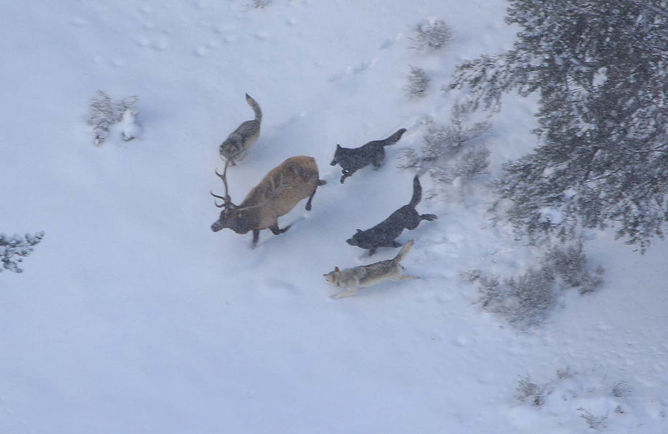
Based on field research, my Oregon State University co-author Robert Beschta and I documented the impact of cougars and wolves on the regeneration of forest tree stands and riverside vegetation in Yellowstone and other national parks in western North America. Fewer predators, we found, lead to an increase in browsing animals such as deer and elk. More browsing disrupts vegetation, reduces birds and some mammals and changes other parts of the ecosystem. From the actions of the top predator, widespread impacts cascade down the food chain.

Similar effects were found in studies of Eurasian lynx, dingoes, lions and sea otters. For example in Europe, absence of lynx has been closely tied to the abundance of roe deer, red fox and hare. In Australia, the construction of a 3,400-mile dingo-proof fence has enabled scientists to study ecosystems with and without dingoes which are closely related to gray wolves. They found that dingoes control populations of herbivores and exotic red foxes. The suppression of these species by dingoes reduces predation pressure, benefiting plants and smaller native prey.

In some parts of Africa, the decrease of lions and leopards has coincided with a dramatic increase in olive baboons, which threaten crops and livestock. In the waters off southeast Alaska, a decline in sea otters through killer whale predation has led to a rise in sea urchins and loss of kelp beds.

Predators are integral, not expendable

We are now obtaining a deeper appreciation of the impact of large carnivores on ecosystems, a view that can be traced back to the work of landmark ecologist Aldo Leopold. The perception that predators are harmful and deplete fish and wildlife is outdated. Many scientists and wildlife managers now recognise the growing evidence of carnivores’ complex role in ecosystems, and their social and economic benefits. Leopold recognised these relationships, but his observations were ignored for decades after his death in 1948.

op carnivores, at work keeping things in check. Doug Smith
Top carnivores, at work keeping things in check. Doug Smith

Human tolerance of these species is the major issue. Most would agree these animals have an intrinsic right to exist, but additionally they provide economic and ecological services that people value. Among the services documented in other studies are carbon sequestration, restoration of riverside ecosystems, biodiversity and disease control. For example, wolves may limit large herbivore populations, thus decreasing browsing on young trees that sequester carbon when they escape browsing and grow taller. Where large carnivore populations have been restored – such as wolves in Yellowstone or Eurasian lynx in Finland – ecosystems appear to be bouncing back.

I am impressed with how resilient the Yellowstone ecosystem is, and while ecosystem restoration isn’t happening quickly everywhere in this park, it has started. In some cases where vegetation loss has led to soil erosion, for example, full restoration may not be possible in the near term. What is certain is that ecosystems and the elements of them are highly interconnected. The work at Yellowstone and other places shows how species affect each another through different pathways. It’s humbling as a scientist to witness this interconnectedness of nature.

My co-authors and I have called for an international initiative to conserve large carnivores in co-existence with people. This effort could be modelled after a couple of other successful efforts including the Large Carnivore Initiative for Europe, a non-profit scientific group affiliated with the International Union for the Conservation of Nature, and the Global Tiger Initiative which involves all 13 of the tiger-range countries. With more tolerance by humans, we might be able to avoid extinctions. The world would be a scary place without these predators.

William Ripple does not work for, consult to, own shares in or receive funding from any company or organisation that would benefit from this article, and has no relevant affiliations.

The Conversation

This article was originally published at The Conversation.
Read the original article.

ooOOoo

Footnote – Please help the elephants

Tuesday’s Legitimate Hope included this:

Also what needs to be highlighted are the organisations that are actively working on behalf of the elephants.

The Independent Newspaper have their own elephant campaign.

Elephant Crisis

In 2011, more African elephants were killed than any other year in history. The figures for 2012 and 2013 are not yet known, but are likely to be even higher. At current rates, in twelve years, there will be none left.

It is a familiar cause, but it has never been more urgent. Poaching has turned industrial. Armed militia fly in helicopters over jungle clearings, machine gunning down entire herds. Their tusks are then sold to fund war and terrorism throughout the continent and the wider world. Ivory is still illegal, but as China booms, it is more popular than ever.

This campaign will raise money to support rangers on the ground to protect Kenya’s elephants from armed poachers, together with Space for Giants’ longer term work to create new wildlife sanctuaries where elephants will be safe, forever. More can be found about the charity at Space for Giants

The article above includes two videos.  A shorter one that can be viewed on the paper’s campaign website. Then there is a longer, five-minute, video also on YouTube and included below.

http://www.youtube.com/watch?v=fLuZfACo6eM

Offering a donation to help is only a click away.

Jean and I wanted to make a donation but found that without a UK bank account/UK Visa card it wasn’t possible.  We contacted Space for Giants and received the following email from Amy.

TUSK

Hi Paul

Sorry for the difficulties and thank you for your perseverance!
You can donate in USD through our CrowdRise page at www.crowdrise.com/spaceforgiants1. These funds are sent to TUSK USA who will then allocate them to us.
Alternatively, you can make out a cheque to ‘TUSK USA’  and send to TUSK USA, 40 East 94th Street, Apt 3A, New York, NY 10128 – please attach a covering note confirming that you would like your donation to be used to support the work of Space for Giants.
Many thanks,
Amy.
So if there’s anyone else out there not in the UK who would like to donate, here’s another option.
Please, for all our sakes, help these beautiful creatures.