Tag: Technology

The Third Eye

A guest post from John Hurlburt.

Our living garden planet.

When we’re in love with God, the cosmos, our living garden planet and the steadily growing conscious interconnection between those who understand and serve, we live in awe and wonder and realize a peaceful natural serenity in the midst of our daily concerns and responsibilities.

As our world, our environment and our culture appear to be unraveling, it becomes increasingly necessary for human beings to slow down to re-energize. It’s clear that our species has recently lost spectacularly to natural forces in the Gulf of Mexico and Japan. It’s no coincidence that it’s our technology which continues to reveal the fundamental weakness of human ego. It’s more than a metaphor that our individual and species arrogance is our Achilles heel.

There are many people who fail to perceive, understand and appreciate parallel realities from a rational, sensory and unified perspective by learning to see through a mystical third eye. Mysticism may be misunderstood as simply thinking outside of the box. Forget about the box. Let go of self-centered fears. Become aware of being unaware. Nurture capabilities to perceive non-locally and act locally. What’s happening worldwide comes with the territory. We are each responsible for our collective destiny

Meditation reflects that imagination and creativity are necessary to invent and utilize tools. Creativity did not begin with humans and is not exclusive to humans. God’s nature precedes emerging technology. Morality derives from our common need for species unity.

The message is that God doesn’t care about money and the sky is no longer a human limit. The fact remains that except for occasional astronauts we all continue to live on the same planet. Those who understand need no explanation.

There is a need for productive use of intelligence and technology at our natural frontiers. We need to refuel world economies with clean energy visions that provide solutions for our present local planetary emergency.

We may choose to implement the changes necessary to avoid impending local ecosphere, cultural and technological meltdowns while preparing for a migration to the stars.

Unification is a common goal. Leaving the nest of our garden planet is a partial unifying solution for the problems of our exponentially expanding species. An alternative is that our obsession with the symbol of money will have the same dire consequences for those who are obsessed as for those whom are oppressed.

Please love God, maintain an even strain, follow your bliss, continue to learn, share and serve our common purpose under God, proceed as the way opens, cross the next bridge as we come to it, enjoy the journey and stay in touch.

Gratefully,

From an old lamplighter!
Beauty of flight

There’s more to flying than many of us realise.

Thanks to Mike T who I have known for a few years now.  Mike is an air traffic controller as well as being a keen private pilot so if there is one person who can see through the telescope from both ends, it’s this man.

Anyway, GE Aviation are one of the big players in aviation.  Here’s a quote from the website that I am going to link you to in a moment.

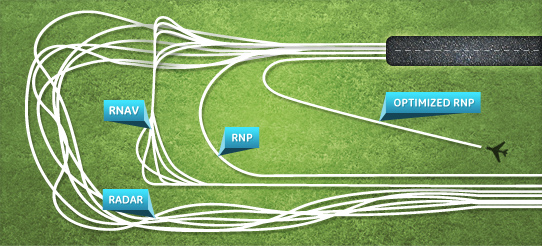
GE Aviation designs engines, flightpaths, and advanced aircraft systems. And we wanted to share the intricate choreography of flying in all its glory.


Dancing in the air!


Here’s the video – just 1:48 long – it’s captivating.  This link takes you to the GE web page where there is much more of great interest other than the video.

If you only want to watch the video then, of course, there’s a copy on YouTube, as below.  Enjoy!

Thanks Mike.

By Paul Handover

Fear and the alternative

“Fear paralyzes; curiosity empowers. Be more interested than afraid.” — Patricia Alexander, American educational psychologist.

This dropped into my email in-box the other day so I grabbed it to set this Post off on the right theme.

There is much around that can generate fear, touched on in my Post a couple of days ago where I quoted Richard Branson.

Prof. Lovelock

For an example of fear, many will have listened to the recent interview of Professor James Lovelock on the BBC Today programme and wondered just where we are all heading.  ( The interview may be listened to here.  – it’s 7 minutes long but listen to it!)

Here’s a YouTube video of Lovelock being interviewed in 2009. (Also worthy of watching for the full 13 minutes and note the connection between Lovelock and Branson.)

So if you listened and watched these two interviews then one could argue that there is more than enough to be fearful of our future.

Now go back to the opening quotation: “Fear paralyzes; curiosity empowers. Be more interested than afraid.”

Being fearful is not the answer – even if no alternative appears to be a rational way of mentally processing something.

Here’s a piece from Wayne Dyer’s book, There’s a Spiritual Solution to every Problem.

We are subjected to many illusions in our daily life.  The greatest one is the one that keeps us trapped in giving our energy to what always has been.

The past is behind us.  Predicting the future accurately, even by eminent scientists such as James Lovelock, is very, very unreliable.  Thus all we have is today.  So do not be afraid, be curious.

By Paul Handover

Anniversary message from Paul

Learning from Dogs has been running for one year.

On July 15th, 2009 a post called Parenting lessons from Dogs started what has now become a bit of a ‘habit’.  But more reflections tomorrow.

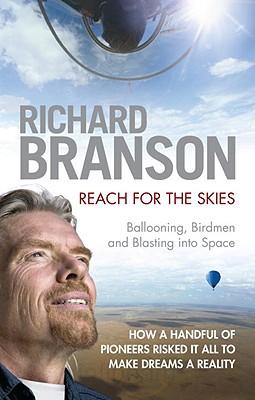
Reach for the Skies

Today I want to voice something that has been running around my mind for some time.  It is whether we give in to the mounting doom and gloom at so many levels in our societies (and it can be a very compelling draw) or whether we see this as a painful but necessary period where slowly but surely the desires of ordinary people; for a fairer, more truthful, more integrous world are gaining power.

And I’m going to use Richard Branson to voice it for me!

(Now this is an unusually long Post so I’ve inserted the Read More divider to prevent the Post visually swamping your browser.)

Read the rest of this article

Integrity – aviation fashion!

The brilliance of fine engineering

The BBC have been started a series on how things are made!  The first episode was on the making of a nuclear submarine – perhaps not something that touches most of us!

Trent 900 on the A380

But the second episode was much more the ‘touch of the common man’ as it was about the building of a commercial jet engine, the Trent engine built by Rolls Royce of Derby, England.

Anyway, I’m not going to natter on other than to say that not all regulatory bodies are bad in this world.  Indeed, the aviation industry has shown how splendid both engineering and the certification processes can be in giving us a incredibly safe form of transport.

There are plenty of YouTube videos on the Trent engine but here are two that I found of great interest. (Thanks to Simon H for the pointers.)

Rolls Royce Trent Engine Certification video

A380 Loss of Blade test

By Paul Handover

Incentive to apply for retirement!

Ouch! Ouch! Ouch!

A quick Google search shows that this is a well-documented story that has been doing the rounds since 2009.  But I hadn’t come across it before so was very grateful for a friend in England, Richard Howell, including me on a recent email circulation.  I shall reproduce Richard’s email just as it was received.

OK… so… you’re the pilot of a plane…

It’s on auto-pilot and you’re catching up on People magazine and having a cup of coffee.

Suddenly the loudest sound you will ever hear goes off just behind your left ear.

You’re blinded by the flash and can’t hear.

All you can feel is something warm running down your leg.

You immediately consider retirement.

This is an Atlantic Southeast Airlines/Delta Connection aircraft… soon after it suffered a lightning strike.

Yep… time to RETIRE!

Thanks Richard,

By Paul Handover

Happy Birthday WordPress!

What a fabulous gift to openness!

Wordpress Logo

I subscribe to a Blog that comes with the rather intriguing name of The Gospel According to Rhys.  It’s a bit ‘geeky’ for my tastes but it offers sufficiently good advice on Blogging and other Social Media systems that it is a worthwhile entry in to my email in-box.

Anyway, in today’s in-box was a piece from Rhys about WordPress turning 7 years old.

Learning from Dogs is, of course, a WordPress driven Blog and thus is an example of the power of this wonderful software.  I trust that Rhys will forgive me if I quote at length from his article – I can’t better it.

Recently it was WordPress’ 7th Birthday. On the 27th of May in 2003, Matt Mullenweg released a fork of b2/cafelog, called WordPress. From the 0.72 release, it’s become the defacto blogging solution for thousands of publishers.I love it, I think it’s great, and although I’m probably preaching to the converted, here’s 7 reasons why I think your blog should be on WordPress.

It’s Free

For what it does, and for amount it costs, it is amazing that it costs nothing. Sure there’s hosting costs & domain names, but there’s nothing stopping you playing with the software for nothing.

It’s Open Source

Fancy yourself as a bit of a coder? Well WordPress is entirely free to see the code. In fact, I recommend playing with WordPress to learn the basics of PHP. There is great documentation (again, open source wiki) to help you with the WordPress framework, itself a great introduction into advanced PHP programming & working with API’s & frameworks.

Furthermore, with it being open source, if a bug is discovered, it’s fixed relatively quickly.

It Is Quick & Easy To Use

WordPress is famous for it’s five minute installation, and when you get good, it should take you half of that time. Logging in you can write a post within a minute, and it’s ridiculously easy to use. Changing design & adding plugins is easy as well.

As CMS’s Goes, It’s Pretty Good for SEO

Out of the box, f0r search engine optimisation, it’s okay. However, with a few tweaks, WordPress becomes a solid SEO platform. It’s certainly one of the better CMS’ out there.

It’s Well Supported

I’m not sure if there’s been a “state of the wordpress community” post ever done, but WordPress itself hosts nearly 10,000 plugins, and there must be tens of thousands of themes available online (WordPress itself only holds about 1 and a half thousand). Each one has a programmer or designer behind it, and although support varies (the official wordpress forum is average at best), enough people know what they are doing, both paid or free, to help you out.

It Can Make You A Rich Man (or Woman)

Whilst I’m not a rich man, running this blog & a few websites on WordPress have allowed me to make some money, and anybody can do this. As well as ebooks, adsense, affiliate marketing & god knows what else, you can make a fortune carrying out WordPress related services for other people.

It’s Never Going To Disappear Overnight

WordPress has some huge sites supporting it, a company fully dedicated to it’s production, and a thriving community. It’s not here today, and gone tomorrow.

So happy birthday WordPress, here’s to the next 7 years!

Well said, Rhys.

By Paul Handover

That oil spill

Visualisation of data

I can’t recall how but I came across a web site that focuses on ‘translating’ data into pictures.  As they say, a picture is worth a thousand words.  The web site is called Information is Beautiful.

Anyhow, they have attempted to graphically portray the scale of the BP oil spill. (A thumbnail is below but please click on the link, or here, to see this as it was meant to be shown.)

Ouch!

But this image is an update of an earlier one here that is really powerful.  Because it attempts to put the scale of the oil spill into context with global oil consumption.

If the Purdue University estimate of the oil spill is correct at 48,500 barrels a day (a barrel is approximately the equivalent of two car tankfuls of gas/petrol) and the spill is contained in 90 days then the total oil spilled will be:

90 x 48,500 = 4,365,000 barrels

That is an enormous quantity.

But have a guess as to how much that would represent in terms of hourly global oil consumption?

Any idea?

Well global oil consumption is 3,500,000 barrels an hour.

So 90 days at 48,500 barrels a day represents just 1 hour 15 minutes worth of global consumption!

If there was ever an argument for the world to wean itself off oil then this would appear to be it.

What has happened so far is tragic – tragic beyond measure.  But if it turns out to be a ‘tipping point’ for nations to reconsider how we find and use energy then, perhaps, it will have been a horrible lesson that we all had to take.

And if the USA puts all it’s collective back into leading the world out of our addiction to oil then the damage and hardship will not have been in vain.

By Paul Handover

Deepwater Horizon

Transocean Deepwater Horizon Explosion-A Discussion of What Actually Happened?

The trouble with the way that the news is presented and consumed is that major events are delivered in ‘headline’ style and even something as terrible as the oil spill in the Gulf of Mexico is starting to compete with other, more current, news stories.

The other issue with news channels is that it is uncommon to be presented with a real insight into the human scale of massive catastrophes.  Thank goodness for the web!

Drilling Ahead is a website that describes itself as A Social Network of Oil & Gas Professionals. Another website find courtesy of Naked Capitalism.

On Drilling Ahead is a report about the loss of the Deepwater Horizon.  It makes both gripping and chilling reading.  Here’s an extract but it’s much better to read it directly from here:

An Ill-fated Discovery
According to news accounts, at about 10 p.m. CDT last Tuesday, Deepwater Horizon was stable, holding an exact position in calm, dark seas about 45 miles south of the Louisiana coastline. Water depth in the area is 5,000 feet. The vessel manifest listed 126 souls on board.

Deepwater Horizon was finishing work on an exploration well named Macondo, in an area called Mississippi Canyon Block 252. After weeks of drilling, the rig had pushed a bit down over 18,000 feet, into an oil-bearing zone. The Transocean and BP personnel were installing casing in the well. BP was going to seal things up, and then go off and figure out how to produce the oil — another step entirely in the oil biz.

The Macondo Block 252 reservoir may hold as much as 100 million barrels. That’s not as large as other recent oil strikes in the Gulf, but BP management was still pleased. Success is success —
certainly in the risky, deep-water oil environment. The front office of BP Exploration was preparing a press release to announce a “commercial” oil discovery.

This kind of exploration success was par for the course for Deepwater Horizon. A year ago, the vessel set a record at another site in the Gulf, drilling a well just over 35,000 feet and discovering the 3 billion barrel Tiber deposit for BP. SoDeepwater Horizon was a great rig, with a great crew and a superb record. You might even say that is was lucky.

But perhaps some things tempt the Gods. Some actions may invite ill fate. Because suddenly, the wild and wasteful ocean struck with a bolt from the deep.

The Lights Went out;
and Then.
..

Witnesses state that the lights flickered on the Deepwater Horizon. Then a massive thud shook the vessel, followed by another strong vibration. Transocean employee Jim Ingram, a seasoned
offshore worker, told the U.K. Times that he was preparing for bed after working a 12-hour shift. “On the second [thud],” said Mr. Ingram, “we knew something was wrong.” Indeed, something was very wrong.

Within a moment, a gigantic blast of gas, oil and drilling mud roared up through three miles of down-hole pipe and subsea risers. The fluids burst through the rig floor and ripped up into the gigantic draw-works. Something sparked. The hydrocarbons ignited. In a fraction of a second, the drilling deck of the Deepwater Horizon exploded into a fireball. The scene was an utter conflagration.

Unimaginable hell!

And here’s another extract:

Read the rest of this Post

Is “IT” “in denial”?

Change: the only thing that’s constant!

Whither IT?

Wow, the big picture of the IT world seems to be crumbling with increasing rapidity! Many people are at risk of getting hurt if they continue to hold traditional attitudes.

The post “Why the New Normal Could Kill IT” captures it well.  Here’s how that article starts:

Plenty of seismic shifts have rocked and reshaped IT in the past. Some big rumblings’ epicenters had origins in an unstoppable technology shift; other fissures had nothing to do with PCs and servers. Consider the recent shocks: the Internet revolution and dotcom bust; Y2K and 9/11; the consumerization of IT; and the unstoppable broadband and mobile explosion.

However, the latest shock–the global financial meltdown–is like the recent 8.8 earthquake that shook Chile and knocked the earth off its axis. And for IT leaders today, it’s important to realize that the aftershocks are still coming.

Thomas Wailgum provides an insightful description of the challenges facing the important operational aspects of IT in many organizations. Many of the symptoms and some of the causes that he describes are undoubtedly true and have been adversely affecting the performance of many people for a long time!

But, who really cares?

I suggest that the people who really care are the people who are trying to serve the customers of the business. Consequently they will decide what they do and how they do it, including what services and products they use, including those that involve IT (almost all of them these days).

It seems to me interesting to describe this, as he has done, from the perspective of IT and IT people (of whom I am also, broadly, one!) .. but it is only interesting to IT people.

The people who require services are getting them from wherever they can and wherever they like and will continue, increasingly, to do so.

Many of the points that he makes are valid and accurate, including his list of  “recent shocks”. Two of those struck me as particularly poignant and relevant.

One is “the unstoppable broadband and mobile explosion”, which seems to be a strange way to describe it. My reading of this is that IT people would like to “stop” it; but why? The availability of communication services with increasing bandwidth and location-independence is enabling greater sharing of information and understanding; many people, especially those in the “third world”, are benefitting enormously from this. I hope that I have understood his meaning incorrectly because, surely, the task of people who understand IT is to help others to take full advantage of the opportunities, not to try to stop them!

The other is “the consumerization of IT”, which is one way of looking at it but, again, seems to carry a subtextual bias. I detect a sense that this is seen to be the use, in business applications, of lower quality facilities intended for individuals who do not know the implications. There is some truth in this, but this has been a trend for decades and, so far, the roof has not fallen in! I suggest that this is misunderstanding of the bigger picture and, in a sense, does not go far enough

This is not simply consumerization, this is the commoditization of IT. This happens in every industry as bespoke products become more generally available, the nature of the competition changes. What was custom becomes standard and the action moves up a layer!

Much of Thomas Wailgum’s account of the situation is accurate and, potentially, very useful; but, by viewing it from the perspective of the providers of IT services rather than that of the consumers of IT services, the nature of the solutions seems to be pointing in the wrong direction!

By John Lewis