Fed’s Kohn on Lessons from Buying Government Bonds….in Britain
Preface:
Recently Dr Jarrell, now a fellow author of this Blog as well as her own, debated the meaning of inflation. That essay, in three parts, may be found in the list of Essays on the right hand side of this Blog. This Post is an extract from a recent Post that Dr Jarrell presented on her own site and is presented here with the hope that, following the essay on inflation, this Post is more widely accessible to you, the reader. Paul Handover.
A calm and rational destruction of the Dangerous Demographics YouTube video
On the 20th August, a Post was published on Learning from Dogs called Doing nothing! It was largely an emotional response to the video on YouTube that has been watched by over ten millions and claims that Europe and North America are close to becoming dominated by Muslims. The unspoken implication being that this would be ‘dangerous’ for those present societies. The YouTube film was clearly made with a racist agenda in mind.
The vision of this Blog is to support the notion that integrity is not only a noble inspiration but on a day-to-day basis delivers better outcomes for you and me. Integrity is being true to one’s beliefs, or as defined in the free dictionary, “Steadfast adherence to a strict moral or ethical code“. Morals and ethics rely on understanding the truth, as best we can, of the world around us. Thus it is enormous pleasure to find the BBC presenting a statistical rebuttal to the YouTube video.
Please watch it.
The web address is ….. see below
UPDATE NOTE: For some reason the BBC have removed that video. However, the material that debunks the YouTube video may be seen here, and here.
And when you have seen it, if you know of anyone who has emailed you the link to the YouTube video, please email them the link to the truth spoken by the BBC.
As the English philosopher Edmund Burke said,
‘The only thing necessary for the triumph [of evil] is for good men to do nothing.’
James Kwak of Baseline Scenario makes his tribute personal, and all the better for it.
I have nothing new or insightful to add, but it feels wrong to go back to blogging without paying respects to Ted Kennedy. When I was younger and perhaps more idealistic, I used to carry around a copy of his speech at the 1980 Democratic National Convention. He was a man who cared about the poor, the unemployed, and the sick, even as their cause became less and less fashionable over the past four decades. He believed that justice went beyond formalistic legal rights and extended to economic and social conditions as well. The Senate needs another person like him, but sadly will not find one.
You’ve zeroed in on the key question, I believe: why is there an inflation risk while the outlook remains so grim?
Inflation is a (sustained) increase in the equilibrium price of goods and services.
The price results from the interaction between two completely independent sides of the market: the demanders and the suppliers. Think of money (or a debit card, whatever form money takes) as an enabler of demand — it makes transactions easier, quicker, and thus more transactions result. The higher the supply of money, the more enhanced the underlying demand for goods and services (by consumers, business, and government).
So more money, higher demand. Higher demand, higher prices. Higher prices, higher inflation.
My first realisation is that I don’t really understand what “money growth” really means. In fact I am little uncertain about money, as a concept!
Are we talking ‘growth’ as in more and more money being lent to the US Treasury Department from the [ever increasing] sale of US Treasury Bonds?
If the sale of these Bonds is to banks or institutions outside the US then there is a flow of money coming into the US via the Treasury Department that then comes into the economy via various Government programmes. Is that correct?
But this is money lent to the US. That means that in order for the US to pay it back (plus interest) there has to be the expectation of taxation income in the future sufficient to meet these debts. As my Pension advisor said, “More credit also means more debt.”
Inflation, deflation, economic crisis and so on, getting to the bottom of meanings.
The background.
Not so long ago there was an exchange between me and Dr Sherry Jarrell about the meaning of inflation. Dr Jarrell is, in every meaning of the words, a qualified economist so when I had the courage/stupidity/ignorance to query her views I could not have been more surprised to receive this:
You won’t reveal a lack of understanding of economics — there are co-existing opposing points of view on the topic – that’s why it made for an interesting discussion! (My italics)
This got me thinking. If your author, who is reasonably well-read about many things especially protecting what little wealth he has, can miss such a fundamental point, then there must be a huge number of other people who, likewise, miss the point and, even more important, don’t even realise it!
Dr Sherry Jarrell
Over the last few weeks Dr Jarrell has not only found time to debate with me, she, too, has realised that a more rigorous exploration of what many economic and financial terms mean has real value for readers of this Blog as well her own Blog.
Therefore I am delighted to welcome Sherry Jarrell to the team of authors.
These essays will attempt to distil clarity out of a number of basic economic ideas, starting with inflation. That seems to be a worry widely ‘predicted’ in the general media as well as elsewhere.
The essay is in the form of a debate format, albeit virtually. We hope it is both informative and educational. Please let us know by leaving a comment!
Whatever one’s political leanings it’s difficult not to get a feeling for the toughness of the job of leading the Nation.
The quote? Attributed to Mario Cuomo, the former Governor of New York. And Edward Luce is the Washington Bureau chief of the Financial Times. A graduate of Oxford University (politics, philosophy and economics) he is no stranger to the world of politics as his father was the British conservative politician Richard Luce, a noble Lord no less.
Not being either a US Citizen or even a resident takes away my right to contribute an opinion. The matter is entirely a domestic one for those living in the USA.
But my life-long Californian buddy, Dan, recently sent me an article published in the Wall Street Journal on the 12th August. The article was written by John Mackey, the CEO of Whole Foods Market Inc. so this isn’t an impartial perspective. (And see an important foot-note at the end of this Post)
But the last part of the article is good common sense, as you can read:
Let me start with an extract from the Henrik Hudson School District Library Media Centre:
Perpetrators, collaborators, bystanders, victims: we can be clear about three of these categories. The bystander, however, is the fulcrum. If there are enough notable exceptions, then protest reaches a critical mass. We don’t usually think of history as being shaped by silence, but, as English philosopher Edmund Burke said, ‘The only thing necessary for the triumph [of evil] is for good men to do nothing.’ (My source for this is here.)
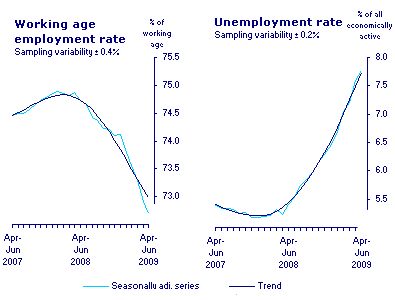
While these figures were published by the UK Office for National Statistics last Wednesday, first opportunity to comment on this Blog was today. It’s not a pretty sight!
Employment figures, as reported Aug 2009
These trends look really nasty and not a hint of an upturn in employment or a lessening of the rate of increase in unemployment.
 delivers better outcomes for you and me. Integrity is being true to one’s beliefs, or as defined in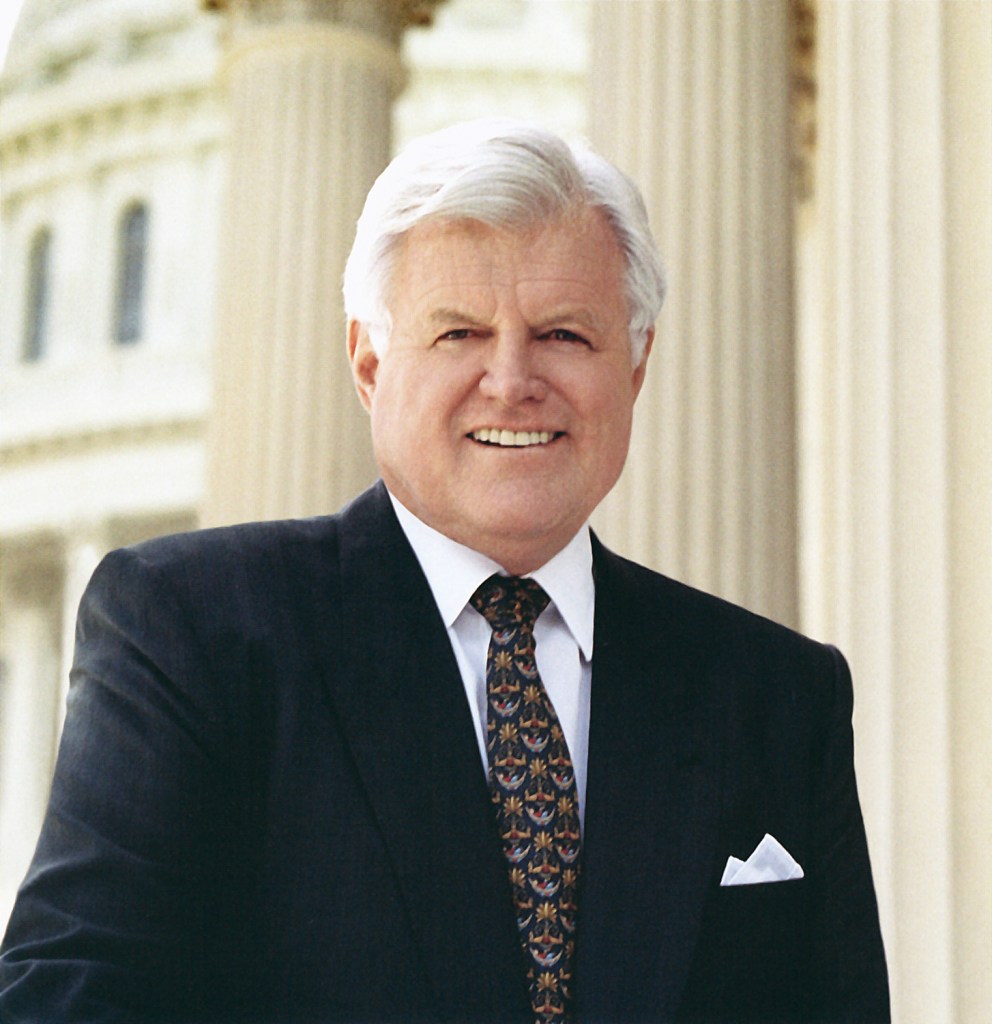
 Are we talking ‘growth’ as in more and more money being lent to the US Treasury Department from the [ever increasing] sale of US Treasury Bonds?
 Who would ever be a leading politician? It must be a hell of a job.
 Learning from Dogs