“Fear paralyzes; curiosity empowers. Be more interested than afraid.” — Patricia Alexander, American educational psychologist.
This dropped into my email in-box the other day so I grabbed it to set this Post off on the right theme.
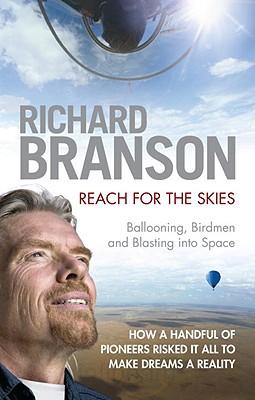
There is much around that can generate fear, touched on in my Post a couple of days ago where I quoted Richard Branson.
Prof. Lovelock
For an example of fear, many will have listened to the recent interview of Professor James Lovelock on the BBC Today programme and wondered just where we are all heading. ( The interview may be listened to here. – it’s 7 minutes long but listen to it!)
Here’s a YouTube video of Lovelock being interviewed in 2009. (Also worthy of watching for the full 13 minutes and note the connection between Lovelock and Branson.)
So if you listened and watched these two interviews then one could argue that there is more than enough to be fearful of our future.
Now go back to the opening quotation: “Fear paralyzes; curiosity empowers. Be more interested than afraid.”
Being fearful is not the answer – even if no alternative appears to be a rational way of mentally processing something.
Here’s a piece from Wayne Dyer’s book, There’s a Spiritual Solution to every Problem.
We are subjected to many illusions in our daily life. The greatest one is the one that keeps us trapped in giving our energy to what always has been.
The past is behind us. Predicting the future accurately, even by eminent scientists such as James Lovelock, is very, very unreliable. Thus all we have is today. So do not be afraid, be curious.
It’s been a partly exhilarating and very scary 12 months since the launch of Learning from Dogs. I can’t remember a time when there has been so much change and uncertainty that hits right down to the foundations of everyone.
Twelve months ago these changes were merely hinted at, and then only to a few in the upper strata of the finance world, from my point of view anyway. How everything seems to have changed now!
Where lies ahead?
Warnings abound about our use of our worlds’ resources. Our seeming need to procreate without self imposed limit is leading us to a place that coupled with climate change, we will be unable to sustain the current world’s population, let alone the projected increase within 20 years or so. Water is becoming scarce in many parts of the world and so is food.
For those who are awakening from a media-induced slumber which distorts and bends reality to suit who can apply the greatest financial influence and weighting, the reality of the situation we are facing as a planet, is rapidly catching us up.
We still have choices – all is not lost and they will require a highly integrous group of people and thinkers to guide us through the next hundred years or so. In other words, in our children’s or children’s, children’s lifetimes. People who are not driven by the ego, but to serve the highest good.
So what can we do as individuals? Enjoy what we have, perhaps? I think, work on ourselves through awareness and expose ourselves to everything positive and integrous.
Most of our problems lie within, from that thing called an ego, that would rather drive us to death, rather than admit it might be wrong. The world would be an even more positive place if we worked on ourselves and our awareness rather than looking for all the answers ‘out there’, with somebody or something else.
So, how do we work with that? Well, no surprises there really – by bringing in awareness and coming out of the dream state, or nightmare state, depending on how you see things at the moment, and into the Present or Now, as some writers have called it.
How do we do that? It can simply begin by remembering to breath! So by bringing our awareness to the breath, we come back into our bodies and out of the trance going on in the mind. Approximately 95% of our time is spent in this self-induced trance-like state, by the way.
Think you can’t survive without ‘your mind’ or ‘your thoughts’. There’s no such thing really. By coming out of the mind and back into the body, slowly, with practice and awareness, the noise gently starts to subside and we become aware of spaces of silence or no thought. That is where the answers lie, not in thinking.
The intellect and what we have learned kicks in after the quiet, to allow us to put into action what has come up through the silence.
Most of us have such a huge investment in ‘our thoughts’ or ‘our ideas’. If we could just make the time to sit still, in peace and quiet, so much more would be revealed to us.
So in this brave, new world going forward, to badly quote Einstein, we must aspire to move onto a higher level than the one that triggered this road we are relentlessly pursuing. We need to start becoming aware of the interconnectedness of all beings and focus on activities that are for the highest good, that benefit everyone, rather for the benefit of the few, to the detriment of the many.
On July 15th, 2009 a post called Parenting lessons from Dogs started what has now become a bit of a ‘habit’. But more reflections tomorrow.
Reach for the Skies
Today I want to voice something that has been running around my mind for some time. It is whether we give in to the mounting doom and gloom at so many levels in our societies (and it can be a very compelling draw) or whether we see this as a painful but necessary period where slowly but surely the desires of ordinary people; for a fairer, more truthful, more integrous world are gaining power.
And I’m going to use Richard Branson to voice it for me!
(Now this is an unusually long Post so I’ve inserted the Read More divider to prevent the Post visually swamping your browser.)
A quick Google search shows that this is a well-documented story that has been doing the rounds since 2009. But I hadn’t come across it before so was very grateful for a friend in England, Richard Howell, including me on a recent email circulation. I shall reproduce Richard’s email just as it was received.
OK… so… you’re the pilot of a plane…
It’s on auto-pilot and you’re catching up on People magazine and having a cup of coffee.
Suddenly the loudest sound you will ever hear goes off just behind your left ear.
You’re blinded by the flash and can’t hear.
All you can feel is something warm running down your leg.
You immediately consider retirement.
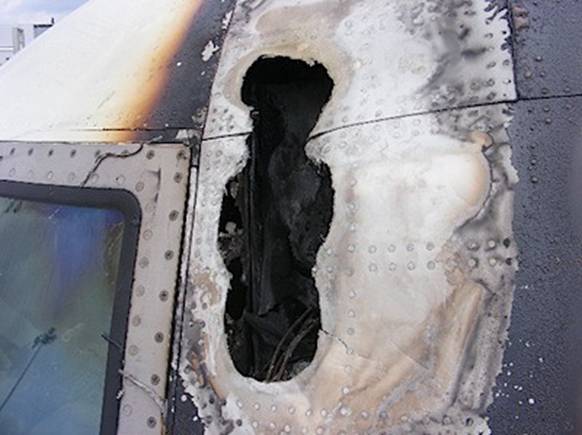
This is an Atlantic Southeast Airlines/Delta Connection aircraft… soon after it suffered a lightning strike.
I can’t recall how but I came across a web site that focuses on ‘translating’ data into pictures. As they say, a picture is worth a thousand words. The web site is called Information is Beautiful.
Anyhow, they have attempted to graphically portray the scale of the BP oil spill. (A thumbnail is below but please click on the link, or here, to see this as it was meant to be shown.)
Ouch!
But this image is an update of an earlier one here that is really powerful. Because it attempts to put the scale of the oil spill into context with global oil consumption.
If the Purdue University estimate of the oil spill is correct at 48,500 barrels a day (a barrel is approximately the equivalent of two car tankfuls of gas/petrol) and the spill is contained in 90 days then the total oil spilled will be:
90 x 48,500 = 4,365,000 barrels
That is an enormous quantity.
But have a guess as to how much that would represent in terms of hourly global oil consumption?
Any idea?
Well global oil consumption is 3,500,000 barrels an hour.
So 90 days at 48,500 barrels a day represents just 1 hour 15 minutes worth of global consumption!
If there was ever an argument for the world to wean itself off oil then this would appear to be it.
What has happened so far is tragic – tragic beyond measure. But if it turns out to be a ‘tipping point’ for nations to reconsider how we find and use energy then, perhaps, it will have been a horrible lesson that we all had to take.
And if the USA puts all it’s collective back into leading the world out of our addiction to oil then the damage and hardship will not have been in vain.
We live on a finite Earth. But really understanding what that means is difficult. I guess because most of us think that in our own little way we can’t really be doing any harm to the planet – I mean what’s another few grams of CO2?
Al Bartlet, University of Colorado
Well here’s Dr Albert Bartlett of the Department of Physics at the University of Colorado chatting about arithmetic! And if you go to his website, you will come across this quote on the home page:
“Can you think of any problem in any area of human endeavor on any scale, from microscopic to global, whose long-term solution is in any demonstrable way aided, assisted, or advanced by further increases in population, locally, nationally, or globally?”
Want to sit in on his famous lecture, “Arithmetic, Population and Energy: Sustainability 101”? Well you can.
The lecture is broken down into 8 10-minute videos, each of them on YouTube. The first two instalments are here , Part Three and Four here and Parts Five and Six in this post. The concluding two parts are tomorrow. Part Five
We live on a finite Earth. But really understanding what that means is difficult. I guess because most of us think that in our own little way we can’t really be doing any harm to the planet – I mean what’s another few grams of CO2?
Al Bartlet, University of Colorado
Well here’s Dr Albert Bartlett of the Department of Physics at the University of Colorado chatting about arithmetic! And if you go to his website, you will come across this quote on the home page:
“Can you think of any problem in any area of human endeavor on any scale, from microscopic to global, whose long-term solution is in any demonstrable way aided, assisted, or advanced by further increases in population, locally, nationally, or globally?”
Want to sit in on his famous lecture, “Arithmetic, Population and Energy: Sustainability 101”? Well you can.
The lecture is broken down into 8 10-minute videos, each of them on YouTube. The first two instalments are here with Part Three and Four in this post. The remaining four parts over the next two days.
We live on a finite Earth. But really understanding what that means is difficult. I guess because most of us think that in our own little way we can’t really be doing any harm to the planet – I mean what’s another few grams of CO2?
Al Bartlet, University of Colorado
Well here’s Dr Albert Bartlett of the Department of Physics at the University of Colorado chatting about arithmetic! And if you go to his website, you will come across this quote on the home page:
“Can you think of any problem in any area of human endeavor on any scale, from microscopic to global, whose long-term solution is in any demonstrable way aided, assisted, or advanced by further increases in population, locally, nationally, or globally?”
Want to sit in on his famous lecture, “Arithmetic, Population and Energy: Sustainability 101”? Well you can.
The lecture is broken down into 8 10-minute videos, each of them on YouTube. The first two instalments are in this post with each of the following three days having the next two.
Trying to say anything new about the implications of the terrible disaster in the Gulf of Mexico would be impossible.
All I can do is to admit my very great discomfort at knowing that later today, I shall be returning to Phoenix by flying across the Atlantic in a Boeing 747.
A small amount of web research suggests that there are about 600 transatlantic flights a day and that my B747 will use roughly 10 tons of fuel an hour, i.e. conservatively 100 tons for the flight LHR-PHX.
So 600 x 100 = 60,000 tons of fuel every day just in flights across the Atlantic!
So pointing the finger at BP is, in a very real sense, misdirected. BP are only responding to our need for oil, in all its forms.
Do watch the videos from Prof Al Bartlett being shown on this Blog from tomorrow to understand the mathematics behind our unsustainable way of life.