A reflection on intelligence, learning and knowledge.
Today’s essay has been prompted by a fascinating exchange of views and comments on a post recently published by Patrice Ayme. More of that tomorrow.
Before getting to the heart of things, I feel compelled to offer a little background on my own educational journey. It is presented today as a preamble to tomorrow’s main essay.
By rights, I should have enjoyed a stunning academic journey as a young man. My mother holds a double degree in French and German from Cambridge University. My father was both a Chartered Architect and Chartered Surveyor and worked for Barclay Perkins & Co at their Anchor Brewery in Southwark, London all his working life. My uncle, Christian Schiller, took up a mathematics scholarship at Sidney Sussex college at Cambridge University and ended up HM Inspector of Schools in the United Kingdom. Notably, he was a promoter of progressive ideas in primary education.
But it was not to be so.
My father died suddenly and with very little warning five days before Christmas in 1956. I had turned 12-years-old some six weeks previously and just completed my first term at Preston Manor County Grammar School. My secure, comfortable young life was thrown into emotional turmoil with one of the consequences being that instead of passing a clutch of GCE ‘O-Level’ exams, I barely managed to pass two subjects and was unable to continue on with a higher level of studying and the consequent sitting of GCE ‘A-Level’ exams, a pre-requisit for university.
Somehow, I then managed to win a place as a student at the Faraday House of Electrical Engineering, in those days based at Southampton Row, London. It was to study for a Diploma in Electrical Engineering. The requirement was that by the end of my first year at Faraday House I should pass two A-level examinations.
I was very happy as a college student. That first year was spent entirely learning about engineering with much time ‘hands-on’ in the engineering workshop. Then came time for me to sit those two A-level exams. I failed both of them! There was no choice but for me to leave the college.
So that’s enough to demonstrate that academic prowess was not my speciality.
However, being unable to jump through the hoops needed for a degree or equivalent didn’t mean that I was a poor learner; far from it.
After my father’s death, my mother remarried and my ‘new’ Dad was very supportive. He had a background in communications and quickly encouraged me to become a radio amateur. I joined the nearby Radio Society of Harrow (still in existence!) and their encouragement enabled me to pass the full set of exams necessary to become a licensed radio amateur and a full member of the Radio Society of Great Britain. My amateur call sign was (and still is) G3PUK. I was 17.
I can still whistle the alphabet in morse code, from A to Z, and the numbers 0 to 9!
Later on, when I was an apprentice at the British Aircraft Corporation’s site in Stevenage, Hertfordshire, one of the commercial staff, Jim Jenner, spent many hours preparing me for the Institute of Advanced Motorists examination. I passed that exam and became a full member of the IAM in May, 1966.
So there’s my background that, hopefully, will set the scene to a wonderful exchange of views and ideas that flowed from Patrice’s blog. Ideas that will be explored tomorrow.
For the reason, the powerful reason, that the intelligence and wisdom of humanity has always been important. But now, in this time of the affairs of man, our collective intelligence and wisdom has never been more important.
I sense the levels of inequity in today’s world reaching crisis levels!
This is the next essay in my irregular series of The Natural order. The last one, on life and death, was published a couple of weeks ago.
Now it would be tempting to rant on at great length about the ‘haves’ and the ‘have-nots’ but there’s a sense of caution about so doing. Because, to be blunt about it, the lifestyle that Jean and I enjoy here on our rural retreat in Southern Oregon is, compared to millions, a blissful luxury.
So all I will do is to refer to some recent articles and essays that seem, to me anyway, to speak volumes about the terrible and growing levels of inequity between the majority of citizens and ‘the 1%‘!
Patrice Ayme of the blog Patrice Ayme’s Thoughts has long written about inequality. I recommend you browse his many essays on the subject of plutocracy but this one, USA: Rich Plutos, Poor People, comes to mind fairly quickly; from which I quote:
Plutocracy is a redistribution of wealth, power, income, from We The People to a small minority of controlling parasites. Plutocracy paralyzes the minds with a warped case of inverted decency. Plutocracy is neither optimal for the society, nor the economy.
Plutocracy affects the USA more than Europe, and the minds, even more than the stomachs. The fact that average Americans feel that they are much better off than in the rest of the world reinforces the plutocratization of the USA. Including astounding tolerance for the amazingly corrupt so-called Supreme Court (Supremely plutocratic!).
I’m “Black”, Mom Was White, & Thus We’re In The Black.
Turning back to this place, not so long ago I published a two-part essay on the loss of democracy. In the first part, I wrote:
But if you think this is an American problem, let me take you back a couple of days to my post that reflected the feeling that it was all getting too much: I just want to throw up! Reason? Because in that post I referred to a recent essay by George Monbiot called The Shooting Party. Here are the opening chapters (and you will have to go here to read the numbered references):
As the food queues lengthen, the government is giving our money to the super-rich.
By George Monbiot, published in the Guardian 29th April 2014
So now you might have to buy your own crutches, but you’ll get your shotgun subsidised by the state. A few days after False Economy revealed that an NHS group is considering charging patients for the crutches, walking sticks and neck braces it issues (1), we discovered that David Cameron has intervened to keep the cost of gun licences frozen at £50: a price which hasn’t changed since 2001 (2).
The police are furious: it costs them £196 to conduct the background checks required to ensure that shotguns are issued only to the kind of dangerous lunatics who use them for mowing down pheasants, rather than to the common or garden variety. As a result they – sorry we – lose £17m a year, by subsidizing the pursuits of the exceedingly rich (3). The Country Land and Business Association – the armed wing of the Conservative party – complains that it’s simply not fair to pass on the full cost of the licence to the owners of shotguns (4); unlike, say, the owners of passports or driving licences, who are charged on the basis of full cost recovery.
Three days later – on Friday – the government announced that it will raise the subsidy it provides for grouse moors from £30 per hectare to £56 (5). Yes, you read that right: the British government subsidises grouse moors, which are owned by 1% of the 1% and used by people who are scarcely less rich. While the poor are being forced out of their homes through government cuts, it is raising the payments – across hundreds of thousands of hectares – that some owners use to burn and cut the land (helping to cause floods downstream), shoot or poison hen harriers and other predators, and scar the hills with roads and shooting butts (6). While the rest of us can go to the devil, the interests of the very rich are ringfenced.
Shortly, I’m going to refer to another Monbiot essay recently published that underscores, once again, the corruption of fairness that is happening in the United Kingdom.
Before that, let me remind all you great readers the lesson we should, and must, learn from Nature. Again, using something recently posted:
OK, I opened today’s post with the sub-heading “Probably just now the most important lesson to be learnt from dogs!” Let me expand on that.
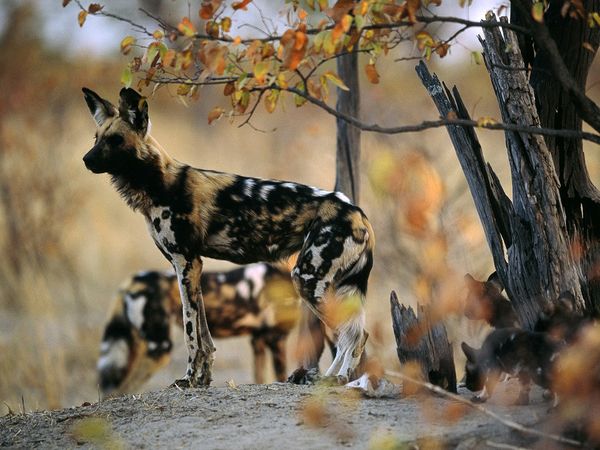
Dogs, like many other ‘pack’ animals, have a relatively flat hierarchy across their group. Typically, a wild dog pack numbered upwards of 30 animals although in modern times we have only the African Wild dog left to study. Nevertheless, the African Wild dog offers mankind the key lesson about cooperation and social equality. Here’s an extract from a National Geographic article [my emphasis]:
African Wild Dog Lycaon pictus
Known as African wild, painted, or Cape hunting dogs, these endangered canines closely resemble wolves in their pack-oriented social structure. Photograph by Chris Johns
The African wild dog, also called Cape hunting dog or painted dog, typically roams the open plains and sparse woodlands of sub-Saharan Africa.
These long-legged canines have only four toes per foot, unlike other dogs, which have five toes on their forefeet. The dog’s Latin name means “painted wolf,” referring to the animal’s irregular, mottled coat, which features patches of red, black, brown, white, and yellow fur. Each animal has its own unique coat pattern, and all have big, rounded ears.
African wild dogs live in packs that are usually dominated by a monogamous breeding pair. The female has a litter of 2 to 20 pups, which are cared for by the entire pack. These dogs are very social, and packs have been known to share food and to assist weak or ill members. Social interactions are common, and the dogs communicate by touch, actions, and vocalizations.
African wild dogs hunt in formidable, cooperative packs of 6 to 20 (or more) animals. Larger packs were more common before the dogs became endangered.
So back to the domesticated dog. There are just three ‘roles’ to be found: the female alpha dog, the male beta dog and the omega dog that can be of either gender. Even though in a group of dogs (we have eight here at home) the alpha and beta dogs are dominant and will eat first, there is no question of denying the other dogs in the group access to food, water and love from us humans.
The lesson we must learn from dogs is obvious and there’s no need for me to spell it out!
This, then, is the power of the natural order as it applies to animal ‘communities’.
Nature, one way or another, will show us that the natural order is the only ruling order on this natural planet.
So with those tones of mine hopefully ringing in your ears, have a read of this recent Monbiot essay republished with Mr. Monbiot’s kind permission.
ooOOoo
Land of Impunity
May 5, 2014
Politicians and government contractors now seem to be able to get away with almost anything.
By George Monbiot, published in the Guardian 6th May 2014.
What do you have to do to fall out of favour with this government? Last month, the security company G4S was quietly rehabilitated (1). It had been banned in August 2013 from bidding for government contracts (2), after charging the state for tagging 3,000 phantom criminals (3). Those who had died before it started monitoring them presented a particularly low escape risk. G4S was obliged to pay £109m back to the government.
Eight months later, and before an investigation by the Serious Fraud Office has concluded, back it bounces, seeking more government business. Never mind that it almost scuppered the Olympics (4). Never mind Jimmy Mubenga, an asylum seeker who died in 2010 after being “restrained” by G4S guards(5), or Gareth Myatt, a 15-year-old who died while being held down at a secure training centre in 2004(6). Never mind the scandals and crises at Oakwood, the giant prison it runs(7). G4S, recently described by MPs as one of a handful of “privately-owned public monopolies”(8), is crucial to the government’s attempts to outsource almost everything. So it cannot be allowed to fail.
Was it ever banned at all? Six days after the moratorium was lifted, G4S won a new contract to run services for Her Majesty’s Revenue and Customs(9). A fortnight later, it was chosen as one of the companies that will run the government’s Help to Work scheme(10). How did it win these contracts if, in the preceding months, it wasn’t allowed to bid?
When I first worked in Brazil, in the late 1980s, the country was widely described as o pais de impunidade: the land of impunity. What this meant was that there were no political consequences. Politicians, officials and contractors could be exposed for the most flagrant corruption, but they remained in post. The worst that happened was early retirement with a fat pension and the proceeds of their villainy safely stashed offshore. It’s beginning to look a bit like that here.
This is not to suggest that the people or companies I name in this article are crooked or corrupt. It’s to suggest that the political class no longer seems to care about failure.
The failure works both ways of course. As Polly Toynbee has shown, the pilot projects for the Help to Work scheme which G4S will run reveal that it’s a complete waste of time and money(11). Yet the government has decided to go ahead anyway, subjecting the jobless to yet more humiliation and pointlessness. Contrast the boundless forgiveness of G4S to the endless castigation for being unemployed.
A record of failure reflects the environment in which such companies are hired: one in which ministers launch improbable schemes then look the other way when they go wrong. G4S had to pay back so much money for the phantom criminals it wasn’t monitoring because it had been doing it for eight years, and no one in government had bothered to check(12). There is no such thing as failure any more, just lessons to be learnt.
Accountability has always been weak in this country, but under this government you must make spectacular efforts to lose your post. At the Leveson inquiry in April 2012, the relationship between the then culture secretary Jeremy Hunt and the Murdoch empire that he was supposed to be regulating was exposed in gory detail(13,14). Though he was meant to be deciding impartially whether or not to allow the empire to take over the broadcaster BSkyB, he was secretly exchanging gleeful messages with James Murdoch and his staff(15).
We all knew what it meant. The emails, the Guardian observed, were likely to “sever the slim thread connecting Hunt to his cabinet job.”(16) “After this he’s toast … it’s over for Hunt,” wrote Tom Watson MP(17). “He cannot stay in his post,” said Ed Miliband. “And if he refuses to resign, the prime minister must show some leadership and fire him.”(18) We waited. Hunt remained culture secretary for another four months, then he was promoted to secretary of state for health.
On 2 September 2012, the Guardian revealed that the housing minister, Grant Shapps, had founded a business which “creates web pages by spinning and scraping content from other sites to attract advertising”: a process that looks to me like automated plagiarism(19). He had been promoting the business under the name of Michael Green, who claimed to be an internet marketing guru. Again it looked fatal. Two days later, in the same reshuffle that elevated Hunt, he was promoted to Conservative party chairman.
A real Mr Green – Stephen this time – was ennobled by David Cameron and appointed, democratically of course, as minister for trade and investment. In July 2012, a US Senate committee reported that while Lord Green was chief executive and chairman of HSBC, the bank’s compliance culture was “pervasively polluted”(20). Its branches had “actively circumvented US safeguards … designed to block transactions involving terrorists, drug lords, and rogue regimes.” Billions of dollars from Mexican drug barons, from Iran and from “obviously suspicious” travellers’ cheques “benefiting Russians who claimed to be in the used car business” sluiced through its tills(21). Out went dollars and financial services to banks in Saudi Arabia and Bangladesh linked to the financing of terrorists. The Guardian reported that HSBC “continued to operate hundreds of accounts with suspected links to Mexican drug cartels, even after Green and fellow executives were told by regulators that HSBC was one of the worst banks for money laundering.”(22)
Green refused to answer questions and sat tight(23). He remained in post for another 17 months, until he gracefully retired in December 2013.
After it had become obvious to almost everyone that it was impossible for them to remain in the Cabinet, David Cameron refused to sack either Liam Fox or Maria Miller. Forgiveness and redemption, by all means. But they are not unconditional: without contrition or even acknowledgement that wrong has been done, there’s no difference between giving people a second chance and engaging in an almighty cover-up.
There has seldom, in the democratic era, been a better time to thrive by appeasing wealth and power, or to fail by sticking to your principles. Politicians who twist and turn on behalf of business are immune to attack. Those who resist are excoriated.
Here’s where a culture of impossible schemes and feeble accountability leads: to cases like that of Mark Wood, a highly vulnerable man who had his benefits cut after being wrongly assessed by the outsourcing company Atos Healthcare as fit for work, and starved to death(24) – while those who run such companies retire with millions. Impunity for the rich; misery for the poor.
Regular visitors to this blog probably now don’t notice my home page where I state, in part:
Dogs live in the present – they just are! Dogs make the best of each moment uncluttered by the sorts of complex fears and feelings that we humans have. They don’t judge, they simply take the world around them at face value. Yet they have been part of man’s world for an unimaginable time, at least 30,000 years.
Just as likely, I expect, readers do not go across to my sideline Dogs and integrity that includes, in part:
Dogs are part of the Canidae, a family including wolves, coyotes and foxes, thought to have evolved 60 million years ago. There is no hard evidence about when dogs and man came together but dogs were certainly around when man developed speech and set out from Africa, about 50,000 years ago. See an interesting article by Dr. George Johnson.
Recently Patrice Ayme published a post under the title of Neanderthal Superiority. In that post he set out very convincing arguments about the origins of the Neanderthals and I do recommend you read it in full.
However, what I would like to republish is the part of Patrice’s essay that explains the origins of the domesticated dog, as it is very different to what I have been presenting on Learning from Dogs. Here it is:
Previously unknown Neanderthal technologies are found every year. Neanderthals invented needle and thread, way back (80,000 years ago, at least; probably much older). Necessity was the mother of invention: Europeans (aka Neanderthals) needed clothing more than Africans did, as the latter wore none. Moreover, appropriate fibers are more easily found in the temperate zone (everything rots quickly in the very warm, wet tropics, including DNA).
NEANDERTHALS INVENTED DOGS, COAL BURNING, SHELL FISH DINING:
Some of the arguments against Neanderthals have been outright ridiculous: not only we were told, without any evidence, that they could not talk, but that the superiority of Africans came from eating shell fish, about 70,000 years ago (along the East Coast of Africa).
Neanderthals also used coal, as long ago as 73,000 years. Once again, making a fire in present day France, then suffering from a pretty bad glaciation, made more sense than trying to stay warm in the Congo.
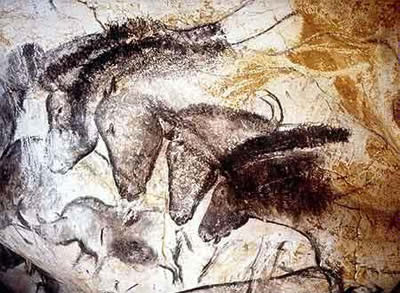
Earlier and earlier prehistoric art has been found. It’s getting ever harder to claim that Neanderthals had nothing to do with it. This is from the enormous Chauvet cave in France, at least 32,000 years old:
If Not Neanderthal, Probably Mostly Neanderthal
(42,000 year old art was also found in Spain.)
Neanderthals also domesticated, and genetically engineered dogs, from European wolves. That’s very clear.
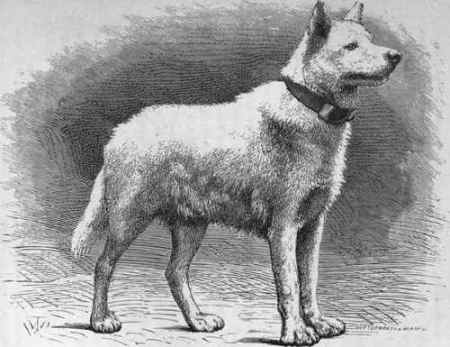
How do I know this? Simple. The Goyet dog, pictured below was dated around 32,000 years. In 2010, an even older dog was found in the Altai mountains. Both dogs were derived from Canis Lupus Familiaris, the European wolf, but were quite distant from it, genetically, they had been evolved probably on a time scale of more than 10,000 years, thus well before any arrival of Sapiens Sapiens from Africa.
Those dogs were completely compatible with people, just as contemporary dogs are. Proof? Ancient, 26,000-year-old footprints made by a child and a dog deep in the Chauvet Cave, France. (OK, by then Neanderthals had been deemed “extinct” by some… However, these are still the same dogs Neanderthals invented.)
It Took Many Thousands Years To Breed Such Large Dogs From European Wolves.
It is perplexing that other human groups did not domesticate the local canids. There are (still!) wolves in Africa and India. And also Lycaons (“African Wild Dogs”). Those are supremely intelligent, and sort of domesticate readily in the wild (I tried this myself as a child).
The argument that Africans would have moved to Europe to domesticate European wolves, when they had a similar fauna, including wolves, to domesticate in Africa, is simply extravagant.
In the next few days I will amend those static pages to incorporate this fascinating update to my knowledge. I shall also seek permission to republish the articles linked to by Patrice as they are full of detailed knowledge about the oldest man-animal relationship; by far!
Normally, there’s always a selection of bits and pieces in my LfD Blog folder from which to construct a new post.
But yesterday afternoon as I trawled a number of articles and blog sites I ended up feeling sick to the back teeth. Disgusted about the inequalities and injustices that seem to be in the news just now. (I use the word ‘news’ liberally!)
It started with me reading, even before I was out of bed, the latest essay from George Monbiot entitled The Shooting Party.
As the food queues lengthen, the government is giving our money to the super-rich.
Then I went back to re-read an essay from Patrice Ayme that came out on the 22nd called USA: Rich Plutos, Poor People. Here’s a snippet from there:
Plutocracy is a redistribution of wealth, power, income, from We The People to a small minority of controlling parasites. Plutocracy paralyzes the minds with a warped case of inverted decency. Plutocracy is neither optimal for the society, nor the economy.
Plutocracy affects the USA more than Europe, and the minds, even more than the stomachs. The fact that average Americans feel that they are much better off than in the rest of the world reinforces the plutocratization of the USA. Including astounding tolerance for the amazingly corrupt so called Supreme Court (Supremely plutocratic!).
On to another of Patrice’s essays. Or more specifically to a comment left by Eugen to a post from Patrice published yesterday.
I would like to share with you my thought about the major defaults of the economic system called “Market economy” or “Capitalism”, or in the language of this blog, the moral deficiency of the system run by Plutocracy.
The major problem of the contemporary economic system on the macro level is that it enabled on one hand to pour into the economy too much financial liquidity at times of boom and overheated economy, by investing too much money in wrong and too expensive assets, and on the other hand at times of bust, when the economy needs liquidity to sustain employment, the system is rather greedy with helping investments in the same assets for even very reduced price. This system a-priory has to cause bust and boom, situations.
The economist since the great depression of 1929-1933 which had disastrous consequences learned from the lesson, and since then the governments and the central banks took as their major task in economy (and be the price whatever it takes), to act as anti bust and boom instrument. This is why they made the economic stimulus of trillions that saved the banks and financial system from total collapse (luckily the collapse came during the time of republican presidency and they couldn’t resist this decision), and the quantitative easing that poured liquidity of government money into the economy as alternative to the private money from banks who stopped to borrow.
So if it is so easy to solve the economic crisis situations, what is the problem? Let the economy run on the waves of bust and boom, and whenever the bust comes the government interferes, and at the times of booms let the boys play and enjoy themselves. If economics would be only about mathematical formulas, probably it could work, but the truth is all the economic decisions have their moral-political aspects. [Ed. My emphasis] And here lies the problem.
Because it is morally and politically very hard to neglect the principle of punish those who do wrong and give tribute to those who has done good. And this is actually what happens when the government comes to rescue the “credit boomers”, the bankers who created a distorted financial system, that channeled the financial and material resources to wrong places to invest in wrong assets, and when the D day came, they did not have to pay the price for their wrong doings. The same happened to those who took the loans, without to ask themselves if and when are they going to pay them back.
These Financiers and their creditors, who get loans of other peoples’ money enjoy free lunch twice. Once when they give and get these loans with knowledge that it will never be repaid, and second time when they enjoy the debt reduction, when the governments come to rescue them.
On the other hand those who use the wealth generated at times of boom to accumulate reserves for the bad times have to pay twice. First time when they restrain their activities during the times of prosperity and reduce by it their profits, second time at times of bust, when still they have to fulfill all their obligations, and get no praise for their responsible behavior in the times of boom.
Of course this system of Boom and Bust causes with each wave a major shift of wealth from one sector to the other, and generally from the decent and responsible entrepreneurs to the irresponsible gamblers, who happen to make bid on other people’s money.
This is one of the reasons why the pension systems are all in deficit, the wages stagnate while the profits and mainly the rewards of corporate managers of publicly traded companies surge.
Plutocrats have a certain grudging respect for one another. Naturally, they would like to put each other out of business unless it impacted their own business adversely. So I conclude that Obama’s sanctions are an attempt to isolate Putin from his plutocratic supporters (although perhaps supporters is too strong a word; Putin keeps his plutocrats on a pretty tight leash, just ask Mikhail Khodorkovsky).
But what if under the table the West is inviting Putin’s plutocrats to join them, where the grass is greener and you don’t have old Vlad busting your chops. We’re not going to mention that we’re going to give you a haircut on the way, but are you really ready for the rebirth of the Soviet Union? The London bankers must certainly be for it.
On the other hand, you have the Chinese promising big business… but China’s biggest real estate investor is unloading everything as China replicates the Western real estate bubble and collapse….
It’s tough being a Russian plutocrat these days. It’s tough being a plutocrat anywhere, really, with all this talk that plutocrats are *too* wealthy (and are actually mass murdering their fellow humans with their insatiable greed by hording wealth and depriving others of health care, education and jobs).
Come to America! Come to the UK! Plutocrats rule! This is the subtext of what the Russian plutocrats are hearing.
Finally, an essay published on Naked Capitalism had me reaching for the bowl. It was by Rob Johnson on the Breakdown of Democracy. Read it. It included this video.
Published on Apr 26, 2014
Rob Johnson: The influx of additional campaign finance dollars and central bank policies have contributed to the destruction of democratic institutions
That was enough for me.
Couldn’t take any more. Certainly wasn’t feeling inspired and creative. Just wanted to go out and find a horse to kiss.
Sanity is a warm, loving horse!
Sorry! Hopefully back to being more positively creative tomorrow!
Regular readers of Learning from Dogs will recall that just under a week ago I published an essay under the title of A bedtime story for mankind. The post centred around an essay from Patrice Ayme. Patrice’s essay could be summarised as follows: “At the present rate of greenhouse gases emissions, within nine years, massively lethal climate and oceanic changes are guaranteed.”
Then just last Sunday, Patrice published a second essay reinforcing that first one. The subsequent essay was called Ten Years to Catastrophe. I was minded to republish that but upon reflection thought that there was a better option. That was to explore the deep, core questions that both of Patrice’s essays raised in my mind and, presumably, must be raised in the minds of countless thousands of others. Questions along the lines of a comment I submitted to that subsequent post from Patrice.
Do you have an idea, even a sense, of when global leaders, elected Governments, the ‘movers and shakers’ in societies, will truly embrace the global catastrophe that is heading our way?
And a supplementary question: What would be the indicators that Governments were acknowledging the task ahead?
Frankly, they weren’t especially good questions but they were an attempt by me to open up a debate on whether or not this is the “beginning of the end” of life for us humans. Central to what was going through my mind was the core question of how did it all go wrong?
Welcome to Payson, AZ
On Monday evening, I rang John Hurlburt, a close friend of Jean and me from our Payson, Arizona days and kicked around those questions . It was a most enlightening conversation. John is an active founder member of Transition Town Payson and Payson recently welcomed the Great March for Climate Action in their walk from Los Angeles to Washington D.C. (An essay on that event coming soon.)
Anyway, from out of that conversation with John came the idea of a series of essays here on Learning from Dogs about the past, present and future of man’s relationship with Nature. The aim is to offer an essay on a weekly basis but we’ll see how it goes. Wherever possible, I will use the essays and posts from other bloggers that reinforce the vision. As always, your feedback in the form of ‘Likes’ or comments will reflect on the value of the essays to you.
After John and I finished the call, he sent me an email with what could be best described as his vision for these essays. Here is that email [my emphasis].
Integral Vision
Everything fits together. Otherwise, we’d simply be disassociated atoms.
Human beings are a consciously aware component of Nature. We have a DNA-level directive to survive as a species and as individual members of a species …. in that order!
We are consciously aware components of the conscious interaction between energy and matter in a predominently smoothly emerging cyclic universe with departures from time to time into pockets of chaos.
We disconnect from reality when we become self-centered, often during the various stages of our lives. When we are blessed we continue to live and learn.
Issues of ideology, rational thought, economics, politics, religion, history and science become insignificant in comparison to the whelming power of Nature.
Such is life. It comes with the territory. Spirituality, Nature and Science describe the metanexus in which we live.
Maintain an even strain,
an old lamplighter
Ref: Episcopal “Catechism of Creation”
Ideas, feedback and comments, as always, hugely welcomed.
The latest IPCC report is more than dry science; it’s our future!
Regular readers of Learning from Dogs will be aware that yesterday I published a post called A bedtime story for Jimmy. It was prompted by learning of an eight-year-old who was offered the opportunity of shooting a wild turkey early last Saturday morning. The penultimate paragraph read as follows:
If we care for nature then we care for the health of our lands, for our forests and for our seas. We are careful with how we live our lives. If we care for nature then as we live our lives we do our best to leave things better for those that come after us.
Little did I know when writing my post that on the same day of publication would be a chilling post from Patrice Ayme; a post that Patrice has generously given me permission to republish in full.
Indeed, little did I know that when I composed my preface to Jimmy’s story and included these words:
However, this eight-year-old lad is facing a future that demands that he and all his generation accept that embracing nature, totally and whole-heartedly, is their only hope of not being the last generation of humans on this beautiful planet.
That less than twenty-four hours later Patrice’s perspective on the latest IPCC report made that sentence of mine far from hyperbole! Here is that essay from Patrice.
ooOOoo
Terminal Greenhouse Crisis.
A CRASH TECH PROGRAM IS NEEDED, & HAS TO INVOLVE HYDROGEN.
At the present rate of greenhouse gases emissions, within nine years, massively lethal climate and oceanic changes are guaranteed.
Such is the conclusion one can draw from the Inter Governmental Panel On Climate Change of the UN (the IPCC, with its top 300 climate scientists from all over the world). About 78% of the emissions have to do with heating, cooking, and basic, necessary industrial activities, such as making cement.
They are not elective.
As Bad As An Asteroid?
Notes:CO2 FOLU = CO2 emissions from Forestry and Other Land Use. F-gases = Fluorinated gases covered under the Kyoto Protocol. At the right side of the figure: Emissions of each greenhouse gas with associated error bars (90% confidence interval).
Only a crash program of construction of several hundreds of new technology nuclear fission plants, an all-out renewable energy program, with massive solar plants all over the American South and the (similar latitude) Sahara desert, plus a massive hydrogen economy to store the wind and solar energy could allow us to mitigate the massive lethal change incoming.
In other words, it is already too late to avoid the massive lethal change.
What’s the problem? Simple mathematics. It’s evaluated that human activities in the last century or so released 515 billion tons of greenhouse gases. The IPCC and the best experts believe that 800 to 1,000 billion tons of such gases would bring a rise of global temperatures of two degrees Celsius.
At the present rate, that’s nine years to reach the upper reaches: one trillion tons of GHG.
Most of the temperature rise will be in the polar regions, melting those, and inducing worldwide climate catastrophe, especially if emissions of polar methane turn apocalyptic. The polar regions are the Achilles heel of the Earth’s present biosphere. By striking there mostly, enormous changes can be brought to bear, as they would destroy the Earth’s air conditioning and oceanic circulation.
In 2014, trade winds in the Pacific had four times the energy they usually have, creating abnormally intense ocean upwelling off the west coast of North America, thus a high pressure ridge (thus a drought there), causing a world wide oscillation of the jet stream that dragged cold polar air down the east coast of the USA, before rebounding as continual storms and rain on the west coast of Europe, and so forth.
Nobody can say the weather was normal: precipitation in England beat all records, dating 250 years, whereas most of California experienced extreme drought.
At this point, warm water is piling down to 500 meters depth in the western Pacific in what looks like a preparation for a massive El Nino, similar to the one in 1997-98. If this happens, global temperature records will be smashed next year.
Massively lethal means death to the world as we know it, by a thousand cuts. It means cuts to democracy, privacy, life span, food intake. Some of these are already in plain sight: the Ukraine war is already a war about gas, no less an authority as dictator Putin says so.
Tom Friedman in “Go Ahead, Vladimir, Make My Day.” takes the situation lightly. “SO the latest news is that President Vladimir Putin of Russia has threatened to turn off gas supplies to Ukraine if Kiev doesn’t pay its overdue bill, and, by the way, Ukraine’s pipelines are the transit route for 15 percent of gas consumption for Europe. If I’m actually rooting for Putin to go ahead and shut off the gas, does that make me a bad guy?
Because that is what I’m rooting for, and I’d be happy to subsidize Ukraine through the pain. Because such an oil shock, though disruptive in the short run, could have the same long-term impact as the 1973 Arab oil embargo — only more so. That 1973 embargo led to the first auto mileage standards in America and propelled the solar, wind and energy efficiency industries. A Putin embargo today would be even more valuable because it would happen at a time when the solar, wind, natural gas and energy efficiency industries are all poised to take off and scale. So Vladimir, do us all a favor, get crazy, shut off the oil and gas to Ukraine and, even better, to all of Europe. Embargo! You’ll have a great day, and the rest of the planet will have a great century.”
It’s not so simple. The investments needed are massive, and all the massive investments so far have to do with fracking… Which is, ecologically speaking, a disaster. 3% methane leakage makes fracking worse than burning coal. And this leakage is apparently happening.
Unbelievably, some of the countries with coal beds got the bright idea to burn the coal underground. Australia, about the worst emitter of CO2 per capita, experimented with that. It had to be stopped, because some particularly toxic gases (such as toluene) were coming out, not just the CH4 and CO the apprentice sorcerers were looking for.
Carbon Capture and Storage does not exist (but for very special cases in half a dozen special locations, worldwide, not the thousands of locales needed). And CSS will not exist (profitably).
What technology exist that could be developed (but is not yet)? Not just Thorium reactors. The hydrogen economy is a low key, and indispensable economy. Water can be broken by electricity from wind and sun, and then energy can be stored, under the form of hydrogen. Nothing else can do it: batteries are unable to store energy efficiently (and there is not enough Lithium to make trillions of Lithium batteries).
The hydrogen technology pretty much exist, including for efficient storage under safe form (one thick plate of a material that cannot be set aflame can store 600 liters of hydrogen).
Another advantage of storing hydrogen is that oxygen would be released. Although it may seem absurd to worry about this, too much acidity in the ocean (from absorption of CO2) could lead to phytoplankton die-off, and the removal of half of oxygen production.
In this increasingly weird world, that’s where we are at.
Oh, by the way, how to stop Putin? Europe should tell the dictator he can keep his gaz. Now. As good an occasion to start defending the planet, and not just against fascism.
Patrice Aymé
ooOOoo
I can’t add anything at a scientific level to what Patrice has written. But I can offer this. Each and every one of us needs to make sure the message is spread as far and wide as possible (you are free to share and republish this post) and then do something, however small it may seem, to make a difference. And do it now!
For the sake of all the Jimmys in the world – and all the turkeys!
A number of essays and items from a variety of sources have passed my screen in recent times that ….. well, you complete the sentence! Let me illustrate; in no particular order.
I have long been a follower of the writings of George Monbiot. Those who haven’t come across Mr. Monbiot before can avail themselves of his background and dip into his articles, many of which underscore my proposition that we really are a peculiar race. For example, just three days ago George Monbiot published an article under the title of The Benefits Claimants the Government Loves. It highlights one mad aspect of UK Policy.
Corrupt, irrational, destructive, counter-productive: this scarcely begins to describe our farming policy.
By George Monbiot, published in the Guardian 4th March 2014
Just as mad cow disease exposed us to horrors – feeding cattle on the carcasses of infected cattle – previously hidden in plain sight, so the recent floods have lifted the lid on the equally irrational treatment of the land. Just as BSE exposed dangerous levels of collusion between government and industry, so the floods have begun to expose similar cases of complicity and corruption. But we’ve heard so far just a fraction of the story.
You really do need to read the article in full to get your arms around the terrible state of affairs of the UK benefits scandal. But try this:
As a result of these multiple failures by the government, even Farmers’ Weekly warns that “British soils are reaching crisis point” (16). Last week a farmer sent me photos of his neighbours’ fields, where “the soil is so eroded it is like a rockery. I have the adjoining field … my soil is now at least 20 cm deeper than his.” In the catchment of the River Tamar in Devon, one study suggests, soil is being lost at the rate of five tonnes per hectare per year (17).
I could go on. I could describe the complete absence of enforceable regulations on the phosphates farmers spread on their fields, which cause eutrophication (blooms of algae which end up suffocating much of the freshwater ecosystem) when they run into the rivers. I could discuss the poorly-regulated use of metaldehyde, a pesticide that is impossible to remove from drinking water (18). I could expand on the way in which governments all over Europe have – while imposing a temporary ban for flowering crops – permitted the use of neonicotinoid insecticides for all other purposes, without any idea of what their impact might be on animals in the soil and the rivers into which they wash. The research so far suggests it is devastating, but they were licensed before any such investigation was conducted (19).
There is just one set of rules which are effective and widely deployed: those which enforce the destruction of the natural world. Buried in the cross-compliance regulations is a measure called GAEC 12 (20). This insists that, to receive their money, farmers must prevent “unwanted vegetation” from growing on their land. (The rest of us call it wildlife habitat). Even if their land is producing nothing, they must cut, graze or spray it with herbicides to get their money. Unlike soil erosion, compaction and pollution, breaches of this rule are easy to detect and enforce: if the inspectors see trees returning to the land, the subsidy can be cut off altogether.
Perhaps a clue to the extreme unfairness of who is in receipt of UK benefits can be explained by the fact expressed by George Monbiot above, “The biggest 174 landowners in England take £120m between them.”
With that in mind, let’s move on. Move on to a recent essay from Patrice Ayme: WAR MAKES HISTORY! To say it makes disturbing reading is, trust me, an understatement. But in the context of the UK’s rich landowners, as George Monbiot explained above, try this closing extract from Patrice’s essay:
We are a deeply equalitarian species. Out of equality rises our superior cultural performance. Plutocracy, the rule of the Dark Side, denies giving, love, and the equality which make us possible. Thus plutocracy is a denial of our species. Only an anger great enough to destroy it, will save us, and the biosphere. And there is hope: greed is neither as natural, nor as strong as anger.
It’s time to get angry against dictator Putin. Angry now is better than very sorry tomorrow.
War makes history. Of this we must think, if we want to make history better.
Patrice Aymé
Frankly, my own knowledge of these ‘dark forces’, of the influence of money and power, is practically zero. But the more that one looks at the madness of so many aspects of mankind’s existence, the more one thinks the truth, as Patrice writes it, is the real truth. Indeed, here’s how Patrice opens his essay:
WAR MAKES HISTORY
HERE WE GO AGAIN
The earlier unjustifiable, unprovoked fascism, greedy plutocracy, imperial overstretch, murderous paranoia and other aspects of the Dark Side get smashed, the better.
Such is the most basic lesson of the 1930s.
For the millions of us that live relatively comfortable lives, it’s easy to read this stuff, nod sagely, and wonder if the heating needs to be left on this coming night. But, pardon the pun, wake-up calls as to the approaching nightmares (sorry!) are not hard to find.
Try this from an interview with Elizabeth Kolbert, as recently published on Grist:
In “The Sixth Extinction,” Elizabeth Kolbert reports from the frontlines of a dying world
The New Yorker writer and acclaimed author Elizabeth Kolbert has a penchant for depressing topics. Her 2006 book, Field Notes from a Catastrophe, helped push climate change into the mainstream (with bonus points for not mincing words in the title).
Now that climate change is safely keeping most of us up at night, Kolbert turned her pen to another big bummer: the sixth extinction. We’re currently losing species at a rate of 1,000 to 10,000 times higher than unassisted nature wiping out the occasional newt. While humans weren’t responsible for the last five mass extinctions, our fingerprints are all over this one. Yep: We collectively have the force of an asteroid when it comes to erasing species (high five, guys!) and for the most part, our response has been classic Urkel.
That interview concludes:
Q. You also write about some efforts to save species. Could you share some of those?
A. I happened to go to the San Diego Zoo, where they have a very impressive conservation program. I was there to see something called the “frozen zoo.” It’s just a bunch of vats of liquid nitrogen with cell lines from, in many cases, highly endangered animals and, in one case, an animal that doesn’t exist anymore, a Hawaiian bird. The idea is pretty much what it sounds like: You have these cell lines, you’re going to keep them alive forever, and eventually people are going to figure out how to resurrect some of these species. Or maybe if you don’t want to go quite that sci-fi, we’ll take the cell lines, we’ll do a DNA analysis, we’ll try to figure out why this population is having trouble.
They took me to see this bird named Kinohi, one of the last Hawaiian crows. He’s “reluctant to part with his genetic material,” let’s put it that way. He had been taken from this breeding facility on Maui to San Diego, and he is ministered to by a PhD physiologist who is trying to, let’s say, pleasure this bird, so that he will give up some sperm, so she can artificially inseminate a bird back in Maui. When I visited he had not yet, you know, come through. She was literally preparing to try again — I don’t know if it has ever worked, I should call her.
That was really, to me, emblematic of this crazy situation we find ourselves in. We’re incredibly smart, we’ve figured out how to freeze cell lines and quite possibly bring back extinct animals — we’re willing to pleasure crows. And yet, the Hawaiian Islands are called the extinction capital of the planet — it’s an absolutely devastated ecosystem. Many, many birds are extinct already; those that aren’t are just clinging to existence. Those forces are not changing and, in fact, things are getting worse. There used to be no mosquitoes in Hawaii; there are now mosquitoes. They carry avian malaria, and as the climate warms, avian malaria is moving up the slopes so that even these refugees species that are high on the mountains are increasingly not there. A lot of birds are in terrible trouble there.
All of these things are happening at once and, once again, they’re all true. People are devoting a lot of time and energy and love to trying to preserve these species, and meanwhile the world is increasingly screwed up. So that is how I end the book: They can both be true; it’s not one or the other.
Did you notice the reference to yet another example of mankind’s madness? “That was really, to me, emblematic of this crazy situation we find ourselves in. We’re incredibly smart, we’ve figured out how to freeze cell lines and quite possibly bring back extinct animals — we’re willing to pleasure crows. And yet, the Hawaiian Islands are called the extinction capital of the planet — it’s an absolutely devastated ecosystem.“
I believe inherently that the great majority of individuals are good people. Take Kevin Richardson for instance. Not for him money and power. Just a passion to save lions. Oh, and hugging them! Just watch, and be moved.
Don’t know how to close this? Maybe using a quotation from Ernest Hemingway:
The world breaks everyone, and afterward many are strong at the broken places.
So in these broken times, let all the good people come out strong – stronger than those who are corrupt, irrational, destructive and counter-productive!
It is the ultimate time for hope and faith in the power of goodness!
The most important thing, without a doubt, to learn from dogs.
Last Tuesday, Learning from Dogs published the first of the three parts of Martin Lack’s essay From Environmentalism to Ecologism. It generated a fascinating discussion. One of the commentators was Chris Snuggs who writes his own blog under the name of Nemo Insula Est. Here is the essence of a discussion with Martin Lack and Patrice Ayme. (Without reading the following comments, my closing opinion will make little sense; assuming they do at the best of times!)
Chris: The problem with politics at the moment is that the choices come down to A) being socialist, moral and bankrupt or B) capitalist and immoral but at least with a chance of avoiding poverty and chaos.
Martin: I think I am very much in agreement with you, Chris. It says a l lot when a practicing Catholic can admit that his Church needs to ditch its anthropocentric bias and stop treating the Earth as if we are the only species that matters…
Chris: One of the big questions for me is this. Is the world of our perceptions ONLY what we see, hear, smell and touch or is there another dimension which we cannot sense? Personally, I believe the former, which is why I cannot believe in: God, aliens, ghosts, an afterlife, fairies or indeed a sensible socialist economic policy.
I sometimes feel this makes me boring (or if you like, it just another feature of my boringness), but on the other hand I feel more or less in tune with what I understand “The Enlightenment” to have meant. It would be much more reassuring to know that there is a God (caring if possible, though it is hard to see how he would be) and indeed aliens, as long as they were friendly. But until there is some sound evidence, I cannot. And there IS no evidence that would stand up in court, is there?
So, we are alone; the universe is as it is; how it came into being we do not know and it is perhaps unknowable; the planet Earth cares not a jot about us or our feelings; we have no particular right to exist: we just do, by natural accident (until proven otherwise). I am not a fan of the “There are billions of stars in the universe, so there must be other forms of life elsewhere.” argument. “must be” is not “is”.
So if WE do not ensure our survival by looking after the planet then nobody or nothing will. As for “ecology”, good people are trying to do a lot of things, but as far as I can see:
A) It is too late and too little. Even if we were doing all the right things NOW (which we obviously are not), the time lag before our actions start to correct othe damage done will be too great; we may well have died out by then.
B) Despite all that is being done, CO2 emissions are going up, countries have STILL found no economic model that does not insist on growth and you cannot have growth without increased energy use, which for the moment and foreseeable future means fossil fuel extraction. And THIS of course continues apace with many countries now desperately trying to frack their way to growth, in the case of the USA rather successfully.
Martin: All very interesting, Chris, although I am not sure why your atheism necessitates rejection of socialism. For many people the two are inextricably linked. However, this is all off-topic… All I wanted to point out was that anthropocentrism is a mistake that can be made by both theists and atheists alike; and that it is good to see the former admitting they have made this mistake.
Paul: Chris/Martin, To my way of thinking, there is a more fundamental issue at work. That is the corrupting effect of power. I’m certain you know the famous saying. Thus whatever fine motives propel a person to enter politics, that person seems unable to avoid the call of power and its corrupting effect. The only hope is that key countries, and none so key as the USA, evolve a better, more representative, political process. Otherwise, I fear for the coming years.
Patrice: I agree with Paul 100%. I saw the call of power. Unimaginable. People just get insane. There are also filtering systems to insure they get that way (it starts right away with one week retreats in extremely posh resorts; does not matter if you are capitalist, socialist, blueist, reddist, ecologist, independentist, etc.).
Chris: Agreed. It has been clear time and time again throughout history. Well, so much is obvious, but WHAT TO DO about it?
A) We must end the practice of having career politicians: you serve a maximum of TEN years, at the end of which you go.
B) Inherited wealth allowing the building up of immensely powerful family dynasties over generations must be ended. It is simply untenable. The rich-poor gap is getting obscene everywhere, and money is of course power. My “Abolish inheritance” idea will be wildly unpopular because we are naturally acquisitive and “greedy” and of course would hit those with most to lose who also therefore have the most power.
Patrice: With all due respect, Chris and Martin sound rather naïve… Huge wealth and power is where it’s at. And it attracts to politics first, foremost, and soon uniquely, those it attracts most, namely the basest sort.
Chris:
A) All a question of balance: SOME ambition is essential; it is when there is too much that it is dangerous.
B) I would have maximum terms for political service. plus:
C) Nobody should be allowed to be a public representative until they have fulfilled certain conditions, for example (but to be debated): worked in the private sector; some experience of life in a factory; nobody under 30; high achievement in some industrial, commercial, academic or social field, and so on
Ed Milliband grew up in a Marxist family, went to a posh school and then straight to university from where he went straight into politics as an “advisor”, thence to become a Minister and now leader of the opposition and possible OM.
THAT is not the proper background for a national leader, but the House of Commons is full of such people. The % of MPs from “working-class” backgrounds is going down and down and down. In the USA, Congress is over-represented by the rich, famous and/or connected. Where are the mailmen, bus drivers and burger-servers? “You need more intelligent Congresspeople than that.”
Sorry, I can’t take that argument from a country that elected Dan Quayle, George Bush and Sara Palin!!!!!
Patrice: Right. Glad to see every body agrees. It’s even worse than that. “Representative” politics is intrinsically demonic, as it vests great power in some individuals. That, per se is not just a crime, but absolutely corrupting.
Representative politics has got to be eliminated. Switzerland has eliminated it at the legislative level. Why can’t all other countries of the West do the same? Because the present plutocracy rules through the representatives, esp. in the USA? After we have done the legislative, the executive could be handled along Roman Republican lines and Athenian lines. Roman Consuls, for example, had full power only for one month at a time. In Athens enormous quora (say, 8% of the potential electorate) had to be found, before any decision.
Martin:Excellent synopsis, Patrice. All of the things you mention would be made possible by a return to localism and/or bioregionalism, which may well come to pass by default (i.e. as a result of those in power now being in denial about what is happening to our planet).
Now the reason that I offered up this lengthy transcript of the conversation was that it clearly showed to me that bright, well-educated people agree that there is much wrong with many, if not most, countries that offer a representative democratic form of Government. Bright, well-educated people are also not afraid to offer answers. Patrice went on to write a most engaging post over at his place under the title of Representative Politics Is Dictatorship. It opens:
Representative Dictatorship Is Not Democracy
I know a young lady who was elected for the first time in California. She is sent to a posh resort for a week to learn the basics of her new job, being a “Democratic” politician. Everything is wrong with this picture (not just the mansion she lives in and her million dollar family income, while claiming to be a leftie). Everything is wrong, but it’s typical: all elected representatives in the USA are treated very well, and get to meet who, it dawns on them after a while, can insure for them, and their families, much nicer lives. (The New York Times, to its discredit, just discovered this PACS trick in 2014.)
A gigantic manipulation industry has developed, with its own strategists. Barack Obama seemed to have come out of nowhere, but, even before he started to score big, he was viewed as the anointed one, by the highest powers in “Democratic” circles: Axelrod, a professional manipulator who had just led Kerry’s campaign, was sent to Obama, just a modest Senator. Obama then gave a keynote speech at the Kerry convention, etc. When he campaigned, Wall Street money started to flow, more than towards any other candidate, by orders of magnitude, etc. No wonder Obama has found so hard to bite the hand that fed him.
Let me draw this all together. Possibly in a manner that will cause readers to sigh and say the old fella is losing the plot!
Because what I am about to say strikes me as so obvious, so massively demonstrated day-in, day-out by the planet’s sentient, warm-blooded creatures (even man can do it!).
It is this.
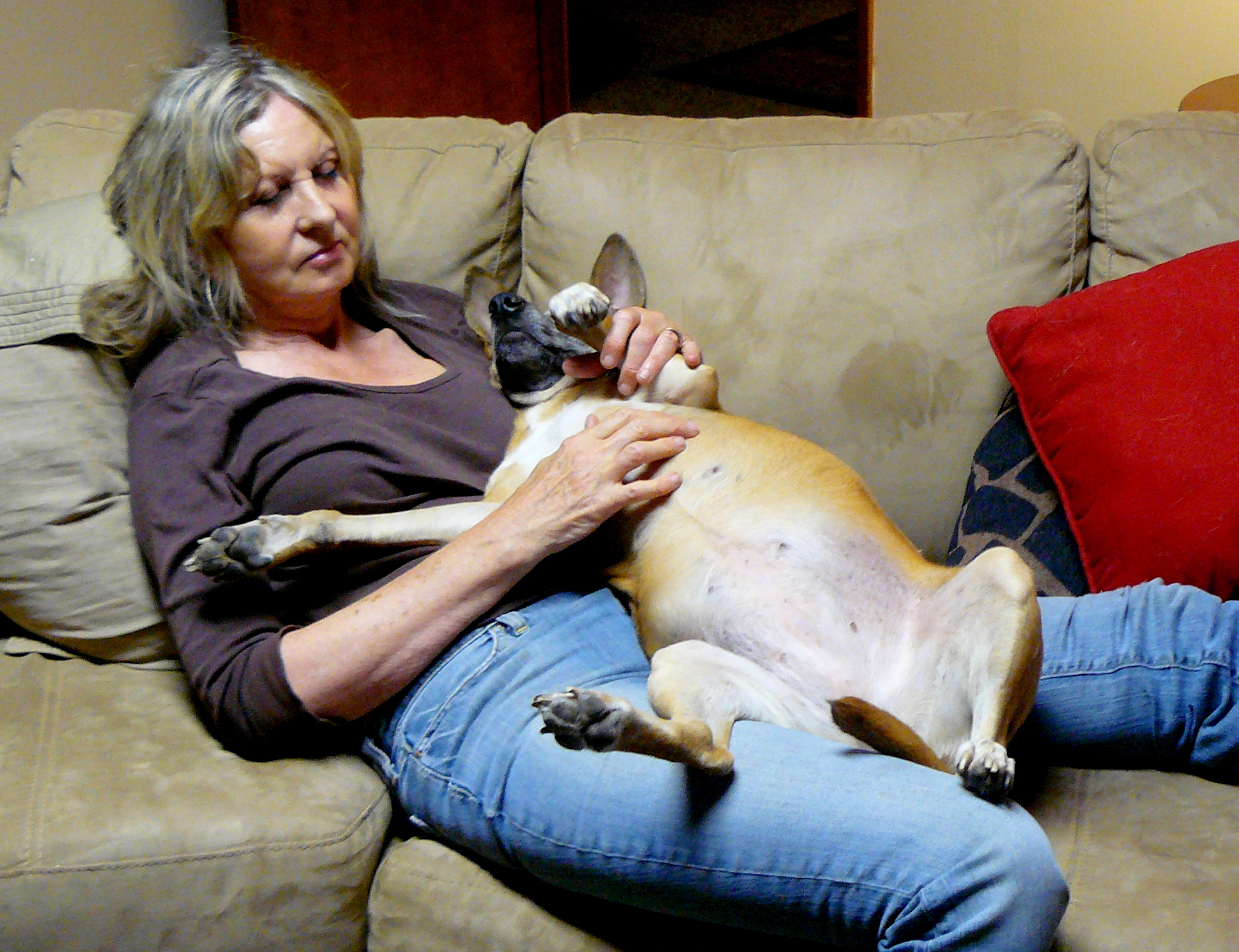
We have lost sight of the fact that animals offer an endless set of examples of living in the present and offering unconditional love to those creatures, humans included, that do not threaten them. These are very difficult times for us and all the creatures on this planet. Unconditional love for the planet we live on and for all those that do not threaten us is the only way forward!
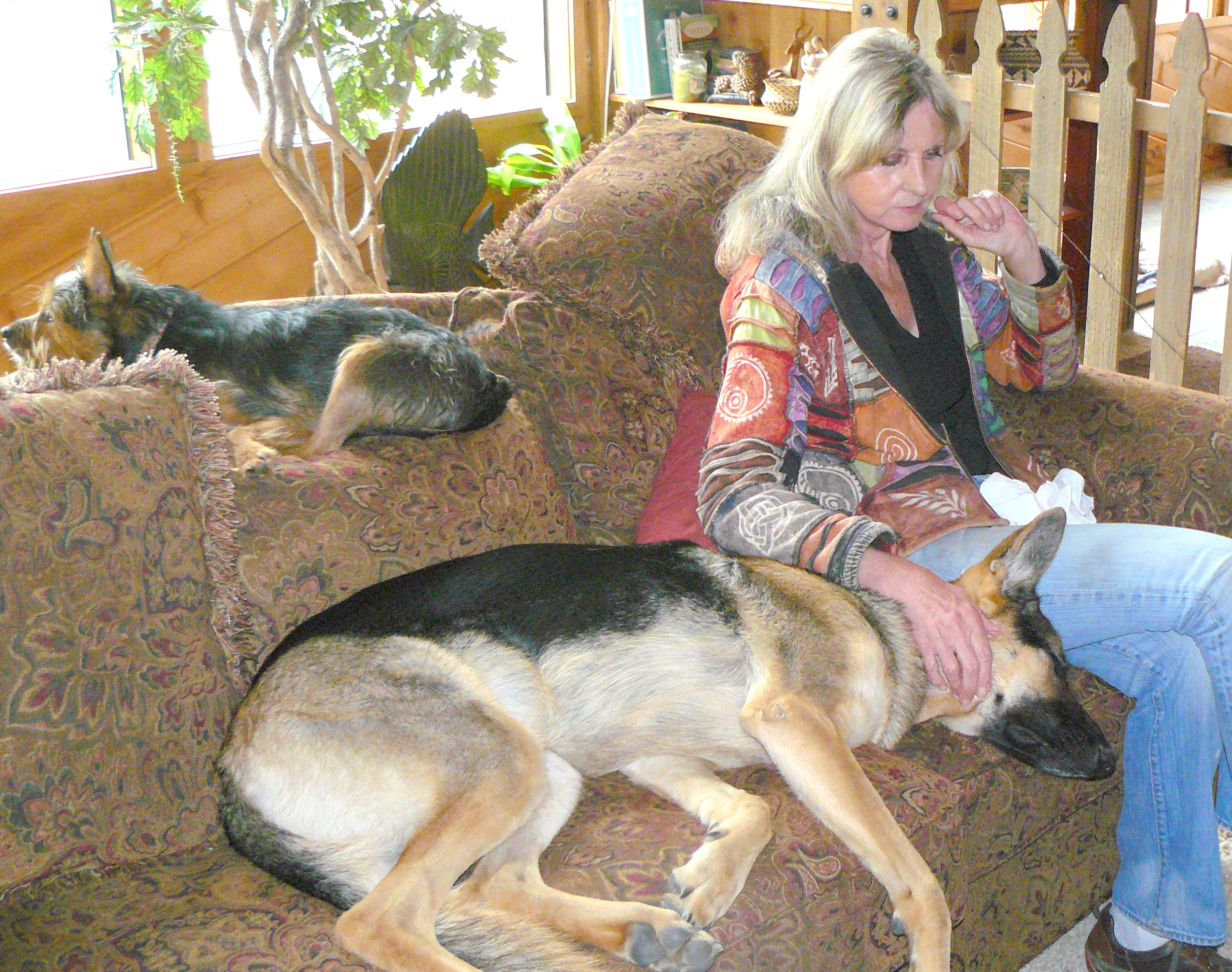
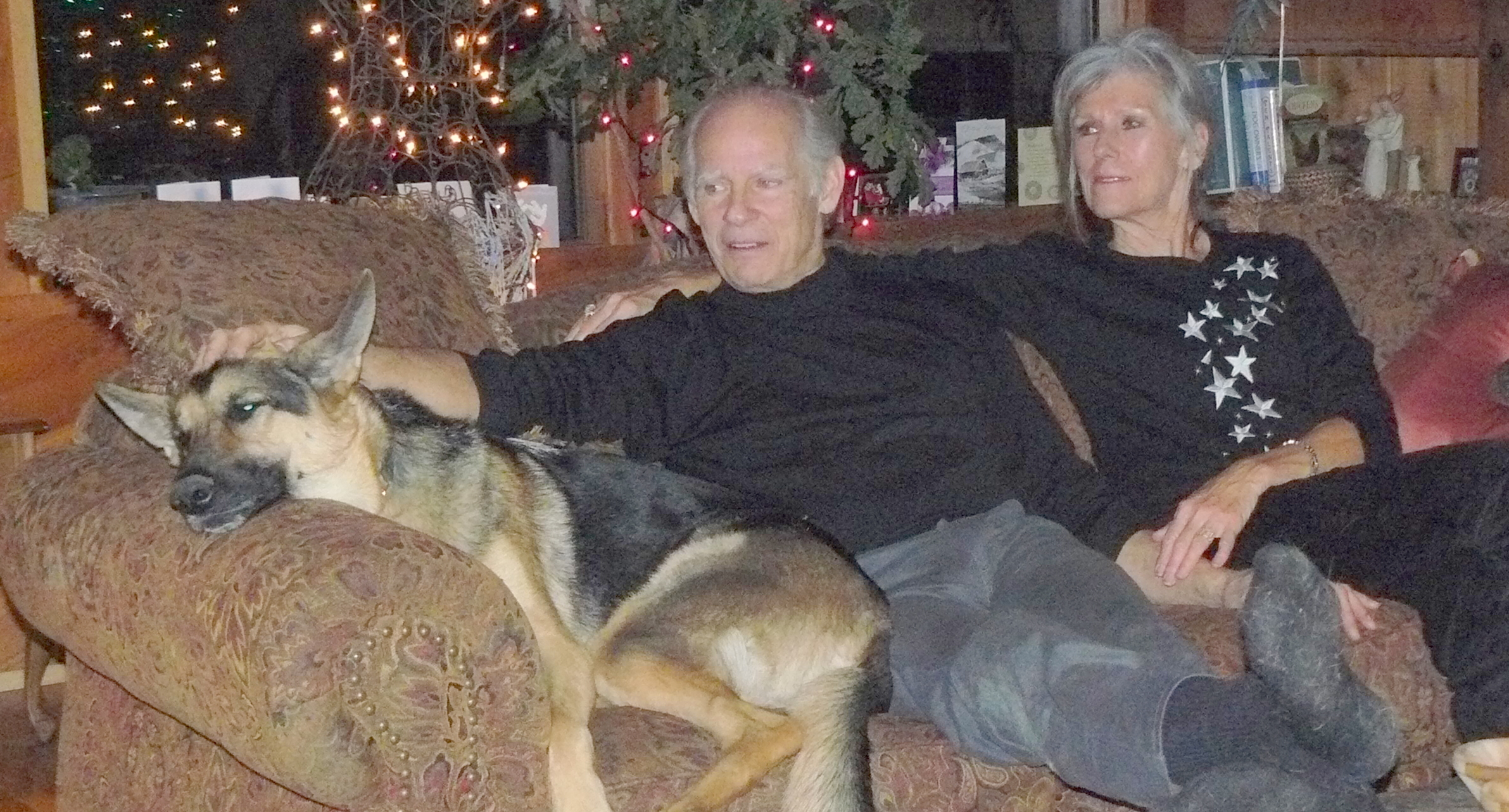
Let me close with three photographs that provide all the evidence that we need to embrace love and tenderness for everything in our lives.
Sweeny on back of settee, Cleo loving Jean.
oooo
Dhalia’s unconditional love for Jean.
oooo
Neighbours Bill and Dordie under the influence of Cleo’s unconditional love.
HEIST: Who Stole the American Dream? is stunning audiences across the globe as it traces the worldwide economic collapse to a 1971 secret memo entitled Attack on American Free Enterprise System. Written over 40 years ago by the future Supreme Court Justice Lewis Powell, at the behest of the US Chamber of Commerce, the 6-page memo, a free-market utopian treatise, called for a money fueled big business makeover of government through corporate control of the media, academia, the pulpit, arts and sciences and destruction of organized labor and consumer protection groups.
But Powell’s real “end game” was business control of law and politics. HEIST’s step by step detail exposes the systemic implementation of Powell’s memo by BOTH U.S. political parties culminating in the deregulation of industry, outsourcing of jobs and regressive taxation. All of which led us to the global financial crisis of 2008 and the continued dismantling of the American middle class. Today, politics is the playground of the rich and powerful, with no thought given to the hopes and dreams of ordinary Americans. No other film goes as deeply as HEIST in explaining the greatest wealth transfer of our time. Moving beyond the white noise of today’s polarizing media, HEIST provides viewers with a clear, concise and fact- based explanation of how we got into this mess, and what we need to do to restore our representative democracy.
It’s an incredibly interesting film, but more of that later. For me, what was stunningly enlightening was at last understanding the powerful forces at work since Lewis Powell published ‘the memo’ back on August 23, 1971. Because for me over in Britain, the era of the ’70s’ and ’80s’ were incredibly fulfilling. First, as a salesman for IBM UK – Office Products Division, from 1970 through to 1978, and then forming and managing my own company through to 1986 when I succumbed to an attractive purchase offer. Then, when my company was sold, taking a few years off cruising a sailboat in the Mediterranean; based out of Larnaca, Cyprus.
Thus I was immune to the global money and power plays, albeit enjoying rising house prices! Only Lady Luck protected me from the collapse of 2008 in that I had sold my Devon home in early 2007 and was renting. Then Lady Luck arranging for me to meet Jean in Mexico, Christmas 2007 (we were born 23 miles apart in London) and subsequently moving out to Mexico with Pharaoh in September, 2008, to be with Jean and all her dogs. Lady Luck’s magic continued in that we came to Merlin, Oregon because we were able to take advantage of a bank-owned property; moving there in October, 2012.
Of course, the scale of the downturn was obvious and there were many instances of people that I knew losing jobs or homes, or both, and generally having a very rough time.
So back to the film. Here’s the official trailer.
Uploaded on Feb 17, 2012
Please watch the newly updated trailer for “Heist: Who Stole the American Dream?,” the new, explosive documentary from Frances Causey and Donald Goldmacher exposing the roots of the American economic crisis and the destruction of the American dream. Visit www.Heist-TheMovie.com for more information on how to see the feature film and how to Take Action in restoring democracy and economic justice in the United States.
But here’s another thing that now makes sense: The legitimate anger of so many people, especially those who have some insight into what had been taking place. No, amend that! What is still taking place!
Just one example of that legitimate anger, that of Patrice Ayme. Just go across and read his blog post of two days ago: American Circus.
My strong recommendation is that you take an evening off and watch the film. Here’s another preview:
Frances Causey, Co-producer & co-director-Heist & Donald Goldmacher, Co-producer & co-director-Heist join Thom Hartmann. Corporate America is the biggest Welfare reciepient in the country – but that wasn’t always the case. The makers of Heist will tell you how organized money has been able to pull off the biggest “Heist” of the American Dream!
The film also concludes by offering many ways in which individuals can take back control of their lives, reinvigorate local communities, actively show that people-power is unstoppable. As it always has been and always will be.
This post started with a quote and I’m going to close with another.
“The day the power of love overrules the love of power, the world will know peace.” -Mahatma Gandhi
On Monday and Tuesday of the week I posted Legitimate Anger and Legitimate Hope. (And please see the footnote to today’s post)
Patrice Ayme left the following comment to the Legitimate Hope post:
It’s hard to live with elephants, especially in poor, crowded conditions. I remember bathing in Africa as a child with a bull elephant 200 meters away, on the other side of a stream, and being extremely worried, with all in attendance.
Europe used to have elephants, and North America, two species. Time to reintroduce them, and live according to our discourse.
Rewilding Euramerica can be done, and should be done, for the deepest philosophical and emotional reasons, and will create new, very productive jobs.
PA
Then on Friday came an email from reader and blogger Martin Lack:
It was but a moment to go across to The Conversation website (rather liked what I saw, by the way) and find the article that Martin linked to. It is republished here within the terms of The Conversation site.
ooOOoo
Restore large carnivores to save struggling ecosystems
By William Ripple, Oregon State University
We are losing our large carnivores. In ecosystems around the world, the decline of large predators such as lions, bears, dingoes, wolves, and otters is changing landscapes, from the tropics to the Arctic. Habitat loss, persecution by humans and loss of prey have combined to inflict great losses on these populations.
In fact more than 75% of the 31 largest carnivore species are declining, and 17 species now occupy less than half their former ranges. Southeast Asia, southern and East Africa, and the Amazon are among areas in which multiple large carnivore species are declining. And with only a few exceptions, large carnivores have already been exterminated from much of the developed world, including areas of Western Europe, and the eastern United States.
Top dogs keep ecosystems in order
Many of these large carnivore species are endangered and some are at risk of extinction, either in specific regions or entirely. Ironically, they are vanishing just as we are learning about their important ecological effects, which is what led us to write a new paper in the journal Science to document their role.
From a review of published reports, we singled out seven species that have been studied for their important ecological role and widespread effects, known as trophic cascades. These are the African lion, leopard, Eurasian lynx, cougar, gray wolf, sea otter and dingo.
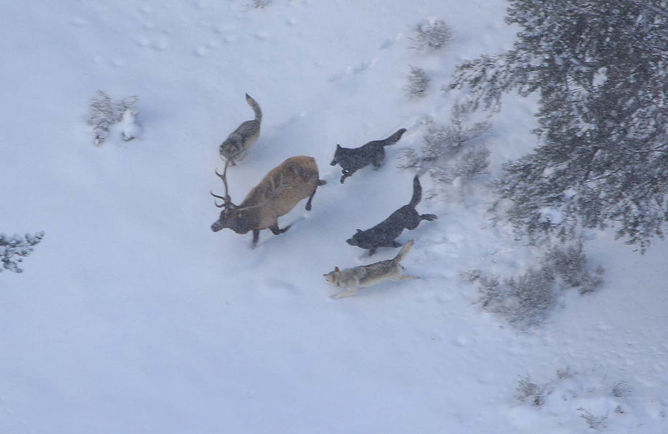
Based on field research, my Oregon State University co-author Robert Beschta and I documented the impact of cougars and wolves on the regeneration of forest tree stands and riverside vegetation in Yellowstone and other national parks in western North America. Fewer predators, we found, lead to an increase in browsing animals such as deer and elk. More browsing disrupts vegetation, reduces birds and some mammals and changes other parts of the ecosystem. From the actions of the top predator, widespread impacts cascade down the food chain.
Similar effects were found in studies of Eurasian lynx, dingoes, lions and sea otters. For example in Europe, absence of lynx has been closely tied to the abundance of roe deer, red fox and hare. In Australia, the construction of a 3,400-mile dingo-proof fence has enabled scientists to study ecosystems with and without dingoes which are closely related to gray wolves. They found that dingoes control populations of herbivores and exotic red foxes. The suppression of these species by dingoes reduces predation pressure, benefiting plants and smaller native prey.
In some parts of Africa, the decrease of lions and leopards has coincided with a dramatic increase in olive baboons, which threaten crops and livestock. In the waters off southeast Alaska, a decline in sea otters through killer whale predation has led to a rise in sea urchins and loss of kelp beds.
Predators are integral, not expendable
We are now obtaining a deeper appreciation of the impact of large carnivores on ecosystems, a view that can be traced back to the work of landmark ecologist Aldo Leopold. The perception that predators are harmful and deplete fish and wildlife is outdated. Many scientists and wildlife managers now recognise the growing evidence of carnivores’ complex role in ecosystems, and their social and economic benefits. Leopold recognised these relationships, but his observations were ignored for decades after his death in 1948.
Top carnivores, at work keeping things in check. Doug Smith
Human tolerance of these species is the major issue. Most would agree these animals have an intrinsic right to exist, but additionally they provide economic and ecological services that people value. Among the services documented in other studies are carbon sequestration, restoration of riverside ecosystems, biodiversity and disease control. For example, wolves may limit large herbivore populations, thus decreasing browsing on young trees that sequester carbon when they escape browsing and grow taller. Where large carnivore populations have been restored – such as wolves in Yellowstone or Eurasian lynx in Finland – ecosystems appear to be bouncing back.
I am impressed with how resilient the Yellowstone ecosystem is, and while ecosystem restoration isn’t happening quickly everywhere in this park, it has started. In some cases where vegetation loss has led to soil erosion, for example, full restoration may not be possible in the near term. What is certain is that ecosystems and the elements of them are highly interconnected. The work at Yellowstone and other places shows how species affect each another through different pathways. It’s humbling as a scientist to witness this interconnectedness of nature.
My co-authors and I have called for an international initiative to conserve large carnivores in co-existence with people. This effort could be modelled after a couple of other successful efforts including the Large Carnivore Initiative for Europe, a non-profit scientific group affiliated with the International Union for the Conservation of Nature, and the Global Tiger Initiative which involves all 13 of the tiger-range countries. With more tolerance by humans, we might be able to avoid extinctions. The world would be a scary place without these predators.
William Ripple does not work for, consult to, own shares in or receive funding from any company or organisation that would benefit from this article, and has no relevant affiliations.
In 2011, more African elephants were killed than any other year in history. The figures for 2012 and 2013 are not yet known, but are likely to be even higher. At current rates, in twelve years, there will be none left.
It is a familiar cause, but it has never been more urgent. Poaching has turned industrial. Armed militia fly in helicopters over jungle clearings, machine gunning down entire herds. Their tusks are then sold to fund war and terrorism throughout the continent and the wider world. Ivory is still illegal, but as China booms, it is more popular than ever.
This campaign will raise money to support rangers on the ground to protect Kenya’s elephants from armed poachers, together with Space for Giants’ longer term work to create new wildlife sanctuaries where elephants will be safe, forever. More can be found about the charity at Space for Giants
The article above includes two videos. A shorter one that can be viewed on the paper’s campaign website. Then there is a longer, five-minute, video also on YouTube and included below.
Jean and I wanted to make a donation but found that without a UK bank account/UK Visa card it wasn’t possible. We contacted Space for Giants and received the following email from Amy.
Hi Paul
Sorry for the difficulties and thank you for your perseverance!
You can donate in USD through our CrowdRise page at www.crowdrise.com/spaceforgiants1. These funds are sent to TUSK USA who will then allocate them to us.
Alternatively, you can make out a cheque to ‘TUSK USA’ and send to TUSK USA, 40 East 94th Street, Apt 3A, New York, NY 10128 – please attach a covering note confirming that you would like your donation to be used to support the work of Space for Giants.
Many thanks,
Amy.
So if there’s anyone else out there not in the UK who would like to donate, here’s another option.
Please, for all our sakes, help these beautiful creatures.





 Learning from Dogs