Tag: Ocean acidification

Not seeing the wood for the trees!

A postscript to the last two days.

This week is taking on a life of it’s own, so far as Learning from Dogs is concerned!

For when I penned Monday’s post, Running on Empty, I had not yet read George Monbiot’s essay Are We Bothered?. When I did so, it struck me as the perfect sequel to Monday’s post and formed the crux of yesterday’s post The nature of delusions.  That second post also included a personal account of my delusion with regard to ocean sailing and seemed sufficiently wordy not to be extended by my further reflections.

Thus the decision to run over to a third day!

Let me offer, first of all, my own reflections to George Monbiot’s concerns. That I distill, using his words, to: “The more we consume, the less we care about the living planet.” Expanded in his concluding paragraph:

So the perennially low level of concern, which flickers upwards momentarily when disaster strikes, then slumps back into the customary stupor, is an almost inevitable result of a society that has become restructured around shopping, fashion, celebrity and an obsession with money. How we break the circle and wake people out of this dreamworld is the question that all those who love the living planet should address. There will be no easy answers.

When I first read Mr. Monbiot’s essay, I found myself nodding in agreement. Yet, upon further reflection, I became less sure that “a society that has become restructured around shopping, fashion, celebrity and an obsession with money.” was the core of the issue.  I think it is a symptom.

Stay with me awhile I take a small deviation. To dogs, and other animals.

Many creatures have a powerful and instinctive means of assessing danger.  One only needs to observe the wild black-tailed deer that frequent our property to know that the slightest hint of danger or the unknown has them dashing away to safety.

A young black-tailed deer seen at home last September.

Dogs are the same in that they will run early on from a danger.

Humans also have the propensity to be cautious about a clear and present danger.  However, it’s my proposition that when the danger is unclear and when that danger threatens the very essence of who we are and the world that we have constructed around us, we can be blind to the point of madness. I can think of many examples in support of that thesis and I’m sure you can too.

Yes, we have “a society that has become restructured around shopping, fashion, celebrity and an obsession with money.” But I contend only because of the power of capitalism, of the power of modern marketing and advertising and the allure of being ‘one of the crowd’.

So back to my proposition.  It is this.

That when our lives are threatened by something unclear, complex and, ultimately, of devastating impact, we are very reluctant to embrace it and even more reluctant to both embrace it and escape to safety; whatever the latter implies.

Mankind’s effect on the environment, the rising CO2 levels in the atmosphere, the increasing acidification of the oceans, the growing concerns about global weather, and on and on, are the most unclear, the most complex and the most devastating of futures to embrace.
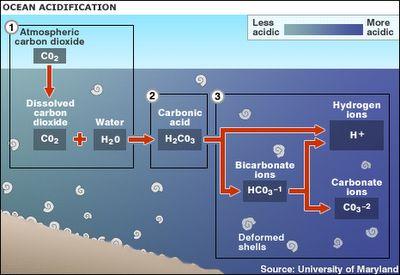
(Thanks to Patrice for using this recently.)
(Thanks to Patrice for referring to this recently.)

So it really is no surprise to see mankind in general behaving as though this is a bit of a hangover, and an aspirin and a good night’s sleep will sort it! Especially when there is so much money and control invested in selling the same message; the message that there really is nothing to worry about.

There will be a so-called ‘tipping point’. A point in our awareness where the urgency to prevent the destruction of the biosphere will be paramount. And it will be a miracle if when that point arrives it isn’t far too late to save us.

I truly hope that I am wrong.

oooo

Remember what I wrote in yesterday’s post? About experiencing an Atlantic gale?

Fewer than 48-hours before my estimate of coming into Horta Marina on the Azores island of Faial, Songbird of Kent was struck by an early, fierce Winter gale. I seem to recall it was touching Force 10 Beaufort Scale (54 – 63 mph or 48 – 55 knots).

Anyway, it just about finished me off: literally as well as psychologically! I was so frightened, so utterly scared that I could think of nothing else other than getting to Horta and never going sailing again.

It revealed my delusion!

That was my ‘tipping point’ when it came to ocean sailing.

The gale subsided and I motor-sailed the 150-odd miles to Horta without any break for sleep or rest. Came into the harbour early in the morning after the second night since the gale. As soon as I was securely berthed, I closed the boat up and found a local hotel where a hot shower and a clean bed could restore a part of me.

Within a week, I had engaged a crew to sail the boat to Plymouth in South-West England and I flew back to England on a commercial airline.

Once Songbird of Kent arrived at Plymouth, she was put up for sale at a price that wouldn’t delay matters and that was that!

Oh, and I have never read any more books about single-handed ocean sailing. (But see my P.S.!)

oooo

P.S.

In yesterday’s post, I referred to Les Powells. Remember when I was in Larnaca, Cyprus? This is what I wrote:

Living on a boat close to me was Les Powles. Many will not have heard of Les but this quiet, softly-spoken man knows a thing or two about solo ocean sailing. As an article in The Guardian newspaper explained (in part):

In the 1980s and 90s a British man called Les Powles sailed three times round the world – always single-handedly, once non-stop. He couldn’t afford a radio transmitter, and on his greatest adventure he didn’t speak to anyone for 329 days. At 84, his ­circumnavigating days are now behind him, but he still lives on his boat, the Solitaire. What’s the ­appeal of sailing, I asked him. “It’s the solitude. When you’re out at sea on your own, there’s no government or bankers to worry about. You’re not ­responsible to anyone but yourself.”

Three times around the world – solo!

Thus getting to know Les was a great inspiration in getting me over the hurdle of can I really do this! (Les once said to me “the first three days are the worst!”)

Anyway, I have discovered that Les is living happily on his boat in Lymington, England and has written a book about his sailing life.

Les Powells book

It has been ordered and arrives today. This one will be read – from the comfort and safety of our rural home in Oregon!

Weep for our oceans, too.

Our fate is also wrapped up in the ocean – another cause for tears.

In a very real sense, this Post continues from my writings of yesterday concerning James Hansen.

A year ago, the BBC reported the shocking state of our oceans.  It included this:

“The rate of change is vastly exceeding what we were expecting even a couple of years ago,” said Ove Hoegh-Guldberg, a coral specialist from the University of Queensland in Australia.

“So if you look at almost everything, whether it’s fisheries in temperate zones or coral reefs or Arctic sea ice, all of this is undergoing changes, but at a much faster rate than we had thought.”

But more worrying than this, the team noted, are the ways in which different issues act synergistically to increase threats to marine life.

Some pollutants, for example, stick to the surfaces of tiny plastic particles that are now found in the ocean bed.

This increases the amounts of these pollutants that are consumed by bottom-feeding fish.

Plastic particles also assist the transport of algae from place to place, increasing the occurrence of toxic algal blooms – which are also caused by the influx of nutrient-rich pollution from agricultural land.

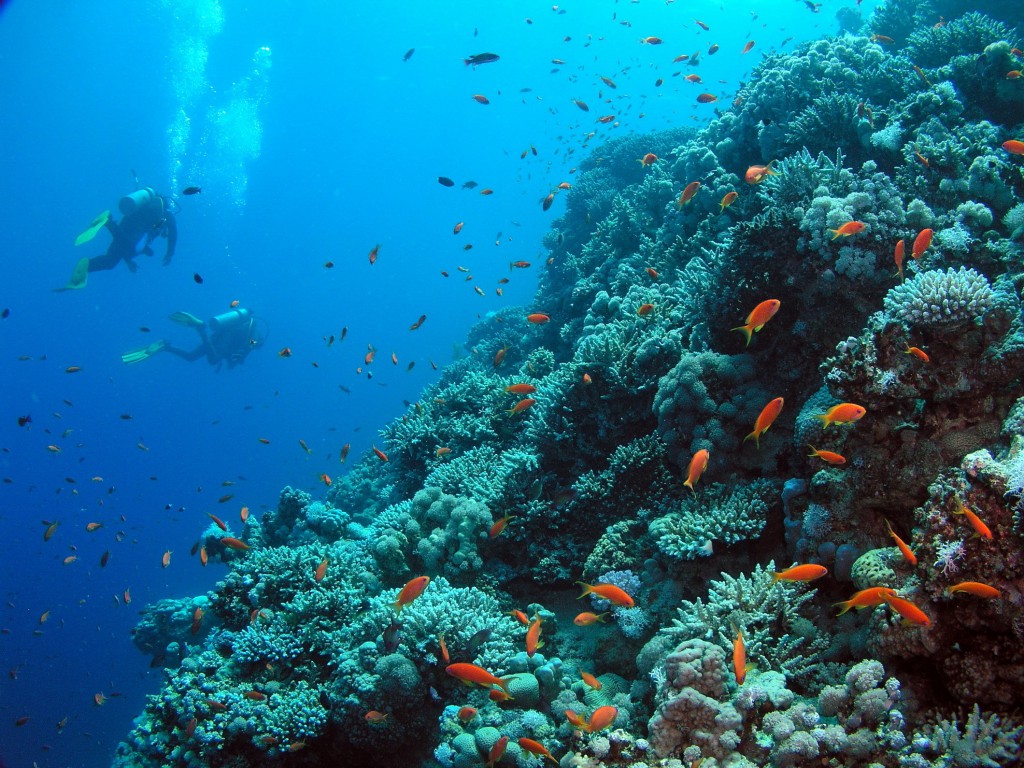
In a wider sense, ocean acidification, warming, local pollution and overfishing are acting together to increase the threat to coral reefs – so much so that three-quarters of the world’s reefs are at risk of severe decline.

As Callum Roberts explains in a forthcoming book The Ocean of Life,

Prof. Callum Roberts

We have always been fish eaters, from the dawn of civilization, but in the last twenty years we have transformed the oceans beyond recognition. Putting our exploitation of the seas into historical context, Roberts offers a devastating account of the impact of modern fishing techniques, pollution, and climate change, and reveals what it would take to steer the right course while there is still time. Like Four Fish and The Omnivore’s DilemmaThe Ocean of Life takes a long view to tell a story in which each one of us has a role to play.

That book was recently reviewed in The Economist, from which I reproduce the following extracts,

The Ocean of Life: The Fate of Man and the Sea. By Callum Roberts.

Traditional attitudes towards the sea, as something immutable and distant to humanity, are hugely out of date. The temperature change that harmed the corals was not caused by human activity; yet it was a foretaste of what man is now doing to the sea. The effects of overfishing, agricultural pollution and anthropogenic climate change, acting in concert, are devastating marine ecosystems. Though corals are returning to many reefs, there is a fair chance that in just a few decades they will all be destroyed, as ocean temperatures rise owing to global warming. The industrial pollution that is cooking the climate could also cause another problem: carbon dioxide, absorbed by the sea from the atmosphere, turns to carbonic acid, which is a threat to coral, mussels, oysters and any creature with a shell of calcium carbonate.

The reviewer explains that, “The enormity of the sea’s troubles, and their implications for mankind, are mind-boggling. Yet it is equally remarkable how little this is recognised by policymakers—let alone the general public.” and then adds, to the author’s credit, ” There is also a dearth of good and comprehensive books on a subject that can seem too complicated and depressing for any single tome. Callum Roberts, a conservation biologist, has now provided one.”

The book review then continues,

He [Callum Roberts] starts with a bold claim: that anthropogenic stresses are changing the oceans faster than at almost any time in the planet’s history. That may be putting it too strongly. Yet there is no quibbling with the evidence of marine horrors that Mr Roberts presents.

Take overfishing. The industrialisation of fishing fleets has massively increased man’s capability to scoop protein from the deep. An estimated area equivalent to half the world’s continental shelves is trawled every year, including by vast factory ships able to put to sea for weeks on end. Yet what they are scraping is the bottom of the barrel: most commercial species have been reduced by over 75% and some, like whitetip sharks and common skate, by 99%. For all the marvellous improvements in technology, British fishermen, mostly using sail-power, caught more than twice as much cod, haddock and plaice in the 1880s as they do today. By one estimate, for every hour of fishing, with electronic sonar fish finders and industrial winches, dredges and nets, they catch 6% of what their forebears caught 120 year ago.

Overfishing is eradicating the primary protein source of one in five people, many of them poor. It also weakens marine ecosystems, making them even more vulnerable to big changes coming downstream.

For example, there is the matter of chemical pollution, mostly from agricultural run-off. This has created over 400 dead-zones, where algal tides turn the sea anoxic for all or part of the year. One of the biggest, at the mouth of the Mississippi Delta in the Gulf of Mexico, covers 20,000 square km (7,700 square miles) of ocean. An annual event, mainly caused by the run-off of agricultural fertilisers from 40% of America’s lower 48 states, it makes the one-off Deepwater Horizon oil-spill look modest by comparison.

Global warming is another problem. Hitherto, the sea has been a buffer against it: because the heat capacity of water is several times that of air, the oceans have sucked up most of the additional heat, sparing the continents further warming. Yet this is now starting to change—faster than almost anyone had dared imagine.

One effect of the warming ocean, for example, is to increase the density difference between the surface and the chilly deep, which in turn decreases mixing of them. That means less oxygen is making it down to the depths, reducing the liveability of the oceans. Off America’s west coast, the upper limit of low-oxygen water is thought to have risen by 100 metres. Where strong winds bring this water nearer to the surface, there are mass die-offs of marine life. Such events will proliferate as the climate warms.

This is a poor lookout for already put-upon fish. “Fish under temperature and oxygen stress will reach smaller sizes, live less long and will have to devote a bigger fraction of their energy to survival at the cost of growth and reproduction,” writes Mr Roberts. And that is before he gets to the effects of ocean acidification, which could be very bad indeed. Without dramatic action to reverse these processes, he predicts a catastrophe comparable to the mass extinctions of the Palaeocene-Eocene Thermal Maximum, when carbon-dioxide levels, temperature and ocean acidity all rocketed. He writes: “Not for 55m years has there been oceanic disruption of comparable severity to the calamity that lies just a hundred years ahead.” That would be hard to prove; it would be better not to try.

So what is to be done? Mr Roberts provides a hundred pages of answers, occupying roughly a third of the book. They range from the obvious—curbing carbon emissions—to technical fixes, like genetic improvements to aquaculture stocks. None is impossible; and Mr Roberts, almost incredibly, describes himself as an optimist. He writes, “We can change. We can turn around our impacts on the biosphere.” We had better do so.

Amen to that!

So want to know where to start?  Here’s a snippet of advice in terms of protecting our fish stocks,

I must go down to the sea again, spelt H2CO3!

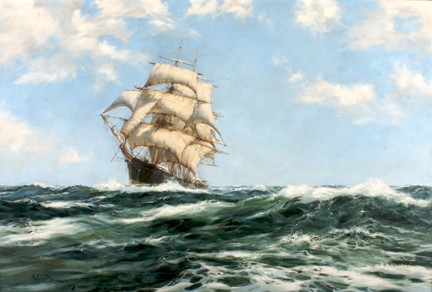
Starting to feel like a long way from John Masefield’s poem Sea Fever.

The call of the sea.

One of my all-time favourite poems.

I must go down to the seas again, to the lonely sea and the sky,
And all I ask is a tall ship and a star to steer her by,
And the wheel’s kick and the wind’s song and the white sail’s shaking,
And a grey mist on the sea’s face, and a grey dawn breaking.

I must go down to the seas again, for the call of the running tide
Is a wild call and a clear call that may not be denied;
And all I ask is a windy day with the white clouds flying,
And the flung spray and the blown spume, and the sea-gulls crying.

I must go down to the seas again, to the vagrant gypsy life,
To the gull’s way and the whale’s way, where the wind’s like a whetted knife;
And all I ask is a merry yarn from a laughing fellow-rover,
And quiet sleep and a sweet dream when the long trick’s over.

Why do I start this piece with that poem?

Well, read this,

Carbonic acid is a weak acid that is created when carbon dioxide (CO2) is dissolved in water (H2O), resulting in the chemical formula H2CO3. When the acid dissociates, or gives up a hydrogen ion, the resulting molecule is called a bicarbonate ion. Carbonic acid appears frequently in the natural world. It can be found in sodas, champagne, and blood. The acid even appears in rain.

But like so many things in nature, it’s all about balance.

A week ago, the 2nd March, Patrice Ayme gave me permission to reproduce an essay of his The collapse of the biosphere.  In that essay he wrote,

Besides, it’s not all about “climate change”. Half of the CO2 is presently dissolving in the oceans, so a rise of two degrees Celsius means extremely acid oceans (CO2 turns into carbonic acid after it reacts with water). At the present rate of acidification, marine life will dissolve big time by 2100. That’s how a lot of the oxygen is produced, by photosynthesizing unicellular animals, with acid sensitive skeletons. Atmospheric poisoning deniers do not want just to warm us up.

On that same day of March 2nd, Yves Smith of Naked Capitalism published an item that reinforced what Patrice wrote.  Yves very kindly gave me permission to republish her Post in full, as follows:

Current Rate of Ocean Acidification Worst in 300 Million Years

Science has published a troubling but not entirely surprising article on the fact that the oceans are acidifying at the fastest rate in 300 million years. Actually, it could be the fastest rate over an even longer time period, but we can only go back with any degree of accuracy for 300 million years

We first wrote about this issue in early 2007, and this section, which quoted Stormy from Angry Bear, will help bring readers up to speed:

….there are side effects to our love affair with CO2 that are not often mentioned. In fact, whether the earth cools or warms is absolutely irrelevant to these effects. I repeat: Absolutely irrelevant.

One of the most startling effects is the acidification of the oceans. Since 1750, the oceans have become increasingly acidic. In the oceans, CO2 forms carbonic acid, a serious threat to the base of the food chain, especially on shellfish of all sizes. Carbonic acid dissolves calcium carbonate, an essential component of any life form with an exoskeleton. In short, all life forms with an exoskeleton are threatened: shell fish, an important part of the food chain for many fish; coral reefs, the habitat of many species of fish….

The formation of carbonic acid does not depend upon temperature. Whether the oceans warm or cool is irrelevant. Of concern only is the amount of CO2 that enters the oceans.

Fast forward to today. Consider the scope of the paper in Science, per a very good discussion in ars technica:

A new paper in Science examines the geologic record for context relating to ocean acidification…The research group (twenty-one scientists from nearly as many different universities) reviewed the evidence from past known or suspected intervals of ocean acidification…They find that the current rate of ocean acidification puts us on a track that, if continued, would likely be unprecedented in last 300 million years.

There is an important driver of this process that this overview mentions only in passing further on, and it’s useful to have it in mind when you review the discussion of the historical record:ocean acidification depends primarily on the rate of atmospheric CO2 increases, not the absolute concentration. Look at how attenuated the rate of past CO2 changes was in the past versus the speed now:

The first period the researchers looked at was the end of the last ice age, starting around 18,000 years ago. Over a period of about 6,000 years, atmospheric CO2 levels increased by 30 percent, a change of roughly 75 ppm. (For reference, atmospheric CO2 has gone up by about the same amount over the past 50 years.) Over that 6,000 year time period, surface ocean pH dropped by approximately 0.15 units. That comes out to about 0.002 units per century. Our current rate is over 0.1 units per century—two orders of magnitude greater, which lines up well with a model estimate we covered recently.

The last deglaciation did not trigger a mass extinction, but it did cause changes in some species…

During the Pliocene warm period, about 3 million years ago, atmospheric CO2 was about the same as today, but pH was only 0.06 to 0.11 units lower than preindustrial conditions. This is because the event played out over 320,000 years or so. We see species migration in the fossil record in response to the warming planet, but not ill effects on calcifiers…

Next, the researchers turned their focus to the Paleocene-Eocene Thermal Maximum (or PETM), which occurred 56 million years ago. Global temperature increased about 6°C over 20,000 years due to an abrupt release of carbon to the atmosphere (though this was not as abrupt as current emissions). The PETM saw the largest extinction of deep-sea foraminifera of the last 75 million years, and was one of the four biggest coral reef disasters of the last 300 million years…

The group also examined the several mass extinctions that defined the Mesozoic—the age of dinosaurs. The boundary between the Triassic and Jurassic included a large increase in atmospheric CO2 (adding as much as 1,300 to 2,400 ppm) over a relatively short period of time, perhaps just 20,000 years. The authors write, “A calcification crisis amongst hypercalcifying taxa is inferred for this period, with reefs and scleractinian corals experiencing a near-total collapse.” Again, though, it’s unclear how much of the catastrophe can be blamed on acidification rather than warming.

Finally, we come the big one—The Great Dying. The Permian-Triassic mass extinction (about 252 million years ago) wiped out around 96 percent of marine species. Still, the rate of CO2 released to the atmosphere that drove the dangerous climate change was 10-100 times slower than current emissions…

In the end, the researchers conclude that the PETM, Triassic-Jurassic boundary, and Permian-Triassic boundary are the closest analogs to the modern day, at least as far as acidification is concerned. Due to the poor ocean chemistry data for the latter two, the PETM is the best event for us to compare current conditions. It’s still not perfect—the rate of CO2 increase was slower than today…

The authors conclude, “[T]he current rate of (mainly fossil fuel) CO2 release stands out as capable of driving a combination and magnitude of ocean geochemical changes potentially unparalleled in at least the last ~300 [million years] of Earth history, raising the possibility that we are entering an unknown territory of marine ecosystem change.”

Translation: “We’re probably fucked, but the data is so far outside of historical parameters, we can’t say anything with a high degree of certainty.”

Worth protecting, worth saving, worth caring about!