Something else we really can learn from dogs.
I’m not sure that I should admit that my dearest Jeannie is my 4th wife! Long story that goes back to when I had just turned 12 years-old, back in 1956. I suffered an event that I interpreted as emotional rejection and promptly buried that deep into my subconscious where it stayed for over 50 years.
Then brought to the surface in 2007 (thanks Jon) after the failure of marriage number 3. I met Jean some 6 months later, in December 2007, and we were married in Payson, AZ in November, 2010. Being with Jean has been the happiest days of my life!
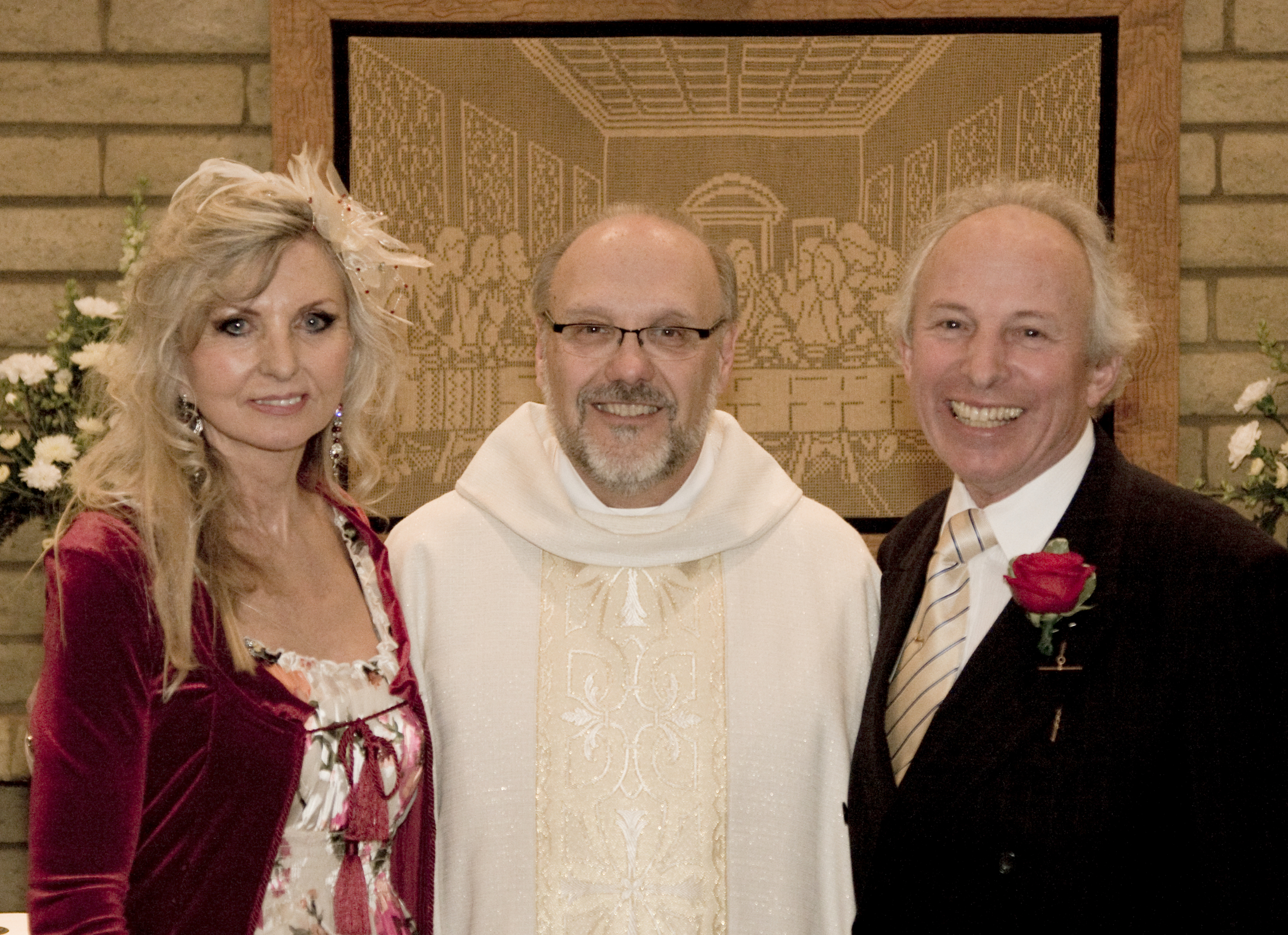
Inevitably, while being married to Jean seems such a natural relationship, one is curious about what makes for a happy, lifelong relationship. Let’s face it, divorce is not uncommon. In fact, the Divorce Rate website reveals that in 2012, the divorce rate was 3.4 couples per 1,000 population in the USA; the sixth highest in the world.
So it was fascinating to listen to a recent radio programme broadcast under the BBC’s Point of View series. Just 10 minutes long, this particular programme was a talk by Adam Gopnik: The secret of a happy marriage 29th March 2013. (Adam Gopnik is an American commentator and writes for The New Yorker.)
You should be able to listen to the programme by going here. Or you can download the programme by going here, and following the instructions. (Not sure how long the programme will be available to listen/download, so don’t delay.)
The programme was also featured on the BBC News Magazine Website. From which I quote:
A Point of View: Is there a secret to a happy marriage?
Nobody can explain the secret to a happy marriage, says Adam Gopnik, but it doesn’t stop people trying.
Anyone who tells you their rules for a happy marriage doesn’t have one. There’s a truth universally acknowledged, or one that ought to be anyway.
Just as the people who write books about good sex are never people you would want to sleep with, and the academics who write articles about the disappearance of civility always sound ferociously angry, the people who write about the way to sustain a good marriage are usually on their third.
Nonetheless (you knew there was a nonetheless on its way) although I don’t have rules, I do have an observation after many years of marriage (I’ve promised not to say exactly how many, though the name “Jimmy Carter” might hold a clue).
Later, Adam Gopnik speaks about Charles Darwin whose marriage to Emma he describes “as something close to an ideal marriage.”
So what is it we learn from dogs?
So, marriages are made of lust, laughter and loyalty – but the three have to be kept in constant passage, transitively, back and forth, so that as one subsides for a time, the others rise.
Now Adam writes about the special form of loyalty that dogs offer us:
Be lit by lust, enlightened by laughter, settle into loyalty, and if loyalty seems too mired, return to lust by way of laughter.
I have had this formula worked out – and repeated it, waggishly, to friends, producing for some reason an ever more one-sided smile on the face of my beautiful wife.
Until, not long ago, I realised that there was a flaw in this idea. And that was that I had underestimated the reason that loyalty had such magnetic power, drawing all else towards it.
For I had been describing loyalty in marriage as though it were a neutral passive state – a kind of rest state, a final, fixed state at the end of the road of life.
And then, against our better wishes, and our own inner version of our marriage vows, at our daughter’s insistence we got a dog. And this is what changed my view.
“The expense and anxiety of children” indeed. Our daughter’s small Havanese dog, Butterscotch, has instructed us on many things, but above all on the energy that being loyal really implies.
Dogs teach us many things – but above all they teach us how frisky a state loyalty can be.
Dogs, after all – particularly spayed city dogs that have been denied their lusts – have loyalty as an overriding emotion. Ours will wait for hours for one of its family, and then patiently sit right alongside while there is work to be done.
Loyalty is what a dog provides. The ancient joke-name for a dog, Fido, is in truth the most perfect of all dog names – I am faithful. I am loyal. I remain.
Dogs are there to remind us that loyalty is a jumpy, fizzy emotion. Loyalty leaps up at the door and barks with joy at your return – and then immediately goes to sleep at your side. Simple fidelity is the youngest emotion we possess.
The loyalty of a dog. No more to be said.

 Learning from Dogs