Tag: Moon

The full moon – very full!

Brought forward as a result of the Japanese earthquake.

I had this item scheduled for publication on Friday 18th March, the day before this month’s full moon.  But recent events in Japan made me decide to bring it forward to today for reasons that will be clear when this Post is read further.

The world is set to experience the biggest full moon for almost two decades when the satellite reaches its closest point to Earth next weekend.

On 19 March, the full moon will appear unusually large in the night sky as it reaches a point in its cycle known as ‘lunar perigee’.

Stargazers will be treated to a spectacular view when the moon approaches Earth at a distance of 221,567 miles (356,577 km) in its elliptical orbit – the closest it will have passed to our planet since 1992.

The full moon could appear up to 14% bigger and 30% brighter in the sky, especially when it rises on the eastern horizon at sunset or is provided with the right atmospheric conditions.

Moon apogee and perigee

This phenomenon has reportedly heightened concerns about ‘supermoons’ being linked to extreme weather events – such as earthquakes, volcanoes and tsunamis. The last time the moon passed close to the Earth was on 10 January 2005, around the time of the Indonesian earthquake that measured 9.0 on the Richter scale.

Hurricane Katrina in 2005 was also associated with an unusually large full moon.

Previous supermoons occurred in 1955, 1974 and 1992 – each of these years experienced extreme weather events, killing thousands of people.

However, an expert speaking to Yahoo! News today believes that a larger moon causing weather chaos is a popular misconception.

Dr Tim O’Brien, a researcher at the Jodrell Bank Centre for Astrophysics at the University of Manchester, said: “The dangers are really overplayed. You do get a bit higher than average tides than usual along coastlines as a result of the moon’s gravitational pull, but nothing so significant that will cause a serious climatic disaster or anything for people to worry about.”

But according to Dr Victor Gostin, a Planetary and Environmental Geoscientist at Adelaide University, there may be a link between large-scale earthquakes in places around the equator and new and full moon situations.

He said: “This is because the Earth-tides (analogous to ocean tides) may be the final trigger that sets off the earthquake.”

UPDATE: This was noted in Naked Capitalism on Saturday.

Volcanoes have reportedly erupted in JapanIndonesia, and Kamchatka Russia today, presumably due to the massive Japanese earthquake. There have been no reports of damage from the eruptions.

Earth, a poem

A lovely comment and a beautiful poem.

On the 28th January, Learning from Dogs posted the second of two articles about Planet Earth.  The first one was here and the second here.  That second piece attracted a lovely comment from Sue of SueDreamwalker.  What follows from this point is all Sue’s work.

A very Good Post Paul.

I thought I might share a Poem of mine about Earth I was inspired to write this in 1995, long before we got the weather we are experiencing today… Appologies for its length..

I agree we need to respect… for we are along longs ways from Space hopping..

Earth


Earth gave her body; she gave it us to share
Her breath once sweet now pollutes the air
Her waterways of veins once were crystal clear
Now they hold our garbage lifeless pools and mires

Earth gave her body; she gave it us to share
She gave us animals for pleasure and yes for food
Not to be hunted to extinction penned up and abused
She gave us her Forests for shelter and for fuel
Not for mass developments using greed for cutting tools

Earth gave us her body; she gave it us to share
The soil she gave for harvest of plants that now are rare
For medicine and minerals, silver bronze and gold
Her treasure chests of beauty, we’ve pillaged raped and sold

Earth gave us her body; she gave it us to share
Now her tears are falling, can’t you see her pain?
The bombs that we are testing, fall out, Floods- the Rain.
Wars between each Nation, like stabbings in her back
Earthquakes——- Thunder, Lightning,
She’s Crying with each Crack..

“Enough” she cries “Enough”, as Planet Earth disrupts
Her breaking heart that Bleeds, Volcanoes then Erupts
Her breath now rages Anger, Tornadoes swirl revenge
Beware the Human Race, Planet Earth could still avenge

Earth gave her body she gave it us to share
The beauty is all around us, forever standing there
Let’s not take her for granted, for some day she will rebel
Treat her with some kindness, our fellow man as well.

Earth gave her body, she gives us Life
Let’s stop all our hating, stop the greed and strife
Earth gave us a garden, she gives us love
Love is the only answer, we are told so from above

Earth gave her body, Give her your respect
For she might rebel, turn her back sooner than you’d expect
So help her through her Torment, Heal her wounded sores,
We can start by healing each other around her windy shores
Love her and those upon her, take away her tears,
Her Promise in return,
Rebirth the “ Golden Years!”

By Dreamwalker..

Beautiful words!

It’s all we have!

A bit tight on time for today’s Post so just feast your eyes on this image.


Earthrise, from the cabin of Apollo 8


This view of the rising Earth greeted the Apollo 8 astronauts as they came from behind the Moon after the lunar orbit insertion burn. The photo is displayed here in its original orientation, though it is more commonly viewed with the lunar surface at the bottom of the photo. Earth is about five degrees left of the horizon in the photo. The unnamed surface features on the left are near the eastern limb of the Moon as viewed from Earth. The lunar horizon is approximately 780 kilometers from the spacecraft. Height of the photographed area at the lunar horizon is about 175 kilometers.

The Apollo 8 mission was the first time man had left the orbit of the Earth.

The photograph was taken on the 24th December 1968 by NASA astronaut William Anders.  Within 18 months of this image being published, the environmental movement had started. Wilderness photographer Galen Rowell called it “the most influential environmental photograph ever taken.”


That beautiful lunar eclipse

As it happens, here in Payson at 01:15 am on the morning of Tuesday, 21st December, low broken cloud was obscuring the moon much of the time.  But nonetheless the pale outline of the darkened moon was visible, sitting above the constellation of Orion.  Very, very mystical.

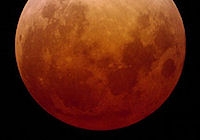
Here’s what it looked like without the cloud, thanks to a Google search for images.

Dec 21st 1638; Dec 21st 2010; Dec 21st 2094

And a late update, thanks to Pete N (via Facebook) who spotted this wonderful video recently placed on YouTube.

which then highlighted this video taken by the Kurdistan Planetarium – these are amazing examples of the power of our new virtual world in sharing images across so many peoples.

Solstice Lunar Eclipse

(Again, thanks to Dan G for highlighting this.)

If you want to see this solar eclipse then read the times carefully – to assist, I am publishing this Post much earlier than normal, at 18:00 US Mountain Time (UTC -7hrs) on Monday, 20th December.  Oh, and more information at Spacedex here.

SOLSTICE LUNAR ECLIPSE
by Dr. Tony Phillips
Reprinted from http://science.nasa.gov ( but this link address is better. Ed.)

Dec. 17, 2010:  Everyone knows that “the moon on the breast of new-fallen snow gives the luster of mid-day to objects below.”

That is, except during a lunar eclipse.

The luster will be a bit “off” on Dec. 21st, the first day of northern winter, when the full Moon passes almost dead-center through

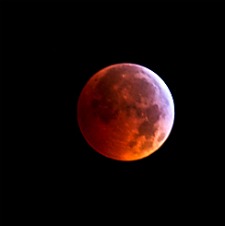
A similar lunar eclipse in Nov. 2003. Credit: Jim Fakatselis.

Earth’s shadow. For 72 minutes of eerie totality, an amber light will play across the snows of North America, throwing landscapes into an unusual state of ruddy shadow.

The eclipse begins on Tuesday morning, Dec. 21st, at 1:33 am EST (Monday, Dec. 20th, at 10:33 pm PST). At that time, Earth’s shadow will appear as a dark-red bite at the edge of the lunar disk. It takes about an hour for the “bite” to expand and swallow the entire Moon. Totality commences at 02:41 am EST (11:41 pm PST) and lasts for 72 minutes.

If you’re planning to dash out for only one quick look — it is December, after all — choose this moment: 03:17 am EST (17 minutes past midnight PST). That’s when the Moon will be in deepest shadow, displaying the most fantastic shades of coppery red.

Credit: F. Espenak, NASA/GSFC.

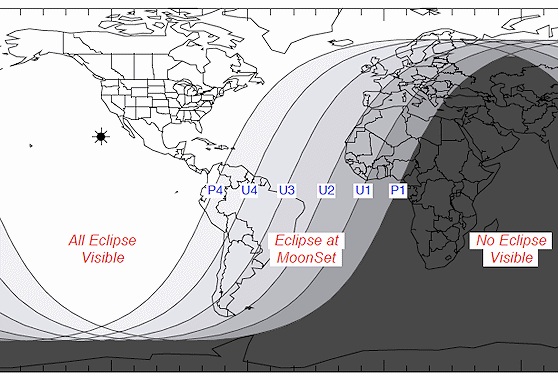
From first to last bite, the eclipse favors observers in North America. The entire event can be seen from all points on the continent. Click to view a world map of visibility circumstances. Credit: F. Espenak, NASA/GSFC.

Why red?

A quick trip to the Moon provides the answer: Imagine yourself standing on a dusty lunar plain looking up at the sky. Overhead hangs Earth, nightside down, completely hiding the sun behind it. The eclipse is underway. You might expect Earth seen in this way to be utterly dark, but it’s not. The rim of the planet is on fire! As you scan your eye around Earth’s circumference, you’re seeing every sunrise and every sunset in the world, all of them, all at once. This incredible light beams into the heart of Earth’s shadow, filling it with a coppery glow and transforming the Moon into a great red orb.

Back on Earth, the shadowed Moon paints newly fallen snow with unfamiliar colors–not much luster, but lots of beauty.

Enjoy the show.

Coincidences (UPDATED): This lunar eclipse falls on the date of the northern winter solstice. How rare is that? Total lunar eclipses in northern winter are fairly common. There have been three of them in the past ten years alone. A lunar eclipse smack-dab on the date of the solstice, however, is unusual. Geoff Chester of the US Naval Observatory inspected a list of eclipses going back 2000 years. “Since Year 1, I can only find one previous instance of an eclipse matching the same calendar date as the solstice, and that is 1638 DEC 21,” says Chester. “Fortunately we won’t have to wait 372 years for the next one…that will be on 2094 DEC 21.