Tag: Michael Pollan

We are what we eat.

A thought-provoking presentation on the role of food in our society.

The last time I used this title for a post was back on July 20th.  However, the topic then was very different to today’s theme.  Then I wrote about how the genetic modification of our food represents as big a danger to the long-term survival  of man as does the damage to our biosphere.

So this comes as a very pleasant contrast.  I am indebted to Yves Smith’s blog Naked Capitalism for drawing this presentation to my attention. As was written in that NK post,

This is a super presentation by Ray Patel for Michael Pollan’s class at Berkeley, Edible Education 103. The presentation and the question period together come to about an hour.  Ray Patel follows after Michael Pollan handles administrative stuff and then does an introduction.

There are plenty of charts, but I really enjoy the anecdote on Northern Malawi at minute 43:54 — too long for me to transcribe, so I’ll quote Patel’s closing line:

What makes it really sail is not just the democracy, but the joy which comes through people cooking together as equals and eating together as equals.

Bon apetit!

Published on Dec 7, 2012
Raj Patel is an award-winning writer, activist, and academic. He has degrees from the University of Oxford, the London School of Economics, and Cornell University, has worked for the World Bank and WTO, and protested against them around the world.

He’s currently a visiting scholar at UC Berkeley’s Center for African Studies, an Honorary Research Fellow at the School of Development Studies at the University of KwaZulu-Natal, and a fellow at The Institute for Food and Development Policy, also known as Food First. He is currently an IATP Food and Community Fellow.

He has testified about the causes of the global food crisis to the U.S. House Financial Services Committee and is an Advisor to the United Nations Special Rapporteur on the Right to Food. In addition to numerous scholarly publications, he regularly writes for The Guardian, and has contributed to the LA Times, NYTimes.com, The San Francisco Chronicle, The Mail on Sunday, and The Observer. His first book was Stuffed and Starved: The Hidden Battle for the World Food System and his latest, The Value of Nothing, is a New York Times best-seller.
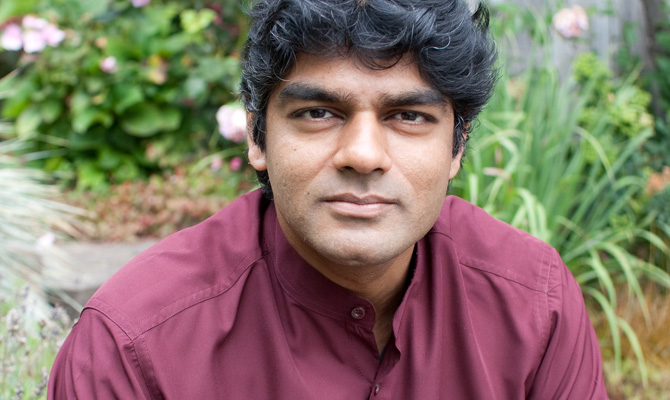
raj_patel

Raj Patel’s website is a great reference so do spend a little time wandering through the material.  For example, this item jumped off the page for me.

What I Did This Summer

By Raj on 08/11/2012

The good folk at Canada’s Globe & Mail asked me to write a piece called “What I Did This Summer.” Never having written one before, I thought I’d channel my inner 12 year old.

Cuzco, Peru: This summer I started to write a book and film a documentary with my hero. His name is Steve James. He filmed ‘Hoop Dreams’ which was about basketball and hope and disappointment and race and inequality and America. Our film is called “Generation Food”. It is about how we will eat in the future.

So I went to Japan. People used to live long lives in Okinawa because of the traditional diet. Lots of people lived until 100. Now grandparents are burying their children. They don’t eat as they used to. When the Americans came with their military base, they brought fast food for the GIs. Everybody eats it now. I visited farmers who plant crops on US bases. They did it so often that the Americans gave up and just let them do it. I ate goat sashimi because it would have been rude not to.

Won’t reproduce it in full as I haven’t sought permission.  So do go here to read it.  But I just can’t resist offering you Raj Patel’s closing words.

I have learned that: People are kind. Everyone has contradictions. Raw goat tastes funny, but it’s not as bad as Cuban food. The world is more beautiful than I imagined. There is more hope for the future of food than I dared to believe, against impossible odds. And it comes from unlikely places.

And after the summer, I was never the same again.

What a lovely sentiment to end on.

Food

We are what we eat!

There are a few sayings that I would have loved to have authored!  ‘We are what we eat‘, is one of them.  ‘The world reflects back what we think about most‘, is another.

But anyway, this article is not about sayings, it’s about food.  And to get straight to the point, I’m going to republish something that recently appeared on the Chris Martenson blog.

Joel Salatin, proprietor of Polyface Farms and highly-visible champion of sustainable farming, thinks modern humans have become so far removed from a natural connection to the food they eat that we no longer have a true understanding of what “normal” food is.

The rise of Big Ag and factory farming over the past century has conditioned us to treat food mechanically (as something to be recoded and retooled) vs. biologically. And we don’t realize that for all our industrialization and optimization, we’re actually getting less yield and less nutrition than natural-based processes can offer.

Whether we like it or not, the arrival of Peak Oil is going to force us to realize that our heavily-energy intensive practices can’t continue at their current scale. And with world population still increasing exponentially, we’ll need to find other, more sustainable ways of growing our food.

“What we view today as “normal,” I argue, is simply not normal. Just think about if you wanted to go to town 120 years ago. If you wanted to go to town, you actually had to go out and hook up a horse. That horse had to eat something, which means you had to have a patch of grass somewhere to feed that horse, which meant you had to take care of some perennial in order to feed that horse in order to go to town. And so throughout history, you had these kinds of what I call ‘inherent boundaries,’ or brakes, on how much a single human could abuse the ecology.

And today, during this period of cheap energy, we’ve been able to extricate ourselves from that entire umbilical, if you will, and just run willy-nilly as if there is no constraint or restraint. And now we are starting to see some of the outcome of that boundless, untied progression. And so the chances are, the way to bet, is that in the future we are going to see more food localization, we are going to see more energy localization, we are going to see more personal responsibility in ecological lifestyle decisions, because it’s going to be forced on us to survive economically. We are going to have to start taking some accounting of these ecological principles.”

Joel, his family, and the team at Polyface Farms dedicate themselves to developing environmentally, emotionally, and economically-enhanced food prototypes and advocate for duplicating their production around the world.

In this interview, Chris and Joel explore what constitutes truly sustainable agriculture and the reasons why our current system has departed so far from it, as well as practical steps individuals can take to increase their own personal resiliency around the food they eat (in short: “find your kitchen,” source your food locally, and grow some yourself).

There’s a recording of the interview and a transcript, both of them from here.  Want to know more about Joel Salatin? Keep reading!

Joel Salatin, Polyface Farms

Joel Salatin is one of the most visible and influential leaders in the organic food and sustainable farming movement. His family owns and managesPolyface Farms, which has been featured prominently in such modern food movement works as The Omnivore’s Dilemma by Michael Pollan and the film documentary Food, Inc. Joel’s unconventional but highly innovative farming practices are inspiring millions to increase their nutritional and community resiliency by seeking out local sources of chemical-free food raised using natural process-based farming practices. These practices have been documented in the many books he has authored, including You Can Farm: The Entrepreneur’s Guide to Start & Succeed in a Farming Enterprise (1998), The Sheer Ecstacy of Being a Lunatic Farmer (2010), and the upcoming Folks, This Ain’t Normal: A Farmer’s Advice for Happier Hens, Healthier People, and a Better World (available for pre-order).

And if you think this is exciting and a powerful reminder of the speed at which the ‘New World’ is coming to us, then stop by tomorrow and read a recent article from Rob Hopkins from Transition Culture – will blow your mind away!