Tag: John Masefield

Sea Fever

But not of the John Masefield variety.

A friend of Jean and me and recent follower of Learning from Dogs, Ira W., sent me an email that included a link to Theo Jansen’s Strandbeest website.  To say that I was astonished at what I read would be a giant understatement.  Wikipedia offers this opening description:

Theo Jansen (born 1948) is a Dutch artist. In 1990, he began what he is known for today: building large mechanisms out of PVC that are able to move on their own, known as Strandbeest. His animated works are a fusion of art and engineering; in a car company (BMW) television commercial Jansen says: “The walls between art and engineering exist only in our minds.” He strives to equip his creations with their own artificial intelligence so they can avoid obstacles by changing course when one is detected, such as the sea itself.

How is that realised? Well take a look at this:

theo-jansen-2

The Strandbeest website has this information about what the ‘beast’ is about.

Self-propelling beach animals like Animaris Percipiere have a stomach . This consists of recycled plastic bottles containing air that can be pumped up to a high pressure by the wind. This is done using a variety of bicycle pump, needless to say of plastic tubing. Several of these little pumps are driven by wings up at the front of the animal that flap in the breeze. It takes a few hours, but then the bottles are full. They contain a supply of potential wind. Take off the cap and the wind will emerge from the bottle at high speed. The trick is to get that untamed wind under control and use it to move the animal. For this, muscles are required. Beach animals have pushing muscles which get longer when told to do so. These consist of a tube containing another that is able to move in and out. There is a rubber ring on the end of the inner tube so that this acts as a piston. When the air runs from the bottles through a small pipe in the tube it pushes the piston outwards and the muscle lengthens. The beach animal’s muscle can best be likened to a bone that gets longer. Muscles can open taps to activate other muscles that open other taps, and so on. This creates control centres that can be compared to brains.

Plus there is no shortage of videos to find on the web.  I chose this one for you. (But, please do go to  Jansen’s home page as well and watch the video.)

So the creativity of man knows no bounds!  Which neatly brings me to the creativity of the poet John Masefield.  Here is that famous poem.

Sea Fever

BY JOHN MASEFIELD

I must go down to the seas again, to the lonely sea and the sky,
And all I ask is a tall ship and a star to steer her by;
And the wheel’s kick and the wind’s song and the white sail’s shaking,
And a grey mist on the sea’s face, and a grey dawn breaking,

I must go down to the seas again, for the call of the running tide
Is a wild call and a clear call that may not be denied;
And all I ask is a windy day with the white clouds flying,
And the flung spray and the blown spume, and the sea-gulls crying.

I must go down to the seas again, to the vagrant gypsy life,
To the gull’s way and the whale’s way where the wind’s like a whetted knife;
And all I ask is a merry yarn from a laughing fellow-rover,
And quiet sleep and a sweet dream when the long trick’s over.
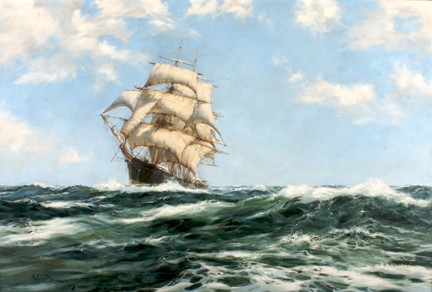
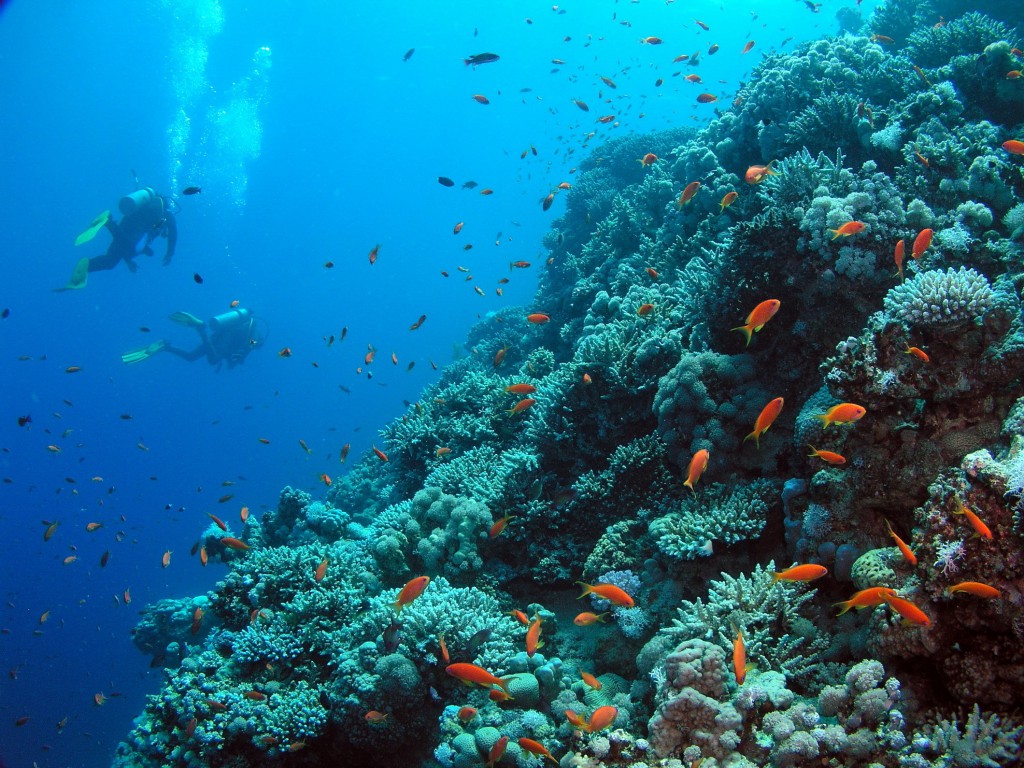
I must go down to the sea again, spelt H2CO3!

Starting to feel like a long way from John Masefield’s poem Sea Fever.

The call of the sea.

One of my all-time favourite poems.

I must go down to the seas again, to the lonely sea and the sky,
And all I ask is a tall ship and a star to steer her by,
And the wheel’s kick and the wind’s song and the white sail’s shaking,
And a grey mist on the sea’s face, and a grey dawn breaking.

I must go down to the seas again, for the call of the running tide
Is a wild call and a clear call that may not be denied;
And all I ask is a windy day with the white clouds flying,
And the flung spray and the blown spume, and the sea-gulls crying.

I must go down to the seas again, to the vagrant gypsy life,
To the gull’s way and the whale’s way, where the wind’s like a whetted knife;
And all I ask is a merry yarn from a laughing fellow-rover,
And quiet sleep and a sweet dream when the long trick’s over.

Why do I start this piece with that poem?

Well, read this,

Carbonic acid is a weak acid that is created when carbon dioxide (CO2) is dissolved in water (H2O), resulting in the chemical formula H2CO3. When the acid dissociates, or gives up a hydrogen ion, the resulting molecule is called a bicarbonate ion. Carbonic acid appears frequently in the natural world. It can be found in sodas, champagne, and blood. The acid even appears in rain.

But like so many things in nature, it’s all about balance.

A week ago, the 2nd March, Patrice Ayme gave me permission to reproduce an essay of his The collapse of the biosphere.  In that essay he wrote,

Besides, it’s not all about “climate change”. Half of the CO2 is presently dissolving in the oceans, so a rise of two degrees Celsius means extremely acid oceans (CO2 turns into carbonic acid after it reacts with water). At the present rate of acidification, marine life will dissolve big time by 2100. That’s how a lot of the oxygen is produced, by photosynthesizing unicellular animals, with acid sensitive skeletons. Atmospheric poisoning deniers do not want just to warm us up.

On that same day of March 2nd, Yves Smith of Naked Capitalism published an item that reinforced what Patrice wrote.  Yves very kindly gave me permission to republish her Post in full, as follows:

Current Rate of Ocean Acidification Worst in 300 Million Years

Science has published a troubling but not entirely surprising article on the fact that the oceans are acidifying at the fastest rate in 300 million years. Actually, it could be the fastest rate over an even longer time period, but we can only go back with any degree of accuracy for 300 million years

We first wrote about this issue in early 2007, and this section, which quoted Stormy from Angry Bear, will help bring readers up to speed:

….there are side effects to our love affair with CO2 that are not often mentioned. In fact, whether the earth cools or warms is absolutely irrelevant to these effects. I repeat: Absolutely irrelevant.

One of the most startling effects is the acidification of the oceans. Since 1750, the oceans have become increasingly acidic. In the oceans, CO2 forms carbonic acid, a serious threat to the base of the food chain, especially on shellfish of all sizes. Carbonic acid dissolves calcium carbonate, an essential component of any life form with an exoskeleton. In short, all life forms with an exoskeleton are threatened: shell fish, an important part of the food chain for many fish; coral reefs, the habitat of many species of fish….

The formation of carbonic acid does not depend upon temperature. Whether the oceans warm or cool is irrelevant. Of concern only is the amount of CO2 that enters the oceans.

Fast forward to today. Consider the scope of the paper in Science, per a very good discussion in ars technica:

A new paper in Science examines the geologic record for context relating to ocean acidification…The research group (twenty-one scientists from nearly as many different universities) reviewed the evidence from past known or suspected intervals of ocean acidification…They find that the current rate of ocean acidification puts us on a track that, if continued, would likely be unprecedented in last 300 million years.

There is an important driver of this process that this overview mentions only in passing further on, and it’s useful to have it in mind when you review the discussion of the historical record:ocean acidification depends primarily on the rate of atmospheric CO2 increases, not the absolute concentration. Look at how attenuated the rate of past CO2 changes was in the past versus the speed now:

The first period the researchers looked at was the end of the last ice age, starting around 18,000 years ago. Over a period of about 6,000 years, atmospheric CO2 levels increased by 30 percent, a change of roughly 75 ppm. (For reference, atmospheric CO2 has gone up by about the same amount over the past 50 years.) Over that 6,000 year time period, surface ocean pH dropped by approximately 0.15 units. That comes out to about 0.002 units per century. Our current rate is over 0.1 units per century—two orders of magnitude greater, which lines up well with a model estimate we covered recently.

The last deglaciation did not trigger a mass extinction, but it did cause changes in some species…

During the Pliocene warm period, about 3 million years ago, atmospheric CO2 was about the same as today, but pH was only 0.06 to 0.11 units lower than preindustrial conditions. This is because the event played out over 320,000 years or so. We see species migration in the fossil record in response to the warming planet, but not ill effects on calcifiers…

Next, the researchers turned their focus to the Paleocene-Eocene Thermal Maximum (or PETM), which occurred 56 million years ago. Global temperature increased about 6°C over 20,000 years due to an abrupt release of carbon to the atmosphere (though this was not as abrupt as current emissions). The PETM saw the largest extinction of deep-sea foraminifera of the last 75 million years, and was one of the four biggest coral reef disasters of the last 300 million years…

The group also examined the several mass extinctions that defined the Mesozoic—the age of dinosaurs. The boundary between the Triassic and Jurassic included a large increase in atmospheric CO2 (adding as much as 1,300 to 2,400 ppm) over a relatively short period of time, perhaps just 20,000 years. The authors write, “A calcification crisis amongst hypercalcifying taxa is inferred for this period, with reefs and scleractinian corals experiencing a near-total collapse.” Again, though, it’s unclear how much of the catastrophe can be blamed on acidification rather than warming.

Finally, we come the big one—The Great Dying. The Permian-Triassic mass extinction (about 252 million years ago) wiped out around 96 percent of marine species. Still, the rate of CO2 released to the atmosphere that drove the dangerous climate change was 10-100 times slower than current emissions…

In the end, the researchers conclude that the PETM, Triassic-Jurassic boundary, and Permian-Triassic boundary are the closest analogs to the modern day, at least as far as acidification is concerned. Due to the poor ocean chemistry data for the latter two, the PETM is the best event for us to compare current conditions. It’s still not perfect—the rate of CO2 increase was slower than today…

The authors conclude, “[T]he current rate of (mainly fossil fuel) CO2 release stands out as capable of driving a combination and magnitude of ocean geochemical changes potentially unparalleled in at least the last ~300 [million years] of Earth history, raising the possibility that we are entering an unknown territory of marine ecosystem change.”

Translation: “We’re probably fucked, but the data is so far outside of historical parameters, we can’t say anything with a high degree of certainty.”

Worth protecting, worth saving, worth caring about!

I must down to the seas again

History repeating itself in terms of the commercial sailing ship.

Tea clipper 'Cutty Sark'

Most Brits have heard of the tea clipper Cutty Sark.  As the Cutty Sark website explains,

Cutty Sark has travelled across the world, sailing under both the Red Ensign and the Portuguese flag, visiting every major port in the world through the course of her working life. In admiration of her beauty and in recognition of her fame, she was preserved for the nation by Captain Wilfred Dowman in 1922.

Since then, the old clipper has been berthed in Falmouth and Greenhithe, finally arriving at her current resting place in Greenwich in 1954.

And elsewhere on that website,

Cutty Sark matters because:
  • She is the epitome of the great age of sail.
  • She is the only surviving extreme clipper, and the only tea clipper still in existence.
  • Most of her hull fabric survives from her original construction and she is the best example of a merchant composite construction vessel.
  • She has captured the imagination of millions of people, 15 million of whom have come on board to learn the stories she has to tell.
  • She was preserved in Greenwich partly as a memorial to the men of the merchant navy, particularly those who lost their lives in both world wars.
  • She is one of the great sights of London.

I mention the Cutty Sark because it seems a historic connection with something very relevant to today’s world that was the subject of a recent item on Rob Hopkin’s Transition Culture blogsite.  In it Rob presents his first podcast, the topic being the sailing ship Tres Hombres, that is being used for commercial sea transport.  The link to the Transition Culture story is here, and the podcast follows, (just click on the link to listen to the fascinating 14 minutes audio story about the ship Tres Hombres.)

Tres Hombres podcastfinal

Sailing ship Tres Hombres

The first Transition podcast! A visit to the Tres Hombres, tasting a revolution in shipping

Last week I did a course with the Media Trust on how to make podcasts (highly recommended).  So, here, with some fanfare, is the first ‘Transition podcast’, I hope you like it.  If so, do embed it in other places.  It means I spent the time I would spend writing editing pieces of audio.  Let me know what you think.  So, the podcast is about a fascinating morning I spent visiting the sailing ship Tres Hombres which visited Brixham earlier this week.  It explores the potential of sail-powered shipping as the price of oil rises and the economy tightens.  It’s an exciting story.

Finally, let me close with a very well-known poem about sailing the big ships.

“Sea-Fever”

I must down to the seas again, to the lonely sea and the sky,
And all I ask is a tall ship and a star to steer her by,
And the wheel’s kick and the wind’s song and the white sail’s shaking,
And a grey mist on the sea’s face, and a grey dawn breaking.

I must down to the seas again, for the call of the running tide
Is a wild call and a clear call that may not be denied;
And all I ask is a windy day with the white clouds flying,
And the flung spray and the blown spume, and the sea-gulls crying.

I must down to the seas again, to the vagrant gypsy life,
To the gull’s way and the whale’s way where the wind’s like a whetted knife;
And all I ask is a merry yarn from a laughing fellow-rover
And quiet sleep and a sweet dream when the long trick’s over.
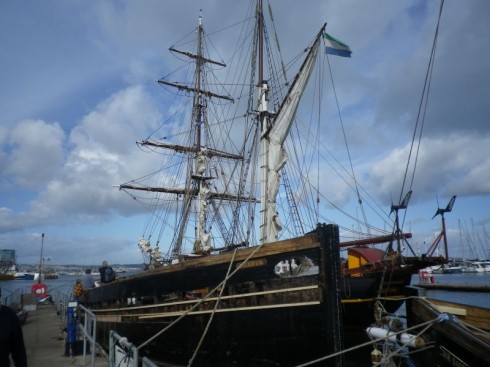
By John Masefield (1878-1967).
(English Poet Laureate, 1930-1967.)