Tag: John Gray

Living in the present.

Cherishing the here and now.

Over a week ago there was a fascinating and very thought-provoking BBC radio broadcast by Mr. John Gray, the political philosopher and author of the book False Dawn: The Delusions of Global Capitalism, .
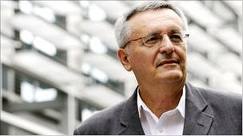
Mr. John Gray

The BBC website then carried a further article by John Gray.  But before quoting from that article, I do recommend that you put aside just 14 minutes to listen to that broadcast.  If you click here you will be taken to the BBC podcast page for the Point of View series and then scroll down to the item that is headlined: The End, yet again? 26 Dec 2011.

There will see that a simple ‘right click & save target as’ allows you to download the audio file so you can listen at your pleasure.

Indeed, having listened to Point of View over the many years when living in England, I can thoroughly recommend them.  Described on the website, “Weekly reflections on topical issues from a range of contributors including historian Lisa Jardine, novelist Sarah Dunant and writer Alain de Botton.”

Here are some extracts from the John Gray article that appeared on the BBC website.

A Point of View: The endless obsession with what might be

If we can stop thinking about what the future might bring and embrace the present for what it is, we would be a lot better off, writes John Gray.

It’s been some time now since history didn’t end. Twenty-odd years ago, when the Berlin Wall was coming down, there were many who believed that there would be no more serious conflicts.

The American writer Francis Fukuyama, who promoted the idea of the end of history in the autumn of 1989, declared that the chief threat in future would be boredom. A new era, different from any before, had arrived.

Of course it hadn’t. The end of the Soviet Union was followed by conflicts and upheavals of the sort that happen when empires fall apart – war in the Caucasus and economic collapse in Russia, for example.

In any realistic perspective the idea that a single event – however large – could mark the end of human conflict was absurd. But those who were seduced by the idea were not thinking in realistic terms.

They were swayed by a myth – a myth of progress in which humanity is converging on a universal set of institutions and values. The process might be slow and faltering and at times go into reverse, but eventually the whole of humankind would live under the same enlightened system of government.

When you’re inside a myth it looks like fact, and for those who were inside the myth of the end of history it seems to have given a kind of peace of mind. Actually history was on the move again. But since it was clearly moving into difficult territory, it was more comfortable to believe that the past no longer mattered.

Then later on in the article, John writes,

Life’s framework

The implication is that sudden shifts are relatively rare in history. But consider continental Europe over the past 70 years – until recently a normal human lifetime. Unless they were Swedish or Swiss, an ordinary European man or woman lived during that period under several quite different systems of government.

Nearly all of Europe, some of it democratic, succumbed for a time to Nazism or fascism. Half of Europe moved from Nazism to communism with only a brief interval of democracy. Most of that half, though not Russia, became functioning democracies after the end of the Cold War.

Not only have political forms changed during a normal lifetime, systems of law and banking have come and gone along with national currencies. The entire framework in which life was lived has changed not once, but several times. In any longer historical perspective discontinuities of these kinds are normal.

The article then concludes, thus,

We seem to be approaching one of those periods of discontinuity that have happened so often in the past. It may seem unthinkable that the European banking system could implode, or that a global currency like the euro could dissolve into nothing.

Yet something very much like that was the experience of citizens of the former Soviet Union when it suddenly melted down, and there is nothing to say something similar could not happen again.

For believers in progress it must be a dispiriting prospect. But if you can shake off this secular myth you will see there is no need to despair. The breakdown of a particular set of human arrangements is not after all the end of the world.

Surely we would be better off if we put an end to our obsession with endings. Humans are sturdy creatures built to withstand regular disruption. Conflict never ceases, but neither does human resourcefulness, adaptability or courage.

We tend to look forward to a future state of fulfilment in which all turmoil has ceased. Some such condition of equilibrium was envisioned by the American prophet of the end of history with whom I began.

As Fukuyama admitted, it’s not an altogether appealing vision. But living in fear of the end is as stultifying as living in hope of it. Either way our lives are spent in the shadow of a future that’s bound to be largely imaginary.

Without the faith that the future can be better than the past, many people say they could not go on. But when we look to the future to give meaning to our lives, we lose the meaning we can make for ourselves here and now.

The task that faces us is no different from the one that has always faced human beings – renewing our lives in the face of recurring evils. Happily, the end never comes. Looking to an end-time is a way of failing to cherish the present – the only time that is truly our own.

I have extracted more than perhaps I ought, and there was so much more to read than is presented here.  So please go to the BBC website and read it in full; it’s a very powerful essay.

You may also be interested in learning more about John Gray’s pivotal book: False Dawn: The Delusions of Global Capitalism

Finally, let me take you back to a piece that I wrote back in September about Transitions.  I closed that piece thus,

There is significant evidence, real hard evidence, that the patterns of mankind’s behaviours of the last few decades cannot continue.  Simply because mankind will go over the edge of self-extinction.  Darwin’s evidence and all that!  We have to accept that humans will see the bleedin’ obvious before it is too late.  We have to keep the faith that our species homo sapiens is capable of huge and rapid change when that tipping point is reached, so eloquently written by Paul Gilding in his book, The Great Disruption, reviewed by me here.  We have to embrace the fact that just because the world and his wife appears to be living in total denial, the seedlings of change, powerful change, are already sprouting, everywhere, all over the world.

So let’s welcome those changes. Let’s nurture those seedlings, encourage them to grow and engulf our society with a new richness, a new fertile landscape.

Let’s embrace the power of now, the beauty of making today much better and letting go of tomorrow.

For today, I am in charge of my life,

Today, I choose my thoughts,

Today, I choose my attitudes,

Today, I choose my actions and behaviours.

With these, I create my life and my destiny.

It’s very difficult to make predictions, especially when they involve the future!

Behaving like animals

A fascinating point of view of the relationship between humans and animals.

Jean and I were at our regular gardening college class yesterday.  It was all about the growing of vegetables.  OK, I can hear you thinking, what on earth does that have to do with today’s topic?  Simply because the tutor, Cayci V., mused at the start of her lesson how gardeners were great animal lovers and then proceeded to list all the animals she and her husband kept at their home in Globe, about an hour from Payson, Arizona.  Cayci admitted to having 5 dogs, 15 cats, 2 emus, 2 llamas, numerous chickens.  She also had 2 bison that recently died having been poisoned by Oleander cuttings.  Anyway, to the article.

recent article on the BBC News Magazine was about the need for humans to have contact with animals.  It was presented by John Gray who is a political philosopher and author of the book False Dawn: The Delusions of Global Capitalism which  argues that free market globalization is unstable and is in the process of collapsing!  H’mmm.  John is also the author of the book Straw Dogs: Thoughts on Humans and Other Animals, a book that was described by the British Observer newspaper thus,

There is unlikely to be a more provocative or more compelling book published this year than Straw Dogs. A long-time scourge of the delusions of global capitalism, John Gray is one of the most consistently interesting and unpredictable thinkers in Britain. He is unpredictable because, unlike most political commentators, he never ceases to question the underlying assumptions of his own beliefs and prejudices.

Anyway, I’m at risk of digressing, as many of you will regularly notice!  The article by John Gray on the BBC News website was published over a couple of weeks ago and, therefore, I feel it not too great a copyright sin to reproduce it in full on Learning from Dogs.  It’s a fascinating article.

Why does the human animal need contact with something other than itself, asks John Gray.

Many years ago an eminent philosopher told me he’d persuaded his cat to become a vegan. To begin with I thought he was joking. Knowing a bit about cats, I couldn’t take seriously the idea that they’d give up their predatory ways.

“You must have provided the cat with some pretty powerful arguments,” I said jokingly. “It wasn’t as difficult as you may think,” he replied rather sternly.

He never explained exactly how the transformation was achieved. Was his cat presented with other cats that had converted to veganism – feline role models, so to speak? Had he prepared special delicacies for his cat – snacks that looked like mice but were made of soya, perhaps?

Beginning to suspect that the philosopher might after all be serious, I asked if the cat went out. He told me it did. That answered a part of my puzzlement. Evidently the cat was supplementing its vegan diet by hunting, natural behaviour for cats after all.

I was still a little perplexed though. Cats tend to bring their hunting trophies back home and I wondered how the philosopher had missed seeing them. Had the cat hidden them out of sight? Or were the cat’s trophies prominently displayed but disregarded by the philosopher, marks of atavistic feline behaviour that would eventually disappear as the cat progressed towards a new kind of meat-free life?

The conversation tapered off and I never did get to the bottom of the mystery. The dialogue did set me thinking. Evidently the philosopher thought of the cat as a less evolved version of himself that, with a lot of help, could eventually share his values. But the idea that animals are inferior versions of humans is fundamentally misguided.

Each of the millions of species that evolution has thrown up is different and particular, and the animals with which we share the planet aren’t stages on the way to something else – ourselves. There’s no evolutionary hierarchy with humans perched at the top. The value of animals – or as I’d prefer to say other animals – comes from being what they are. And it’s the fact that they are so different from humans that makes contact with them so valuable to us.

Human qualities

Some philosophers – not many it must be admitted – have in the past understood this. The 16th Century French essayist, Michel de Montaigne, loved cats because he knew he would never be able to enter their minds. “When I play with my cat,” he asked, “how do I know she is not amusing herself with me rather than I with her?”

Montaigne didn’t want his animal companions to be mirrors of himself, he wanted them to be a window from which he could look out from himself and from the human world.

Never more than partly domesticated, cats are never fundamentally humanised. Montaigne found them lovable for precisely this reason, it wasn’t that he was suggesting we should emulate cats. Wiser than the philosopher who believed he’d converted his cat to veganism, he understood that the good life means different things for animals with different natures. What he questioned was the idea that one kind of life, the kind humans alone can live, is always best.

It’s true that cats don’t have some of the capacities we associate with morality. They seem to lack empathy, the capacity of identifying with the emotions of others. This may explain what has often been described as cruelty in their behaviour, toying with captured mice for example. Attributing cruelty to cats seems a clear case of anthropomorphism – the error of projecting distinctively human qualities onto other species.

Cats are not known to display compassion, but neither do they inflict pain and death on each other in order to gratify some impulse or ideal of their own. There are no feline inquisitors or suicide bombers. Pedants will say that this is because cats lack the intellectual equipment that is required to formulate an idea of truth or justice. I prefer to think that they simply decline to be enrolled in fanaticism, another peculiarly human trait.

Dogs seem to be capable of showing human-like emotions of shame, but though they are more domesticated they still remain different from us. And I think it’s their differences from us, as much as their similarities, that makes them such good companions.

Whatever you feel about cats and dogs, it seems clear that the human animal needs contact with something other than itself. For religious people this need may be satisfied by God, even if the God with whom they commune seems too often all-too-human. For many landscape gives a sense of release from the human world, even if the land has been groomed and combed by humans for generations, as it has in England.

The contemplation of field, wood and water intermingling with wind and sky still has the power to liberate the spirit from an unhealthy obsession with human affairs. Poets such as Edward Thomas and Ted Hughes have turned to the natural world in an attempt to escape a purely human view of things. Since they remained human and used human language in the attempt, it’s obvious that they couldn’t altogether succeed. It’s also obvious that searching for a way of looking at the world that’s not simply human expresses a powerful human impulse.

The most intense example of this search I know is that recorded by John Baker in his book The Peregrine. First published in 1967 and recently reissued, the book is seemingly a piece of nature writing which slowly reveals itself as the testament of someone struggling to shed the point of view of a human observer.

Renewed humanity

Baker records his pursuit of two pairs of peregrines, which had arrived to hunt in the part of East Anglia where he lived. Alone he followed the birds for over 10 years. Concentrating the decade-long quest into a single year in order to recount it in the book, he writes of the peregrine: “Wherever he goes, this winter, I will follow him. I will share the fear, and the exaltation, and the boredom of the hunting life.”

He tells us that he came late to the love of birds. “For years I saw them only as a tremor on the edge of vision. They know suffering and joy in simple states not possible for us. Their lives quicken and warm to a pulse our hearts can never reach. They race to oblivion.”

In time the human observer seemed to be transmuted into the inhuman hawk. “In a lair of shadow,” Baker writes, “the peregrine was crouching, watching me… We live, in these days in the open, the same ecstatic fearful life. We shun men.”

Note how Baker switches suddenly from describing the hawk watching him to describing how “we” flee from humans. Baker found a sensation of freedom in the feeling that he and the hawk were fused into one. Sharing in the “exaltation and serenity” of the birds’ life he could imagine that he’d shed his human identity, at least for a time, and could view the world through hawks’ eyes.

Of course he didn’t take this to be literal truth. He knew he couldn’t in the end be anything other than human. Yet he still found the pursuit of the peregrine deeply rewarding, for it opened up a temporary exit from the introspective human world.

John Baker’s devotion to the peregrine hadn’t enabled him to see things as birds see them. What it had done was to enable him to see the world through his own eyes, but in a different way. His descriptions of the landscape of East Anglia are exact and faithful to fact. But they reveal that long-familiar countryside in a light in which it looks as strange and exotically beautiful as anything in Africa or the Himalayas. The pursuit of a bird had revitalised his human perceptions.

What birds and animals offer us is not confirmation of our sense of having an exalted place in some sort of cosmic hierarchy, it’s admission into a larger scheme of things, where our minds are no longer turned in on themselves. Unless it has contact with something other than itself, the human animal soon becomes stale and mad. By giving us the freedom to see the world afresh, birds and animals renew our humanity.

A fascinating, beautiful and incredibly thought-provoking essay.