We interrupt your life to bring you a moment of beauty, part two.
Last week I published the first set of pictures sent across by John Hurlburt. Here is the second set (but do look at the postscript).
oooo
oooo
oooo
oooo
oooo
oooo
oooo
oooo
oooo
oooo
Now a bonus.
I was reading Naked Capitalism earlier on Saturday and came across the link to a story in Huffington Post about a young man who jumped into a swollen river in Bangladesh to rescue a young fawn in danger of being swept away to it’s death. This how that story opens:
Courageous Teen Risks His Life To Save Drowning Baby Deer
This is pretty incredible.
A wildlife photographer visiting Noakhali, Bangladesh, was able to witness — and document — an amazingly courageous teen risk his own life to save a drowning fawn, Caters News Service reports.
The boy waded into the fast current of a surging, swollen river in Noakhali, holding the deer above his head, even as he, himself, disappeared beneath the water at times.
The link in the last sentence takes you to the article as it appeared in The Daily Mail newspaper (online version).
Two of the photographs from that article.
PIC FROM HASIB WAHAB / CATERS NEWS (Pictured: DEER RETURNED SAFELY) – A brave boy fearlessly risked his own life – to save a helpless baby deer from drowning. The boy, believed to be in his early teens, defiantly held the young fawn in one hand above his head as he plunged through the surging river. During the ordeal onlookers were unsure whether the boy was going to appear again. When he finally made it to the other side the locals cheered as the deer was reunited with its family. The incident took place in Noakhali, Bangladesh, when the young fawn became separated from its family during torrential rain and fast-rising floods.
oooo
PIC FROM HASIB WAHAB / CATERS NEWS (Pictured: DEER)
OK, I know I have a tendency to get a little sentimental but here’s my closing thought. That is that while there are people in the world such as young Belal who will not hesitate to rescue a vulnerable creature then there’s hope for all of mankind.
From alerting you to the potential catastrophe of the Mustangs in Nevada.
Relationships across the internet, especially across the world of blogging are, oh, I don’t know, different! (OK, I hear some saying I could have chosen a more apt word; such as weird, self-indulgent, vain, and so on.)
Melinda Roth is an author. Her ‘goodreads’ page is here; her Amazon Books page is here; her website is here. Melinda has started reading posts on Learning from Dogs and, likewise, I have read posts over at Anyone Seen My Horse?
Seven days ago, Melinda published a post under the title of Oh, yum. This is the opening paragraph.
I ran across this recipe while doing a little research on horse slaughter (the Nevada Farm Bureau is suing the Bureau of Land Management because they want the federal agency to round up what’s left of America’s wild horses and send them to slaughter) so… thought I’d share:
When I read that I felt a mixture of anger, confusion, puzzlement; surely this can’t be the case? Then I read on, skipping the recipes that Melinda included in her post.
Now, you might have to go to Canada or Mexico to get the horse meat, but we ship those countries about 150,000 of our unwanted equines for slaughter anyway, so your meat will probably be home grown in the USA. No worries.
That is, as long as you’re not too concerned about the unregulated administration of numerous chemical substances to horses before slaughter, which according to official reports “are known to be dangerous to humans, untested on humans, or specifically prohibited for use in animals raised for human consumption.”
If travel is out of the question, however, you can always buy imported horse meat online.
Check out My Brittle Pony, which is horse meat jerky seasoned with “Guinness, onions, garlic, fresh herbs and Soy Sauce and is guaranteed to contain no horse substitute such as beef.”
It costs £3.50… and you can pay with Pay Pal.
But if the Nevada Farm Bureau has its way, we won’t have to travel or use currency converters to buy horse meat. A majority of the country’s last wild horses live in Nevada, and that state seems ready to cash in on one of its most popular natural resources.
Anyone who knows anything about Jean and me knows that we love animals and we adore our own animals. Thus as I read Melinda’s post the pain and anguish building in me was indescribable; and I’m only half-way through the post. Yes, there’s worse to come.
According to reports published in the last week, the Nevada Farm Bureau and the Nevada Association of Counties want the BLM to round up just about as many remaining wild horses as they can. The BLM argues that it’s already housing about 50,000 wild horses it’s already captured and can’t afford to take in many more.
The Nevada Farm Bureau argues that there are too many wild horses on public lands. But there are only about 30,000 wild horses left, and since public lands seem perfectly able to support 1.75 million head of livestock (that belong to private ranchers), what exactly is the problem?
There’s more you should read so please do so. Especially not forgetting to communicate your feelings to NVFB via the address listed on their web site – nvfarmbureau@nvfb.org
I wrote a comment to Melinda’s post endeavouring to explain what I was feeling. Melinda then pointed me to an essay by Andrew Cohen. It was beautiful and it seemed in order to share it with you. So here is Andrew Cohen writing about horses.
I write about wild horses. I write an awful lot about wild horses. And it’s not just because I cherish the animals or admire all that they have done through the centuries to ease our burden here in North America. I sometimes get grief about my focus upon the nation’s herds, and I know that many people who don’t “get” horses, or who have never been near a horse, cannot fathom the depth of passion the animals engender among their human supporters. What can I say? I can’t help it and I won’t stop.
I write about wild horses for many of the same reasons that I write about mentally ill prisoners who are abused in their cells or about indigent defendants who cannot afford a lawyer or anyone else who has a voice, and rights, but who cannot be properly heard or who cannot have those rights acknowledged. Mordecai Richler, the late, great Canadian writer, long ago captured the essence of what I try to do with all my writing: “The novelist’s primary moral responsibility is to be the loser’s advocate,” he said. The actor Ricky Gervais said pretty much the same thing the other day, without the literary flair, when he said: “Animals don’t have a voice. But I do.”
I have a voice and I’ve chosen to speak out for these horses, which are being rounded up by the tens of thousands from our public and private lands and sent to holding pens in the Midwest — or sold into slaughter even though that is against the law. The government and the ranchers say these roundups must happen because there is no room for the herds, or because they graze too heavily upon the land, but ample evidence exists suggesting that this simply isn’t so. The truth is that there is plenty of room out West for these horses and there are plenty of ways in which the herds may be properly managed to ensure their survival without forcing them into cruel conditions or slaughter.
Why that isn’t happening is a story everyone ought to care about. So I write about wild horses because I think their treatment over the past four decades, since the passage of the federal law designed to protect them, reveals a great deal about American politics and the nature of the bureaucratic state. The Interior Department, which has stewardship over the herds, is little more than a straw man for the industries it is supposed to regulate. And those industries, which receive enormous federal benefits in the form of welfare ranching, and which in turn send millions of dollars and boatloads of lobbyists to Washington, want the horses off the public lands no matter what anyone else says.
I write about wild horses because last year the National Academies of Science issued a report scathing in its criticism of the Bureau of Land Management’s scientific approach to the herds. Before the report was issued, federal officials assured advocates that its conclusions would be respected (or at least publicly discussed). But it’s been seven months now since the report was issued and federal officials have done almost nothing about it. That’s just not unjust to the horses, and unfair to their human advocates, and perhaps a violation of federal law, it’s also terrible policy, as a general rule, for bureaucrats to ignore the findings of a report they themselves commissioned and paid for.
I write about wild horses because the last Secretary of the Interior was a rancher who did not even try to conceal his disdain for federal obligations to the horses and because the current Secretary of the Interior, herself a former engineer, has shown no interest in the herds or in addressing the concerns raised by the NAS report. Only the Interior Department, the backwater of all Washington beats, could engender so little muckracking when so much money, and so much else, is on the line. I write about wild horses because their story is the story of every other small interest without political power in Washington or the statehouses of this nation.
They are persecuted. They have rights but no remedies. And their fate isn’t going to get better unless more people come to understand the injustice of what’s happening to them — and how far the gulf is between the noble image we have given them in our national psyche and the reality of their perilous existence. That’s why I write about wild horses and it’s why I am grateful when anyone happens to read what I’ve written.
ooOOoo
Now I don’t know one end of a horse from the other. But Jean does. In previous years, Jean was a keen horse-woman. But me not speaking horse doesn’t mean that I am not passionate about doing something to help these poor wild horses. Even if what we do is only something tiny, as the old saying goes, by the inch it’s a cinch. Jean is just as passionate about wanting to help as I.
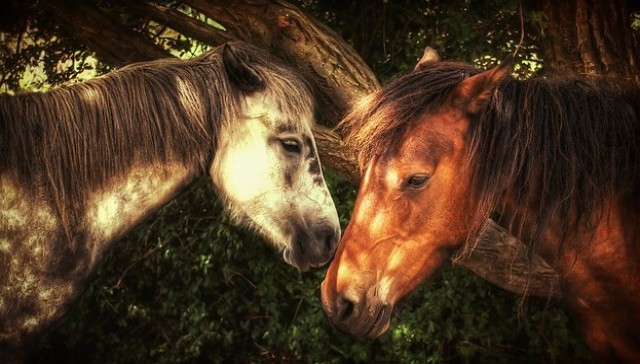
Not only do we have two miniature horses here in Oregon, we have sufficient pasture to accommodate two of these Mustangs. We want to adopt two horses or burros that, otherwise, would be slaughtered.
Tomorrow I will share how we are researching how one goes about adopting a mustang or a burro. Because if only one extra horse is adopted as a result of the Melinda Roth – Andrew Cohen – Learning from Dogs sequence then that’s one less horse destined for slaughter.
The most important thing, without a doubt, to learn from dogs.
Last Tuesday, Learning from Dogs published the first of the three parts of Martin Lack’s essay From Environmentalism to Ecologism. It generated a fascinating discussion. One of the commentators was Chris Snuggs who writes his own blog under the name of Nemo Insula Est. Here is the essence of a discussion with Martin Lack and Patrice Ayme. (Without reading the following comments, my closing opinion will make little sense; assuming they do at the best of times!)
Chris: The problem with politics at the moment is that the choices come down to A) being socialist, moral and bankrupt or B) capitalist and immoral but at least with a chance of avoiding poverty and chaos.
Martin: I think I am very much in agreement with you, Chris. It says a l lot when a practicing Catholic can admit that his Church needs to ditch its anthropocentric bias and stop treating the Earth as if we are the only species that matters…
Chris: One of the big questions for me is this. Is the world of our perceptions ONLY what we see, hear, smell and touch or is there another dimension which we cannot sense? Personally, I believe the former, which is why I cannot believe in: God, aliens, ghosts, an afterlife, fairies or indeed a sensible socialist economic policy.
I sometimes feel this makes me boring (or if you like, it just another feature of my boringness), but on the other hand I feel more or less in tune with what I understand “The Enlightenment” to have meant. It would be much more reassuring to know that there is a God (caring if possible, though it is hard to see how he would be) and indeed aliens, as long as they were friendly. But until there is some sound evidence, I cannot. And there IS no evidence that would stand up in court, is there?
So, we are alone; the universe is as it is; how it came into being we do not know and it is perhaps unknowable; the planet Earth cares not a jot about us or our feelings; we have no particular right to exist: we just do, by natural accident (until proven otherwise). I am not a fan of the “There are billions of stars in the universe, so there must be other forms of life elsewhere.” argument. “must be” is not “is”.
So if WE do not ensure our survival by looking after the planet then nobody or nothing will. As for “ecology”, good people are trying to do a lot of things, but as far as I can see:
A) It is too late and too little. Even if we were doing all the right things NOW (which we obviously are not), the time lag before our actions start to correct othe damage done will be too great; we may well have died out by then.
B) Despite all that is being done, CO2 emissions are going up, countries have STILL found no economic model that does not insist on growth and you cannot have growth without increased energy use, which for the moment and foreseeable future means fossil fuel extraction. And THIS of course continues apace with many countries now desperately trying to frack their way to growth, in the case of the USA rather successfully.
Martin: All very interesting, Chris, although I am not sure why your atheism necessitates rejection of socialism. For many people the two are inextricably linked. However, this is all off-topic… All I wanted to point out was that anthropocentrism is a mistake that can be made by both theists and atheists alike; and that it is good to see the former admitting they have made this mistake.
Paul: Chris/Martin, To my way of thinking, there is a more fundamental issue at work. That is the corrupting effect of power. I’m certain you know the famous saying. Thus whatever fine motives propel a person to enter politics, that person seems unable to avoid the call of power and its corrupting effect. The only hope is that key countries, and none so key as the USA, evolve a better, more representative, political process. Otherwise, I fear for the coming years.
Patrice: I agree with Paul 100%. I saw the call of power. Unimaginable. People just get insane. There are also filtering systems to insure they get that way (it starts right away with one week retreats in extremely posh resorts; does not matter if you are capitalist, socialist, blueist, reddist, ecologist, independentist, etc.).
Chris: Agreed. It has been clear time and time again throughout history. Well, so much is obvious, but WHAT TO DO about it?
A) We must end the practice of having career politicians: you serve a maximum of TEN years, at the end of which you go.
B) Inherited wealth allowing the building up of immensely powerful family dynasties over generations must be ended. It is simply untenable. The rich-poor gap is getting obscene everywhere, and money is of course power. My “Abolish inheritance” idea will be wildly unpopular because we are naturally acquisitive and “greedy” and of course would hit those with most to lose who also therefore have the most power.
Patrice: With all due respect, Chris and Martin sound rather naïve… Huge wealth and power is where it’s at. And it attracts to politics first, foremost, and soon uniquely, those it attracts most, namely the basest sort.
Chris:
A) All a question of balance: SOME ambition is essential; it is when there is too much that it is dangerous.
B) I would have maximum terms for political service. plus:
C) Nobody should be allowed to be a public representative until they have fulfilled certain conditions, for example (but to be debated): worked in the private sector; some experience of life in a factory; nobody under 30; high achievement in some industrial, commercial, academic or social field, and so on
Ed Milliband grew up in a Marxist family, went to a posh school and then straight to university from where he went straight into politics as an “advisor”, thence to become a Minister and now leader of the opposition and possible OM.
THAT is not the proper background for a national leader, but the House of Commons is full of such people. The % of MPs from “working-class” backgrounds is going down and down and down. In the USA, Congress is over-represented by the rich, famous and/or connected. Where are the mailmen, bus drivers and burger-servers? “You need more intelligent Congresspeople than that.”
Sorry, I can’t take that argument from a country that elected Dan Quayle, George Bush and Sara Palin!!!!!
Patrice: Right. Glad to see every body agrees. It’s even worse than that. “Representative” politics is intrinsically demonic, as it vests great power in some individuals. That, per se is not just a crime, but absolutely corrupting.
Representative politics has got to be eliminated. Switzerland has eliminated it at the legislative level. Why can’t all other countries of the West do the same? Because the present plutocracy rules through the representatives, esp. in the USA? After we have done the legislative, the executive could be handled along Roman Republican lines and Athenian lines. Roman Consuls, for example, had full power only for one month at a time. In Athens enormous quora (say, 8% of the potential electorate) had to be found, before any decision.
Martin:Excellent synopsis, Patrice. All of the things you mention would be made possible by a return to localism and/or bioregionalism, which may well come to pass by default (i.e. as a result of those in power now being in denial about what is happening to our planet).
Now the reason that I offered up this lengthy transcript of the conversation was that it clearly showed to me that bright, well-educated people agree that there is much wrong with many, if not most, countries that offer a representative democratic form of Government. Bright, well-educated people are also not afraid to offer answers. Patrice went on to write a most engaging post over at his place under the title of Representative Politics Is Dictatorship. It opens:
Representative Dictatorship Is Not Democracy
I know a young lady who was elected for the first time in California. She is sent to a posh resort for a week to learn the basics of her new job, being a “Democratic” politician. Everything is wrong with this picture (not just the mansion she lives in and her million dollar family income, while claiming to be a leftie). Everything is wrong, but it’s typical: all elected representatives in the USA are treated very well, and get to meet who, it dawns on them after a while, can insure for them, and their families, much nicer lives. (The New York Times, to its discredit, just discovered this PACS trick in 2014.)
A gigantic manipulation industry has developed, with its own strategists. Barack Obama seemed to have come out of nowhere, but, even before he started to score big, he was viewed as the anointed one, by the highest powers in “Democratic” circles: Axelrod, a professional manipulator who had just led Kerry’s campaign, was sent to Obama, just a modest Senator. Obama then gave a keynote speech at the Kerry convention, etc. When he campaigned, Wall Street money started to flow, more than towards any other candidate, by orders of magnitude, etc. No wonder Obama has found so hard to bite the hand that fed him.
Let me draw this all together. Possibly in a manner that will cause readers to sigh and say the old fella is losing the plot!
Because what I am about to say strikes me as so obvious, so massively demonstrated day-in, day-out by the planet’s sentient, warm-blooded creatures (even man can do it!).
It is this.
We have lost sight of the fact that animals offer an endless set of examples of living in the present and offering unconditional love to those creatures, humans included, that do not threaten them. These are very difficult times for us and all the creatures on this planet. Unconditional love for the planet we live on and for all those that do not threaten us is the only way forward!
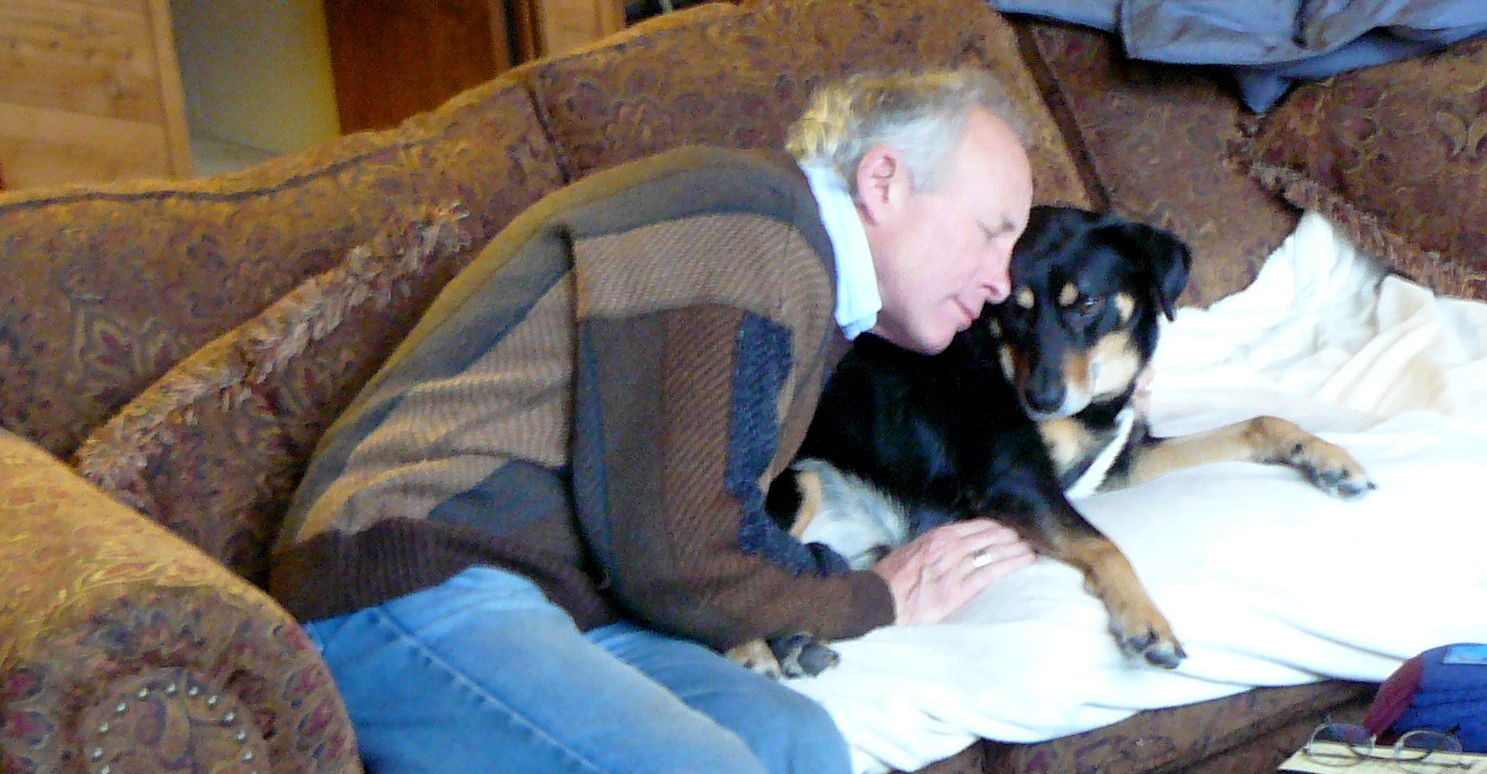
Let me close with three photographs that provide all the evidence that we need to embrace love and tenderness for everything in our lives.
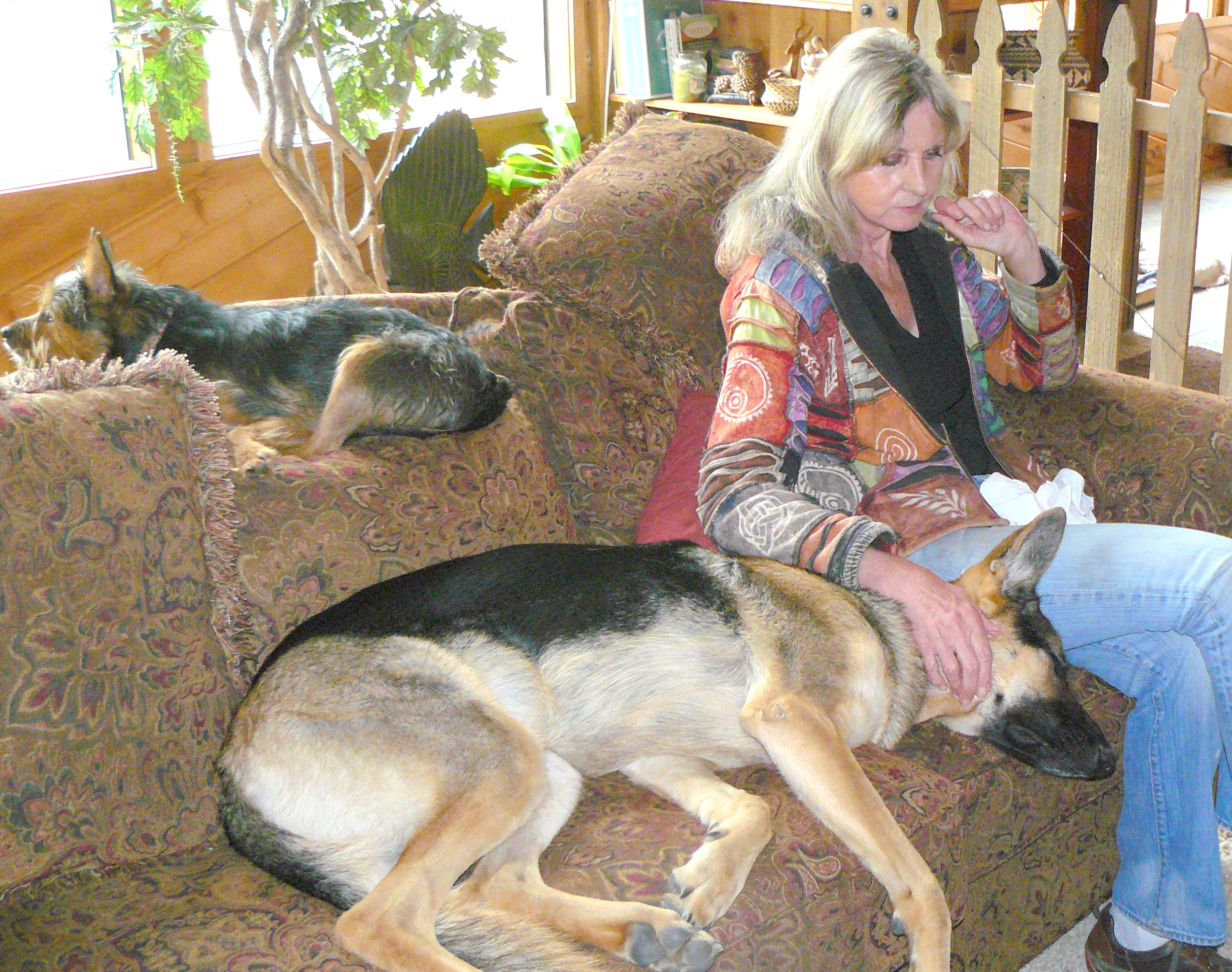
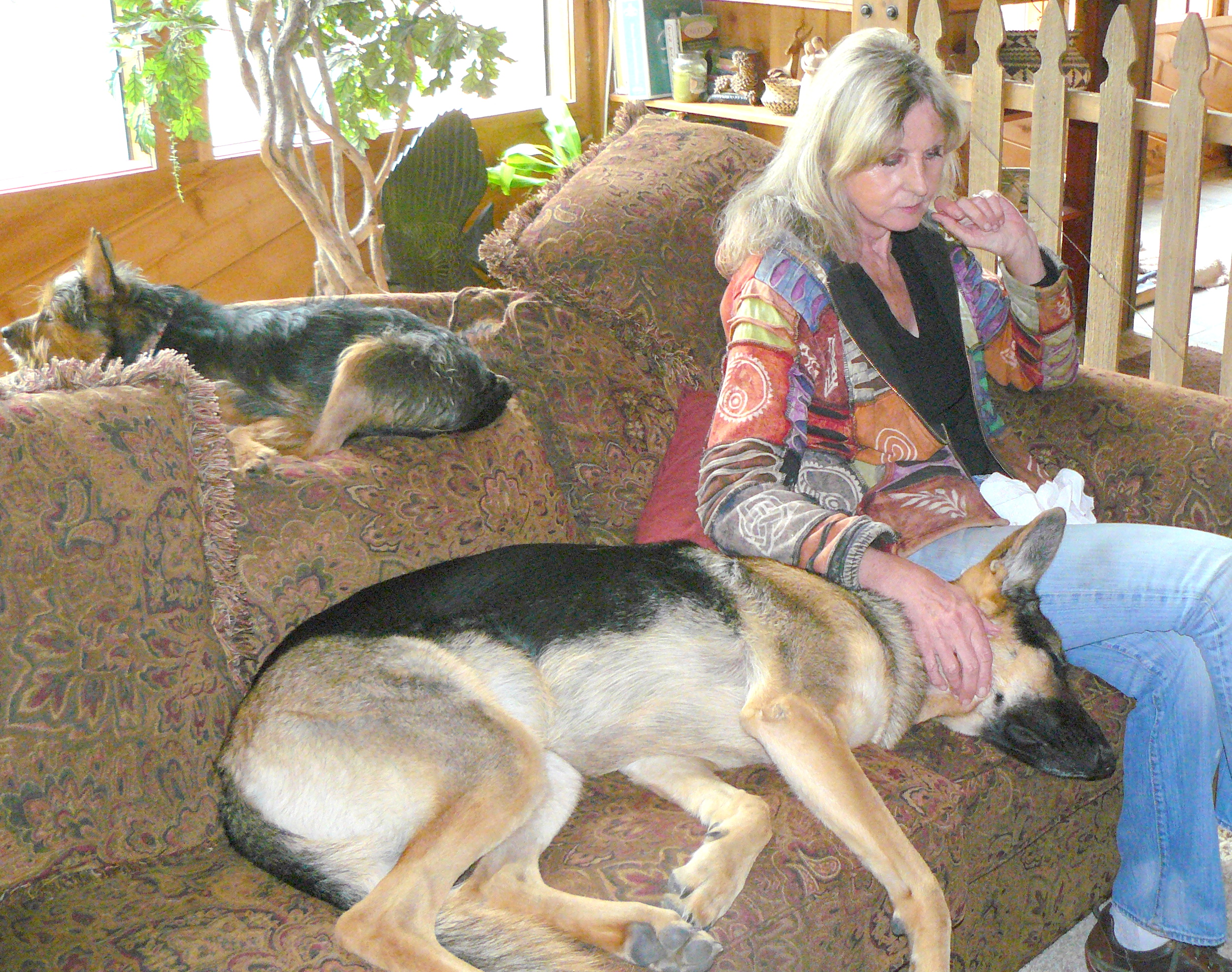
Sweeny on back of settee, Cleo loving Jean.
oooo
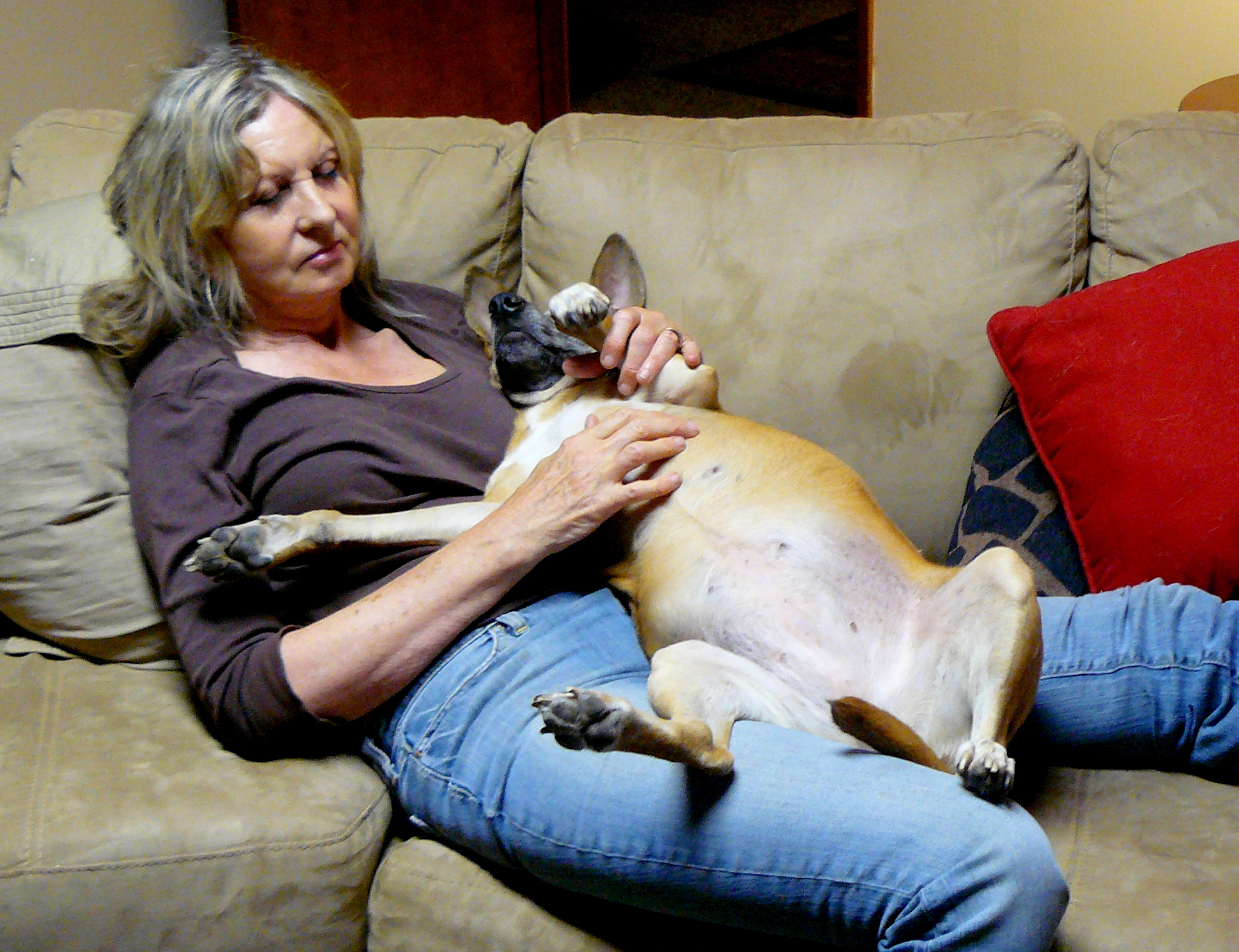
Dhalia’s unconditional love for Jean.
oooo
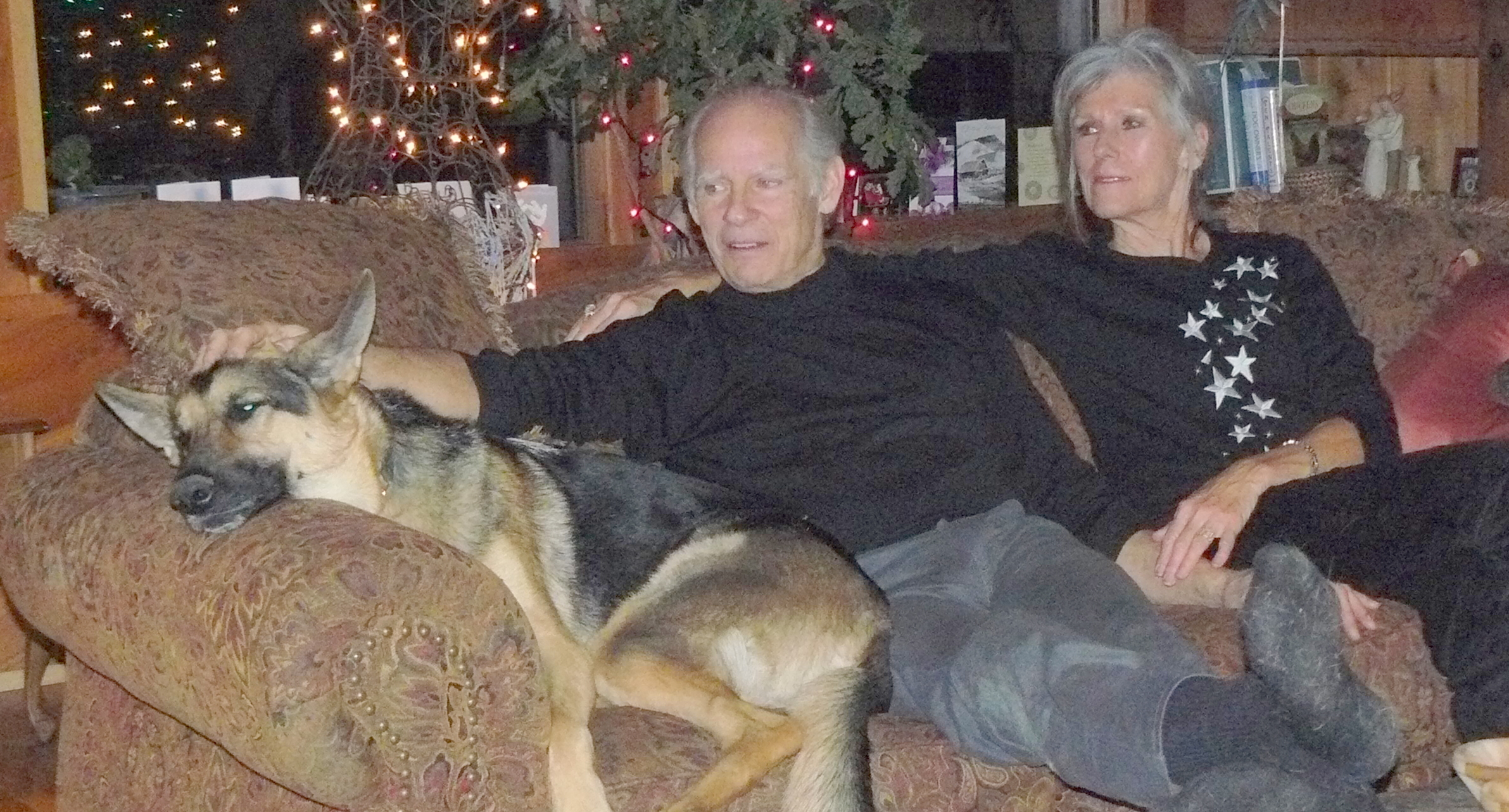
Neighbours Bill and Dordie under the influence of Cleo’s unconditional love.
My post last Monday, The lure of patterns, appears to have resonated far and wide. In the sense of many echoes reinforcing the perilous nature of our present times and the desperately uncertain decades ahead. Tomorrow I shall be writing specifically about those echoes.
Those echoes, as I chose to call them, were kicked off by a recent item on the blog Economic Populist. The item was called Maps of Economic Disaster and had some sickening information. Such as:
Today 15% of Americans live in poverty. Below is a county map showing the previous year’s poverty rate and we see once again the South has high concentrations.
People are living on the edge. People living in liquid asset poverty is a whopping 43.9%. This means 132.1 million people lack the savings to cover basic expenses for three months if they lose their job, have a medical emergency or some other sort of crisis. The below map** breaks down that percentage state by state. Pretty much half the country is living on the edge, paycheck to paycheck.
** I’ve not included that map but it may be seen here. However, I did want to republish the closing map.
Finally, the next map shows how income inequality has grown in United States over time. The gini index is a measure of income inequality, the higher then index gets, the worse income inequality is. If there is ever a map which shows the the destruction of the U.S. middle class, it is this one.
[N.B.The following map is an automated GIF so just left-click on it to see the sequence. That sequence is essentially a coloured graphical image of each year, from 1977 through to 2012. Don’t struggle with it. All you have to note are the changing colours. More colours towards the green end of the spectrum indicate a worsening gini index, i.e. a worsening measure of income inequality. ]
America is clearly in dire straights and the above maps it all out. Why then has this government, this Congress not put wages and jobs as jobs #1 is a good question. Why America hasn’t outright revolted, demanding this government do so is a better one.
oooo
George Monbiot.
Let me now turn to George Monbiot, a British writer known for his environmental and political activism. WikiPedia describes Mr. Monbiot, in part, as:
Here are some of the things I love: my family and friends, salt marshes, arguments, chalk streams, Russian literature, kayaking among dolphins, diversity of all kinds, rockpools, heritage apples, woods, fishing, swimming in the sea, gazpacho, ponds and ditches, growing vegetables, insects, pruning, forgotten corners, fossils, goldfinches, etymology, Bill Hicks, ruins, Shakespeare, landscape history, palaeoecology, Gavin and Stacey and Father Ted.
Here are some of the things I try to fight: undemocratic power, corruption, deception of the public, environmental destruction, injustice, inequality and the misallocation of resources, waste, denial, the libertarianism which grants freedom to the powerful at the expense of the powerless, undisclosed interests, complacency.
Here is what I fear: other people’s cowardice.
There was a recent essay concerning the UK’s energy strategy posted by George Monbiot published in the Guardian on the 22nd October. It is also on his website.
The essay opens, thus [my emphasis]:
Fiscal Meltdown
The government is betting the farm on a nuclear technology that might soon look as hip as the traction engine.
Seven years ago, I collected all the available cost estimates for nuclear power. The US Nuclear Energy Institute suggested a penny a kilowatt hour. The Royal Academy of Engineering confidently predicted 2.3p. The British government announced that in 2020 the price would be between 3 and 4p. The New Economics Foundation guessed that it could be anywhere between 3.4 and 8.3p. 8.3 pence was so far beyond what anyone else forecast that I treated it as scarcely credible. It falls a penny short of the price now agreed by the British government.
Mr. Monbiot’s essay concludes:
An estimate endorsed by the chief scientific adviser at the government’s energy department suggests that, if integral fast reactors were deployed, the UK’s stockpile of nuclear waste could be used to generate enough low-carbon energy to meet all UK demand for 500 years. These reactors would keep recycling the waste until hardly any remained: solving three huge problems – energy supply, nuclear waste and climate change – at once. Thorium reactors use an element that’s already extracted in large quantities as an unwanted by-product of other mining industries. They recycle their own waste, leaving almost nothing behind.
To build a plant at Hinkley Point which will still require uranium mining and still produce nuclear waste in 2063 is to commit to 20th-Century technologies through most of the 21st. In 2011 GE Hitachi offered to build a fast reactor to start generating electricity from waste plutonium and (unlike the Hinkley developers) to carry the cost if the project failed. I phoned the government on Monday morning to ask what happened to this proposal. I’m still waiting for an answer.
That global race the prime minister keeps talking about? He plainly intends to lose.
NB. I edited out the links to a comprehensive set of references to make the essay easier to read off the screen. But all the facts reported by Mr. Monbiot may be seen here.
oooo
Just two more or less random pieces of writing that have graced my ‘in-box’. Nothing scientific about my selection; just the sense that they are representative of the reams and reams of articles, essays and reports coming in on an almost daily basis from right across the world showing an ever-increasing credibility gap between the peoples of many nations and those who purport to serve those peoples in their respective Governments.
Frankly, I can’t even imagine how or when we will ‘transition’ out of this present period. But one thing I am sure about. This schism between us, the people, and those who govern us is unsustainable!
Yesterday’s long rant was the outcome of me promising ‘a debate’ with Patrice Ayme. Succinctly, I had disagreed with a comment from Patrice where he had written: “Force is the truth of man. Everything else is delusion, even the vegetarian style.” and wanted to respond within the space of a post rather than the more restrictive comment.
For my disagreement with Patrice had been essentially about his statement, ‘Force is the truth of man‘. I don’t recall a war in the last 50 years that has been a force for good.
But then it was Alex’s comment, see below, that stopped me short. For I realised that I was confusing ‘force’ with ‘war’ and that was probably a big mistake on my behalf. Of course, I’m writing this without the benefit of knowing better what Patrice meant in his comment! Blogging, as powerful a media as it is, does not provide for immediate interaction!
Nevertheless, Alex’s comment yesterday was powerfully inspirational. Because so many of us (and I include me in that ‘us’) all too often behave as though we are a species utterly divorced from Nature.
So what to do? Because I am fundamentally at odds with the sentiment expressed by Patrice Ayme; “Force is the truth of man. Everything else is delusion, even the vegetarian style.“
The answer takes us to tomorrow’s post, A return to integrity.
And, yes, it does mention dogs! Rather a lot as it happens!
Dogs are the one species that man has lived with longer than any other species. So when we refer to the qualities of the dog it is simply because we are so familiar with them. In no way does that exclude the numerous other species that bond with man and share the same wonderful qualities.
Qualities so easily seen: Love, Honesty, Loyalty, Trust, Openness, Faithfulness, Forgiveness and Affection. Together they are Integrity.
Of course dogs will kill a rabbit, for example, as readily as a cat will kill a mouse. In this respect force isthe truth of Nature.
The only way for species man to survive on this planet is for every element of man’s existence on this planet to be rethought of in terms of the natural order. Read the comment left by Alex in yesterday’s post:
Hi Paul, what you highlight are examples of disconnection between humanity with nature and each other. I have on my own blog highlighted a concept of Ubuntu – “I am because we are” – which is only possible when the self realises they are part of an inter-connected network of life. Your example of islands of fragmented forest where disconnected wildlife are dying out is how it is with disconnected humanity, we are doomed to destruction because we are cut off from the life-giving connection to nature.
All the problems you highlight are symptoms of the disease of disconnection, until there is reconnection to nature none of these symptoms can be successfully addressed.
War is an integral part of nature, when people seek to dismiss this then they add to the disconnection from nature. I was stung in the face by a drunken wasp a few days ago, this is how it is with nature, it is beautiful but also brutal. Peace and balance are illusions, life is in a becoming because of unbalance and strife. I advocate harmony, like a downhill skier we do not seek to control our surroundings, but instead act in harmony by moving around the obstacles such as rock and tree.
Disconnection can be as large as destroying whole forests by ignorant energy policies to those idiots who kicked a puffball to pieces before I could harvest it, or the new owners of my former home who have taken a chainsaw to all the trees and bushes in the garden. People who are disconnected do not consider how their actions impact nature or people contrary to the philosophy of Ubuntu.
“I am because we are!” Each and every one of us is where we are today, for good or ill, because of what we are: part of Nature. It’s so incredibly obvious – we are a natural species – yet who reading this wouldn’t admit at times to behaving “as though we are a species utterly divorced from Nature.”
Millions of us have pets and animals that we love. Yet we still miss the key truth of our pets. That we are a part of Nature, subject to Natural order, just as much as our pets are. We have so much to learn from our animals.
Take this rather sad story but, nonetheless, a formidable story of the integrity of one species for another. Watch the video.
oooo
Take this rather happier story about the integrity of one species for another. Watch the video.
oooo
Thus when we see the extraordinary benefits that arise from love and trust, from loyalty and faithfulness, and much more, why oh why is so much of our society fundamentally broken?
As John Hurlburt wrote in a recent email, it is because, “we are spiritual bankrupt. We spend too much of our time thinking about ourselves and what we want and too little of our time thinking about other people and what we all need.” John went on to add that this spiritual bankruptcy had preceded our moral and economical bankruptcy. He pointed out that the solution to our moral and financial problems, as well as our salvation as individuals and as a species, is spiritual. “We simply need to love the Nature of God, the earth and each other regardless of what we may believe God to be.”
Now whether you are a religious soul, or a heathen, or somewhere in the middle, it matters not. For if we continue to defy Nature and the natural laws of this planet we are going to be dust before the end of this century. Again in John’s powerful words:
Denying climate change is a death wish.
Nature always wins in the long run.
Nature is balanced. Are we?
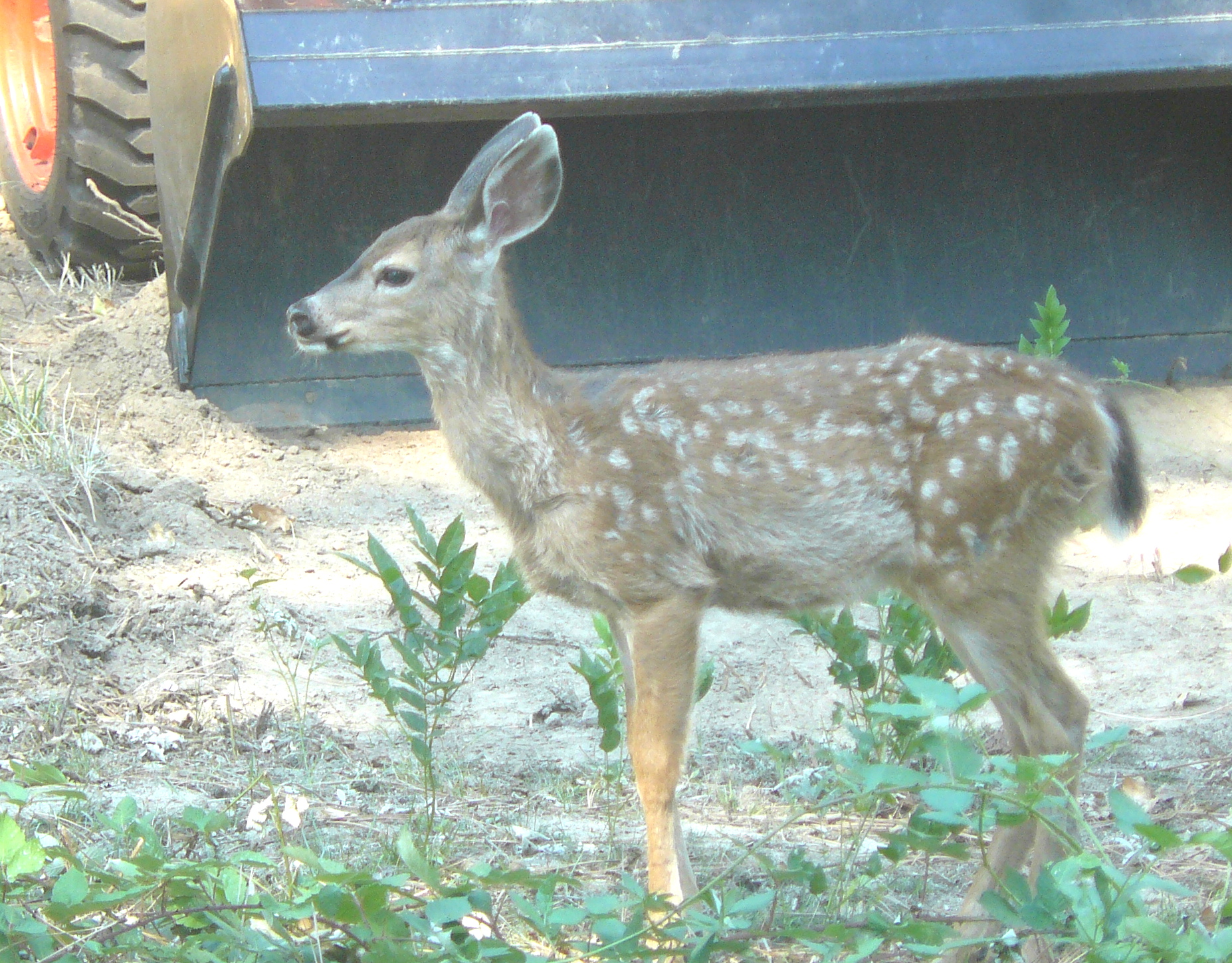
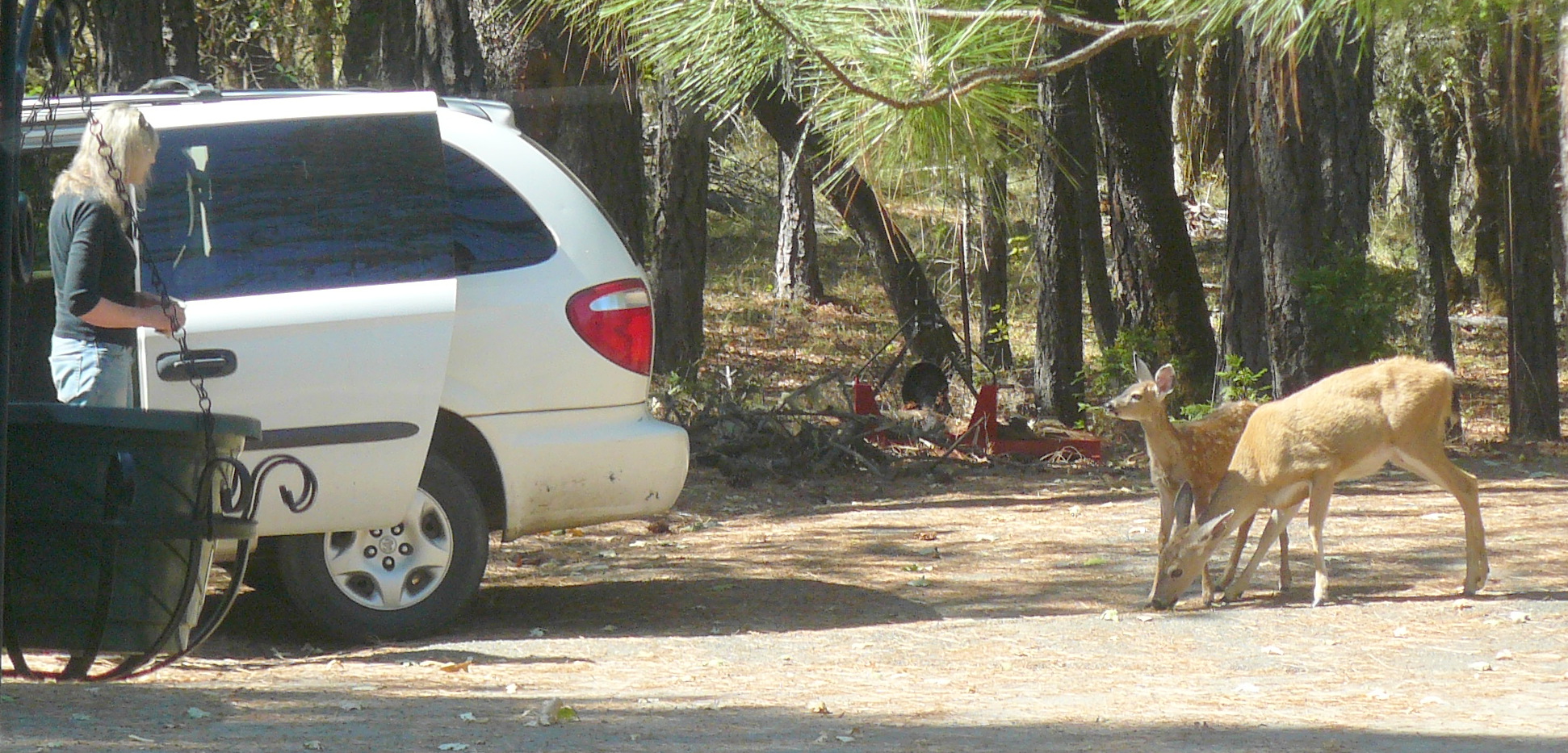
As if to endorse the great examples that Nature offers us in terms of the benefits of love and trust, take a look at these three recent photographs from here in Oregon.
A young timid deer showing her trust of me as I sat quietly on the ground less than 30 feet away.
oooo
A mother and her fawn trusting Jean’s love for them, and getting a good feed!
oooo
Little Sweeny and Cleo converting trust to peace and happiness. (Not to mention Jean!)
Now these are not photographs to ‘ooh’ and ‘ah’ over, these are reminders that kindness, generosity, selflessness and trust are part of Nature. All the great virtues and values of man do not come from a vacuum, they come to us via Nature.
We have been blessed by an evolution that has allowed mankind to achieve remarkable things. Even to the point of leaving the confines of our planet and setting foot on the Moon and sending probes from out of our Solar System. There’s a sense, a distinctly tangible sense, that man has conquered all; that we have broken the link from being part of Nature; from being of Nature.
And now Mother Earth is reminding all of her species, every single one of them including species man, that everything is bound by her Natural Laws.
Does this mean that man has to revert to some form of pre-civilised stone-age era? Of course not! Progress can be as much within the Natural order than in competition with it, as it has been in recent times. In fact, Professor Pat Shipman explains our progress is benefited by being part of that Natural order. Here’s how Amazon describe her book, The Animal Connection.
The Animal Connection: A New Perspective on What Makes Us Human
A bold, illuminating new take on the love of animals that drove human evolution.
Why do humans all over the world take in and nurture other animals? This behavior might seem maladaptive—after all, every mouthful given to another species is one that you cannot eat—but in this heartening new study, acclaimed anthropologist Pat Shipman reveals that our propensity to domesticate and care for other animals is in fact among our species’ greatest strengths. For the last 2.6 million years, Shipman explains, humans who coexisted with animals enjoyed definite adaptive and cultural advantages. To illustrate this point, Shipman gives us a tour of the milestones in human civilization-from agriculture to art and even language—and describes how we reached each stage through our unique relationship with other animals. The Animal Connection reaffirms our love of animals as something both innate and distinctly human, revealing that the process of domestication not only changed animals but had a resounding impact on us as well.
It’s a powerful read and greatly recommended. Here’s an extract from the book [page 274, my emphasis]:
Clearly, part of the basis of our intimacy with tame or domesticated animals involves physical contact. People who work with animals touch them. It doesn’t matter if you are a horse breeder, a farmer raising pigs, a pet owner, a zoo keeper, or a veterinarian, we touch them, stroke them, hug them. Many of us kiss our animals and many allow them to sleep with us. We touch animals because this is a crucial aspect of the nonverbal communication that we have evolved over millennia. We touch animals because it raises our oxytocin levels – and the animal’s oxytocin levels. We touch animals because we and they enjoy it.
From the first stone tool to the origin of language and the most recent living tools, our involvement with animals has directed our course.
So to round this off. These last two posts came from my need to debate with Patrice the statement that “Force is the truth of man.” If Patrice’s meaning was that the truth of man is subject to the force of Nature, then I agree one-hundred percent.
For the time for man to recognise that the force of Nature is “the truth of man” is running out.
Each of us, whoever you are, for the sake of your children and for all of the children in the world, embrace today the qualities, the values of Nature.
A personal perspective on today’s American presidential election
Voting for truth!
In many ways, it’s helpful that despite being a resident of the USA I am not eligible to vote. That’s because my residency status as a ‘Green card’ holder does not give me such entitlement. That’s the domain of citizens, and rightly so.
The reason I find it helpful is that as a non-voter and still very much the ‘newcomer’ to this county, I view the proceedings from a different perspective; well that’s my take on things!
So here are two thoughts.
Integrity
The motivation behind Learning from Dogs came from the realisation that dogs offer mankind many lessons, especially the one of behaving with integrity. You can read more about this aspect of dogs here.
Maybe it’s a naive hope but politicians around the world must rapidly embrace the fact that without integrity in the political processes we are all lost. To underline this plea, go and read a recent essay that was introduced by Daniel Honan on The Big Think. Here’s a dip into that:
Larry Lessig: End Raging Cronyism, Save Our Republic
What’s the Big Idea?
If you are not planning to vote in the upcoming election, Larry Lessig has a good explanation why.
You, like most Americans, believe that money buys results in Congress. No matter who wins, you believe that corporate interests will still have too much power and prevent real change. You are correct in your belief that money buys results in Congress, Lessig says. However, he has a different prescription than non-participation.
What’s the Significance?
Lessig points out that .000015 percent, or 47 individuals, have given 42 percent of the Super PAC donations this election cycle. As a result of this “money election,” Lessig says a few powerful interests exert an influence that conflicts with the public good.
“… 47 individuals, have given 42 percent of the Super PAC donations this election cycle.” Just reflect on the power and influence that flows from such a distortion of fairness.
Truthfulness
My second thought is about being truthful.
The time for all our leaders, right across the world, to come together and face the reality of climate change is upon us. There is no time left to duck and weave.
Peter Sinclair of ClimateCrocks blogsite recently posted this video. Watch it and ask yourself how much longer the leader of the most powerful nation in the world can sit on the sidelines of the greatest threat to our civilisation ever seen.
A lifting of the importance of integrity is the key to our survival.
Let me start by reflecting on the difference between ‘truth’ and ‘integrity’.
Here’s one of the definitions of Truth: conformity with fact or reality; verity: the truth of a statement.
Here’s one of the definitions of Integrity: adherence to moral and ethical principles; soundness of moral character; honesty.
So while in yesterday’s article, I frequently referred to the word ‘truth‘, determining the ‘fact or reality‘ of a wide range of issues associated with anthropogenic climate change is not always straightforward. Many of us probably have a strong intuition of the ’cause and effect’ of man’s footprint on this planet but a strong intuition is not the same as truth.
Then let’s turn to the notion of integrity. This is a much bigger issue, to my mind, the appalling lack of integrity! Illustrated by one simple example. How many leading politicians from any number of countries have demonstrated soundness of moral character; honesty with regard to the changing climate, even offering something as simple as “I don’t know!”
There’s a saying that pilots use, “If there’s any doubt, there’s no doubt!” Come on, politicians and leaders, at the very least there is doubt!
OK, let me move on!
If integrity is partly defined as honesty, then while it’s easy to take a pot-shot at the world’s politicians maybe we need to look closer at home; ourselves. Are we as honest with our own self as we now need to be?
Here’s an example that supports that question.
A few days ago there was a report on the website The Daily Impact about the crash of US fisheries. Let me show you how that report opens,
Report: US Fisheries Crashing
We live in a country in which every household has two TV sets, most of them receiving hundreds of channels, and two cell phones, many of them “smart.” One of every two households has a computer connected to the Internet. This country is currently in the middle of a hotly contested presidential election. And yet among the things that have almost completely escaped public attention is this: last week the US government declared fisheries disasters on four coasts.
Reflect on that paragraph. Surely it’s a reflection about the lack of integrity, of honesty, about our society?
The report ends thus,
The disaster declaration covering all these dire situations makes them eligible for Congressional aid, along with drought-stricken farmers in the Midwest and Southwest, flooded-out homeowners in New Orleans and along the Gulf, the fire-ravaged states of the far West, and the derecho-pounded Northeast. Congress will no doubt be delighted by the opportunity to help.
We eat nearly five billion pounds of seafood every year — about 16 pounds for each of us — and 85 per cent of it is imported (according to NOAA). Yet in the wake of this grim assessment of a large proportion of the domestic industry, and the questions it raises about the future sources of seafood, there is no discussion of “fisheries independence” or “peak fish” in politics or the media. Only in such outposts as this website and Mother Jones will the dire warning from the Commerce Department be reported as what it is — a dire warning.
Then there was a recent article on the Australian Permaculture news website about the US food and dairy industry. Here’s how that opened,
Americans’ right to access fresh, healthy foods of their choice is under attack. Farmageddon tells the story of small, family farms that were providing safe, healthy foods to their communities and were forced to stop, sometimes through violent action, by agents of misguided government bureaucracies, and seeks to figure out why.
Filmmaker Kristin Canty’s quest to find healthy food for her four children turned into an educational journey to discover why access to these foods was being threatened. What she found were policies that favor agribusiness and factory farms over small family-operated farms selling fresh foods to their communities. Instead of focusing on the source of food safety problems — most often the industrial food chain — policymakers and regulators implement and enforce solutions that target and often drive out of business small farms that have proven themselves more than capable of producing safe, healthy food, but buckle under the crushing weight of government regulations and excessive enforcement actions.
I’m not going to insert that YouTube video into this post but you can link to both the full article and the film here. For anyone interested in the fate of the family farm in the USA, the film is a ‘must see’! Once again, the theme of integrity, of adherence to moral and ethical principles; honesty, comes to mind!
How I do want to close this rather personal reflection on present times (some may call it an indulgent reflection!) is by including a video from this seasons TED Talks. It was brought to my attention by Christine over at her excellent blog 350 or bust. The video is about resolving conflict,
William Ury, author of “Getting to Yes,” offers an elegant, simple (but not easy) way to create agreement in even the most difficult situations — from family conflict to, perhaps, the Middle East.
The reason why this seems like a very appropriate way to close this is because the way things are going at the moment, avoiding conflict could become rather important, rather soon!
The last couple of weeks of Posts seem to have been rather dominated by the risks to the planet’s biosphere from the highly probable actions of mankind. I feel a little uncomfortable about this as Learning from Dogs is not a single issue Blog. Well not in the sense of a tightly defined issue. But in another sense, it is about the issue of integrity; about raising the values of truth and openness so that it’s clear how we are to move forward as a species and pass through these ‘interesting times’ with hope and confidence.
Dogs are such pure creatures, as I try and explain in the Dogs and Integrity sidelink. As I wrote in the Vision,
Our children require a world that understands the importance of faith, integrity and honesty
Learning from Dogs will serve as a reminder of the values of life and the power of unconditional love – as so many, many dogs prove each and every day
Constantly trying to get to the truth …
The power of greater self-awareness and faith …
So that’s the issue!
If we don’t embrace the truth of what is happening to our planet, then we can’t embrace change.
And your feedback to this musing would be really appreciated.
The number of daily readers of Learning from Dogs is now steadily in the range of 250-350 and gently increasing. Writing posts for publication on a daily basis can be hard at times, hence the insertion of articles at times that don’t adhere closely to the vision behind the Blog: This world needs integrity, honesty and grace more than even before. My judgement is that having something to read every day is better for you, dear Blog reader, but having your feedback to this point would be valuable.
Then there are moments when a number of ideas come together and having the freedom to ‘talk’ to others across the digital ether seems like a precious privilege.
Jean and I watched this film the other evening. I have seen it a number of times but Jean just once before when it first was released in 1968! Yes, over 40 years ago!
What struck me watching it today was how beautifully slow the film was. I mean in the sense of camera and scene changes. I had forgotten just how beautiful the film was from a technical perspective. It held the eye and brain in a way that seemed so foreign to the way that films have been made in the last so many years.
And there are more summaries on the INDB website, here’s an example:
“2001” is a story of evolution. Sometime in the distant past, someone or something nudged evolution by placing a monolith on Earth (presumably elsewhere throughout the universe as well). Evolution then enabled humankind to reach the moon’s surface, where yet another monolith is found, one that signals the monolith placers that humankind has evolved that far. Now a race begins between computers (HAL) and human (Bowman) to reach the monolith placers. The winner will achieve the next step in evolution, whatever that may be.
The sign!
What is just as interesting is remembering the feelings that I had when I first saw the film, probably in 1968 or 1969, when I was living out in Australia, aged mid-twenties!
I was incredibly fascinated by the US expeditions out to the moon with the actual landing in July 1969. Indeed, I rented a TV and took a complete week’s holiday from work just to watch every minute of this historical event.
So the film, 2001: A Space Odyssey, seemed to capture, for me anyway, the feelings and mood of a brave new world reaching out beyond Planet Earth. The year 2001 felt like aeons away. It was obvious that when we eventually got to the 21st century, mankind would be unbelievably advanced in many exciting and positive ways.
Ah, the dreams of the naive young!
Now here we are heading towards the year 2011 and the world, I mean mankind, seems to be going where? Here’s Jon Lavin’s rather sombre view:
Have been musing about the part failure of the Russian grain harvest and the resultant speculation, that has forced the grain price up astronomically, the impact on bread/food/beer etc., evidence of the same mentality that kicked the banks/investments recession off.
Also, the fact that Lloyds TSB are 43% owned by the British people and are charging interest on non-approved loans of 165% and have a bonus fund of half billion pounds that certainly they have not asked my permission about.
This continuing lack of integrity, in the face of food shortages, untold hardship for millions of people, just goes to show that until an absolute calamity strikes to stop the whole of mankind in our tracks, it’s business as usual for the financially-led people and get-rich-on-the-back-of-anything-and-anybody crowd.
Are we still at consciousness level 204 or have we crossed back below the threshold, back below integrity 200, where falsehood rules?
The answer is to retain faith in the future, faith in the power of love and compassion, and faith in the fact that being the best that we can be today, now, in the present, just as dogs are so wonderful at doing, will bring us the better tomorrows we all dreamed about in 1968. Here’s a reminder:
By Paul Handover
P.S. Serendipity at work. Saw this from the BBC less than 5 minutes after completing this Post!






 Learning from Dogs