Tag: Hope

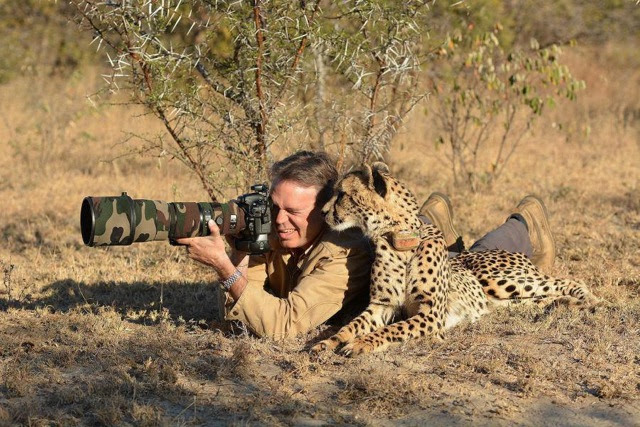
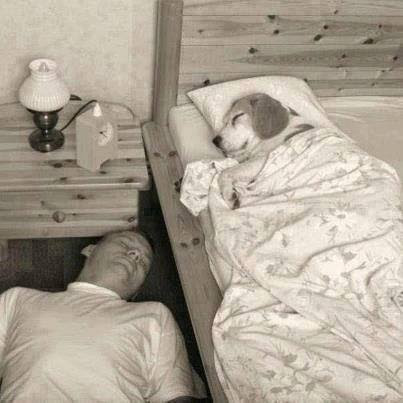
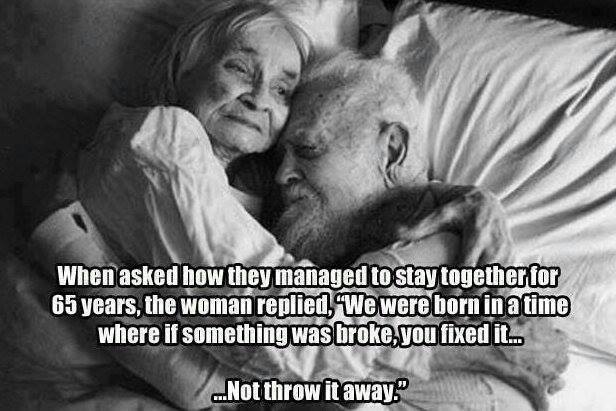
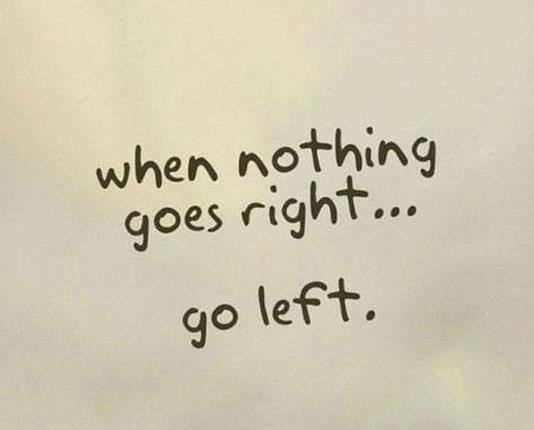
Picture parade thirty-seven.

From The Meta Picture website, link sent to me by Suzann.

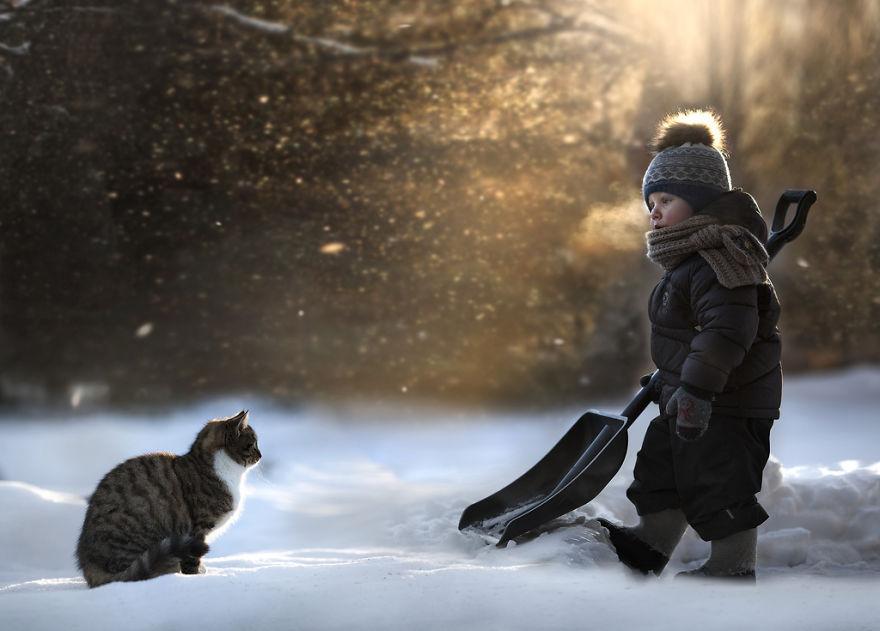
All pictures by Elena Shumilova. See her gallery on Flickr and 500px.  They are breathtakingly beautiful.

ooOOoo

A MOTHER FROM RUSSIA TOOK THESE PICTURES AT HER FARM

ALONG WITH HER TWO SMALL BOYS, A CAT AND A DOG. 

These wonderful photographs by Elena Shumilova plunge the viewer into a beautiful world that revolves around her two boys and their adorable dog, cat, duckling and rabbit friends.

Taking advantage of natural colors, weather conditions and her enchanting surroundings, the gifted Russian artist creates cozy and heartwarming photography that leaves you amazed. Elena said, “Children and animals – it’s my life. I’m a mom with two sons and we spend a lot of time on the farm.”


meta1

oooo

meta2

oooo

meta3

oooo

meta4

oooo

meta5

oooo

meta6

oooo

meta7

oooo

meta8

ooOOoo

Another eight next week; be sure to come back, they are unmissable pictures.

My wish for the world

A most fitting guest essay after yesterday. The following is published with the kind permission of the author, Jeremy Nathan Marks.  I have done a ‘screen grab’ of the image associated with his blog post so you can experience it as you would see and read it from The Sand County.  It seemed perfect as a follow-on to yesterday’s post Life, and mortality.

ooOOoo

The Sand County

“In wildness is the preservation of the world.” -Henry David Thoreau Sand County

My Wish for the World

If I could leave behind but one lasting accomplishment from my life it would be to have changed the hearts and minds of all those people who accept or practice cruelty towards animals. Now there are a great many worthy causes in this world which fully deserve the attention of all those who believe in justice, in fairness, and in mercy. But I also know that each of us -perhaps- has a cause that stands above and beyond all of the other noble concerns that we know exist. For me this cause is the humane treatment of animals. And when I say animals I mean ALL animals. Permit me to explain. My wife and I have two dogs. Both are mutts and both were adopted through the Animal Rescue Foundation of Ontario (ARF). I have blogged about ARF before and can only offer the highest praise for the organization. Courtesy of ARF, we have been provided with free dog training classes which have proved to be an invaluable resource in learning about dog behaviour. Better yet, the dog trainer we have worked with has made herself available for our questions outside of class. Whenever we have encountered a behavioural challenge that we have not understood or have been unsure of a proper method of approach, this trainer has been very obliging. Importantly, she believes in positive reinforcement and does not believe in the use of pain, dominance, or stress as a means of conditioning dogs. For my wife and me, this fits in with our moral beliefs and our ethics. Our eldest dog, who just turned one year old, is a 60 lbs. shepherd mix who has a “leash anxiety,” if I may call it that. When we are out on a walk and she sees another dog she becomes quite agitated and will bark loudly and lunge at the other dog. This has puzzled us because our dog loves to play with others and is frequently socialized. We grew increasingly concerned because our use of treats and positive reinforcement was not working. And because our dog is a large shepherd, we both have worried that she might develop a reputation and become a source of fear or suspicion by other people in our neighbourhood. In due course, we contacted our trainer for advice. She suggested that rather than putting our dog in a stressful situation by repeatedly walking her past other dogs (and trying to control her behaviour when she becomes agitated) we should take her out of the situation instead. So, when we see another dog approaching we turn around and walk in a different direction, all the while rewarding our dog with treats and telling her she is a good girl. We have recently started doing so and the improvements are showing. So, let us fast forward to today. . . This afternoon we took both of our dogs on a 20 km hike along the Thames River. The trail is like so many other trails; it forms a narrow path through the woods which makes passing other trail goers challenging at points. If another dog were to come toward us this narrowness would pose something of a challenge because we cannot turn around (and head home). Also, because the trail runs through the woods, there aren’t often places to step aside and let other dogs pass by without our oldest detecting them. Inevitably we encountered another dog. We were approached by a small dog that was off leash (which is posted as unlawful, actually). We heard the dog before we saw it and prepared ourselves for some nervousness on the part of our oldest. When the dog approach some barking ensued and I tried to move our dog, as best I could, off the trail to let the family that was approaching us pass by with their dog. When we informed the family that our dog is uncomfortable around other dogs when she is leashed they did not seem to understand that we wanted them to pass by us quickly. When our eldest became excited one of the women turned to us and said that we should “knee our dog in her side to show her who is dominant.” I was appalled. Some woman, whom I have never met, who knows nothing about our dog or our relationship with our dog, was suggesting we use violence against her to show her who is boss. . . And this is a woman with a dog of her own! My wife later remarked to me, as we were driving home, that she would not feel entitled to the love and affection our dogs offer us if we used violence on them in any way. I thought what she said was beautiful and captured the principle of the matter perfectly. We want our dogs to love us and to trust us. How would we have any right to their love and affection if we were to lead them to believe that -at any moment and for no apparent reason- we might use painful force on them? Dogs do not understand why you use violence against them. They do not reason or understand cause-and-effect the same way that humans do. This is not a fault. It does not mean they are stupid or of lesser value than human beings. It does not mean they deserve to be treated with cruelty or brutality. Dogs experience violence as pain and suffering that is inflicted out of the blue. They are not only unprepared for it, but are often completely defenceless against it. How could we ever defend such an inhumane practice? It troubles me immensely that someone, whom I do not know, could so nonchalantly counsel me to violence against my dog. Her arrogant presumption aside, this was a monstrous act. It was barbaric. Nowhere in polite society would someone get away with counseling violence against a child. . . or against someone who is weaker. Yet violence against animals, even against dogs who supposedly occupy a place closer to human hearts than most other animals, is countenanced and even endorsed. (I won’t even begin to explain why the Dog Whisperer horrifies and saddens me.) If a young child was caught torturing animals we would all raise the alarm. The torture of animals, by a young child, is seen as an early warning sign of severe mental disturbance and has been linked to homicidal tendencies and highly violent behaviour. One of the great villains of American literature, the character Popeye from William Faulkner’s novel Sanctuary is depicted as a torturer of animals in his youth. Now I know that increasingly there are laws on the books in many nations that are designed to prevent cruelty to animals and to prosecute perpetrators. This is a positive development that I certainly applaud. But I would argue that there is something broader, more troubling in our relationship with animals that goes beyond the bounds of this current posting. It is a topic I will return to time and again at this blog. What troubles me is how animals are frequently seen as objects if they are even seen or thought of at all. The damage that our destruction of the forests, deserts, plains, and oceans of this world does to countless species is something that has been well documented. We do this because we are interested in acquiring the resources we feel are vital to ensuring our survival. . . but often it is our comfort or our “way of life” that really is the central reason for our pursuit of these things. There is a deep seated human arrogance which treats animals as inferior forms of life. We see them as less sophisticated because they cannot compete with us for power on this planet. We suffer from what Aldo Leopold called an “Abrahamic view” toward the land. Somewhere biblical “dominion” over nature became domination. This is tragic. And it is not necessary. I was deeply troubled by what I experienced today and it reminded me that if I could leave behind but one lasting accomplishment it would be to somehow awaken a sense of love, of mercy, and a thirst for justice where the animal life on this planet is concerned. Just imagine what realizing that love would really mean. By achieving a love that transcends the will to power, the will to control, and the will to domination our embrace of animals really is, after all, the achievement of that revelatory love that is at the heart of the great religions and the religious spirit. Love for animals is love for justice and mercy. It is reverence for life. And it is peace. I think Henry Beston captures these sentiments beautifully: “Remote from universal nature, and living by complicated artifice, man in civilization surveys the creature through the glass of his knowledge and sees thereby a feather magnified and the whole image in distortion. We patronize them for their incompleteness, for their tragic fate in having taken form so far below ourselves. And therein we err, and greatly err. For the animal shall not be measured by man. In a world older and more complete than ours they move finished and complete, gifted with extensions of the senses we have lost or never attained, living by voices we shall never hear. They are not brethren; they are not underlings; they are other nations, caught with ourselves in the net of life and time, fellow prisoners of the splendour and travail of the earth.” -from The Outermost House, by Henry Beston (quoted from Farley Mowat’s A Whale For The Killing) photos-1761
ooOOoo

I’m sure you will join me in thanking Jeremy for writing such a beautiful and heart-felt essay.

Once again – the need for integrity.

No apologies for another banging of this drum!

Last Friday’s post Has it always been like this? was comprised mainly of a republication of a recent George Monbiot essay.  The closing paragraph of that essay read:
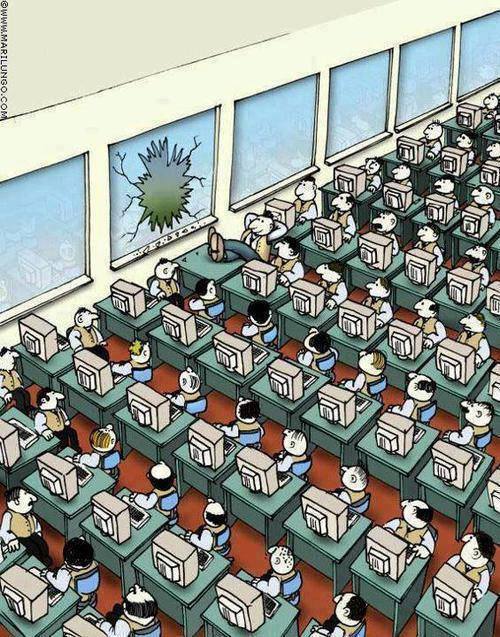
Stories like this remind me that much of life is a struggle against disappointment. Perhaps I’m an idiot, but I expected a world that was so much better. I still believe it’s possible. But getting there requires a daily struggle against those who would mislead us.

George is certainly no idiot for expecting a better world, or to put it another way, if George is an idiot for such an expectation then there are millions of fellow idiots out there.

That essay from George Monbiot opened, thus:

Almost everything is fake. The brave proverbs with which we were brought up – the truth will out, cheats never prosper, virtue will triumph – turn out to be unfounded. For the most part, our lives are run and our views are formed by chancers, cheats and charlatans. [Ed. my emphasis!]

They construct a labyrinth of falsehoods from which it is almost impossible to emerge without the help of people who devote their lives to navigating it. This is the role of the media. But the media drags us deeper into the labyrinth.

So with those words still ringing in your ears, settle down for just sixteen minutes and watch anti-corruption activist, Charmian Gooch‘s recent TED Talk.

Anonymous companies protect corrupt individuals – from notorious drug cartel leaders to nefarious arms dealers – behind a shroud of mystery that makes it almost impossible to find and hold them responsible. But anti-corruption activist Charmian Gooch hopes to change all that. At TED2014, she shares her brave TED Prize wish: to know who owns and controls companies, to change the law, and to launch a new era of openness in business.

And if, having watched Charmian’s very compelling talk, you want to support her, then go to the Global Witness website.

Picture parade thirty-six.

The final set of pieces of wisdom.

The two previous sets may be linked to via here.  Bob D., who sent them to me, will be delighted with the number of comments and ‘Likes’.  Fittingly, it’s dear Capt. Bob’s birthday today!

RD14

oooo

RD15

oooo

RD16

oooo

RD17

oooo

RD18

oooo

RD19

oooo

RD20

oooo

RD21

oooo

RD22

ooOOoo

Going to close today’s picture parade by adding a couple of pictures recently seen on Naked Capitalism.  Each day Yves inserts an ‘antidote du jour’ and in the last week two of them were so wonderful that they just had to be shared with you.

NK2

oooo

NK1

ooOOoo

You all have a great week!

Picture parade thirty-five.

The second instalment of pieces of wisdom.

If you missed the first set from Bob Derham they were last week.

RD8

oooo

RD9

oooo

RD10

oooo

RD11

oooo

RD12

oooo

RD13

oooo

RD14

oooo

Come back in a week’s time for the third and final set.

In the interim, have a peaceful week.

Mid-week story

Too good to wait until the week-end!

(And a big thanks to Dan Gomez for sending it my way.)

ooOOoo

Went Fishing, Caught 4 Deer

A once in the history of mankind kind of thing. The Best Day Of Fishing Ever!

Some fishing stories are a little hard to believe but this guy has pictures to prove his story. Like me, you will heard of salmon jumping into boats, but never anything quite like this…

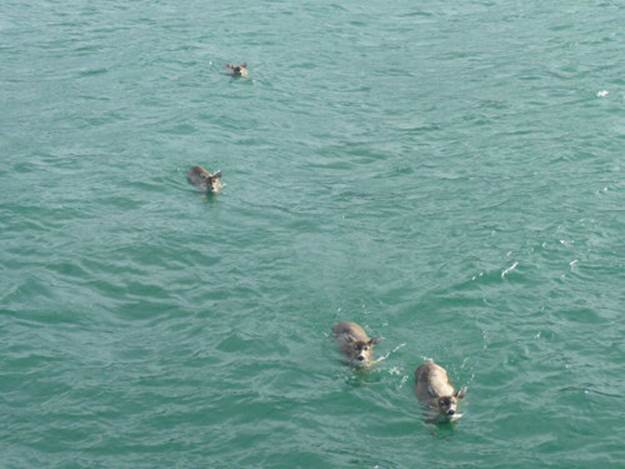
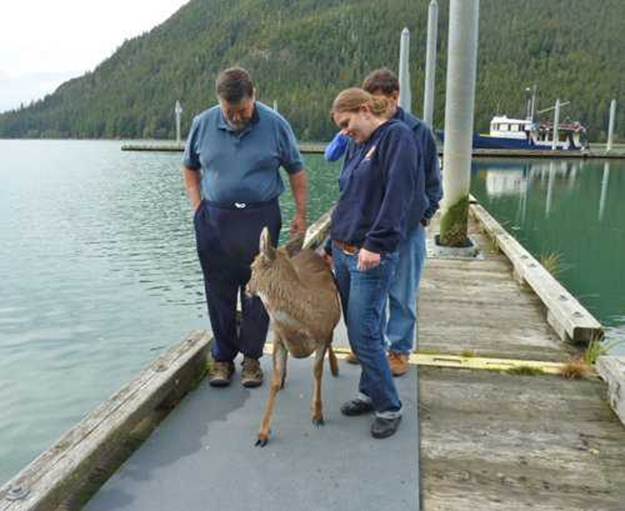
Tom Satre told the Sitka Gazette that he was out with a charter group on his 62-foot fishing vessel when four juvenile black-tailed deer swam directly toward his boat.

a_00t4

Once the deer reached the boat, the four began to circle the boat, looking directly at us. We could tell right away that the young bucks were distressed. I opened up my back gate and we helped the typically skittish and absolutely wild animals onto the boat. In all my years fishing, I’ve never seen anything quite like it! Once on board, they collapsed with exhaustion, shivering.

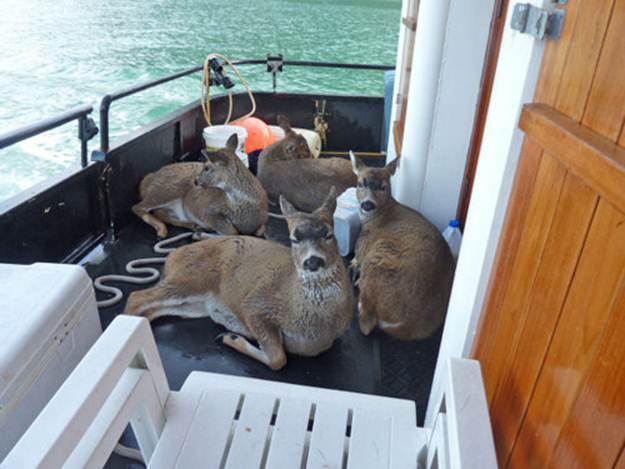
ass

This is a picture I took of the rescued bucks on the back of my boat, the Alaska Quest. We headed for Taku Harbour.  Once we reached the dock, the first buck that we had pulled from the water hopped onto the dock, looked back as if to say ‘thank you’ and disappeared into the forest. After a bit of prodding and assistance, two more followed, but the smallest deer needed a little more help.

a_sf003
This is me carrying the little guy.

oooo

a_00ff2

My daughter, Anna, and son, Tim, helped the last buck to its feet. We didn’t know how long they had been in the icy waters or if there had been others who did not survive.  My daughter later told me that the experience was something that she would never forget, and I suspect the deer felt the same way as well!”

Kindness is the language the blind can see and the deaf can hear.” – Mark Twain

Story dated October, 2010

ooOOoo

I have no idea if it is a true story, although the photographs suggest it is, but so what!  Any reminder of how precious our wild life is will always be welcomed on Learning from Dogs!

Picture parade thirty-four

Pieces of wisdom.

After the run of eye-wateringly beautiful pictures of dogs and small children, the third and final set being a week ago, I was gently panicking as to how to follow that up.  Then dear friend, Bob Derham, came to the rescue, the first seven of which are offered today.

RD1

oooo

RD2

oooo

RD3

oooo

RD4

oooo

RD5

oooo

RD6

oooo

RD7

oooo

More from Capt. Bob next week.

Picture parade thirty-three.

The concluding photographs on the theme of why we have pets.

The first set may be seen here; the second set are here.

AS17

oooo

AS18

oooo

AS19

oooo

AS20

oooo

AS21

oooo

AS22

oooo

AS23

oooo

AS24

oooo

AS25

oooo

As I mentioned in Picture parade thirty-one, all twenty-five photographs were sent to me by friend and follower in Australia, Amanda Smith.

Amanda will be delighted that her photographs have caused so much pleasure to so many, including Jean and me, of course.

Meet the dogs – Casey

On to dog number five.

If you are new to this series then Ruby’s story of last week will link you to all the dogs written about so far.  Today, here is Jean’s account of how Casey became part of the family.
ooOOoo

Casey

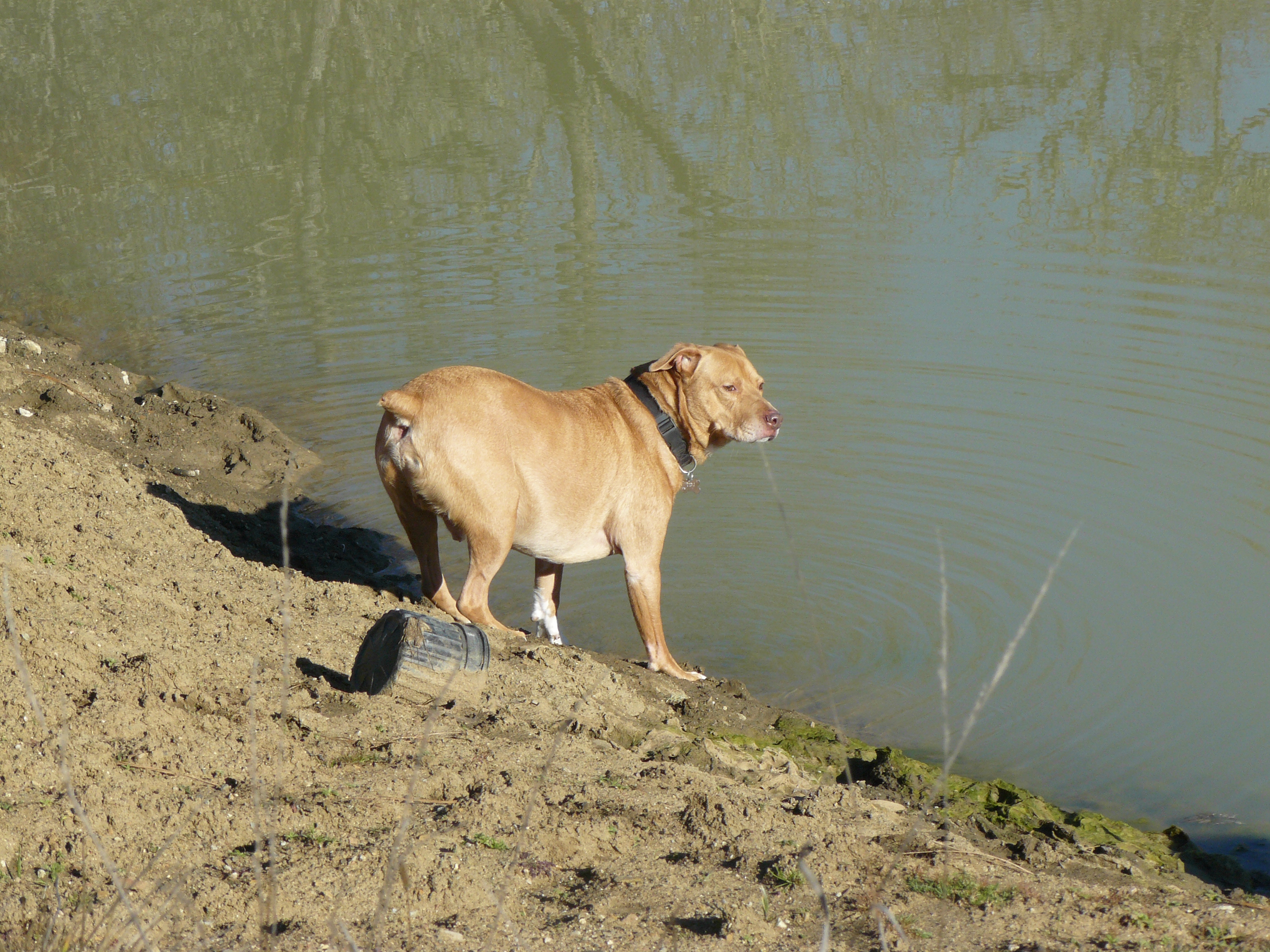
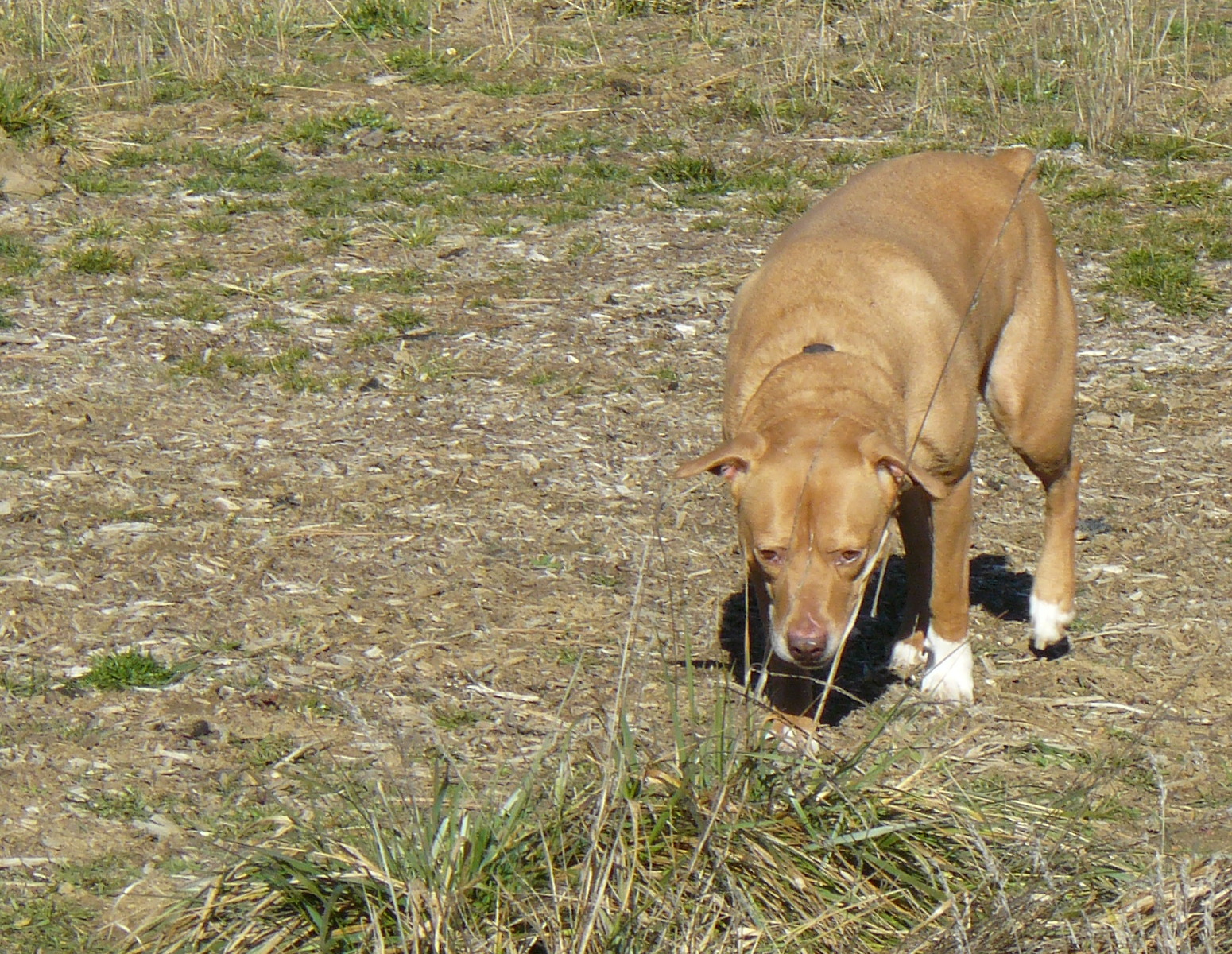
Casey, at home; picture taken a month ago.


Every Friday, the Payson Roundup newspaper would devote a full page to the Humane Society, displaying some of the cats and dogs they had for adoption. I would read about each animal and quietly wish I could bring them all home.

I was particularly taken with one dog that had appeared several times in this Friday page.  His name was Casey and he was a six-year-old Pit Bull mix.  Unfortunately, at home (we were then living in Payson, AZ) we were ‘maxed out’ with a total of 14 dogs in three different sections of our house.  We just couldn’t take Casey.

I had volunteered to be a dog-walker at the Humane Society dog shelter.  But after two sessions walking dogs, I just couldn’t look at these sad little faces without breaking down in tears. I switched my efforts to working at the Society’s Thrift Store.  That was great fun and, at least, it felt as though I was still helping the animals. Nonetheless, I was very impressed with the animal shelter.  They did their utmost to re-home the animals in their care.

Ruby’s ‘pack’ here at home included Phoebe and Tess, rescue dogs from Mexico.   Recently, Phoebe had died with leukaemia and Tess with bone cancer leaving Ruby on her own.  Ruby was a dog that didn’t mix at all well with the other dogs, as was explained in last week’s post.

The next Friday, the Payson Roundup showed the Society’s ‘lonely hearts club’, highlighting animals that had been in care for a long time.  The first dog shown was Casey.  I telephone Chandra, the lady responsible for adoptions, and asked if Paul and I could bring Ruby to the shelter to find a companion for her. When we were at the shelter, Chandra asked us if we had anything against Pit Bulls. Of course we didn’t.  Ruby was introduced to Casey and, as they say, the rest was history.  Casey and Ruby right from the start were just wonderful together.

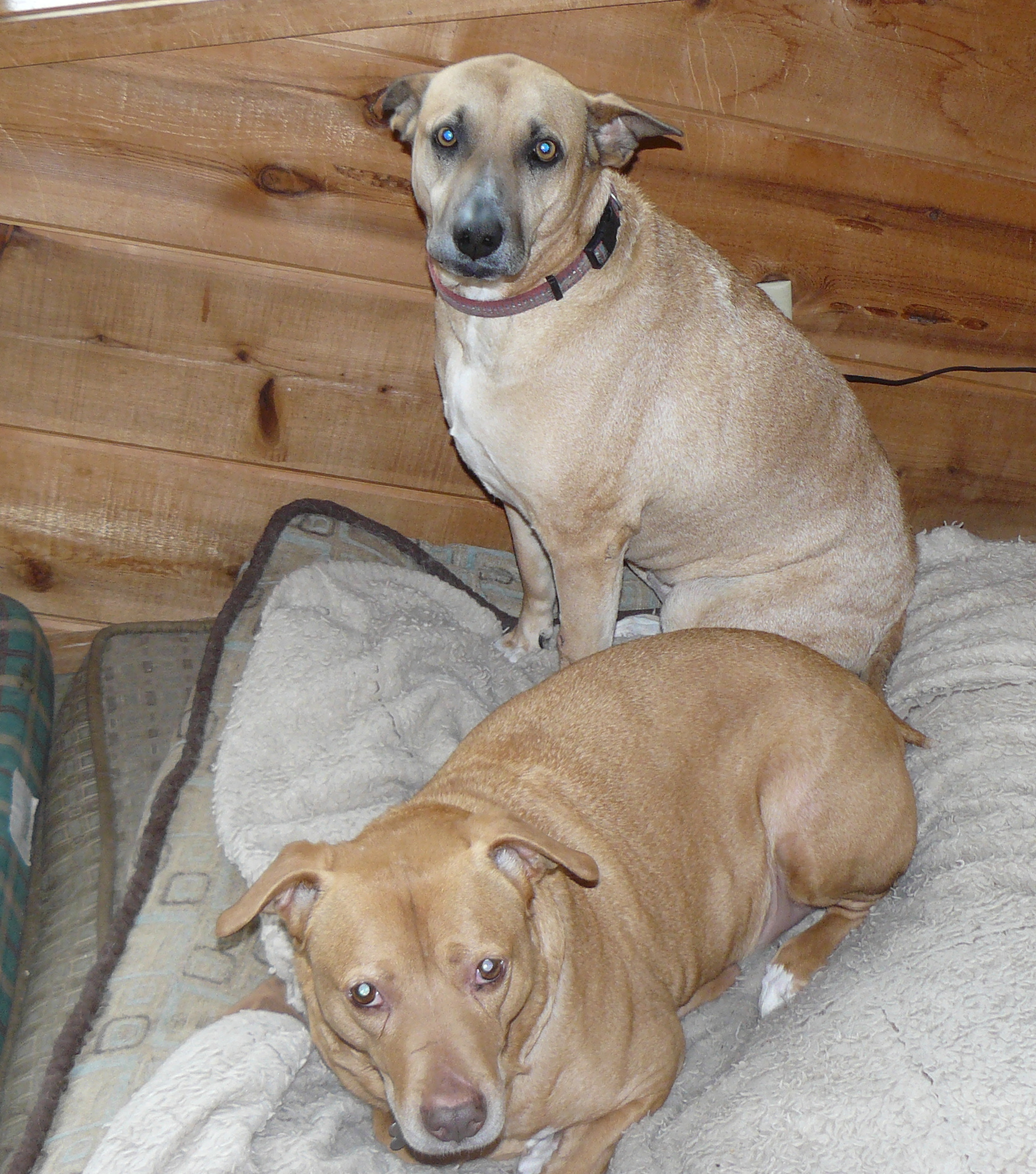
Ruby behind Casey.
Ruby behind Casey.

Subsequently, I learned from Chandra that Casey had been in care for over a year and, had we not taken him home, his days were numbered at the shelter.  There were many cheers and tears when I signed the adoption paper for Casey.

Casey now lives in the kitchen group here in Oregon: Paloma, Ruby, Lilly and Casey.  As with all our dogs, Casey is so happy to have our 14 acres to play in.  He is also the sweetest natured of dogs and will try to climb on to your lap at the first opportunity.  I have always been a great advocate of Pit Bulls and Pit Bull mixes and have never come across a mean one.

Thus, if you are in the position to adopt a dog, please consider Pit Bulls and Pit Bull mixes for the Pit Bull is a much-maligned breed.

Casey demonstrating a dog's focussing skills!
Casey demonstrating a dog’s focussing skills!

ooOOoo

Meet dog number six next week.

Picture parade thirty-two.

The second set of why we have pets.

Thank you hugely for the response to last week’s first set of photographs sent to me from Australia by Amanda.  So without further ado, here is the next set.

AS9

oooo

AS10

oooo

AS11

oooo

AS12

oooo

AS13

oooo

AS14

oooo

AS15

oooo

AS16

oooo

Come back in a week’s time for the final set of nine photographs on the theme of why we have pets.