Tag: History

Burning the Bridges in Europe

A very far-sighted view of European collaboration from 12 years ago!

Once again, Learning from Dogs welcomes a guest post from Per Kurowski.

Per Kurowski

——————-

I was intrigued by a recent Post on Learning from Dogs entitled Poor Old Europe.  It included two commentaries from elsewhere about the state of Europe and how the feeling of trying to force, politically, very disparate countries together was still ever so dominant.  It reminded me of an article that I wrote for my own Blog nearly 12 years ago just before the Euro came into effect.  Reading it today is interesting, to say the least.

In just a few weeks, on the 1st of January 1999, eleven European countries will forsake the right to issue their own currency and accept the circulation within their boundaries of a common currency, the Euro. Monetary policy related to the Euro will be set by a European Central Bank. One fact that struck me as curious is that in all the abundant legislation that regulates this process, there is no mention whatsoever of how to manage the withdrawal or future regret of any of the union’s members.

The absence of alternatives in this case evidently represents a burning of the bridges, but this may be necessary to achieve credibility. There is no turning back and there is no doubt that this is a truly historical moment. As participants in a globalized world in which Europe has an important role, we must naturally wish all members luck, no matter what worries we might secretly harbor.

Until 1971, all money used throughout the history of humanity was backed in one way or another by something physical to which a real value was attributed. Sometimes the backing was direct, pearls for example, while in other cases it was indirect such as the right to exchange bills for a certain quantity of gold.

This physical backing in itself did not necessarily mean it consisted of something of fixed value. The value of a pearl, for example, is in itself subjective. The promise to exchange bills for gold did not guarantee anything either, since this promise could easily be voided by fraud. Whatever the backing was, however, it did at least offer the holder of the money the illusion that it was supported by something concrete.

In 1971, the United States formally abandoned the gold standard and the direct backing, however imaginary, disappeared. Since the Dollar is a legal currency, it could always be used to repay Dollar denominated debt. Today, however, in spite of the fact that the Dollars may have lost some of their purchasing power, a holder of excess Dollars can only hope that the Government of the United States will exchange his old bills for new ones of the same tenor.

This apparently precarious situation must be the raison d’etre of the motto printed clearly on the bills which states “In God We Trust”.

Since 1971, the real value of the Dollar as an element of exchange, has lost some of its value due to inflation. Today, we would need many more Dollars to buy the same houses, cars, movie tickets and gold than we would have needed in 1971. In spite of the above, with few exceptions such as the end of the ‘70s during which inflation increased dramatically, few would dare qualify the United States’ elimination of the gold standard as a failure.

The world’s economies have managed to increase international commerce drastically and with it, sustain a healthy growth rate. Many analysts would explain this phenomenon by saying that the discipline exacted by the gold standard represented a brake on international commerce. The growth rate registered in commerce after 1971 was the result of the release of this brake. Other more critical analysts sustain the thesis that, due to the fact that we have abandoned the discipline required by the gold standard, the world has accumulated gigantic accounts payable, which we may be coming due very soon.

I personally swing back and forth between amazement of the fact that the world has accepted such a fragile system and satisfaction that it actually has done so.

The Euro has one characteristic that differentiates it from the Dollar. This characteristic makes me feel less optimistic as to its chances of success. The Dollar is backed by a solidly unified political entity, i.e. the United States of America. The Euro, on the other hand, seems to be aimed at creating unity and cohesion. It is not the result of these.

The possibility that the European countries will subordinate their political desires to the whims of a common Central Bank that may be theirs but really isn’t, is not a certainty. Exchange rates, while not perfect, are escape valves. By eliminating this valve, European countries must make their economic adjustments in real terms. This makes these adjustments much more explosive. High unemployment will not be confronted with a devaluation of the currency which reduces the real value of salaries in an indirect manner, but rather with a direct and open reduction of salaries or with an increase of emigration to areas offering better possibilities.

What worries me most is the timing. The world is facing the possibility of a global recession. This will require very flexible economic and monetary policies. The fact that the search for initial credibility for the Euro is based on trying to assure markets around the world that the new currency will be guided by a philosophy closer to that of Bonn than that of Rome, probably goes against the best interests of the world.

Published in Daily Journal, Caracas, November 19, 1998

By Per Kurowski

Three buses arrive at once ….

Hang on, folks.  We have some good news!

It is a sad and lonely vigil that we who long for good news sometimes keep. But now and again, like London buses, it does arrive in welcome batches, and so it has proved this week.

Oh look! Here's five of them!

US Health Care

First of all, our faith in Obama has been somewhat resurrected from what had become – in my case at least – a depressingly-comatose condition.  For he has managed to squeeze his

Band-aid or long-term fix?

health bill through Congress, which is more than the glamorous Clinton duo managed the last time it was tried.

Now I am sure Learning from Dogs has many American friends – at least, I hope so. And they are surely better-qualified to give an objective view of exactly what has been achieved. To listen to the Republicans, you’d think the end of the world had arrived, yet it is surely surreal that “the greatest country in the world” should NOT have universal health care, isn’t it?

As far as I understand, another 32 million Americans will now have health cover, even if that still – apparently – leaves some outside the fold. Well, let’s not quibble; it’s a major step forward. How even the reddest-necked Republicans could accept poor Cuba having better overall health care for their poorest citizens than the mighty USA was always a mystery to me. So, let’s chalk it up and celebrate.

Palestine

Secondly, the Obama-Clinton team is AT LAST standing up to Israel. Now this is a major topic, and beyond the scope of one post, but if you empathize – as I feel one should – then from a Palestinian’s point of view, the Israelis are occupying their territory by force. And they are not alone in this belief; the international community has long considered the Israeli presence in the West Bank and Jerusalem to be illegal. Yes, Israeli supporters may find ways of rationalizing their presence there, but the facts speak for themselves.

“Whom the Gods seek to destroy, they first make mad.” Well, Netanyahu may not quite be mad, but he was certainly very silly – in my opinion – to so impudently announce more building in Jerusalem just as efforts to restart serious negotiations were under way. How he could imagine this would not be a major slap in the face to the US is a mystery. Perhaps he was just seeing how much he could get away with? Well, he seems to have found out, and for once – after nearly a year of pussy-footing about with Israel – the USA is moving closer to the international community’s position.

The world – let alone the Palestinians – needs a permanent solution to the problem, and that will not be achieved by Netanyahu prattling on about Jerusalem “belonging to Israel”. It is obvious to any outsider that the city has to be shared. As with Berlin, what will no doubt be a divided city for some time will eventually – through the force of position and logic – become a united one. WITHOUT goodwill (and there has been precious little in recent years from victorious Israel) this running sore will only come back to bite the Israelis time and time again. Friends of Israel – as I count myself in fact – should make this point more strongly.

However, the only friend that really counts is the USA, and we need them to keep up the pressure. Can and will Obama tough this one out in the face of the very powerful Israeli lobby? I believe Obama has said that he would prefer to be a one-term President if it meant he could get some real reforms through, and this is a welcome change from the “I’ll do anything to stay in office” syndrome that we seem to be seeing in Britain right now.  Let’s hope he can live up to this promise. It is after all now nearly a decade since 9/11, after which there was so much talk about “finding a solution” that has – so far – come to little.

Google & China

Where next?

Finally, we hear from Asia that China is cross with Google for removing filters from its search engines. Now we have got used to cosying up to China, to the point where the west imports a VAST quantity of cheap goods that have helped China’s economy to make a real leap forward, and of course pay for a vast increase in their military spending.

Yet the truth remains the truth, no matter how you dress it up. It remains a Communist dictatorship.

That Google even tolerated acquiescence in the fascist suppression of free speech in the first place was a disgrace, but they seem now to be moving to a more defensible position. What was sad about their original  move into China was that they are big and powerful enough to have made a stand before. All over that vast country, individuals are trying to stand up to a fascist state, so how must they have felt when a vast, rich and powerful organisation from the west (Statue of Liberty and all that) got into bed with their oppressors?

Well, perhaps those little people will feel a bit better now. Predictably, the Chinese are now making threats against other “partners” of Google, saying that they “must obey its laws”. Well, we’ll see how this plays, but united we stand, divided we fall, and is it moral to respect immoral laws?

Yes, it will irritate the Chinese Communist Party leaders (I won’t be losing any sleep there …) and No, it won’t make a vast practical difference in the short-term; the Chinese have their OWN search engines, but it is a symbol, and symbols count. Sooner or later, the Chinese will join the modern world; but every now and then the free world needs to give it a prod in the right direction.

By Chris Snuggs

[Explanation of title to our non-UK readers. Londoners are so used to waiting in the cold for a bus to arrive and then having three arrive at once, that the phrase has become a little bit of English folklaw! Ed.]

The Delusions of Leadership

The British ‘silly season’ approaches!

The current British Prime Minister

Well, this is election season in Britain, or as near as it gets ….. no doubt British PM Gordon Brown will wait to the last possible moment in the hope that either oil in vast quantities will be struck  on Salisbury Plain or that David Cameron will be found wandering around near the men’s toilets on Wandsworth Common late one night.

But Gordon-Brown’s procrastination has almost reached its consume-by date and everyone expects an announcement soon for an election on May 6th.

This will be a momentous election. As it seems that British politics has evolved into mammoth-long parliamentary stints – a bit like Japan – the government of the next 15 years could be up for grabs.  Will we stagger along under the camel-breaking weight of turgid bureaucracy, overspending and debt under Labour or emerge post-election into the great entrepreneurial leap forward à la Maggie Thatcher Mark II? (this is a slight over-simplification for newcomers to British politics).

We’ll see, but one of the most fascinating aspects of general elections is always to listen to what politicians say.  On rare occasions we may be inspired and amazed by their vision and rhetoric, but unfortunately one’s reaction is more often one of total disbelief. I had one of the latter yesterday when I read the following in the Guardian:

“I will continue as Labour leader even if I lose election, “Gordon Brown says.

Now nobody pretends being British PM is easy, but one does at least hope that one’s leader – the one with the finger on the nuclear button after all – will not lose touch with reality. And the idea that Brown could soldier on after a defeat is surreal.

He was never actually elected by his party in the first place, nor of course as PM by the British Public. He has already nearly been thrown out a couple of times by his own party so what possible justification could there be for trying to stay on in defeat? Is the following a justification?

“I owe it to people to continue and complete the work we have started of taking this country out of the most difficult global financial recession.” (Reuters)

Does he really think that NOBODY ELSE can save Britain? Megalomaniac delusions, I fear. And IF he loses the election, the Labour Party could face another 15 years in opposition. The idea of Brown staggering on until he drops is rather sobering.

Mr Brown didn’t NEED to say what he did; the usual politician’s deviousness would have sufficed: “no point speculating about hypothetical situations …. ” and so on …. the fact that he cannot seem to imagine NOT being leader after so many years of playing sulky bridesmaid to the slick and charismatic Tony Blair is pathetic in the true sense of the word.

In sport, business, love and politics, there comes a time when you have to give up, and leading your party to defeat at an election is one of them ……..

PS Of course, he could WIN the election! Oh dear …… pass me the Glenfiddich …..

Glenfiddich Caoran Reserve 12 Years Old

By Chris Snuggs

Econned, by Yves Smith

Learning from Dogs muses the new book from Yves Smith

ECONned, by Yves Smith

In Econned, Yves Smith, founder of Naked Capitalism, argues that the economy was doing just fine in the regulated environment up to the 1970s.  Then began the work of the Chicago economists who challenged Keynesian economics and touted the benefits of deregulation which eventually led to the financial crisis we have today.

Yves argument is internally consistent and well researched, but ignores some factors that I think would change the conclusions drawn from her work.

Yves Smith, author and founder of Naked Capitalism

First, Yves notes that the primary reason that economists are not useful to the real world is that economic research presumes equilibrium.  Smith misses the point here, but it is understandable. It took me years of study and contemplation to fully appreciate that an equilibrium simply gives economists a point of reference, a common base, from which to study shocks and movements. In and of itself, equilibrium is not interesting or important.   But movements to and from equilibrium are of real interest because they enable us to study and try to predict how individuals will react to incentives and changes in market conditions.

Second, we have to put the contributions of the Chicago economists of the 1970s into context.  Up until that time, the only real school of thought in macroeconomics was based on Keynes, who presumed that markets fail and that the government must play an active and large role – primarily through government spending and taxes — for the economy to perform well.  Keynes’ work was a reaction to the Great Depression.

Friedman’s monetarism also sought to explain the Great Depression, but focused on the role of monetary policy on the economy. This work showed that the missteps of the Federal Reserve was the primary cause of the depth and length of the Great Depression, and that long-term accommodative monetary policy causes inflation.  This body of work did not stress deregulation, although it did lean more heavily on enabling private market solutions than on replacing them with government solutions.  Neither theory is complete; Keynes focused on the short run (“In the long run, we are all dead” is a rather famous Keynes quip) and Monetarism focused on the long run.

There was a second large body of work that came out of the University of Chicago during the late 1960s and 1970s.  This research documented the tremendous costs of regulation. I know this literature personally and believe that its conclusions are very sound:  it shows that any effective regulation limits either the quantity or price of a good or service away from what it would have been without the regulation.  In fact, in my view, it was the passage of regulations requiring certain lending behavior that set off the series of events that led to the crisis, which is the exact opposite argument from what Ms. Smith makes.

By Sherry Jarrell

A useful reflection on the economic crisis.

Will this prove to be an accurate analysis of what happened?

Regular readers of Learning from Dogs will know that Yves Smith of Naked Capitalism is held in high regard by this author.  She was one of the authors mentioned in a recent Post titled Free Speech and then a little later on there was a Post from me specifically praising her.

Last Friday the US Business News Network, BNN, ran a piece which included Yves discussing her new book ECONNED.

Yves Smith - ECONNED

The reason for publishing this Post is that the video clip covering Yves contribution is a very clearly articulated account of how we got ourselves into this economic mess.  For those like this author who don’t really understand many of the sophisticated economic terms used widely elsewhere, this was a refreshing ‘tutorial’.

Do watch it – Yves is brought in around 3 min 45 secs.

By Paul Handover

Greenwich Observatory

A rich and beautiful place in British History

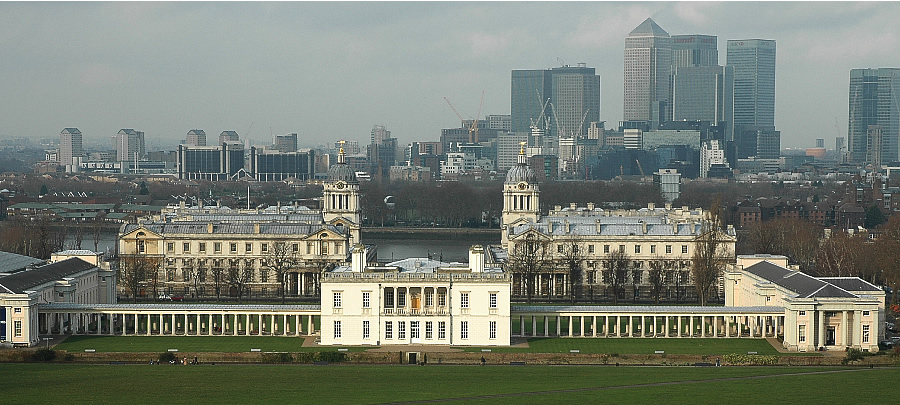
View from Observatory Hill of Queen Anne's Palace, the old naval buildings & across the river Canary Wharf

Paul Handover recently published an article about “Daylight Saving” and the Greenwich Meridian.  THIS SITE with its photos and links is of particular interest to those with little personal knowledge of London.

Greenwich Park – where stands the magnificent Royal Observatory – is one of the jewels of London. Steeped in history, it provides the perfect day-out for the family, including foreign tourists. Forget the jostling crowds in the frenzied den of useless consumption that is Oxford Street and take a train out to Greenwich. There you will find a magnificent park, wonderful views of London and the Thames, the Royal Observatory and the National Maritime Museum. Too much to mention in detail, but if for nothing else just go to see the clocks of John Harrison, horologer extraordinaire in a time when chronometry meant everything to men at sea. You don’t have to be British to take pleasure in the great skills and achievements of British sailors and explorers, backed up by men of science responsible for some of the most important advances in scientific history.

I can’t count how many times I’ve been to Greenwich Park, but every time I get back to London from my current home in Germany, I try to take my son there.  I want him to see this rich place in British history, but also to enjoy its enormous beauty.

The Greenwich Meridian

Don’t know what time it is?  Hardly surprising in Spring and Autumn.

Today is exactly one month before the United Kingdom ‘moves’ its clocks forward and enters British Summer Time; 1am (UTC) on Sunday 28th March 2010.  Is that date the same across the world?  One would think so because it makes life, especially international air transport, so much easier.

But no!  In fact the way that time zones are applied and changed for Daylight Saving is a complete hotch-potch.

In the United States of America, daylight saving starts at 2am on March 14th, 2010.  And just three years ago that start time would have been the first Sunday in April.  Changes were made in the US Energy Policy Act of 2005.

From this geographic site comes the following:

Other parts of the world observe Daylight Saving Time as well. While European nations have been taking advantage of the time change for decades, in 1996 the European Union (EU) standardized an EU-wide “summertime period.” The EU version of Daylight Saving Time runs from the last Sunday in March through the last Sunday in October. During the summer, Russia’s clocks are two hours ahead of standard time. During the winter, all 11 of the Russian time zones are an hour ahead of standard time. During the summer months, Russian clocks are advanced another hour ahead. With their high latitude, the two hours of Daylight Saving Time really helps to save daylight. In the southern hemisphere where summer comes in December, Daylight Saving Time is observed from October to March. Equatorial and tropical countries (lower latitudes) don’t observe Daylight Saving Time since the daylight hours are similar during every season, so there’s no advantage to moving clocks forward during the summer.

Of course, someone had to create a web-site to track all these various time zones and changes.  Here it is.

Last year, the BBC News website published an interesting article about the Greenwich Meridian aka The Prime Meridian.  The setting of the Prime Meridian was done just over 125 years ago, in October 1884.  When one thinks of the importance in having a standard meridian, both for time keeping and navigation, I would have guessed that it went back much further in time.

The other aspect that was news to me was that the conference had been convened at the request of the American President Chester Arthur.

From that BBC article:

Until the 19th Century, many countries and even individual towns kept their own local time based on the sun’s passage across the sky and there were no international rules governing when the day would start or finish.

Maps with multiple meridians were confusing

However, with the rapid expansion of the railways and communications networks during the 1850s and 1860s, setting a standard global time soon became essential.

“The world was in a very big mix-up,” explains Dr Avraham Ariel, author of Plotting the Globe. “People had lots of prime meridians. Earlier in Europe there were 20 prime meridians. The Russians had two or three, the Spanish had their own and so on.”

Thus that famous line in the grounds of the National Maritime Museum at Greenwich, London is not as old as many might have thought.

Prime Meridian, Greenwich

By Paul Handover

Predicting lost decades for Britain

…. and most likely other ‘Western’ nations

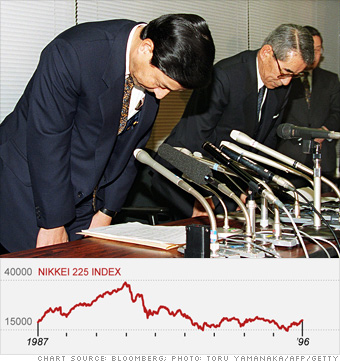
This Post is taken in its entirety from the website Contrary View. Contrary view number 73 has just been published, as follows.  Please see note after signature. [The Japanese Nikkei 225 index was 10352 at the time of writing this Post – 0800 MT, 23rd Feb.]

There is plenty of evidence from Japan about lost decades for investments. Japan has now lost two decades in equity and property investment, during which time only Government Bonds provided any sanctuary. All policy options failed, because none tackled the real problem, which is that there is already too much debt. What lessons can be drawn for Britain?

Lost decades

Shares here [in Britain] have certainly had a lost decade. On the Japanese evidence, they may well suffer another lost decade. Property has only hit minor bumps, so the Japanese experience suggests that property may suffer a long decline for two decades. In the UK, the Bank of England’s support for mortgages will be withdrawn over the next two years, which itself threatens prices. Why, though, the hysteria about Government debt?

It is questionable whether pundits appreciate the extent of the private sector debt problem, which explains why two groups of economists can offer totally contradictory remedies. In a world with no Gold standard and therefore no anchor to the monetary system, Government debt is relatively safe. The global economy is perched on a knife edge, with a permanent loss of output that must cause income loss and therefore restrict the capacity of households to service their debts. Seeing the commercial risks, banks are still restricting lending, which means there can be no sustained recovery.

There is a misconceived demographic argument being touted at present, which completely ignores the real driver of the post-1945 expansion, namely increased credit. That credit growth has simply gone too far and now brings its own problems. For those people who neither saw the credit crunch nor the long fall in interest rates and inflation coming, to now be credible in predicting a lost decade for bonds, is itself unbelievable.

By Paul Handover

Note: Until very recently, the author was a client of Kauders Portfolio Services, the publisher of the Contrary View website.  Please see the warning about these views posted on that site.

Tax, Law, Crime and Morality in Banking

More holes than in a Swiss Cheese!

There is currently a merry old ding-dong spat going on between the German and Swiss governments. Basically, someone has got hold of information about German citizens with bank accounts in Switzerland where they are hiding large sums on which they should pay German taxes.

This or these enterprising whistleblower(s) are offering to sell this data to the German government for a hefty fee. The German government is on the point of accepting to buy this “illegally-obtained” information from the (from the Swiss point of view) criminals who have stolen their secret bank data.

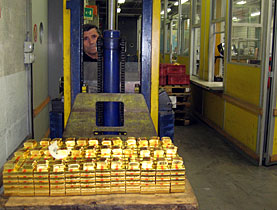
This story raises a large number of fascinating questions. It has long been common knowledge that Switzerland offers banking facilities with few questions asked. Any self-respecting criminal or tax evader has or had a secret, numbered Swiss account.

What has always amazed me is how they have got away with this for so long, stuck as they are in the centre of Europe. How is it possible that other countries have allowed Switzerland to become a haven for money obtained illegally in other countries?

For it is clearly immoral to profit from the illegal activities of foreign nationals, isn’t it? What exactly is the difference between this behaviour and “receiving stolen goods”? Worse, we have to remember that the largest sums come from drugs. Anyone willing to look after (or launder) drug  money is complicit in the misery and deaths of millions of drug addicts worldwide. Yet the Swiss have pulled off this trick for decades. The Swiss banking (and government) fraternity has never shied away from shady dealings, being until the end of WWII covert supporters of the Nazis.

Well, Angela Merkel is going to do a deal with presumably Swiss “criminals” (according to the Swiss government) in order to recoup money it is owed by German criminals (according to Germany). What a merry old moral maze we have here. But in truth, the world is now too small and inter-connected to allow either tax evasion on a vast scale  or the safeguarding of criminal funds.

Switzerland has to decide whether to remain as a supporter of tax evaders and gangsters (including of course African Presidents who have ripped their countries off in a big way) OR to join the real, civil, honest and inter-connected world.

The rest of us should stop tolerating this connivance with crime. “Client secrecy” is no excuse for condoning and profiting from crime.

More on the whole  Nazi gold in Switzerland story is here.

By Chris Snuggs

UK Iraq Enquiry Update

The UK Iraq enquiry produces some odd insights

I found this on the BBC website last Sunday:

“Gordon Brown was ‘marginalised’ by Tony Blair in the build-up to the Iraq war”, former International Development Secretary Clare Short has said.

“The then chancellor neither opposed nor supported the invasion but was ‘preoccupied’ by other concerns,” she told the BBC’s Andrew Marr Show.

Frankly, it is surreally ludicrous. Is she really saying that while the country was preparing to go to war in extraordinarily-controversial circumstances, with hundreds of thousands marching in protest and all the rest, that

Clare Short

Brown had “other concerns”? And during the whole process these “other concerns” prevented him from AT ANY TIME having an input or indeed an opinion?

Is this some sort of attempt to disassociate him from responsibility? Whatever one thinks about the rights or wrongs of the invasion it was in the end a COLLECTIVE DECISION. Blair could NOT have done it without the support of the British Cabinet, especially Brown and Straw. If they had felt strongly enough about it, they could have resigned, or more likely have told Blair they WOULD resign if he pressed on, and thereby thwarted him.  Now, it isn’t easy to resign, or even threaten to – your bluff could always be called and your career go down the spout – but if you can’t do it when it is a matter of your country going to war when the hell CAN you do it?

Gordon Brown

As for “neither supported nor opposed” the invasion, what a PATHETIC verdict on someone who went on (without an election) to “lead” the country.

“Well, I’m neither supporting nor opposing it since that way I can take either position later depending on how it pans out.”

I can’t recall having seen a more pathetic, fumbling, cowardly shambles. You may love or – more likely – hate Tony Blair, but as with Margaret Thatcher, you certainly knew where he stood.

By Chris Snuggs