Regular readers of Learning from Dogs know that my pattern is to write a single article each day with a focus on something light and airy over the week-end. But I’m making an exception this Sunday, for two reasons. The first was that I spent a couple of hours yesterday catching up on this week’s The Economist and especially liked the tribute to Steve Jobs; a small extract is below with a link to the full article. The second reason was that friend, Neil K. in South Devon, sent me a lovely graphical tribute that I wanted so much to share with you.
So, first to The Economist article,
Steve Jobs
The magician
The revolution that Steve Jobs led is only just beginning
Oct 8th 2011 | from the print edition
Steve Jobs
WHEN it came to putting on a show, nobody else in the computer industry, or any other industry for that matter, could match Steve Jobs. His product launches, at which he would stand alone on a black stage and conjure up an “incredible” new electronic gadget in front of an awed crowd, were the performances of a master showman. All computers do is fetch and shuffle numbers, he once explained, but do it fast enough and “the results appear to be magic”. Mr Jobs, who died this week aged 56, spent his life packaging that magic into elegantly designed, easy-to-use products.
Read the full article on The Economist website. The article finishes, thus,
Mr Jobs was said by an engineer in the early years of Apple to emit a “reality distortion field”, such were his powers of persuasion. But in the end he conjured up a reality of his own, channelling the magic of computing into products that reshaped entire industries. The man who said in his youth that he wanted to “put a ding in the universe” did just that.
I suspect very few of you regular readers will recall that in 2009 (24th June to be precise) I ran a very short article under a similar title. This is what was published.
A simple heading but, in truth, a very complex subject. This was brought home by a recent article in The Economist by Bagehot. That is “Politicians frequently lie. So does everyone else. Why all the fuss?”
Bagehot writes a Blog so those who don’t read the newspaper can read the rest of his thesis here.
Here’s some of that essay by Bagehot,
On lying
Jun 30th 2009, 14:43 by Bagehot
THE WORD “lie” means something very specific. It doesn’t mean a misleading statement, or an exaggeration, or a half-truth: it is a falsehood advanced intentionally and knowingly. That is why, in my column last week, I wrote that probably only Tony Blair and his crew could know whether they “lied” about Iraq’s weapons of mass destruction. Only they can know what was in their heads, and how far their public utterances diverged from their inner convictions. For that reason the question of lying over Iraq seems to me a bit of a red herring and distraction. What can be proved about their sloppiness and embellishments, and has been, is bad enough.
Lying is back in the news this week. Gordon Brown stands accused by various newspapers and columnists of deliberately misleading the public about the government’s fiscal position. Ditto Ed Balls, the prime minister’s henchman, who evidently doesn’t take kindly to having his integrity impugned in this way. David Cameron is a bit more periphrastic, knowing that in political parlance the “l” word is a nuclear accusation; but he came pretty close to it yesterday with his talk of “a thread of dishonesty” running through Mr Brown’s premiership.
There are (at least) two big questions provoked by this revived interest in lying. First and most obviously, are Mr Brown, Mr Balls and others really and indisputably liars? Do the fiscal figures they cite and twist in any way support the interpretation they put on them–at least enough to make it credible that they believe what they are saying, even if no-one else does? If so, they may not be lying. They may be over-optimistic, incompetent or deluded. But they are not obviously liars.
Just re-read those last few sentences, “Do the fiscal figures they cite and twist in any way support the interpretation they put on them–at least enough to make it credible that they believe what they are saying, even if no-one else does? If so, they may not be lying. They may be over-optimistic, incompetent or deluded. But they are not obviously liars.”
Delay your judgement for just a few minutes while we go to this next item. This next item is a recent essay from John Maudlin, the financial expert, about the latest jobs report in the US.
The US jobs report came out this morning, and it was simply dismal. This week we look at not only the jobs report but also “what-if” proffers for the US and global economies. There’s a lot to cover, so let’s jump in.
First, there were only 18,000 jobs created in June, the lowest since September 2010. While private employment rose by 57,000, government workers dropped by 39,000, continuing a trend as governments at all levels work to cut their budgets. Long-time readers know I think it is important to look at the direction of the revisions, and we got no help. May was revised down by 29,000 jobs and April a further down 15,000.
I saw some headlines and talking heads in the mainstream media saying the poor number was due to “seasonals,” and I just shook my head. If you are that reflexively bullish when presented with what was clearly a bad report, how can you be taken seriously? You know who you are. And then Philippa Dunne of the Liscio Report sent the following note. She is one of the best data mavens there is on jobs and employment.
John M. then includes quite a long extract from Philippa’s note. You can read it and the rest of John’s article here. Here’s how that extract from Philippa Dunne ends,
Also, there is no adjustment to the headline number – the sectors are adjusted separately (96 different industries at the 3-digit NAICS level, to be precise) and the total is the sum of those components. The whole argument is bogus.
Notice that last sentence, “The whole argument is bogus.” [My emboldening, Ed.]
OK, clearly not lying, in the strict definition of the term. But still delay your judgement.
Back on the 25th June this year, I wrote a piece with the title of Lying is OK, that’s official! Duh! I stated very clearly that lying is wrong! Mind you, one could at least congratulate Jean Claude Juncker for honestly admitting being a liar. (Jean Claude Juncker is the Prime Minister of Luxembourg and the head of the Eurogroup council of eurozone finance ministers.) Here’s that video clip with Juncker admitting that when it’s serious one has to lie! (Listen carefully, the words are quietly spoken.)
Finally, I have long followed Yves Smith’s excellent Blog, Naked Capitalism. Just yesterday, Yves wrote a powerful piece,
Not only is Obama assuring that he will go down as one of the worst Presidents in history, but for those who have any doubts, he is also making it clear that his only allegiance is to the capitalist classes and their knowledge worker arms and legs.
It’s an angry essay that has, at it’s heart, an anger at the lack of true representative government, remember the one that Abraham Lincoln had in mind when he wrote, “Government of the people, by the people, for the people, shall not perish from the Earth.”
Yves concludes in that article thus,
Even knowing how dedicated to bad ends Obama is, I still feel like I’ve walked into a parallel universe. He’s now determined to make these horrific entitlement cuts a sign of his manhood. This is “Change” for sure, to a more brutal, grasping, dog eat dog society, all administered by self serving elites. They will in the end reap the whirlwind they are creating, but not before it mows a path of destruction through our social order.
Right, time to draw it all together.
Despite my chest-beating on the subject of politicians and leaders deliberately lying in that recent piece about Juncker, there’s something much more fundamental. What defines lying is really not that important. It’s whether or not we trust that our leaders are doing their best for their constituents, to the best of their abilities.
Whether you support left-leaning or right-leaning policies is unimportant; indeed political differences and the ability to vote for one’s beliefs is at the heart of an open democracy.
But if we don’t trust that our leaders are doing their best for our country then that causes the destruction of faith. If we do not have faith in those that lead us then the breakdown of a civilised social order becomes a very real risk.
These are such difficult times impacting us across so many fronts. Scarily, one seems to find many who have lost much faith in their leaders.
Hopefully, by the time this Post is published (it’s being written on the 12th) the steel rescue chamber above the trapped Chilean miners will be in action, carefully and steadily bringing the men to the surface, one by one. The event will be mainstream news so Learning from Dogs will simply watch from the side.
(And to the huge joy of millions, we now all know the miners are safe! Jon)
But there was something that caught my eye from the BBC News website on the 12th. Here’s the extract:
Meanwhile, Alejandro Pino, a journalist who has been in daily contact with the miners and advising them on handling interviews, revealed that he had been helping them prepare a speech.
“I asked them to give me just one word and with that word I would show them how to create a speech,” he said.
“It was just a try, so I can repeat to you what happened because I was touched by it and they were touched by it too, not because I made the speech but because the word they chose to start with was extraordinary: it was ‘comradeship’.”
Comradeship!
It doesn’t take very long to realise that mining is one of those crafts that relies on comradeship.
Here’s a quote from Antoine de Saint-Exupery, “The greatness of a craft consists firstly in how it brings comradeship to men.”
From the word ‘comradeship’ it seems a small step to the word ‘community’ and all that is implied for the health and welfare of mankind.
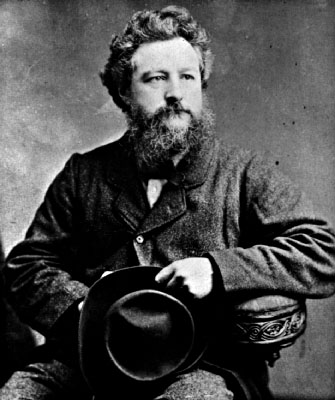
Fellowship is heaven, and lack of fellowship is hell; fellowship is life, and lack of fellowship is death; and the deeds that ye do upon the earth, it is for fellowship’s sake ye do them. (A Dream of John Ball, Ch. 4; first published inThe Commonweal 1886/7)
Fellowship, community, comradeship – call it what you will, it will have to be the essence of mankind’s future.
By Jon Lavin
(Full citation is: Smith, M. K. (2001) ‘Community’ in the encyclopedia of informal education
Usually when I talk with supporters of America’s current wars in the Middle East, those who discover that I am vehemently opposed to an American presence in the region find me to be naïve. In their minds, I just do not understand realism or how power politics actually functions. My anti-war sentiments are the idealistic notions of an inexperienced youth who thinks that everyone should just get along.
The great irony here is that when followed to its logical end, the realist school of internationalist relations which so
The 'fog' of war.
many use to justify the American presence all over the world is in fact one of the greatest arguments against our current foreign policy. I do not argue against America’s wars in Iraq, Afghanistan, and Pakistan because I think that we would all just get along if these wars ceased to happen. I argue against these wars because I come from a perspective that sees the people we are fighting as human beings with the same base motivations as myself, and when these people see their livelihood threatened, they take the best course of action that they can find, which unfortunately often involves siding with whatever group holds the most regional power.
The great mistake in logic made by many advocates of an interventionist foreign policy is to merely think of the world in terms of the international stage. Such people look at the world in terms of what Iran, Al Qaeda, Russia, China, OPEC, or other entities have done or might do, rather than considering actions based on their effects on individuals, and what these individuals are likely to do in response.
The Basel Committee on Banking Supervision provides a forum for regular cooperation on banking supervisory matters. Its objective is to enhance understanding of key supervisory issues and improve the quality of banking supervision worldwide. It seeks to do so by exchanging information on national supervisory issues, approaches and techniques, with a view to promoting common understanding. At times, the Committee uses this common understanding to develop guidelines and supervisory standards in areas where they are considered desirable. In this regard, the Committee is best known for its international standards on capital adequacy; the Core Principles for Effective Banking Supervision; and the Concordat on cross-border banking supervision.
The Committee’s members come from Argentina, Australia, Belgium, Brazil, Canada, China, France, Germany, Hong Kong SAR, India, Indonesia, Italy, Japan, Korea, Luxembourg, Mexico, the Netherlands, Russia, Saudi Arabia, Singapore, South Africa, Spain, Sweden, Switzerland, Turkey, the United Kingdom and the United States. The present Chairman of the Committee is Mr Nout Wellink, President of the Netherlands Bank.
OK, that’s clear then!
Pers Kurowski
Well, according to a good supporter of and Guest contributor to Learning from Dogs, Pers Kurowski, we really ought to know much, much more about this ‘committee’.
Pers has a Blog called Tea with FT (as in the Financial Times) and there is much to read there that helps us understand why we are in so big a mess with the banks. Here’s his piece from the 4th May.
Basel Committee, why don´t you just shut up!
Sir who do these Basel Committee regulators really think they are bullying us around with an arrogant “the banks should be sensible and realise that it might backfire if they protest too much”? as reported by Brooke Masters, May 4.
They themselves are the ones who thought everything would be fine and dandy if they just had some few credit rating agencies determine default risks and then gave the banks great incentives, by means of different capital requirements, to follow those credit risk opinions. They themselves are the ones who believing in the abundance of safe triple-A rated lending and investments, caused the world to stampede and fall over the subprime mortgages. They themselves should shut up, because rarely has the world seen such a gullible naive and outright stupid bunch of regulators.
Now the banks, in the midst of a crisis, need to build up the equity they do not have precisely because the Basel Committee did not require them to have; precisely when we need the most the banks to lend. The regulators, instead of bullying banks, should busy themselves day and night finding ways for severely capital stretched banks to be able to lend to those small businesses and entrepreneurs who have had to pay the cost of higher capital requirements but who had absolutely nothing to do in generating this crisis.
And just in case, for the record, I am no banker, only a citizen, very upset with the fact that in the 347 pages of the regulations known as Basel II, there is not one single word that describes the purpose of those regulations. Basel Committee why do you not start defining a purpose for what you are doing? Is that too much to ask?
Wonderful short film of the P-38 Lightning (thanks to Steve).
The Lockheed P-38 Lightning was a WWII American fighter aircraft. Equipped with droppable fuel tanks under its wings, the P-38 was used as a long-range escort fighter and saw action in every major combat area of the world.
A very versatile aircraft, the Lightning was also used for dive bombing, level bombing, ground strafing and photo reconnaissance missions.
The Lockheed team chose twin booms to accommodate the tail assembly, engines, and turbo superchargers, with a central nacelle for the pilot and armament. The nose was designed to carry two Browning .50 machine guns, two .30″ Brownings and an Oldsmobile 37 mm cannon.
The P-38 was the only American fighter aircraft in active production throughout the duration of American involvement in the war, from Pearl Harbor to VJ Day.
Music: Benny Goodman with Helen Forrest – ‘It’s Always You’.
[As a newcomer to Arizona with only a couple of months experience of living in Payson, North-East of Phoenix, I have no right to pass comment on what has been big news both inside and outside the State. I have observed that feelings run strong about illegal immigrants, with many reacting to the complicated process that I am going through applying for US residency by saying “It’s not fair”. Not fair in the sense that they see so many Mexicans just walking over the long border that Arizona has with it’s neighbour to the south.
Thus this thoughtful Post from Gordon Coons is a chance for Learning from Dogs to air a point of view from someone who does have a right to an opinion. Ed.]
My fellow Americans, friends and relatives:
I am writing you to express my concerns over the recently passed law regarding immigration in my former state of Arizona.
As most (if not all) of you know, I lived in Arizona for 10 years, my children still live there and Linda and I have been living in Mexico. I mention this only in that it gives me a certain perspective on the events that have transpired recently.
The Border
The spate of marches and protests around the country would lead us to believe that the state of Arizona has completely lost its collective and legislative mind. The feeling is that enforcing such a law would lead to rampant profiling of Mexicans (and other Chicanos) who DO live in this country legally.
First of all, let’s examine WHY all of those Latinos want to come here. There are 2 basic, and yet profound, reasons:
they want jobs and
they want their children to be born here so that they become naturalized citizens and are the beneficiaries of all of our rights.
Do I blame them? Of course not….if I were in their shoes, I would want to come here as well.
I do take exception to the growing group of “banditos Mexicano” who are bent on illegal activities on both sides of the border.
Uncontrolled borders and Washington’s lack of self-control
[This article appeared in the online version of the Wall Street Journal on May 1st. Copyright exists with the WSJ and it is reproduced below without permission. However, it seems to me to be such an insightful commentary on present conditions that the decision was taken to publish it on Learning from Dogs. Ed.]
By Peggy Noonan
Peggy Noonan
We are at a remarkable moment. We have an open, 2,000-mile border to our south, and the entity with the power to enforce the law and impose safety and order will not do it. Wall Street collapsed, taking Main Street’s money with it, and the government can’t really figure out what to do about it because the government itself was deeply implicated in the crash, and both political parties are full of people whose political careers have been made possible by Wall Street contributions. Meanwhile we pass huge laws, bills so comprehensive, omnibus and transformative that no one knows what’s in them and no one—literally, no one—knows how exactly they will be executed or interpreted. Citizens search for new laws online, pore over them at night, and come away knowing no more than they did before they typed “dot-gov.”
It is not that no one’s in control. Washington is full of people who insist they’re in control and who go to great lengths to display their power. It’s that no one takes responsibility and authority. Washington daily delivers to the people two stark and utterly conflicting messages: “We control everything” and “You’re on your own.”
All this contributes to a deep and growing alienation between the people of America and the government of America in Washington.
This is not the old, conservative and long-lampooned “I don’t trust gummint” attitude of the 1950s, ’60s and ’70s. It’s something new, or rather something so much more broadly and fully evolved that it constitutes something new. The right never trusted the government, but now the middle doesn’t. I asked a campaigner for Hillary Clinton recently where her sturdy, pantsuited supporters had gone. They didn’t seem part of the Obama brigades. “Some of them are at the tea party,” she said.
None of this happened overnight. It is, most recently, the result of two wars that were supposed to be cakewalks, Katrina, the crash, and the phenomenon of a federal government that seemed less and less competent attempting to do more and more by passing bigger and bigger laws.
Add to this states on the verge of bankruptcy, the looming debt crisis of the federal government, the likelihood of ever-rising taxes. Shake it all together, and you have the makings of the big alienation. Alienation is often followed by full-blown antagonism, and antagonism by breakage.
Which brings us to Arizona and its much-criticized attempt to institute a law aimed at controlling its own border with Mexico. It is doing this because the federal
The US-Mexico border
government won’t, and because Arizonans have a crisis on their hands, areas on the border where criminal behavior flourishes, where there have been kidnappings, murders and gang violence. If the law is abusive, it will be determined quickly enough, in the courts. In keeping with recent tradition, they were reading parts of the law aloud on cable the other night, with bright and sincere people completely disagreeing on the meaning of the words they were reading. No one knows how the law will be executed or interpreted.
Every state and region has its own facts and experience. In New York, legal and illegal immigrants keep the city running: They work hard jobs with brutal hours, rip off no one on Wall Street, and do not crash the economy. They are generally considered among the good guys. I’m not sure New Yorkers can fairly judge the situation in Arizona, nor Arizonans the situation in New York.
But the larger point is that Arizona is moving forward because the government in Washington has completely abdicated its responsibility. For 10 years—at least—through two administrations, Washington deliberately did nothing to ease the crisis on the borders because politicians calculated that an air of mounting crisis would spur mounting support for what Washington thought was appropriate reform—i.e., reform that would help the Democratic and Republican parties.
Both parties resemble Gordon Brown, who is about to lose the prime ministership of Britain. On the campaign trail this week, he was famously questioned by a party voter about his stand on immigration. He gave her the verbal runaround, all boilerplate and shrugs, and later complained to an aide, on an open mic, that he’d been forced into conversation with that “bigoted woman.”
He really thought she was a bigot. Because she asked about immigration. Which is, to him, a sign of at least latent racism.
The establishments of the American political parties, and the media, are full of people who think concern about illegal immigration is a mark of racism. If you were Freud you might say, “How odd that’s where their minds so quickly go, how strange they’re so eager to point an accusing finger. Could they be projecting onto others their own, heavily defended-against inner emotions?” But let’s not do Freud, he’s too interesting. Maybe they’re just smug and sanctimonious.
The American president has the power to control America’s borders if he wants to, but George W. Bush and Barack Obama did not and do not want to, and for the same reason, and we all know what it is. The fastest-growing demographic in America is the Hispanic vote, and if either party cracks down on illegal immigration, it risks losing that vote for generations.
But while the Democrats worry about the prospects of the Democrats and the Republicans about the well-being of the Republicans, who worries about America?
No one. Which the American people have noticed, and which adds to the dangerous alienation—actually it’s at the heart of the alienation—of the age.
In the past four years, I have argued in this space that nothing can or should be done, no new federal law passed, until the border itself is secure. That is the predicate, the commonsense first step. Once existing laws are enforced and the border made peaceful, everyone in the country will be able to breathe easier and consider, without an air of clamor and crisis, what should be done next. What might that be? How about relax, see where we are, and absorb. Pass a small, clear law—say, one granting citizenship to all who serve two years in the armed forces—and then go have a Coke. Not everything has to be settled right away. Only controlling the border has to be settled right away.
Instead, our national establishments deliberately allow the crisis to grow and fester, ignoring public unrest and amusing themselves by damning anyone’s attempt to deal with the problem they fear to address.
Why does the federal government do this? Because so many within it are stupid and unimaginative and don’t trust the American people. Which of course the American people have noticed.
If the federal government and our political parties were imaginative, they would understand that it is actually in their interests to restore peace and order to the border. It would be a way of demonstrating that our government is still capable of functioning, that it is still to some degree connected to the people’s will, that it has the broader interests of the country in mind.
The American people fear they are losing their place and authority in the daily, unwinding drama of American history. They feel increasingly alienated from their government. And alienation, again, is often followed by deep animosity, and animosity by the breaking up of things. If our leaders were farsighted not only for themselves but for the country, they would fix the border.
Peggy Noonan is a columnist for The Wall Street Journal whose work appears weekly in the Journal’s Weekend Edition and on OpinionJournal.com.
She is the author of eight books on American politics and culture. The most recent, “Patriotic Grace,” was published in October 2008. Her first book, the bestseller “What I Saw at the Revolution: A Political Life in the Reagan Era,” was published in 1990.
She was a special assistant to the president in the White House of Ronald Reagan. Before that she was a producer at CBS News in New York. In 1978 and 1979 she was an adjunct professor of journalism at New York University.
Freedom as something one must endeavor to gain and maintain!
The power of a cup of tea!
There is a quiet self-contradiction developing in the Tea Party movement that needs addressing, for it is a contradiction that, if left uncorrected, could turn a force with truly revolutionary potential into one more element of an oligarchic political stasis.
This movement, which as a culture attempts in many ways to be an imitation of the founders, is steering away from its origins and failing to take hold of perhaps the single most important insight of the entire American Revolution – that national change is the result of local change, not its cause.
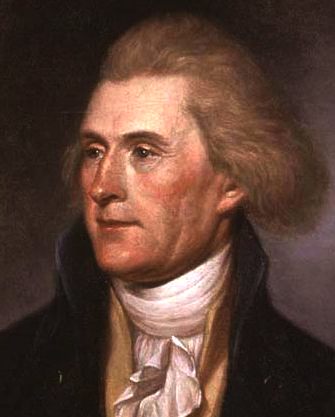
It was not homesickness that led Thomas Jefferson to return to his home state of Virginia and decline a re-election to
Thomas Jeffersen
Congress after penning the Declaration of Independence. At the forefront in Jefferson’s mind on July 5, 1776, was not the welfare of the new nation as a whole, but rather the welfare of his home state of Virginia.
For Jefferson, Virginia was not simply one part of the ultimate goal of the United States, but in fact an ultimate goal in itself. It was at the local level that Jefferson knew provisions for the future freedom of his fellow Virginians had to be made.
Voltairine de Cleyre, an anarchist who lived in the late 19th and early 20th centuries, greatly admired the founding generation and Jefferson in particular.
In her essay “Anarchism and American Traditions,” she wrote that one of the greatest traits of the American revolutionaries was their recognition “that the little must precede the great; that the local must be the basis of the general; that there can be a free federation only when there are free communities to federate; that the spirit of the latter is carried into the councils of the former.”
“Anarchism” today is often employed as a pejorative term rather than as a description of the political and economic philosophy taken seriously by such great minds as J.R.R. Tolkien, Henry David Thoreau, Thomas Jefferson and William Lloyd Garrison. In fact, de Cleyre’s political philosophy had many similarities with modern libertarianism and traditional conservatism.








 Learning from Dogs