Tag: Eötvös Loránd University

Dogs’ Brains

Many surprises and, probably, more to come!

Among the many dog-related blogs that I read is Treehugger. It covers a wide range of sustainable actions and habits and not infrequently writes about dogs. That is the main reason I follow the blog.

On January 12th, 2022 the blog site carried an article about the ways that dogs hear speech. It was called Dogs Brains Can Distinguish Between Different Human Languages.

I republish it below:

ooOOoo

Dog Brains Can Distinguish Between Different Human Languages

They also can tell the difference between real speech and scrambled speech.
By Mary Jo DiLonardo

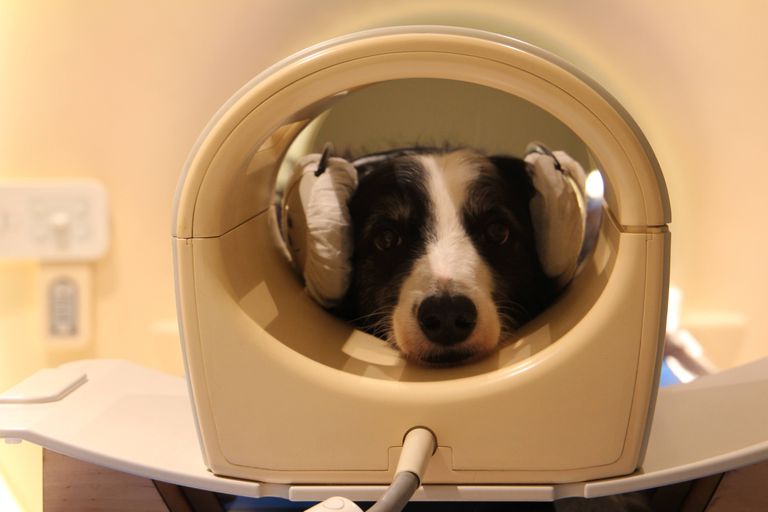
Kun-kun the border collie listens to language in an MRI machine. Enikő Kubinyi

You talk to your dog, and of course, you’re convinced your pup understands you. But what if a dog is plopped down in a place where suddenly everyone is speaking a different language?

In a new study, researchers have used brain imaging techniques to find that dogs can differentiate between familiar and unfamiliar languages. Researchers say the findings, from the Department of Ethology at Eötvös Loránd University in Hungary, are the first evidence that shows a non-human brain can distinguish between languages.1

A few years ago, first author Laura V. Cuaya moved from Mexico to Hungary for her postdoctoral research. Before the move, Cuaya’s border collie Kun-kun had only heard Spanish. She was curious whether he would notice that people in Budapest spoke a different language, Hungarian.2

“Like many dogs, Kun-kun tends to pay attention to humans, trying to predict their social environment,” Cuaya tells Treehugger.

“When we moved to Hungary, it was a whole new world for everyone. In Budapest, people are very friendly with dogs. When people talked to Kun-kun, I wondered if he picked up the language difference. And happily, this question fitted with the goals of the Neuroethology of Communication Lab.”

For their study, researchers recruited Kun-kun and 17 other dogs, who had been previously trained to lie still in a brain scanner for functional magnetic resonance imaging (fMRI).1

The dogs were played speech excerpts from “The Little Prince” in Spanish and Hungarian. Each of the dogs had heard only one of the two languages: Hungarian was the familiar language of 16 dogs, Spanish of the other two dogs. That allowed them to compare a very familiar language with a completely unfamiliar one.1

Researchers also played scrambled versions of the excerpts to the dogs. These were nonsensical and completely unnatural. This was to test whether they could tell the difference between speech and nonspeech.1

They compared the brain responses to the two different languages and to speech and nonspeech.

“We found distinct cerebral regions for both processes: for speech detection (speech vs. non-speech), the primary auditory cortex, and for language recognition (familiar language vs. unfamiliar language), the secondary auditory cortex,” Cuaya says.

“Our results may suggest a hierarchy processing in the dog’s brain to process speech. In the first stage, their brain would detect whether a sound is speech or not. Then, in the second stage, their brain would identify whether the speech is a familiar language or not.”

The results were published in the journal NeuroImage.

Exposure and Age 

Researchers found that no matter which language the dogs were listening to, the primary auditory cortex of the dogs’ brains could distinguish between speech and scrambled, nonspeech.1

“Dog brains, like human brains, can distinguish between speech and nonspeech. But the mechanism underlying this speech detection ability may be different from speech sensitivity in humans: whereas human brains are specially tuned to speech, dog brains may simply detect the naturalness of the sound,” says Raúl Hernández-Pérez, coauthor of the study.

They also determined that dog brains could differentiate between Spanish and Hungarian. Those patterns were found in a different region of the brain called the secondary auditory cortex.1

Researchers found that the older the dog was, the better their brain was able to tell the difference between a familiar and unfamiliar language. That suggests that the longer dogs live with their people and are exposed to a language, the more they understand how their language sounds.1

“As we could not control the amount of exposure to language in our study, we used the dog age as an indirect measure of the time dogs have been exposed to a given language,” Cuaya says. “I hypothesize that dogs with a closer relationship with humans will better distinguish languages. It could be great if future studies test puppies to control the exposure to a language better.”

Dogs as Models 

Researchers are curious whether this language differentiation is unique to dogs or whether other non-human animals may also be able to distinguish between languages.2

“A variety of auditory regularities characterizes each language. For example, sometimes, we cannot identify what language we are listening to. However, we can likely recognize its general origin (e.g., an Asian or Romance language) because of its auditory regularities,” Cuaya explains.

“Detecting regularities is something that brains do very well, not only humans or dogs’ brains. It is highly likely that other species can be trained to differentiate between languages successfully.”

But Cuaya points out that in their study, dogs weren’t “trained.”

“Their brains detected the difference spontaneously, perhaps due to the domestication process,” she says. “While it is likely that other species can differentiate between complex sounds, it is possible that just a few species are interested in the human language.”

Researchers believe the findings are important because by studying dogs, they can have a broader picture of the evolution of speech perception.2

“Dogs are an excellent model because they have been living—and cooperating—with humans for thousands of years. When we wonder if another species cares about what humans do, it is inevitable to think of dogs. In the case of language perception, we can learn, for example, that different brains—with different evolutive paths—can carry out a similar process,” Cuaya says.

“Also, as someone with dogs in my family, it is lovely to know that dogs are picking up subtle cues of their social environment all the time.”

Article Sources

  1. Cuaya, Laura V., et al. “Speech Naturalness Detection and Language Representation in the Dog Brain.” Neuroimage, 2021, p. 118811., doi:10.1016/j.neuroimage.2021.118811

2. first author Laura V. Cuaya from the Department of Ethology at Eötvös Loránd University in Hungary

ooOOoo

Time after time I learn new things about dogs. This is another example of the mystery of a dog’s brain. Thank goodness there is scientific study into our lovely animals.
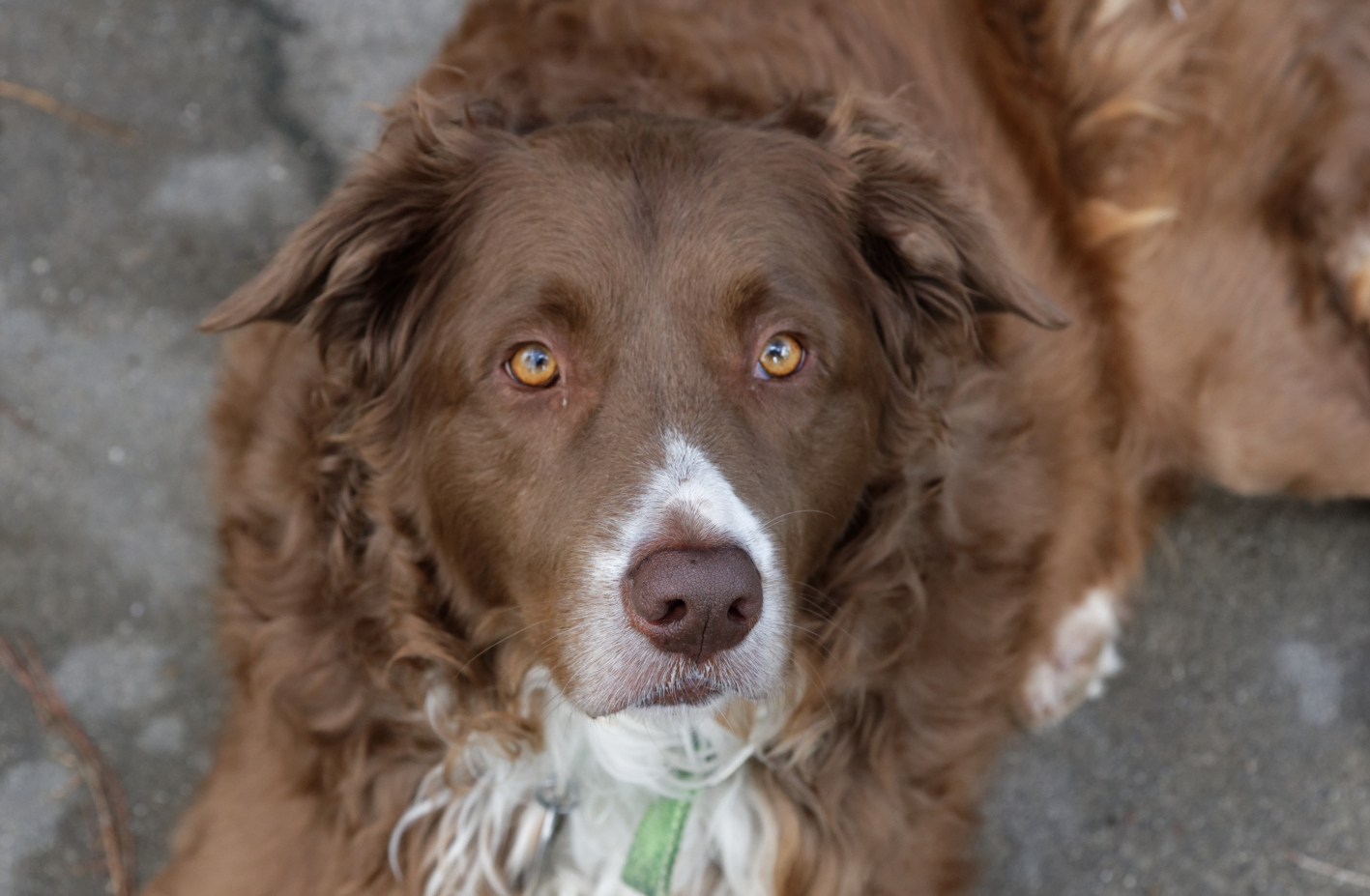
Eye to eye!

Making eye contact with one’s dog.

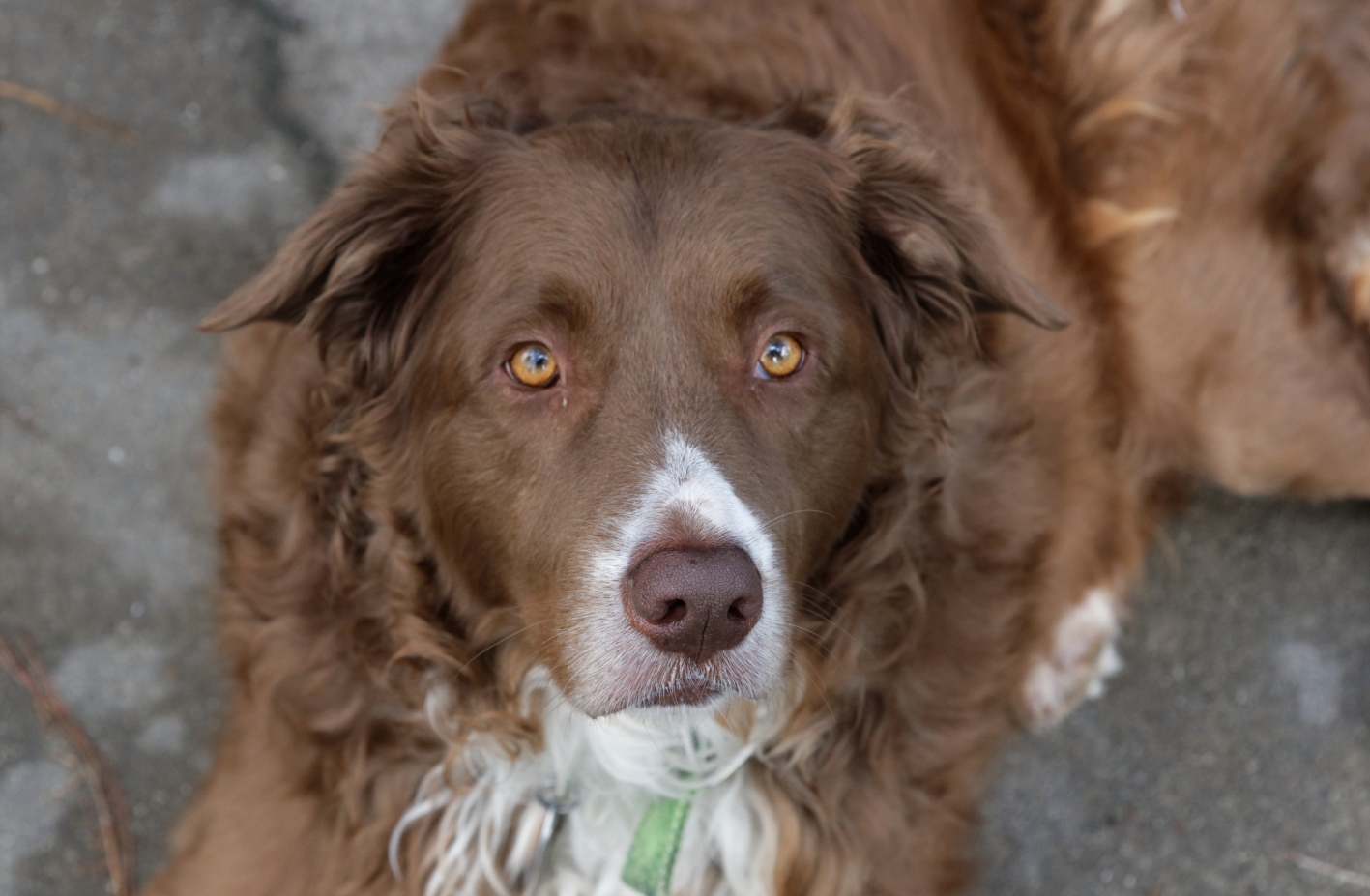
Of all the wonderful dogs we have at home Oliver is the one who has perfected his eye contact. Oliver holds one’s eyes forever and they are full of love.

As this photograph, taken in May, 2020, shows.

But there’s more to this than meets the eye (pardon the pun) as this article recently presented by Treehugger reveals.

ooOOoo

Want Eye Contact With Your Dog? These 4 Factors Play a Role

By Mary Jo DiLonardo

Mary Jo DiLonardo

May 12th, 2021

Head shape and playfulness can play a part, study finds.

Short-nosed dogs are more likely to make eye contact, study finds. LWA/Dann Tardif / Getty Images

How much time does your dog spend looking into your eyes? It could depend on the shape of their head, among other factors.

Making eye contact is an important part of human relationships and it can be key in person-canine bonding too. But all dogs aren’t equal when it comes to eye gazing, finds a new study, published in the journal Scientific Reports.1

“Eye contact is an important non-verbal signal in humans. We use it in conversations to show that we are paying attention to each other,” study first author Zsófia Bognár, a Ph.D. candidate in the Department of Ethology at Eötvös Loránd University in Budapest, Hungary, tells Treehugger. “Also, the oxytocin levels in both parties rise, which plays a role in the development of social bonding.”

This social connection is easily observed when a bond is formed between a mother and a baby, she points out.

But eye contact is not so important for dog relationships. They don’t look into each other’s eyes very often, and when they do, it’s antagonistic and challenging behavior.1

“Dogs tend to make eye contact with humans, and research found that oxytocin levels also rose in both parties when owners and dogs formed eye contact,” Bognár says. “It is also known that dogs do not behave the same, differences can be found between them.” 

Earlier studies found that shorter-headed dogs were more successful at following pointing gestures from humans and watched pictures of faces for longer periods of time.21

Snub-nosed dogs have a more pronounced area in the retina of the eye responsible for central vision, so they can better respond to things happening right in front of them.1 Longer-nosed dogs have a more panoramic vision, so they’re more easily distracted by things going on all around them.1

The researchers decided to see how head shape and other factors also influenced eye contact.

Why Head Shape Matters

Researchers worked with 130 family dogs for the study. First, they measured the length and width of their heads to determine what’s called the cephalic index—the ratio of the maximum length and width of the head.

  • Short-headed or brachycephalic dog breeds include boxers, bulldogs, and pugs. 
  • Long-headed or dolichocephalic dog breeds include greyhounds, Great Danes, and German shepherds.
  • Medium-headed or mesocephalic dog breeds include Labrador retrievers, Cocker spaniels, and border collies.

Then, on to the testing.

First, the experimenter would call the dog’s name and reward the dog with a treat. Then the experimenter would stay silent and motionless, waiting for the dog to establish eye contact. They then rewarded the dog with a treat each time eye contact was made.

The experiment ended after five minutes or after 15 episodes of eye contact were made. During this test, the dog’s owner remained in the room (silent, motionless, and not looking at the dog) so the dog wouldn’t be stressed due to separation.

They measured how many times the dog made eye contact as well as how much time elapsed between eating the treat and the next time the dog made eye contact. The team found that the shorter the dog’s nose, the more quickly it made eye contact with the researcher.1

“We assumed that due to this, snub-nosed dogs could focus their attention better to their communication partner because other visual stimuli coming from the periphery could disturb them less,” Bognár says.

But there’s also the chance that pugs, bulldogs, and other similar dogs just get more of a chance to interact with people because of the baby-like way they look.1

“We couldn’t exclude the possibility that these dogs have more opportunity to learn to engage with humans and make eye contact with them,” Bognár says. “Because humans have a preference for ‘baby schema’ features, and the characteristics of snub-nosed dogs’ heads are in accordance with these features, thus the owners of these dogs may pay more attention towards them and are more likely to engage in mutual gaze with their animals.”

Age, Playfulness, and Breed Characteristics 

But the head shape wasn’t the only factor that came into play. Researchers found that a dog’s age, playfulness, and general cooperative nature due to breed characteristics all played a role in how much eye contact they made with the experimenter.1

They found dogs that were originally bred to take visual cues made more eye contact. For example, herding dogs who follow directions from the owner to work livestock, are “visually cooperative” breeds that are more likely to make eye contact. Sled dogs that run in front of a musher or dachshunds that are bred to chase prey underground are “visually non-cooperative” breeds that rely on vocal cues and don’t have to see their owners.1

Interestingly, dogs that were mixed breeds performed just as well as cooperative breeds. About 70% of the mixed breed dogs in the study were adopted from a shelter. Maybe their eagerness to make eye contact helped get them adopted in the first place, the researchers suggest.1

The researchers also found that older dogs made less eye contact. They had a harder time controlling their attention and were slower switching from the treat to the experimenter.1

A dog’s playfulness was another factor that impacted eye contact. To measure a dog’s playfulness, the off-leash dog was in a room with the owner. The experimenter walked in with a ball and a rope and offered them to the dog. If the dog chose one, they played with the toy for a minute. If the dog didn’t choose a toy, the experimenter tried to initiate a social interaction.

A dog was given a high playfulness score if it played enthusiastically with the experimenter, brought the ball back at least once, or tugged on the rope. It was given a low playfulness score if it didn’t touch the toys, ran after the ball but didn’t bring it back, or took the rope but didn’t tug on it. Researchers found that dogs with high playfulness were quicker to establish eye contact than dogs with low playfulness.1

The research uncovers a key understanding of what impacts dog-person eye contact, which can affect canine-human communication.

“Eye contact can help dogs to decide whether the message/command what the human says/shows are directed to them. They are more likely to execute a command if the human looks at them than shows its back or looks at another human/dog,” Bognár says.

“Dogs also use their gaze to communicate with humans, for example, gaze alternation can be a way to direct humans’ attention to different objects like an unreachable piece of food or a ball,” adds Bognár. “And it can also play a role in social bonding through oxytocin hormone.”

ooOOoo

Interesting! No, it is more than that. It is science at work.

Zsófia Bognár, the study’s first author, makes the point that: “Eye contact is an important non-verbal signal in humans. We use it in conversations to show that we are paying attention to each other. Also, the oxytocin levels in both parties rise, which plays a role in the development of social bonding.

So returning to our dear Oliver we can see that the levels of oxytocin rise in Oliver and in Jean or me depending on who Oliver has engaged with.

Speaking of Oxytocin let’s go across to an article in Psychology Today that explains a little more about this important hormone.

Oxytocin is a powerful hormone that acts as a neurotransmitter in the brain. It plays an important role in reproduction, initiating contractions before birth as well as milk release. And it is thought to be involved in broader social cognition and behavior, potentially ranging from mother-infant bonding and romantic connection to group-related attitudes and prejudice. The hormone is produced in the hypothalamus and released into the bloodstream by the pituitary gland.

Why Is Oxytocin Called the “Love Hormone?”

Oxytocin has been called “the cuddle hormone” or “the love hormone” due to its association with pair bonding. It appears to help reinforce the early attachment between mothers and their infants, as well as the bonds between romantic partners. Animal research has connected oxytocin (along with another hormone, vasopressin) with the lifelong pair-bonding of prairie voles, and scientists have reported increases in oxytocin levels following orgasm in humans. There is also evidence that increases in oxytocin may encourage prosocial behavior, though not all studies have found these positive results, and some experts have undercut the idea that the hormone is a “trust molecule.”

There! Now we know!


I remember everything …

except the things I forget!

Taken in the round I don’t think I’m ageing too badly. But there is one aspect of my world that does drive me bonkers from time to time. That is a decline (and that’s putting it politely) in my short-term memory. Everything from forgetting what it was I wanted to say to Jeannie to still being unsure of finding regularly visited places in Grants Pass, our local city. To put that last point into context we moved here to Merlin, some 12 miles from Grants Pass, back in September, 2012.

Turning to the cognitive skills of our wonderful dogs it is clear to me that we can only go so far in understanding how our dogs think and how much of their world is dealing with the present supported by their memories of previous events. (Frankly, in writing the last sentence I realised how even that premise was more of a guess than a known fact.)

A recent study at Eotvos Lorand University in Budapest about the memories of dogs has been widely referred to across many news outlets. So when it appeared on the Care2 site it was a natural to republish it for all you good people.

ooOOoo

New Study Finds Dogs Remember a Whole Lot

3195202-largeBy: Laura Goldman December 2, 2016

About Laura

My doorbell has been broken for a few years, but every time my 9-year-old dog, Leroy, hears one chiming on a TV show, he looks at the front door.

Many pet owners have similar tales to tell about their dogs being able to remember long-ago experiences and events. And now we have proof that this really is possible. A new study found that dogs may have a more complex form of memory than most other nonhuman animals (sorry, elephants).

“Every move you make, every step you take, I’ll be watching you,” Sting once sang, and these lyrics could apply to our dogs, too. They’re not only watching us, but they’re remembering what they’re observing, no matter how trivial it may seem to us.

In the study at Eotvos Lorand University in Budapest, published Nov. 23 in Current Biology, 17 dogs were taught a training method called “Do As I Do.” The dogs would watch their owners perform an action. When the dogs were told, “Do it” and imitated their owners’ action, they were rewarded with a treat.

Next, the owners performed various actions but told the dogs to lie down instead of “Do it.” After a while, the dogs began lying down without being told to do so. The study’s authors noted that this showed the dogs had lost the expectation that they would be given the “Do it” command to imitate their owners.

Finally, the owners performed various actions, and when their dogs would lie down, the owners would wait either a minute or an hour and then give them the “Do it” command.

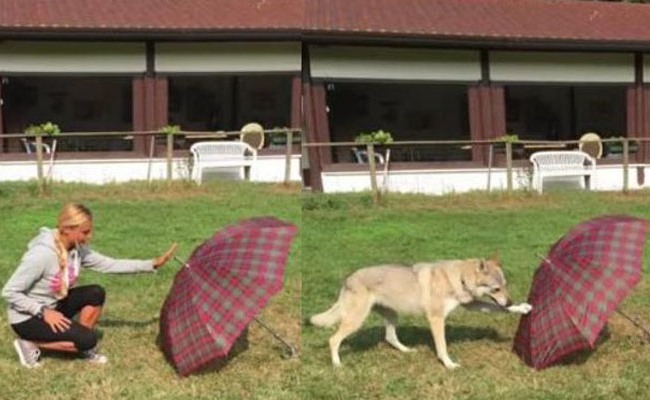
Some of the actions were unfamiliar to the dogs, such as their owners tapping on an open umbrella. The dogs would be led behind a partition, and a minute to an hour later would be led back to the umbrella and given the “Do it” command.

The dogs were able to remember what their owners had done, and tapped the umbrella with their paws.

“We cannot directly investigate what is in the dog’s mind,” psychologist Claudia Fugazza, an author of the study and owner of a Czechoslovakian Wolfdog who participated, told the Washington Post. “So we have to find behavioral evidence of what they expect or not.”

Remembering events in our lives is known as episodic memory. Until recently, only humans were thought to have this ability, but studies have found evidence that rats, monkeys and birds also have it, and so do dogs.

However, the researchers said the dogs don’t have full-fledged episodic memory, which would give them self awareness. Fugazza told NPR she didn’t think there was a method available to test whether dogs are self aware.

Victoria Templer, a behavioral neuroscientist at Providence College who wasn’t involved in the study, told NPR the results could be useful in helping scientists understand how episodic memory developed in humans and how it’s helped us to survive.

One interesting possibility Templer suggested is that “we evolved the ability to relive the past in order to imagine the future.”

ooOOoo

Of course what would be a marvelous aspect of a dog’s memory is being able to take note and remember where his male human companion left items around the house!