Tag: Endocrine Society

Learning sleep from our dogs!

Lack of sleep can have a role in obesity and diabetes.
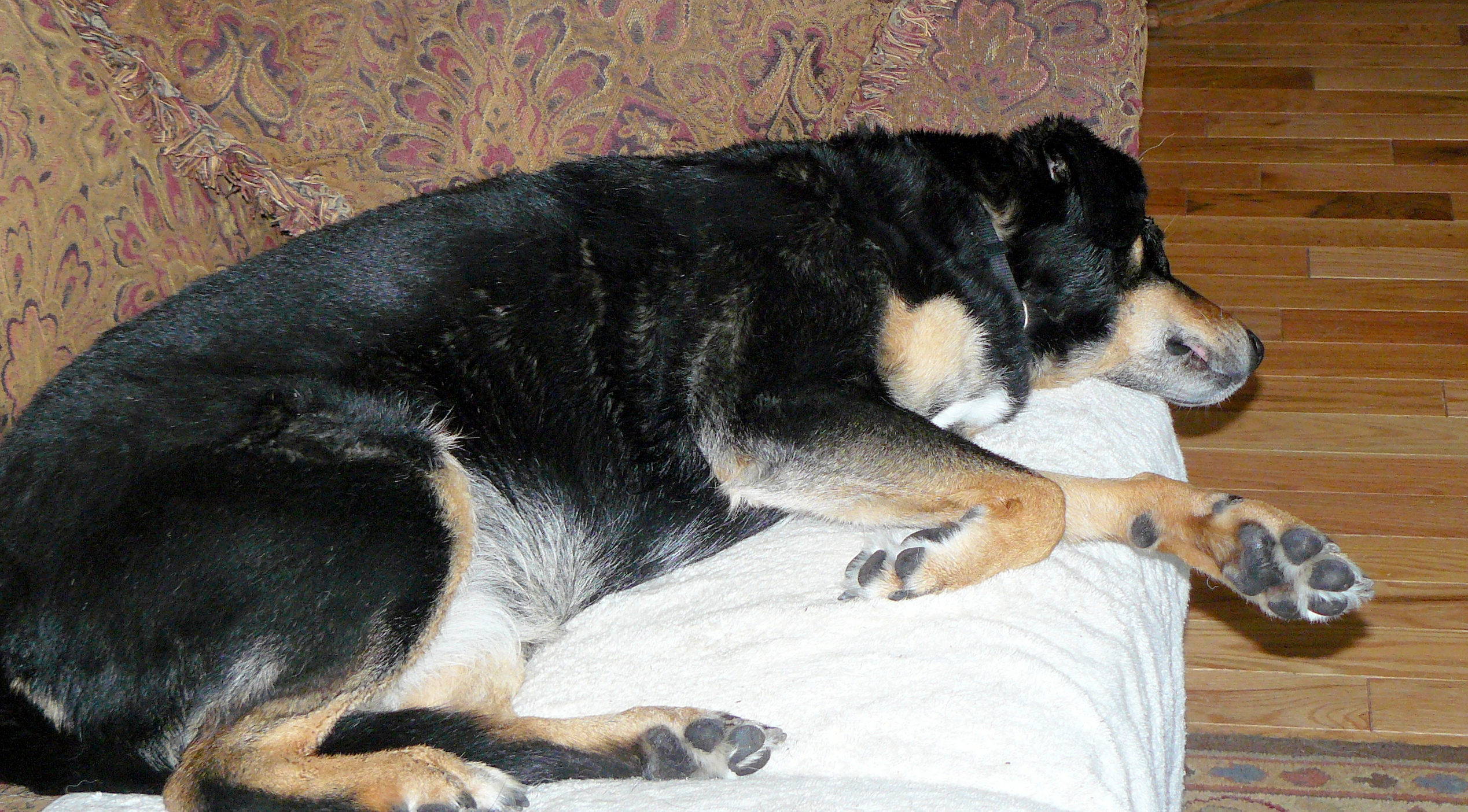
Hazel asleep on the living-room couch at 2pm yesterday.

The sub-heading is taken from an item on the BBC News website that I read yesterday morning. (I’m republishing it in full so that readers are fully informed.)

Lack of sleep can have role in obesity and diabetes, study says

By James Gallagher, Health editor, BBC News website, San Diego

If you need a lie-in at weekends to make up for lack of sleep in the week, you may be at risk of obesity and type 2 diabetes, a study suggests.

The sleeping habits of 522 people found those losing sleep on weekdays were more likely to develop the conditions.

The findings, shown at the Endocrine Society‘s annual meeting, suggested increasing sleep could help patients.

Experts said the findings were interesting and called for the idea to be tested in large trials.

Studies have already shown that shift work can rapidly put healthy people into a pre-diabetic state.

The action of throwing the body clock out of sync is thought to disrupt the natural rhythm of hormones in the body, leading to a host of health problems.

But the pressures of work and social lives mean many people cut their sleep during the week and catch up at the weekend. Researchers are investigating whether there is a health impact.

Widespread

The study, by a team at the University of Bristol in the UK and Weill Cornell Medical College in Qatar, assessed “sleep debt” – a measure of the difference in the nightly hours asleep on weekdays and at the weekend.

“We found that as little as 30 minutes a day sleep debt can have significant effects on obesity and insulin resistance,” said Prof Shahrad Taheri from Weill Cornell.

He added: “Sleep loss is widespread in modern society, but only in the last decade have we realised its metabolic consequences.

“Our findings suggest that avoiding sleep debt could have positive benefits for waistlines and metabolism and that incorporating sleep into lifestyle interventions for weight loss and diabetes might improve their success.”

The study was funded by the UK’s Department of Health, where 10% of healthcare budgets are already spent on treating diabetes.

The disease can lead to blindness, increase the risk of heart attacks and strokes, as well as damaging nerves and blood vessels – dramatically increasing the risk of a foot needing to be amputated.

What the researchers do not know is the impact of improving people’s sleep so they get more on a weeknight and do not need a weekend lie-in.

Dr Denise Robertson, a senior lecturer from the University of Surrey, commented: “This work is interesting and consistent with prospective data found in healthy individuals without type 2 diabetes.

“However, before this association between sleep length, obesity and metabolic status can be used in terms of public health we need the next tier of evidence.

“To date there have been no randomised controlled trials where sleep debt is addressed and a metabolic benefit is observed. However, the potential for such interventions to impact on health is great.”

So while it might be regarded as a little ‘tongue-in-cheek’ to say that we need to learn to sleep more effectively from dogs, the BBC item suggests that it’s not as silly as one might think.
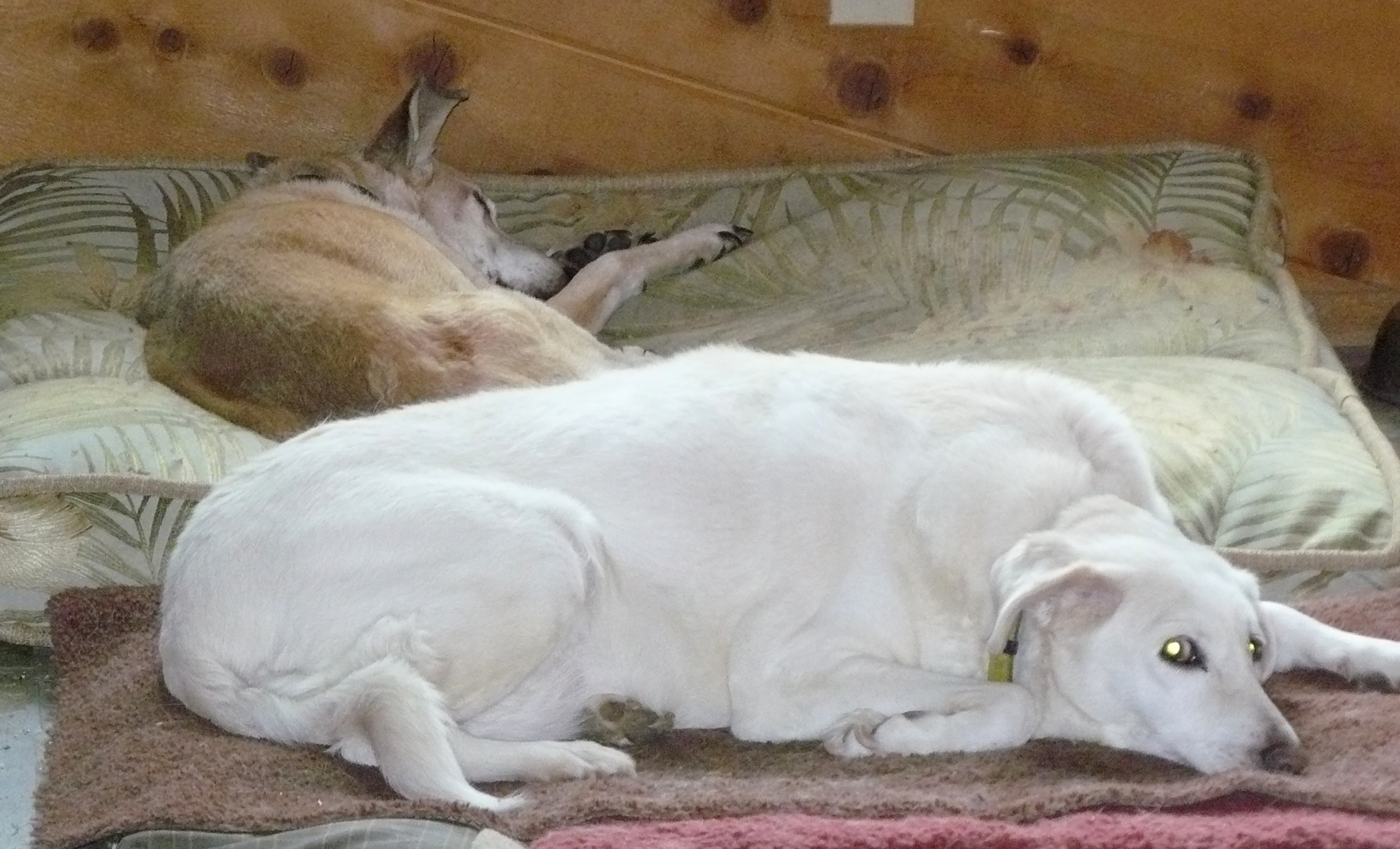
Lilly, to the rear of Paloma, sleeping soundly yesterday afternoon.

In the photograph above of Lilly and Paloma, both Mexican feral dogs rescued by Jean many years ago, sleep and a gentle life have allowed Lilly to achieve the grand old age of 17! In human terms that would be the equivalent of 136-years-old!
The Secret Life of Dogs.

Dogs watch us all the time and read our body language like a sixth sense.

A fascinating, and inspiring, insight into our favourite animal companion.

Published on Jan 26, 2014

Check out BBC Earth on BBC online
Dogs watch us all the time and read our body language like a sixth sense. They also smell our bodies for changes.

Max smelt cancer in Maureen before any medical scans could pick it up. Dogs do this naturally and can be trained to pick up on tiny volatile chemicals given off by cancerous tumors. They can even be taught to alert diabetics to low blood sugar levels.

Then read this, courtesy of the EarthSky Blog.

This dog can smell cancer

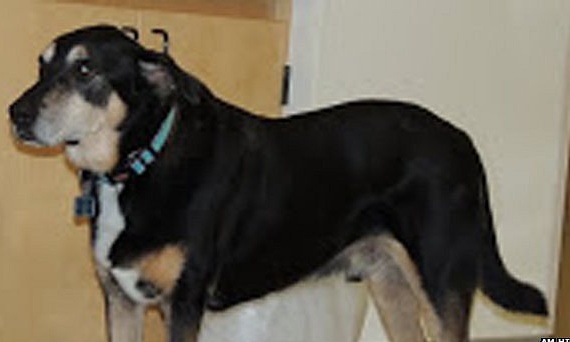
This is Frankie, a German shepherd mix. He can sniff out thyroid cancer in patients’ urine samples with 88% accuracy, according to a new study.

Image via The Endocrine Society.

A trained scent dog accurately identified whether patients’ urine samples had thyroid cancer or were benign (noncancerous) 88 percent of the time, according to a new study by researchers at University of Arkansas for Medical Sciences (UAMS). The results were presented March 6 at the Endocrine Society’s annual meeting in San Diego.

Approximately 62,450 new cases of thyroid cancer will be diagnosed in the US this year, and around 1,950 Americans will die from the disease.

Techniques used to diagnose thyroid cancer include fine-needle aspiration biopsy, which involves the patient having a thin needle inserted into the thyroid gland in the neck to obtain a tissue sample. Donald Bodenner, MD, PhD chief of endocrine oncology at UAMS is the study’s senior investigator. Bodenner said:

Scent-trained canines could be used by physicians to detect the presence of thyroid cancer at an early stage and to avoid surgery when unwarranted.

Study-coauthor Arny Ferrando previously “imprinted,” or scent-trained, a rescued male German Shepherd-mix named Frankie to recognize the smell of cancer in thyroid tissue. Ferrando, who noted that dogs have at least 10 times more smell receptors than humans, said:

Frankie is the first dog trained to differentiate benign thyroid disease from thyroid cancer by smelling a person’s urine.

German shepherd mix Frankie, a formerly stray dog rescued in Little Rock, Arkansas, was trained to diagnosis thyroid cancer through scent imprinting. Image credit: AM Hinson/BBC

In this study, 34 patients gave a urine sample before they went on to have a biopsy of suspicious thyroid nodules and surgery. The surgical pathology result was diagnosed as cancer in 15 patients and benign thyroid disease in 19. These urine samples were presented one at a time to Frankie to sniff. Frankie had been trained to alert to a cancer sample by lying down, and turning away from a benign sample to alert the absence of cancer.

The dog’s alert matched the surgical pathology diagnosis in 30 of the 34 study samples, the investigators reported.

Bottom line: A new study by University of Arkansas for Medical Sciences (UAMS) researchers presented March 6, 2015 at the Endocrine Society’s annual meeting in San Diego described Frankie, a trained scent dog that accurately identified whether patients’ urine samples had thyroid cancer or were benign 88 percent of the time.

Read more from the Endocrine Society

What incredible animals they are.