Category: Writing

Real Learning from Dogs – for our Children!

Another wonderful guest post from Zara Lewis.

Back on March 13th, Zara published her first guest post in this place. It was called Dogs and allergies and was very well received by many if not most of you.

So what a pleasure it was to receive a further email and material from Zara last Friday.

Here it is for all you good people!

ooOOoo

How Your Family Pooch Can Teach Your Youngsters Responsibility

by Zara Lewis, March 30th 2018

It’s easy to confuse pure obedience with true responsibility, simply because the former serves as the stepping stone, while the latter is a mindset that takes years to build. We as parents make choices every day that affect how well this mindset develops in our kids, but one of the best, most seamless ways for them to succeed is by nurturing their relationship with your family doggo.

With a four-legged friend by their side, kids tend to assume the role of a leader, a friend, and a caregiver with greater ease. Although it comes with its own set of parenting challenges, teaching your kids responsibility with your little fuzzy buddy is a rewarding experience that will enrich your kids’ childhood and help you be a better parent, as well!

Building healthy habits

From regular vet check-ups, vaccines, feeding on a schedule, and taking them for walks every day, your kids will quickly realize that only a healthy dog will be a happy dog. I know that some kids will be eager to split their chocolate cake with their furry pal, but when you explain to them that such a diet can be very harmful, they will be much more careful when choosing the right dog food.
When they’re young, they won’t perceive those walks and frisbee throws as exercise, but if they start embracing this lifestyle so early, they will be much more likely to stay active throughout their adulthood, too.

Learning about boundaries
No matter how in love your youngsters may be with their pet, they often don’t understand that dogs have moods, too. That means they won’t always be in the mood to be hugged, or that dogs won’t put up with having their tail pulled all the time.

The sooner they understand to respect the needs and wants of their pets, your kids will appreciate the meaning of personal preferences even in life. They will learn how to recognize certain body language signals that they are about to cross a line and transfer that knowledge to their hooman friends as well.


Mastering discipline

Just like that birthday cake is almost too irresistible not to be shared with your pooch, it’s no surprise that many kids want to take their dogs everywhere and share absolutely everything with them. My own little boy wanted to share his bed with our dog, Joey, and even though this is perfectly fine from time to time, making it into a habit wasn’t the best option for either of them.

So, we got a Snooza bed for Joey and placed it in our son’s bedroom and explained that it’s best for each of them to have their own space, since they both grow very fast. Plus, once I told my son that the cleaning of his room will be much more difficult if his bed was filled with dog hair, he immediately changed his mind!


Handling suitable tasks

Overburdening your kids with too many difficult chores is as bad as not giving them enough opportunities to be responsible. It’s best to discern how much your youngsters can handle depending on their age. For example, toddlers can tell you if their water bowl is empty or if they caught the little rascal in the potty act.

Older kids can share the entire feeding, grooming, and walking routine with you, depending on their school responsibilities and other chores. In fact, older kids can even help you train the dog by teaching them various tricks, and playing sessions are beneficial both for your kids and the dog, as they’ll help them grow stronger, and build their bond over time.

Fostering independence

Sometimes the homework will pile up and perhaps the flu season will kick in, so you’ll feel the need to spare your kids the trouble of caring for your pet. Even though it’s perfectly fine to help them manage their chores and take over a portion until they are well enough, they shouldn’t suddenly let you take over for good.
Moreover, encourage your kids to pitch in, no matter how little, with their birthday savings or their pocket money when buying dog food, or getting new chew toys. This is yet another way of sharing and learning to become more autonomous even financially with their pets.

The cycle of learning and teaching
While we’re on the subject of sharing, some kids perceive their pooch as another toy at first, or even as a chore you’ve added to their “unwanted” list. This is especially common among very young kids, and it becomes essential for parents to help them cope with these responsibilities by gradually introducing new ones.
Talk to them, see if they would actually like to take charge of a particular activity such as feeding or walking, while you share other responsibilities with them. Explain why these actions are important for keeping your pooch happy and healthy, and they will be much more likely to take on more responsibilities over time.

Finally, don’t forget to be a true role model while your kids are still in the learning stages of caring for your family pet. They will make mistakes, but they should look up to you for better behavioral patterns, and it’s your duty to be the caregiver you’d want your kids to become for your pooch.

ooOOoo

You do know if Zara carries on like this I shall hang up my keyboard and just savour Zara’s writings!!

Moving house – With A Dog

Or with 12 in our case!!

Back in February I received an email from a John Stuart:

Hi ,

I work on behalf of at kennelstore.co.uk, and I recently noticed your blog while I was looking around for a few resources on pets especially Dog! You have some great content there, I especially enjoyed this one https://learningfromdogs.com/2015/05/04/irish-wolfhound-guest-post/

I know sometimes it’s hard to create new content all the time and sometimes you probably find yourself needing blog content at learningfromdogs.com

I’m looking for high-quality sites like yours that I can contribute quality articles to in order to continue to build my profile, win a Pulitzer Prize and eventually take over the Universe.

Hopefully it’s a great opportunity for us to collaborate, you get some great content and I take a step towards world domination.

Hit me up and we can move forward from there. I’d be eager to contribute my knowledge and expertise and I’m confident I’ve got the writing chops to draw your readers in and even add value to your site.

Don’t just take my word for it though. Give me the nod and I’ll shoot across something for you to review and then we can go from there, I’d also be happy to work on something you might have had in mind for a while and not managed to get around to.

Note: I wont be charging anything for the article, it will be free of cost.

Regards,

John

Now I am pretty cautious when it comes to ‘promoting’ a guest author’s business or employer but if it’s clear that I have no direct connection with that business, and the article has real merit in being shared with you, then I think that is satisfactory. (But only if you dear readers agree with my stance in such cases: if you don’t then tell me!!)

Here is that article from John; the photographs were also supplied by him.

ooOOoo

Thinking of moving house? Here’s how to ensure it’s a dog friendly experience

Moving house can be stressful enough for us humans, and it’s even more of a confusing experience for the canine members of our household. Dogs are territorial animals by nature, and a sudden change of environment can upset the balance of their day-to-day lives. These changes can be very small; i.e. changing the room where you keep your dog’s food bowl or toys. It can also be a much greater logistical change; i.e. having to introduce your dog to a new vet, or new neighbours (human or canine)

Step One – Ensuring your new home is dog friendly 

This is arguably the most important step in ensuring your house move is as dog friendly as possible – your pooch needs to feel as happy and well-adjusted in a new house as possible. There are a number of factors to take into account when you’re first house-hunting (it’s worth noting that it’s ok if you can’t tick off all the items on this list!)

Living quarters

This is pretty essential. Your dog needs plenty of space to roam around, and probably won’t enjoy a confined space. If you’re used to keeping your dog indoors, it’s vital that your new home has plenty of space for their bed, toys and food bowl. Likewise, if your dog is kept outdoors, you need sufficient space to keep a kennel.

Security and safety

Make sure that your new residence is safe and secure for your dog to roam around. If you are keeping him/her outside, then you may wish to minimise visibility to and from the street, especially if your dog is easily excited by the site of strangers.

It’s also worth getting to know your local area and gaining a keen understanding of the potential hazards or threats which any pet owner needs to be aware of. If you are living in a highly built up area, then it’s doubly vital that your dog isn’t allowed to roam without your knowledge; likewise you may wish to familiarise yourself with any other dogs which your pet may come into contact with when you finally make the move.

Step Two – How to make your new home as dog-friendly as possible

Unfortunately, there’s no one-size-fits all, magical solution to making your dog’s home as friendly as possible. As long as you’ve got space and there are minimal hazards, the rest is a case of how much effort you’re willing to put in.

The secret of moving your dog into his/her new home smoothly is actually a relatively simple one – make your new home as similar as your old home as is humanly possible. There are several ways you can do this.

  • Establish a new routine as quickly as possible – this is very important; making sure your dog has an active routine is vital to ensuring continuity in your new home. Make this routine as similar to the old one. Feeding times and walk time should be exactly as they were in your previous residence. This routine should, of course, be as geared towards exploring your dog’s new surroundings as possible.
  • Don’t wash blankets – dogs are very responsive to familiar smells, meaning that it’s important to maintain as much familiarity as possible in the initial phases of a move. Familiar scents can make all the difference in making your dog feel more at home.
  • Transition is important – the actual experience of moving day might be unsettling for your dog, so making the transition as seamless and comfortable as possible is a good idea. Consider packing a little travel pack to make your dog as comfortable as possible. This should include blankets, toys, medication, water and food, as many things as possible to maximise comfort and continuity for your dog. As long as he/she feels at home, that’s all that matters.
  • Toilet train them immediately – when you get your dog to your new place, it’s important to make sure they know where to go to the toilet to avoid any unfortunate accidents.
  • Take special precautions for puppies – if you are moving a puppy, you may need to take extra precautions. It may be worthwhile to ask someone to puppy-sit for you if you’re planning to be out of the house for long periods of time.

Step Three – Important admin

This part is, admittedly, for you rather than your dog. However, there are some simple but important administrative tasks which can make all the difference in ensuring that your dog is happy in their new home. These can include:

  • Changing any dog tags which may have your old address on them
  • Registering with a new vet if possible. Dogs may not like visits to the vet at the best of times, so getting them adjusted to a new face is important.

Kennelstore specialise in the sale of wooden dog kennels, dog runs and dog cabins to homeowners and industry professionals.

http://kennelstore.co.uk/

ooOOoo

Your feedback as to the degree of value this post was for you would be most useful to me!

Blue Ridge Beef dog food recall

Reminds of me of that old saying about London buses!!

As in don’t worry if you just missed a bus, another one or twenty, will be along shortly!!

The following was circulated by Dog Food Advisor on the 27th March.

ooOOoo

Dear Fellow Dog Lover,

Because you signed up on our website and asked to be notified, I’m sending you this special recall alert. If you no longer wish to receive these emails, please click the “unsubscribe” link at the bottom of this message.
Important: This email alert includes 2 different recalls.

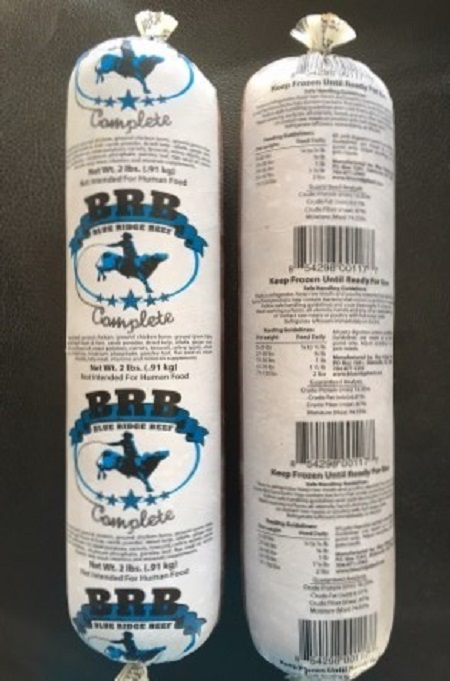
Blue Ridge Beef is recalling one lot of its BRB Complete raw frozen dog food due to possible contamination with Salmonella and Listeria monocytogenes.

To learn which products are affected, please visit the following link:

Blue Ridge Beef Dog Food Recall of March 2018

Also…

Darwin’s Natural Pet Products is recalling 4 lots of its raw dog food because they have tested positive for Salmonella and E. coli O128, bacteria that can cause serious and sometimes fatal infections.

To learn which products are affected, please visit the following link:

Darwin’s Dog Food Recall of March 2018

Please share the news of this alert with other pet owners.

Mike Sagman, Editor

The Dog Food Advisor

P.S. Get instant access to a list of The Dog Food Advisor’s safest and most recommended dog food brands. Click here for details.

ooOOoo

As usual, I also include the details of what you will find if you click on that Darwin’s Dog Food Recall link.

oooooh

Blue Ridge Beef Dog Food Recall of March 2018

March 26, 2018 — Blue Ridge Beef of Eatonton, GA, is voluntarily recalling one lot of its BRD Complete raw pet food because of the potential of contamination with Salmonella and Listeria monocytogenes.

What Caused the Recall?

This recall was initiated after samples collected and tested by the FDA showed positive for Salmonella and Listeria monocytogenes.

There has been no consumer or pet illnesses in association with this product.

Blue Ridge Beef is voluntarily recalling this product lot as a commitment to consumer and pet health and safety.

About Salmonella and Listeria

Salmonella and Listeria can cause severe and potentially fatal infection in both the animals consuming the pet food, and the humans that handle the pet food.

There is a risk to humans from handling contaminated pet products, especially if they have not thoroughly washed their hands after having contact with the products or any surface exposed to these products.

Pets can be carriers of the bacteria and infect humans, even if the pets do not appear to be ill.

Once Salmonella and/or Listeria monocytogenes gets established in the pet’s gastrointestinal tract, the animal can shed the bacteria when it has a bowel movement, and the contamination will continue to spread.

Groups at high risk for Salmonella and Listeria monocytogenes include the elderly, people with weakened immune systems and certain chronic medical conditions (such as cancer), and pregnant women.

Healthy people infected with Salmonella and Listeria monocytogenes should monitor themselves and their pets for some or all of the following symptoms: nausea, vomiting, diarrhea or bloody diarrhea, abdominal cramping and fever.

Consumers exhibiting these signs after having contact with this product or pets that have consumed this product should contact their healthcare provider.

Pet owners should contact a veterinarian if their pet shows symptoms.

Consumers should also follow the simple handling tips on the package.

What’s Recalled?

The recalled lot would affect the following states:

  • Florida
  • Georgia
  • North Carolina
  • South Carolina
  • Tennessee

The affected product is sold in two pound chubs that are frozenand are distinguished by the manufacturing codes:

  • BRB Complete
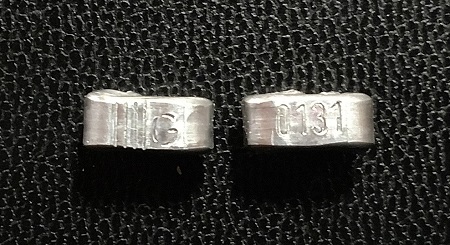
  • Lot #: GA0131
  • Manufacturing date: 01/31/2018

The packaging of the product and the location of the lot number is pictured above along with the location of the clips on each end of the chub.

What to Do?

Consumers are encouraged to check the clips of product to ensure that they possess the affected lot # GA0131.

Those who have purchased the above lot of BRB Complete are urged to stop feeding them and return products to the place of purchase for a full refund or dispose of them immediately.

Those with questions can email the company at blueridgebeefga@yahoo.com.

This recall is being made with the knowledge of the US Food and Drug Administration.

U.S. citizens can report complaints about FDA-regulated pet food products by calling the consumer complaint coordinator in your area.

Or go to http://www.fda.gov/petfoodcomplaints.

Canadians can report any health or safety incidents related to the use of this product by filling out the Consumer Product Incident Report Form.

Get Dog Food Recall Alerts by Email

Get free dog food recall alerts sent to you by email. Subscribe to The Dog Food Advisor’s emergency recall notification system.

ooOOoo

As I always ask: “Please share this as far and wide as you can!”

Smucker Recalls Milo’s Kitchen Dog Treats

This was a dog food recall notice sent out on the 23rd March.

Dear Fellow Dog Lover,

Because you signed up on our website and asked to be notified, I’m sending you this special recall alert. If you no longer wish to receive these emails, please click the “unsubscribe” link at the bottom of this message.

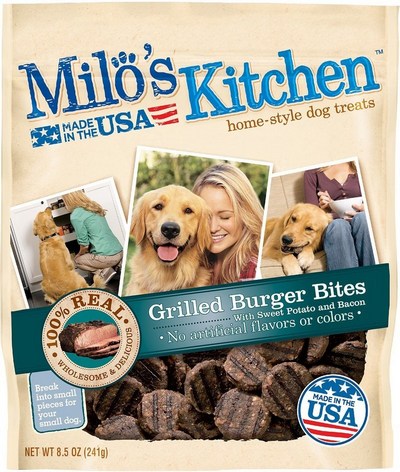
J. M. Smucker Company of Orrvile, OH, is recalling two varieties of its popular Milo’s Kitchen dog treats due to elevated levels of beef thyroid hormone.

To learn which products are affected, please visit the following link:

Smucker Recalls Milo’s Kitchen Dog Treats

Please share the news of this alert with other pet owners.

Mike Sagman, Editor
The Dog Food Advisor

P.S. Get instant access to a list of The Dog Food Advisor’s most recommended dog food brands. Click here for details.

If you go to that link then you will read this:

ooOOoo

Smucker Recalls Milo’s Kitchen Dog Treats

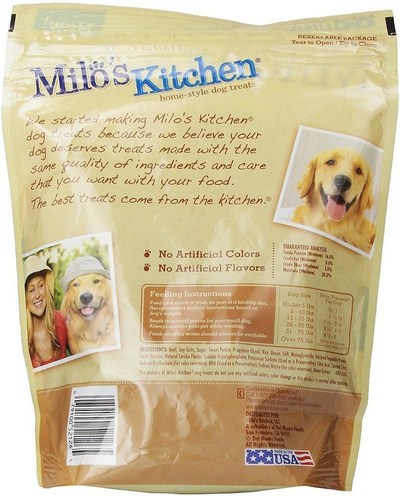
March 22, 2018 — The J.M. Smucker Company has announced a limited voluntary recall of specific lots of two varieties of Milo’s Kitchen dog treats, distributed nationally, because the products potentially contain elevated levels of beef thyroid hormone.

What’s Recalled?

The affected products include the following items and lots:
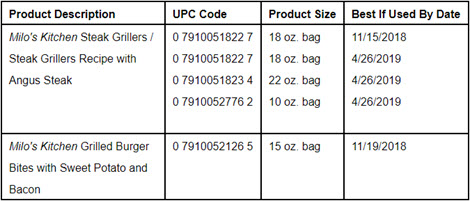
About Elevated Thyroid Hormone

Dogs consuming high levels of beef thyroid hormone may exhibit symptoms such as increased thirst and urination, weight loss, increased heart rate and restlessness.

These symptoms may resolve when the consumption of these levels is discontinued.

However, with prolonged consumption these symptoms may increase in severity and may include vomiting, diarrhea, and rapid or labored breathing.

Should these symptoms occur, we recommend pet owners contact their veterinarian immediately.

About the Recall

The FDA informed Smucker of three illness reports and the company immediately initiated a voluntary recall of the limited, impacted production.

No other Milo’s Kitchen dog treats, or any other product manufactured by The J.M. Smucker Company, are impacted.

The voluntary recall is being conducted in cooperation with the U.S. Food and Drug Administration.

What to Do?

Consumers who have purchased the specific lots of product listed above should stop feeding it to their dogs.

If consumers have questions or would like to receive a refund or coupon for replacement product, they should call the company at 888-569-6767, Monday through Friday, between 9:00 AM and 5:00 PM ET or email us by completing this form.

U.S. citizens can report complaints about FDA-regulated pet food products by calling the consumer complaint coordinator in your area.

Or go to http://www.fda.gov/petfoodcomplaints.

Canadians can report any health or safety incidents related to the use of this product by filling out the Consumer Product Incident Report Form.

Get Dog Food Recall Alerts by Email

Get free dog food recall alerts sent to you by email. Subscribe to The Dog Food Advisor’s emergency recall notification system.

ooOOoo

As always gets said, do please share this as best you can. Not just this one but the further one that is being republished tomorrow!

Hertfordshire’s Finest is a Dog!

Again and again our dogs demonstrate their incredible characters!

I’m a very ‘ex’ typewriter salesman, in that for the period of 1970 to 1978 I was a salesman for IBM Office Products in the UK.

I have had two great friends for many, many years. Dan, whom I met in Boston, Mass., in 1980 at a Commodore PET Computer event, and Richard, whom I met in England a couple of years previously. Richard used to work as a salesman for Olivetti Typewriters more or less the same time that I was selling for IBM.

I speak to Dan and Richard several times each week.

A few days ago, Richard’s lovely partner, Julie, sent me an email with a link to a recent item carried by the BBC.

As follows:

It didn’t take me long to find another video. This time broadcast by Channel 5 News that had apparently led with the story. (NB: when I reviewed today’s post a little after 6am local time that FB page seemed to be missing.)

Brave, brave Finn!

When I spoke with Julie she added that earlier on in her lifetime she had been a police officer at that Hertfordshire Station.

Shit Happens!

A very inspirational essay from George Monbiot.

It is said that there are only two certainties in life: Death and Taxes.

I think that is one short: The Unexpected. As in Death, Taxes and The Unexpected!

As evidence of The Unexpected, one could put falling off one’s bike or being diagnosed with Parkinson’s Disease. Or the many other ‘hiccups’ that are an attribute of the real world that we humans live in. Put in the words of the street: Shit Happens!

Now read this very inspirational essay from George Monbiot. Republished here with Mr. Monbiot’s very kind permission.

ooOOoo

Unprostrated

16th March 2018

I have prostate cancer, but I’m happy. Here’s how.

By George Monbiot, published in the Guardian 14th March 2018

It came, as these things often do, like a gunshot on a quiet street: shocking and disorienting. In early December, my urine turned brown. The following day I felt feverish and found it hard to pee. I soon realised I had a urinary tract infection. It was unpleasant, but seemed to be no big deal. Now I know that it might have saved my life.

The doctor told me this infection was unusual in a man of my age, and hinted at an underlying condition. So I had a blood test, which revealed that my prostate specific antigen (PSA) levels were off the scale. An MRI scan and a mortifying biopsy confirmed my suspicions. Prostate cancer: all the smart young men have it this season.

On Monday, I go into surgery. The prostate gland is buried deep in the body, so removing it is a major operation: there are six entry points and it takes four hours. The procedure will hack at the roots of my manhood. Because of the damage that will be caused to the surrounding nerves, there’s a high risk of permanent erectile dysfunction. Because the urethra needs to be cut and reattached to the bladder, I will almost certainly suffer urinary incontinence for a few months, and possibly permanently. Because the removal of part of the urethra retracts the penis, it appears to shrink, at least until it can be stretched back into shape.

I was offered a choice: radical surgery or brachytherapy. This means implanting radioactive seeds in the parts of the prostrate affected by cancer. Brachytherapy has fewer side effects, and recovery is much faster. But there’s a catch. If it fails to eliminate the cancer, there’s nothing more that can be done. This treatment sticks the prostate gland to the bowel and bladder, making surgery extremely difficult. Once you’ve had one dose of radiation, they won’t give you another. I was told that the chances of brachytherapy working in my case were between 70 and 80%. The odds were worse, in other words, than playing Russian roulette (which, with one bullet in a six-chambered revolver, gives you 83%). Though I have a tendency to embrace risk, this was not an attractive option.

It would be easy to curse my luck and start to ask “why me?”. I have never smoked and hardly drink; I have a ridiculously healthy diet and follow a severe fitness regime. I’m 20 or 30 years younger than most of the men I see in the waiting rooms. In other words, I would have had a lower risk of prostate cancer only if I had been female. And yet … I am happy. In fact, I’m happier than I was before my diagnosis. How can this be?

The reason is that I’ve sought to apply the three principles which, I believe, sit at the heart of a good life. The first is the most important: imagine how much worse it could be, rather than how much better.

When you are diagnosed with prostate cancer, your condition is ranked on the Gleason Score, which measures its level of aggression. Mine is graded at 7 out of 10. But this doesn’t tell me where I stand in general. I needed another index to assess the severity of my condition, so I invented one: the Shitstorm Scale. How does my situation compare to those of people I know, who contend with other medical problems or family tragedies? How does it compare to what might have been, had the cancer had not been caught while it is still – apparently – confined to the prostate gland? How does it compare to innumerable other disasters that could have befallen me?

When I completed the exercise, I realised that this bad luck, far from being a cause of woe, is a reminder of how lucky I am. I have the love of my family and friends. I have the support of those with whom I work. I have the NHS. My Shitstorm Score is a mere 2 out of 10.

The tragedy of our times is that, rather than apply the most useful of English proverbs – “cheer up, it could be worse” – we are constantly induced to imagine how much better things could be. The rich lists and power lists with which the newspapers are filled, our wall-to-wall celebrity culture, the invidious billions spent on marketing and advertising, create an infrastructure of comparison that ensures we see ourselves as deprived of what others possess. It is a formula for misery.

The second principle is this: change what you can change, accept what you can’t. This is not a formula for passivity. I’ve spent my working life trying to alter outcomes that might have seemed immovable to other people. The theme of my latest book is that political failure is, at heart, a failure of imagination. But sometimes we simply have to accept an obstacle as insuperable. Fatalism in these circumstances is protective. I accept that my lap is in the lap of the gods.

So I will not rage against the morbidity this surgery might cause. I won’t find myself following Groucho Marx who, at the age of 81, magnificently lamented, “I’m going to Iowa to collect an award. Then I’m appearing at Carnegie Hall, it’s sold out. Then I’m sailing to France to pick up an honour from the French government. I’d give it all up for one erection.” And today there’s viagra.

The third principle is this: do not let fear rule your life. Fear hems us in, stops us from thinking clearly and prevents us from either challenging oppression or engaging calmly with the impersonal fates. When I was told that this operation has an 80% chance of success, my first thought was “that’s roughly the same as one of my kayaking trips. And about twice as good as the chance of emerging from those investigations in West Papua and the Amazon”.

There are, I believe, three steps to overcoming fear: name it, normalise it, socialise it. For too long, cancer has been locked in the drawer labelled Things We Don’t Talk About. When we call it the Big C, it becomes, as the term suggests, not smaller, but larger in our minds. He Who Must Not Be Named is diminished by being identified, and diminished further when he becomes a topic of daily conversation.

The super-volunteer Jeanne Chattoe, whom I interviewed recently for another column, reminded me that, just 25 years ago, breast cancer was a taboo subject. Thanks to the amazing advocacy of its victims, this is almost impossible to imagine today. Now we need to do the same for other cancers. Let there be no more terrible secrets.

So I have sought to discuss my prostate cancer as I would discuss any other issue. I make no apologies for subjecting you to the grisly details: the more familiar they become, the less horrifying. In doing so, I socialise my condition. Last month, I discussed the remarkable evidence suggesting that a caring community enhances recovery and reduces mortality. In talking about my cancer with family and friends, I feel the love that I know will get me through this. The old strategy of suffering in silence could not have been more misguided.

I had intended to use this column to urge men to get themselves tested. But since my diagnosis, we’ve discovered two things. The first is that prostate cancer has overtaken breast cancer to become the third biggest cancer killer in the UK. The second is that the standard assessment (the PSA blood test) is of limited use. As prostate cancer in its early stages is likely to produce no symptoms, it’s hard to see what men can do to protect themselves. That urinary tract infection was a remarkably lucky break.

Instead, I urge you to support the efforts led by Prostate Cancer UK to develop a better test. Breast cancer has attracted twice as much money and research as prostate cancer, not because (as the Daily Mail suggests) men are the victims of injustice, but because women’s advocacy has been so effective. Campaigns such as Men United and the Movember Foundation have sought to bridge this gap, but there’s a long way to go. Prostate cancer is discriminatory: for reasons unknown, black men are twice as likely to suffer it as white men. Finding better tests and treatments is a matter of both urgency and equity.

I will ride this out. I will own this disease but I won’t be defined by it: I will not be prostrated by my prostate. I will be gone for a few weeks but when I return, I do solemnly swear I will still be the argumentative old git with whom you are familiar.

http://www.monbiot.com

ooOOoo

It appears to be a unique aspect of the human mind. I am referring to our ability to worry about the future, to struggle to break away from ‘habitual’ responses to unanticipated crap coming along, to see the glass as half full as opposed to half empty, and so on, and so on.

Oh, to be like our dear, sweet, wise dogs.

Just let the world roll by!

What a great man he was!

I am, of course, referring to the recent death of Stephen Hawking.

There’s no way that I can add anything to the widespread reporting of the very sad death of the theoretical physicist, cosmologist and author Professor Stephen Hawking.

Except, possibly, this interesting quirk of fate.

For this great man died yesterday: March 14th.

The very same day that another very famous man, the German-born Albert Einstein, was born. As in March 14th. Albeit, Stephen Hawking’s death being 139 years after the birth of the 1921 winner of the Nobel Prize in Physics.

Did you also know that Professor Hawking was a great dog lover!

I was very pleased that The Conversation blog site released a wonderful tribute to Stephen Hawking. The item opens, thus:

ooOOoo

Acclaimed British theoretical physicist, cosmologist and author Stephen Hawking has died aged 76. Hawking is best known for his work on black holes, which revolutionised our understanding of the universe.

Hawking passed away today peacefully at his home in Cambridge, his family confirmed in a statement:

We are deeply saddened that our beloved father passed away today. He was a great scientist and an extraordinary man whose work and legacy will live on for many years.

His courage and persistence with his brilliance and humour inspired people across the world. He once said, “It would not be much of a universe if it wasn’t home to the people you love.” We will miss him forever.


Read more: A timeline of Stephen Hawking’s remarkable life


Hawking was born on January 8, 1942, in Oxford, England. In 1963 he was diagnosed with ALS, a form of Motor Neurone Disease, and later confined to a wheelchair and forced to communicate via a computerised voice. But he continued his theoretical work and was outspoken on many things over much of his life.

Tributes have been pouring in on social media for the scientist, who made complex science accessible to everyone in his 1988 bestselling book A Brief History of Time.

ooOOoo

Do read the rest of that article. I will take the tribute from Alice Gorman that closes The Conversation article to close today’s post.

ooOOoo

Alice Gorman, Senior Lecturer in archaeology and space studies, Flinders University

There are few scientists who reach as far into popular culture as Stephen Hawking did. His research tackled the biggest of big questions – the nature of time, space and the universe we live in.

Sometimes it feels like science is losing ground in the modern world, but people still look to the stars for answers about who we are and how we come to be here.

Hawking’s bestselling A Brief History of Time made cosmology accessible to people and brought black holes out of the shadows and into the public imagination.

Personally I’ll miss his appearances on The Big Bang Theory, where he could out-nerd the nerds, and also provide some often necessary common sense. It was always great to see a world-class scientist just having fun.

ooOOoo

What a very great man he was!

Saving lives!

Saving the lives of our dogs and their owner/carers!

The Smithsonian website recently featured a dog rescue centre in Costa Rica that has the odd dog or one thousand being cared for!

I kid you not!

This Costa Rican Paradise Shelters Over 1,000 Stray Dogs

A photographer documents scenes from Territorio De Zaguates, a converted farm in the Santa Bárbara mountains that’s giving abandoned dogs a second chance
By Jennifer Billock, smithsonian.com, March 6, 2018

The article also includes a range of incredible photographs. I have ‘borrowed’ a couple to share with you.

oooo

What rescuing a dog means to thousands of gentle-hearted people is no better spoken about than in the words of a poem that Colin published over on his blog A Dog’s Life.

It is republished here with Colin’s very kind permission.

ooOOoo

“A Stray they named Ray”

The following is one of the poems in my book “Just Thinking”, which is available direct from Friesen Press, Amazon, and other on-line book retailers.

https://books.friesenpress.com/store/title/119734000032944229/Colin-Chappell-Just-Thinking

This is such a sweet collection of beautiful thoughts and sentiments and reflections. The people and stories and memories are so real and tangible, easy to connect with, easy to read. For each poem I have read so far, it’s like he is talking about someone I know… or someone I would want to know 🙂 This books explores so many things, takes you on so many journeys.. the good and the bad and the beauty in between. This book was given as a gift, and it’s one I will treasure!” (Amazon review)

 “A Stray they named Ray”

They were found on a farm

Not too far away,

But… where was their home?

Two dogs, frightened, hungry,

So very tired and,

Surviving somehow on their own.

***

The rescue van arrived,

And the crew discussed

How best to capture this pair.

Traps were determined

To be the most humane,

But… so many questions were there.

***

Why were these two dogs

Having to scavenge for food?

Why were they out on their own?

The treats in the traps,

Put an end to all that,

And they were captured, scared… and alone.

***

They had no collars; no tags;

No microchips were found.

They were just two dogs without names.

Their faces were expressionless,

And their fur in poor condition.

Were they siblings? Perhaps their mother was the same?

***

Once back at the shelter

They were caged together,

But then a fight ensued.

Trainers intervened,

And gave them separate cages,

But then had to decide what to do.

***

One (they later named Ray) was not unfriendly,

Although cautious and rather aloof.

He seemed to know he was no longer alone.

He was given a bath and a bowl of food

And, with some loving care (they thought),

He could possibly adapt to a home.

***

He was a sorry sight,

And no doubt a once proud dog.

Clearly a German Shepherd cross,

Just managing to survive,

By eating scraps to stay alive.

To explain him, they were quite at a loss.

***

They tried to find his owners.

They checked the Missing Pets files,

But there only seemed one option.

He now belonged to the shelter

And… as he was neither reported lost, nor stolen,

He would be trained for adoption.

***

Four months later he was ready.

His adoption photo was published,

And all were looking for a sign.

He needed a family,

To love… and be loved by.

This will, hopefully, be his time.

***

Eventually a couple arrived

Who clearly were drawn to him,

And regular walks were arranged.

It was soon to be seen

That his life, as it had been,

Was quickly going to change.

***

His day of adoption came.

The staff all said their farewells.

Smiles, and tears, were all around,

For the life of a stray;

Of a dog they named Ray;

A life almost lost… had been found.

*

ooOOoo

I am finishing today’s post with another photograph from the Costa Rican Paradise Shelter.

Then my final words are those in that Smithsonian article:

Now, more than 1,000 dogs roam the countryside of the Costa Rican estate. They go on daily walks in the mountains and eat roughly 858 pounds of food per day. They’re bathed and treated on-site for illness or injury (though more intense cases go to a specialist vet in San Jose). And most importantly, they’re given a better quality of life than they’d experience on the streets.

“There is a major problem with stray and abandoned dogs in Costa Rica,” Dan Giannopoulos, a photographer who recently visited the shelter, told Smithsonian.com. “The government line on [the] treatment of strays is to destroy them. This is the only shelter of its kind in Costa Rica. It offers a new lease [on] life to the dogs, many of whom have lived terrible lives and have terminal illnesses.”

Read more: https://www.smithsonianmag.com/travel/these-photos-transport-you-dogs-central-american-paradise-180968018/#v9xZpKmRadL5JHeA.99
Give the gift of Smithsonian magazine for only $12! http://bit.ly/1cGUiGv
Follow us: @SmithsonianMag on Twitter

Dogs and allergies

Again and again I feel so privileged to be writing this blog!

For so many reasons! But the top reasons are that I feel part of an enormous family of dog lovers and that so frequently I am approached by a person who has valuable information to share with me and you.

Such as it was when back last September in came an email from Zara Lewis.

Hi Paul,
As you probably already know, all the pet stories you are sharing are super interesting and, most importantly, super useful to the entire community of us, pet parents.
Professionally, I am a regular contributor at highstylife.com magazine, while personally I am very interested in pet topics, as I am a proud mom of two + one. I say “+one” because I can hardly separate my foster dog from my children 😀

I have no book to publish, but I was wondering if you are willing to add guest content to your blog. Here you can check my style and previous posts:

https://caninecupcakes.com/the-essential-guide-to-going-green-with-your-dogs-diet-this-spring/
http://tinpaw.com/everything-need-know-preventing-heartworm-cat/

Here are some topic suggestions that I believe can be useful for your community:

-Teaching your child responsibility with animals
-The Latest Trends in Pet Care
Looking forward to your response.
Regards from me & furry Joey,

Zara

You will not be surprised to hear me say that I replied to Zara saying that I would be delighted to receive an essay from her.

The weeks slipped by, as they do, but on the 6th March Zara sent the following.

It’s a wonderful essay!

ooOOoo

Dog Allergies 101: What Are the Most Common Ones & What to Do About Them

by Zara Lewis, March 6th, 2018.

Allergies are a very common ailment, so it’s not unusual for your dog to have one. Even though people have the ability to describe the symptoms to the last detail, dogs tend to show different ones, so it’s very important for us to know and recognize them. Unless you have some kind of a super dog breed, your four-legged friend might start developing certain allergies. This mostly happens because their bodies mistakenly believe a certain type of food is bad for them, or they use it too much or too often, so their immune system responds by releasing antibodies that can cause serious problems. Take a look at the most common symptoms and allergens:

What could the symptoms be?

So before starting with the most common allergens, it’s very important to know what the most common symptoms of food allergies in dogs are. So, if you happen to notice that your dog is experiencing one of the following, make sure to get them checked by a vet as it’s very probable they have a certain food allergy:

  • Itching
  • Poor fur quality
  • Nausea
  • Obsessive Licking
  • Vomiting
  • Chronic diarrhoea
  • Chronic gas
  • Chronic ear inflammation

What are the most common allergens?

Eggs
It’s a well-known fact that eggs (more specifically egg yolks) are very rich in protein, so your dog can easily become allergic to them. On the positive side, avoiding eggs is not difficult; just make sure to check dog food labels to see if there’s any danger for your four-legged friend. Even though one of the most common symptoms of this type of allergy in your dog is the appearance of bald spots, egg allergy can manifest in other ways as well.

Beef, chicken and lamb
Beef is also known to have high amounts of protein, which means that your dog can become intolerant to this kind of meat as well. This usually happens if you’ve been feeding your dog a certain type of food for a very long time, so your dog becomes intolerant or allergic to that specific food. Due to this reason, beef allergies are very common, as most dog foods contain this type of meat. The same rule applies to chicken as well. Dog foods are most commonly made of beef and chicken, so it would be best to feed your dog with all possible meats – beef, pork, chicken and lamb, and rotate them as much as you can. On the other hand, lamb is very often regarded as a ‘safe haven’ for dogs with meat allergies. However, if you don’t pay attention to rotating your dog’s diet, your dog can also become allergic to lamb.

Grain
Another thing that most types of dog food contain is grains, which means that this is also one of the most common allergens. If you happen to notice itchy and dry skin or hair loss, make sure to check if your dog is allergic to grain. Mind that finding completely grain-free food can be quite tricky, so there might be a chance you have to cook everything by yourself. Luckily, for all those who don’t have the time to do this daily, there are certain products that can help with that, such as the grain-free line of Ivory Coat dog food. Always check your dog – if they’re allergic to grain, the sooner you discover it, the better.

Dairy products

It’s not only people who can be lactose intolerant – dogs can be as well. This means they are not allowed to eat or drink any dairy products, such as cheese or milk. Otherwise, they’ll end up with gas problems, diarrhoea and vomiting. As far as dairy products are concerned, there is one tricky thing you need to pay attention to – a dog can actually develop an allergy towards them, so it’s crucial for you to be able to tell the allergy apart from the intolerance. If you notice itchiness or redness on your dog, make sure to have it checked by the vet as soon as possible. If it’s only diarrhoea or vomiting, it’s probably only intolerance, but a check-up won’t hurt.
Soy
There’s an ongoing debate whether soy is good for your dog or not, but it’s definitely true that soy food is very common. Soy can cause many health problems that can be more serious than simple allergies, including reproductive and growth problems, and diseases of the liver. Furthermore, soy is the second most genetically modified crop that is grown, so it would be the most advisable to avoid this product.

It’s not for nothing that they say dogs are people’s best friends. And we treat our best friends nicely, don’t we? This is why we should all (especially if we’re the owners) make sure to treat them the best we can. The first step is making sure our little furry friends are not allergic to anything, and discovering this quickly won’t make only our lives easier, but those of our dogs as well.

ooOOoo

Great email from Zara! Great guest essay with great pictures and loads and loads of valuable advice, and great links to other websites.

You see why I like running this blog!!

Redband Dog Chews Recall

Another day, another recall!

In came the email yesterday:

Dear Fellow Dog Lover,

Because you signed up on our website and asked to be notified, I’m sending you this special recall alert. If you no longer wish to receive these emails, please click the “unsubscribe” link at the bottom of this message.

Redbarn Pet Products of Long Beach, CA is expanding its recall to now include multiple brands of dog chews due to contamination with Salmonella.

To learn which products are affected, please visit the following link:

Redbarn Expands Recall to Include Multiple Brands of Dog Chews

Please share the news of this alert with other pet owners.

Mike Sagman, Editor
The Dog Food Advisor

P.S. Need help? Get instant access to a list of The Dog Food Advisor’s most recommended dog food brandsClick here for details.

Then across to that link to read the following:

ooOOoo

Redbarn Expands Recall to Include Multiple Brands of Dog Chews

March 7, 2018 — Redbarn Pet Products, LLC of Long Beach, CA is expanding its voluntarily recall issued on February 9 to include all lots manufactured with raw material from a single supplier because it has the potential to be contaminated with Salmonella.

No illnesses, injuries or complaints have been reported to date.

What’s Recalled?

The recall is limited to specific lots of the following brands distributed from March 2017 through February 2018:

  • Redbarn
  • Chewy Louie
  • Good Lovin’
  • Dentley’s Brand

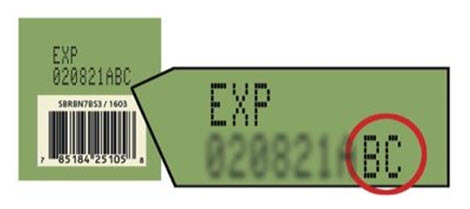
The supplier’s raw material was used to produce the Redbarn, Chewy Louie, Dentley’s and Good Lovin’ brand products listed below with best-buy dates ending in BC.

In total, 24 SKUs are affected.

The recalled products were distributed nationwide in pet specialty and grocery retail stores.

Affected products are listed below and have best by dates ending in BC.

You can view examples of the packaging here or use the illustration below as a guide.

All lots of Redbarn, Chewy Louie, Dentley’s and Good Lovin’ brand products listed below with best by dates ending in BC are included in this expanded recall.

The supplier’s raw materials were used to produce each of these products:

Redbarn Brand

  • 205001 Redbarn 5″ Bully Stick
    Best By Code Ending: BC
    UPC: 785184205006
  • 207001 Redbarn 7″ Bully Stick
    Best By Code Ending: BC
    UPC: 785184207000
  • 207016 Redbarn 7″ Bully Stick 6pk
    Best By Code Ending: BC
    UPC: 785184207161
  • 209001 Redbarn 9″ Bully Stick
    Best By Code Ending: BC
    UPC: 785184209004
  • 230001 Redbarn 30″ Bully Stick
    Best By Code Ending: BC
    UPC: 785184230015
  • 236001 Redbarn 36″ Bully Stick
    Best By Code Ending: BC
    UPC: 785184236017
  • 245002 Redbarn Steer Stick 6pk
    Best By Code Ending: BC
    UPC: 785184245026
  • 245010 Redbarn 5″ Steer Stick 10pk
    Best By Code Ending: BC
    UPC: 785184245101
  • 247000 Redbarn 7″ Steer Stick
    Best By Code Ending: BC
    UPC: 785184247006
  • 251005 Redbarn 7″ Bully Stick 3pk
    Best By Code Ending: BC
    UPC: 785184251058
  • 290091 Redbarn 9″ Bully 1-lb bag
    Best By Code Ending: BC
    UPC: 785184290095
  • C207001 Redbarn 7″ Bully
    Best By Code Ending: BC
    UPC: 785184207017
  • C207016 Redbarn 7″ Bully Stick 6pk
    Best By Code Ending: BC
    UPC: 785184207062
  • C236001 Redbarn 36″ Bully Stick
    Best By Code Ending: BC
    UPC: 785184236116

Chewy Louie Brand

  • 807101 Chewy Louie 7″ Bully Stick
    Best By Code Ending: BC
    UPC: 785184807019

Good Lovin’ Brand

  • 2729250 Good Lovin’ 10pk Steer
    Best By Code Ending: BC
    UPC: 800443272732
  • 2729381 Good Lovin’ 6pk Bully Stick
    Best By Code Ending: BC
    UPC: 800443272862
  • 2729410 Good Lovin’ 7″ Bully Stick
    Best By Code Ending: BC
    UPC: 800443272893
  • 2729461 Good Lovin’ 5″ Bully Stick
    Best By Code Ending: BC
    UPC: 800443272947
  • 2729532 Good Lovin’ XL Bully
    Best By Code Ending: BC
    UPC: 800443273012
  • 207004 Prime Cuts 7″ Bully Stick
    Best By Code Ending: BC
    UPC: 800443104798
  • 207005 Time for Joy Holiday 7″ Bully
    Best By Code Ending: BC
    UPC: 800443287781
  • 207013 Prime Cuts 7″ Bully 3pk
    Best By Code Ending: BC
    UPC: 800443120446

Dentley’s Brand

  • 920068 Dentley’s 7″ Bully Stick
    Best By Code Ending: BC
    UPC: 737257479852

What Caused the Recall?

Redbarn initiated a recall of a single lot of product in early February after being notified that a sample collected at retail by the Colorado Department of Agriculture tested positive for Salmonella.

Redbarn is expanding this recall to include all products manufactured from the raw material supplier of the first recalled product.

We came to this decision after being notified that the FDA tested a different lot of raw material from this supplier at Redbarn and it tested positive for Salmonella.

About Salmonella

Salmonella can affect animals eating the products, and there is a risk to humans from handling contaminated pet products, especially if they have not thoroughly washed their hands after
having contact with the products or any surfaces exposed to these products.

Healthy people infected with Salmonella should monitor themselves for some or all of the
following symptoms: nausea, vomiting, diarrhea or bloody diarrhea, abdominal cramping and
fever.

Rarely, Salmonella can result in more serious ailments, including arterial infections, endocarditis, arthritis, muscle pain, eye irritation, and urinary tract symptoms.

Consumers exhibiting these signs after having contact with this product should contact their healthcare providers.

Pets with Salmonella infections may become lethargic and have diarrhea or bloody diarrhea, fever, and vomiting.

Some pets will have only decreased appetite, fever, and abdominal pain.

Infected but otherwise healthy pets can be carriers and infect other animals or humans.

If your pet has consumed the recalled product and has these symptoms, please contact your veterinarian.

What to Do?

Consumers are encouraged to check the best by code, using the guide above, to see if their
product was affected.

Pet owners who have this product matching this best by code in their homes are urged to discontinue use of the product.

Consumers who purchased the product with the affected lot code are urged to return them to the place of purchase for a full refund.

Consumers with questions may contact the company via email at info@redbarninc.com or by
phone at 800-775-3849, Monday thru Friday, 8 AM to 5 PM PT.

U.S. citizens can report complaints about FDA-regulated pet food products by calling the consumer complaint coordinator in your area.

Or go to http://www.fda.gov/petfoodcomplaints.

Canadians can report any health or safety incidents related to the use of this product by filling out the Consumer Product Incident Report Form.

Get Dog Food Recall Alerts by Email

Get free dog food recall alerts sent to you by email. Subscribe to The Dog Food Advisor’s emergency recall notification system.

ooOOoo

Why do I have this feeling that this is not the last alert to dog food possibly having salmonella contamination! Wonder if cat food is similarly affected?