Sorry!
I was distracted by something yesterday and completely forgot to prepare today’s Picture Parade. Hopefully, I will remember to post it on August 2nd. It will be the second set of Ethyn’s wonderful photos.
Dogs are animals of integrity. We have much to learn from them.
Category: Uncategorized
Sorry!
I was distracted by something yesterday and completely forgot to prepare today’s Picture Parade. Hopefully, I will remember to post it on August 2nd. It will be the second set of Ethyn’s wonderful photos.
The poetry of the young.
Last Saturday, I was going through my inbox and reading the new emails. I subscribe to The Conversation and in the articles of the 25th June was the following.
Now the article speaks of American youngsters but my guess is that in many other countries the young are similarly positive.
ooOOoo
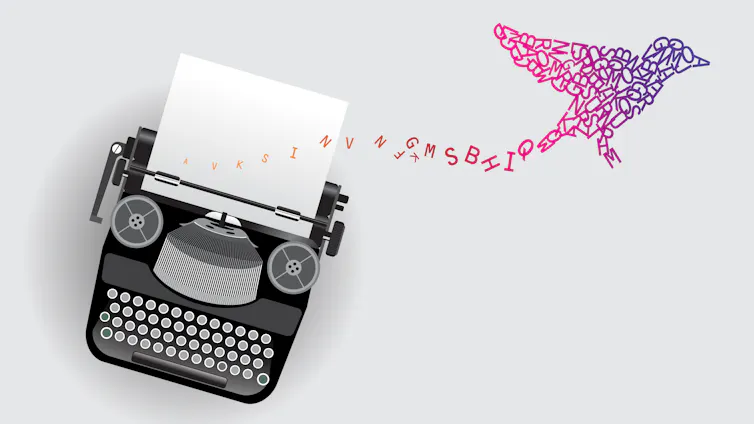
Sean Murphy, Shenandoah University
If you’ve read any commentary about younger people, none of the following statistics will surprise you.
Approximately 19% of Americans who are 12 to 19 years old are depressed – higher than any adult age group. Only about 58.5% of teens who are 12 to 17, meanwhile, say they consistently receive the emotional and social support they need. They often have little faith in institutions – be it the government or schools, or one another. And the average American child age 8 to 18 spends 7.5 hours a day watching or using screens.
On the one hand, these statistics are understandable: Young people are facing a future shaped by climate anxiety, political extremism, economic instability and chronic loneliness.
But those numbers may only be telling part of the story.
I have spent the past six months reading hundreds of poems submitted by young writers age 10 to 21. In June 2026, we will publish an anthology of writing from 177 of these young people in the “1455 Young Poets Anthology.”
More than 300 young people submitted their poems to a nonprofit I run, called 1455 Storytelling Arts. The poets mostly come from the U.S., but nine other countries are represented.
I continually found myself surprised, encouraged and inspired while reading their poetry. In a world that sometimes seems to reward the noisiest and the most aggressive, the wealthiest and the most selfish, these young poets understand something at once simple and profound that I think many adults have forgotten: Hope is not optimism. It’s endurance.

For the young writers whose work crossed my desk, hoping for a better future seems to be both a personal and collective act of accountability. It’s a refusal to accept a status quo in politics and other ways of life that might not work for some people.
Again and again, young people submitted poems that wrestled with loneliness, fractured families, violence, identity, anxiety, grief and uncertainty.
Layla Dwelle, age 15, confronts this tense atmosphere of information overload and anxiety, writing, “I’m tired of the cycle / I’m tired of evil / I’m tired of what is done / I’m tired of what isn’t.”
Yet many also revealed an unwillingness to surrender entirely to despair. Alicia Chow, age 14, writes, “I realize the only way through is through / So I keep moving as defiance of loss.”
These poems acknowledge pain, but identify tenderness in the darker corners of life. They describe a world that has a soundtrack set on two extremes: chaos and silence. They grapple with real fear and insist that bearing witness to the world gives purpose and meaning to people’s lives.
These writers, in short, are not giving up – they are looking to create a future that revises the dysfunctional present, which they see as a work in progress.
The titles of some poems speak volumes about the worlds and feelings these poems explore: “Self-Portrait as a Firefly,” “The Cost of Rain,” “The Ones Who Run,” “Prayer for a New Season,” “The Grass That Grows in the Cracks” and “Scars on Soul.”
What struck me most while editing this anthology was not the poets’ honesty or vulnerability, though both of those qualities were present.
Instead, it was their maturity that really stood out. There’s a focused seriousness present in their writing that combines political reality with a sense of urgency.
Here’s Emily Bennett, age 18, from her poem, “For the Love of the Sunk Cost Fallacy”:
Because,
nothing true aches forever.
And sometimes the bravest thing
you can do is simply open your hands.
Many of these young writers are trying to answer questions that adults themselves struggle with or avoid, including how to remain human in a culture that monetizes distraction.
This is an issue the American writer Jenny Odell compellingly addresses in her 2019 book, “How to Do Nothing: Resisting the Attention Economy.” Her thesis, simple yet radical, is that attention is people’s most vital resource, and all people are being bombarded, 24/7, with algorithmic strategies looking to distract and divide them. She astutely describes “the mindless traffic of information,” which, not so coincidentally, is something poetry has always stood in quiet defiance of.
The poems raise other questions. How do people care for one another without becoming uncomfortably numb to others’ pain and suffering? How do people imagine and create a future while they are constantly reminded of growing inequality within many countries, and with the world’s wealthiest people quickly growing richer?
The fact that so many young people are still turning to poetry feels, to me, significant, if not momentous.
Poetry is typically not a commercially rewarded art form. It obliges readers to slow down, sit with ambiguity and experience language in ways that plumb interior life.
If today’s algorithms reward speed, branding and certainty, poetry rewards reflection. This is the thesis of professor and Atlantic editor Walt Hunter’s illuminating – and quite encouraging – recent article, “Stop Meeting Students Where They Are,” which we recently discussed in detail on my podcast, “Some Things Considered.”
Younger people are not oblivious about the world’s problems. The young poets I’ve been reading see empathy not as weakness, but as a bold imperative to help make the world a kinder, more just place.
I can hardly think of a better example than 16-year-old poet Dave Thompson’s provocatively titled “What if Jesus Was a Little Brown Boy in the USA”:
But you are here.
A little God walking to school,
still foolish enough
still holy enough
to believe love might mean
what it says.
As a podcaster and professor of storytelling, I can’t count how many times I’ve heard people my age or older lament that today’s generation doesn’t read or doesn’t care. This issue comes up at almost every panel discussion I’ve recently participated in.
I think these kinds of assertions about young people are both simplistic and unhelpful. In some ways, while mental health is a real concern for young people, they are doing better than their predecessors in other ways. Youth arrest rates have been declining since the 1990s in the U.S., for example, and American high school students are more likely than ever to graduate.
I think we should pay attention to some of the messages that these young poets are sending. We might even seek to emulate them.
Sean Murphy, Director, Center for Story, Shenandoah University
This article is republished from The Conversation under a Creative Commons license. Read the original article.
ooOOoo
Sean points out in this essay that: “The young poets I’ve been reading see empathy not as weakness, but as a bold imperative to help make the world a kinder, more just place.”
And then there is the poetry from Dave Thompson, presented above. Dave is sixteen, sixty-five years younger than me, but showing that age isn’t an issue. In his poem he writes: “… to believe love might mean what it says.”
Beautiful!
Action regarding the climate crisis.
The following essay from George Monbiot is a difficult read but it is also a necessary read.
With the news that the polar ice caps are retreating, just read yesterday: “Polar ice caps and sheets are shrinking at alarming rates due to global warming, with Arctic sea ice decreasing by over 12% per decade and polar ice sheets losing 7,560 billion tonnes of ice between 1992 and 2020. Greenland and Antarctica are losing hundreds of billions of tons of ice annually, significantly contributing to rising sea levels. [1, 2, 3, 4]”
ooOOoo
Alternating Current
Posted on 29th April, 2026
If this crucial circulation system shuts down, the civilisational impacts will be irreversible. So why isn’t it a top priority?
By George Monbiot, published in the Guardian 23rd April 2026
The poor and middle pay taxes, the rich pay accountants, the very rich pay lawyers – and the ultra-rich pay politicians. It’s not an original remark, but it bears repeating until everyone has heard it. The more money billionaires accumulate, the greater their control of the political system – which means they pay less tax, which means they accumulate more, which means their control intensifies.
They reshape the world to suit their demands. One of the symptoms of the pathology known as “billionaire brain” is an inability to see beyond their own short-term gain. They would sack the planet for a few more stones on the pointless mountain of wealth. And we can see it happening. Last week delivered the biggest news of the year so far, perhaps the biggest news of the century. But partly because billionaires own most of the media, most people never heard it. We might find ourselves committed to a civilisation-ending event before we even learn that such a thing is possible.
The news is that the state of a crucial oceanic circulation system has been reassessed by scientists. Some now believe that, as a result of climate breakdown changing the temperature and salinity of seawater, it is more likely than not to collapse. This system – known as the Atlantic meridional overturning circulation (Amoc) – delivers heat from the tropics to the North Atlantic. Recent research suggests that if it shuts down, it could cause both a massive drop in average winter temperatures in northern Europe and drastic changes in the Amazon’s water cycles. This could help tip the rainforest into cascading collapse and trigger further disaster.
Amoc’s shutdown is likely also to cause an acceleration of sea level rise on the east coast of the US, threatening cities. It could also raise Antarctic temperatures by roughly 6C and release a vast pulse of carbon currently stored in the Southern Ocean, accelerating climate catastrophe.
Even when the countervailing effects of generalised global heating are taken into account, a further paper proposes, the net impact in northern Europe would be periods of extreme cold – including events in which temperatures in London fall to -19C, in Edinburgh to -30C and in Oslo to -48C. Sea ice in February would extend as far as Lincolnshire. Our climate would change drastically, with the likelihood of far greater extremes, such as massive winter storms. Rain-fed arable agriculture would become impossible almost everywhere in the UK.
This shift, on any realistic human scale, would be irreversible. Its speed is likely to outrun our ability to adapt. Amoc shutdowns, driven by natural climate variability, have happenedbefore. But not in the era of large-scale human civilisation.
The first paper proposing that Amoc might have an on-state and an off-state was published in 1961. Since then, many studies have confirmed the finding and explored potential triggers and likely implications. Until recently, Amoc collapse caused by human activity fell into the category of a “high impact, low probability” event, devastating if it happens, but unlikely to occur.
Research over the past few years prompted a reassessment: it began to look more like a “high impact, high probability” event. Now, in response to last week’s paper, Prof Stefan Rahmstorf – perhaps the world’s leading authority on the subject – says the chances of a shutdown look like “more than 50%”. We could pass the tipping point, he says, “in the middle of this century”.
So why is this not all over the news? Why is it not the top priority for the governments that claim to protect us from harm? Well, in large part because oligarchic power has championed a model of climate impact that bears little relation to reality: that is, they have a hypothesis about how the world works that is completely detached from scientific findings. This model underpins official responses to the climate crisis.
It began with the work of the economist William Nordhaus, who sought to assess the economic effects of global heating. His modelling suggests that a “socially optimal” level of heating is between 3.5C and 4C. Most climate scientists see a temperature rise of this kind as catastrophic. Even 6C of heating, Nordhaus suggests, would cause a loss of just 8.5% of GDP. Climate science suggests it would look more like curtains for civilisation.
As the eminent economists Nicholas Stern, Joseph Stiglitz and Charlotte Taylor have argued, the mild effects Nordhaus forecasts are merely artefacts of the model he has used. For example, his modelling assumes that catastrophic risks do not exist and that climate impacts rise linearly with temperature. There is no climate model that proposes such a trend. Instead, climate science forecasts nonlinear impacts and greatly escalating risk.
The likely impacts of high levels of heating include the inundation of major cities, the closure of the human climate niche (the conditions that sustain human life) across large parts of the globe, the collapse of the global food system and cascading regime shifts – that is, abrupt transitions in ecosystems – releasing natural carbon stores, potentially leading to a “hothouse Earth” in which very few survive. Never mind a few points off GDP: there would be no means of measurement and scarcely an economy to measure.
Bizarrely, the modelling also applies discount rates to future people: their lives, it assumes, are worth less than ours. In other words, it has taken a method used to calculate returns to capital and applied it to human beings. As the three economists point out, “it is very difficult to find a justification for this in moral philosophy.” Moreover, climate impacts disproportionately affect the poor – but under the models, their lives are also priced down.
Unsurprisingly, models of this kind, Stern, Stiglitz and Taylor note, have been seized on by “special interests” such as the fossil fuel industry to argue for minimal responses to the climate crisis. And it’s not just the oil companies. Bill Gates, who claims to want to protect the living planet, has given $3.5m (£2.6m) to a junktank run by Bjorn Lomborg, who has built his career on promoting Nordhaus’s model, thus helping to downplay the need for climate action. Nordhaus was awarded the Nobel Memorial prize for economics for his pernicious nonsense – and it is deeply embedded in government decision-making.
A billionaire death cult has its fingers around humanity’s throat. It both causes and downplays our existential crisis. The oligarchs are not just a class enemy but, as they have always been, a societal enemy: a few thousand people can destroy civilisations. It’s the billions v the billionaires, and the stakes could not possibly be higher.
ooOOoo
Until I came to live in the the USA permanently, in 2010, I used to live in South Devon, near Totnes. Thus the AMOC was very familiar to me and the local population. AMOC stands for Atlantic Meridional Overturning Circulation. Much more information on AMOC may be read on the WikiPedia site.
Although the future of the AMOC is uncertain, many scientists are concerned that the AMOC will weaken.
The above article by George Monbiot is potentially frightening. As Monbiot says at the end; “… a few thousand people can destroy civilisations.“
What we need is a few thousand people to make this the number one priority! Not tomorrow but today!
A change from the usual pictures.
Here is a video that my son, Alex, shot recently.
In Alex’s own words, “My main camera is the OM system OM-1 mkii with the 150-400 TCPro lens and had an external 2x teleconverter on the lens giving me over 2000mm effective reach.“
The video is fascinating.
If for any reason you cannot watch the embedded YouTube video above, then try this:
https://www.youtube.com/embed/i9K4Xsc1g4U?si=ubT_7KSvCL3nHW2o
It is all about taking photographs of dogs!
I shall go straight to Penny’s article.
ooOOoo
How to Capture Stunning Photos and Videos of Your Dog With Ease
For beginner dog owners who want Instagram dog photos without stressing their pup, the hardest part is how quickly dogs move and how fast those perfect moments disappear. One second brings a head tilt, a goofy grin, or a soulful look, and the next second it’s gone, leaving blurry shots that don’t match the bond dog owners feel in real life. The good news is that pet photography basics don’t require fancy gear to start capturing dog expressions with more consistency. With a little patience and a creative pet photography mindset, everyday walks and couch cuddles can turn into photos and videos that feel true to a dog’s personality.
Quick Summary: Better Dog Photos and Videos
Set Up the Shot: Light, Gear, Angle, and Composition
A few small setup choices can turn a “cute but blurry” pet photo into something you’re proud to frame or share. Use these quick, beginner-friendly tweaks to make your dog’s expressions look crisp and natural.
Common Questions About Easy Dog Photos & Videos
Q: What lighting conditions work best for taking Instagram-worthy photos of my dog?
A: Aim for soft, even light so fur texture and eye sparkle show up naturally. Bad light, you have bad video, so step near a bright window indoors or choose open shade outside to avoid squinting and harsh contrast. If your dog seems restless, keep it short and try again later rather than forcing the moment.
Q: How can I get my dog to look directly at the camera for photos and videos?
A: Make the camera “predict good things” by rewarding calm glances with a tiny treat or gentle praise. Hold a treat near the lens, cue an easy behavior your dog enjoys, then release quickly so it stays fun. If your dog turns away, respect that and capture a candid moment instead.
Q: What types of equipment are worth investing in to improve my dog photography?
A: Prioritize stability and speed: a simple tripod or phone clamp and a remote shutter reduce blur and let you focus on your dog. If you shoot lots of video, a small light or reflector can help in dim rooms without startling your pup. Upgrade only when your current setup feels limiting.
Q: How can I edit my dog photos to make them more engaging without overdoing it?
A: Start with gentle tweaks: crop to emphasize eyes, brighten slightly, and lower highlights to keep fur detail. Keep colors realistic so your dog still looks like your dog, and avoid heavy smoothing that erases whiskers and texture. Save a “natural” preset so your style stays consistent.
Q: What should I consider if I want to create and share a dedicated Instagram account for my dog?
A: Let your dog’s comfort set the pace, not a posting schedule, and skip anything that stresses them for the sake of content. Share moments that reflect your values, like enrichment, consent-based handling, and everyday joy. Use short clips, then optionally clean them up with a web-based video creator to trim, stabilize, and add simple captions.
ooOOoo
Excellent advice.

A recent trip to Cape Verde.
This is over 21 minutes long but is a wonderful video of the joys of wildlife photography.
The link to the video is here: https://youtu.be/5SwGH5vdF_Q?si=XbztgauiVr4s6_Uo
Different this day!
My son, Alex, filmed this video.
First, Alex’s words.
“Join me on an unforgettable 36 hour adventure to Sal, a hidden gem in Cape Verde, where the stunning beaches and unique wildlife make it a bird photography paradise.
With its incredible array of shorebirds, kestrels, and ospreys, Sal is a must-visit destination for any wildlife enthusiast or bird photography aficionado.
In this video, I’ll be sharing my experiences and tips on how to capture the perfect shot, from low angle bird photography to using the right equipment, such as the OM System OM1, to get up close and personal with these amazing creatures.
Whether you’re a seasoned wildlife photographer or just starting out, this 36 hour challenge will provide valuable insights into the world of travel wildlife photography and the techniques used to photograph birds abroad.
From the beautiful landscapes of Cape Verde to the thrilling experience of photographing birds in their natural habitat, this video is a must-watch for anyone passionate about nature photography, birding, and wildlife conservation. With its unique blend of stunning scenery, fascinating wildlife, and expert photography tips, this video is sure to inspire and educate, so sit back, relax, and enjoy the journey to Sal, a true bird photography paradise in the heart of Cape Verde., in the Cape Verde islands, is known as a winter sun destination—but is it any good for wildlife photography?”
Watch along and get some Wildlife Photography Travel Tips and How to photograph shorebirds.
📸 Camera Gear:
OM System OM-1mkII
OM system 150-400 TC pro
DJI Osmo Pocket 3
DJI mic 3
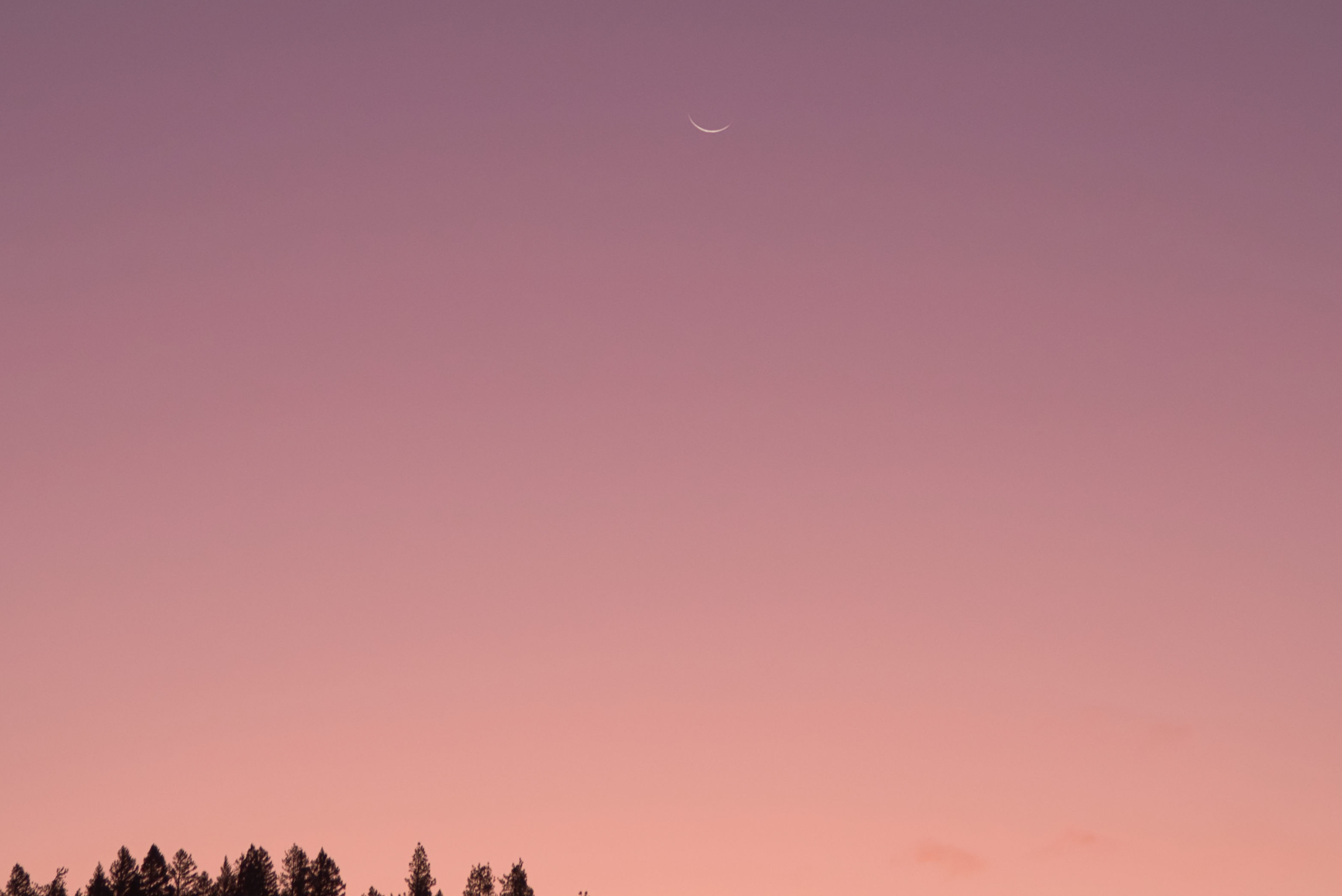
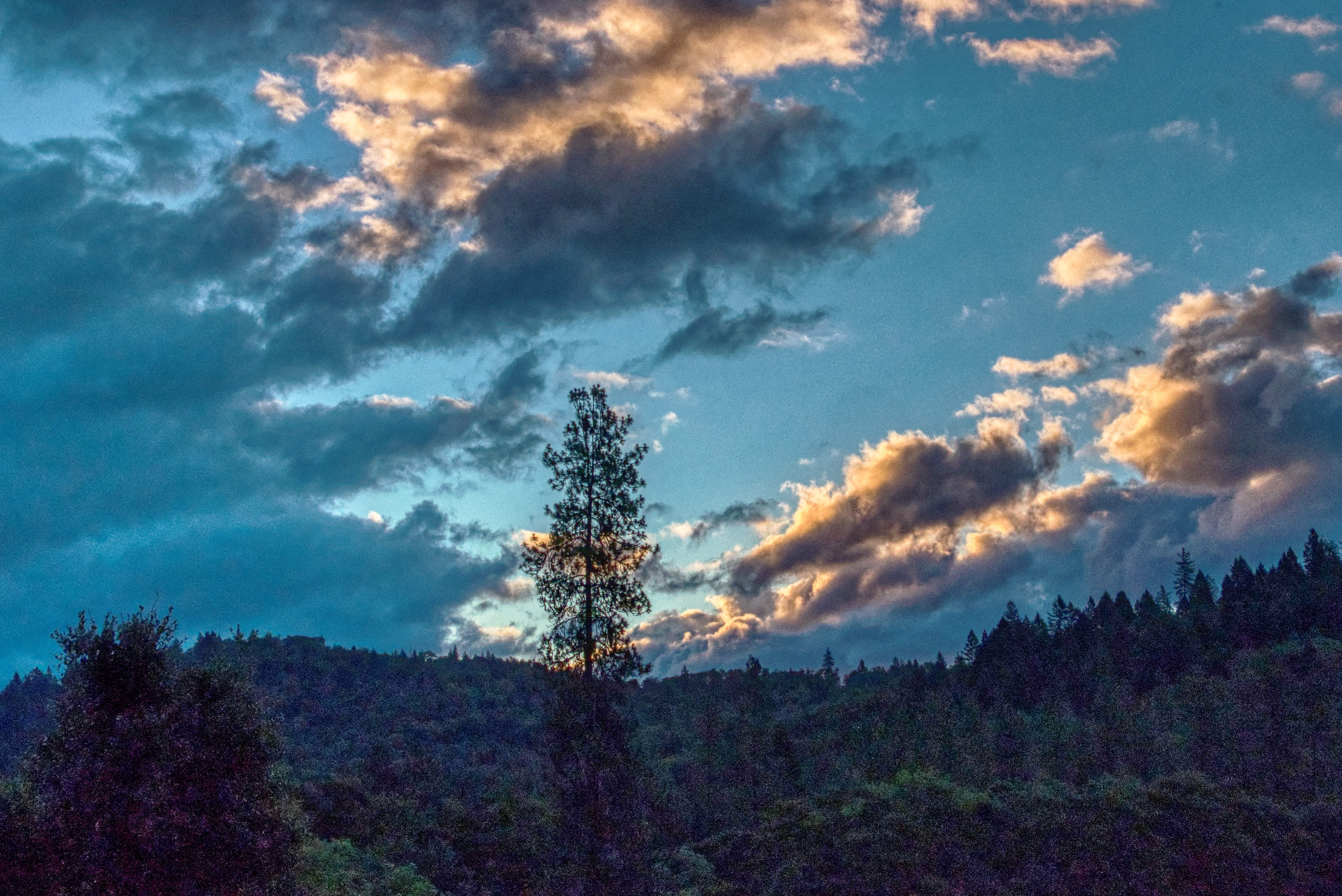
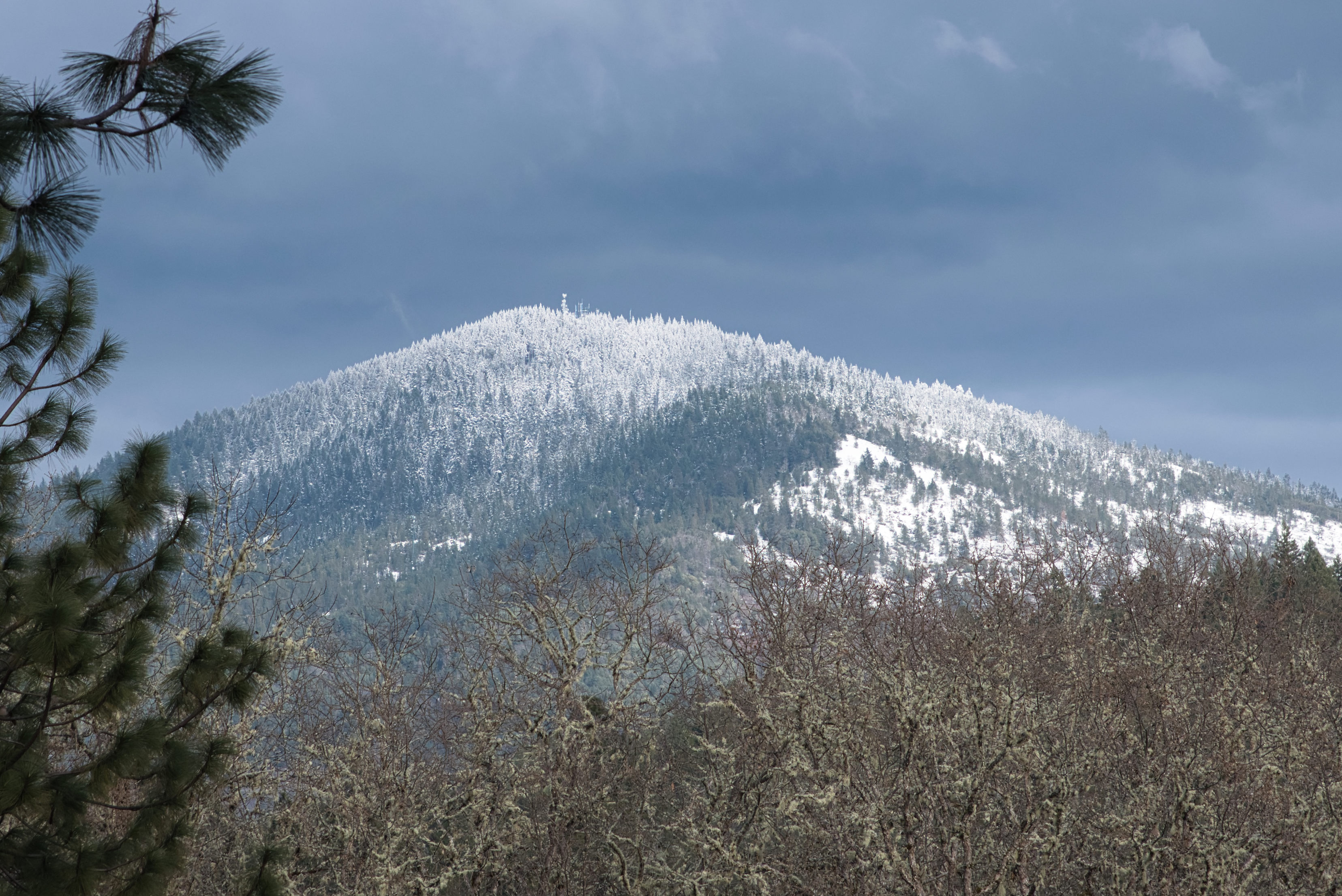
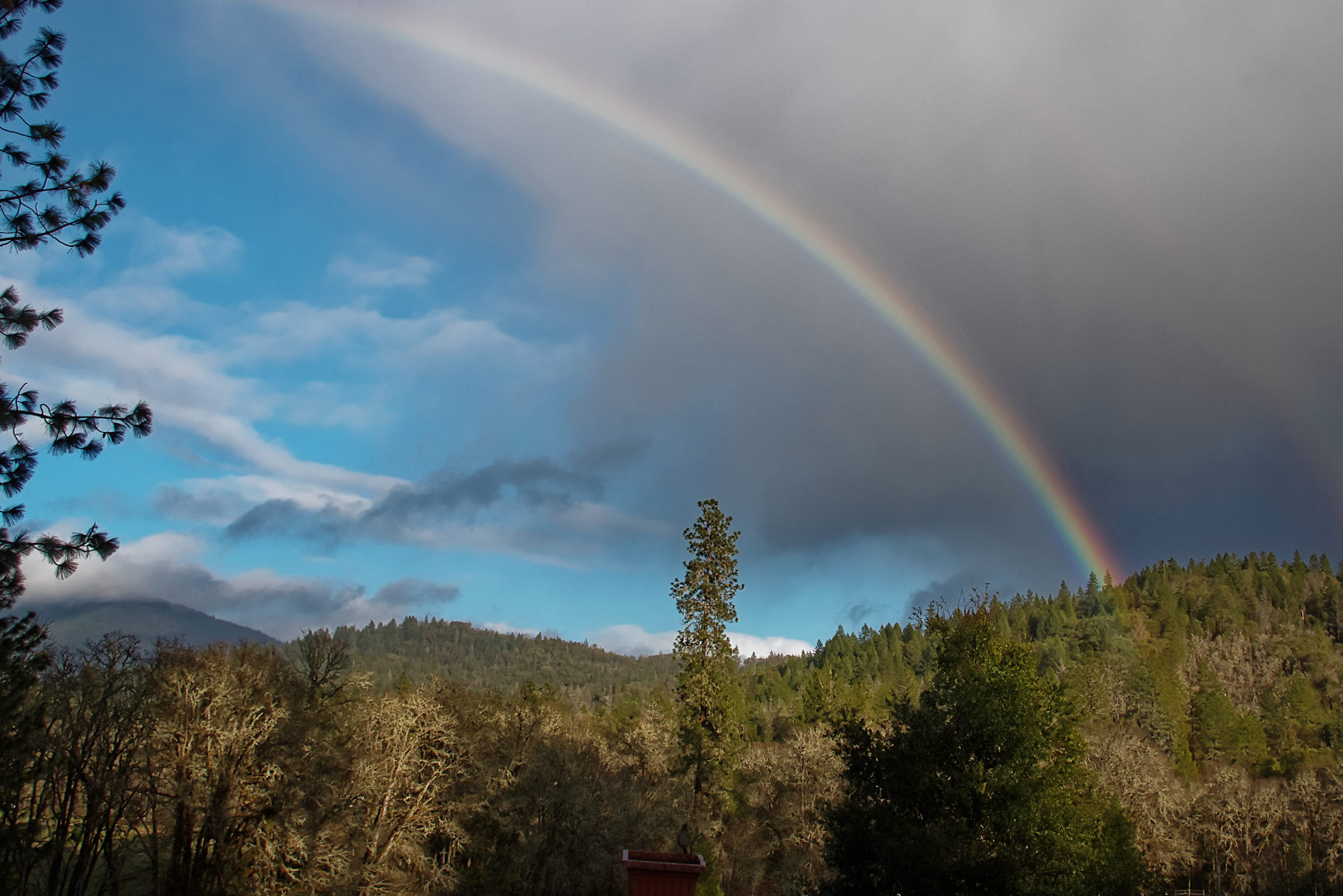
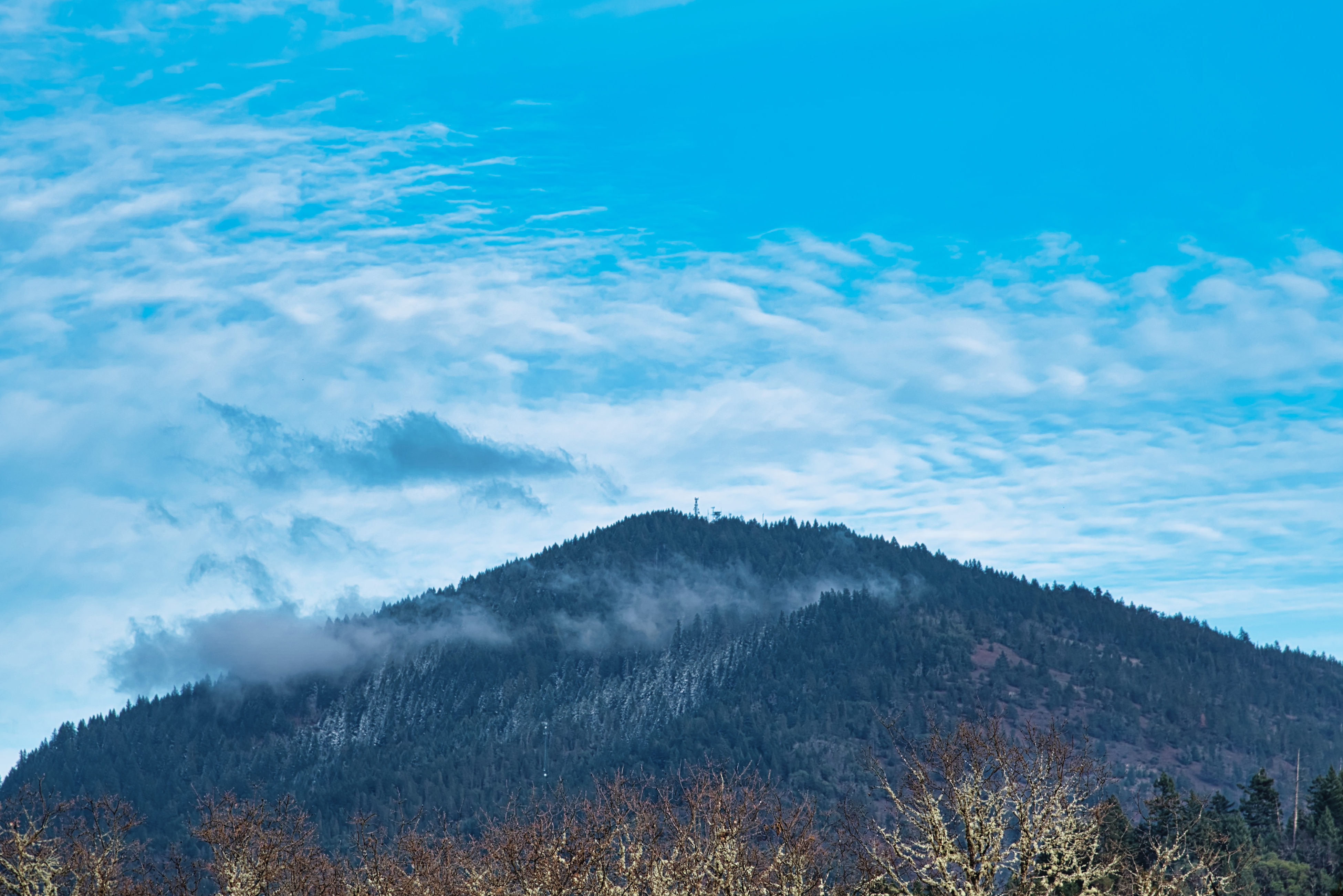
A few photographs looking East from our deck.
They were taken recently.
oooo
oooo
oooo
oooo
See you next week!
Wave clouds.
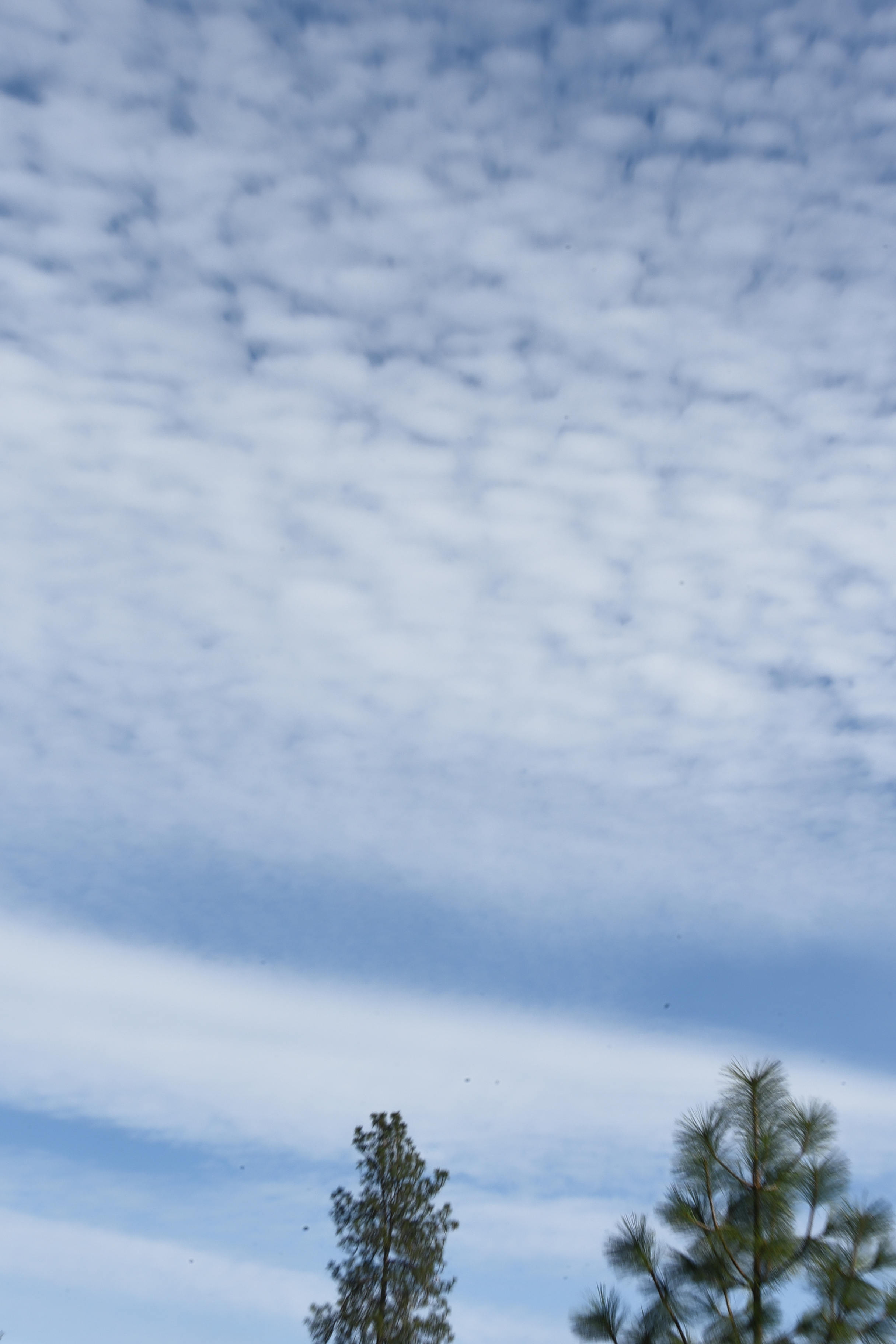
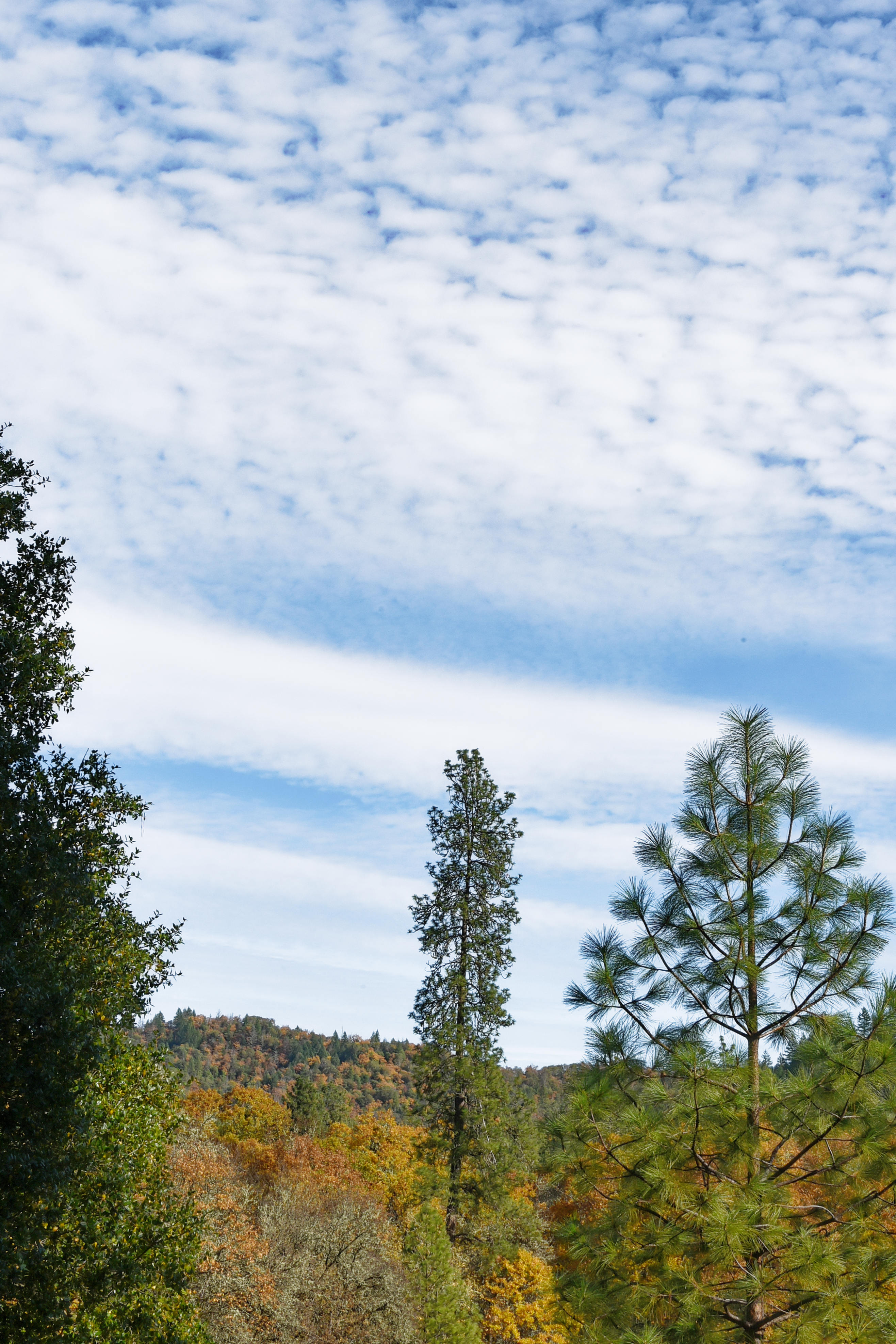
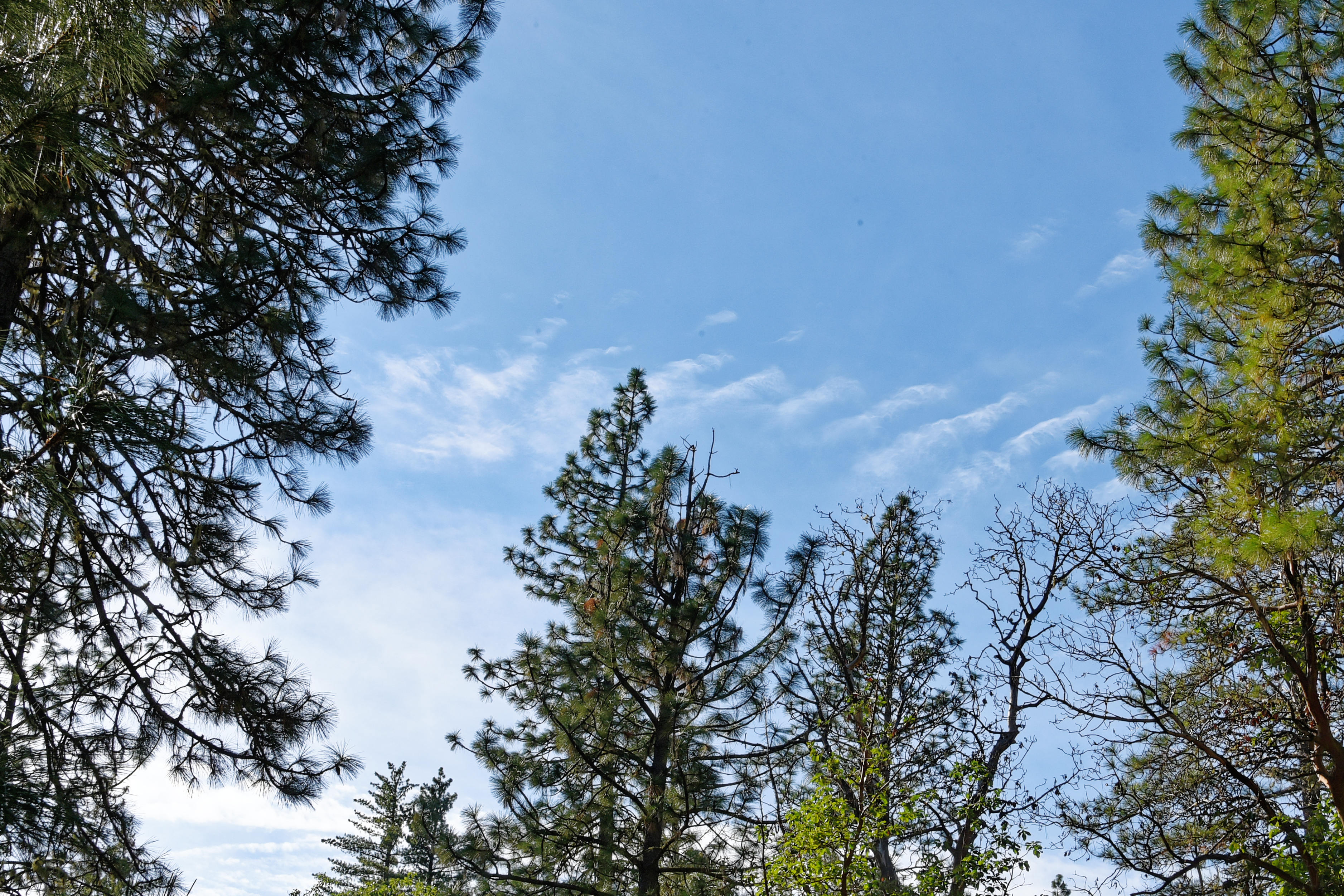
Here are a collection of photographs taken by me at home. They show wave clouds.
Wave clouds are brilliant for glider pilots. Rarely at a low altitude (below two to three thousand feet) but nonetheless a soaring ambition when they appear within range. Here’s the AI description:
Cloud waves, or Kelvin-Helmholtz clouds, are rare, transient formations that resemble breaking ocean waves in the sky. They occur when a faster layer of air moves over a slower, denser layer, creating shear that curls the top of the cloud. Often appearing as a series of curls, they are considered a sign of high atmospheric instability and turbulence.
oooo
oooo
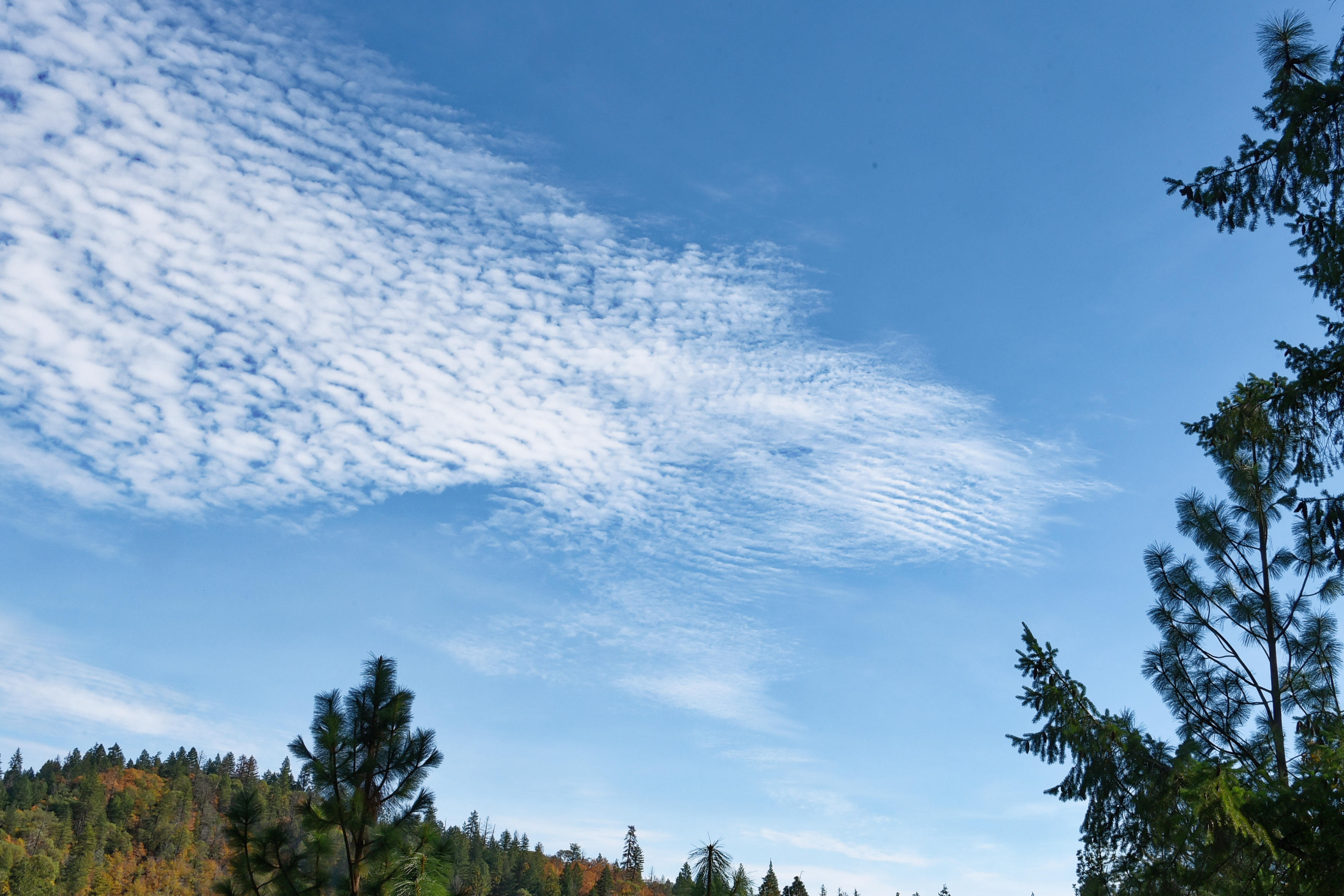
oooo
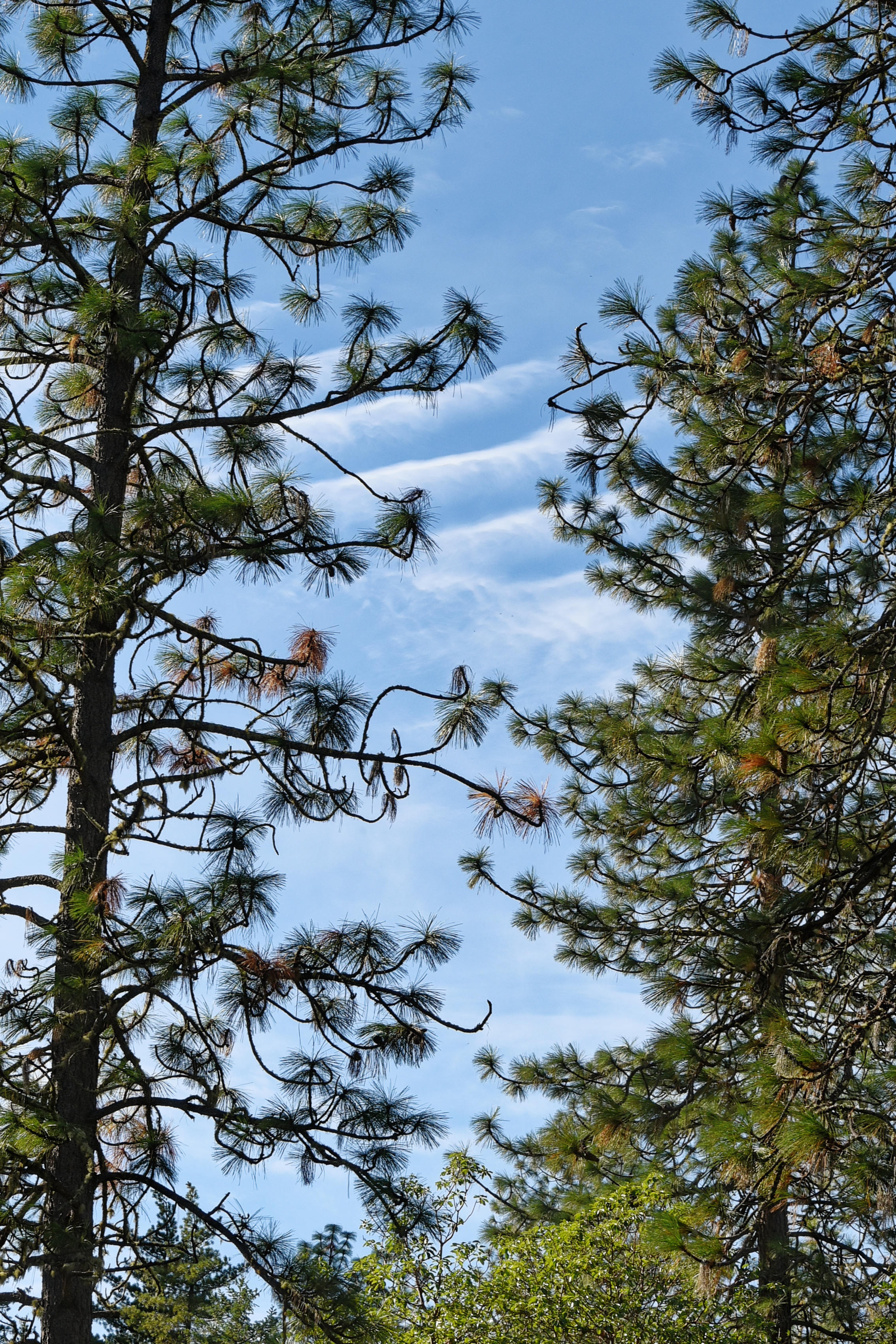
oooo
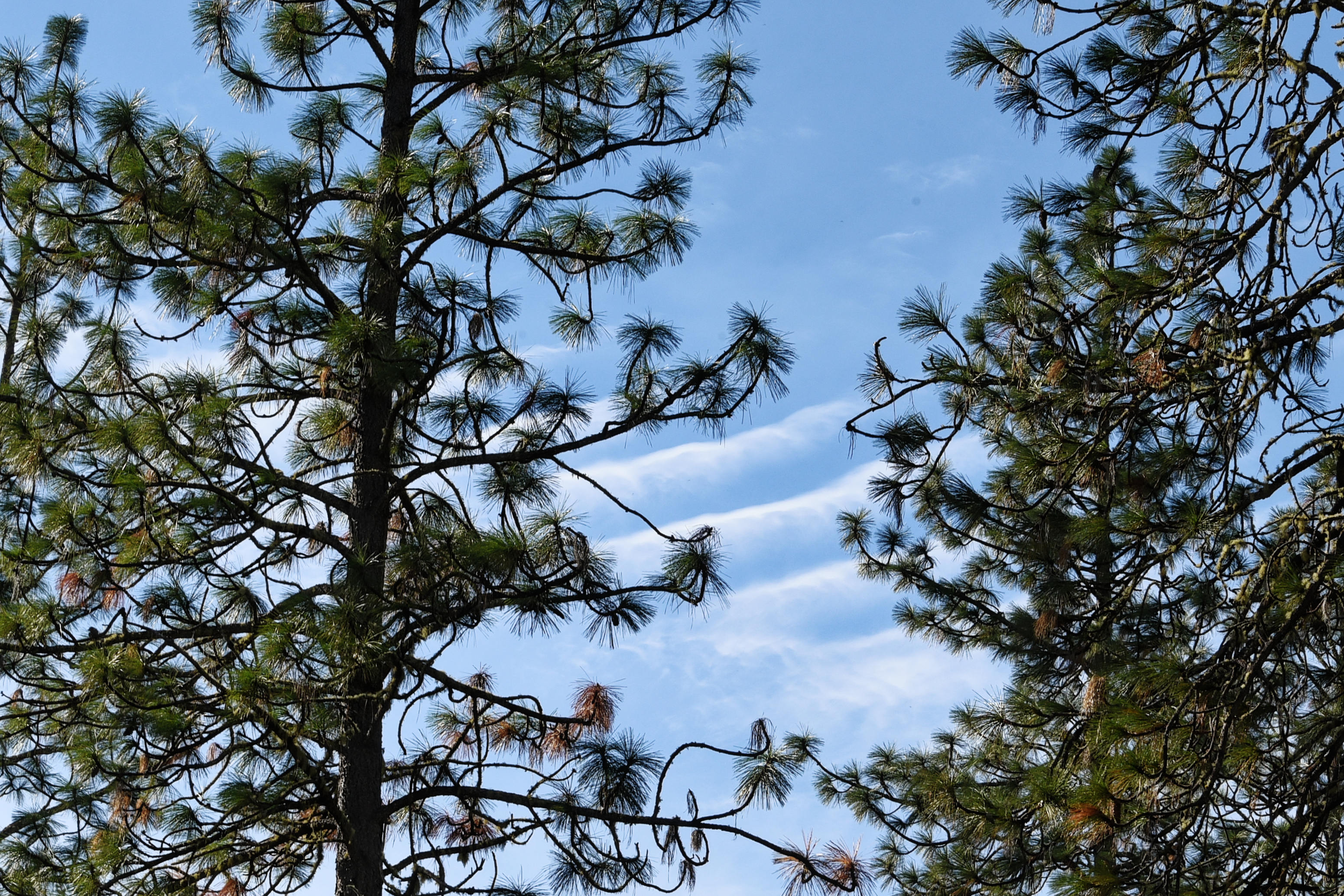
oooo
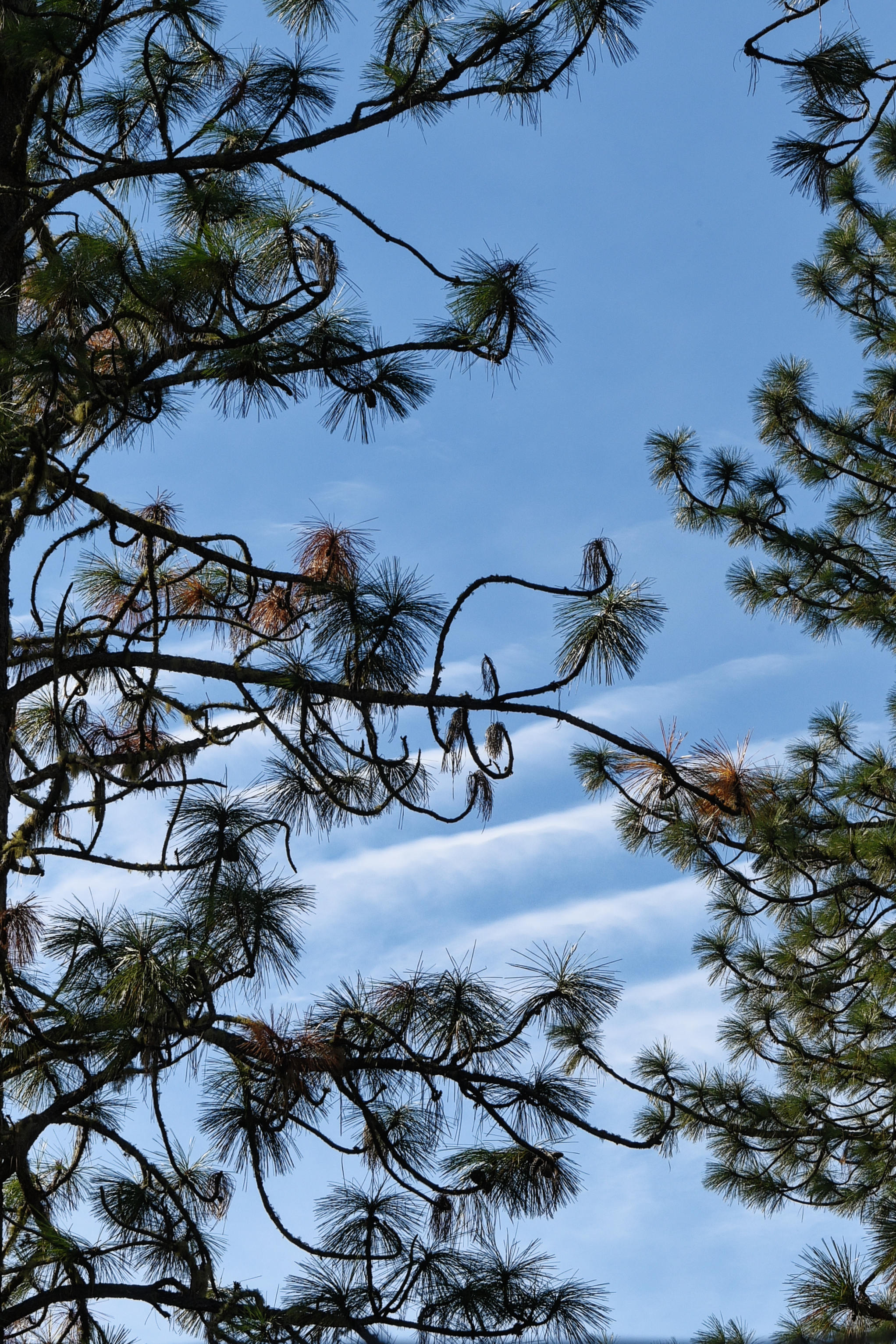
oooo
Reflections.
I was born in 1944 and that makes me 81. I am still relatively healthy but find myself wondering how long I will live. My father died in 1956, aged 55, and my mother died when she was 97.
The website Super Age recently spoke of foods that slow biological ageing. I quote:
The gut microbiome is the collection of trillions of bacteria, viruses, and fungi living in your digestive tract. These microbes help regulate inflammation[in-fluh-mey-shuhn]nounYour body’s response to an illness, injury or something that doesn’t belong in your body (like germs or toxic chemicals). LEARN MORE, blood sugar, immune function, mood, and metabolism. Research increasingly links microbiome diversity to longevity and reduced risk of chronic disease.
Researchers have come up with a simple way to measure how your diet supports your gut. One science-backed framework being studied right now is the Dietary Index for Gut Microbiota (DIGM). It’s designed to help people (and researchers) better understand the connection between diet and gut microbial health.Developed by a team from the University of South Carolina, the DIGM pulls together two decades of research linking specific foods and food groups with positive or negative impacts on gut microbiome diversity, richness, and functionality.
Then there is the emotional health of a person. Here’s an extract from Equinox.
HOW EMOTIONS INFLUENCE LONGEVITY
The most popular scientific study on how emotions influence longevity is the “Nun Study,” a longitudinal study that involved 687 Catholic nuns. Researchers found that the sisters who experienced positive emotions (like happiness) lived longer than the sisters who experienced negative emotions (like depression). Another scientific study found that people with a high level of optimism were associated with “exceptional longevity,” which means surviving to 85 years old.
The way emotions influence health is not fully understood, says Robert Levenson, Ph.D., a professor of psychology at the University of California Berkeley. But what is known is that continuously experiencing negative emotions (like sadness, stress, or anger) can cause wear and tear on the body, which can accumulate over time. He explains that chronically high levels of stress or depression cause sustained levels of autonomic nervous system activation. This, he says, can raise blood pressure (bad news for your heart) and weaken the immune system. “On the flip side, experiencing feelings of positive emotions, like happiness, can undo that activation,” Dr. Levenson says.
One emotion that’s well-documented to shorten lifespan: anger. “People who are angry or show a lot of hostility are more likely to experience heart attacks and get coronary artery disease,” Dr. Levenson says. These emotions cause blood vessels to constrict, which raises blood pressure and makes the heart work harder. Over time, this can put too much stress on the heart.
Besides the physical reactions emotions can have on health, negative emotions can cause people to neglect taking care of themselves, adds Dan Blazer, M.D., Ph.D, a professor emeritus of psychiatry and behavioral science at Duke University. This can, in turn, negatively impact their health. For example, someone who is depressed may not have the energy to go to the gym to make nutrient-rich meals. They may stop seeing friends or doing anything social, something that is associated with a shorter lifespan. Dr. Blazer says that people who are depressed are more likely to have trouble sleeping—and getting consistent, good sleep is very important for longevity.
So staying positive isn’t only good emotionally but it has benefits for our body.
For me, I just welcome the deer each morning when I go out to feed them.
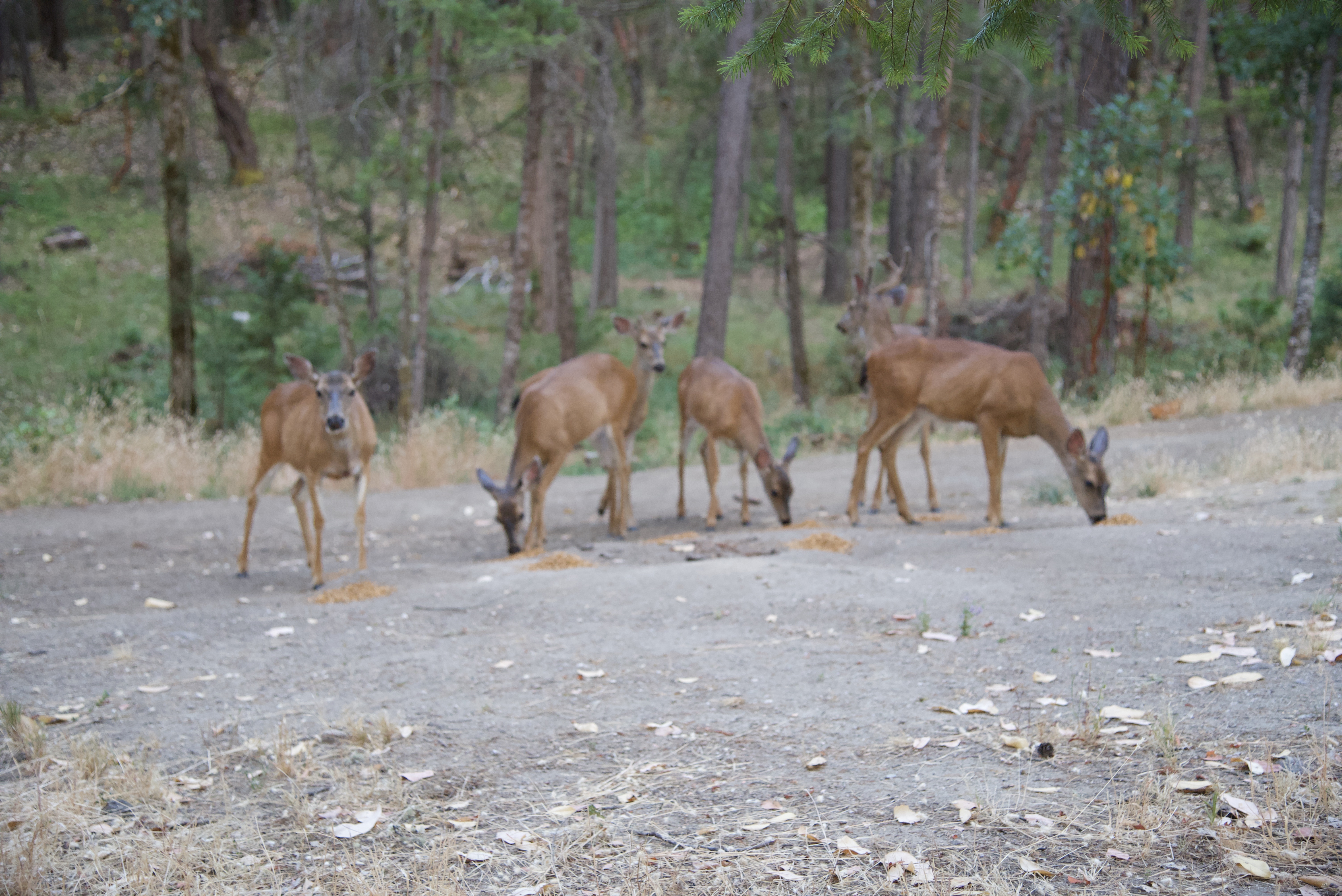
They give me a perfect start to the day!
 Learning from Dogs