Category: tourism

South Devon snow report!

Wanted to share this with you!

First of all the weather forecast from the UK Met Office as at 1pm PST yesterday.

Between 18:05 Thu 1st and 08:00 Fri 2nd

Heavy snow affecting southwest England and parts of Wales is extending further east across parts of southern and central England. The snow will be accompanied by very strong easterly winds leading to blizzards and considerable drifting. From Thursday evening some places could also see ice build up due to freezing rain, mainly across southwest England. Long delays and cancellations of public transport seem very likely. Some roads may become blocked by deep snow, stranding vehicles and passengers. Long interruptions to power supplies and other utilities are likely to occur, along with possible damage to trees and other structures due to heavy snow or ice. This is an update to extend the amber area northeastwards.

Then here’s a photograph taken by Neil Kelly, a good friend from my Devon days, from half-way up Totnes High Street yesterday morning.

And this was before the blizzard arrived. N

Wherever you are in the world, stay warm and dry!

Travelling with your dog!

So welcome to the first day of March!! Holidays in the offing? Here is some useful advice!

Inevitably, with so many followers (big hugs to you all) I receive emails from people who have a commercial interest in the readership of this blog.

As I did earlier in January.

Hi,

Hope you had a great weekend!

My name is Emma from BestCarSeatHub.com. I’m wondering if we can contribute a fresh and original post about pets (traveling with pets or safety of dogs) to your site Learning from Dogs. It’ll be 100% neutral and written based on your site’s tone.

In return, we’ll be sharing that post to all our networks… helping you gain new and more readers.

Let me know if you’re interested. I’m also willing to discuss any other options you have. Thanks a lot.


Sincerely yours, Emma Lachey.

My reply was:

Emma,
Thanks for writing me.

In principle, I am happy to receive your guest post so long as you are happy for me to introduce your company as a firm of which I have no personal knowledge.

Does that work for you?

Paul H.

Emma then sent me the following guest post. It’s very useful advice in my opinion.

ooOOoo

Traveling With Your Dog – A How To Guide

Are you planning to travel with your dog in the future? While it is a great experience and you will certainly have many memories, it will also add a few new levels to your traveling experience. You will have to plan a lot more, make sure your dog is allowed everywhere you go, and make concessions on what you can do.

For most people, boarding their dogs turns out to be the better option – but it doesn’t have to be if you take these tips into consideration. For now, we will focus on traveling with your dog in the car.

Plan Ahead

The first thing you want to do is really plan ahead for your travels. Think about where you may need to take a break for your dog to go to the bathroom – and he will need to go much more frequently than he will just at home. Make sure to have some time set aside so that he can get out and walk around – a dog that wares off some energy will be much easier to deal with in the car.

Finally, make sure that you have places you can go so that your dog doesn’t have to be stuck inside the car when you go to eat. There are plenty of places that either offer outdoor seating or will be happy to pack your food up for you so that you can eat it somewhere where your dog can as well – of course, weather will dictate much of this.

Consider Medication

If your dog has severe anxiety when he or she is in the car, you might want to consider getting medication for your dog. This is something you should only use sparingly, but it is something you want to consider.

Bring Toys and Familiar Items

Does your dog have a favorite toy? How about a familiar bed or blanket? If he does, you want to bring some of those with you, just to make him more comfortable. With toys, you want to get something that he will sit and play with for a long time while you are travelling – this can take away much of the stress.

Use a Dog Car Seat

Dogs get pretty excited about going in the car, especially if they aren’t the type of dogs that get to go for a ride all that often. There are plenty of dog car seats on the market today, from simple tethers or harnesses to high-tech dog booster seats that have all you can ever imagine.

Some other items you want to have?

  1. Leash
  2. Water bowl and water
  3. Treats
  4. Busy Toys
  5. Doggie Bags
  6. Medication
  7. All your dog’s tags
  8. The name and number of a local vet

The car seat won’t only keep your dog safe, which of course is important, but it will keep you safe as well. Dogs running around the car can really distract you from your surroundings and can put everyone in danger.

Be Prepared for Emergencies

Emergencies will happen, and while you hope that you won’t encounter one, you do have to be prepared for anything. Planning in advance will ensure that you can tackle anything that might happen. Before you go on a trip, talk to your vet about anyone that he or she may know near where you are staying. It should be a priority to take your dog to the vet before you leave for your trip anyway. You also want to have the phone number of your vet so that you can call in a pinch. Always make sure that your phone has a full battery so you can look up vets in the car.

If your dog is acting quiet and a little “off,” it could be nothing – your dog could just be adjusting to life this way. However, you want to ensure that your dog has enough time out of the car and has enough water. Once your dog shows sudden signs of illness, then you want to get to work.

If you are driving, you want to map out any vets on the pathway, set an alarm for medications, bring only the highest quality dog food, give your dog adequate bathroom time, and bring all medical records with you.

Make Sure ID Is Always on Your Dog

Make sure that your dog always has a collar on when you are traveling. Make sure the collar has your phone number and your name on it as well. If your dog does get away when you are traveling, this is the best way to ensure that your dog will get back to you.

You might want to consider a microchip as well. You’ll want to have a recent photo of your dog on your phone so that, if the worst does happen, you will have a way to make flyers.

Traveling with your dog doesn’t have to be a terrible experience. Instead, you want to make the most of it by being prepared, taking many photos of your pup, and having the times of your lives.

ooOOoo

Now all that Jean and I need to work out is how to take our six dogs with us when next month we travel to Europe for a couple of weeks!!

Any ideas, Emma?

A plea for this planet!

I feel compelled to ‘bang the drum’!

The recent news that many scientists have signed an open letter warning about how soon it will be too late to “save Earth” has been widely broadcast; not that this stops me from republishing the version of the news story that I read on the EarthSky blog site.

Here it is.

oooooh

Scientists warn: Soon it will be too late to save Earth

By Eleanor Imster in EARTH | HUMAN WORLD | November 16, 2017
More than 15,000 scientists in 184 countries have signed a letter urging the world to address major environmental concerns. “Soon it will be too late to shift course away from our failing trajectory, and time is running out.”

A letter to all of us, signed by more than 15,000 scientists (and counting) in 184 countries, warns that human well-being will be severely jeopardized by continuing trends in environmental harm, including our changing climate, deforestation, loss of access to fresh water, species extinctions and human population growth.

Entitled World Scientists’ Warning to Humanity: A Second Notice, it was published in the international journal Bioscience on November 13, 2017.

In 1992, more than 1,700 scientists signed a World Scientists’ Warning to Humanity published by the Union of Concerned Scientists. But global trends have worsened since 1992, the authors wrote in the new letter. In the last 25 years, trends in nine environmental issues suggest that humanity is continuing to risk its future.

Read the letter here.

The scientists wrote:

Soon it will be too late to shift course away from our failing trajectory, and time is running out. We must recognize, in our day-to-day lives and in our governing institutions, that Earth with all its life is our only home.

The letter also says …

By failing to adequately limit population growth, reassess the role of an economy rooted in growth, reduce greenhouse gases, incentivize renewable energy, protect habitat, restore ecosystems, curb pollution, halt defaunation, and constrain invasive alien species, humanity is not taking the urgent steps needed to safeguard our imperiled biosphere.

The article was written by an international team led by William Ripple of Oregon State University led the international team of scientists who created the letter. Ripple said in a statement:

Some people might be tempted to dismiss this evidence and think we are just being alarmist. Scientists are in the business of analyzing data and looking at the long-term consequences. Those who signed this second warning aren’t just raising a false alarm. They are acknowledging the obvious signs that we are heading down an unsustainable path. We are hoping that our paper will ignite a wide-spread public debate about the global environment and climate.

Progress in some areas — such as a reduction in ozone-depleting chemicals and an increase in energy generated from renewable sources — shows that positive changes can be made, the authors wrote. There has been a rapid decline in fertility rates in some regions, which can be attributed to investments in education for women, they added. The rate of deforestation in some regions has also slowed.

The warning came with steps that can be taken to reverse negative trends, but the authors suggested that it may take a groundswell of public pressure to convince political leaders to take the right corrective actions. Such activities could include establishing more terrestrial and marine reserves, strengthening enforcement of anti-poaching laws and restraints on wildlife trade, expanding family planning and educational programs for women, promoting a dietary shift toward plant-based foods and massively adopting renewable energy and other “green” technologies.

Scientists who did not sign the warning prior to publication can endorse the published warning here.

Bottom line: A letter entitled World Scientists’ Warning to Humanity: A Second Notice, urging the world to address major environmental concerns. was signed by more than 15,000 scientists in 184 countries.

Read more from Oregon State University

ooOOoo

As is the way with this modern inter-connected world it was but a moment to track down said William Ripple, find his email address and ask him what he recommended as the top things that you and I should be doing now.

Not just for you and me but for all the animals as well on this very beautiful planet.

Bill’s reply is part of tomorrow’ post. See you then!

Are we awake!

Returning to Earth with a bang!

My posts of the last few days have been in the ‘cuddly, cosy’ vein of life and, as many would say, a long way from the reality of this 21st century.

The reality is tough and scary and many, including me, favour running away from scary places. I’m sure that the urge to flee and hide is a survival behaviour from long time ago. BUT!! But the only hope for us humans is to face the facts full on.

Take, for example, the Ganges River. We have all heard of this famous river (my emphasis below):

The Ganges  is a trans-boundary river of Asia which flows through the nations of India and Bangladesh. The 2,525 km (1,569 mi) river rises in the eastern Himalayas in the Indian state of Uttarakhand, and flows south and east through the Gangetic Plain of North India into Bangladesh, where it empties into the Bay of Bengal. It is the third largest river in the world by discharge.

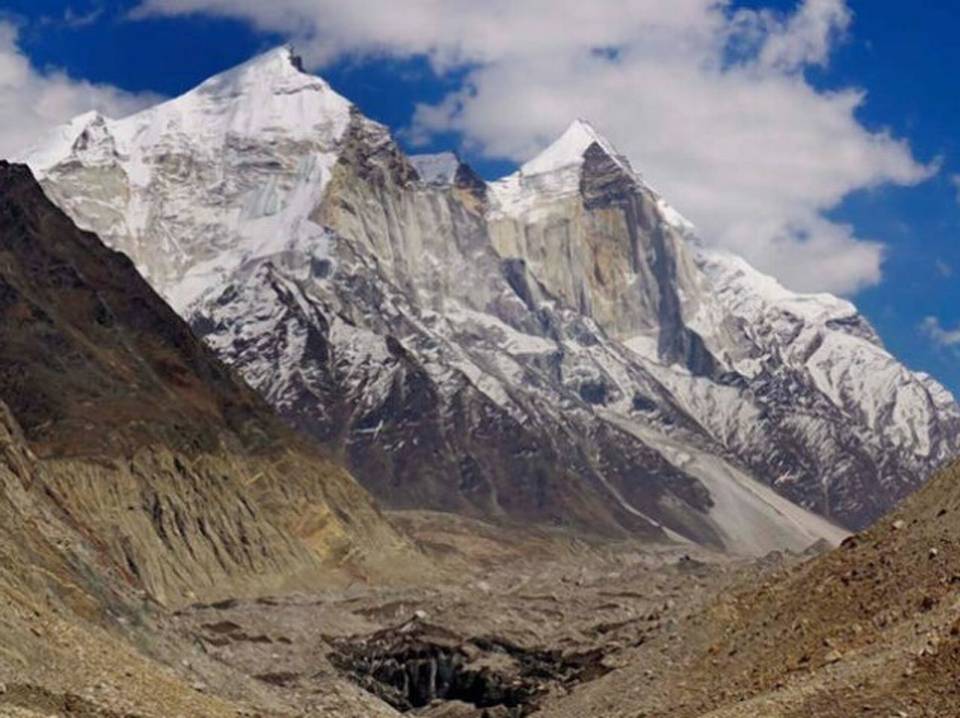
The source of the Ganges is the Gangotri glacier. Here it is:

Gaumukh, snout of the Gangotri glacier,surrounded by the Bhagirathi peaks of Garhwal Himalayas, at an altitude of over 4,000 metres. Photo: Vidya Venkat.

The photograph was taken from this article; from which I offer:

Scientists say dwindling snowfall affects volume of water fed to the Bhagirathi, the main source of the Ganga

After a four-hour-long trek from Bhojwasa, the final camping spot in Gangotri, when a brown, fractured pile of rocks finally came into view it was hard to believe that this was the mouth of the glacier from which the ‘holy’ Ganga emerged.

Gaumukh, the snout of the Gangotri glacier, named after its shape like the mouth of a cow, has retreated by over 3 kilometres since 1817, says glaciologist Milap Chand Sharma of Jawaharlal Nehru University.

It was nearly two centuries ago that the retreat of the glacier was first documented by John Hodgson, a Survey of India geologist.

With 10 Indian States reeling under drought and the country facing a severe water crisis after two weak monsoons, the story of retreating freshwater sources such as the Himalayan glaciers is worrying. And though a three-kilometre retreat over a period of two centuries might seem insignificant at first glance, data shows that the rate of retreat has increased sharply since 1971. The rate of retreat is 22 metres per year.

Twenty-two metres or seventy-two feet a year!

Wringing our hands is no good. All of us who care for our Living Planet have to shout out just what is going on. As George Monbiot continues to do. Take his latest essay, for example, that is republished here in full with GM’s very kind permission.

ooOOoo

Insectageddon

The scale and speed of environmental collapse is beyond imagination.

By George Monbiot, published in the Guardian 20th October 2017

Which of these would you name as the world’s most pressing environmental issue? Climate breakdown, air pollution, water loss, plastic waste or urban expansion? My answer is none of the above. Almost incredibly, I believe that climate breakdown takes third place, behind two issues that receive only a fraction of the attention.

This is not to downgrade the danger presented by global heating – on the contrary, it presents an existential threat. It is simply that I have come to realise that two other issues have such huge and immediate impacts that they push even this great predicament into third place.

One is industrial fishing, which, all over the blue planet, is now causing systemic ecological collapse. The other is the erasure of non-human life from the land by farming.

And perhaps not only non-human life. According to the UN Food and Agriculture Organisation, at current rates of soil loss, driven largely by poor farming practice, we have just 60 years of harvests left. And this is before the Global Land Outlook report, published in September, found that productivity is already declining on 20% of the world’s cropland.

The impact on wildlife of changes in farming practice (and the expansion of the farmed area) is so rapid and severe that it is hard to get your head round the scale of what is happening. A study published this week in the journal Plos One reveals that flying insects surveyed on nature reserves in Germany have declined by 76% in 27 years. The most likely cause of this Insectageddon is that the land surrounding those reserves has become hostile to them: the volume of pesticides and the destruction of habitat have turned farmland into a wildlife desert.

It is remarkable that we need to rely on a study in Germany to see what is likely to have been happening worldwide: long-term surveys of this kind simply do not exist elsewhere. This failure reflects distorted priorities in the funding of science. There is no end of grants for research on how to kill insects, but hardly any money for discovering what the impacts of this killing might be. Instead, the work has been left – as in the German case – to recordings by amateur naturalists.

But anyone of my generation (ie in the second bloom of youth) can see and feel the change. We remember the “moth snowstorm” that filled the headlight beams of our parents’ cars on summer nights (memorialised in Michael McCarthy’s lovely book of that name). Every year I collected dozens of species of caterpillars and watched them grow and pupate and hatch. This year I tried to find some caterpillars for my children to raise. I spent the whole summer looking and, aside from the cabbage whites on our broccoli plants, found nothing in the wild but one garden tiger larva. Yes, one caterpillar in one year. I could scarcely believe what I was seeing – or rather, not seeing.

Insects, of course, are critical to the survival of the rest of the living world. Knowing what we now know, there is nothing surprising about the calamitous decline of insect-eating birds. Those flying insects – not just bees and hoverflies but species of many different families – are the pollinators without which a vast tract of the plant kingdom, both wild and cultivated, cannot survive. The wonders of the living planet are vanishing before our eyes.

Well, I hear you say, we have to feed the world. Yes, but not this way. As a UN report published in March explained, the notion that pesticide use is essential for feeding a growing population is a myth. A recent study in Nature Plants reveals that most farms would increase production if they cut their use of pesticides. A study in the journal Arthropod-Plant Interactions shows that the more neonicotinoid pesticides were used to treat rapeseed crops, the more their yield declines. Why? Because the pesticides harm or kill the pollinators on which the crop depends.

Farmers and governments have been comprehensively conned by the global pesticide industry. It has ensured its products should not be properly regulated or even, in real-world conditions, properly assessed. A massive media onslaught by this industry has bamboozled us all about its utility and its impacts on the health of both human beings and the natural world.

The profits of these companies depend on ecocide. Do we allow them to hold the world to ransom, or do we acknowledge that the survival of the living world is more important than returns to their shareholders? At the moment, shareholder value comes first. And it will count for nothing when we have lost the living systems on which our survival depends.

To save ourselves and the rest of the living world, here’s what we need to do:

  1. We need a global treaty to regulate pesticides, and put the manufacturers back in their box.
  2. We need environmental impact assessments for the farming and fishing industries. It is amazing that, while these sectors present the greatest threats to the living world, they are, uniquely in many nations, not subject to such oversight.
  3. We need firm rules based on the outcomes of these assessments, obliging those who use the land to protect and restore the ecosystems on which we all depend.
  4. We need to reduce the amount of land used by farming, while sustaining the production of food. The most obvious way is greatly to reduce our use of livestock: many of the crops we grow and all of the grazing land we use are deployed to feed them. One study in Britain suggests that, if we stopped using animal products, everyone in Britain could be fed on just 3m of our 18.5m hectares of current farmland (or on 7m hectares if all our farming were organic). This would allow us to create huge wildlife and soil refuges: an investment against a terrifying future.
  5. We should stop using land that should be growing food for people to grow maize for biogas and fuel for cars.

Then, at least, nature and people would have some respite from the global onslaught. And, I hope, a chance of getting through the century.

http://www.monbiot.com

ooOOoo

Please do share this as widely as you can. Please do inform others. Please do make whatever changes, however small, you can within your own lives.

Bhagirathi Peaks from the Gangotri Glacier

And, please, please, listen to our Living Planet that is screaming out to us that this cannot go on!

Return to the movies!

Another movie, another dog! Correction: another world-famous dog!

Monday’s post Hail the Hero was about Max.

Max, a feature film by the producers of the doggie classic Marley and Me, intends to explore a soldier dog’s journey that doesn’t end with this heartbreaking image of a pup chasing down his fallen brother, but rather begins with it.

So it’s rather nice to welcome a guest post from Emily Ridgewell that features a dog that became known far and wide thanks to television and the cinema.

ooOOoo

An Incredible Rescue: An Often Forgotten “Tail” From The Golden Age Of Hollywood

By Emily Ridgewell

In the shadow of recent world tragedies, and long before cute puppies and kittens graced the internet, there were former movie legends in the form of incredible canines that found their way onto the big screen in the golden age of Hollywood. Think of adorable dogs like Toto from The Wizard of Oz or Lassie from many different types of these movies and television shows.

But there’s another “tail” (pardon the pun) about a German Shepherd named Rin Tin Tin who stole America’s heart and eventually had millions of fans all around the world long before the advent of the internet. Few of us today know the real-life story of this precious little puppy who was rescued from a war zone long before Toto or Lassie gained their fame and fortune as canine celebrities.

According to a historically-related biography published long-after this rag-tag dog shot to fame in the late twenties and early thirties, there was a young American soldier stationed in Europe shortly before the end of World War I. Corporal Lee Duncan was traipsing through the aftermath of formerly German-occupied farming village in France when he came across a single building, actually it was a kennel, that remained somewhat intact after a devastating bombing had leveled the entire town.

After cautiously entering the building, the young trooper painfully walked over more than a dozen dead German Shepherd dogs. These canine soldiers were trained for combat and left behind by the Third Reich. Corporal Duncan heard whimpering coming from deeper inside this solitary structure and continued on with his mission. To his amazement, Lee discovered some unlikely survivors of this terrible tragedy.

AFTER THE UNTHINKABLE – LIVING & LOVABLE

Lying in the rubble, there Lee saw a female shepard with five young puppies who were just a few days old. Corporal Duncan was no stranger to abandonment since his own father had left him and his mother to fend for themselves back in 1898. Just a year later, his Mom took him and a younger sibling to an orphanage. Perhaps this tugged on his heartstrings and he couldn’t leave behind this young family so he took them all underneath his wing.

He took the entire brood back to his barracks in a living and loving rescue effort. The young Corporal quickly realized he couldn’t care for all of them and found loving homes for all but two of the pups. He kept a little boy and girl, named them Nanette and Rin Tin Tin, both titles given to good luck charms found in France.

THE CANINES AFTER CHAOS

Lee continued to care for his beloved best buddies as the chaos of the war continued. After the conflict had concluded, Corporal Duncan was bound and determined to take his little war refugees home with him. Imagine the red-tape he was faced with and, long story short, he lost Nanette to pneumonia after bringing them both home to the states.

The WWI veteran got a job in his home state of California and began training Rin Tin Tin to perform some tricks in their spare time. After some filming occurred, the former Corporal wrote a screenplay and the rest (as they say) is history.

There’s an old saying (later turned into a Beatles song – also from many days gone by) that rings true in this case, you “Can’t Buy Me Love.” And that’s the whole point.

You can’t purchase the love and affection of an animal, but if you rescue one, you’ll find unconditional love that lasts forever. You might not become rich and famous after rescuing an animal, but you’ll never find a deeper love and connection with your four-legged best friend.

ooOOoo

Emily Ridgewell is an arts professional and a pet enthusiast from sunny LA. Emily has a creative energy and an aesthetic sense of living, where everything beautiful is worth sharing. She loves her yorkie Olivia and writes original and fun articles on ways to learn and improve your pet-best friend’s life. She finds exciting new things to explore and experience! Don’t forget to connect with her on Twitter: @ridgewell_j

Picking up on that ‘old saying’ with regard to The Beatles makes it easy to close today’s post. (And sorry if this makes some of you feel old!)

Here’s a little bit of music history:

Written by: Lennon-McCartney
Recorded: 29 January; 25 February; 10 March 1964
Producer: George Martin
Engineers: Norman Smith, Geoff Emerick

Released: 20 March 1964 (UK), 16 March 1964 (US)

Can’t Buy Me Love was The Beatles’ sixth British single, released with the b-side You Can’t Do That. It was written while the group were in Paris for a 19-date residency at the city’s Olympia Theatre.

Ah! Nostalgia!

So who is Sam?

You loved Sam Grant’s photos of Casper and Scotland. Learn more about her.

Last Sunday my Picture Parade was primarily a recent item that appeared on the BBC website.

Meet Scotland’s ‘most well-travelled dog’

By Ewan Murrie, BBC Scotland news website, 3rd June 2017

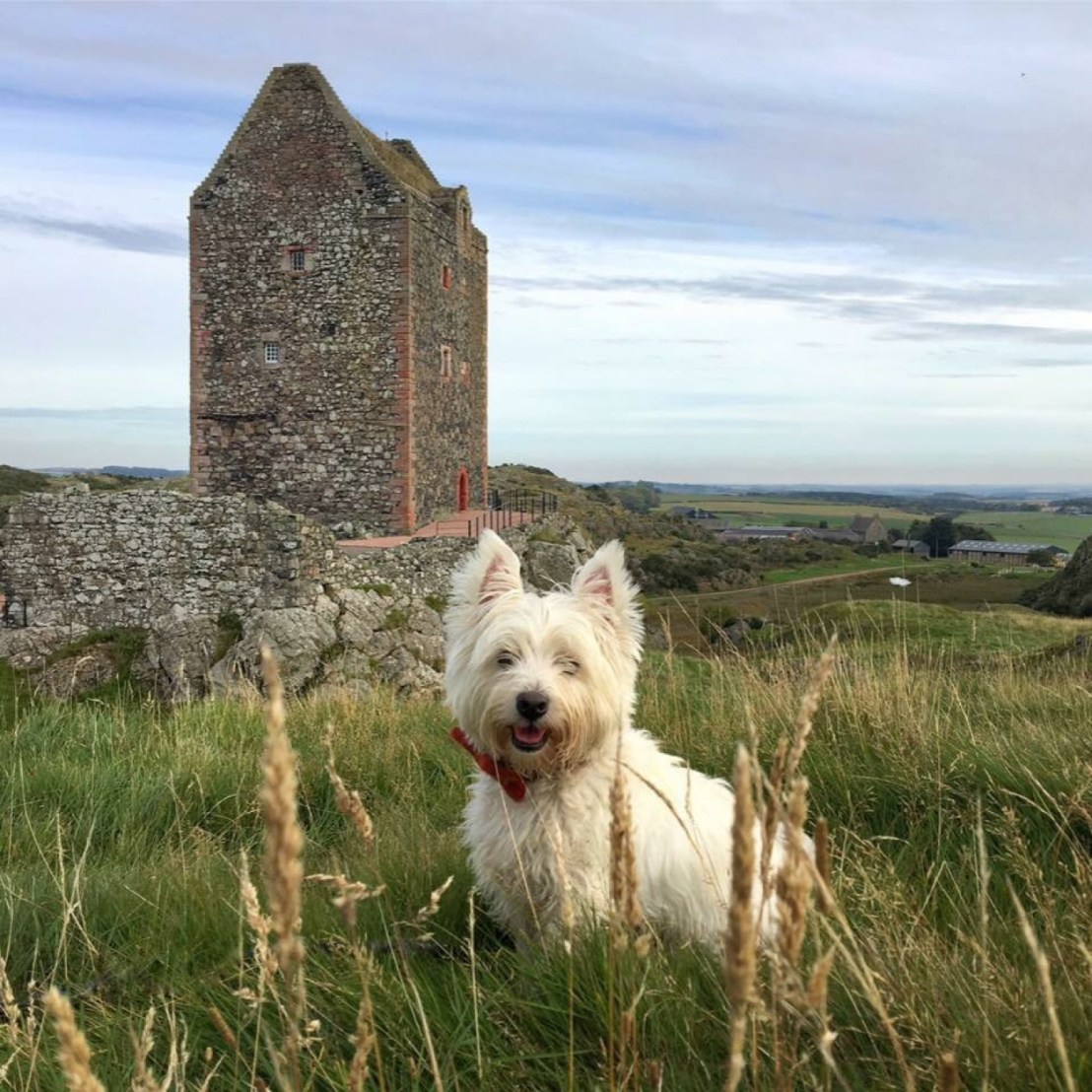
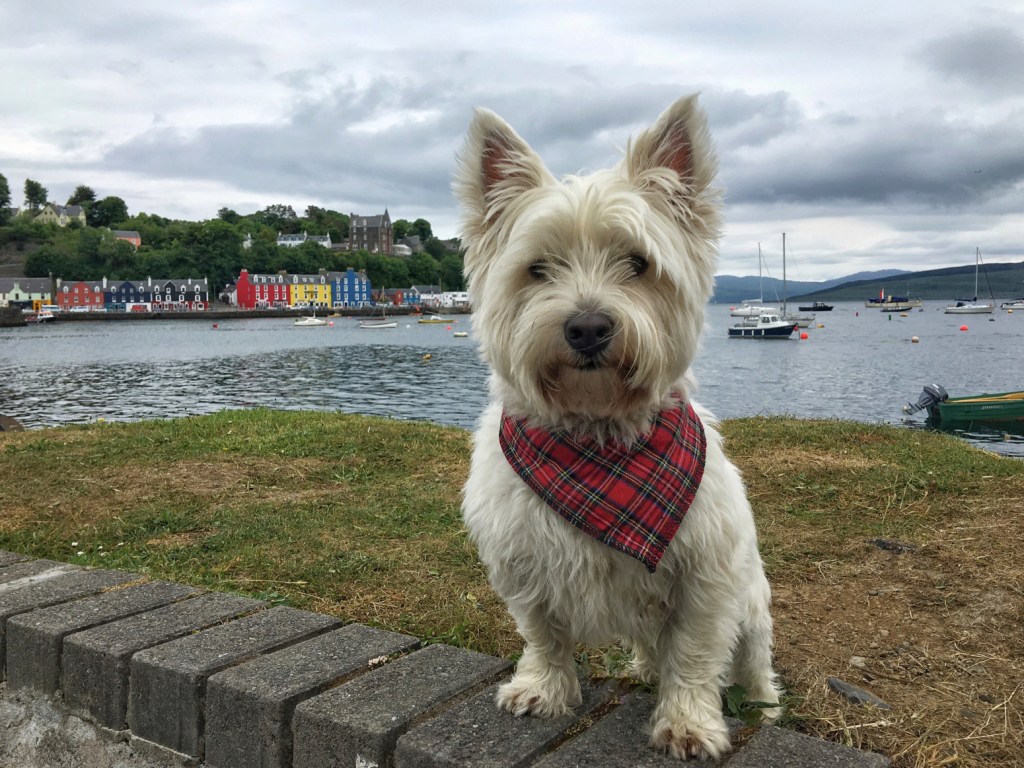
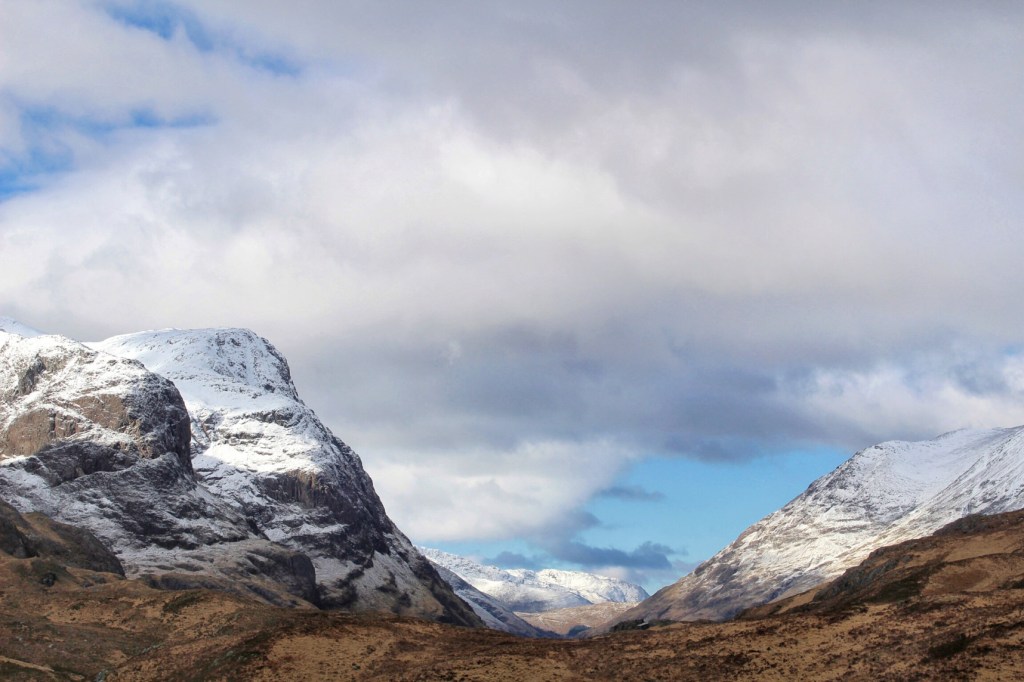
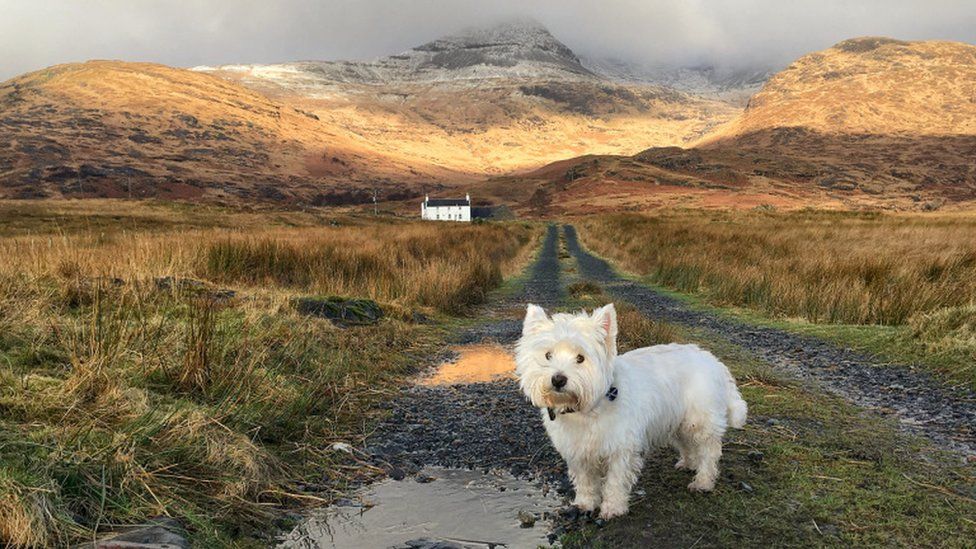
After photographs of her West Highland Terrier received more “likes” on social media than even the most stunning Glencoe landscapes she could capture, Sam Grant conceded that “the wee white dug” should star in her Scottish travel blog.

I went on to republish a wonderful set of photographs that had been taken by Sam. You all loved them and that led me to ask Sam if I could republish her About Me page on her blog. Sam very kindly said that would be fine.

ooOOoo

Scotland with the Wee White Dug

A Scottish travel blog showcasing the best of Scotland. Scotland with the Wee White Dug is a comprehensive and informative guide to Scotland, covering history, outdoor activities, events, visitor attractions, accommodation, eating out and more.

About Me

A little bit about me

Hello and welcome to my Scottish travel blog which I hope you’ll find informative and interesting, but most of all fun.

I’m Samantha but am generally known as Sam, Mrs G or Mum.  I’m married to Alex (Mr G) and we live in Edinburgh with a well travelled wee white dug called Casper.  We also share our home with the The Teen, Casper’s sloth like and gadget obsessed big sister.

All of my free time is spent road-tripping around Scotland.  I’ve travelled extensively throughout the country and never tire of its jawdropping and diverse beauty.

I have a vast knowledge of where to stay, eat and what to do in Scotland. Whether it be an afternoon out, a day trip or an extended tour. I also know all of the best places to go with your four legged friend.

I’m a Visit Scotland Ambassador and I helped launch their online Community in the spring of 2016.  The Community is a Scottish travel forum for sharing insider hints and tips about visiting Scotland.  Visit Scotland’s Ambassadors were selected for their expert knowledge of the country.

In January 2017 I took up the role of resident blogger for East Lothian Council on their Visit East Lothian website.  I write a fortnightly post for their blog, highlighting the delights of East Lothian.

I’m passionate about the history, language, literature, customs and myths of Scotland. I read History at the University of Edinburgh and during my time there I studied Scottish History, Literature and Politics which gave me an excellent understanding of how Scotland became the country that it is today.

I absolutely adore the great outdoors – it’s my happy place.  I love hiking, have been known to summit a Munro or two and am happiest when surrounded by lochs, moors and mountains.

My photography

I’ve been an avid hobby photographer since joining Instagram several years ago.  I’m part of a diverse group of Scottish Instagrammers with a passion for sharing Scotland with the World.

My feed @bean_nighe has appeared on Instagram’s prestigious Suggested User list.  You’ll find the Wee White Dug on Instagram too @theweewhitedug.  His feed is also dedicated to sharing our Scottish travels.

I’ve featured in articles recommending the best Scottish Instagram accounts to follow by The ScotsmanMatador Network and the award winning travel blog Stories my suitcase could tell.

My photos appear regularly on various social media channels including those of Canon UK, BBC, Skyscanners, Scottish Memories Magazine, Scotrail, Historic Scotland, Visit Scotland and The Guardian.

I share my Scottish travels on Facebook and Twitter too so if you’re on those sites stop by and say hello.

I’m passionate about promoting Scotland as a wonderful place to visit.  It’s a country with a rich history and heritage. A country full of stories just waiting to be told.

I appreciate you taking the time to stop by my blog to join me on my travels.  I hope ‘Scotland with the Wee White Dug’ inspires you to visit Scotland, helps you to plan for a forthcoming trip or makes you reminisce fondly about a past visit.

If you’re interested in working with me you can find out more here.

Sam

ooOOoo

Just glorious!

Foreboding times?

Something brooding in the air!

The smoke from the forest fires in Oregon and California has been thick in the air here in Merlin for days.

As can be seen in the photograph below. The photograph is as it was captured by the camera at 7:15 am yesterday morning. No changes by me made at all. The middle tree line is at the Eastern end of our property about a 1/4 mile away.

We are fed up with the smoke and the terrible air conditions.

But what drew me to grab the camera and take the photograph was that the image had some sort of, Oh, I don’t know, some sort of end of the world feeling about it.

It also seemed a most apt image to be an introduction to the latest essay from George Monbiot. It is republished here with Mr. Monbiot’s kind permission.

ooOOoo

Don’t Look Now

2nd September 2017

The media avoids the subject of climate breakdown – to do otherwise is to bring the entire infrastructure of thought crashing down

By George Monbiot, published in the Guardian 29 August 2017

It is not only Donald Trump’s government that censors the discussion of climate change; it is the entire body of polite opinion. This is why, though the links are clear and obvious, the majority of news reports on Hurricane Harvey have made no mention of the human contribution.

In 2016, the United States elected a president who believes that human-driven global warming is a hoax. It was the hottest year on record, in which the US was hammered by a series of climate-related disasters. Yet the total combined coverage for the entire year on the evening and Sunday news programmes on ABC, CBS, NBC and Fox News amounted to 50 minutes. Our greatest predicament, the issue that will define our lives, has been blotted from our minds.

This is not an accident. But nor (with the exception of Fox News) is it likely to be a matter of policy. It reflects a deeply ingrained and scarcely conscious self-censorship. Reporters and editors ignore the subject because they have an instinct for avoiding trouble. To talk about climate breakdown (which in my view is a better term than the curiously bland labels we attach to this crisis) is to question not only Donald Trump, not only current environmental policy, not only current economic policy, but the entire political and economic system.

It is to expose a programme that relies on robbing the future to fuel the present, that demands perpetual growth on a finite planet. It is to challenge the very basis of capitalism; to inform us that our lives are dominated by a system that cannot be sustained, a system that is destined, if it is not replaced, to destroy everything.

To claim that there is no link between climate breakdown and the severity of Hurricane Harvey is like claiming that there is no link between the warm summer we have experienced and the end of the last ice age. Every aspect of our weather is affected by the fact that global temperatures rose by around 4° between the ice age and the 19th Century. And every aspect of our weather is affected by the 1° of global warming caused by human activities. While no weather event can be blamed solely on human-driven warming, no weather event is unaffected by it.

We know that the severity and impact of hurricanes on coastal cities are exacerbated by at least two factors: higher sea levels, caused primarily by the thermal expansion of seawater, and greater storm intensity, caused by higher sea temperatures and the ability of warm air to hold more water than cold air.

Before it reached the Gulf of Mexico, Harvey had been demoted from a tropical storm to a tropical wave. But as it reached the Gulf, whose temperatures this month have been far above average, it was upgraded first to a tropical depression, then to a category 1 hurricane. It might have been expected to weaken as it approached the coast, as hurricanes churn the sea, bringing cooler waters to the surface. But the water it brought up from 100 metres and more was also unusually warm. By the time it reached land, Harvey had intensified to a category 4 hurricane.

We were warned about this. In June, for example, Robert Kopp, a professor of earth sciences, predicted that “In the absence of major efforts to reduce emissions and strengthen resilience, the Gulf Coast will take a massive hit. Its exposure to sea-level rise – made worse by potentially stronger hurricanes – poses a major risk to its communities.”

To raise this issue, I’ve been told on social media, is to politicise Hurricane Harvey. It is an insult to the victims and a distraction from their urgent need. The proper time to discuss it is when people have rebuilt their homes, and scientists have been able to conduct an analysis of just how great the contribution from climate breakdown might have been. In other words, talk about it only when it’s out of the news. When researchers determined, 9 years on, that human activity had made a significant contribution to Hurricane Katrina, the information scarcely registered.

I believe it is the silence that’s political. To report the storm as if it were a entirely natural phenomenon, like last week’s eclipse of the sun, is to take a position. By failing to make the obvious link and talk about climate breakdown, media organisations ensure that our greatest challenge goes unanswered. They help push the world towards catastrophe.

Hurricane Harvey offers a glimpse of a likely global future; a future whose average temperatures are as different from ours as ours are from those of the last ice age. It is a future in which emergency becomes the norm and no state has the capacity to respond. It is a future in which, as a paper in the journal Environmental Research Letters notes, disasters like Houston’s occur in some cities several times a year. It is a future that, for people in countries such as Bangladesh, has already arrived, almost unremarked by the rich world’s media. It is the act of not talking that makes this nightmare likely to materialise.

In Texas, the connection could scarcely be more apparent. The storm ripped through the oil fields, forcing rigs and refineries to shut down, including those owned by some of the 25 companies that have produced over half the greenhouse gas emissions humans have released since the start of the Industrial Revolution. Hurricane Harvey has devastated a place in which climate breakdown is generated, and in which the policies that prevent it from being addressed are formulated.

Like Donald Trump, who denies human-driven global warming, but who wants to build a wall around his golf resort in Ireland to protect it from the rising seas, these companies, some of which have spent millions sponsoring climate deniers, have progressively raised the height of their platforms in the Gulf of Mexico, in response to warnings about higher seas and stronger storms. They have grown from 40 feet above sea level in 1940, to 70ft in the 1990s, to 91ft today.

This is not, however, a story of mortal justice. In Houston, as everywhere else, it is generally the poorer communities, that are least responsible for the problem, who are hit first and hit worst. But the connection between cause and effect should appeal to even the slowest minds.

The problem is not confined to the United States. Across the world, the issue that hangs over every aspect of our lives is marginalised, except on the rare occasions on which world leaders gather to discuss it in sombre tones (then sombrely agree to do almost nothing), whereupon the instinct to follow the machinations of power overrides the instinct to avoid a troubling subject. When they do cover the issue, they tend to mangle it. In the UK, the BBC distinguished itself in customary fashion this month, by yet again inviting the climate change denier Lord Lawson onto the Today programme, in the mistaken belief that impartiality requires a balance between correct facts and false ones. They seldom make such a mess of other topics, because they take them more seriously.

When Trump’s enforcers instruct officials and scientists to purge any mention of climate change from their publications, we are scandalised. But when the media does it, without the need for a memo, we let it pass. This censorship is invisible even to the perpetrators, woven into the fabric of organisations that are constitutionally destined to leave the major questions of our times unasked. To acknowledge this issue is to challenge everything. To challenge everything is to become an outcast.

www.monbiot.com

ooOOoo

Dear people, I sat staring at the screen for 10 minutes and then went off when Jeannie called lunchtime. Returned to the screen a little after 2pm yesterday and still couldn’t come up with a closing thought that merited being shared with you all.

See you tomorrow!

Picture Parade Two Hundred and Ten

Pictures of Casper.

(All will become clear shortly!)

Dear friend of this place, Margaret K. from Tasmania (MargfromTassie), recently sent me an email with a link to a story that had appeared on the BBC website.

I thought the photographs would make a fabulous Picture Parade.

But first sufficient of the news story for the photographs to be seen in proper context.

Meet Scotland’s ‘most well-travelled dog’

After photographs of her West Highland Terrier received more “likes” on social media than even the most stunning Glencoe landscapes she could capture, Sam Grant conceded that “the wee white dug” should star in her Scottish travel blog.

“Casper is my unique selling point,” says Sam Grant, an Edinburgh-based VisitScotland ambassador who spends her spare time travelling the country with her pet.

She adds: “There are lots of travel bloggers out there who are very good writers, but they don’t have the wee white dug.”

Here are almost all of those photographs that the BBC presented.

You will love them.

Please note that all of the photographs were taken by Sam Grant who, I am sure, retains copyright ownership of them. Sam’s blogsite is Scotland With The Wee White Dug and well worth a visit.

The village of Crianlarich is located in Glen Strathfillan to the north of the Trossachs, around eight miles north of the head of Loch Lomond

oooo

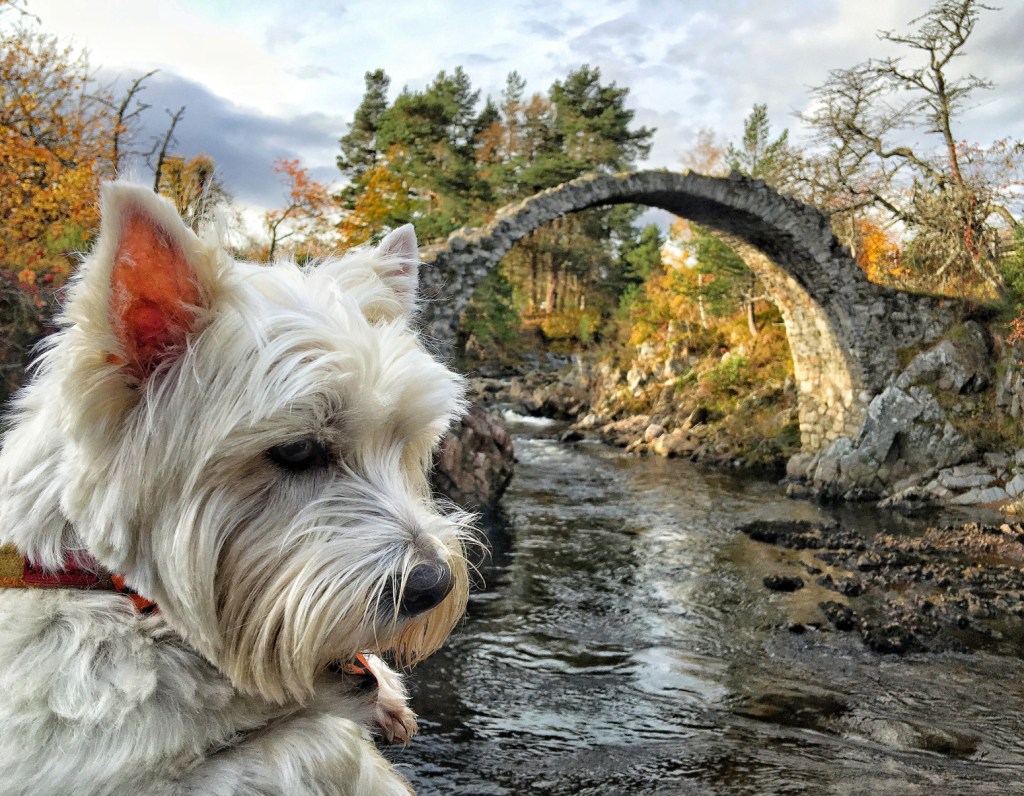
The village of Carrbridge, in the Scottish Highlands is famous for its 18th Century packhorse bridge.

oooo

Whiting Bay, Isle of Arran, offers views across to Holy Isle.

oooo

Culzean Castle is perched on the Ayrshire cliffs.

oooo

Culloden Moor in the Highlands is where the Battle of Culloden took place in 1746.

oooo

Iona, Inner Hebrides, is often described as a “tiny island paradise”.

oooo

The Tomb of the Eagles, Orkney, is thought to be more than 5,000 years old.

oooo

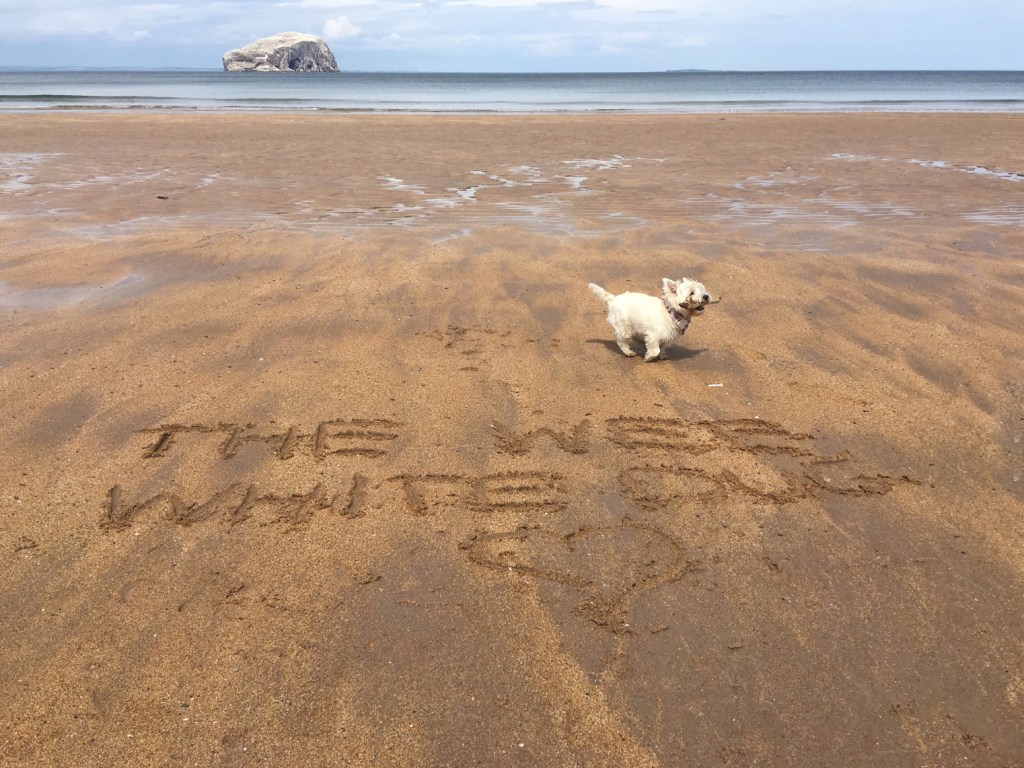
North Berwick, East Lothian, boasts many great beaches and coastal scenery.

oooo

“Dolphin Spirit” is a boat to take tourists onto the waters of the inner Moray Firth to see the dolphin pods.

oooo

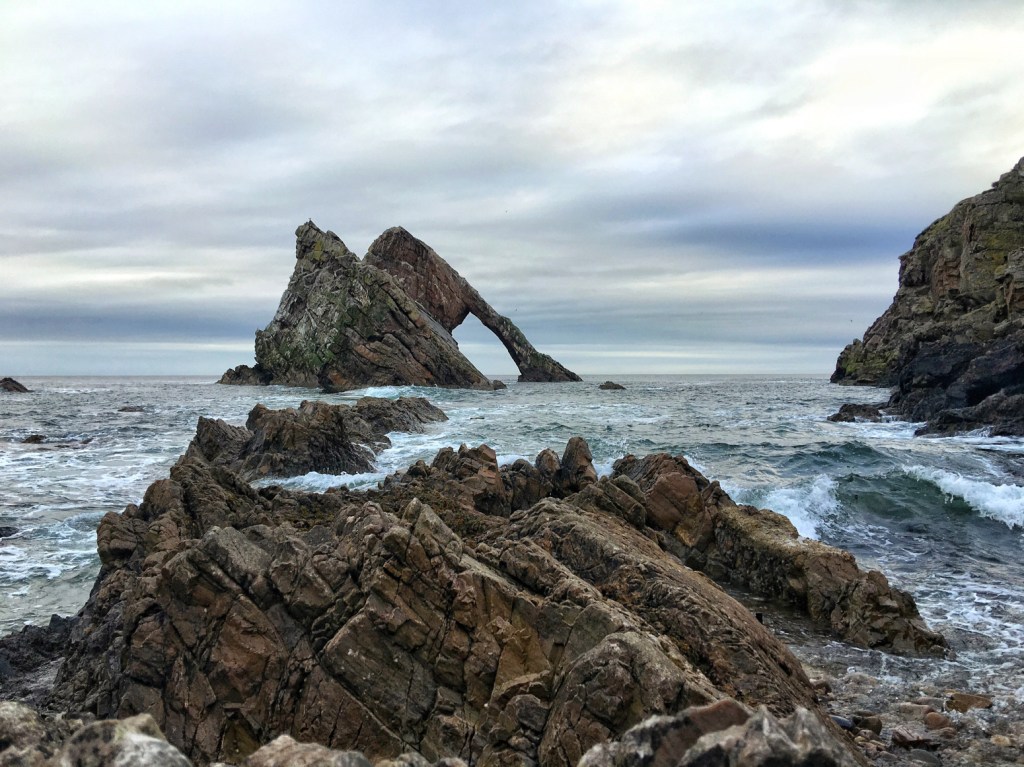
Bow Fiddle Rock is a natural sea arch near Portknockie on the north-eastern coast of Scotland.

oooo

Kilchurn Castle is a ruined castle on a rocky peninsula at the northeastern end of Loch Awe, Argyll and Bute.

oooo

Snow capped Ben More in Glen More, Isle of Mull, Western Isles.

oooo

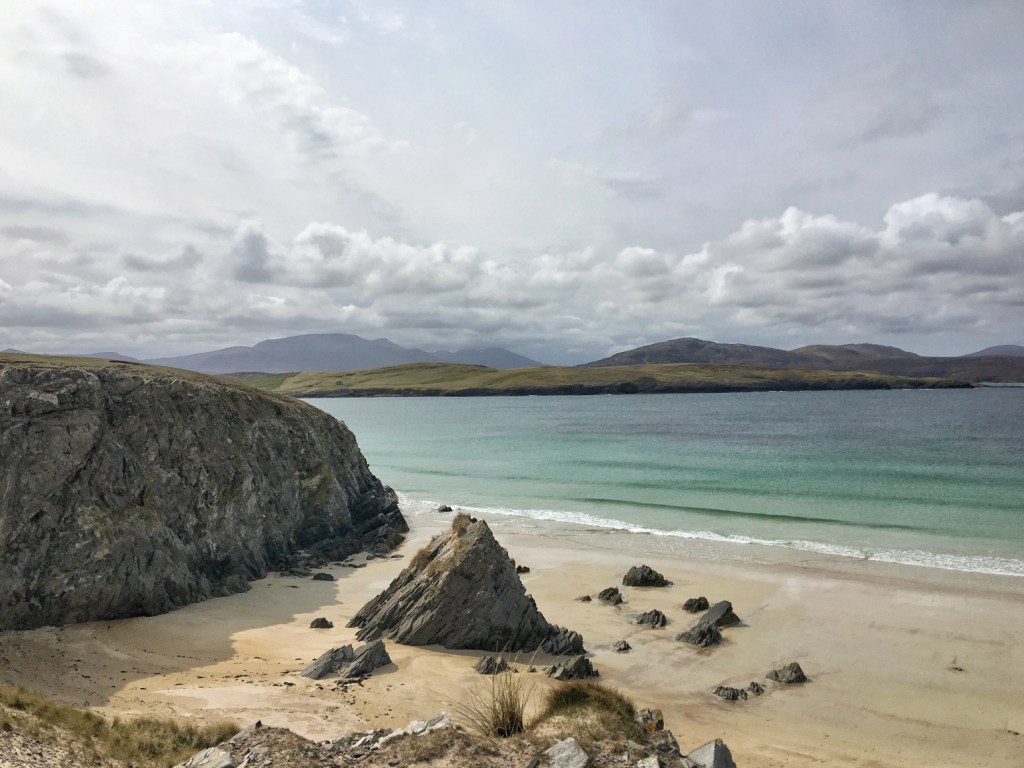
Balnakeil Bay is near Durness, Scottish Highlands.

I can’t resist including the rest of the text that the BBC published for the photographs are strengthened enormously by Sam’s words.

Her eccentric website details places of interest in areas including Orkney, Loch Lomond and the Scottish Borders.

It was launched in 2015 after an Instagram account written from Casper’s perspective proved popular with followers.

The social media profile has nearly 4,000 followers, who Sam says “can’t get enough” of the wee white dug’s quirky anecdotes about his travels.

Sam says travelling with Casper has given her lots of insight into Scotland’s best pet-friendly tourist attractions and holiday accommodation.

She says: “There are loads of good places that you can visit nowadays where you can bring along your four-legged friends.”

Sam hopes the blog could encourage more Scots to look around their own country, as well as attracting other visitors.

She says: “If you visit the beaches in the Outer Hebrides, you’ll see there’s really no need to go to the Caribbean – unless you’re a sun worshipper.

“Scotland’s a country with a rich history and heritage. A country full of stories just waiting to be told.”

Sam says most traffic to her website comes from the UK and US but she has had visitors from more than 100 countries – including China.

“When I see that I’ve had visitors from far-flung countries, I imagine them on the other side of the world reading about Scotland and the wee white dug,” the writer adds.

Asked if she thinks some people could say her pictures are a bit twee, Sam replied: “I did worry about that at first, so I try to make a joke of it.

“But if people like my pictures and they bring a bit of happiness to someone’s day, then why not?”

I guarantee that all of you dear people who view these photographs will have much happiness brought to you. As was brought to Jeannie and me.

Picture Parade Two Hundred and Nine

Just a few memories of the last week.

Our English guests, Mark and Debbie, who stayed with us after traveling to Warm Springs, South-East of Portland, Oregon, to view the eclipse took the following three photographs.

See the crescents in the dappled shade of a near by bush. 10 minutes before totality.

oooo

Totality – August 21st, 2017.

oooo

Our English guests.

oooo

Then you will love the next one. Sent in by Neil Kelly from Devon, England.

Madison wears sunglasses to view the eclipse along the Cumberland River, Nashville, USA

oooo

And another beauty courtesy of Neil K.

Last but not least ….

oooo

Back to the stars!

The rising moon a little after 5am on the 19th August.

oooo

And there hanging above that rising moon was Venus!

oooo

Finally, back to Tanja Brandt whose most beautiful photographs will be gracing these Picture Parades in the future.

The day of the eclipse!

The day has arrived! Listen carefully!

Listen??  Yes, and thanks to The Smithsonian, if you are blind or visually impaired!

ooOOoo

What Does an Eclipse Sound Like?

A new app will allow blind and visually impaired users to experience the upcoming solar eclipse on August 21.

By Nathan Hurst
smithsonian.com  August 14, 2017

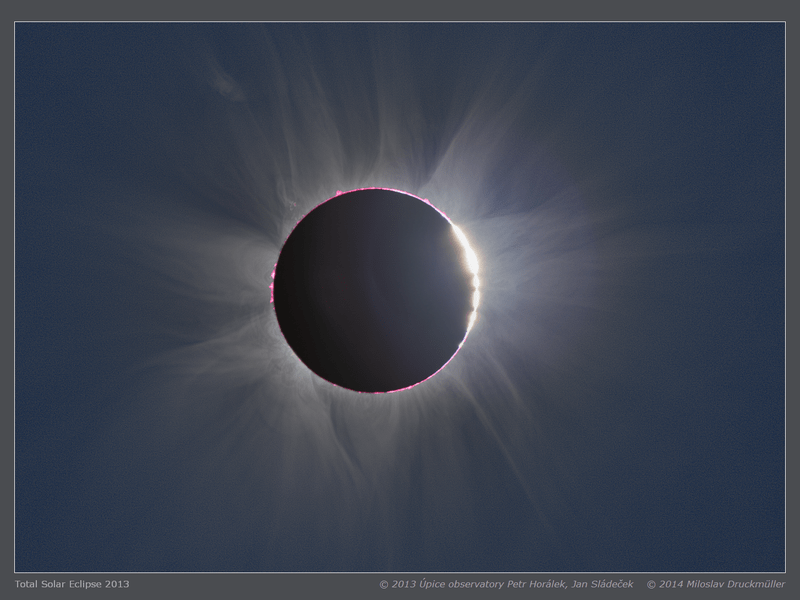
How would you describe an eclipse to a blind person? The moon moves in front of the sun, yes. But what does that look like? Someone trained in illustrative description of images might say, “The moon appears as a featureless black disk that nearly blocks out the sun. The sun’s light is still visible as a thin band around the moon’s black disk. To the upper right, at the moon’s leading edge, a small area of sunlight still shines brilliantly.”

That’s just an example of how such an event could be described. Bryan Gould, director of accessible learning and assessment technologies at the National Center for Accessible Media, a non-profit working to make media experiences accessible to people with disabilities, is hoping to offer oral descriptions of the eclipse in an app. Paired with other features, like a tactile diagram and audio from the changing natural environment as the eclipse darkens the sky, the app is designed to make the event more accessible to blind or visually impaired people who want to experience it.

Gould is working with Henry Winter, a solar astrophysicist at the Harvard-Smithsonian Center for Astrophysics, to develop the app, called Eclipse Soundscapes. As the August 21 solar eclipse darkens a path across the United States, Eclipse Soundscapes will release descriptions, timed—based on the user’s location—to match the progress of the eclipse.

Winter conceived Eclipse Soundscapes after a conversation with a friend who’s been blind since birth. She asked him to explain what an eclipse means.

Such an event might provide an interesting representation of the eclipse, thought Winter, so he partnered with the National Park Service’s Natural Sounds program, which preserves and catalogs sounds from the parks. Helpers stationed at national parks along the route will record audio during the eclipse, to hear the change in the “bioacoustical chorus” of the animals.

This can’t happen in real time, of course, so the National Center for Accessible Media is providing illustrative descriptions, based on a previous eclipse. The sounds of crickets, frogs and birds becoming active on the day of the eclipse will be added to the app later.

Last, with the help of an audio engineer named Miles Gordon, Winter is trying something completely new. Gordon developed a “rumble map” of the eclipse: The app places images of different stages of an eclipse on your smartphone’s screen, and as you trace your finger across the eclipse’s image, the vibration increases or decreases based on the brightness of the image.

“It does give you the impression that you’re actually feeling the sun, as you move your finger around,” says Winter.

“I realized I didn’t have the vocabulary to answer that question for her,” says Winter. “Every way I thought about it was visual in nature, and I didn’t know how to explain it to somebody … light, dark, bright, dim, flash. All these different words have no meaning to somebody that’s never seen.”

But the project goes well beyond audio descriptions. It includes two further elements: audio of the changing soundscape caused by the eclipse, and a tactile exploration of the eclipse’s image (which means that people who are blind or visually impaired can “feel” the eclipse using vibrations on their smartphones).

Many creatures become active as the sun sets, and many of them use darkness as an indicator of time of day. During an eclipse, crickets will chirp and frogs will chorus, thinking night has fallen. These habits were noted as far back as 1932, in a Proceedings of the American Academy of Arts and Sciences article titled “Observations on the Behavior of Animals During the Total Solar Eclipse of August 31, 1932.”

Scientists around the world will be using the eclipse as an opportunity to study solar astronomy in a way they usually can’t, measuring the ultraviolet light emitted from the sun’s corona, which Earth-based observers can’t normally see, as it is overpowered by the normal sunlight. It’s also rare for an eclipse to cover this much land — it traverses from Oregon to South Carolina — and Winter points out that it is a particularly good opportunity for education and outreach.

Though education is important, for Wanda Diaz Merced, a visiting scientist at the Harvard-Smithsonian Center for Astrophysics who is completely blind, there’s a lot more to the eclipse than that. Merced, who has consulted on the Eclipse Soundscapes project, studies human-computer interaction and astrophysics, and to do her research, she needs assistance translating data into a format she can interact with. She’s been building tools to help with that translation, and sees elements of Winter’s project that could contribute.

“It’s still not a prototype that I may use, for example, to study elements of the photosphere. It is not on that stage,” says Merced. “But hopefully one day we will be able to not only hear, but to touch.”

The eclipse will occur on August 21, starting around 10 a.m. in Oregon and finishing by 3 p.m .in South Carolina. The Eclipse Soundscapes app is available for iOS now, and the team is working on an Android app as well.

ooOOoo

I can’t imagine there’s anyone still pondering on whether or not to view the eclipse.

But that still doesn’t stop me offering you this recently presented TED Talk.

On August 21, 2017, the moon’s shadow will race from Oregon to South Carolina in what some consider to be the most awe-inspiring spectacle in all of nature: a total solar eclipse. Umbraphile David Baron chases these rare events across the globe, and in this ode to the bliss of seeing the solar corona, he explains why you owe it to yourself to witness one, too.

This talk was presented to a local audience at TEDxMileHigh, an independent event. TED editors featured it among our selections on the home page.

About the speaker: David Baron David Baron writes about science in books, magazines, newspapers and for public radio. He formerly served as science correspondent for NPR and science editor for PRI’s The World.

Enjoy it, good people. And protect your eyes!!!

Or better still allow NASA Television to show the eclipse to you.

NASA Television will air a four-hour show – Eclipse Across America – which will include live video of the event, along with coverage of activities in parks, libraries, stadiums, festivals and museums across the nation, and on social media. NASA’s show begins at 15:00 UTC (11 a.m. EDT; translate to your time zone), or later (we’ve seen this time waffle around a bit). Check the website for changes or further details.