Category: Technology

The Future of Content

A fascinating piece by John Maudlin.

I came across John Maudlin’s web site some time ago and ended up subscribing to one of his Blogs, Outside the Box.  To be frank, much of what John writes is a little bit too technical for me but this item did catch my eye to the extent that I read the item in full and was intrigued by it.

The article was called, “Apple, Google, NewsCorp and the Future of Content”  You can read it directly here.  But just to whet your appetite, here’s a small extract of what is primarily an interview with Michael Whalen:

In this issue of The Institutional Risk Analyst, we speak to Michael Whalen, [Emmy] award winning composer and new media observer about the outlook for the business of creating and delivering content.  Since graduating from Berklee College of Music, Michael has taught a business for music class that has saved thousands of young artists from making terrible mistakes with content and other contractual rights.  Think Frank Zappa and Warner Brothers.   And yes, Michael is IRA co-founder Chris Whalen’s younger brother.

and later …

Whalen: Frankly, I think we’re going back to the 19th century in terms of the “status” of artists. They’ll be figureheads. Imagine: like Paris or Vienna of the 1900s, we’ll have wealthy patrons and small clutches of people who support the art of “real” artists. In this environment, the work we will try to sell is simply a loss leader and an inducement for us to perform or create a “custom” song, TV show or film… Yup, it’s all here now… What will be really interesting is what happens next… I am not pretending to be the “Grim Reaper” but I think the record business, the film studio system and the television networks are over as we think we know them. I think there is a new business emerging in gathering creative investment, content and creative marketing…. It will be in a structure that’s more akin to a stock market than the traditional structure we’ve seen for artistic and creative content and the platform for it will be the digital ocean we have already discussed. Based on the “buzz”, there will be a “futures” market and the idea is commoditized and funded in days – not months or years. For decades, most record companies and networks have been little more than funding sources for artists – now the truly visionary artist won’t even need these ancient businesses – the market itself will generate everything it needs to create content efficiently. It’s a little overwhelming the change that is here now vs. five years ago and that will be coming in torrents in the next few years. Amazing.

Read the full interview here – I promise you won’t regret it.

By Paul Handover

Music for Christmas Day

But not quite as you know it!

(And, once again, a thank-you to Dan G for the link!)

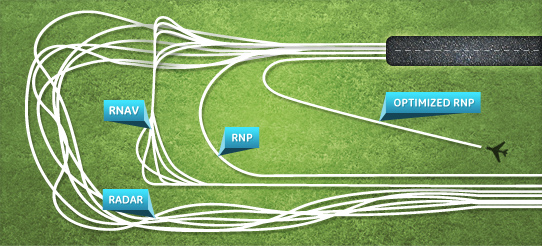
Beauty of flight

There’s more to flying than many of us realise.

Thanks to Mike T who I have known for a few years now.  Mike is an air traffic controller as well as being a keen private pilot so if there is one person who can see through the telescope from both ends, it’s this man.

Anyway, GE Aviation are one of the big players in aviation.  Here’s a quote from the website that I am going to link you to in a moment.

GE Aviation designs engines, flightpaths, and advanced aircraft systems. And we wanted to share the intricate choreography of flying in all its glory.


Dancing in the air!


Here’s the video – just 1:48 long – it’s captivating.  This link takes you to the GE web page where there is much more of great interest other than the video.

If you only want to watch the video then, of course, there’s a copy on YouTube, as below.  Enjoy!

Thanks Mike.

By Paul Handover

Spices

A fascinating insight and a reminder, courtesy of Alistair Cooke

Jeannie recently gave me the book Alistair Cooke’s America.  The book was published in 1973 and was born out of the scripts that Cooke wrote for the television series America: A Personal History of the United States shown in both countries in 1972.  I can’t recall when I first started listening to the BBC Radio programme Letter from America, broadcast by Cooke, but it was a long time ago considering that the 15-minute programme started to be broadcast on the BBC in March 1946, just 18 months after I was born!


Alistair Cooke Nov 1908 - Mar 2004


Anyway, the motivation to start into the book was born out of a desire to know a lot more about this new country of mine.  But quickly there was a fascinating detour.

Early in Chapter One, The New-found Land, Cooke writes of the consequences of the Turks capturing Constantinople:

In 1453, there was a decisive turn in the centuries of warfare between the Christians of Europe and the Moslems of Asia.  Their common market, bridge, and gateway was Constantinople, our Istanbul.  In 1453, the Turks conquered it, and in so doing shut off the commerce between East and West, the exchange of cloth, leather wines and sword blades of Europe for the silks, jewels, chessmen, and spices of Asia.  All things considered, the stoppage was much harder on the court treasuries of Europe that those of Asia and, in one vital item, harder on all Europeans.  That item was spice.

Cooke then writes about historic change often being caused by the denial of a simple human need.  Shortage of water, total absence of timber for the Egyptians since the time of Solomon, for example.

What I hadn’t realised that for Europeans, spices were regarded as “fundamental to human survival”.  That was simply because in the 15th century spices made food edible.  Cooke writes,

Even in rich houses, the meals came putrid to the table. (Dysentery, by the way, seems to have been considered through most of the last five centuries a hazard as normal as wind and rain.)

Think about that the next time you reach for the pepper!

That led me to think about the enormous benefit that electricity and therefore domestic refrigeration has had on the health and life expectancies of mankind.  It is almost inconceivable to imagine the consequences of a widespread loss of electricity for, say a week, let alone a few months.

Patrice Ayme wrote a guest post for Learning from Dogs that was published on the 26th.  In it he wrote,

But then, after an auspicious start, Mars lost most of most of its atmosphere (probably within a billion years or so). Why? Mars is a bit small, its gravitational attraction is weaker than Earth (it’s only 40%). But, mostly, Mars has not enough a magnetic field. During Coronal Mass Ejections, CMEs, the Sun can throw out billions of tons of material at speeds up to and above 3200 kilometers per seconds. It’s mostly electrons and protons, but helium, oxygen and even iron can be in the mix.

The worst CME known happened during the Nineteenth Century, before the rise of the electromagnetic civilization we presently enjoy. Should one such ejection reoccur now, the electromagnetic aspect of our civilization would be wiped out.It goes without saying that we are totally unprepared, and would be very surprised. Among other things, all transformers would blow up, and they take months to rebuild. we would be left with old books in paper, the old fashion way. A CME can rush to Earth in just one day. (Fortunately the Sun seems to be quieting down presently, a bit as it did during the Little Ice Age.)

So let’s just hope and pray that our continued interest in spices remains a flavouring desire and doesn’t return as a critical need for human survival.

By Paul Handover

Whoops, just on the phone!

The unacceptable side of mobile (cell) phones.

Recently, I saw something come in to my in-box that just held my attention for sufficiently long to get me to move from scan reading to actually thinking about what I was reading and how it made me feel.

The US government may require cars to include scrambling tech that would disable mobile-phone use by drivers, and perhaps passengers.

“I think it will be done,” US Secretary of Transportation Ray LaHood said on Wednesday morning, according to The Daily Caller. “I think the technology is there and I think you’re going to see the technology become adaptable in automobiles to disable these cell phones.

No, this is not some other form of Government interference in areas of our lives that are irrelevant to the real world.  This is serious stuff:

Believe it or not, I wasn’t always so outspoken about the dangers of distracted driving. Like a lot of folks, I just didn’t give a lot of thought to it.

But that all changed as I met people from coast to coast who told me about the loved ones they lost in senseless crashes caused by texting and cell phone use behind the wheel. And it was their stories–of dreams shattered and lives cut short–that turned the fight to end distracted driving into my personal crusade.

These people have had a profound effect on me. And I think their stories will have a profound effect on you.

SNIP

Just last year, nearly 5,500 people were killed and 500,000 more were injured in distracted driving-related crashes.  But, these aren’t statistics. They’re children and parents, neighbors and friends.

So this really does deserve thinking about.  As The Register article puts it:

The problem is that the average driver doesn’t think that he or she is an average driver: nearly two-thirds of drivers think of themselves as safer and more skillful than a driver of median safety or skills — a statistical impossibility, of course.

When faced with the prospect of automotive mobile phones being disabled, we’d be willing to bet that most drivers, suffused with confidence in their own skills, will think in terms of personal inconvenience and a restriction on personal freedom.

Perhaps it might be better to think of the guy texting in the lane to your left, or the gal yelling at her ex on her iPhone in the lane to your right, and think not of your own inconvenience, but of some distracted dolt killing you.

Remember one unassailable statistic, as explained by the late, great George Carlin: “Just think of how stupid the average person is, and then realize half of them are even stupider!”

LaHood may be right. Disabling mobile phones in cars should not be looked at as a way of protecting you from yourself, but instead as a way of protecting you from the stupid.

Quite so!

By Paul Handover

It almost goes on for ever.

The almost everlasting heavens above us.

There is so much information around us these days that it’s easy to forget how incredibly advantaged are those today that wish to learn about everything and anything.  It was just such a meander around the internet that brought me to a website called Science Daily, a wonderful daily digest of top science news items.

And a browse through that web site brought me to this piece on the creation of the very first stars in the universe.

June 1, 2007 — Astronomers removed light from closer and better known galaxies and stars from pictures taken with the Spitzer Space Telescope. The remaining images are believed to be the first objects in space, 13 billion light years away.

The first stars in our universe are long gone, but their light still shines, giving us a peek at what the universe looked like in its early years.

Astrophysicists believe they’ve spotted a faint glow from stars born at the beginning of time. Harvey Moseley, Ph.D., an astrophysicist at the NASA Goddard Space Flight Center in Greenbelt, Maryland, says, “The reason they’re faint is just because they’re very, very far away, they’re over at the far edge of the universe.”

I don’t know about you but I find this so deeply inspiring – a reminder of the instinctive nature of man to enquire and explore.  And it is this exploratory instinct that will pull us all through from the challenges that we all face today.

Anyway, I’m wandering off the subject!

Do read the piece in full here and then watch the following video from Avi Loeb.

Oh, want to know how far 13 billion light years is?  Brace yourself!

Light travels at 186,000 miles per second or more properly expressed 299,792.458 km/sec.  See here.  (Brilliant website by the way) That is 10 trillion kilometres a year.

So 13 billion light years is simply! 10 trillion multiplied by 13 billion kilometres.  Anyone got a larger calculator?

By Paul Handover

To the heavens

Life is about journeys – here’s a spectacular example

Yesterday while I was travelling the 5,450 flight miles between London Heathrow and Los Angeles airports, another marvel of flight technology approached a small lump of rock far out in space.  I speaking of NASA’s Deep Impact/EPOXI spacecraft passing within 450 miles of the Comet Hartley 2.

“There are billions of comets in the solar system, but this will be only the fifth time a spacecraft has flown close enough to one to snap pictures of its nucleus,” says Lori Feaga of the EPOXI science team. “This one should put on quite a show!”

Cometary orbits tend to be highly elongated; they travel far from the sun and then swing much closer. At encounter time, Hartley 2 will be nearing the sun and warming up after its cold, deep space sojourn. The ices in its nucleus will be vaporizing furiously – spitting dust and spouting gaseous jets.

“Hartley 2’s nucleus is small, less than a mile in diameter,” says Feaga. “But its surface offgasses at a higher rate than nuclei we’ve seen before. We expect more jets and outbursts from this one.”

The EPOXI Mission website is here, from which has been selected this photograph of the Comet.

The details of this photograph are:

Caption: This EPOXI mission image of comet 103P/Hartley 2 was taken 34 days from Encounter (E-34d) using the Medium Resolution Instrument (MRI) and a clear filter. Science Team member Dr. Dennis Wellnitz combined three successive one-minute exposures to make this single image. The mid-exposure time was 2010/10/01 16:22:51 UTC. The comet was 1.12 AU from the Sun and 0.23 AU (35 million km) from the spacecraft.

Of course, when this Post is published, automagically, you will have to go onto the mission website to see the very latest information.

I will be more interested in catching a South-West airline flight into Phoenix.

By Paul Handover

V838 Monocerotis

Awesome!  Plain and simply awesome.

V838 Monocerotis

From the Hubble website.  Here’s the description of the image:

“Starry Night”, Vincent van Gogh‘s famous painting, is renowned for its bold whorls of light sweeping across a raging night sky. Although this image of the heavens came only from the artist’s restless imagination, a new picture from the NASA/ESA Hubble Space Telescope bears remarkable similarities to the van Gogh work, complete with never-before-seen spirals of dust swirling across trillions of kilometres of interstellar space.

This image, obtained with the Advanced Camera for Surveys on February 8, 2004, is Hubble’s latest view of an expanding halo of light around a distant star, named V838 Monocerotis (V838 Mon).

The illumination of interstellar dust comes from the red supergiant star at the middle of the image, which gave off a flashbulb-like pulse of light two years ago. V838 Mon is located about 20,000 light-years away from Earth in the direction of the constellation Monoceros, placing the star at the outer edge of our Milky Way galaxy.

Credit:

NASA, the Hubble Heritage Team (AURA/STScI) and ESA

Here are my thoughts.

A single light-year is approximately 6 trillion miles, or 9,460,730,472,580.8 kms for the metric brigade!  Thus 20,000 light-years is 120,000 trillion miles, or 120,000,000,000,000,000 miles.

It is beyond imagination – yet it is real!

It humbles one beyond measure that in this short lifetime on mine, science has reached out so far.  And then one looks more closely to home and remains appalled that we have learnt so little about living in peace and with integrity on this funny third rock from the Sun.

The ultimate paradox!

By Paul Handover

Integrity – aviation fashion!

The brilliance of fine engineering

The BBC have been started a series on how things are made!  The first episode was on the making of a nuclear submarine – perhaps not something that touches most of us!

Trent 900 on the A380

But the second episode was much more the ‘touch of the common man’ as it was about the building of a commercial jet engine, the Trent engine built by Rolls Royce of Derby, England.

Anyway, I’m not going to natter on other than to say that not all regulatory bodies are bad in this world.  Indeed, the aviation industry has shown how splendid both engineering and the certification processes can be in giving us a incredibly safe form of transport.

There are plenty of YouTube videos on the Trent engine but here are two that I found of great interest. (Thanks to Simon H for the pointers.)

Rolls Royce Trent Engine Certification video

A380 Loss of Blade test

By Paul Handover

Happy Birthday WordPress!

What a fabulous gift to openness!

Wordpress Logo

I subscribe to a Blog that comes with the rather intriguing name of The Gospel According to Rhys.  It’s a bit ‘geeky’ for my tastes but it offers sufficiently good advice on Blogging and other Social Media systems that it is a worthwhile entry in to my email in-box.

Anyway, in today’s in-box was a piece from Rhys about WordPress turning 7 years old.

Learning from Dogs is, of course, a WordPress driven Blog and thus is an example of the power of this wonderful software.  I trust that Rhys will forgive me if I quote at length from his article – I can’t better it.

Recently it was WordPress’ 7th Birthday. On the 27th of May in 2003, Matt Mullenweg released a fork of b2/cafelog, called WordPress. From the 0.72 release, it’s become the defacto blogging solution for thousands of publishers.I love it, I think it’s great, and although I’m probably preaching to the converted, here’s 7 reasons why I think your blog should be on WordPress.

It’s Free

For what it does, and for amount it costs, it is amazing that it costs nothing. Sure there’s hosting costs & domain names, but there’s nothing stopping you playing with the software for nothing.

It’s Open Source

Fancy yourself as a bit of a coder? Well WordPress is entirely free to see the code. In fact, I recommend playing with WordPress to learn the basics of PHP. There is great documentation (again, open source wiki) to help you with the WordPress framework, itself a great introduction into advanced PHP programming & working with API’s & frameworks.

Furthermore, with it being open source, if a bug is discovered, it’s fixed relatively quickly.

It Is Quick & Easy To Use

WordPress is famous for it’s five minute installation, and when you get good, it should take you half of that time. Logging in you can write a post within a minute, and it’s ridiculously easy to use. Changing design & adding plugins is easy as well.

As CMS’s Goes, It’s Pretty Good for SEO

Out of the box, f0r search engine optimisation, it’s okay. However, with a few tweaks, WordPress becomes a solid SEO platform. It’s certainly one of the better CMS’ out there.

It’s Well Supported

I’m not sure if there’s been a “state of the wordpress community” post ever done, but WordPress itself hosts nearly 10,000 plugins, and there must be tens of thousands of themes available online (WordPress itself only holds about 1 and a half thousand). Each one has a programmer or designer behind it, and although support varies (the official wordpress forum is average at best), enough people know what they are doing, both paid or free, to help you out.

It Can Make You A Rich Man (or Woman)

Whilst I’m not a rich man, running this blog & a few websites on WordPress have allowed me to make some money, and anybody can do this. As well as ebooks, adsense, affiliate marketing & god knows what else, you can make a fortune carrying out WordPress related services for other people.

It’s Never Going To Disappear Overnight

WordPress has some huge sites supporting it, a company fully dedicated to it’s production, and a thriving community. It’s not here today, and gone tomorrow.

So happy birthday WordPress, here’s to the next 7 years!

Well said, Rhys.

By Paul Handover