Last Sunday, after the mid-morning service, one of the congregation passed me a letter she had received from the Natural Resources Defense Council. It was all about the proposed mine in Alaska known as the Pebble Mine. She asked if I might write about it on Learning from Dogs. WikiPedia introduces the project thus,
Pebble Mine is the common name of an advanced mineral exploration project investigating a very large porphyry copper, gold, and molybdenum mineral deposit in the Bristol Bay region of Southwest Alaska, near Lake Iliamna and Lake Clark. The proposal to mine the ore deposit, using large-scale operations and infrastructure, is controversial. Proponents argue that the mine will create jobs, provide tax revenue to the state of Alaska, and reduce American dependence on foreign sources of raw materials. Opponents argue that the mine would adversely affect the entire Bristol Bay watershed; and that the possible consequences to fish populations, when mining effluents escape planned containments, are simply too great to risk. Much of this debate concerns the tentative plan to impound large amounts of water, waste rock, and mine tailings behind several earthen dams at the mine site.
Proposed mine location
My instinct is to join the side of those protesting because, once again, it seems like another example of mankind working hard to exhaust every natural jewel in the planet’s crown.
Yet, I was also conscious that I’m sitting in front of a computer that will have it’s fair share of copper inside it and that we, as in Jean and me, use a whole range of sophisticated materials in our daily lives, ergo leading a life that genuinely reduces our footprint on Planet Earth is easier said than done.
Here’s one ‘protest’ website that sets out the reasons for not proceeding with this mine,
1. Bristol Bay is home to the world’s largest sockeye salmon run.
2. Pebble mine would generate toxic waste in a seismically active region.
3. A majority of the people of Bristol Bay do not want the mine.
4. Native people live in Bristol Bay, and they subsist off the land.
5. Bristol Bay is home to an abundance of animals that need pristine habitat.
6. Bristol Bay has thousands of rivers and streams that would be degraded.
7. Commercial and sport fishing jobs would be jeopardized.
8. Wild salmon provide us with omega-3 fatty acids.
9. The Pebble Limited Partnership is untrustworthy.
10. Future generations depend on us to protect their most important and lasting legacy–the land.
There is a website that supports the project, where you will read their ‘core value’ expressed as, “Responsible mining technologies that actively support a healthy, respectful and sustainable co-existence with the environment and Southwest Alaska culture.”
Ultimately, it all comes down to there being too many people competing for too few resources. Nay, worse than that. It comes down to too many people living on this small planet, over-consuming what the planet can deliver and running out of time. There are millions who instinctively feel very uncomfortable about the future but, as yet, no global movement with real political power to make a difference.
A peek at a very interesting article in the February issue of National Geographic magazine.
Big thanks to Bob T. here in Payson for sending me a recent email that contained the one line, “There is a lengthy article entitled “Mix, Match, Morph” in the February issue of National Geographic. I strongly suspect you will find it of interest.” Understatement big time! The article is wonderful. It is also available online! 🙂
The premise behind the article is, as the opening words reveal,
Three breeds, Copyright National Geographic, photo by Robert Clark
How to Build a Dog
Scientists have found the secret recipe behind the spectacular
variety of dog shapes and sizes, and it could help unravel the
complexity of human genetic disease.
As is made clear early on in Evan Ratcliff’s text, the huge variety in the breeds of dogs is a very recent occurence,
For reasons both practical and whimsical, man’s best friend has been artificially evolved into the most diverse animal on the planet—a staggering achievement, given that most of the 350 to 400 dog breeds in existence have been around for only a couple hundred years.
And later Ratcliff writes,
The breeders gave no thought, of course, to the fact that while coaxing such weird new dogs into existence, they were also tinkering with the genes that determine canine anatomy in the first place. Scientists since have assumed that underneath the morphological diversity of dogs lay an equivalent amount of genetic diversity. A recent explosion in canine genomic research, however, has led to a surprising, and opposite, conclusion: The vast mosaic of dog shapes, colors, and sizes is decided largely by changes in a mere handful of gene regions.
What is critically being discovered is,
Already, more than a hundred dog diseases have been mapped to mutations in particular genes, many of them with human counterparts. Those diseases may have a whole array of mutations leading to a risk of disease in dogs, as they do in us.
It would be wrong, without permission to reproduce the article, to include more but you can quickly go here and read it yourself. Except I can’t resist closing with the last sentence from the article,
After all, he points out, there are millions of dog lovers out there willing and eager to help with the fieldwork.
Ain’t that the truth!
And don’t miss the fabulous photographs of dogs taken by Robert Clark which you can see here, another example of which is below. Robert Clark’s website is here.
Chesapeake Bay retriever, 48, Photograph by Robert Clark
We are what we eat! A sobering assessment of the food industry this Friday, the 13th!
This saying, which has been around for some time, reminds us that the foods we eat break down into elements that our bodies absorb. What we eat literally becomes part of us, and not just us humans but our dogs and cats as well. That’s why I haven’t differentiated between us humans and our pets in this Post.
Let’s start off with our pets.
On the 28th December, just a couple of weeks ago, I wrote an article about the possible harm to dogs from Jerky treats coming in to the USA from China. Kenneth Bryant of TriPom Chews added a comment that included a link to a news story about 353 dogs possibly being made sick. Since then he and I have been in email correspondence including Ken passing the web address of Susan Thixton’s website Truth about Pet Food. If you have a pet, go to this website!
I’m sure Susan wouldn’t mind me giving you a flavour (pardon the pun!) of what she has on this important website. Try this.
Is there Chicken in Chicken Pet Foods?
One of the newest trends of pet food marketing is a tag line something like ‘Chicken is the first ingredient’. Sounds good doesn’t it? Chicken, first or second on the ingredient list surely means this pet food contains lots of quality meat doesn’t it? No wonder this ‘chicken’ pet food is a little more expensive – it contains more meat. Right? Maybe not.
Just because petsumers think meat when the ingredient ‘chicken’ is listed on a label, doesn’t mean the pet food actually contains chicken meat. Pet food can have a very different definition of ‘chicken’. Thanks to very broad Association of American Feed Control Officials (AAFCO) ingredient definitions, the ingredient ‘chicken’ listed on a pet food label could be nothing more than skin, bone, cartilage, and maybe a few tiny fragments of meat.
Here is the AAFCO definition of poultry (quoting the 2011 AAFCO Official Publication): “Poultry is the clean combination of flesh and skin with or without accompanying bone, derived from the parts or whole carcasses of poultry or a combination thereof, exclusive of feathers, heads, feet and entrails. It shall be suitable for use in animal food. If it bears a name descriptive of its kind, it must correspond thereto.”
Problems with this pet food ingredient definition…
#1 This ingredient (which includes all types of poultry including chicken) can be “a combination thereof” of any part of poultry. This means that a pet food, proudly claiming Chicken as the #1 ingredient, can include ONLY chicken bones and/or skin (left over from the human food industry).
#2 “It shall be suitable for use in animal food” means that animals rejected for use in human food for reasons including (but not limited to) disease and drug residues are approved for use in pet food. This we can thank the FDA for. Federal Food Safety Laws should make it illegal for pet food to include whole or parts of diseased or rejected animals, but FDA Compliance Policies tell pet food it is acceptable to use diseased and drugged animals in pet food [My emboldening, PH.] (“it shall be suitable for use in animal food”).
Chicken Meal/Poultry Meal is very similarly defined – except ‘meal’ implies moisture removed. However the very same end result can apply – the meal can consist of little more than skin and bones — no meat.
Other pet food meat ingredient definitions are a bit more descriptive, however all meat pet food ingredient definitions include the “it shall be suitable for use in animal food” disclaimer. Thus any pet food meat ingredient – thanks to FDA Compliance Policies and AAFCO ingredient definitions – can be the same quality as human meats or can be sourced from diseased, rejected animals. But, regulations do NOT provide petsumers with a means to determine which is which.
Read the rest of this article on Susan’s website. Even better subscribe to her newsletters.
I could go on and on but will close this section by saying ‘thanks’ to Ken of TriPom for providing this awareness of what we all may be feeding our beloved cats and dogs.
So, humans next!
Just a few days ago there was an article on The Atlantic magazine website about The Very Real Danger of Genetically Modified Foods. It’s a detailed article that, nonetheless, needs to be read by the widest possible audience. Here are some extracts,
Chinese researchers have found small pieces of ribonucleic acid (RNA) in the blood and organs of humans who eat rice. The Nanjing University-based team showed that this genetic material will bind to proteins in human liver cells and influence the uptake of cholesterol from the blood.
The type of RNA in question is called microRNA, due to its small size. MicroRNAs have been studied extensively since their discovery ten years ago, and have been linked to human diseases including cancer, Alzheimer’s, and diabetes. The Chinese research provides the first example of ingested plant microRNA surviving digestion and influencing human cell function.
Should the research survive scientific scrutiny, it could prove a game changer in many fields. It would mean that we’re eating not just vitamins, protein, and fuel, but information as well.
Later on the article says,
Monsanto’s claim that human toxicology tests are unwarranted is based on the doctrine of “substantial equivalence.” This term is used around the world as the basis of regulations designed to facilitate the rapid commercialization of genetically engineered foods, by sparing them from extensive safety testing.
According to substantial equivalence, comparisons between GM and non-GM crops need only investigate the end products of DNA translation: the pizza, as it were. “There is no need to test the safety of DNA introduced into GM crops. DNA (and resulting RNA) is present in almost all foods,” Monsanto’s website reads. “DNA is non-toxic and the presence of DNA, in and of itself, presents no hazard.”
The Chinese RNA study threatens to blast a major hole in that claim. It means that DNA can code for microRNA, which can, in fact, be hazardous.
And the closing two paragraphs,
The OECD’s 34 member nations could be described as largely rich, white, developed, and sympathetic to big business. The group’s current mission is to spread economic development to the rest of the world. And while that mission has yet to be accomplished, OECD has helped Monsanto spread substantial equivalence to the rest of the world, selling a lot of GM seed along the way.
The news that we’re ingesting information as well as physical material should force the biotech industry to confront the possibility that new DNA can have dangerous implications far beyond the products it codes for. Can we count on the biotech industry to accept the notion that more testing is necessary? Not if such action is perceived as a threat to the bottom line.
Please read the whole article as my extracts do not give justice to the importance of these findings.
Finally, let me turn to a recent item on the BBC website about the decline of brain function from as soon as age 45! (I’m 67!) The item starts,
The brain’s ability to function can start to deteriorate as early as 45, suggests a study in the British Medical Journal.
University College London researchers found a 3.6% decline in mental reasoning in women and men aged 45-49.
What caught my eye were these concluding paragraphs,
Dr Simon Ridley, head of research at Alzheimer’s Research UK, said he wanted to see similar studies carried out in a wider population sample.
He added: “Previous research suggests that our health in mid-life affects our risk of dementia as we age, and these findings give us all an extra reason to stick to our New Year’s resolutions.
“Although we don’t yet have a sure-fire way to prevent dementia, we do know that simple lifestyle changes – such as eating a healthy diet, not smoking, and keeping blood pressure and cholesterol in check – can all reduce the risk of dementia.”
Professor Lindsey Davies, president of the Faculty of Public Health, said that people should not wait until their bodies and minds broke down before taking action.
“We need only look at the problems that childhood obesity rates will cause if they are not addressed to see how important it is that we take ‘cradle to grave’ approach to public health.”
Let me repeat this sentence, “we do know that simple lifestyle changes – such as eating a healthy diet, not smoking, and keeping blood pressure and cholesterol in check – can all reduce the risk of dementia.”
Understanding what food is healthy for us and our animals ought to be straightforward. But it’s not, when one understands the terrible lack of integrity in the industries that make our food!
Neil K. from South Devon sent me these, a little too late to put in my NY Post that came out yesterday. But they were too good to leave to next week-end so here they are. First Berlin.
Beginning with a countdown on a giant hourglass and a greeting from an “Android,” LG’s huge presentation took viewers on a thrilling 3D ride that included — among other things — whales, ice skaters, giant octopi and steaming jungles.
A fascinating talk by Luis von Ahn about new and powerful ways of collaborating.
Before moving on to this Post, just a quick word about the next seven days. I’m going to take a small break over Christmas, not by ceasing to publish Posts but by offering you a number of light-hearted items that have come my way. Hope you enjoy them and a very big thanks for the support of Learning from Dogs that you have shown over the year; it means a great deal. Have a wonderful Christmas vacation.
This particular Post focusses on a talk given (as below) by Luis von Ahn that is on TED Talks. The TED website is a fabulous resource. The interview was brought to my attention by Lee Crampton of Softdev. Lee and I go back a number of years, to the time when he and I were part of a small group that started up a company that offered online flight briefing services to the airline industry; still running today as it happens. So very happy to recommend Lee, more details of the services he can offer are here.
After re-purposing CAPTCHA so each human-typed response helps digitize books, Luis von Ahn wondered how else to use small contributions by many on the Internet for greater good. At TEDxCMU, he shares how his ambitious new project, Duolingo, will help millions learn a new language while translating the Web quickly and accurately — all for free.
Watching this video made me muse about the potential for this level of transformation in other areas. Fascinating!
In a sense the discovery of a potential life-supporting planet isn’t news.
What do I mean by that sub-heading?
Many (and I mean ‘many’) years ago I was a student at Faraday House Electrical Engineering College in Southampton Row, London. The College was closely associated with London University and one year there was an invite to attend a lecture by the famous British astronomer, Sir Bernard Lovell.
Sir Bernard Lovell and the Jodrell Bank radio telescope
Despite that lecture being about 45 years ago, I still recall Sir Bernard explaining the statistics of the universe to demonstrate that the odds of another planet somewhere ‘out there’ that could support life were huge. (Just as an aside do read this interesting story of Jodrell Bank picking up signals from the Russian Lunar 15 just as Neil Armstrong and Buzz Aldrin prepared to leave the moon’s surface.)
So with the positive identification of this planet some 600 light-years away, Sir Bernard’s speculation has been proved spot-on.
But in another very real sense, the discovery of Kepler 22b is astounding. Step outside the science of the find and just cogitate a little about the implications; the deep philosophical issues that Kepler 22b raises. Here’s an extract from Northern Voices Online news,
The excitingly named Kepler 22b, a planet believed to have been discovered orbiting a star a mere 600 light years away, is being hailed as a “New Earth”. But sci-fi fans shouldn’t get too excited just yet: as always with these stories, the likelihood is that we have not met the neighbours. Or, if we have, they probably aren’t very exciting conversationalists.
Talking about the likelihood of intelligent life on Kepler 22b, Dr Lewis Dartnell, of the Centre for Planetary Sciences at UCL, said, “There are big hurdles that life has to get over, and we don’t know how big a hurdle the origin of life itself is. You simply can’t tell with a single datum – you can’t do stats when N=1.”
The N that Dr Dartnell mentioned was earth: the only known planet inhabiting intelligent life forms, or better still, life forms of any kind.
Dr Dartnell further adds, “The interesting thing will be when we go to Mars and Europa and see whether there are bacteria there. It would be enormously significant if life is found there. But the next step, once Kepler has looked at a lot of planets, will be to see what their atmospheres are made of, using infrared spectroscopy.
“If one or two of them have oxygen in the atmosphere, it may be a transient thing – like Venus, undergoing a runaway greenhouse effect – but if we find, say, 20 Earth-like planets, all with the signature of oxygen in their atmosphere, then that would be very unlikely. Life would be the more reasonable explanation,” concluded Dr Dartnell.
There are many news reports online but this short video caught my eye.
The latest NASA report is here from which is quoted,
NASA’s Kepler Mission Confirms Its First Planet in Habitable Zone of Sun-like Star
NASA’s Kepler mission has confirmed its first planet in the “habitable zone,” the region where liquid water could exist on a planet’s surface. Kepler also has discovered more than 1,000 new planet candidates, nearly doubling its previously known count. Ten of these candidates are near-Earth-size and orbit in the habitable zone of their host star. Candidates require follow-up observations to verify they are actual planets.
The newly confirmed planet, Kepler-22b, is the smallest yet found to orbit in the middle of the habitable zone of a star similar to our sun. The planet is about 2.4 times the radius of Earth. Scientists don’t yet know if Kepler-22b has a predominantly rocky, gaseous or liquid composition, but its discovery is a step closer to finding Earth-like planets.
Previous research hinted at the existence of near-Earth-size planets in habitable zones, but clear confirmation proved elusive. Two other small planets orbiting stars smaller and cooler than our sun recently were confirmed on the very edges of the habitable zone, with orbits more closely resembling those of Venus and Mars.
“This is a major milestone on the road to finding Earth’s twin,” said Douglas Hudgins, Kepler program scientist at NASA Headquarters in Washington. “Kepler’s results continue to demonstrate the importance of NASA’s science missions, which aim to answer some of the biggest questions about our place in the universe.”
So let me leave you with this tantalising thought. One day it will be confirmed that there is intelligent life on a planet out there in the universe. That is likely to be one of the astounding events ever in the history of man on this planet. Even trying some wild guesses about how that will change mankind’s self-perception is more than difficult – yet it will change the way we look at ourselves irrevocably!
I pray that I am still alive when that happens, as I’m sure many others must do.
A truly remarkable example of the level of film animation being produced.
The second item that came to me from Bob D. (yesterday’s is here) has clearly done the rounds; the YouTube video has been watched nearly 7 million times! But if you haven’t seen this short film, just over 6 minutes long, then do watch it. It shows just how close to reality film animation has become! The story behind the film is from here, reproduced below.
Pigeon: Impossible is the tale of Walter, a rookie secret agent faced with a problem seldom covered in basic training: what to do when a curious pigeon gets trapped inside your multi-million dollar, government-issued nuclear briefcase.
The film took nearly 5 years to complete and is the first attempt at animation by writer/director Lucas Martell: “When the project started, it was mostly an excuse to learn 3D animation, but by the end of the project I had spent so much time reworking and polishing the story that I just wanted people to laugh.”
The end-result is a hilarious 6-minute romp through the streets of Washington D.C. as our hero fights to save himself, and the world from the chaos reigned down by a hungry pigeon. Breathtaking visuals and a sweeping soundtrack showcase the work of nearly one-hundred talented artists and musicians, and the film stands as a testament to what can be accomplished by a team of dedicated volunteers working for the love of their craft.
Personally, I think that last sentence is still an understatement. Just watch this – and be amazed.
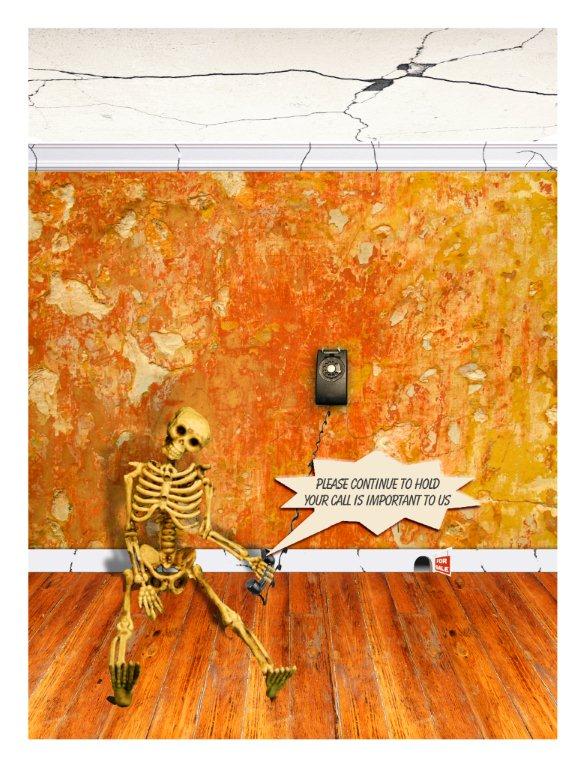
A delightful trawl by Neil Kelly through the call centre industry.
Picture by Neil Kelly
Are there any more annoying phrases in the English language than “your call is important to us“, or “we are experiencing particularly high call volumes“?
In 2007 companies worldwide spent some $280 billion on outsourced call-centre services, according to NASSCOM, a call-centre trade group in Delhi. Much of India’s call-centre industry, which employs roughly 300,000 agents, is located outside the ring road that encircles Bangalore, in a string of smart new business parks with tidy lawns and private security. Were it not for the stray dogs, a visitor could be forgiven for mistaking the area for Silicon Valley.
Meanwhile in Australia …
Meanwhile …… back in Wales in the United Kingdom … listen to this call centre handling a complaint from an ASDA customer – listen right to the end!
Thanks to David from neatorama.com I was able to put together a medley of hold music and without resorting to The Four Seasons! Hope to have The Top Twenty Hold Music Songs out in time for Christmas.
Finally, you may be interested in reading Your Call Is Important to Us: The Truth about Bullshit by Laura Penny which is available as a free eBook here.
In a sense this piece today connects with the conclusions from my review of David Kauders’ new book The Greatest Crash; that we are transitioning into a new era.
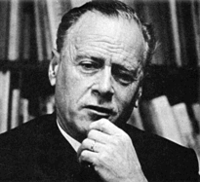
That’s why I was fascinated to come across a long essay about Herbert Marshall McLuhan written by Michael Valpy and published in the The Globe and Mail last July.
Let me quote some extracts from that article to illustrate why I made the connection with my book review.
The University of Toronto professor of English credited with foreseeing the Internet 30 years before it was invented and broadcasting scores of ideas about how electronic communications media was changing the way humans think has been redeemed from labels of McLuhanacy and psuedo-scientific charlatanism.
His work no longer is described, as it was in one erudite journal of the 1970s, as “a hoax so gigantic that it shows every sign of becoming an international intellectual scandal.”
Later on in the article,
Deciding recently to pay a visit to the McLuhan coach house, she wrote: “To be perfectly honest, I had never heard of McLuhan until I moved into residence at SMC, and accidentally stumbled into the book and media studies program. But as I quickly learned, Marshall McLuhan is kind of a big deal. You know that phrase that you hear everywhere: ‘The medium is the message?’ Yeah, that was McLuhan.”
And McLuhan’s problem – one of his problems – is that his message couldn’t escape his medium. As Douglas Coupland points out in a 2009 McLuhan biography, the wonderful, whimsical, boundlessly optimistic and imaginative sixties society that embraced him and lapped up his ideas morphed into the gloom of a change-fatigued seventies society that tired of hearing from him. Yet the brand remained strong. “You know that phrase that you hear everywhere: ‘The medium is the message?’” Ms. Kellogg asks us. “Yeah, that was McLuhan.”
Think of his intellectual history as a journey between two mountain peaks passing through a shadowed valley.
When one thinks of the power of the many new tools we lump under the title ‘social media’ then it’s easy to think that the way that humans are now communicating will have profound implications. Even this humble Blog was read by over 31,000 in the month of October. Back to the article,
McLuhan believed that each new technology created a new human environment and thus a new way of thinking. The medium-is-the-message meant that the content of electronic media is insignificant; it is the medium itself that has the greater impact on the environment. In other words, it wasn’t what we were seeing on TV that was important; it was the fact that we were watching TV (and not doing other things) that altered our brains.
And because, as Prof. Francis points out, McLuhan saw humans as essentially communicative animals, he believed it was the technologies of communication that were primary in shaping who we were, what we thought, and how we acted, with effects that often were subliminal and therefore not recognized.
Finally, the article concludes thus,
To truly understand McLuhan and his ideas, says Prof. Scheffel-Dunand, students have to read him.
Most students of McLuhan today, she says, read scholars who write about McLuhan rather than read McLuhan himself. Which is a mistake, she says, because McLuhan wrote as a poet: he wrote metaphorically, aphoristically, he wrote in what he called “mosaics.”
Biographer Philip Marchand agrees. “My suggestion for students is to begin with the articles written by McLuhan – ‘Acoustic Space’ and ‘The Effect of the Printed Book on the language of the 16th century’ and a couple others that appear in the anthology entitled Explorations in Communication. These articles are lucid, comprehensible introductions to McLuhan’s thought.”
To rejoin UpbeaT blogger Emily Kellogg on her coach house tour: “I don’t want to bore you, dear readers, but I just can’t help gushing. I dig this stuff. These kind of conversations, are the things that make an undergraduate degree worth pursuing. They’re the ones that give you an adrenalin rush because you’re thinking so quickly – and your brain kind of feels like a trapeze artist jumping from idea to idea.
There’s also something innately cool about having an intellectual conversation that ranges from iPhones to Heidegger in five seconds flat in the place that housed Marshall McLuhan as he wrote the books that revolutionized the field of media research.”
Ms. Kellogg: 2011 medium of McLuhan’s message.
Michael Valpy is a freelance writer based in Toronto.




 Learning from Dogs