Category: Technology

Spaceship Earth

Home to everything, including humans and dogs!

This is a TED video presented by Will Marshall. A quick web search reveals that Will Marshall is:

Co-founder & CEO of Planet Labs.

Planet Labs is helping share near-real-time images of our planet, from a constellation of earth-observing satellites.

In his Twitter bio, William Marshall calls himself a “quantum physicist cum space scientist in search of world peace and harmony.” And when you hear about his job, it falls into place: he and his cofounders at Planet Labs want to show the earth what it looks like, almost real time, via a new network of compact, capable satellites. They hope that up-to-date images will inform future humanitarian and commercial projects all over our planet; it will enable people to make decisions that enable us to take care of our dearest spaceship, spaceship earth.

Before co-founding Planet Labs, Marshall was a scientist at NASA/USRA, where he helped to formulate the Small Spacecraft Office at NASA Ames Research Center. He worked on lunar orbiter mission LADEE, lunar impactor mission LCROSS and the groundbreaking PhoneSat project, building satellites out of consumer parts.

It was only a couple of mouse clicks to find the website for Planet Labs.

All of which is my way of introducing the TED video but not before thanking next door neighbour Larry Little who emailed me the link to the video.

Published on Nov 18, 2014
Satellite imaging has revolutionized our knowledge of the Earth, with detailed images of nearly every street corner readily available online. But Planet Labs’ Will Marshall says we can do better and go faster — by getting smaller. He introduces his tiny satellites — no bigger than 10 by 10 by 30 centimeters — that, when launched in a cluster, provide high-res images of the entire planet, updated daily.

You all have a lovely weekend.

More on those happy dogs.

Indebted, again, to Chris Gomez.

Jean and I were out for much of yesterday resulting in me not sitting down to compose today’s post until nearly 5pm (PDT) in the afternoon. I must admit I didn’t have a clue as to what to write about. Then sitting in my email inbox was another email from Chris Gomez with this short but valuable sentence, “Love is real….Check this out! (via ABC7 Los Angeles local news iOS app) Study reveals scientific reason your dog is happy to see you.” Chris included a link to the ABC7 news item. I’m republishing it here.

ooOOoo

STUDY REVEALS SCIENTIFIC REASON YOUR DOG IS HAPPY TO SEE YOU

A new study explains why your dog gets so happy to see you. (Shutterstock)

Tuesday, August 11, 2015 11:04AM

Is your dog overwhelmed with joy anytime you walk through the door? There’s a scientific reason behind their excitement, a new study shows, and it’s not just because you feed them.

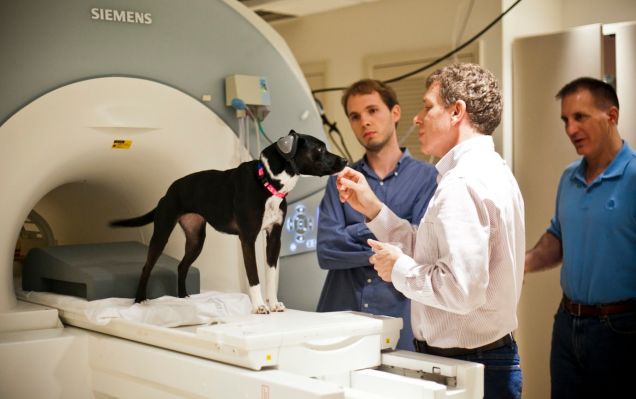
Researchers at Emory University used functional magnetic resonance imaging (fMRI) to scan dogs’ brains for activity when they were shown images of dog faces, human faces and ordinary objects.

The dogs’ temporal lobes lit up “significantly more” when presented with the faces than with the objects. These findings suggest that dogs may recognize both human and dog faces.

Facial recognition causes dog brains to activate in the same areas as in monkey and human brains, the study found. This is separate from the “reward areas” that would be triggered by anticipation of food.

“What we’re finding with the imaging work is that dogs love their humans-and not just for food,” researcher Gregory Berns told io9. “They love the company of humans simply for its own sake.”

“The existence of a face-selective region in the temporal dog cortex opens up a whole range of new questions to be answered about their social intelligence,” the researchers explained, such as whether dogs can understand different facial expressions and whether they can read body language.

This isn’t the first time scientists have explored what makes dogs’ tails wag with excitement when reunited with their owners. A January study that Berns was also involved in found that dogs have a positive reaction to the scent of familiar humans compared with other smells, even those of other dogs.

The results of that study “suggested that not only did the dogs discriminate that scent [of familiar humans] from the others, they had a positive association with it.”

A 2013 behavioral study found that dogs can show when they’re happy to see their owners by lifting their eyebrows. Their left eyebrow went up when they saw their respective owners, the study found. They didn’t have this reaction for other things that may excite them, such as attractive toys.

ooOOoo

Granted there was some overlap with Monday’s post but there was more than enough in the ABC7 article to warrant sharing it with you.

Thanks again, Chris.


The happiness of dogs

Why are dogs so very happy to see us?

When I first started writing this blog, more than six years ago now, I had no idea whatsoever that the community of friends who read and follow Learning from Dogs would develop to the point where the volume of ideas and suggestions sent in are, are by far, the biggest source of creative posts.

Take today’s for example. The link to the article was sent to me by Chris Gomez a little over a week ago and yesterday was the first time that I read the article in full.

It’s a fascinating and incredibly interesting piece.

So with no further ado, besides thanking Chris so much for sending it on, here is: Why Are Dogs So Insanely Happy to See Us When We Get Home?

ooOOoo

Why Are Dogs So Insanely Happy to See Us When We Get Home?

By George Dvorsky

Unlike a certain companion animal that will go unnamed, dogs lose their minds when reunited with their owners. But it’s not immediately obvious why our canine companions should grant us such an over-the-top greeting—especially considering the power imbalance that exists between the two species. We spoke to the experts to find out why.

Call of the Wild

In order to gain an appreciation for dog behavior, it’s important to understand that dogs are descended from wolves (or at least a common wolf-like ancestor). Clearly, the two species, separated by about 10,000 to 15,000 years, share a lot in common.

Like dogs, wolves greet each other with vigorous face licking (Credit: Sander van der Wel CC A-SA 2.0)

But there’s only so much we can extrapolate from wolves; dogs are categorically different by virtue of the fact that their ancestors actively sought out the company of humans. Making matters even more complicated is the realization that Paleolithic era wolves are not the same as the ones around today. Consequently, any inferences we make about dog behavior and how it relates to wolves is pure speculation.

Neuroscientist Gregory Berns, author of How Dogs Love Us, says there’s a fundamental difference between modern wolves and those that lived long ago.

“The most social of those ancestral dogs who were hanging around humans had to have been the most social of those wolves,” he told io9. “They joined humans and eventually evolved to become dogs. The remainder of the wolf population were among the most antisocial of those animals, and did not want to have anything to do with humans.”

That said, however, Berns says we can clearly see behaviors in wolves that are similar to those expressed by dogs. For instance, wolves greet each other by licking each others’ faces. For these pack animals, this licking behavior serves as an important social greeting, but also as a way to check out and determine what the other wolves have brought home in terms of food.

Wolves, says University of Trento neuroscientist Giorgio Vallortigara, greet each other in different ways depending on the type of individual relationships they’ve forged. Feral dogs, he says, behave in similar ways. But the big change in terms of adaptive sociality has been the ability of domesticated dogs to interact with humans using our own communicative signals, such as gazes and gestures.

Dog expert Jessica Hekman, who blogs at DogZombie, has witnessed greeting behaviors among wolves first hand.

“When I’m at Wolf Park in Battle Ground, Indiana, I am always struck by how much some of the specific wolf behaviors resemble behaviors I see in dogs—but so much more ritualized, and sort of writ large,” she told io9. “I witnessed one behavioral study there in which wolves who knew each other well had been separated for a few days and were put back together. The greeting rituals were fascinating, with lots of crouching and chin-licking from the subordinate wolves. You do see these behaviors in dogs, but more sporadically, without such intensity.”

At the same time, dogs exhibit behaviors that are markedly different from wolves. As Hekman explained to me, one of the most dramatic differences between dogs and wolves is the ability of dogs to accept novelty. Simply put, dogs are less fearful than wolves.

“It may sound a little odd to say that a wolf, who can easily kill you, is afraid of you, but that is precisely why they can be dangerous: because they may choose to take proactive measures to protect themselves, using their teeth,” says Hekman. “Dogs are a lot less likely to do this.”

Indeed, given their wolf ancestry, it’s remarkable that dogs get along with humans so well. But as Berns pointed out to me, sociability has turned out to be a rather powerful adaptation, one that has worked a lot better for dogs than it has wolves.

“I mean, look around the world and see how many dogs there are,” he says. “With dogs, it’s proven to be a highly effective evolutionary strategy. There are in the order of tens of millions of dogs in the world, so in many ways, dogs have out-evolved wolves.”

Berns says that whatever the sociality that dogs have evolved, one of the defining traits of a dog is the degree to which they will interact with humans as well as other animals.

How Dogs See Humans

A key aspect of Berns’ brain imaging research is to study how dogs perceive us. We humans know that dogs are a separate species, but are dogs cognizant of this as well? Or do they see us as members of their pack, or as some kind of weird dog?

Callie gets outfitted with ear protection prior to entering the noisy fMRI machine. The research team includes, from left, Andrew Brooks, Gregory Berns and Mark Spivak. (Credit: Bryan Meltz, Emory University)

According to Berns’ research, dogs that are presented with certain smells in scanners can clearly tell the difference between dogs and humans, and also discern and recognize familiar and strange odors. In particular, the scent of a familiar human evokes a reward response in the brain.

“No other scent did that, not even that of a familiar dog,” Berns told io9. “It’s not the case that they see us as ‘part of their pack as dogs,’ they know that we’re something different— there’s a special place in the brain just for us.”

Berns stresses that dogs are social with us not just because of their scavenging tendencies.

“What we’re finding with the imaging work is that dogs love their humans—and not just for food,” he says. “They love the company of humans simply for its own sake.”

Hekman says it’s hard to know what dogs are thinking, but she suspects they understand that we’re not quite like them. As evidence, she points to aggressiveness in dogs as it’s directed to other dogs and humans—differences that aren’t correlated. She says it’s quite common for a dog to have a problem with one and not the other. In other words, dogs appear to perceive other dogs as one group, and humans as a separate group. What’s more, dogs will seek the help of humans and not other dogs—a possible sign that dogs understand that humans have resources that dogs do not, and are thus a different kind of social entity.

But do dogs see us as part of the pack?

“It’s important to note that a pack of wolves is a family—literally, usually mom, dad, puppies, and some young offspring from previous years who haven’t gone off on their own yet,” says Hekman. “Do dogs see us as part of their family? I think they do.”

So Happy to See Us

Virtually all experts agree that the happiness dogs feel is comparable to what humans experience, and that it’s similar to how humans feel towards each other.

One happy dog (Credit: Lars Curfs/CC-A-SA 3.0)

“All the things that we’ve done with the brain imaging—where we present certain things to the dogs and map their reward responses—we see analogous brain responses in humans,” says Berns. “Seeing a person that’s a friend or someone you like, these feelings are exactly analogous to what a dog experiences.”

Berns says that dogs don’t have the same language capacities as humans, and that they’re not capable of representing things in their memory like we can. Because dogs don’t have labels or names for people, he suspects that they have an even purer emotional response; their minds aren’t filled with all sorts of abstract concepts.

It’s also important to consider the dog-human bond and the degree of attachment each feels toward each other. When used with dogs, the “Strange Situation Test” devised by developmental psychologist Mary Ainsworth, suggests that during absence and then at the rejoining with the owners, a dog’s behavior is very similar to that observed in children and mothers in similar situations. As Vallortigara pointed out to me, it’s appropriate and correct to speak of the dyad dog/owner in terms of “attachment.”

A dog’s particular greeting, however, is dependent on several factors, such as the dog’s temperament, the personality of the owner, the nature of their relationship, the level of stress and anxiety, and the dog’s tendency/capacity for self-control.

It’s important to note, however, that stress manifests differently in dogs than it does in humans.

“The separation from the owner for the dog is not voluntary,” says Vallortigara. “It is always unnatural for a dog to detach and abandon the pack.”

Dogs will sometimes go solo on a temporary basis if they’re sufficiently motivated to do so, but they do it knowing that social contact can be resumed at virtually any time.

“The exaggerated level of greeting that can be observed in some dogs is likely due to the fact that they have not yet learned to accept the possibility of non-voluntary detachment,” says Vallortigara.

When trying to appreciate a dog’s over-the-top greeting, Hekman says we need to imagine what it was like for a dog to be alone all day while we were gone.

So bored. (Credit: Pixabay/Pinger/10 images/CC0 Public Domain)

“This dog probably had a pretty boring day without much enrichment, and moreover may have been alone all day, which is unpleasant for a social animal,” she told io9. “So in addition to being glad to see us, they are probably feeling some relief that they will get to do something interesting, like go for a walk, and have someone else around. Some people are able to have a dog walker come in or send their dogs to daycare—this is a great solution to what can otherwise be a difficult lifestyle for a dog.”

And as Berns points out, the greeting ritual is a social bonding mechanism—but it’s also a function of curiosity.

“When they jump up, they’re trying to lick you in the face,” says Berns. “Part of that is a social greeting, but they’re also trying to taste and smell you to figure out where you’ve been and what you’ve done during the day. So some of it is curiosity. If I’ve been with other dogs, for instance, my dogs know it, and they resort to sniffing intensely.”

How to Greet Your Dog Back

It’s obviously important to respond to your dog when you get home, but according to Marcello Siniscalchi, a veterinary physician from the University of Bari, how you should react will depend on the context of the situation and the needs of the dog itself.

“The greeting ritual will vary from dog to dog because any individual dog perceives and reacts to detachment from the owner in a very personal way,” he told io9. “Some dogs need to be greeted, in others it is better to avoid any escalation in the level of excitation, others need to learn strategies for coping with the stress associated with detachment.”

Hekman says there’s definitely a tension between our buttoned-down greeting rituals (“Hi, honey, I’m home!”) and theirs (“I want to lick you on the face repeatedly!”).

happydogs5

“My dog Jenny is a very enthusiastic greeter, and I hate having her jump all over me in her efforts to get at my face,” she says. “So I have taught her to get on a couch when I come home. I generally have to remind her to ‘get on your couch,’ but now she does with great enthusiasm, and waits for me to come over. The couch puts her more on my level, so she doesn’t have to jump, and I can bend forward and let her lick my cheek, which is a very important part of the ritual for her.”

Hekman stresses that, for any dog, it’s important for us not to tell them what not to do (e.g. “don’t jump on me!”), but to tell them what to do.

“Many is the retriever owner who has taught their dog to get a toy when they come home to channel their excitement,” she added.

The main point, she says, is that it’s important for dogs to have the greeting ritual, but it can be redirected in ways to make it easier on the owners such that everyone enjoys it.

ooOOoo

So a huge thank you to all of you that send in remarkable items for Learning from Dogs.

Fly like a bird.

The power and freedom of the air.

Yesterday was heading to be a very hot day in Merlin, Oregon with top temperatures forecasted to be around the mid-90’s, or 34-36 deg. C in ‘new money’. The light westerly wind must have been generating some up currents, aided and abetted by the rising hot air, for there were a number of black ravens soaring in a thermal. Watching the birds circle and climb in the thermal current without needing to flap their wings took me back too many years.

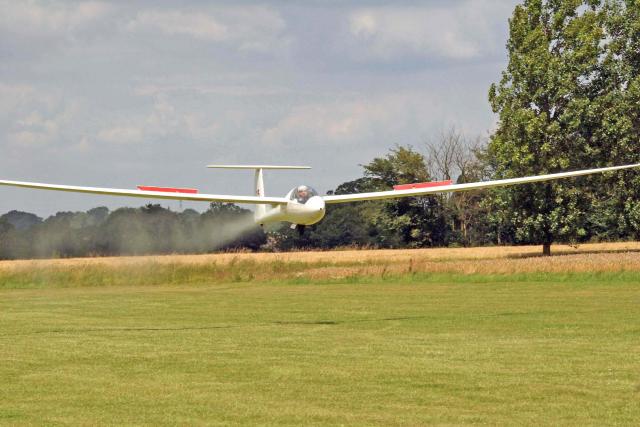
It took me back to a June day in 1981 where I experienced my first glider flight (sailplane in American speak) at the Rattlesden Gliding Club in Suffolk, East Anglia. I’m delighted to see that the Club is still an active one, as their website confirms. Although I subsequently went on to gain my private pilot’s licence (PPL) there are still times when I miss the magic, the pure magic, of gaining altitude in a glider in a beautiful thermal.

Modern fibreglass glider coming into land at Rattlesden G.C.

So what prompted this flood of flying nostalgia!! An item that was published on the BBC website earlier in the year.

ooOOoo

Fly like a bird: The V formation finally explained

By Victoria Gill, Science reporter, BBC News

The mystery of why so many birds fly in a V formation may have been solved.

Scientists from the Royal Veterinary College fitted data loggers to a flock of rare birds that were being trained to migrate by following a microlight. This revealed that the birds flew in the optimal position – gaining lift from the bird in front by remaining close to its wingtip.

The study, published in the journal Nature, also showed that the birds timed their wing beats.

A previous experiment in pelicans was the first real clue to the energy-saving purpose of V formations. It revealed that birds’ heart rates went down when they were flying together in V.

But this latest study tracked and monitored the flight of every bird in the flock – recording its position, speed and heading as well as every wing flap.

This was possible thanks to a unique conservation project by the Waldarappteam in Austria, which has raised flocks of northern bald ibises and trained them to migrate behind a microlight.

The aim of this unusual project is to bring the northern bald ibis back to Europe; the birds were wiped out by hunting, so the team is retraining the birds to navigate a migration route that has now been lost.

Fitting tiny data loggers to these critically endangered ibises showed that the birds often changed position and altered the timing of their wing beats to give them an aerodynamic advantage.

Lead researcher Dr Steven Portugal explained: “They’re seemingly very aware of where the other birds are in the flock and they put themselves in the best possible position.”

This makes the most of upward-moving air generated by the bird in front. This so-called “upwash” is created as a bird flies forward; whether it is gliding or flapping, it pushes air downward beneath its wings.

“Downwash is bad,” explained Dr Portugal. “Birds don’t want to be in another bird’s downwash as it’s pushing them down.” But as the air squeezes around the outside of the wings, it creates upwash at the wingtips.

“This can give a bit of a free ride for the bird that’s following,” said Dr Portugal. “So the other bird wants to put its own wingtip in the upwash from the bird in front.”

 The other really surprising result, the researchers said, was that the birds also “timed their wing beats perfectly to match the good air off the bird in front”.

“Each bird [kept] its wingtip in the upwash throughout the flap cycle,” Dr Portugal explained.

oooo

In a sidebar to that BBC article there is this explanation about Flapping and Flying:

As a bird’s wings move through the air, they are held at a slight angle, which deflects the air downward. This deflection means the air flows faster over the wing than underneath, causing air pressure to build up beneath the wings, while the pressure above the wings is reduced. It is this difference in pressure that produces lift.

Flapping creates an additional forward and upward force known as thrust, which counteracts the weight and the “drag” of air resistance. The downstroke of the flap is also called the “power stroke”, as it provides the majority of the thrust. During this, the wing is angled downwards even more steeply.

You can imagine this stroke as a very brief downward dive through the air – it momentarily uses the animal’s own weight in order to move forward. But because the wings continue to generate lift, the creature remains airborne. In each upstroke, the wing is slightly folded inwards to reduce resistance.

ooOOoo

The BBC piece also included this wonderful short video:

http://www.youtube.com/watch?v=Svg_VN1N8xk

This piece has nothing to do with dogs unless one extends the mindset to the magic of the complete natural world.

UPDATE

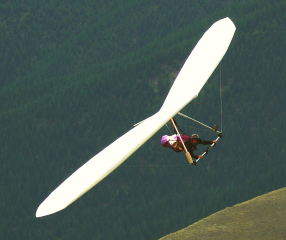
This is a photograph of George Ball hang-gliding – see his reply below.

hanggliding

Understanding animals and pain.

Do animals feel pain in the way that we humans do?

Last week, shortly after Paloma had been let out for a ‘call of nature’, she emitted the most terrible of screams. No other dog had gone near her and there was no immediate explanation for the heart-rending cry.

While this was not the first time that Paloma had suddenly cried out for no apparent reason this was by far the worst cry that Paloma had made so Jean and I thought that an immediate visit to our local vet practice was sensible, that being Lincoln Road Veterinary Clinic. We were seen by Dr. Goodbrod and he came to the conclusion that she had a spinal disc problem: Paloma is thirteen years old.

Paloma, December 29th 2011

All of which serves as a relevant introduction to a recent essay over on The Conversation blogsite. The essay was written by Professor Andrea Nolan, who became Principal and Vice-Chancellor of Edinburgh Napier University in July 2013. (Andrea graduated as a veterinary surgeon from Trinity College Dublin, Ireland.)  Her essay is called Do animals feel pain like we do? and is republished here within the terms of The Conversation blogsite.

ooOOoo

Do animals feel pain like we do?

July 7, 2015 6.35am EDT

Not hard to read. Eddy Van 3000, CC BY-SA

Pain is a complex experience involving sensory and emotional components: it is not just about how it feels, but also how it makes you feel. And it is these unpleasant feelings that cause the suffering we humans associate with pain.

The science of suffering is well documented in the book of the same name by Patrick Wall. We know that animals certainly feel physical pain, but what is less clear is whether this emotional suffering that we feel can be said to be true of animals. And if it is, how we go about measuring it.

As a subjective emotion, pain can be experienced even in the absence of physical tissue damage, and the level of feeling can be modified by other emotions including fear, memory and stress. Pain also has different dimensions – it is often described in terms of intensity but it also has “character”, for example the pain of a pin-prick is very different from that of a toothache, a slipped disc or labour pain. Nearly all of us have experienced pain in our lives, but for each person, the experience is uniquely individual.

To understand or appreciate others’ pain we mostly rely on what they report. But there are many who either cannot communicate their pain verbally, babies for example, or effectively, like those with dementia or learning disabilities. In these situations, others must use a range of factors to judge the presence of pain and its impact on the individual.

Pain is not all bad – it serves a protective function, to keep us away from further danger, to help us heal, for example by stopping us from putting weight on a sprained ankle. But if it isn’t managed effectively it can have a major negative impact on our lives inducing fear, anger, anxiety or depression – all emotions which may in turn exacerbate it. And chronic pain is a major concern to millions of individuals and to our societies around the world.

Pain in animals

The nature of pain is perhaps even more complex in animals. How pain is sensed and the physical processes behind this are remarkably similar and well conserved across mammals and humans. There are also many similarities in pain behaviours across the species, for example they may stop socialising with people and/or other animals, they may eat less, they may vocalise more and their heart rate may rise. The capacity of animals to suffer as sentient creatures is well established and enshrined in law in many countries, however we don’t understand well how they actually experience pain.

Some aspects of the experience and expression of pain are not likely to be the same as in humans. First, animals cannot verbally communicate their pain. Dogs may yelp and you may notice behaviour change but what about your pet rabbit, cat, tortoise or horse? Animals rely on human observers to recognise pain and to evaluate its severity and impact. Without the ability to understand soothing words that explain that following surgery to repair a bone fracture, their pain will be managed (hopefully) and will subside, animals may also suffer more when in pain than we do.

Loud and clear.  William Heron, CC BY-SA
Loud and clear. William Heron, CC BY-SA

The debate around animals’ capacity to experience pain and suffer raged in the 20th century, but as we developed a greater understanding of pain, and studied its impact on the aspects of animal life that we could measure, we veterinary surgeons, along with many behavioural and animal scientists, recognised the significant impact of untreated pain, and we now believe this experience causes them to suffer.

For example, we know that animals and indeed birds with clinical signs of pain (limping) will choose to eat food containing pain-killing drugs (analgesics) over untreated food, and by measures of behaviour, they will improve.

Similarly many studies in a range of domestic animals have indicated that animals who have had surgery but not had adequate pain relief demonstrate behaviours reflective of pain which are alleviated when they are treated with analgesics such as morphine.

We also know that it is not just our dogs and cats that can suffer pain – there is an equally strong evidence base for the presence and negative impact of pain in sheep, cattle, pigs and horses among other species. But recognising pain in these different species is part of the complexity associated with animal pain. Managing it in animals that we rear for food and those that we keep as companions is equally challenging.

Behavioural disturbances have long been recognised as potential indicators of the presence of pain in animals. However it is important to recognise that each species manifests its own sometimes unique pain-related behaviours or behavioural disturbances in different ways, often rooted in the evolutionary process, so prey species, for example, are less likely to “advertise” an increased vulnerability to predators. Dogs may become aggressive, or quiet, or may stop socialising with “their” humans and other dogs. Sheep, on the other hand, may appear largely the same when casually observed.

Some expressions of pain however may be conserved. A recent paper suggested commonality in some features of facial expression during acute pain experiences in several animal species and humans.

These findings and much other work are being incorporated into tools to evaluate animal pain, because in the words of Lord Kelvin, the great Glaswegian scientist behind the Kelvin temperature scale, said: “When you cannot measure it, when you cannot express it in number … you have scarcely, in your thoughts, advanced to the stage of science, whatever the matter may be”.

So in order to treat and manage pain effectively we must measure it.

And there is a huge demand for these tools. The Glasgow Composite Pain Scale, a simple tool to measure acute pain in dogs and first published in 2007, has been translated into six languages. It is used in veterinary practices to measure pain to treat it effectively. It has also been used to evaluate the effectiveness of new analgesic drugs that are being developed by animal health companies. Tools to measure the impact of chronic pain, such as osteoarthritis, on the quality of life of dogs are now available and are a significant advance in managing chronic conditions.

There is now a global effort to raise awareness of pain in animals. Recently the World Small Animal Veterinary Association launched the Global Pain Council and published a treatise for vets and animal keepers worldwide to promote pain recognition, measurement and treatment. Dogs may be man’s best friend, but for all those who work with, care for and enjoy the company of animals, understanding how their pain feels is essential to improving the quality of their lives.

ooOOoo

Back to Paloma. Dr. Goodbrod prescribed muscle relaxers and a mild pain killer.

Dear, sweet Paloma. Found by Jean on a Mexican street in Guaymas in 2005 with her eight puppies. Jean found homes for all the eight puppies in the USA and adopted Paloma because she was very wild.

Paloma, Oregon, January 26th, 2014.

Just doing one thing at a time.

The way a dog focuses on the immediate task holds a very important lesson for us.

It’s a safe bet to claim that any dog owner has, from time to time, envied the way a dog so perfectly lives in the present. Then let’s not even go to the comparison between dogs and humans when it comes to relaxing!

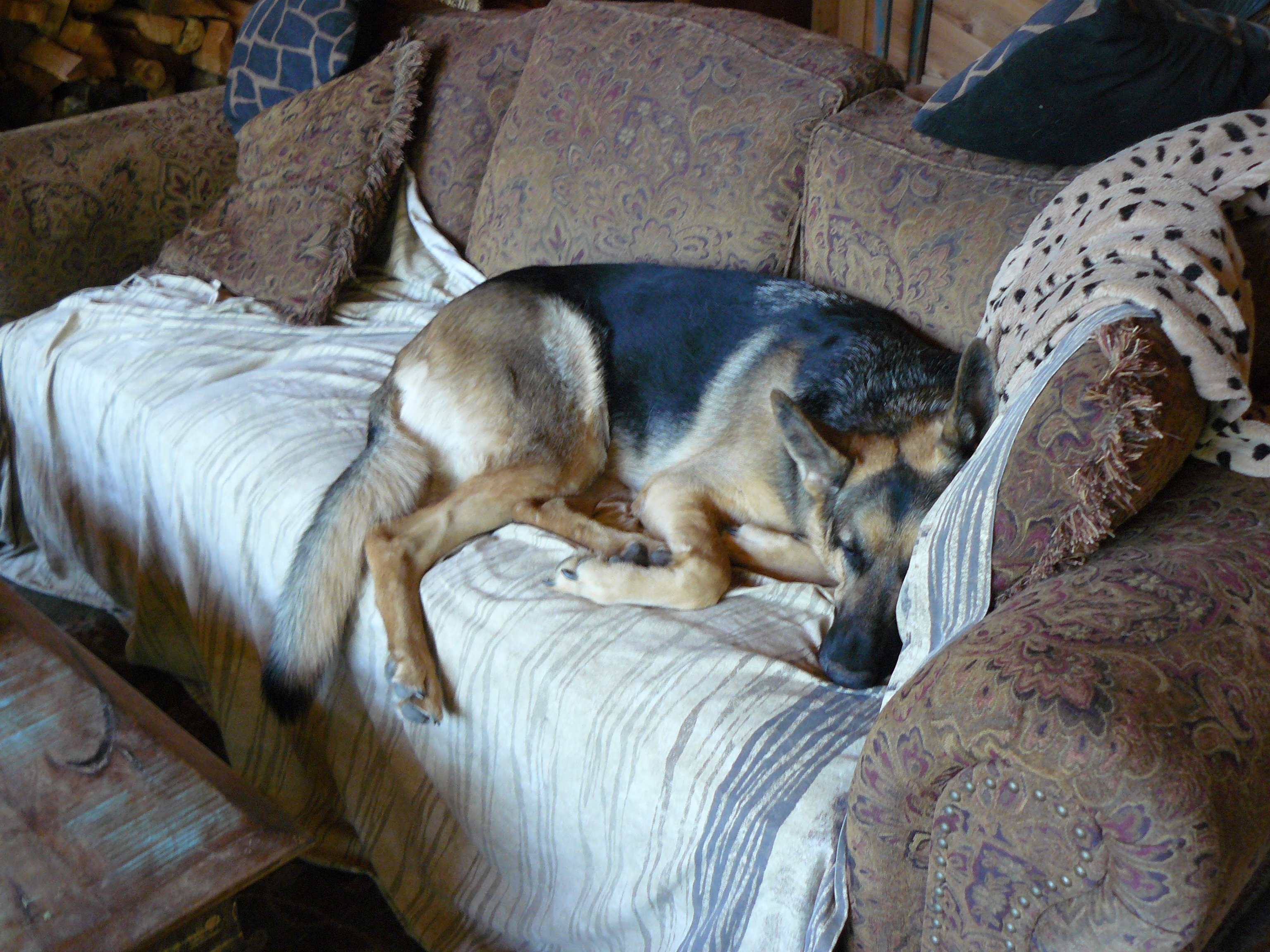
Hazel taking a mid-morning break yesterday.
Hazel taking a mid-morning break on Tuesday.

These opening thoughts were prompted by a recent article that was published on The Conversation. The article criticised, rightly in my opinion, the madness (my word) of how many of us live these days, and with particular respect to ‘multi-tasking’. It’s a sobering reminder of the value of letting go and is republished here within the terms of essays published on The Conversation.

ooOOoo

The value of unplugging in the Age of Distraction

July 7, 2015 4.59am EDT

Author: John Rennie Short – Professor, School of Public Policy at University of Maryland, Baltimore County.

Small device, but very demanding. aciej_ie/flickr, CC BY-NC-ND

A common experience: you are walking down the street and someone is walking in the opposite direction toward you. You see him but he does not see you. He is texting or looking at his cellphone. He is distracted, trying to do two things at the same time, walking and communicating.

There is also the telltale recognition of a car driver on a phone; she’s driving either too slowly or too fast for the surrounding conditions, only partly connected to what is going on around her. Connected to someone else in another place, she is not present in the here and now.

These types of occurrences are now common enough that we can label our time as the age of distraction.

A dangerous condition

The age of distraction is dangerous. A recent report by the National Safety Council showed that walking while texting increases the risk of accidents. More than 11,000 people were injured last year while walking and talking on their phones.

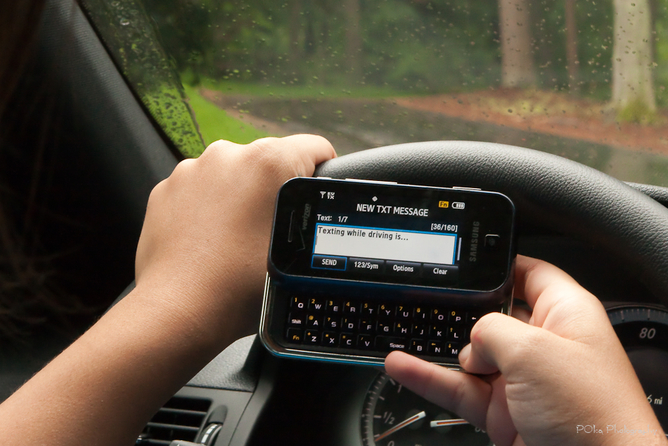
Really bad idea: texting while driving.  Paul Oka/flickr, CC BY-NC
Really bad idea: texting while driving. Paul Oka/flickr, CC BY-NC

Even more dangerous is the distracted car driver. Distracted drivers have more fluctuating speed, change lanes fewer times than is necessary and in general make driving for everyone less safe and less efficient.

Texting while driving resulted in 16,000 additional road fatalities from 2001 to 2007. More than 21% of vehicle accidents are now attributable to drivers talking on cellphones and another 5% were text messaging.

Cognitive impairment

Multitasking relatively complex functions, such as operating handheld devices to communicate while walking or driving, is not so much an efficient use of our time as a suboptimal use of our skills.

We are more efficient users of information when we concentrate on one task at a time. When we try to do more than one thing, we suffer from inattention blindness, which is failing to recognize other things, such as people walking toward us or other road users.

Digital devices, which are proliferating in our lives, encourage multitasking, but does this really help our performance?  Thomas Hawk/flickr, CC BY-NC-SA
Digital devices, which are proliferating in our lives, encourage multitasking, but does this really help our performance? Thomas Hawk/flickr, CC BY-NC-SA

Multitaskers do worse on standard tests of pattern recognition and memory recall. In a now classic study, researchers at Stanford University found that multitaskers were less efficient because they were more susceptible to using irrelevant information and drawing on inappropriate memories.

Multitasking may not be all that good for you either. A 2010 survey of over 2,000 8- to 12-year-old girls in the US and Canada found that media multitasking was associated with negative social indicators, while face-to-face contact was associated with more positive social indicators such as social success, feelings of normalcy and hours of sleep (vital for young people).

Although the causal mechanism has yet to be fully understood – that is, what causes what – the conclusion is that media multitasking is not a source of happiness.

Distraction-seeking creatures?

There are a number of reasons behind this growing distraction.

One often-cited reason is the pressure of time. There is less time to accomplish all that we need to do. Multitasking then is the result of the pressure to do more things in the same limited time. But numerous studies point to the discretionary use of time among the more affluent, and especially more affluent men. The crunch of time varies by gender and class. And, paradoxically, it is less of an objective constraint for those who often articulate it most.

Although the time crunch is a reality, especially for many women and lower-income groups, the age of distraction is not simply a result of a time crunch. It may also reflect another form of being. We need to reconsider what it means to be human, not as continuous thought-bearing and task-completing beings but as distraction-seeking creatures that want to escape the bonds of the here-and-nowness with the constant allure of someone and somewhere else.

Media theorist Douglas Rushkoff asserts that our sense of time has been warped into a frenzied present tense of what he calls “digiphrenia,” the social media-created effect of being in multiple places and more than one self all at once.

There is also something sadder at work. The constant messaging, emailing and cellphoning, especially in public places, may be less about communicating with the people on the other end as about signaling to those around that you are so busy or so important, so connected, that you exist in more than just the here and now, clearly a diminished state of just being.

There’s greater status in being highly connected and constantly communicating. This may explain why many people speak so loudly on their cellphones in public places.

Reactions

The age of distraction is so recent we have yet to fully grasp it. Sometimes art is a good mediator of the very new.

A video art installation by Siebren Verstag is entitled Neither There nor There. It consists of two screens. On one side a man sits looking at his phone; slowly his form loosens as pixels move to the adjacent screen and back again. The man’s form moves from screen to screen, in two places at one time but not fully in either.

One study that looked at the effect of banning cellphones in schools found that student achievement improved when cellphones were banned, with the greatest improvements accruing to lower-achieving students, who gained the equivalent of an additional hour of learning a week.

On many college campuses, faculty now have a closed-laptop policy after finding students would use their open laptops to skim their emails, surf the web and distract their neighbors. This was confirmed by studies that showed that students with open laptops learned less and could recall less than students with their laptops closed.

We are witnessing a cultural shift occurring with the banning of devices, cellphone usage being curtailed in certain public places and policies banning texting while driving. This is reactive. We also need a new proactive civic etiquette so that the distracted walker, driver and talker have to navigate new codes of public behaviors.

Many coffee stores in Australia, for example, do not allow people to order at the counter when they are on the cellphone, more golf clubs are banning the use of cellphones while on the course and it is illegal in 38 states in the US for novice drivers to use a cellphone while driving.

There is also the personal decision available to us all, one foreshadowed by writer and social critic Siegfried Kracauer, who lived from 1889 to 1966. In a newspaper article on the impact of modernity, first published in 1924, he complained of the constant stimulation, the advertising and the mass media that all conspired to create a “permanent receptivity” that prefigures our own predicament in a world of constant texting, messaging and cellphones.

One response, argued Kracauer, is to surrender yourself to the sofa and do nothing, in order to achieve a “kind of bliss that is almost unearthly.”

One radical response is to unplug and disconnect, live in the moment and concentrate on doing one important thing at a time. Try it for an hour, then for a day. You can even call your friends to tell them about your success – just not while walking or driving, or working on your computer screen or speaking loudly in a public place.

ooOOoo

Oh, did someone mention unplugging and disconnecting?

P1150708
Cleo – unplugged and disconnected.

No post for today.

My connection is so unreliable I am only able to post this – and this took several attempts before it went through!

Not even sure when the service is going to be restored! 😦

Sorry folks!

Protecting the brain.

The joys of growing ever more old!

Last Saturday, in a humorous post called Cognitive Ageing, I wrote:

Or put another way: I can remember everything except the things I forget.

Like many others of my age, the short-term memory is not as sharp as it used to be (not that I can remember when that was! 😉 )

Today’s post is to pass on a recommendation for a programme called Lumosity. It was recommended to me by my local doctor and I signed up in February of this year. Clearly, it is impossible to know, in a scientific way, how much good it has done me but instinctively I feel it has made a strong, positive difference.  Let me quote from their website:

The Science Behind Lumosity

neuroplasticity-banner-77f6a688022811b36d894b9288bd49f3

Neuroplasticity: how the brain is capable of change

Scientists have historically believed that once a person reaches adulthood, their cognitive abilities are immutable. But beginning in the early twentieth century, that theory has been contested by evidence suggesting that the brain’s abilities are in fact malleable and plastic. According to this principle of neuroplasticity, the brain is constantly changing in response to various experiences. New behaviors, new learnings, and even environmental changes or physical injuries may all stimulate the brain to create new neural pathways or reorganize existing ones, fundamentally altering how information is processed.

One of the most dramatic examples of neuroplasticity at work comes from a 2000 brain scan study on London taxi drivers (Maguire et al., 2000). In order to earn a license, London taxi drivers typically spend about two years learning to navigate the city’s serpentine streets. What mark, the study’s researchers wondered, did this long, rigorous period of training leave on taxi drivers’ brains? Under the scrutiny of fMRI scans, 16 male taxi drivers in this study were revealed to have larger hippocampuses than a control group of 50 healthy males of similar ages. And the longer the time spent as a taxi driver, the larger the hippocampus tended to be. As a brain area involved in memory and navigation, the hippocampus likely changed in response to the taxi drivers’ experiences.

Most instances of neuroplasticity-based changes in the brain are much more subtle. But in recent decades, it’s cases like that of the London taxi drivers that have inspired certain members of the scientific community to pursue the next logical step in research: rather than passively waiting to see how the brain might respond to circumstances, is it possible to direct that capacity for change, targeting improvements in specific key abilities?

The science of cognitive training seeks to answer this question. In 2013 alone, 30 cognitive training studies were registered on the government database ClinicalTrials.gov. Lumosity scientists, with the help of outside collaborators, contribute to this research effort: so far, 7 peer reviewed studies have been published using Lumosity as a cognitive training tool for diverse populations, including healthy adults, cancer survivors, elderly people, and children with a genetic disorder.

Maguire, E. A., Gadian, D. G., Johnsrude, I. S., Good, C. D., Ashburner, J., Frackowiak, R. S. J., & Frith, C. D. (2000). Navigation-related structural change in the hippocampi of taxi drivers. Proceedings of the National Academy of Sciences of the United States of America, 97(8), 4398-4403.

Clearly, without trying it out yourself, it’s difficult for me to convey the nature of the ‘games’ that are provided.

What I can do is to republish a review that appeared on the website MD-Health.

Does Lumosity Work?

Lumosity was designed by several leading neuroscientists, which adds an air of credibility to this popular site, and combines the perks of social networking with brain training technology that supposedly makes your brain function at a higher level. But do these brain training games really work? There is plenty of evidence to support and contract the claims made by this popular gaming website, so it is important to look at the facts before making this determination.

What is Lumosity?

Lumosity is a webpage that features several different brain training games. Players are encouraged to create a profile that allows them to track their progress and play certain games that target mental flexibility, memory, problem solving, speed and attention. The idea is that performing these tasks regularly will help “train” your brain to function more effectively.

How Does Lumosity Work?

The web page explains that Lumosity is based on neuroplasticity, which treats the brain like a muscle that needs to adapt when it is presented with new challenges. The idea here is that if you present your brain with harder challenges, the portion of your brain meant to help solve them will grow larger and more functional. Previously it was believed that neuroplasticity was only available in children with brains that were still developing, but recent science leads researchers to believe that this skill is also available for adults.

Lumosity depends on two basic elements when users create their training program. First, users need to use the program regularly. This is similar to creating a daily routine at your local gym to work and tone your muscles. Your routine will not be as effective if you do not stick with it. The second part of this training program depends on users using many different types of games. There are 35 different games available on Lumosity in addition to many different skill levels within these games. Players should use a variety of different games and increase the difficulty level over time to help ensure that they are continuing to challenge the mind. Creating your initial profile gives the player an opportunity to see what weaknesses they have so they can create a routine that is ideal for their situation.

Is Lumosity Effective?

There are several scientific studies that lead scientists to believe that the brain training activities at Lumosity do have an effect on the brain. A study at the University of Michigan found that adults that used brain training games for a regular amount of time saw an improvement in test scores for dual attention asks and memory games in multiple tests. A similar study at Brown University also saw adults exceeding expectations in brain performance after using brain training games to aid in their work. These programs were found to boost the working memory which helps users keep track of tasks they are currently performing.

The thing to remember when analyzing these results is that they came from laboratory conditions. These adults used Lumosity games for hours every day for several months. Users that do not work on a similar schedule will not see these types of results. There is a great deal of evidence that supports the idea that brain training games can help grow and develop the mind, but not necessarily any evidence that Lumosity and the brain training games available here are more effective than other training games that are on the market elsewhere. In general, keeping the mind active and challenging your mind to learn more advanced tasks and ways of thinking are healthy and can help you perform tasks more effectively, and if Lumosity helps you accomplish this, then it can be seen as a positive asset.

There was a review published in The Guardian newspaper back in April, 2013 from which this extract is offered:

According to the website for Lumosity, which devised these games and is one of the best-known internet providers of brain training, setting aside a few minutes each day to complete the above tasks can make you feel “smarter, sharper, and brighter”. By factoring in a mental workout in the same way that we might go to the gym to exercise, we get cleverer and our IQ rockets.

That, at least, is the idea. And there are lots of people who buy it. In recent years, brain training has become a multimillion-pound business with companies such as Jungle Memory, Nintendo and CogniFit developing a wide range of user-friendly neuroscientific puzzles for the average punter. Lumosity itself has grown by 150% year-on-year since its launch in 2005 and now reaches more than 35 million people worldwide. In January alone, the company’s mobile app was downloaded nearly 50,000 times a day and its revenue hit $24m (£16m).

Co-founded by Michael Scanlon after he abandoned his neuroscience PhD at Stanford University, California, the business also has an extensive research programme that studies the effects of computerised cognitive training as well as conducting experiments over the web.

I can also republish another article from the Lumosity website:

The Science Behind Lumosity

study-results-banner-b03eee32c4b930e36629ef65d0eba902


The scientific roots of the Lumosity program

Research has found that certain types of activities may impact the brain more than others (Mechelli et al., 2004; Gaser and Schlaug, 2003; Draganski et al., 2006). It’s believed that as an activity is repeated, the brain tends to fall back on the same set of existing neural pathways. To continue changing, the brain must be exposed to novel, adaptive experiences that challenge it to work in new ways.

Drawing on this idea, Lumosity is designed to give each person a set of exercises that challenge their cognitive abilities.

Lumosity “games” are based on a combination of common neuropsychological and cognitive tasks, many of which have been used in research for decades, and new tasks designed by an in-house science team. Working with experienced game designers, Lumosity neuroscientists have transformed these tasks into over 40 challenging, adaptive games.

Lumosity’s game-based training program is designed to expose your brain to gradually increasing levels of challenges, adapting game difficulty to your individual ability level. As your scores increase, you may encounter new or more difficult games. Modelled from the concept of a physical personal trainer, Lumosity pushes you to operate at the limits of your abilities and stay challenged.

Gaser, C. & Schlaug, G. (2003). Brain structures differ between musicians and non-musicians. Journal of Neuroscience, 23(27), 9240-9245.

Draganski, B., Gaser, C., Kempermann, G., Kuhn, H. G., Winkler, J., Büchel, C., & May, A (2006). Temporal and spatial dynamics of brain structure changes during extensive learning. Journal of Neuroscience, 26(23), 6314-6317.

Mechelli, A., Crinion, J. T., Noppeney, U., O’Doherty, J., Ashburner, J., Frackowiak, R. S., & Price, C.J. (2004). Neurolinguistics: Structural plasticity in the bilingual brain. Nature, 431, 757.

Lumosity is not expensive and while it is impossible to be objective about the positive difference it is giving me I wouldn’t give up on it.

Now where did I leave my car keys???

Welcome to the asylum!

Michael Klare offers convincing proof that the world is mad!

Once again, serendipity has stepped in and provided me with today’s post.

What do I mean?

Well yesterday, I republished in full a recent essay from George Monbiot.  He demonstrated that when it comes to “fiddling while Rome burns” the United Nations takes some beating. This is in the context of 23 years of UN gatherings to control the levels of CO2 in our planet’s atmosphere without attempting, in the slightest, to control the production of coal, oil and gas.  Take this excerpt as an example of our madness.

You cannot solve a problem without naming it. The absence of official recognition of the role of fossil fuel production in causing climate change – blitheringly obvious as it is – permits governments to pursue directly contradictory policies. While almost all governments claim to support the aim of preventing more than 2°C of global warming, they also seek to “maximise economic recovery” of their fossil fuel reserves. (Then they cross their fingers, walk three times widdershins around the office and pray that no one burns it). But few governments go as far as the UK has gone.

In the Infrastructure Act that received royal assent last month, maximising the economic recovery of petroleum from the UK’s continental shelf became a statutory duty. Future governments are now legally bound to squeeze every possible drop out of the ground.

The idea came from a government review conducted by Sir Ian Wood, the billionaire owner of an inherited company – the Wood Group – that provides services to the oil and gas industry. While Sir Ian says his recommendations “received overwhelming industry support”, his team interviewed no one outside either the oil business or government. It contains no sign that I can detect of any feedback from environment groups or scientists.

Then serendipitously, yesterday morning up pops an essay from Michael Klare published on Tom Dispatch that continues to underline the absence, the global absence, of any form of smart thinking.  It is republished today with the kind permission of Tom Engelhardt.

ooOOoo

Tomgram: Michael Klare, Is Big Oil Finally Entering a Climate Change World?

Posted by Michael Klare at 8:00am, March 12, 2015.
Follow TomDispatch on Twitter @TomDispatch.

Welcome to the asylum! I’m talking, of course, about this country, or rather the world Big Oil spent big bucks creating.You know, the one in which the obvious — climate change — is doubted and denied, and in which the new Republican Congress is actively opposed to doing anything about it. Just the other day, for instance, Senate Majority Leader Mitch McConnell wrote a column in his home state paper, the Lexington Herald-Leader, adopting the old Nancy Reagan slogan “just say no” to climate change. The senator from Coalville, smarting over the Obama administration’s attempts to reduce carbon emissions from coal-fired power plants, is urging state governors to simply ignore the Environmental Protection Agency’s proposed “landmark limits” on those plants — to hell with the law and to hell, above all, with climate change. But it’s probably no news to you that the inmates are now running the asylum.

Just weeks ago, an example of Big Energy’s largess when it comes to sowing doubt about climate change surfaced. A rare scientific researcher, Wei-Hock Soon, who has published work denying the reality of climate change — the warming of the planet, he claims, is a result of “variations in the sun’s energy” — turned out to have received $1.2 million from various fossil fuel outfits, according to recently released documents; nor did he bother to disclose such support to any of the publications using his work. “The documents,” reported the New York Times, “show that Dr. Soon, in correspondence with his corporate funders, described many of his scientific papers as ‘deliverables’ that he completed in exchange for their money. He used the same term to describe testimony he prepared for Congress.”

There’s nothing new in this. Big Energy (like Big Tobacco before it) has for years been using a tiny cadre of scientists to sow uncertainty about the reality of climate change. Naomi Oreskes and Erik Conway wrote a now-classic investigative book, Merchants of Doubt, about just how the fossil fuel companies pulled this off, creating a public sense of doubt where a scientific one didn’t exist. Now, the book has been made into a striking documentary film, which has just opened nationally. Someday, perhaps, all of this will enter a court of law where those who knowingly perpetrated fraud on the American and global publics and in the process threatened humanity with a disaster of potentially apocalyptic proportions will get their just desserts. On that distant day when those who ran the planet into the ground for corporate profits have to pay for their criminal acts, Merchants of Doubt will undoubtedly be exhibit one for the prosecution.

In the meantime, TomDispatch regular Michael Klare continues his invaluable chronicling at this site of the depredations of Big Oil on this fragile planet of ours. Tom

Big Oil’s Broken Business Model

The Real Story Behind the Oil Price Collapse
By Michael T. Klare

Many reasons have been provided for the dramatic plunge in the price of oil to about $60 per barrel (nearly half of what it was a year ago): slowing demand due to global economic stagnation; overproduction at shale fields in the United States; the decision of the Saudis and other Middle Eastern OPEC producers to maintain output at current levels (presumably to punish higher-cost producers in the U.S. and elsewhere); and the increased value of the dollar relative to other currencies. There is, however, one reason that’s not being discussed, and yet it could be the most important of all: the complete collapse of Big Oil’s production-maximizing business model.

Until last fall, when the price decline gathered momentum, the oil giants were operating at full throttle, pumping out more petroleum every day. They did so, of course, in part to profit from the high prices. For most of the previous six years, Brent crude, the international benchmark for crude oil, had been selling at $100 or higher. But Big Oil was also operating according to a business model that assumed an ever-increasing demand for its products, however costly they might be to produce and refine. This meant that no fossil fuel reserves, no potential source of supply — no matter how remote or hard to reach, how far offshore or deeply buried, how encased in rock — was deemed untouchable in the mad scramble to increase output and profits.

In recent years, this output-maximizing strategy had, in turn, generated historic wealth for the giant oil companies. Exxon, the largest U.S.-based oil firm, earned an eye-popping $32.6 billion in 2013 alone, more than any other American company except for Apple. Chevron, the second biggest oil firm, posted earnings of $21.4 billion that same year. State-owned companies like Saudi Aramco and Russia’s Rosneft also reaped mammoth profits.

How things have changed in a matter of mere months. With demand stagnant and excess production the story of the moment, the very strategy that had generated record-breaking profits has suddenly become hopelessly dysfunctional.

To fully appreciate the nature of the energy industry’s predicament, it’s necessary to go back a decade to 2005, when the production-maximizing strategy was first adopted. At that time, Big Oil faced a critical juncture. On the one hand, many existing oil fields were being depleted at a torrid pace, leading experts to predict an imminent “peak” in global oil production, followed by an irreversible decline; on the other, rapid economic growth in China, India, and other developing nations was pushing demand for fossil fuels into the stratosphere. In those same years, concern over climate change was also beginning to gather momentum, threatening the future of Big Oil and generating pressures to invest in alternative forms of energy.

A “Brave New World” of Tough Oil

No one better captured that moment than David O’Reilly, the chairman and CEO of Chevron. “Our industry is at a strategic inflection point, a unique place in our history,” he told a gathering of oil executives that February. “The most visible element of this new equation,” he explained in what some observers dubbed his “Brave New World” address, “is that relative to demand, oil is no longer in plentiful supply.” Even though China was sucking up oil, coal, and natural gas supplies at a staggering rate, he had a message for that country and the world: “The era of easy access to energy is over.”

To prosper in such an environment, O’Reilly explained, the oil industry would have to adopt a new strategy. It would have to look beyond the easy-to-reach sources that had powered it in the past and make massive investments in the extraction of what the industry calls “unconventional oil” and what I labeled at the time “tough oil”: resources located far offshore, in the threatening environments of the far north, in politically dangerous places like Iraq, or in unyielding rock formations like shale. “Increasingly,” O’Reilly insisted, “future supplies will have to be found in ultradeep water and other remote areas, development projects that will ultimately require new technology and trillions of dollars of investment in new infrastructure.”

klarepbk2012For top industry officials like O’Reilly, it seemed evident that Big Oil had no choice in the matter. It would have to invest those needed trillions in tough-oil projects or lose ground to other sources of energy, drying up its stream of profits. True, the cost of extracting unconventional oil would be much greater than from easier-to-reach conventional reserves (not to mention more environmentally hazardous), but that would be the world’s problem, not theirs. “Collectively, we are stepping up to this challenge,” O’Reilly declared. “The industry is making significant investments to build additional capacity for future production.”

On this basis, Chevron, Exxon, Royal Dutch Shell, and other major firms indeed invested enormous amounts of money and resources in a growing unconventional oil and gas race, an extraordinary saga I described in my book The Race for What’s Left. Some, including Chevron and Shell, started drilling in the deep waters of the Gulf of Mexico; others, including Exxon, commenced operations in the Arctic and eastern Siberia. Virtually every one of them began exploiting U.S. shale reserves via hydro-fracking.

Only one top executive questioned this drill-baby-drill approach: John Browne, then the chief executive of BP. Claiming that the science of climate change had become too convincing to deny, Browne argued that Big Energy would have to look “beyond petroleum” and put major resources into alternative sources of supply. “Climate change is an issue which raises fundamental questions about the relationship between companies and society as a whole, and between one generation and the next,” he had declared as early as 2002. For BP, he indicated, that meant developing wind power, solar power, and biofuels.

Browne, however, was eased out of BP in 2007 just as Big Oil’s output-maximizing business model was taking off, and his successor, Tony Hayward, quickly abandoned the “beyond petroleum” approach. “Some may question whether so much of the [world’s energy] growth needs to come from fossil fuels,” he said in 2009. “But here it is vital that we face up to the harsh reality [of energy availability].” Despite the growing emphasis on renewables, “we still foresee 80% of energy coming from fossil fuels in 2030.”

Under Hayward’s leadership, BP largely discontinued its research into alternative forms of energy and reaffirmed its commitment to the production of oil and gas, the tougher the better. Following in the footsteps of other giant firms, BP hustled into the Arctic, the deep water of the Gulf of Mexico, and Canadian tar sands, a particularly carbon-dirty and messy-to-produce form of energy. In its drive to become the leading producer in the Gulf, BP rushed the exploration of a deep offshore field it called Macondo, triggering the Deepwater Horizon blow-out of April 2010 and the devastating oil spill of monumental proportions that followed.

Over the Cliff

By the end of the first decade of this century, Big Oil was united in its embrace of its new production-maximizing, drill-baby-drill approach. It made the necessary investments, perfected new technology for extracting tough oil, and did indeed triumph over the decline of existing, “easy oil” deposits. In those years, it managed to ramp up production in remarkable ways, bringing ever more hard-to-reach oil reservoirs online.

According to the Energy Information Administration (EIA) of the U.S. Department of Energy, world oil production rose from 85.1 million barrels per day in 2005 to 92.9 million in 2014, despite the continuing decline of many legacy fields in North America and the Middle East. Claiming that industry investments in new drilling technologies had vanquished the specter of oil scarcity, BP’s latest CEO, Bob Dudley, assured the world only a year ago that Big Oil was going places and the only thing that had “peaked” was “the theory of peak oil.”

That, of course, was just before oil prices took their leap off the cliff, bringing instantly into question the wisdom of continuing to pump out record levels of petroleum. The production-maximizing strategy crafted by O’Reilly and his fellow CEOs rested on three fundamental assumptions: that, year after year, demand would keep climbing; that such rising demand would ensure prices high enough to justify costly investments in unconventional oil; and that concern over climate change would in no significant way alter the equation. Today, none of these assumptions holds true.

Demand will continue to rise — that’s undeniable, given expected growth in world income and population — but not at the pace to which Big Oil has become accustomed. Consider this: in 2005, when many of the major investments in unconventional oil were getting under way, the EIA projected that global oil demand would reach 103.2 million barrels per day in 2015; now, it’s lowered that figure for this year to only 93.1 million barrels. Those 10 million “lost” barrels per day in expected consumption may not seem like a lot, given the total figure, but keep in mind that Big Oil’s multibillion-dollar investments in tough energy were predicated on all that added demand materializing, thereby generating the kind of high prices needed to offset the increasing costs of extraction. With so much anticipated demand vanishing, however, prices were bound to collapse.

Current indications suggest that consumption will continue to fall short of expectations in the years to come. In an assessment of future trends released last month, the EIA reported that, thanks to deteriorating global economic conditions, many countries will experience either a slower rate of growth or an actual reduction in consumption. While still inching up, Chinese consumption, for instance, is expected to grow by only 0.3 million barrels per day this year and next — a far cry from the 0.5 million barrel increase it posted in 2011 and 2012 and its one million barrel increase in 2010. In Europe and Japan, meanwhile, consumption is actually expected to fall over the next two years.

And this slowdown in demand is likely to persist well beyond 2016, suggests the International Energy Agency (IEA), an arm of the Organization for Economic Cooperation and Development (the club of rich industrialized nations). While lower gasoline prices may spur increased consumption in the United States and a few other nations, it predicted, most countries will experience no such lift and so “the recent price decline is expected to have only a marginal impact on global demand growth for the remainder of the decade.”

This being the case, the IEA believes that oil prices will only average about $55 per barrel in 2015 and not reach $73 again until 2020. Such figures fall far below what would be needed to justify continued investment in and exploitation of tough-oil options like Canadian tar sands, Arctic oil, and many shale projects. Indeed, the financial press is now full of reports on stalled or cancelled mega-energy projects. Shell, for example, announced in January that it had abandoned plans for a $6.5 billion petrochemical plant in Qatar, citing “the current economic climate prevailing in the energy industry.” At the same time, Chevron shelved its plan to drill in the Arctic waters of the Beaufort Sea, while Norway’s Statoil turned its back on drilling in Greenland.

There is, as well, another factor that threatens the wellbeing of Big Oil: climate change can no longer be discounted in any future energy business model. The pressures to deal with a phenomenon that could quite literally destroy human civilization are growing. Although Big Oil has spent massive amounts of money over the years in a campaign to raise doubts about the science of climate change, more and more people globally are starting to worry about its effects — extreme weather patterns, extreme storms, extreme drought, rising sea levels, and the like — and demanding that governments take action to reduce the magnitude of the threat.

Europe has already adopted plans to lower carbon emissions by 20% from 1990 levels by 2020 and to achieve even greater reductions in the following decades. China, while still increasing its reliance on fossil fuels, has at least finally pledged to cap the growth of its carbon emissions by 2030 and to increase renewable energy sources to 20% of total energy use by then. In the United States, increasingly stringent automobile fuel-efficiency standards will require that cars sold in 2025 achieve an average of 54.5 miles per gallon, reducing U.S. oil demand by 2.2 million barrels per day. (Of course, the Republican-controlled Congress — heavily subsidized by Big Oil — will do everything it can to eradicate curbs on fossil fuel consumption.)

Still, however inadequate the response to the dangers of climate change thus far, the issue is on the energy map and its influence on policy globally can only increase. Whether Big Oil is ready to admit it or not, alternative energy is now on the planetary agenda and there’s no turning back from that. “It is a different world than it was the last time we saw an oil-price plunge,” said IEA executive director Maria van der Hoeven in February, referring to the 2008 economic meltdown. “Emerging economies, notably China, have entered less oil-intensive stages of development… On top of this, concerns about climate change are influencing energy policies [and so] renewables are increasingly pervasive.”

The oil industry is, of course, hoping that the current price plunge will soon reverse itself and that its now-crumbling maximizing-output model will make a comeback along with $100-per-barrel price levels. But these hopes for the return of “normality” are likely energy pipe dreams. As van der Hoeven suggests, the world has changed in significant ways, in the process obliterating the very foundations on which Big Oil’s production-maximizing strategy rested. The oil giants will either have to adapt to new circumstances, while scaling back their operations, or face takeover challenges from more nimble and aggressive firms.

Michael T. Klare, a TomDispatch regular, is a professor of peace and world security studies at Hampshire College and the author, most recently, of The Race for What’s Left. A documentary movie version of his book Blood and Oil is available from the Media Education Foundation.

Follow TomDispatch on Twitter and join us on Facebook. Check out the newest Dispatch Book, Rebecca Solnit’s Men Explain Things to Me, and Tom Engelhardt’s latest book, Shadow Government: Surveillance, Secret Wars, and a Global Security State in a Single-Superpower World.

Copyright 2015 Michael T. Klare

ooOOoo

Both yesterday’s essay from George Monbiot and Michael Klare’s essay above are not quick reads.  But reading them thoroughly is rewarding because it underlines the degree to which the lives of millions of hard-working citizens comes to naught when big money, power and politics are involved.

Leading edge technology

Or is that crumbling edge technology!

Long-term friend, Bob Derham, recently sent me an item that had been forwarded to him.

It’s about the wonders of the technology that attempts to predict what one is writing; in other words predictive text.

Here’s the story (and to maximise the effect, I have turned on just for today the ‘Read more’ link.)

ooOOoo

THE TEXT

Hi Bob, This is Kevin next door. I’m sorry buddy, but I have a confession to make to you. I’ve been riddled with guilt these past few months and have been trying to pluck up the courage to tell you to your face, but I am at least now telling it in text as I can’t live with myself a moment longer without you knowing. The truth is, I have been sharing your wife, day and night when you’re not around. In fact, probably more than you, particularly in the mornings after you’ve left for work. I haven’t been getting it at home recently, but that’s no excuse I know. The temptation was just too much…. I can no longer live with the guilt and I hope you will accept my sincerest apologies and forgive me. I promise that it won’t happen again. Regards, Kevin.

THE ACTIONS

Bob, feeling anguished and betrayed, immediately went into his bedroom grabbed his gun, and, without a word, shot his wife twice, killing her instantly. He returned to the lounge where he poured himself a stiff drink and sat down on the sofa. He took out his phone to respond to the neighbour’s text and saw he had another message:

Continue reading “Leading edge technology”