Category: Tactics

Lying is OK, that’s official! Duh!

I find this utterly unacceptable – here’s the story
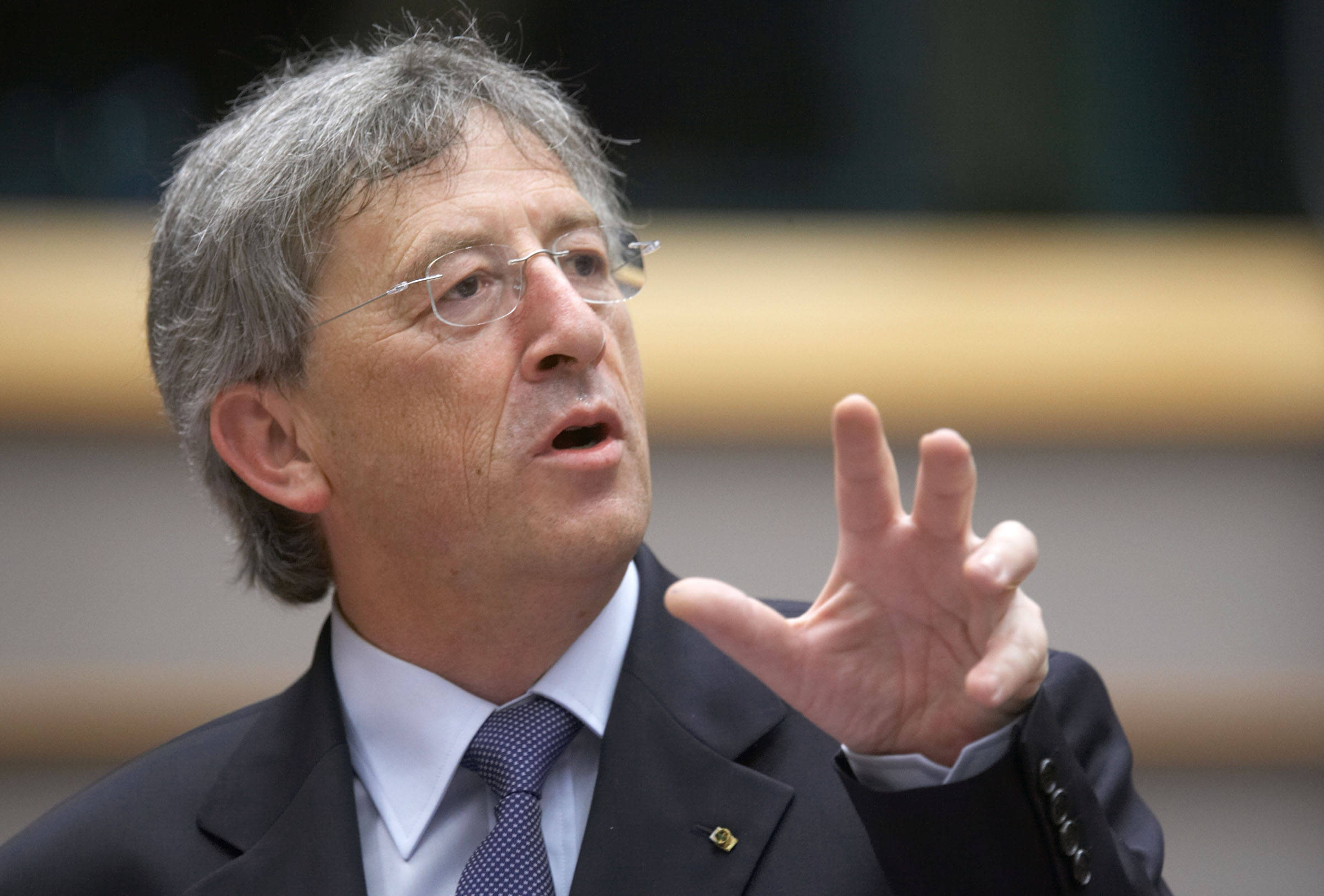
Jean Claude Juncker, lying for Europe!

I was talking to someone in the UK just a couple of days ago, Martin J., about investment matters and we were generally ‘slagging’ off the quality, or rather the lack of quality, of the statements of leading political persons in many fields of government.  Martin then made the statement that Jean Claude Juncker, the Prime Minister of Luxembourg, and the head of the Eurogroup council of eurozone finance ministers had recently stated that “When it becomes serious, you have to lie,”  I was staggered to hear this and asked Martin to supply the details.  Here they are.

Mr. Juncker’s remark had been widely reported and I have chosen the Wall Street Journal’s report to quote from in Learning from Dogs.

MAY 9, 2011, 10:54 AM ET

Luxembourg Lies on Secret Meeting

By Charles Forelle

Is lying considered an appropriate mode of communication for euro-zone leaders?

We have to wonder after a strange episode on Friday evening. Here’s what happened:

Just before 6 p.m., German news magazine Spiegel Online distributed a report saying that euro-zone finance ministers were convening a secret, emergency meeting in Luxembourg that evening to discuss a Greek demand to quit the euro zone.

Calls from reporters flooded in to Guy Schuller, the spokesman for Luxembourg Prime Minister Jean-Claude Juncker, the man who is the head of the Eurogroup council of euro-zone finance ministers.

In a phone call and text messages with two reporters for Dow Jones and the Wall Street Journal, Mr. Schuller repeatedly said no meeting would be held. He apparently said the same to other news outlets; at least one more moved his denials on financial newswires.

Of course, there was a meeting–although not, apparently, to talk about Greece quitting the currency, which would be an extreme step to say the least. Mr. Juncker even said a few words to reporters who had hustled to Luxembourg to stake out the gathering.

Anyway, do read the article in full here.

In that article there is a YouTube video in which Mr. Juncker says “When it becomes serious, you have to lie.”  You can hear it yourself, about 20 seconds into the video despite the sound level being a tad low.

So that’s official then!  Politicians have to lie!  Grand job.  Talking about jobs, don’t suppose Mr. Juncker will lose his.  Or that he will show that, deep down, he is an integrous man and resign his post.

Yes, of course we all understand that what high-profile people say can affect markets and that, at times, one must be careful in terms of what is said.  But lying?  Sorry, for me that will never, ever be acceptable!

What has this to do with dogs?  Simply, dogs don’t lie.

Remarkable people: General Sir Rupert Smith

Conform and/or reform?

Usually, people who have spent a long time in an organisation are steeped in its thinking and its received wisdom. Those who do not fit the mould have difficulty in rising far and may even end up leaving the organisation or being rejected by it.

However, there are people who avoid both outcomes, they fit the mould, and they challenge its thinking. They rise high in the organisation and yet emerge with views which run counter to the common understanding of its purpose. Perhaps they keep their views quiet, at least until they rise above some level where they have sufficient standing based on experience or reputation. To do so, they must very good at what they do and their criticism must be seen, at least on balance, as being constructive.

The utility of force

General Sir Rupert Smith is an impressive independent thinker who combines analysis with clear objectivity; and he has written an important book about it. He has been described as Britain’s foremost “thinking soldier”.

If you’d like to hear a man who has emerged from a substantial military career with a fascinating and important analysis of a major paradigm shift, then you might be interested in his presentation at the Carnegie Council.  He believes that this new era began in 1945 and the first effects were seen in Korea.

“War among the people”

As with so many presentations, the formal content covers the main points and creates the background for discussion; but the subject matter comes alive and the most valuable insights are communicated in the conversations which develop from questions or impromptu stories:

As a fairly young officer, I was in Belfast, responsible for a patch of West Belfast. A bus route came to my area, at the end of its route from Belfast city center. There was a roundabout, and the bus would sit there for twenty minutes and then turn round and go back down into Belfast.

Most Friday nights, somewhere around 9 o’clock in the evening, this bloody bus would get burned. There would be a riot, and people would throw stones at the fire brigade when it came, and then we’d all turn out and fire baton rounds and things at the hooligans throwing the stones, and then someone would shoot as us and we’d shoot back. A good time was had by all. The BBC and everyone were all in there. A burning bus can really get everyone going.

This was going on rather more than I was prepared to put up with. But I couldn’t stop it. I just wasn’t able to defeat this. Until we came up with a cunning wheeze, which involved me persuading two soldiers that it was in their interest to hide in a hidden box on the top of this bus, and when the hooligans appeared with the buckets of petrol and the box of matches, they would leap out before they lit the petrol and capture the hooligans with the petrol, and we would all rush in and help them.

These two soldiers agreed that this was a wizard wheeze and hid in the box. We drove the Trojan Horse in. And, sure enough, we got them.

A quiet conversation took place between the regimental sergeant major and these two little hooligans. It turned out that this thing that we had been treating as IRA terrorism, disrupting the streets, a come-on operation so that we would be pulled in so that then we could be sniped at—that was our complete logic and understanding of it—was wholly and totally wrong. This had nothing to do with terrorism at all. It was the black taxis, and they were paying these hooligans to burn the buses so they got more trade. We hadn’t been fighting anybody.

This story provides a clear example of the analysis in this presentation.

During a related interview by Jeffrey D McCausland, General Smith identifies some key questions:

Who are you supporting, to do what and what is military force’s contribution to achieve that?

Watch that the interview here.

On a comical note

In looking at more material, for this post, I ran across one item which you might be able to view, but I could not; this is due, apparently, to my being in the UK. The message that I am presented with at this location is particularly funny given the subject matter; it is:

Dear Great Britain,

We’re terribly sorry, but full episodes of The Daily Show with Jon Stewart are not available.

But please don’t send any Red Coats in retaliation at this time, as you CAN get your headlines at Channel 4.

(The style of the “Channel 4” text is flashing between white and underlined red. However clicking on it does not appear to have any effect. So does that mean that a gunboat of Red Coats would be acceptable after all?!)

By John Lewis