Category: Science

It’s all we have!

A bit tight on time for today’s Post so just feast your eyes on this image.


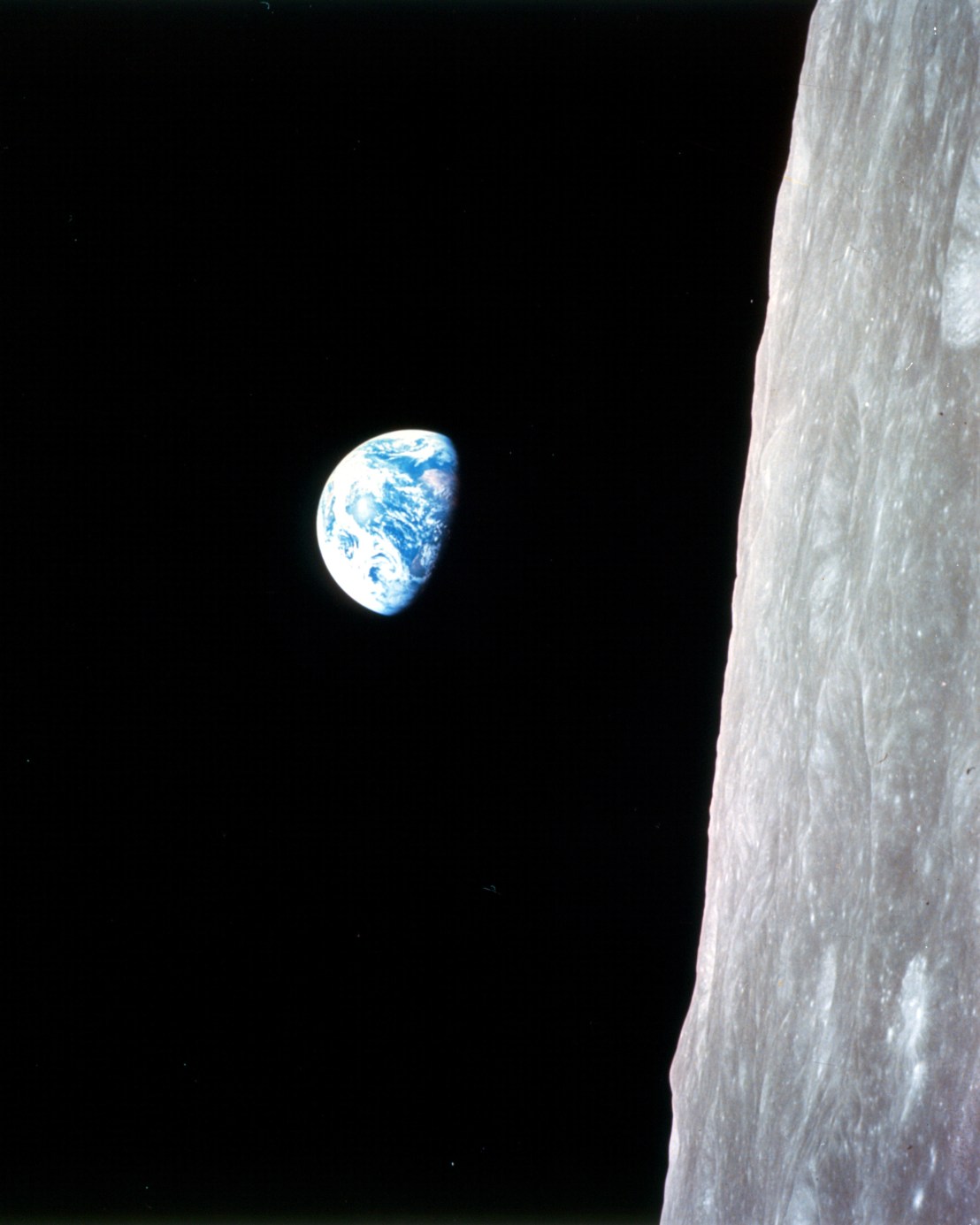
Earthrise, from the cabin of Apollo 8


This view of the rising Earth greeted the Apollo 8 astronauts as they came from behind the Moon after the lunar orbit insertion burn. The photo is displayed here in its original orientation, though it is more commonly viewed with the lunar surface at the bottom of the photo. Earth is about five degrees left of the horizon in the photo. The unnamed surface features on the left are near the eastern limb of the Moon as viewed from Earth. The lunar horizon is approximately 780 kilometers from the spacecraft. Height of the photographed area at the lunar horizon is about 175 kilometers.

The Apollo 8 mission was the first time man had left the orbit of the Earth.

The photograph was taken on the 24th December 1968 by NASA astronaut William Anders.  Within 18 months of this image being published, the environmental movement had started. Wilderness photographer Galen Rowell called it “the most influential environmental photograph ever taken.”


What is the dog?

Time to attempt an answer to this fundamental, well for this Blog, question!


Like wolves, the Dingo is smarter than pet dogs.

(The above photograph comes from an article on ImpactLab – see foot of Post for more details.)

When putting together the Blog ahead of the publication of the very first Post on July 15th, 2009, some 820 Posts ago, I prepared some additional material that set out to justify the Raison d’être for the venture.  Included was a piece regarding Dogs and integrity.  There I wrote:

Dogs are part of the Canidae, a family including wolves, coyotes and foxes, thought to have evolved 60 million years ago.  There is no hard evidence about when dogs and man came together but dogs were certainly around when man developed speech and set out from Africa, about 50,000 years ago.  See an interesting article by Dr. George Johnson.

Anyway, I revisited the article written by Dr Johnson and thought it worthy of being published in full, as a separate article in Learning from Dogs.  I requested permission to reproduce the article in full and Dr. George Johnson was very gracious in quickly coming back to me giving his agreement.  Thank you.  The original article can be read here, the ONSCIENCE home page is here and Dr. Johnson’s details are here.

Evolution of the family dog

I first suspected that Boswell would have a short life when he bit my wife on our nuptial bed.

Boswell was my dog, a feisty Toto-like terrier who shared my bachelor bed and resented the intrusion of a woman where he felt a dog — Boswell — ought to be. As it turns out, my suspicion was correct, and he did not live out the year, which was 1982. Staying with others while I and my bride were overseas, Boswell resented being denied chicken bones, ate them anyway, and died of the consequences. To this day I miss him.

This week I found myself wondering about Boswell’s origins. From what creature did the domestic dog arise? Darwin suggested that wolves, coyotes, and jackals — all of which can interbreed and produce fertile offspring– may all have played a role, producing a complex dog ancestry that would be impossible to unravel. In the 1950s, Nobel Prize-winning behaviorist Konrad Lorenz suggested some dog breeds derive from jackals, others from wolves.

Based on anatomy, most biologists have put their money on the wolf, but until recently there was little hard evidence, and, as you might expect if you know scientists, lots of opinions.

The issue was finally settled in 1997 by an international team of scientists led by Robert Wayne of the University of California, Los Angeles. To sort out the evolutionary origin of the family dog, Wayne and his colleagues used the techniques of molecular biology to compare the genes of dogs with those of wolves, coyotes and jackals.

Wayne’s team collected blood, tissue, or hair from 140 dogs of sixty-seven breeds, and 162 wolves from North America, Europe, Asia, and Arabia. From each sample they extracted DNA from the tiny organelles within cells called mitochondria.

While the chromosome DNA of an animal cell derives from both parents, the mitochondrial DNA comes entirely from the mother. Biologists love to study mitochondrial DNA because of this simple line of descent, female-to-female-to-female. As changes called mutations occur due to copying mistakes or DNA damage, the mitochondrial DNA of two diverging lines becomes more and more different. Ancestors can be clearly identified when you are studying mitochondrial DNA, because clusters of mutations are not shuffled into new combinations like the genes on chromosomes are. They remain together as a particular sequence, a signature of that line of descent.

When Wayne looked at his canine mitochondrial DNA samples, he found that wolves and coyotes differ by about 6% in their mitochondrial DNA, while wolves and dogs differ by only 1%. Already it smelled like the wolf was the ancestor.

Wayne’s team then focused their attention on one small portion of the mitochondrial DNA called the control region, because it was known to vary a lot among mammals. Among the sixty seven breeds of dogs, Wayne’s team found a total of 26 different sequences in the control region, each differing from the others at one or a few sites. No one breed had a characteristic sequence — rather, the breeds of dogs share a common pool of genetic diversity.Wolves had 27 different sequences in the control region, none of them exactly the same as any dog sequence, but all very similar to the dog sequences, differing from them at most at 12 sites along the DNA, and usually fewer.

Coyote and jackal were a lot more different from dogs than wolves were. Every coyote and jackal sequence differed from any dog sequence by at least 20 sites, and many by far more.

That settled it. Dogs are domesticated wolves.

Using statistical methods to compare the relative similarity of the sequences, Wayne found that all the dog sequences fell into four distinct groups. The largest, containing 19 of the 26 sequences and representing 3/4 of modern dogs, resulted from a single female wolf lineage. The three smaller groups seem to represent later events when other wolves mated with the now-domesticated dogs. Domestication, it seems, didn’t happen very often, and perhaps only once.

The large number of different dog sequences, and the fact that no wolf sequences are found among them, suggests that dogs must have been separated from wolves for a long time. The oldest clear fossil evidence for dogs is 12,000 – 14,000 years ago, about when farming arose. But that’s not enough time to accumulate such a large amount of mitochondrial DNA difference. Perhaps dogs before then just didn’t look much different from wolves, and so didn’t leave dog-like fossils. Our species first developed speech and left Africa about 50,000 years ago. I bet that’s when dogs came aboard, when our hunter-gatherer ancestors first encountered them. They would have been great hunting companions.

I think Boswell would be happy to know his ancestor was a wolf. I doubt, however, I will ever be able to get my wife to overlook the biting as “wolf genetic baggage” inherited from nobel ancestors. In my house, science only stretches so far. © Txtwriter Inc

As so often happens, for reasons quite beyond me, when I am pursuing an article idea something else crops up that is highly relevant to my musings.  This was no exception.

A recent article in the Christian Science Monitor describes finding a fragment of dog bone in North America dating back some 9,400 years.  Here’s a flavour of that article.

By Associated Press / January 19, 2011

PORTLAND, MaineNearly 10,000 years ago, man’s best friend provided protection and companionship — and an occasional meal.

That’s what researchers are saying after finding a bone fragment from what they are calling the earliest confirmed domesticated dog in the Americas.

University of Maine graduate student Samuel Belknap III came across the fragment while analyzing a dried-out sample of human waste unearthed in southwest Texas in the 1970s. A carbon-dating test put the age of the bone at 9,400 years, and a DNA analysis confirmed it came from a dog — not a wolf, coyote or fox, Belknap said.

Because it was found deep inside a pile of human excrement and was the characteristic orange-brown color that bone turns when it has passed through the digestive tract, the fragment provides the earliest direct evidence that dogs — besides being used for company, security and hunting — were eaten by humans and may even have been bred as a food source, he said.

Belknap wasn’t researching dogs when he found the bone. Rather, he was looking into the diet and nutrition of the people who lived in the Lower Pecos region of Texas between 1,000 and 10,000 years ago.

The article then, a little later, goes on to say:

Dogs have played an important role in human culture for thousands of years.

There are archaeological records of dogs going back 31,000 years from a site in Belgium, 26,000 years in the Czech Republic and 15,000 years in Siberia, said Robert Wayne, a professor of evolutionary biology at UCLA and a dog evolution expert. But canine records in the New World aren’t as detailed or go back nearly as far.

Darcy Morey, a faculty member at Radford University who has studied dog evolution for decades, said a study from the 1980s dated a dog found at Danger Cave, Utah, at between 9,000 and 10,000 years old. Those dates were based not on carbon-dating or DNA tests, but on an analysis of the surrounding rock layers.

“So 9,400 years old may be the oldest, but maybe not,” Morey said in an e-mail.

Morey, whose 2010 book, “Dogs: Domestication and the Development of a Social Bond,” traces the evolution of dogs, said he is skeptical about DNA testing on a single bone fragment because dogs and wolves are so similar genetically.

My last extract is as follows:

Darcy Morey, a faculty member at Radford University who has studied dog evolution for decades, said a study from the 1980s dated a dog found at Danger Cave, Utah, at between 9,000 and 10,000 years old. Those dates were based not on carbon-dating or DNA tests, but on an analysis of the surrounding rock layers.

“So 9,400 years old may be the oldest, but maybe not,” Morey said in an e-mail.

Morey, whose 2010 book, “Dogs: Domestication and the Development of a Social Bond,” traces the evolution of dogs, said he is skeptical about DNA testing on a single bone fragment because dogs and wolves are so similar genetically.

Fascinating.

Finally, going back to the photograph at the top of the page, this came from an article here in ImpactLab.  It’s well worth a read.
Dr Bruce Lipton continued

The concluding videos from his lecture The Biology of Perception.

No point in going any further if you haven’t seen Parts 1 to 4 which are here.

Here are Parts 5 to 7.

Dr Bruce Lipton

The astounding work showing that what we believe affects our genes and our DNA.

Regular followers of Learning from Dogs have probably read the two Posts published earlier this week about the work by British biochemist, Dr Rupert Sheldrake.  If you missed those then allocate just a couple of hours of your private time to a) watch the video contained here, and then b) learn more about this scientist here. The implications of energy fields, Morphic Fields as Dr Sheldrake has named them, are almost so profound as to be beyond rational description.  Animal and human telepathy is shown to be real, as in scientifically reproducible.

There is much that flows out of Sheldrake’s work but before I try and pull together all my thoughts and feelings, there is more astounding evidence to share with you on the power of thoughts, the power of your beliefs and how they make you how you are both in terms of your biology but also your behaviours.  That comes from an American developmental biologist, Dr Bruce Lipton.

I’m not going to write any more at this stage but hope that you will watch a lecture given by Dr Lipton with the title of The Biology of Perception.  That lecture is available as 7 shortish (9 mins plus or minus) You Tube videos.  They are easy to watch, Dr Lipton has a lovely fast-moving style, and the conclusions are, as I said, astounding.

So the first four sections are below, the balance will be published tomorrow.

Concluding parts tomorrow – do watch them.

Rupert Sheldrake continued

Did you watch the video of Sheldrake discussing The Morphogenetic Universe?  If not then you may want to start here, at yesterday’s Post.

Rather than crowd that article, here is more to provide you with a broader perspective of Sheldrake’s work.

Firstly, Rupert Sheldrake’s very interesting website is here.

Secondly, there is a video here of a talk given by Rupert Sheldrake about animal telepathy.  The talk was given to an audience at Schumacher College in South Devon, England.  Well worth settling down to watch – and be amazed.

Finally, there are many videos on YouTube for those that wish to explore this in more detail.  Here’s a taste.

Enjoy!

Serious Learning from Dogs!

A fascinating talk by Rupert Sheldrake on Morphic Fields, Morphic Resonance and ESP

In 1981 Rupert Sheldrake outraged the scientific establishment with his hypothesis of morphic resonance. A morphogenetic field is a hypothetical biological field that contains the information necessary to shape the exact form of a living thing. A presentation at the Biology of Transformation Conference in 2007.

If the sub-heading means as little to you as it did to me when I was introduced to this speaker and his ideas, then hang on for a small while.  But thanks to Peter N, I have had my eyes opened big time about a number of concepts.  Such as have you ever wondered how at times you ‘sense’ who is ringing you before you answer the phone?  Or how your pet cat or dog, especially your dog, knows when you are returning home even outside a normal pattern of your behaviour?

Rupert Sheldrake is a serious scientist, indeed a Fellow of Clare College, Cambridge University.  He is a Research Fellow of the Royal Institute.

So if you trust what is presented on Learning from Dogs, then trust this one and settle down and watch the video.  It will truly open your eyes in a way that you won’t anticipate.  The video is 1 hour 20 minutes long but within 10 minutes you’ll be hooked!

The link is here http://video.google.com/googleplayer.swf?docid=-4105824266525326404&hl=en&fs=true

More about Rupert Sheldrake tomorrow.

Head scratching stuff!

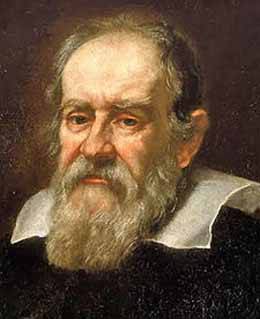
“All truths are easy to understand once they are discovered; the point is to discover them.”

Galileo

Thus said Galileo Galilei.

Why do I start this Post in this fashion?

Simple! Discovering the truth is always the challenge.

But before I go any further, I want to say thanks to my son who drew my attention to the video that is linked to in the next paragraph.  (As a professional pilot he clearly takes a more than casual interest in the weather).

Here’s a link to that video by Joe Bastadi about the big changes to the planet’s weather.  The video is summarised thus, “Temperature is a measure of kinetic energy, and the dirty little secret of the whole AGW debate is that total kinteic energy of the Earth over the longer term is not changing, but is cyclical.

Joe is a professionally trained forecaster (Penn State University) but also a controversial figure.  He is a member of the AccuWeather team.

Anyway, do watch that video – the link is here.  Bottom line is that global weather patterns and longer-term trends are hugely driven by the earth’s natural rhythms and the influence of mankind is minimal in comparison.

Please click the video link above because that is much more current than an earlier interview of Joe Bastardi on YouTube that follows.

OK?

Now go here – ClimateProgress.org.  It’s an important long article that concludes thus:

CONCLUSION:  Unrestricted emissions of greenhouse gases threaten multiple catastrophes, any one of which justifies action.  Together, they represent the gravest threat to humanity imaginable.  The fact that the overwhelming majority of the mainstream media ignored the overwhelming majority of these studies and devoted a large fraction of its climate ‘ink’ in the last 12 months to what was essentially a non-story is arguably the single greatest failing of the science media this year.

So, if you are like me and so many others in wanting to understand the truth about our planet’s climatic future – this Post is going to disappoint you!

Solstice Lunar Eclipse

(Again, thanks to Dan G for highlighting this.)

If you want to see this solar eclipse then read the times carefully – to assist, I am publishing this Post much earlier than normal, at 18:00 US Mountain Time (UTC -7hrs) on Monday, 20th December.  Oh, and more information at Spacedex here.

SOLSTICE LUNAR ECLIPSE
by Dr. Tony Phillips
Reprinted from http://science.nasa.gov ( but this link address is better. Ed.)

Dec. 17, 2010:  Everyone knows that “the moon on the breast of new-fallen snow gives the luster of mid-day to objects below.”

That is, except during a lunar eclipse.

The luster will be a bit “off” on Dec. 21st, the first day of northern winter, when the full Moon passes almost dead-center through

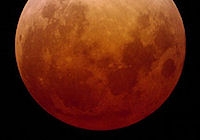
A similar lunar eclipse in Nov. 2003. Credit: Jim Fakatselis.

Earth’s shadow. For 72 minutes of eerie totality, an amber light will play across the snows of North America, throwing landscapes into an unusual state of ruddy shadow.

The eclipse begins on Tuesday morning, Dec. 21st, at 1:33 am EST (Monday, Dec. 20th, at 10:33 pm PST). At that time, Earth’s shadow will appear as a dark-red bite at the edge of the lunar disk. It takes about an hour for the “bite” to expand and swallow the entire Moon. Totality commences at 02:41 am EST (11:41 pm PST) and lasts for 72 minutes.

If you’re planning to dash out for only one quick look — it is December, after all — choose this moment: 03:17 am EST (17 minutes past midnight PST). That’s when the Moon will be in deepest shadow, displaying the most fantastic shades of coppery red.

Credit: F. Espenak, NASA/GSFC.

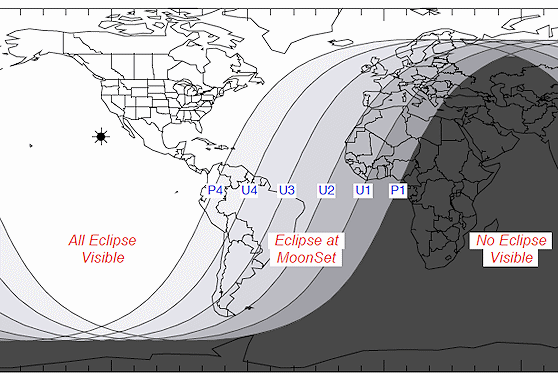
From first to last bite, the eclipse favors observers in North America. The entire event can be seen from all points on the continent. Click to view a world map of visibility circumstances. Credit: F. Espenak, NASA/GSFC.

Why red?

A quick trip to the Moon provides the answer: Imagine yourself standing on a dusty lunar plain looking up at the sky. Overhead hangs Earth, nightside down, completely hiding the sun behind it. The eclipse is underway. You might expect Earth seen in this way to be utterly dark, but it’s not. The rim of the planet is on fire! As you scan your eye around Earth’s circumference, you’re seeing every sunrise and every sunset in the world, all of them, all at once. This incredible light beams into the heart of Earth’s shadow, filling it with a coppery glow and transforming the Moon into a great red orb.

Back on Earth, the shadowed Moon paints newly fallen snow with unfamiliar colors–not much luster, but lots of beauty.

Enjoy the show.

Coincidences (UPDATED): This lunar eclipse falls on the date of the northern winter solstice. How rare is that? Total lunar eclipses in northern winter are fairly common. There have been three of them in the past ten years alone. A lunar eclipse smack-dab on the date of the solstice, however, is unusual. Geoff Chester of the US Naval Observatory inspected a list of eclipses going back 2000 years. “Since Year 1, I can only find one previous instance of an eclipse matching the same calendar date as the solstice, and that is 1638 DEC 21,” says Chester. “Fortunately we won’t have to wait 372 years for the next one…that will be on 2094 DEC 21.

Beauty of flight

There’s more to flying than many of us realise.

Thanks to Mike T who I have known for a few years now.  Mike is an air traffic controller as well as being a keen private pilot so if there is one person who can see through the telescope from both ends, it’s this man.

Anyway, GE Aviation are one of the big players in aviation.  Here’s a quote from the website that I am going to link you to in a moment.

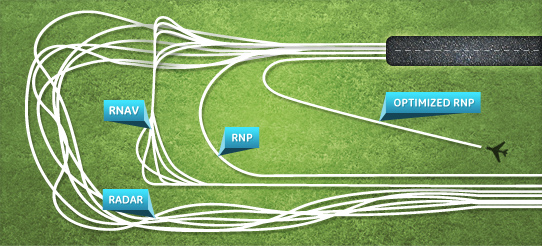
GE Aviation designs engines, flightpaths, and advanced aircraft systems. And we wanted to share the intricate choreography of flying in all its glory.


Dancing in the air!


Here’s the video – just 1:48 long – it’s captivating.  This link takes you to the GE web page where there is much more of great interest other than the video.

If you only want to watch the video then, of course, there’s a copy on YouTube, as below.  Enjoy!

Thanks Mike.

By Paul Handover

Spices

A fascinating insight and a reminder, courtesy of Alistair Cooke

Jeannie recently gave me the book Alistair Cooke’s America.  The book was published in 1973 and was born out of the scripts that Cooke wrote for the television series America: A Personal History of the United States shown in both countries in 1972.  I can’t recall when I first started listening to the BBC Radio programme Letter from America, broadcast by Cooke, but it was a long time ago considering that the 15-minute programme started to be broadcast on the BBC in March 1946, just 18 months after I was born!


Alistair Cooke Nov 1908 - Mar 2004


Anyway, the motivation to start into the book was born out of a desire to know a lot more about this new country of mine.  But quickly there was a fascinating detour.

Early in Chapter One, The New-found Land, Cooke writes of the consequences of the Turks capturing Constantinople:

In 1453, there was a decisive turn in the centuries of warfare between the Christians of Europe and the Moslems of Asia.  Their common market, bridge, and gateway was Constantinople, our Istanbul.  In 1453, the Turks conquered it, and in so doing shut off the commerce between East and West, the exchange of cloth, leather wines and sword blades of Europe for the silks, jewels, chessmen, and spices of Asia.  All things considered, the stoppage was much harder on the court treasuries of Europe that those of Asia and, in one vital item, harder on all Europeans.  That item was spice.

Cooke then writes about historic change often being caused by the denial of a simple human need.  Shortage of water, total absence of timber for the Egyptians since the time of Solomon, for example.

What I hadn’t realised that for Europeans, spices were regarded as “fundamental to human survival”.  That was simply because in the 15th century spices made food edible.  Cooke writes,

Even in rich houses, the meals came putrid to the table. (Dysentery, by the way, seems to have been considered through most of the last five centuries a hazard as normal as wind and rain.)

Think about that the next time you reach for the pepper!

That led me to think about the enormous benefit that electricity and therefore domestic refrigeration has had on the health and life expectancies of mankind.  It is almost inconceivable to imagine the consequences of a widespread loss of electricity for, say a week, let alone a few months.

Patrice Ayme wrote a guest post for Learning from Dogs that was published on the 26th.  In it he wrote,

But then, after an auspicious start, Mars lost most of most of its atmosphere (probably within a billion years or so). Why? Mars is a bit small, its gravitational attraction is weaker than Earth (it’s only 40%). But, mostly, Mars has not enough a magnetic field. During Coronal Mass Ejections, CMEs, the Sun can throw out billions of tons of material at speeds up to and above 3200 kilometers per seconds. It’s mostly electrons and protons, but helium, oxygen and even iron can be in the mix.

The worst CME known happened during the Nineteenth Century, before the rise of the electromagnetic civilization we presently enjoy. Should one such ejection reoccur now, the electromagnetic aspect of our civilization would be wiped out.It goes without saying that we are totally unprepared, and would be very surprised. Among other things, all transformers would blow up, and they take months to rebuild. we would be left with old books in paper, the old fashion way. A CME can rush to Earth in just one day. (Fortunately the Sun seems to be quieting down presently, a bit as it did during the Little Ice Age.)

So let’s just hope and pray that our continued interest in spices remains a flavouring desire and doesn’t return as a critical need for human survival.

By Paul Handover