Category: Sailing

Titanic, 100 years on, Apr 10th 2012

A very famous, albeit sad, anniversary of a great ship.

Such a short life!

From launch to maiden voyage, 100 years ago today.

April 10th, 1911.

And just four, short days after RMS Titanic left Southampton for her maiden voyage; on April 14th, at 11.40 pm ….

Not even a year after the launch.

“The Sinking of the Titanic, 1912,” EyeWitness to History www.eyewitnesstohistory.com (2000).

On April 10, 1912, the Titanic, largest ship afloat, left Southampton, England on her maiden voyage to New York City. The White Star Line had spared no expense in assuring her luxury. A legend even before she sailed, her passengers were a mixture of the world’s wealthiest basking in the elegance of first class accommodations and immigrants packed into steerage.

She was touted as the safest ship ever built, so safe that she carried only 20 lifeboats – enough to provide accommodation for only half her 2,200 passengers and crew. This discrepancy rested on the belief that since the ship’s construction made her “unsinkable,” her lifeboats were necessary only to rescue survivors of other sinking ships. Additionally, lifeboats took up valuable deck space.

Four days into her journey, at 11:40 P.M. on the night of April 14, she struck an iceberg. Her fireman compared the sound of the impact to “the tearing of calico, nothing more.” However, the collision was fatal and the icy water soon poured through the ship.

It became obvious that many would not find safety in a lifeboat. Each passenger was issued a life jacket but life expectancy would be short when exposed to water four degrees below freezing. As the forward portion of the ship sank deeper, passengers scrambled to the stern. John Thayer witnessed the sinking from a lifeboat. “We could see groups of the almost fifteen hundred people still aboard, clinging in clusters or bunches, like swarming bees; only to fall in masses, pairs or singly, as the great after part of the ship, two hundred and fifty feet of it, rose into the sky, till it reached a sixty-five or seventy degree angle.” The great ship slowly slid beneath the waters two hours and forty minutes after the collision

The next morning, the liner Carpathia rescued 705 survivors. One thousand five hundred twenty-two passengers and crew were lost. Subsequent inquiries attributed the high loss of life to an insufficient number of lifeboats and inadequate training in their use.

Read more of this fascinating account, especially the story of Elizabeth Shutes who, aged 40, was governess to nineteen-year-old Margaret Graham who was traveling with her parents. As Shutes and her charge sit in their First Class cabin they feel a shudder travel through the ship. At first comforted by her belief in the safety of the ship, Elizabeth’s composure is soon shattered by the realization of the imminent tragedy.

Also grateful to my cousin, Rose F., who sent me a link to a story in the British newspaper The Telegraph that came out in September, 2010.  I don’t have permission to reproduce that story but hope that it being 18 months since it was published by the Telegraph makes my act forgiveable!

Titanic sunk by steering blunder, new book claims

It was always thought the Titanic sank because its crew were sailing too fast and failed to see the iceberg before it was too late.

10:55PM BST 21 Sep 2010

But now it has been revealed they spotted it well in advance but still steamed straight into it because of a basic steering blunder.

According to a new book, the ship had plenty of time to miss the iceberg but the helmsman panicked and turned the wrong way.

By the time the catastrophic error was corrected it was too late and the side of the ship was fatally holed by the iceberg.
Even then the passengers and crew could have been saved if it had stayed put instead of steaming off again and causing water to pour into the broken hull.

The revelation, which comes out almost 100 years after the disaster, was kept secret until now by the family of the most senior officer to survive the disaster.

Second Officer Charles Lightoller covered up the error in two inquiries on both sides of the Atlantic because he was worried it would bankrupt the liner’s owners and put his colleagues out of job.

Since his death – by then a war hero from the Dunkirk evacuation – it has remained hidden for fear it would ruin his reputation.

But now his granddaughter the writer Lady (Louise) Patten has revealed it in her new novel.  “It just makes it seem all the more tragic,” she said. “They could easily have avoided the iceberg if it wasn’t for the blunder.

The error on the ship’s maiden voyage between Southampton and New York in 1912 happened because at the time seagoing was undergoing enormous upheaval because of the conversion from sail to steam ships.

The change meant there were two different steering systems and different commands attached to them.

Some of the crew on the Titanic were used to the archaic Tiller Orders associated with sailing ships and some to the more modern Rudder Orders.

Crucially, the two steering systems were the complete opposite of one another.

So a command to turn “hard a starboard” meant turn the wheel right under the Tiller system and left under the Rudder.
When First Officer William Murdoch spotted the iceberg two miles away, his “hard a-starboard” order was misinterpreted by the Quartermaster Robert Hitchins.

He turned the ship right instead of left and, even though he was almost immediately told to correct it, it was too late and the side of the starboard bow was ripped out by the iceberg.

The steersman panicked and the real reason why Titanic hit the iceberg, which has never come to light before, is because he turned the wheel the wrong way,” said Lady Patten who is the wife of former Tory Education minister, Lord (John) Patten.

Whilst her grandfather Lightoller was not on watch at the time of the collision, her book Good as Gold reveals that a dramatic final meeting of the four senior officers took place in the First Officer’s cabin shortly before Titanic went down.

There, Lightoller heard not only about the fatal mistake, but also what happened next, up on the bridge.

While Hitchins had made a straightforward error, what followed was a deliberate decision.

Bruce Ismay, chairman of Titanic’s owner, the White Star Line, persuaded the Captain to continue sailing.  For ten minutes, Titanic went “Slow Ahead” through the sea.

This added enormously to the pressure of water flooding through the damaged hull, forcing it up and over the watertight bulkheads, sinking Titanic many hours earlier than she otherwise would have done.

Ismay insisted on keeping going, no doubt fearful of losing his investment and damaging his company’s reputation,” said Lady Patten.  “The nearest ship was four hours away. Had she remained at ‘Stop’, it’s probable that Titanic would have floated until help arrived.

The truth of what happened on that historic night was deliberately buried.

Lightoller, the only survivor who knew precisely what had happened, and who would later go on to be a twice-decorated war hero, decided to hide what he knew from the world, including two official inquiries into the sinking.

By his code of honour, he felt it was his duty to protect his employer – White Star Line – and its employees.

Lady Patten said: “The inquiry had to be a whitewash. The only person he told the full story to was his beloved wife Sylvia, my grandmother.  As a teenager, I was enthralled by the Titanic. Granny revealed to me exactly what had happened on that night and we would discuss it endlessly.

She died when I was sixteen and, though she never told me to keep the knowledge to myself, I didn’t tell anyone. My mother insisted that everything remained strictly inside the family: a hero’s reputation was at stake.

Nearly forty years later, with Granny and my mother long dead, I was plotting my second novel and it struck me that I was the last person alive to know what really happened on the night Titanic sank.

My grandfather’s extraordinary experiences felt like perfect material for Good As Gold.

© Copyright of Telegraph Media Group Limited 2010

Anyone who reads this and is as fascinated as I was should read the comments as there is much discussion about the nature of the steering error.

Rest in peace.

I must down to the seas again

History repeating itself in terms of the commercial sailing ship.

Tea clipper 'Cutty Sark'

Most Brits have heard of the tea clipper Cutty Sark.  As the Cutty Sark website explains,

Cutty Sark has travelled across the world, sailing under both the Red Ensign and the Portuguese flag, visiting every major port in the world through the course of her working life. In admiration of her beauty and in recognition of her fame, she was preserved for the nation by Captain Wilfred Dowman in 1922.

Since then, the old clipper has been berthed in Falmouth and Greenhithe, finally arriving at her current resting place in Greenwich in 1954.

And elsewhere on that website,

Cutty Sark matters because:
  • She is the epitome of the great age of sail.
  • She is the only surviving extreme clipper, and the only tea clipper still in existence.
  • Most of her hull fabric survives from her original construction and she is the best example of a merchant composite construction vessel.
  • She has captured the imagination of millions of people, 15 million of whom have come on board to learn the stories she has to tell.
  • She was preserved in Greenwich partly as a memorial to the men of the merchant navy, particularly those who lost their lives in both world wars.
  • She is one of the great sights of London.

I mention the Cutty Sark because it seems a historic connection with something very relevant to today’s world that was the subject of a recent item on Rob Hopkin’s Transition Culture blogsite.  In it Rob presents his first podcast, the topic being the sailing ship Tres Hombres, that is being used for commercial sea transport.  The link to the Transition Culture story is here, and the podcast follows, (just click on the link to listen to the fascinating 14 minutes audio story about the ship Tres Hombres.)

Tres Hombres podcastfinal

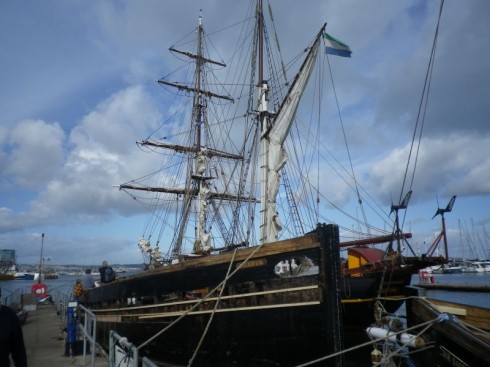
Sailing ship Tres Hombres

The first Transition podcast! A visit to the Tres Hombres, tasting a revolution in shipping

Last week I did a course with the Media Trust on how to make podcasts (highly recommended).  So, here, with some fanfare, is the first ‘Transition podcast’, I hope you like it.  If so, do embed it in other places.  It means I spent the time I would spend writing editing pieces of audio.  Let me know what you think.  So, the podcast is about a fascinating morning I spent visiting the sailing ship Tres Hombres which visited Brixham earlier this week.  It explores the potential of sail-powered shipping as the price of oil rises and the economy tightens.  It’s an exciting story.

Finally, let me close with a very well-known poem about sailing the big ships.

“Sea-Fever”

I must down to the seas again, to the lonely sea and the sky,
And all I ask is a tall ship and a star to steer her by,
And the wheel’s kick and the wind’s song and the white sail’s shaking,
And a grey mist on the sea’s face, and a grey dawn breaking.

I must down to the seas again, for the call of the running tide
Is a wild call and a clear call that may not be denied;
And all I ask is a windy day with the white clouds flying,
And the flung spray and the blown spume, and the sea-gulls crying.

I must down to the seas again, to the vagrant gypsy life,
To the gull’s way and the whale’s way where the wind’s like a whetted knife;
And all I ask is a merry yarn from a laughing fellow-rover
And quiet sleep and a sweet dream when the long trick’s over.

By John Masefield (1878-1967).
(English Poet Laureate, 1930-1967.)

Where’s your bin?

All at sea, Sir!

(This week is a tough one for me with no internet access until the 18th.  So I’m quickly offering items from elsewhere that have caught my eye.)

Courtesy of BBC News

A life at sea - well sort of!

Lifeboat crews have made an unusual rescue off the coast of Anglesey – an 81-year-old man and a wheelie bin.

The man had gone out in a small inflatable dinghy to recover his neighbour’s bin which had swept out to sea in strong winds, in a high tide.

He was blown about a mile off Red Wharf Bay until Moelfre inshore lifeboat was launched to rescue him.

He was picked up suffering from mild hypothermia and taken to hospital in Bangor by ambulance.  The crew said the man was not wearing a life jacket or waterproof clothing. His dinghy was also half full of water because of the sea conditions.

The Moelfre crew then went back out to tow in the dingy and wheelie bin, which was still half full of rubbish.

Moelfre lifeboat station spokesman Dave Massey said: “Everyone at the Moelfre lifeboat station wishes the gentleman a speedy recovery.

“The volunteer lifeboat crews at Moelfre have dealt with a wide variety of emergency calls over the years but I am sure that this is the first time we have been involved in towing in a wheelie bin.”

The Welsh coastline was hit by some of the highest tides of the year on [last] Friday.

By Paul Handover

Mau Piailug

A Pacific master navigator sails into the sunset

The Economist, for me, is one of the great newspapers of our time.  I have often referred to it on Learning from Dogs.

Last Saturday’s edition (July 24th – 30th 2010) carried a most beautiful obituary about Mau Piailug who in 1976 demonstrated that ancient seafarers could indeed have voyaged from Hawaii to Tahiti, a distance of some 2,500 miles, before the age of compasses, sextants or charts.  Here is an extract from that obituary (you may need to register to view it):

As a Micronesian he did not know the waters or the winds round Tahiti, far south-east. But he had an image of Tahiti in his head. He knew that if he aimed for that image, he would not get lost. And he never did. More than 2,000 miles out, a flock of small white terns skimmed past the Hokule’a heading for the still invisible Mataiva Atoll, next to Tahiti. Mau knew then that the voyage was almost over.

On that month-long trip he carried no compass, sextant or charts. He was not against modern instruments on principle. A compass could occasionally be useful in daylight; and, at least in old age, he wore a chunky watch. But Mau did not operate on latitude, longitude, angles, or mathematical calculations of any kind. He walked, and sailed, under an arching web of stars moving slowly east to west from their rising to their setting points, and knew them so well—more than 100 of them by name, and their associated stars by colour, light and habit—that he seemed to hold a whole cosmos in his head, with himself, determined, stocky and unassuming, at the nub of the celestial action.

Mau Piailug creating model of his canoe - Steve Thomas Photo

Here’s an extract from the website Suite101.com:

Mau Piailug was born in 1932 on Satawal, a tiny Pacific island no wider than a mile in Micronesia. When he was still a little baby, his grandfather put him in a tide pool as though he were putting him in a cradle. There the sea gently rocked him back and forth with the rhythm of the tides.

When Mau was six, his grandfather began to teach him about navigation. He started by telling him about the stars; the grandfather made a star compass out of a circle of coral rocks, and in the center he put a little canoe he had made of palm fronds. Then he explained how the stars rose in the sky and traveled from east to west.

As he grew older, Mau spent his evenings in the canoe house. There he asked the elders to teach him about navigation. In this way, and with his grandfather’s help, he learned the paths of more than a hundred stars. He also learned that when clouds covered the sky, he could use the direction of the ocean waves to guide the canoe. He could also follow the birds toward land when they headed home in the evening, and he studied the creatures of the sea, for in times of trouble they, too, could help him find land.

A film was made about Mau called The Last Navigator.  Do click on the link and read more about what Steve ‘learnt’ from Mau – here’s a closing taste:

It has been nearly fifteen years since I first met Piailug. In that time I have been blessed with relative fame and prosperity – an eventuality, by the way, that Piailug foretold to me. As I look back, I am impressed now by the twin qualities in the man that impressed me then: his generosity and his courage. Piailug took me into his family, assumed responsibility for my material and political well-being, and taught me his navigation without reserve. The knowledge he gave me about navigation is considered priceless in his culture. The knowledge he gave me about myself, I have come to see, is priceless as well. I often think of Piailug, and the fierceness and determination with which he defends a way of life he knows will die as the wise elders died. He has the courage to live and teach and voyage in spite of the certain knowledge that his struggle can never stem the tide of Westernization, which will change the character of his archipelago and may well eliminate the very role of the navigator as steward of his island’s sustenance and keeper of the flame of cultural knowledge.

Mau - asleep in the waves

A remarkable man.

By Paul Handover

Jessica is Home!

Young Australian, Jessica Watson, is home safe and sound.

(Circumstances required that I had to prepare this Post well ahead of the confirmation that Jessica is back and as it happens, the chances are that when Jessica made it past the Sydney Heads finish line I was onboard a flight from Los Angeles to London.)

05-May-2010

The youngest person to sail around the world solo, non-stop and unassisted, 16 year old Australian Jessica Watson, is expected to complete her historic voyage, arriving back in Sydney to a hero’s welcome on Saturday 15 May.

Jessica left Sydney on 18 October 2009 and has so far overcome every challenge that Mother Nature has thrown at her to achieve her goal.

Jessica needs to cross the finish line at Sydney Heads to officially complete her voyage.  She will then cruise down Sydney Harbour before disembarking at Sydney Opera House.

It is anticipated that Jessica will cross the finish line at approximately 11:30am and arrive at the Sydney Opera House around 12.30pm, the first time she will have set foot on land in almost seven months.

Readers of Learning from Dogs will know that we recognised Jessica’s brave and courageous voyage in a Post published on November 12th, 2009.

Soon memories such as this:

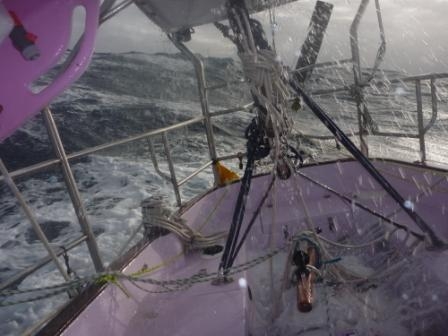
With the drogue trailing behind Ella's Pink Lady shaking off one wave with the next 10m monster coming up behind!

will be a thing of the past!

Our Post of last November is re-published below.

Read the original Post

Celebrity Eclipse

Can this form of holidaying still remain popular?

The Celebrity Eclipse has recently left her construction dockyard at Papenburg, Germany bound for her home base.  This enormous  new ship attracted some news simply because the exercise of getting her from the dockyard to the open sea required some ‘shoe-horning’!  This YouTube video shows why (amateur filming but a great soundtrack!):

The Celebrity Solstice leaving the dockyard at Papenburg
The Celebrity Solstice leaving the dockyard (backwards!) at Papenburg

All would wish any ship that sets out to sea safe travel.  But one wonders whether this huge ship, that must require such huge sums of money just to stay afloat, and that must have been conceived and ordered when times were much rosier, will ever be a commercial success?

By Paul Handover

The Greenwich Meridian

Don’t know what time it is?  Hardly surprising in Spring and Autumn.

Today is exactly one month before the United Kingdom ‘moves’ its clocks forward and enters British Summer Time; 1am (UTC) on Sunday 28th March 2010.  Is that date the same across the world?  One would think so because it makes life, especially international air transport, so much easier.

But no!  In fact the way that time zones are applied and changed for Daylight Saving is a complete hotch-potch.

In the United States of America, daylight saving starts at 2am on March 14th, 2010.  And just three years ago that start time would have been the first Sunday in April.  Changes were made in the US Energy Policy Act of 2005.

From this geographic site comes the following:

Other parts of the world observe Daylight Saving Time as well. While European nations have been taking advantage of the time change for decades, in 1996 the European Union (EU) standardized an EU-wide “summertime period.” The EU version of Daylight Saving Time runs from the last Sunday in March through the last Sunday in October. During the summer, Russia’s clocks are two hours ahead of standard time. During the winter, all 11 of the Russian time zones are an hour ahead of standard time. During the summer months, Russian clocks are advanced another hour ahead. With their high latitude, the two hours of Daylight Saving Time really helps to save daylight. In the southern hemisphere where summer comes in December, Daylight Saving Time is observed from October to March. Equatorial and tropical countries (lower latitudes) don’t observe Daylight Saving Time since the daylight hours are similar during every season, so there’s no advantage to moving clocks forward during the summer.

Of course, someone had to create a web-site to track all these various time zones and changes.  Here it is.

Last year, the BBC News website published an interesting article about the Greenwich Meridian aka The Prime Meridian.  The setting of the Prime Meridian was done just over 125 years ago, in October 1884.  When one thinks of the importance in having a standard meridian, both for time keeping and navigation, I would have guessed that it went back much further in time.

The other aspect that was news to me was that the conference had been convened at the request of the American President Chester Arthur.

From that BBC article:

Until the 19th Century, many countries and even individual towns kept their own local time based on the sun’s passage across the sky and there were no international rules governing when the day would start or finish.

Maps with multiple meridians were confusing

However, with the rapid expansion of the railways and communications networks during the 1850s and 1860s, setting a standard global time soon became essential.

“The world was in a very big mix-up,” explains Dr Avraham Ariel, author of Plotting the Globe. “People had lots of prime meridians. Earlier in Europe there were 20 prime meridians. The Russians had two or three, the Spanish had their own and so on.”

Thus that famous line in the grounds of the National Maritime Museum at Greenwich, London is not as old as many might have thought.

Prime Meridian, Greenwich

By Paul Handover

The rights of the child

A reminder of the United Nations (UNICEF) Convention and a second view from yours truly.

On November 12th I was the author of a Post called Our next generation featuring the young Jessica Watson from Australia who is on course to try and win the record for the youngest person to sail, solo, unassisted, non-stop around the World.  Here’s a part of what was said:

Jessica Watson2
Jessica Watson

Jessica Watson is a teenager.  She is hoping to break the record for the youngest person to sail solo, non-stop and unassisted around the World.  Whatever modern materials and technology can do to make sailing easier, sailing solo for weeks on end is grindingly tough at any age.  She’s a wonderful example of the next generation!
Jessica left Sydney Harbour on October 18, 2009 sailing her sloop Ella’s Pink Lady. Her course is an estimated 23,000 nautical miles requiring her to be roughly 230 days at sea.

You can see that the tone of the Post was supportive.

However the comments that the Post attracted were critical of the pressures and influences that may have been brought to bear on this child.  For at 16 ‘child’ is what Jessica is.  One of our regular contributors pointed out that under the terms of the UNICEF Convention:

The Convention on the Rights of the Child is the first legally binding international instrument to incorporate the full range of human rights—civil, cultural, economic, political and social rights. In 1989, world leaders decided that children needed a special convention just for them because people under 18 years old often need special care and protection that adults do not.

(My underlining)

Read the rest of this Post

Single-handed sailing

A personal reflection on this rather strange way of travelling!

The recent Post about young Jessica Watson sailing alone around the world raised a few comments but also reminded me of my own experiences of solo sailing.

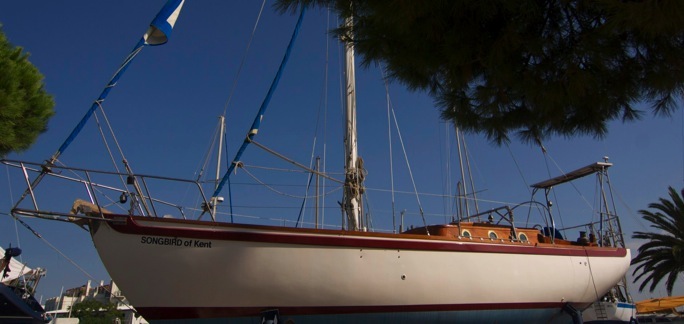
Some years ago, having successfully sold my own IT company, I warmed to the idea of being a full-time yachtie! A second-hand Tradewind 33 was discovered on the Island of Corfu.  (Now here’s a surprise!  I was just browsing the web looking for a picture of a Tradewind and came across my old yacht currently up for sale.  Her name is Songbird of Kent! Picture below.)

Songbird of Kent
Tradewind 33 - Songbird of Kent

Anyway, the deal was done and having sold my house in England I flew out to Corfu to collect Songbird of Kent. Inevitably it was a number of months before the boat was ready to head out into the Mediterranean but in early Spring 1988 it was time to explore the long coastlines of Greece and Turkey.

After a fantastic summer cruising from one idyllic anchorage to another mostly with friends or family on board, it was time to find a winter haven.  Many recommended Larnaca Marina in Cyprus.  Thus it was late in the summer of 1988 that I said goodbye to friends and set out on my own to cross from Antalya in Turkey to Cyprus and for Larnaca, on the SE side of the island.

That sea crossing, only a little over 200 nautical miles, was to become a regular solo experience at the start and end of each summer season. Impossible to do in a single day it was always a night at sea and rarely, if things didn’t go well with the weather, a couple of nights. I hated it! Maybe it was the sudden transition from coastal sailing to a deep water crossing, often going from having friends on board to being alone, but whatever it was I never enjoyed my time on my own and knew that long-distance solo sailing was never going to be my scene.

Read more of this Post

Our next generation.

Here’s a great role model – and she’s 16!

Jessica Watson is a teenager.  She is hoping to break the record for the youngest person to sail solo, non-stop and Jessica Watsonunassisted around the World.  Whatever modern materials and technology can do to make sailing easier, sailing solo for weeks on end is grindingly tough at any age.  She’s a wonderful example of the next generation!

Jessica Watson2

Jessica left Sydney Harbour on October 18, 2009 sailing her sloop Ella’s Pink Lady. Her course is an estimated 23,000 nautical miles requiring her to be roughly 230 days at sea.

As was said, this is no mean feat for any person. Read more about her on her website and her Blog.

Wish her luck and fair winds.

Jessica Watson3