What a shock. U.S. GDP is not growing at 3.5% per year, as originally reported, and celebrated with much fanfare from President Obama about how the stimulus program was working. It is not even growing at the revised 2.8% annualized rate reported a couple of weeks later. The latest re-revised figure is 2.2%.
Nearly the entire 2.2% annualized growth, or 3rd quarter growth of 0.55%, is driven by the cash for clunkers program, the government spending program (also called the stimulus program, but I have a big problem with that particular name), and the extended tax credit for first-time home buyers. As a result, this increase in GDP is not only entirely temporary and fleeting, it will cause lower GDP later.
The cash for clunkers program did not create more overall demand for cars; it simply pulled some of the future demand for a new car into today, all the while wasting millions of tax dollars on administering the program, and putting some dealerships out of business in the process.
The spending program simply shifted profits from businesses to support other segments of society, all of which is temporary and destroys the productive capacity of the economy for many periods to come.
The extended tax credit to first-time home buyers is a real head-scratcher. A curious time to redistribute funds from the producers in the economy to finance a program which lowers the cost to those home buyers who would not have the funds to buy a home in the first place….second wave of home mortgage foreclosures, anyone?
British governmental ‘skills’ now being applied to British universities
THE GOLDEN GOOSE … Greed and the City killed off the financial golden goose – at terrible cost to ordinary people and the economy as a whole. With the problem compounded by government folly, Britain now faces years of debt and austerity to pay for it all. For the moment, the City is reeling, but at least we still have our Higher Education system, don’t we?
Well, errrrmmmm …… yes, we still have it for the moment.
Oxford University
We do – or perhaps did – have a great reputation for having world class universities. Rich foreign parents – including, of course, a good many whose source of income is highly dubious – naturally seek a good education for their children, which Britain in the past was able to provide and their country presumably couldn’t. For decades, a British degree was seen as a precious cachet of excellence in the international paper-chase.
The heads of US mortgage giants Fannie Mae and Freddie Mac may each receive pay packages of up to $6m (£3.7m) for 2009, depending on company performance.
Now I’m not an American nor do I really understand the issues BUT when taxpayers put in $111,000,000,000 of THEIR money into these organisations (that’s $365 for every man, woman and child on the US Census!) and so many of those same US taxpayers are up the proverbial financial creek without a paddle, there has to be a better way of rewarding top bosses (of US publicly owned corporations) than the option of $6,000,000 each!
But the regulator which decided the pay levels said the awards were 40% lower than before the government bailout.
The sums involved reflected the need to attract and retain talent, it argued.
Frankly, I just don’t believe that there aren’t many other incredibly capable business leaders who would do these jobs for a fraction of six million dollars. (The present incumbents are Michael Williams at Fannie Mae and Charles E. Haldeman Jr. at Freddie Mac who will receive a base of $900,000 in 2010 with the opportunity to earn $5.1 more if “certain targets are met“.)
Read the article here – I’m going to lay down in a dark, quiet room for a while!
Okay. If you tried this ploy on your parents, you wouldn’t get away with it. If your kids tried it on you, you wouldn’t fall for it either. So why are the American people letting the Government get away with this ploy? I don’t know. And I don’t get it. Maybe there is just so much going on that it gets lost in the mix. Maybe it’s because of the deceptive and disingenuous way it’s being presented by Pelosi, Reid, and Obama.
Here’s the ruse: “Give us more of your money today, and we will reduce tomorrow’s health care costs. We will increase efficiency. And we will do all of this without increasing the budget deficit!”
Yeah, right.
What exactly is stopping them from reducing health care costs and improving the efficiency of health care delivery now? Why do they need more money today to accomplish these things tomorrow? What magical powers does the next dollar of tax collections have that the current ones don’t?
Exactly. None. So when Congress asks to increase taxes and the deficit in order to fix health care tomorrow, let’s respond to them as we would our clever but errant children: Ask to see some proof today first.
You know how that will turn out. And so does Congress. That’s why they just keep promising the moon. What I don’t get is why we continue to let them get away with it.
[Not just the US Government plays on the roundabout – I’m sure they learnt from the Brits! Ed.]
On 28 February 2001 a vehicle came off the M62 motorway at Great Heck, near Selby, [North Yorkshire, England. Ed] ran down the railway embankment and onto the East Coast Main Line, where it was struck by a passenger train. The passenger train was derailed and then struck by a freight train travelling in the opposite direction. 6 passengers and 4 staff on the trains were killed. The driver of the vehicle was found guilty of causing the deaths of 10 people by dangerous driving.
If you were aware of this incident at the time, you might remember that it attracted considerable discussion and press coverage, here are some examples.
At the time, a variety of causes were cited for the accident and for the failure of various mechanisms to prevent the accident.
“Whose fault was it?”
Most of the discussion seemed to be based on trying to find someone to blame for everything that happened and the main target was the driver of the vehicle who was alleged to have been driving while unfit to drive due to lack of sleep, and to have fallen asleep at the wheel.
However, I thought that the public response to the incident was a matter of considerable concern; and I continue to think so.
Clearly people can expect to be held responsible for their actions. When their action or lack of action causes damage, they can expect to be held responsible for that damage. However, there are surely limits to that responsibility.
Also, it is interesting that this incident was described at the beginning of the DfT report which was otherwise entirely about ways of reducing incursion of road vehicles onto railways. So, if it is accepted that insufficient fences, banks, ditches or other obstructions had been provided, the implication is that the motorist could expect some protection to exist and is therefore not wholly responsible for the consequences of it not existing.
Level of responsibility
If, as alleged, the driver was unfit to drive then he can expect to be held responsible for his actions. But, in much of the discussion about this incident, there was very little importance attached to the issue that the probability was infinitesimally small that he would fall asleep at exactly the location which resulted in his vehicle entering a railway line, and at the time when not one but two trains were about to pass that point. I would hazard a guess that he could not have planned it so accurately if he had intended to cause the incident!
Having, by extremely bad lack, ended up on a railway line and before the railway collision occurred, he was aware of the danger of collision and was already using this mobile phone to attempt to warn the authorities of the situation. But even if he had been injured and unable to warn anyone, to what extent was he responsible for the full range of consequences of this extremely unlikely incident?
The HSE report described the accident as ‘wholly exceptional’ and concluded: ‘There was nothing the railway industry could reasonably have done to prevent the collisions.’
Chief Inspector of Railways Vic Coleman said: ‘It’s clear that the chain of events that led to this catastrophe were determined by sheer chance.’
The DfT report, and the fact that the work to generate it was instigated, suggests that the Department for Transport did not agree with the Health and Safety Executive (HSE) that there ‘There was nothing the railway industry could reasonably have done to prevent the collisions.’
Distinguishing the criminal from the accident elements
How do we distinguish crimes from accidents? In particular, in complex incidents such as this, how do we distinguish the criminal elements from the accidental elements of an incident?
In my opinion, there is no benefit in penalising, or even reprimanding, people for actions which led to consequences which either they were completely unable to foresee or which were so improbable as to be bordering on fantasy. On the contrary, it is an opportunity to learn more about the consequences of one’s actions; this can be a positive process of extending one’s understanding, rather than a negative process of “not doing that again”.
In particular, in cases like the Selby incident, clearly someone should be penalised if it is determined that they were driving dangerously; but it seems to me that the severity of the penalty should be based on the severity of crime, which relates to the severity of the likely consequences of their actions and, presumably, whether this is a recurrence of this or other offences.
It also seems to me that the severity of crime is largely independent of the actual consequences of the incident. In other words, someone should expect to be penalised just as severely when there were no consequences as when there were.
I understand that many people would like to find someone to blame for all damage which occurs. But is this reasonable? There are, after all, such things as accidents!
As is probably apparent, I respectfully disagree. This blame culture does not, in my view, serve any purpose and may even reduce safety. Safety experts in the aviation industry seem to take a completely different view from that in the motoring world and reap the long term benefits of improved safety as a consequence.
The US poor pay czar is lamenting his task: how to limit the pay of executives at companies receiving a bailout without undercutting the ability of the firm to secure talented management. “It’s a delicate balance! Very difficult indeed.” Well, Mr. Czar, difficult for you, maybe, but a piece of cake for the labor market. That’s exactly what the labor market does, day in and day out, quite naturally.
Compensation should not be the purview of an appointed administrator serving at the pleasure of the executive branch of the U.S. Government.
A round up of this strange world that we all live in.
[In fact Chris wrote this on Sunday, 13th but due to the backlog of LfD posts to be published, it has been held until today, the 20th. The points are still as valid. Ed.]
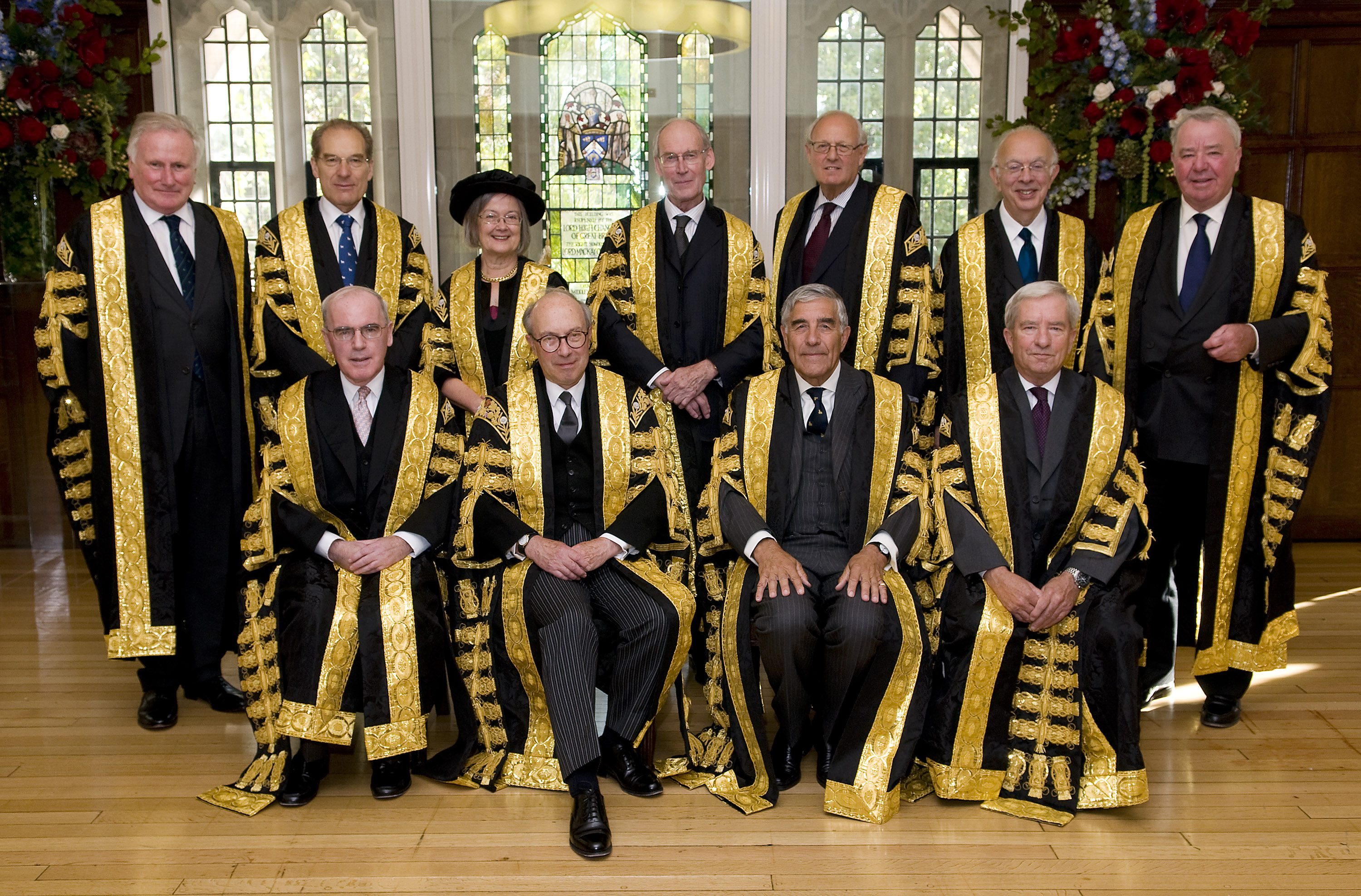
Judges in charge of Britain’s controversial new Supreme Court have been provided with robes they will hardly ever wear at a cost of £137,956 to the taxpayer.
The hand-crafted black brocade robes – embroidered with real gold thread – will not be worn by the 12 Supreme Court Justices in normal session.
They will be donned only perhaps twice a year for ceremonies such as the State Opening of Parliament or the beginning of the legal year. The rest of the time, the judges will wear everyday suits.
A snip at £140,000 ($224,000) Photographer – Ron Coello
It’s only money …. plenty more where that came from…
BRITISH POLITICS: Few things are more pathetic than the Liberals‘ current poll rating of 17%, with Labour on 26% That the worst government in the history of the world is still way ahead of the Liberals is of course a tribute to the lunacy of Labour voters, who seem not to understand the terrible damage this govt has done. Still, some of them have done very well under Labour: doctors, judges, high-ranking civil servants, consultants …. all more or less bribed with the people’s money.
Lib-Dems must be very depressed; if you can’t get a decent poll-rating when up against this motley bunch of venal, pompous, pretentious and incompetent misfits then you wonder really what the point of their party is.
Democracy?
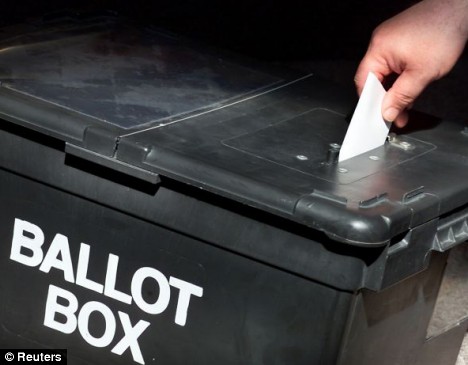
Still, you get the government you deserve, so they say. Except that the British voting system is hopelessly undemocratic. In the next election a vote for the Lib-Dems is probably going to be wasted, risking the danger of letting Brown sneak in despite everything.
As for UKIP, it is a perfectly tenable position to want to get out of the EU. I’d guess that 30% of the electorate would want this, and that’s a very conservative estimate. Yet they have NO CHANCE WHATSOEVER of getting ANY representation in parliament.
This is not democracy, but of course it suits the two dinosaur parties very well indeed.
TIGER WOODS: what a pathetic, sordid saga this is. Not his bedroom antics, but the media obsession with it. People are dying all over the world of treatable diseases, of inhuman treatment at the hands of the North Koreans or others. Democracy is destroyed by religious nutters in Iran, millions more tons of ice melt, while politicians bleat uselessly (and expensively) in Copenhagen (I note they didn’t choose Scunthorpe! Might not have got such a good turnout!)
OIL: Oh, and on the climate front and the importance of reducing emissions I note that the Iraqi government is predicting oil output to rise to 12 million barrels a day within a few years – the same as Saudi Arabia.
That IS good news!!!!! … the British Labour government will hit us with every stealth and non-stealth tax you can imagine “to save carbon” and pay for yet more consultants and managers while the rest of the world greedily sups up billions more tons of oil.
Apparently, this has been a bumper year for oil discoveries …. you couldn’t make it up! An extra-terrestrial observer must be scratching his head wondering how the universe could have spawned up such a bizarre species.
Yet the press is full of Woods ….. and because he is good at golf … hitting a ball into a hole, a skill of such nanoscopically-sized irrelevance to the world’s problems. What sort of mentality is it that is even interested in yet another, crass, boring superstar who has failed to resist the temptations that money brings?
JFK was the great hero who would save the world but turned out to be just another, faithless, lying philanderer. Who can have any illusions since the days of Marilyn Monroe and the extinguished candle?
OBAMA PEACE PRIZE: The surreality of this obsession with over-sexed but hyper-boring celebrities is matched only by that involved in the award of the Nobel Peace Prize to Obama. What exactly has Obama actually DONE?
Nobel prize winner
Crucially, there is practically NO change in the Middle East (except the major change for the good brought by the reviled George Bush and Tony Blair! the world is nothing if not full of irony); the USA still cravenly supports Israel, which CONTINUES to build and/or enlarge settlements, which denies any possibility of ever putting right some of the wrongs of the past (Palestinian exiles, appropriation of their land, stealing of their capital and so on – even the West Bank roadblocks are mostly still in place.)
Yet even in the pathetic there can be humour, as when he said that to bring peace the USA had to make war, or words to that effect.
Yes, he is of course right, but it was still funny. I wonder what Mother Theresa would have said? And Nelson Mandela? He had to sweat out decades in prison preaching non-violence to earn his NPP, while Obama only had to get elected to get his. Truly the triumph of hope over reality.
Perhaps hope is all there is left. I nearly said “we have left”, but then I realized that I haven’t actually got much myself.
US still struggling to find a proper health care solution
We’ve all heard this definition of insanity: doing the same thing over and over again but expecting a different result.
Here, in a nutshell, is the insanity of the current U.S. health care debate:
Medicare, the government’s single-payer wealth redistribution health care program, is quickly going bankrupt. No one disputes this fact.
When President Obama refers to “cutting costs of healthcare,” he is referring to cutting the Medicare budget. Period. No increased efficiencies, no improved services, no reduced market-clearing prices. No, cutting costs refers to reducing the fraction of the U.S. government’s tax collections devoted to Medicare.
The new Health Care Plan is fundamentally a new Medicare program. Let’s call is Medicare 2.0.
Medicare 2.0 is being funded in large part by cutting the current Medicare budget item. We are supposed to ignore the fact that the funds cut from the current Medicare program will be spent on Medicare 2.0.
The Medicare 2.0 plan shifts as much as 25% of its (under)estimated costs (e.g. payments to physicians) to other accounts. The costs are still there; these obligations would still need to be paid by the government under the proposed legislation, but Congress is hoping the public won’t “count” the shifted costs if they slap another name on them, further fostering the illusion of “lowering costs of health care.”
Medicare 2.0 will also go bankrupt but, as a larger, more far-reaching entitlement program, the impact on the U.S. budget will be larger and more far-reaching.
A primer from Prof. Jarrell on this important subject
Macroeconomics is the study of aggregate supply and demand, and looks both internally to the workings of the economy and externally to how a domestic economy interacts with others worldwide.
Macro builds on the principles of microeconomics, which is the study of prices and quantities of individual goods and the markets where these goods are produced and sold.
In macro, “price” refers to some index of the prices of domestic goods and services, and “quantity” refers to some measure of the value of domestic production or “output.” One common measure of output is gross domestic product (“a measure of the productive activity of a country computed on the basis of the ownership of the factors of production”). A country’s standard of living is usually directly correlated with its real output, or the value of total output corrected for inflation.
John M Keynes
Unlike microeconomics, macroeconomics started with the idea that prices and markets do not continuously resolve all of the coordination requirements of a modern economy. Such “failures of coordination” (Keynes) seem likely when one views the economy as the collective sum of thousands of microeconomic markets.
For example, although most economies around the world have experienced generally positive trends in their gross domestic product, short run positive and negative deviations (recessions and, in more dramatic examples of the failure of coordination, depressions) around the trend line, or “business cycles,” are common.
Inflation is the rate of change of the average level of prices, where the price level is usually measured as a price index. Inflation rates are typically quoted in annualized percentages. In normal times, the inflation rate is procyclical: it rises in periods of high growth and declines in periods of slow growth. Unemployment, by contrast, is usually countercyclical. The U. S. inflation rate was as likely to be negative as it was positive before World War II; since then, price levels have risen fairly consistently.
Yesterday, a Post was published a Post about Greg Craven. It made the point that social media was becoming a very real force in influencing opinions and how that threatened traditional politics. Here’s an extract:
I was doing some research for an earlier Post about Copenhagen and came across a YouTube video created by Greg. More details and links later after making a more fundamental point.
This video of Greg’s has had 2,704,000 viewings! The information on that YouTube ‘page’ has had over 7,500,000 viewings. Greg has now written a book and so on, and so on.
Now I want to return to the core subject of how we deal with very complex issues that have the power to decimate humanity, e.g. global warming.
The fact is that the majority of people who think about such issues as global warming don’t have the skills and knowledge to determine what to do for the best. It comes down to determining risks, which was the theme of an earlier Post acknowledging the work of Peter L Bernstein.
That’s also the theme of Greg Craven’s video on YouTube. It’s a noble effort by a concerned citizen of Planet Earth. Watch it.
 Nearly the entire 2.2% annualized growth, or 3rd quarter growth of 0.55%, is driven by the cash for clunkers program, the government spending program (also called the stimulus program, but I have a big problem with that particular name), and the extended tax credit for first-time home buyers. As a result, this increase in GDP is not only entirely temporary and fleeting, it will cause lower GDP later.






 Learning from Dogs