Category: Politics

No signs of intelligent life!

Sometimes one just has to scratch one’s head and wonder about life!

I can’t recall when and where I first heard the muse as to why Planet Earth has not been visited by aliens, but I recall the answer: “Because alien passers-by have not found any signs of intelligent life!

The reason that this comes to mind is that the damage that we are doing to our planet, nay to life on our planet, if we don’t embrace the reality of climate change is truly ‘gob-smacking’!

The evidence for this statement is over-powering.  Just last Friday, I republished a recent essay from Tom Engelhardt under the title of ‘The more it changes, the more it’s the same thing.”  Tom’s essay focused on the lack of any change that came out of the recent Presidential election.  That essay closed, thus:

But stop waiting for change, “big” or otherwise, to come from Washington.  It won’t.  Don’t misunderstand me: as the residents of the Midwestern drought zone and the Jersey shore now know all too well, change is coming, like it or not.  If, however, you want this country to be something other than its instigator and its victim, if you want the U.S. to engage a world of danger (and also of opportunity), you’d better call yourself and your friends and neighbors to the colors.  Don’t wait for a Washington focused on its own well-being in 2014 or 2016.  Mobilize yourself.  It’s time to occupy this country before it’s blown away in a storm.

An inciteful comment from reader Jules was this:

“Don’t count on anyone doing the obvious: launching the sort of Apollo-style R&D program that once got us to the moon and might speed the U.S. and the planet toward an alternative energy economy, or investing real money in the sort of mitigation projects for the new weather paradigm that might prevent a coastal city like New York — or even Washington – from turning into an uninhabitable disaster zone in some not so distant future.”

A pity. Americans can do some things very well, the kind of stuff that merits some of the hyperbole of being the greatest nation, the ability to mobilise a nation and lead the world being one of them. We need heroes maybe it’s time for you lot to don that cape and be one.

Americans have such a potential for positive change – I just can’t imagine why this Nation isn’t leading the world to a more Earth-friendly environment.

This then came into my ‘in-box’ on Friday: Could NDAA be the Death of Biofuels in America?  The article opened thus:

The US military is one of the most important developers of new technologies leading them to a point where they can be released onto the market for public and private use. Currently the Department of Defense, led by the Navy, is attempting to reduce its dependence on oil by as much as 50% by 2020, by producing US-made biofuels.

and the author concluded:

Nicole Lederer, the co-founder of E2, despaired that, “the military often leads major economic transitions in our country. Yet right now in Washington, some shortsighted lawmakers are poised to block a potentially major transformation of our national energy supply – and also hold back the significant economic growth and job gains that would come with it.”

Russ Teal, founder of the biorefinery builder Biodico, warned that, “the military is the biggest driver of the biofuels industry right now. If Congress stops the military from doing what the military knows is best, Congress also could threaten the growth of the Made-in-America biofuels industry.”

By. Joao Peixe of Oilprice.com

Then more or less the same time as I read the piece above, in came the latest from 350.org, an essay by Naomi Klein.

Naomi Klein: Do The Math, The Fossil Fuel Industry Is Destroying Our Future

Naomi Klein was out in the shattered neighbourhood of Rockaway Park Queens last weekend, participating in the Occupy relief efforts there. In this interview she underscores the importance of both increasing local resilience as a response to our changing climate and addressing the fossil fuel industry’s business model directly. As 350.org’s Do The Math campaign makes clear, the fossil fuel industry’s business plan will destroy the planet. Bill McKibben reminded the “Do The Math”audience in Seattle this month that the global warming math is quite simple: we can burn 565 more gigatons of carbon dioxide and stay below 2 degrees of warming. Anything more than that risks catastrophe for life on earth. The only problem? Fossil fuel corporations now have 2,795 gigatons in their reserves, 5Xs the safe amount. And they are planning to burn it all, unless we rise up & stop them.

So is there any hope?  So easy to think not.  But in terms of hope the answer is “Yes, yes and yes!”  Because the decent peoples of the world are way ahead of their politicians.  Take the transition movement.  I used to live in the village of Harberton, just 3 miles from the town of Totnes, Devon, in the South-West of England.

Totnes High Street

Totnes was the site of the world’s first transition movement: Transition Town Totnes.  But as the Transition US website reveals, there are now:

126 official US initiatives
437 official initiatives worldwide
33 US states
34 countries
13 languages

One of the latest has just been formed in the city where Jean and I were living until just a few weeks ago, namely Payson, Arizona.  Here’s a reflection from John Hurlburt in Payson, one of a group of committed citizens who, like so many millions of others around the world, just can’t wait for governments to ‘lead’ and was one of the founding members of Transition Town Payson.

Keep it Simple

We share a living planet as a living species. Corporate finance fuels political hate and denial. The divisiveness of global and national politics reflects an unprecedented escalating global crisis. We live in a world of constant sorrow.

Our stubborn ignorance is the greatest threat to the objectives of peace and well-being. We have become so entrenched in the ‘ruts’ of our conditioned opinions that any semblance of balanced responsibility is immediately numbed by the deliberate stupidity of well-paid spin-doctors across a global electronic media.

The recovery process is truly simple. Surrender to the scientific facts of our inclusive reality, clean house, and have compassion for each other.  The good news is that a basic natural instinct of all life forms is to survive through adaptation.

John Hurlburt

So, on reflection, I was wrong to open with the degree of irony in my ‘voice’ that I had.  This is now a world of wonderful and amazing communication channels, many of them directly ‘person to person’.  The views of the world’s peoples are now so much louder than in previous times.  I am confident that right, rather than might, will prevail.

A plea from the Executive Director of Greenpeace UK

Attention all UK-based Learning from Dogs readers: I received this email today and felt compelled to publish it on my blog – and now here as well (thanks Paul).

For the benefit of new readers (thank you – and welcome – to you all), when you read the email appended below, please bear in mind that I am (or at least have been) a supporter of the Conservative Party.  However, I am very upset by the way in which the Coalition government’s position regarding the Climate Change Act (and our commitments to invest in renewable power generation technologies of all kinds) is being undermined by climate change sceptics who have been encouraging people like John Hayes (Energy Minister) and George Osborne (Chancellor) to question the sense of investing in the Green Economy.

It is also worth pointing out that I do not agree with Greenpeace’s attitude to GMOs or Nuclear Power but, that does not prevent me from supporting them in their attempts to publicise the failure of our politicians to take a strategic long-term decision (to lessen our dependence on fossil fuels) and stick to it.  I therefore hope you will consider adding your name to the online petition to the Prime Minister to get him to face-down the sceptics in his own party; and stick to his election manifesto pledge to lead “the greenest ever government”.

**************************************************

Hi Martin,

I don’t normally email you, but this campaign you’re part of is making headlines.

It’s been front page of the newspapers for two days now and over 35,000 of us have told David Cameron to weed out the climate saboteurs in his party.

But we need many more in our movement if we are to overcome this new anti-climate ‘Tea Party’ trend infecting UK politics.

Please forward the email below to one person you know who will join us. If we all do that, we’ll be 70,000 strong by tomorrow.

Right now we have the opportunity to define our future. If the government does the right thing, we could be getting our energy from renewable sources which would create new jobs, stabilise our bills and help protect the rapidly melting Arctic.

But all that is in danger now as highlighted by our undercover investigation.

If we want a green and a peaceful world the most important thing we can do is source our energy in a way that doesn’t harm the environment. Our only choice is clean energy – let’s demand it from the government.

Please forward the email below to at least one person who will join us.

We’re only getting started,

John Sauven
Executive Director
Greenpeace UK

**************************************************

Hi there,

Over 20,000 people have already told David Cameron to stop Osborne sabotaging progress on climate change.

If these Conservatives have their way, we’ll have more dirty, expensive gas power stations written into the Energy Bill. The bill is crucial in shaping the way our electricity is generated for the next 30 years.

Osborne wants to hand the Energy Bill – and our future – to the gas companies, allowing them to build dozens of new gas power stations. This dash for gas could lead to decades of unrestricted carbon emissions and increasingly volatile household bills, plunging more people into fuel poverty.

We need the opposite, so join the campaign for a future built on clean energy.

A clean Energy Bill would mean almost zero carbon emissions from electricity generation by 2030, a new wave of clean energy and a thriving green economy with tens of thousands of new jobs.

A majority of us – 64% of the British public – want renewable energy powering our lives.

Osborne knows he’s in the minority, and recent investigations shows he’s positioning climate sceptics and anti-wind MPs in key government roles – like pieces on a chessboard – to undermine the progress we’ve made.

But Osborne still answers to the prime minister.

It now falls to David Cameron to respond to the scandal we’ve uncovered and decide where his party – and our country – is going.

At the last election when looking for our votes, Cameron rebranded the Conservative party with the environment at its heart. Our undercover investigation shows he has a fundamental question to answer: will he side with the majority of the British public, or the dirty energy faction led by George Osborne?

Tell David Cameron to listen to the country on clean energy, and please watch the undercover report and share.

Thanks,

Pete and the Energy Team
Greenpeace

The more it changes, the more it’s the same thing.

Tom Engelhardt’s essay on the recent US Presidential election.

Introduction

Regular readers will be aware that republishing essay’s from Tom Engelhardt’s superb blog site TomDispatch has been a regular event on Learning from Dogs.  Again, readers will surely be aware that shortly after this blog got under way and I requested permission to republish a TomDispatch essay, Tom not only promptly gave me permission but added that I was free to republish any others that caught my fancy.  That was very generous and, by way of example, here are links to the last three that have appeared here.  There was the essay on Ernest Callenbach in May, Magic and the Machine in June, and The West in flames at the end of July.

So on to this essay that was recently published by Tom and is called The Meaning of a Do-Nothing Election.  As someone who is not entitled to vote in American elections and is far from understanding local cultures let alone American politics, reading an essay like this is deeply educational and I trust is for you as well.  The full essay including the introduction now follows:

oooOOOooo

[Note for TomDispatch Readers: Recently, I went back to a piece I wrote just days after the 2008 election titled “Don’t Let Barack Obama Break Your Heart.”  It reminded me that sometimes a good deal about our American future can be mined from the post-election moment.  So today, I’ve tried my hand at it again.  I’ll have to check it out in November 2016.  In the meantime, if you want to read more of my writings about the years in between, pick up a copy of The United States of Fear — or for $75 that will help this website stay afloat, you can get a signed, personalized copy (with my appreciation) via our donation page. Tom]

The Mandate of Hell 
How Not to Change the World 
By Tom Engelhardt

In the fall of 1948, Harry Truman barnstormed the country by train, repeatedly bashing a “do-nothing Congress,” and so snatched victory from the jaws of defeat in that year’s presidential campaign.  This year, neither presidential candidate focused on blasting a do-nothing Congress or, in Obama’s case, “Republican obstructionism,” demanding that the voters give them a legislative body that would mean an actual mandate for change.

We now know the results of such a campaign and, after all the tumult and the nation’s first $6 billion election, they couldn’t be more familiar.  Only days later, you can watch a remarkably recognizable cast of characters from the reelected president and Speaker of the House John Boehner to the massed pundits of the mainstream media picking up the pages of a well-thumbed script.

Will it be bipartisanship or the fiscal cliff?  Are we going to raise new revenues via tax reform or raise tax rates for the wealthiest Americans?  Will the president make up with Israeli Prime Minister Benjamin Netanyahu or not?  Will it be war or something less with Iran?  And so on and so forth.  It’s the moment the phrase déjà vu all over again was made for.

A Hell of Our Own Making

When a new Chinese dynasty came to power, it was said that it had received “the mandate of heaven.”  We’ve just passed through an election campaign that, while the noisiest in memory, was enveloped in the deepest of silences on issues that truly matter for the American future.  Out of it, a “mandate” has indeed been bestowed not just on Barack Obama, but on Washington, where a Republican House of Representatives, far less triumphant but no less fully in the saddle than the president, faces media reports that its moment is past, that its members are part of “the biggest loser demographic of the election,” and that its party — lacking the support of young peoplesingle women, those with no religious affiliationHispanicsAfrican Americans, and Asian Americans — is heading for the trash barrel of history.

If true, that does sound like a mandate for something, sooner or later — assuming you happen to have years of demographic patience.  In the meantime, there will be a lot more talk about how the Republicans need to reorient their party and about a possible “civil war” over its future.  And while we’re at it, bet on one thing: we’re also going to hear a ton more talk about how much deeply unhappy Americans — the very ones who just reinstalled a government that’s a senatorial blinkaway from the previous version of the same — really, really want everyone to make nice and work together.

But isn’t it time to cut the b.s., turn off those talking heads, and ask ourselves: What does election 2012 really mean for us and for this country?

Let’s start with one basic reality: we’ve just experienced a do-nothing election that represents a mandate from a special American kind of hell. (Admittedly, Mitt Romney’s election, which would have put the House of Representatives and Big Energy in the Oval Office, undoubtedly represented a more venal circle of that fiery establishment.)

That, in turn, ensures two different but related outcomes, both little discussed during the campaign: continuing gridlock on almost any issue that truly matters at home and a continuing damn-the-Hellfire-missiles, full-speed-ahead permanent state of war abroad (along with yet more militarization of the “homeland”).  The only winners — and don’t believe the outcries you’re hearing about sequestration “doom” for the military — are likely to be the national security complex, the Pentagon, and in a country where income inequality has long been on the rise, the wealthy.  Yes, in the particular circle of hell to which we’re consigned, it’s likely to remain springtime for billionaires and giant weapons manufacturers from 2012 to 2016.

How do we know that gridlock and a permanent state of war are the only two paths open to the people’s representatives, that Washington is quite so constrained?  Because we’ve just voted in a near-rerun of the years 2009-2012, which means that the power to make domestic policy (except at the edges) will continue to slowly seep out of the White House, while the power of the president and the national security state to further abridge evaporating liberties at home and make war abroad will only be enhanced.  The result is likely to be stasis for the globe’s last superpower at a moment when much of the world — and the planet itself — is in the process of tumultuous transformation.

Here are things not to expect: a major move to rebuild the country’s tattered infrastructure; the genuine downsizing of the American global military mission; any significant attempt to come to grips with a changing planet and global warming; and the mobilization of a younger generation that, as Hurricane Sandy showed, is ready to give much and do much to help others in need, but in the next four years will never be called to the colors.

In other words, this country is stuck in a hell of its own making that passes for everyday life at a moment when the world, for better and/or worse, is coming unstuck in all sorts of ways.

Fiddling While the Planet Burns

The United States remains a big, powerful, wealthy country that is slowly hollowing out, breaking down.  Meanwhile, on planet Earth, the global economy is up for grabs.  Another meltdown is possible, as the European, Chinese, Japanese, and Indian economies all continue to take hits.  Power relations have been changing rapidly, from the rise of Brazil in what was once Washington’s “backyard” to the Chinese miracle (and the military muscle that goes with it).  A largely American system that long helped keep the Greater Middle East, the energy heartlands of the globe, under grim, autocratic control is unraveling with unknown consequences.  Above all, from increasingly iceless Arctic waters to ever more extreme weather, rising sea levels, and the acidification of the oceans, this planet is undergoing a remarkably rapid transformation based largely on the release into the atmosphere of carbon dioxide from the burning of fossil fuels.

Other than a few curious Republican comparisons of an American economy under the Democrats to “Greece,” a near obsessive focus on the death of Ambassador J. Christopher Stephens and three other Americans in Libya, and various denunciations of China as a currency manipulator, not a single one of these matters came up in any meaningful way in the election campaign.  In other words, election 2012 boiled down to little more than a massive case of Washington-style denial.  And don’t for a second think that that’s just an artifact of election year artifice.

Take climate change, which like the Arab Spring blasted its way into our unprepared midst in 2011-2012.  There was the wildfire season of all seasons in a parching Southwest and West, a devastating drought that still hasn’t fully lifted in the Midwestern breadbasket (or corncob) of the country, and a seemingly endless summer that may make this the hottest year on record for the continental United States.  It was staggering and, if opinion polls are to be believed, noted by increasing numbers of concerned Americans who could literally feel the world changing around them.

And yet none of this made global warming an election issue.  Month after month, it was The Great Unmentionable.  The silence of emboldened Republicans plugging their drill-baby-drill and lay-those-pipelines policies and of cowed Democrats who convinced themselves that the issue was a no-win zone for the president proved deafening — until the campaign’s last days.  It was then, of course, that Hurricane Sandy, the “Frankenstorm,” swept through my town and devastated New Jersey.  It provided the extreme weather coup de grâce of 2012.  (And yes, there’s little doubt that climate-change-induced rising sea levels contributed to its fury.)  Superstorm Sandy also revealed just how unprepared the U.S. infrastructure is for predicted climate-change events.

The extremity of Sandy and its 14-foot storm surge was stunning enough that global warming was suddenly forced out of the closet.  It made magazine covers and gubernatorial press conferences.  There was even a last-minute Romney vs. Sandy web ad (“Tell Mitt Romney: Climate Change Isn’t a Joke”), and in his victory statement on election night, President Obama did manage to briefly acknowledge the changed post-Sandy moment, saying, “We want our children to live in an America that isn’t… threatened by the destructive power of a warming planet.”

Still, in just about every sense that matters in Washington, real planning for climate change is likely to remain off that table on which all “options” always sit.  Expect the president to offer Shell further support for drilling in Arctic waters, expect a new push for the Keystone XL pipeline which will transport some of the “dirtiest” energy from Canada to the Gulf of Mexico, and so on.

Don’t count on anyone doing the obvious: launching the sort of Apollo-style R&D program that once got us to the moon and might speed the U.S. and the planet toward an alternative energy economy, or investing real money in the sort of mitigation projects for the new weather paradigm that might prevent a coastal city like New York — or even Washington — from turning into an uninhabitable disaster zone in some not so distant future.

Climate science is certainly complex and filled with unknowns.  As it happens, many of those unknowns increasingly seem focused on two questions: How extreme and how quickly?  It’s suggested that sea levels are already rising faster than predicted and some recent scientific studies indicate that, by century’s end, the planet’s average temperature could rise by up to eight degrees Fahrenheit, an almost unimaginable disaster for humanity.

Whatever the unknowns, certain things are obvious enough.  Here, for instance, is a simple reality: any set of attempts, already ongoing, to make North America the “Saudi Arabia” of the twenty-first century in energy production are guaranteed to be a climate-change disaster.  Unfortunately, this election ensures once again that, no matter what the planetary realities or the actual needs of this country, no significant money will flow into alteration or mitigation projects.

Among the truly bizarre aspects of this situation, one stands out: thanks in part to a long-term climate-change-denial campaignwell-funded by the giant energy companies, the subject has become “political.”  The idea that it is a liberal or left-wing “issue,” rather than a global reality that must be dealt with, is now deeply embedded.  And yet there may never have been a more basic conservative issue (at least in the older sense of the term): the preserving, above all else, of what is already most valuable in our lives.  And what qualifies more for that than the health of the planet on which humanity “grew up”?

The phrase “fiddling while Rome burns” seems to catch something of the essence of this post-election moment — and it has special meaning when the fiddlers turn out to be slipping matches to the arsonists.

Mobilize Yourself

Just a week after the election, the Republican Party is already gearing up to produce a new, better-looking, more “diverse,” better-marketed version of itself for the 2014 and 2016 Hispanic and Asian American “markets.”  The Democratic Party is no doubt following suit.  In American politics these days, presidential elections last at least four years.  The first poll for Iowa 2016 is already out.  (Hillary’s way ahead).  Elections are the big business, sometimes just about the only significant political business Washington focuses on with any success, aided and abetted by the media.  So look forward to the $7 billion or $8 billion or $9 billion elections to come and the ever-greater hoopla surrounding them.

But stop waiting for change, “big” or otherwise, to come from Washington.  It won’t.  Don’t misunderstand me: as the residents of the Midwestern drought zone and the Jersey shore now know all too well, change is coming, like it or not.  If, however, you want this country to be something other than its instigator and its victim, if you want the U.S. to engage a world of danger (and also of opportunity), you’d better call yourself and your friends and neighbors to the colors.  Don’t wait for a Washington focused on its own well-being in 2014 or 2016.  Mobilize yourself.  It’s time to occupy this country before it’s blown away in a storm.

Tom Engelhardt, co-founder of the American Empire Project and author of The United States of Fear as well as The End of Victory Culture, his history of the Cold War, runs the Nation Institute’s TomDispatch.com. His latest book, co-authored with Nick Turse, is Terminator Planet: The First History of Drone Warfare, 2001-2050.  You can see his recent interview with Bill Moyers on supersized politics and election 2012 by clicking here.

Follow TomDispatch on Twitter @TomDispatch and join us on Facebook.  Check out the newest Dispatch book, Nick Turse’s The Changing Face of Empire: Special Ops, Drones, Proxy Fighters, Secret Bases, and Cyberwarfare.

Copyright 2012 Tom Engelhardt

oooOOOooo

So what made me select the heading?  Well, it’s the English translation of the well-known French saying, “plus ça change, plus c’est la même chose” that translates to “The more things change, the more they stay the same.”  As Wikipedia tells us, “An epigram by Jean-Baptiste Alphonse Karr in the January 1849 issue of his journal Les Guêpes (“The Wasps”). Literally “The more it changes, the more it’s the same thing.”  Seems to pick up Tom’s theme very nicely.

The power of consequences

That unwritten law of the power of unintended consequences strikes again.

Before moving on to today’s post, just wanted to say that our recent move to Merlin, Oregon continues to take up huge (and enjoyable) demands on our time so the opportunity to write lengthy posts on Learning from Dogs is still some way off.  Having said that with the quality of analysis that is available from others, some readers may prefer it as it currently is!

There is no better example of this than the post that follows.  It is from the blog site of Peter Sinclair ‘Climate Crocks‘.  As the ‘About‘ page says,

Peter Sinclair is a long time advocate of environmental awareness and energy alternatives. An award winning graphic artist, illustrator, and animator, Mr. Sinclair runs Greenman Studio from his home in Midland, MI.

Mr. Sinclair’s syndicated cartoons have appeared worldwide, and his work has been profiled in numerous publications, including the New York Times.  He is the producer of the YouTube series, “Climate Denial Crock of the Week”.

A couple of days ago, Peter published a post called, ““La La La I Can’t Hear You” Comes Home to Haunt GOP, in the Election, and on Climate”. I read it with interest and asked Peter if I might republish it.  In a matter of moments, I received a reply giving me such permission; here it is.

oooOOOooo

When Al Jazeera and The American Conservative are in agreement that you have a problem, you probably have a problem.

The American Conservative:

But the problem wasn’t just that conservative media gave Romney supporters bad information. The people in conservative media also seem to have been fully taken in by the idea that Romney would win and would do so in decisive fashion, and the campaign came to believe its own propaganda, too. As York notes, Romney didn’t have a prepared concession speech. It apparently never occurred to his campaign that he would lose. That’s not so remarkable by itself, but it is just one part of the overall pattern of the Romney campaign and the conservative movement’s reaction to Obama. Romney spent years running against a fantasy record and campaigning on a series of gross distortions and falsehoods, and so it shouldn’t be too surprising that his campaign and his conservative media boosters didn’t have the firmest grip on political reality.

Al Jazeera:

After the election, a number of different people tweeted about a rather obvious connection – how the same people who didn’t believe the polls don’t believe global warming, either. There’s a further correlation here: On the polling side, the supposedly most liberally-biased pollsters actually came closest to hitting the mark, both in the Fordham analysis of national polls and a more sophisticated analysis of state polls by Emory political scientist Drew Linzer at his Votamatic website.

On the global warming side, a new study comparing climate models finds that those predicting the largest climate impacts by 2100 are the most accurate in modelling climate change that’s already occurred – specifically, humidity levels related to cloud formation. In short, the reality being denied in both cases is even worse than it first appears, so attempts to “compromise” or give conservatives “the benefit of the doubt” actually lead us further astray (since I first wrote this, David Roberts of Grist has written an excellent comparison of the twin delusions).

But there is more than just a correlation here. There is a common causal factor involved: Conservatives, trusting their guts, have created their own separate reality, with their own authorities, and their reasoning dominated by ideology, where certain sorts of facts simply cannot intrude. Election day was one of those rare moments in which the bubble they live inside collapsed.

Dave Roberts in Grist:

In the face of model projections like Silver’s, Jonah Goldberg said that “the soul … is not so easily number-crunched.” David Brooks warnedthat “experts with fancy computer models are terrible at predicting human behavior.” Joe Scarborough said “anybody that thinks that this race is anything but a tossup right now is such an ideologue.” Peggy Noonan said that “the vibrations are right” for a Romney win. All sorts of conservative pundits were convinced the Romney campaign just felt like a winner.

Empiricism won. It didn’t win because it’s a truer faith or a superior ideology. It won because it works. It is the best way humans have figured out to set aside their perceptual limitations and cognitive shortcomings, to get a clear view of what’s happening and what’s to come.

As it happens, there’s another issue in American politics where empiricists are forecasting the future and being ignored. Here’s what the Nate Silvers of climate science are up to:

Looking back at 10 years of atmospheric humidity data from NASA satellites, [John Fasullo and Kevin Trenberth of the National Center for Atmospheric Research] examined two dozen of the world’s most sophisticated climate simulations. They found the simulations that most closely matched actual humidity measurements were also the ones that predicted the most extreme global warming.

In other words, by using real data, the scientists picked simulation winners and losers.

“The models at the higher end of temperature predictions uniformly did a better job,” Fasullo said. The simulations that fared worse — the ones predicting smaller temperature rises — “should be outright discounted,” he added.

The Washington Post spells out what that means:

That means the world could be in for a devastating increase of about eight degrees Fahrenheit by 2100, resulting in drastically higher seas, disappearing coastlines and more severe droughts, floods and other destructive weather.

Just reread that last paragraph a couple of times – and make a promise to yourself, and those loved ones around you, to make a positive difference starting now.  And subscribe to Peter’s blogsite!

Postscript to the result

Will we see the renewed President Obama take notice of what we are doing to the planet?

But don’t hold your breath! The BBC reported that President Obama in his victory speech had “pledged to work with Republican leaders in Congress to reduce the government’s budget deficit, fix the tax code and reform the immigration system.”  All well and dandy but, perhaps, missing the big one – climate change.

OK, on to the meat of this post.

“Frankenstorm”

I first came across this reflection on Hurricane Sandy in Christine’s great blog 350 or bust.  It’s an essay written by Colin Beavan, aka “No Impact Man“, who lives in New York City and wrote a response after experiencing Hurricane Sandy last week.  I then asked Colin if I could republish his essay on Learning from Dogs and promptly received his approval.

What to do if Hurricane Sandy scared you

Dear friends,

I don’t say this often but I am scared. Not scared to the point of paralysis. Not scared enough to run away. Not scared enough to stop trying to help. Not scared enough to think we’re doomed. Just scared enough to feel worried for myself, my family, my friends, my community, my country, and my world.

I was lucky when Hurricane Sandy hit. My daughter Bella and I put on our waterproofs in the early hours and ran around Brooklyn’s Fort Greene park in the wind and rain with Frankie–our dog–and our Occupy Wall Street activist friend/hero Monica Hunken.

That night, the lights flickered a couple of times. I lost my internet for three hours. Frankie the dog hid in the upstairs bathroom bathtub. That was the extent of it.

But when I woke up, lower Manhattan was flooded and without power. All the coastal parts of Brooklyn and Queens from Red Hook to Coney Island through the Rockaways and Hamilton Beach were hammered. The wind had driven a fire through Queens that destroyed so many houses. And the world’s most amazing subway system was brought to its knees. To say nothing of poor Staten Island and coastal New Jersey.

We in the Tri-State Area didn’t get Katrina. But we got a taste of her.

Yes, there are some good parts. New Yorkers have been showing up some of the emergency shelters in such numbers that they have been turned away. There are donation drives and volunteer efforts. And about a gazillion New Yorkers have taken to cycling.

But there is a lot of suffering. And a lot of fear not of what Sandy brought. But of what next year’s storm will bring. And the year after that. And after that. First Irene, now Sandy, for how many years in a row can New York City withstand a “once in a century” storm, people are asking?

I hung up the phone with a friend just a few minutes ago. She said, “In some ways, this is way more scarey than 9/11, because you get the feeling that it could happen again and again and again.”

In a coffee shop this afternoon, everyone at every table was talking about climate change. People are talking about where they will go next time. To an aunt’s in New Hampshire. A friend with three cottages in Maine. People are talking about their escape plan for when New York stops functioning.

Katrina, Irene, Sandy, droughts all summer, busted corn crops, water shortages in the southwest: it’s hard to believe we aren’t seeing what the climate scientists predicted. But sooner. Way sooner than they said.

It feels ironic and sad. That the war in Iraq sparked by 9/11 may have got us what we wanted–control over more oil. But that burning that self-same oil has brought us another mini-9/11. Except that this one we are kind of doing to ourselves.

Fracking–the drilling for natural gas by injecting poisonous chemicals into the same rock formations that our drinking comes from. Fighting in the Middle East. Drilling in the arctic. Mountaintop removal in Appalachia. Mining the Canadian tar sands. Building the pipelines. This is bonkers.

Especially when the sun shines everywhere. The wind blows everywhere. The rivers run everywhere. We can generate our power in better, cheaper, safer ways.

Of course, there are reasons for resistance. Our economy is based on fossil fuels. Changing it would be a gargantuan effort. There would be a cost to a transition. But the costs of not making the transition will be much higher. Ask the NY Mass Transit Authority, which is still pumping out the tunnels. Or ask the citizens of New Orleans.

But this isn’t a bitch fest. It’s an appeal.

Years ago, when I did the No Impact Man experiment, I went on the Good Morning America show and I said it wasn’t important that all Americans did as much as I did. “We must each just do something,” I said.

I was mistaken. We must each do a lot.

We all–including me–have a tendency to think that shaking our fist at the TV news or leaving an angry comment on a blog or “clictivism” is some sort of an expression. We need to do more. Not just more at home, but more in our civic engagement, more in the citizen guiding of how our society moves forward.

In fact, I’d argue that we–all of us–need to find a way to dedicate at least some part of our lives to solving our problems. Climate change we need to fix, yes. But also we need to accept that the economic system we live in is driving that climate change. Consumption, as the basis for economy, has become like a winter coat that needs to be shed. It no longer serves us.

Now, I’m not going to claim that I know what each of us should do, how each of us should help to bring about the Great Transformation. I don’t think anyone exactly knows. This, by the way, was the great criticism of Occupy Wall Street, back in the day. That they didn’t say exactly what we should do. They didn’t make their demands clear, the press kept saying.

That was Occupy’s strength in my view. The willingness to bring attention to problems we don’t quite know the solutions for. Occupy didn’t have concrete demands because none of us quite know what we should be demanding quite yet. Occupy was saying “stop ignoring problems just because we don’t know the solution!!!!!!”

You may disagree with me. You may say, we know the solution, it’s renewable energy. But where is the political will to bring that change about when the fossil fuel industry has spent $150 million in this election cycle?

You may say, the solution is getting corporate money out of politics. But how do we do that when the politicians we need to vote for such a thing are the beneficiaries of that self-same corporate money?

You may say, the solution lies in measuring Gross National Happiness instead of Gross Domestic Product. But how do we get that done?

We have lots of ideas about what would fix things, but we have no idea how to actually get those ideas instituted. That’s kind of where we are at a loss. How do we actually bring about the change?

It’s not to say we can’t bring it about. But it is to say that a lot more of us are going to have to join the search for the solutions and the effort to institute them.

In a way, what I am saying is the same as what Occupy said: “Stop pretending that you can’t help just because you don’t know exactly how to help!!!!!!”

We all have to start dedicating some of our lives to these problems. Not just voting for the right people. Not just leaving comments on blogs. Not just having intense conversations over coffee.

So what then?

Here’s a thought. Decide to dedicate five to ten hours a week to helping figure out what to do. Then use those five to ten hours to bring your personal gifts to the search for societal solutions and the means of implementing them.

If you are political then, whatever side of the aisle you are on, start going to your party’s meetings and insist that they address themselves to the major, new-world problems we are facing instead of grumbling over the same stuff they have for 50 years. Get them to try to be leaders instead of winners.

If you are an artist or musician or writer, use your talents to bring more and more attention to our problems and the quest for the solution. Be a constant reminder of the peril our society and world faces.

If you are a therapist or life coach, find a way to introduce to your clients the idea that the problems they face are the same problems all of us are facing. Financial insecurity, for example, is something we can fix together better than any one of us can fix alone.

If you are a banker, bring your personal values and your heart and soul to work with you. The expression “it’s only business” has to be jettisoned. This idea that the free market will fix things so we can ignore the dictates of our conscience needs to be fixed.

If you have a spare bedroom, find an activist who can’t drag themselves away from the work they are doing for all of us long enough to earn themselves some rent. Home and safety for those on the front line of social change is a wonderful service.

If you have two feet, march with my friends at 350.org whenever you have a chance.

All of us have our own ways to help.

One thing is clear, whatever our individual contribution, every one of us needs to be moving back into the political system and the democracy. We are all so disgusted by it that our instinct is to abandon it. In this case, our instinct is wrong. We totally need to Occupy our democracy. We need to flood it with people, with us.

Overall, though, my point here is that all of us have a role to play in our cultural healing. There is no leader who can tell us how to contribute. Each of us has to look around us and use our own minds and souls to see what needs doing and how we are best suited to do it. Each of us must contribute in our own way.

I began this piece by saying that I’m scared. Because I am. But my fear is just a sign that I need to do something. There is really only one thing I know how to do–to write. And so I’m doing it. I don’t know if if will help. But it is the one thing I know how to do.

What is the one thing you know how to do? What is the one thing you can dedicate a slice of your life to?

We can’t leave it to the politicians or the designers or the Occupiers or the activists. It’s up to each of us.

Because–and I’ve said and written this many times–the question is not whether each of us is the type of person who can make a difference. The question is whether we are the type of people who want to try to make a difference. And Sandy has told us we all need each other to try.

Love,
Colin

Nothing much to argue about that! Thanks Colin for letting me republish your essay.

And the result is …

Light-hearted contribution following yesterday’s Presidential election.

I’m writing this at 5pm PDT on the 6th so the result is yet unknown to me and millions of others. In this afternoon’s email ‘in-box’ was this delightful story that, despite being widely distributed, isn’t harmed by being displayed today.  So thank you Rob I.

While walking down the street one day a Corrupt Senator (that may be redundant) was tragically hit by a car and died.

His soul arrives in heaven and is met by St. Peter at the entrance.

“Welcome to heaven,” says St.. Peter. “Before you settle in, it seems there is a problem. We seldom see a high official around these parts, you see, so we’re not sure what to do with you.”

“No problem, just let me in,” says the Senator.

“Well, I’d like to, but I have orders from the higher ups. What we’ll do is have you spend one day in hell and one in heaven. Then you can choose where to spend eternity.”

“Really?, I’ve made up my mind. I want to be in heaven,” says the Senator.

“I’m sorry, but we have our rules.”

And with that, St. Peter escorts him to the elevator and he goes down, down, down to hell.

The doors open and he finds himself in the middle of a green golf course. In the distance is a clubhouse and standing in front of it are all his friends and other politicians who had worked with him. Everyone is very happy and in evening dress. They run to greet him, shake his hand, and reminisce about the good times they had while getting rich at the expense of the people.

They played a friendly game of golf and then dine on lobster, caviar and the finest champagne. Also present is the devil, who really is a very friendly guy who is having a good time dancing and telling jokes. They are all having such a good time that before the Senator realizes it, it is time to go.

Everyone gives him a hearty farewell and waves while the elevator rises.

The elevator goes up, up, up and the door reopens in heaven where St. Peter is waiting for him, “Now it’s time to visit heaven…”

So, twenty-four hours passed with the Senator joining a group of contented souls moving from cloud to cloud, playing the harp and singing. They have a good time and, before he realizes it, the hours have gone by and St. Peter returns.

“Well, then, you’ve spent a day in hell and another in heaven. Now choose your eternity.”

The Senator reflects for a minute, then he answers: “Well, I would never have said it before, I mean heaven has been delightful, but I think I would be better off in hell.”

So St. Peter escorts him to the elevator and he goes down, down, down to hell…

Now the doors of the elevator open and he’s in the middle of a barren land covered with waste and garbage. He sees all his friends, dressed in rags, picking up the trash and putting it in black bags as more trash falls to the ground. The devil comes over to him and puts his arm around his shoulders.

“I don’t understand,” stammers the Senator. “Yesterday I was here and there was a golf course and clubhouse, and we ate lobster and caviar, drank champagne, and danced and had a great time. Now there’s just a wasteland full of garbage and my friends look miserable. What happened?”

The devil smiles at him and says, “Yesterday we were campaigning. Today, you voted..”

Only a humourous story, or course!

Reflections on an election

A personal perspective on today’s American presidential election

Voting for truth!

In many ways, it’s helpful that despite being a resident of the USA I am not eligible to vote.  That’s because my residency status as a ‘Green card’ holder does not give me such entitlement.  That’s the domain of citizens, and rightly so.

The reason I find it helpful is that as a non-voter and still very much the ‘newcomer’ to this county, I view the proceedings from a different perspective; well that’s my take on things!

So here are two thoughts.

Integrity

The motivation behind Learning from Dogs came from the realisation that dogs offer mankind many lessons, especially the one of behaving with integrity.  You can read more about this aspect of dogs here.

Maybe it’s a naive hope but politicians around the world must rapidly embrace the fact that without integrity in the political processes we are all lost.  To underline this plea, go and read a recent essay that was introduced by Daniel Honan on The Big Think. Here’s a dip into that:

Larry Lessig: End Raging Cronyism, Save Our Republic

What’s the Big Idea?

If you are not planning to vote in the upcoming election, Larry Lessig has a good explanation why.

You, like most Americans, believe that money buys results in Congress. No matter who wins, you believe that corporate interests will still have too much power and prevent real change. You are correct in your belief that money buys results in Congress, Lessig says. However, he has a different prescription than non-participation.

What’s the Significance?

Lessig points out that .000015 percent, or 47 individuals, have given 42 percent of the Super PAC donations this election cycle. As a result of this “money election,” Lessig says a few powerful interests exert an influence that conflicts with the public good.

… 47 individuals, have given 42 percent of the Super PAC donations this election cycle.”  Just reflect on the power and influence that flows from such a distortion of fairness.

Truthfulness

My second thought is about being truthful.

The time for all our leaders, right across the world, to come together and face the reality of climate change is upon us.  There is no time left to duck and weave.

Peter Sinclair of ClimateCrocks blogsite recently posted this video.  Watch it and ask yourself how much longer the leader of the most powerful nation in the world can sit on the sidelines of the greatest threat to our civilisation ever seen.

Three years on, and ….

Nothing much changes.  This post first published on the 4th November, 2009!

Debt stress in Middle Class America – how may this play out?

On Saturday, October 24th Yves Smith of Naked Capitalism ran a Post on her Blog about an anonymous couple who were over their heads in debt.  (Yves has given me written permission to reproduce the Post.) The story of this couple then generated a huge response of comments. Read the comments, each and every one of them.

Then ask yourself abraham-lincoln-picturewhere this is all heading?  These comments may, almost certainly are, just be the tip of the iceberg.  Seems a long way from Lincoln’s Gettysburg address in which he was reputed  to have used the words: “… government of the people, by the people, for the people, shall not perish from the earth.”

Some days I worry; worry a lot!

The extract from Yves Post about this couple is reproduced below but far better is to go and read the whole Post and all the comments.

UPDATE: Since writing this Post Yves has published a further Post on the topic again generating a huge volume of comments.  That was Sunday, November 1st.  Then bright and early on November 2nd James Kwak of Baseline Scenario weighs in with his version, Do smart, hard-working people deserve to make more money? 150 comments (at the time of writing) for that one.  Interestingly, as the days have gone on the mood of the commentators has become more reflective and thoughtful thus partly negating the theme behind this Post.

This is the original Post from Naked Capitalism:

Some readers like to demonize those who get in over there heads with debt as people who lived high on the hog and had their day of reckoning come upon them. This story, forwarded from a reader, shows the picture is more complicated.

When I was young, savings of six months of living expenses was considered to be a good cushion against risk. Is that true any more? I doubt it. Although this couple didn’t even have that much stashed away, the sort of buffers that worked a generation ago are insufficient now. People spend longer between jobs than in the past, and if/when they do find new work, it is often at a lower level of pay than before.

Job loss and major illness rather than an overly lavish lifestyle are still the biggest causes of bankruptcy. And now that the average tenure at a job has shrunken considerably, people need to have more in the way of savings, yet the high cost of unemployment means it is even harder than before to build up a big enough kitty.

Via one a correspondent:

Just like most everyone I know, my husband and I are in big debt with our credit card companies. My husband was laid off on New Year’s Eve last year. We were in total shock. I am retired from the USAF and receive a small monthly check, and my husband began collecting a meager unemployment check. He searched all over the US and made several trips out west knocking on doors and handing out his resume. NOTHING. Anyway, we had no saving and a little bit of stock which was cashed in at an all time low. No help there. Then we started living off our credit cards. Without them, we would have not made it, period. Our daughter and her family moved in upstairs and her husband was working of a whopping $8.50 an hour. No help there. So basically we were supporting them as well.

We have a mortgage payment of $1175 and $30,000 equity still in our home, but we are unable to refinance at a lower rate BECAUSE my hubby was unemployed!

Getting back to my B of A card, I have NEVER been late on a payment in 10 years (until last month). I have always paid more than the minimum (until January 1st). BUT, my interest rates have inched up and up in the last few months and then, BOW! I tried to use my card about 3 weeks ago at the grocery store and it was denied. Needless to say, I walked out without the food. We don’t waste anything, not money, not food, not heat or lights, nothing, but we are going down fast. The good news is that my husband got a job this week (at a much, much lower wage) and will finally get a pay next week after almost 10 months. The bad news is that B of A is killing me and will ruin me soon. I sent them a “token” $10 payment on the $450 monthly that I owed. The payment was on time, but the $10 sure didn’t make them happy. They slapped a “LATE FEE” of $39 even though my “payment” was not late AND of course the dreaded overdraft fee of $39. Yesterday I got a statement from them saying that my next payment due 11/11 is $950. I can see the snowball at the top of the hill ready to roll. What do I do? Do I revolt and refuse to pay? Do I keep sending them $10 as a promise to pay? OR do I write Kenneth Lewis and say I want some of their TARP/bonus money back so I can apply it to my B of A account? It’s not fair, although I know we lived off our credits cards and much of what I owe is money that I spent on essentials, BUT, the ultrahigh interests rates combined with their slap-on-every-extra-fee-we-can mentality is outrageous. We have worked all our lives to have and keep our excellent credit ratings and now all that is shot.

What do I do? What do we do? Like I mentioned before, my husband just got a job, but he will be making much, much less than he used to. Our mortgage is behind, the bank is on us about that, our credit cards a behind and they want even MORE blood, our kids and their families aren’t making it even though they work and pinch every penny, no insurance is within reach for them or their babies, so we have been shuffling payments to help our grandchildren, the list goes on and on and on and on…

Please, what do we do? How can we stop the madness that has engulfed us? We are good citizens, worked hard all our lives, paid all our bills on time and paid more than the minimum – until lately -, penny pinch, reheat the reheated leftovers, eat toast, never go out, never hurt anyone, love our family and served our country, and now this.

Please, what do we do?

oooOOOooo

Could have been written yesterday!

The Antarctic Ocean needs your help

This post appeared first on Lack of Environment on Monday; and is re-published here today with the permission  (and active editorial co-operation!) of Martin Lack.  If you have not signed the Avaaz petition already, you will find links to it embedded in the email message at the end of this post (from Hollywood megastar Leonardo diCaprio).

————-

I must admit that I thought the Antarctic Treaty System protected the species living in the Great Southern Ocean – by virtue of the 1982 Convention for the Conservation of Antarctic Marine Living Resources (CCMLR).  However, it would seem that, in the same way that the Convention on International Trade in Endangered Species (CITES) has not eliminated trade in ivory (etc), it may be that the CCMLR is failing to protect endangered species in the Antarctic.  The key to this paradox may therefore be in the word “Conservation”.  If so, what the Antarctic Ocean would need is an equivalent to the Protocol on Environmental Protection to the Antarctic Treaty (1991).  However, looking at that Protocol it already appears to include the entire Southern Ocean above a Latitude of 60 Degrees South.  If so, then you might conclude that 1991 Protocol is not working or not being enforced effectively. Sadly, it would appear to be more sinister than that.

Some of the parties to the existing CCMLR are clearly trying to subvert it!

Following receipt of an email from Leonardo diCaprio (writing on behalf of Avaaz) – appended below – I have retrieved the information below from the website of the Antarctic Ocean Alliance, which provides some useful background…

Antarctic Ocean Alliance logo

The oceans around Antarctica are some of the most precious in the world. They’re one of the last places on Earth still relatively untouched by human activity.

1.  This beautiful, icy ocean environment is home to almost 10,000 species, many of which can be found nowhere else on the planet.
2.  Adelié and emperor penguins, Antarctic petrels and minke whales, Ross Sea killer whales, colossal squid and Weddell seals all thrive in this inhospitable climate.
3.  While many other marine ecosystems in other parts of the world have been devastated by development, pollution, mining, oil drilling and overfishing, Antarctica’s Ross Sea remains the most intact marine ecosystem on the planet.
4.  About 70% of our earth’s surface is ocean, yet less than 1% of it is fully protected from human development.
5.  85% of the world’s fisheries are classified as over exploited, fully exploited, depleted or recovering from depletion, so commercial fishing vessels are moving to remote waters such as Antarctica’s in search of fish (according to the UN’s Food and Agriculture Organisation).
6.  Antarctica’s species are now under increasing pressure from commercial fishing for the slow-growing and long-lived Antarctic and Patagonian toothfish, (also known in parts of the world as the Chilean sea bass). These toothfish have become an expensive delicacy, sold in high-end restaurants as well as speciality seafood markets, primarily in the United States, Japan and Europe.
7.  Fishing by illegal, unregulated and unreported (IUU) vessels, often using “flags of convenience” is on the rise. In some parts of the Southern Ocean, unsustainable fishing methods such as deep sea gillnets are in use in some areas. These gillnets can reach more than 100 kilometres in length and are a threat to almost all marine life, including marine mammals and non-targeted fish species such as rays.
8.  Then there’s krill – an essential part of the food chain that supports the region’s whales, penguins, seals, fish and birdlife. Growing demand for krill as a health supplement and as food for fish farms has put it at risk. Climate change has already been linked to a significant decline in krill numbers – up to 80% in one region around the Scotia Sea (Atkinson et al 2004).
9.  Poor management and the large-scale removal of toothfish and species like krill would threaten the very balance of Antarctica’s unique and fragile ocean ecosystems.
10.  In 1991, the international community made a courageous decision to protect the Antarctic region as a natural reserve for peace and science. This included a ban on mining but this protection does not extend to Antarctica’s magnificent marine environment, leaving it at risk.

———–
Leonardo diCaprio
I shall leave it to Leonardo diCaprio to explain the whole story:

Dear friends,

I’m writing to ask for your help. Within days, governments could begin turning wide stretches of the Antarctic ocean into the world’s largest marine sanctuary, saving the habitat of whales, penguins, and thousands of other polar species from industrial fishing fleets.  But they won’t act unless we speak out now.

Most countries support the sanctuary, but Russia, South Korea and a few others are threatening to vote it down so they can plunder these seas now that others have been fished to death. This week, a small group of negotiators will meet behind closed doors to make a decision. A massive people-powered surge could break open the talks, isolate those attempting to block the sanctuary, and secure a deal to protect over 6 million square kilometers of the precious Antarctic ocean.

The whales and penguins can’t speak for themselves, so it’s up to us to defend them. Let’s change negotiators’ minds with a massive wave of public pressure — Avaaz will surround the meeting with hard-hitting ads, and together we’ll deliver our message to delegates via a deafening cry on social networks. Sign this urgent petition and share it with everyone you know:

http://www.avaaz.org/en/save_the_southern_ocean_5/?bSkdncb&v=18906

More than 10,000 species call these remote Antarctic waters their home, including blue whales, leopard seals, and emperor penguins, and many are found nowhere else on Earth. Climate change has already taken a cruel toll on their fragile habitat, but they will come under further threat from the industrial fishing fleet’s mile-long nets cast over these precious waters. Only a marine sanctuary will increase their odds for survival.

The 25-member governing body that regulates the Antarctic oceans has already committed to creating these marine protected areas. But the two plans being negotiated — one to protect part of the fragile Ross Sea and one for East Antarctica — are at risk of dilution or delay. Shockingly, the talks have been off the media’s radar and countries like Russia and South Korea are betting their opposition will go unnoticed, but if we cast a public spotlight on the talks we can force them to back off, and encourage champions like the US and EU to push for even stronger protections.

The future of the Southern ocean is in our hands. Let’s unleash a massive surge of global pressure and ensure governments don’t put profits before our planet. Please sign and share this petition with everyone you know:

http://www.avaaz.org/en/save_the_southern_ocean_5/?bSkdncb&v=18906

The Avaaz community has come together time and time again to protect our oceans. We’ve already helped win two of the largest marine reserves in the world. But the threats to our oceans continue, and one by one species are coming closer to the brink. Join me in saving the Antarctic ocean before it’s too late.

With hope,

Leonardo DiCaprio, with the Avaaz team.

The death of the USA?

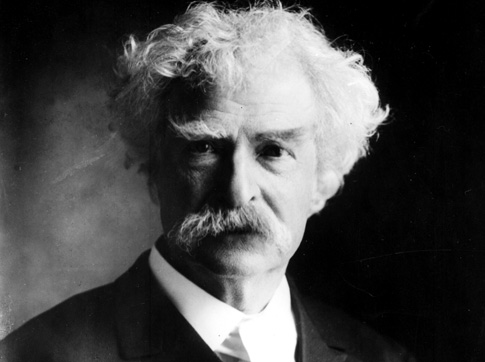
The reports of my death are greatly exaggerated! Mark Twain.

Mark Twain

Origin

Mark Twain quotation after hearing that his obituary had been published in the New York Journal.

Mistaken publications of obituaries aren’t as rare as you might expect. A recent example is of Dave Swarbrick, the British folk/rock violinist, who was killed off mistakenly by the Daily Telegraph in April 1999 when they reported that his visit to hospital in Coventry had resulted in his death. He did at least get the opportunity to read a rather favourable account of his life, not something we all get to do, and to deliver the gag “It’s not the first time I have died in Coventry”.

So why have I opened with this quote from Mark Twain?  Read on and I hope all will be clear.

Integrity is always about getting to the truth!

A little under a week ago I published a couple of posts that proposed that the United States of America is an empire in decline.  The first was What goes up? and the second Might just come down! As a Brit I well know that aspect of British history!

However a recent conversation with a friend of many years back in England, who has also been a shrewd and wise entrepreneur for longer than I care to remember, argued that the evidence for the ‘end of the USA’ could be challenged.

He cited five reasons why he thought the USA would remain, more or less, in its dominant position.  They were:

  1. Spirit of innovation
  2. Relaxed labour laws
  3. The importance of Mexico
  4. The uncertainty of China in terms of the next ’empire’
  5. The likely energy self-sufficiency for the USA in the near-term.

So let me expand on each of those points.

Spirit of innovation

Let me quote from an article in TIME Magazine of the 5th June, 2011,

Innovation is as American as apple pie. It seems to accord with so many elements of our national character — ingenuity, freedom, flexibility, the willingness to question conventional wisdom and defy authority. But politicians are pinning their hopes on innovation for more urgent reasons. America’s future growth will have to come from new industries that create new products and processes. Older industries are under tremendous pressure. Technological change is making factories and offices far more efficient. The rise of low-wage manufacturing in China and low-wage services in India is moving jobs overseas. The only durable strength we have — the only one that can withstand these gale winds — is innovation.

Now there are plenty to argue both ways in terms of the future innovation potential for the USA, as a recent article in The Atlantic does, see American Innovation: It’s the Best of Times and the Worst of Times.  But the spirit of innovation will be a powerful economic potential for the USA for many years to come.

Relaxed labour laws.

Definitely an area that I have little knowledge of except for the subjective notion that compared to many other nations, the laws in the USA are much less of a restraint on economic productivity than elsewhere.

The importance of Mexico.

Importance in the context of providing the USA with a source of cheaper manufacturing facilities.  My English friend thought that this was a significant competitive advantage for the USA.  Now, as it happens, we had a couple staying with us over the week-end of the 6th/7th October.  The husband is a senior manager of Horst Engineering, an American firm based in Guaymas, Sonora County, Mexico.  Here’s a picture from their website,

We are a contract manufacturer of precision machined components and assemblies for aerospace, medical, and other high technology industries. Our core processes include Swiss screw machining, turning, milling, thread rolling, centerless grinding, and assembly. Our extensive supply chain offers our customers a full service logistics solution for managing their precision product requirements. We are ISO9001:2008 and AS9100 registered and proud of our 66 year, three-generation legacy of quality and performance.

I was told that many American and British firms were using Mexico rather than China for a number of reasons.  Not least because Chinese suppliers require full payment before shipment.  Plus that taking into account that financial aspect together with shipping costs and other logistical issues, China wasn’t as ‘cheap’ over all.  Here’s a recent announcement from Rolls Royce,

Rolls-Royce plans new Sonora hub

The burgeoning aerospace industry in Guaymas had its efforts validated recently when the venerable Rolls-Royce chose it as the site for its newest global purchasing office.

Surrounded by several of its aerospace manufacturing suppliers, London-based Rolls-Royce will move into a Guaymas industrial park owned by Tucson-based The Offshore Group to develop a supply hub for commercial jets and military aircraft around the globe.

“Rolls-Royce has very robust booking orders for the next 10 years,” said Joel Reuter, director of communications for Rolls-Royce in North America. “We need to double our production.”

Because a number of Rolls-Royce suppliers already operate in Guaymas, the city was a logical choice, Reuter said.

The uncertainty of China in terms of the next ’empire’

The point made in terms of China taking over ’empire’ status from the USA, as Simon Johnson argues over at Baseline Scenario, is countered by the fact that politically China is an unknown quantity.  Until China endorses some form of democratic process, that unknowingness is not going to disappear.

The likely energy self-sufficiency for the USA in the near-term.

I can’t do better than to ask you to watch this video!  Just 27-minutes long, it is a very interesting review of the energy future of the USA.

As the TED website suggests in terms of why you should listen to Amory Lovins,

Amory Lovins was worried (and writing) about energy long before global warming was making the front — or even back — page of newspapers. Since studying at Harvard and Oxford in the 1960s, he’s written dozens of books, and initiated ambitious projects — cofounding the influential, environment-focused Rocky Mountain Institute; prototyping the ultra-efficient Hypercar — to focus the world’s attention on alternative approaches to energy and transportation.

His critical thinking has driven people around the globe — from world leaders to the average Joe — to think differently about energy and its role in some of our biggest problems: climate change, oil dependency, national security, economic health, and depletion of natural resources.

More on Reinventing Fire may be found here.

So, don’t know about you, but I found those five points deeply convincing.  How about you?  Are the reports of the death of the USA  greatly exaggerated? Do leave a comment.