I have been a subscriber to Ugly Hedgehog, a photographic forum, for a little while.
Recently Vicki posted a couple of photographs of her Corgi. They are fabulous and Vicki was kind enough to give me permission to republish them.
First Vicki in her own words:
The morning light backlit my Corgi, Lexi, as she enjoyed the sunny warmth on the back deck, and the house acted as a very large reflector. No fill flash was needed. The catchlights clearly reflect the windows of the house and may or may not be appealing.
I simplified the background with a layer mask in the second shot.
It’s a brilliant site and one that has reams of good stories about dogs.
Plus it’s OK to republish them which makes a huge difference to so many of you. For I get the impression that you love what they publish as much as I do.
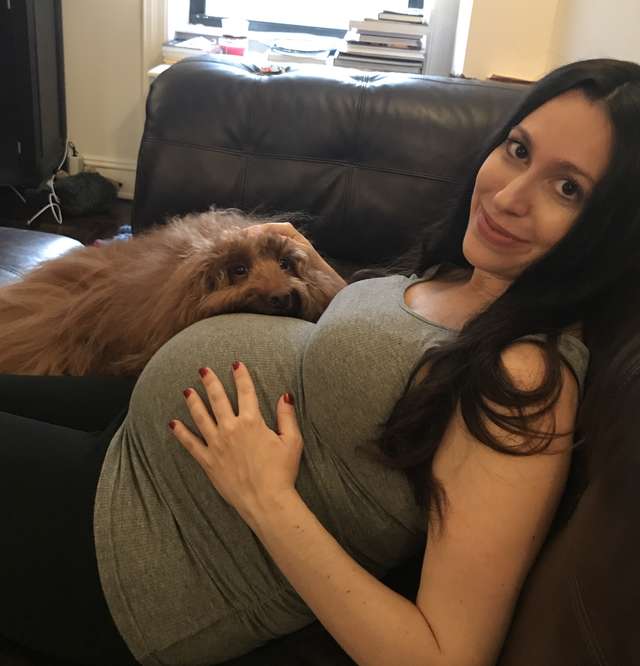
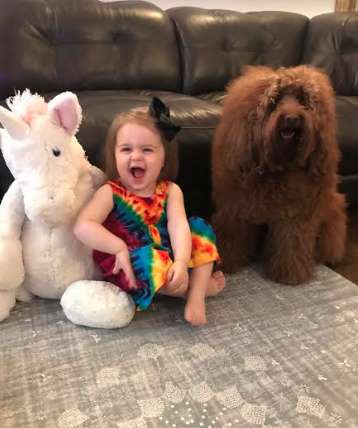
Almost 2 years ago, the lives of Sara Lebwohl and her husband Zach changed forever. That was when the first-time parents welcomed into the world their newborn daughter Halle.
But as the couple embarked on the journey of parenthood, they soon discovered there was someone eager to help them along the way.
That someone, of course, was their adorable dog Prince.
Sara Lebwohl
Even before Halle was born, Prince seemed to understand their family was about to grow. In fact, he rarely left Sara’s side, already devoted to the little one on the way.
Then the big day arrived.
Sara Lebwohl
“When she first came home, he went right up to her and sniffed her,” Sara told The Dodo. “He knew she was little and fragile. But he always stayed close and kept a very close eye on her. He was truly a nanny dog from the first day.”
Sara Lebwohl
Since then, Prince’s dedication to Halle has only grown deeper.
Sara Lebwohl
The two of them are simply inseparable — but although they always have a great time together, Prince still clearly sees himself as both playful companion and caretaker.
And it shows.
Sara Lebwohl
Halle is now nearly 2 years old, and has begun sleeping in her own room. But, as is often the case for youngsters her age, she still requires some comfort and reassurance in the early morning.
Prince, who usually sleeps in Mom and Dad’s room, has always been the first to notice when Halle is seemingly restless. And, without fail, he’d accompany whichever of them got up to attend to Halle during those inconvenient wake-up calls.
Recently, however, Sara and her husband had an idea: What if they left both their bedroom door and Halle’s open throughout the night? Would Prince put a fussy Halle back to sleep on his own?
Yes, is the answer — and here’s some sweet video to prove it:
“Surprisingly it has worked out well,” Sara said. “We crack the door open for him when she gets up, and he walks in to greet her. He has a little routine he does, including rolling around on the ground. Then he will look at her and lay down. The amazing thing is that this calms her, and she goes back to sleep.”
The dog’s stellar nannying skills have made life better for Halle — and her parents, too.
“Prince has been an unexpected savior, allowing us a bit more precious minutes to hours of sleep. When he walks in the room, we know she is in good paws and we can all get some more rest,” Sara said.
Now, everyone’s morning is that much happier.
Sara Lebwohl
This is just one of the ways that Prince has made life better. Every waking moment is improved by having him around, a faithful companion to those who love him the most. And as Halle grows, there’s no doubt he’ll continue to share in the joys and challenges that lie ahead.
His favorite little girl wouldn’t have it any other way.
“He takes his job as protective big brother very seriously,” Sara said. “Our family feels so fortunate to have a dog that is so loving and good-hearted. We are also thankful that Halle adores Prince.”
ooOOoo
See what I mean!
It’s a beautiful story of Prince being so attentive to the needs of Halle and Halle in turn adoring Prince.
Long after Prince has died, indeed for the rest of Halle’s days, she will love dogs.
Continuing the theme of revisiting earlier posts this week!
ooOOoo
More on Pharaoh’s life
What a wonderful relationship it has been.
Years ago if I was ever to own a dog, it had to be one breed and one breed only: a German Shepherd Dog.
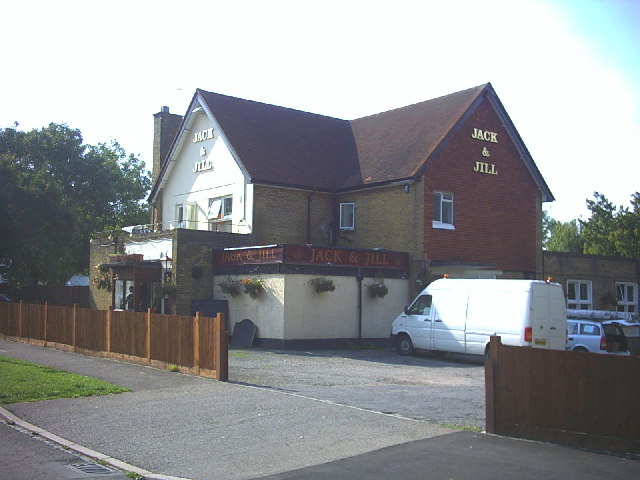
The reason for this was that back in 1955 my father and mother looked after a German Shepherd dog called Boy. Boy belonged to a lovely couple, Maurice and Marie Davies. They were in the process of taking over a new Public House (Pub); the Jack & Jill in Coulsdon, Surrey. My father had been the architect of the Jack & Jill.
Jack & Jill, Longlands Avenue, Coulsdon, Surrey
As publicans have a tough time taking holidays, it was agreed that the move from their old pub to the Jack & Jill represented a brilliant opportunity to have that vacation. My parents offered to look after Boy for the 6 weeks that Maurice and Marie were going to be away.
Boy was the most gentle loveable dog one could imagine and I quickly became devoted to him; I was 11 years old at the time. So when years later it seemed the right time to have a dog, there was no question about the breed. Boy’s memory lived on all those years, and, as this post reveals, still does!
Pharaoh was born June 3rd, 2003 at Jutone Kennels up at Bovey Tracy, Devon, on the edge of Dartmoor. As the home page of the Jutone website pronounces,
The Kennel was established in 1964 and it has always been the aim to breed the best German Shepherd Dogs for type and temperament. To this end the very finest German bloodlines are used to continue a modern breeding programme.
and elsewhere on that website one learns:
Jutone was established by Tony Trant who was joined by Sandra Tucker in 1976. Sandra continues to run Jutone since Tony passed away in 2004. Both Tony and Sandra qualified as Championship Show judges and Sandra continues to judge regularly. Sandra is the Secretary and a Life Member of the German Shepherd Dog Club of Devon.
Tony Trant
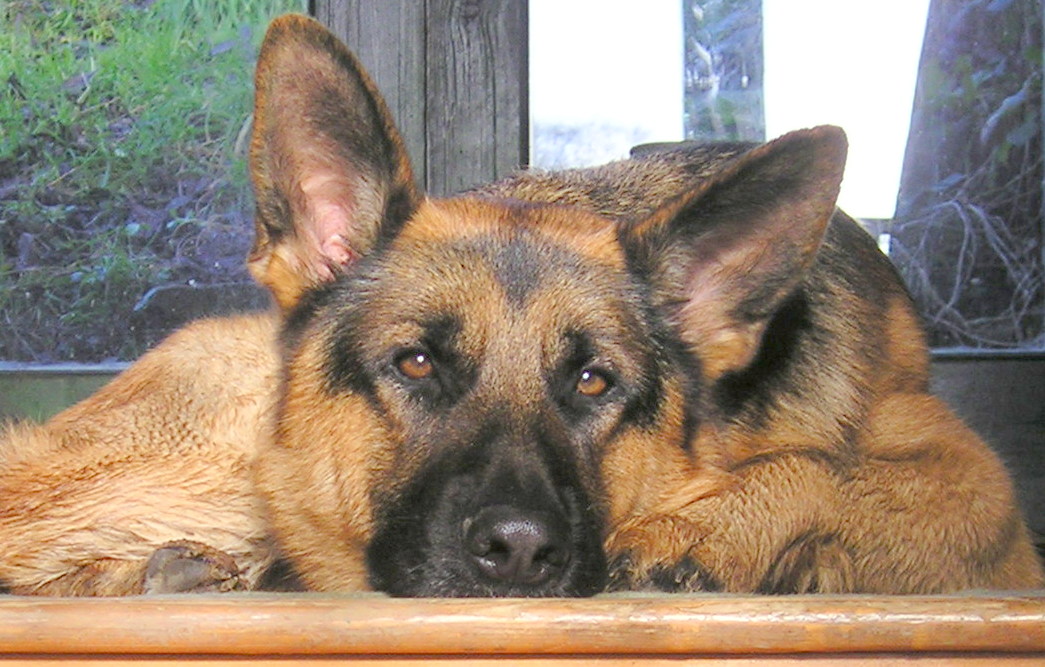
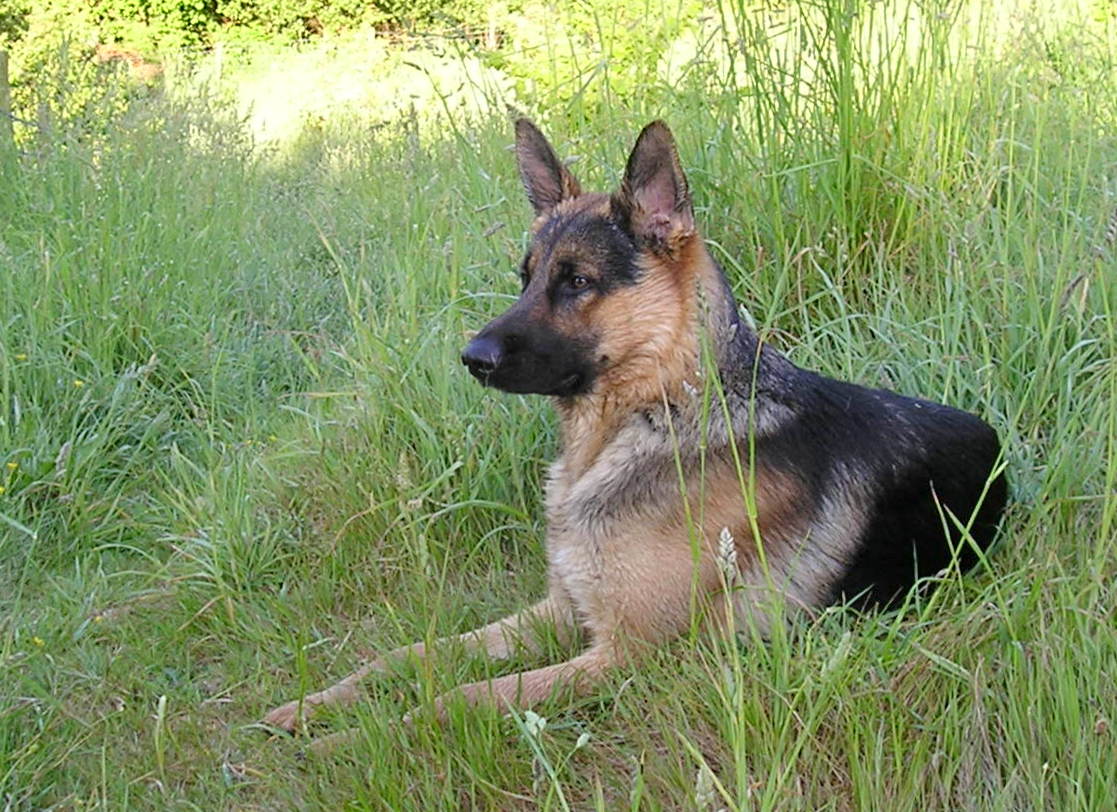
Turning to Pharaoh, here are a few more pictures over the years.
Pharaoh, nine months old.
oooOOOooo
One year old: June 3rd 2004.
The next picture of Pharaoh requires a little background information.
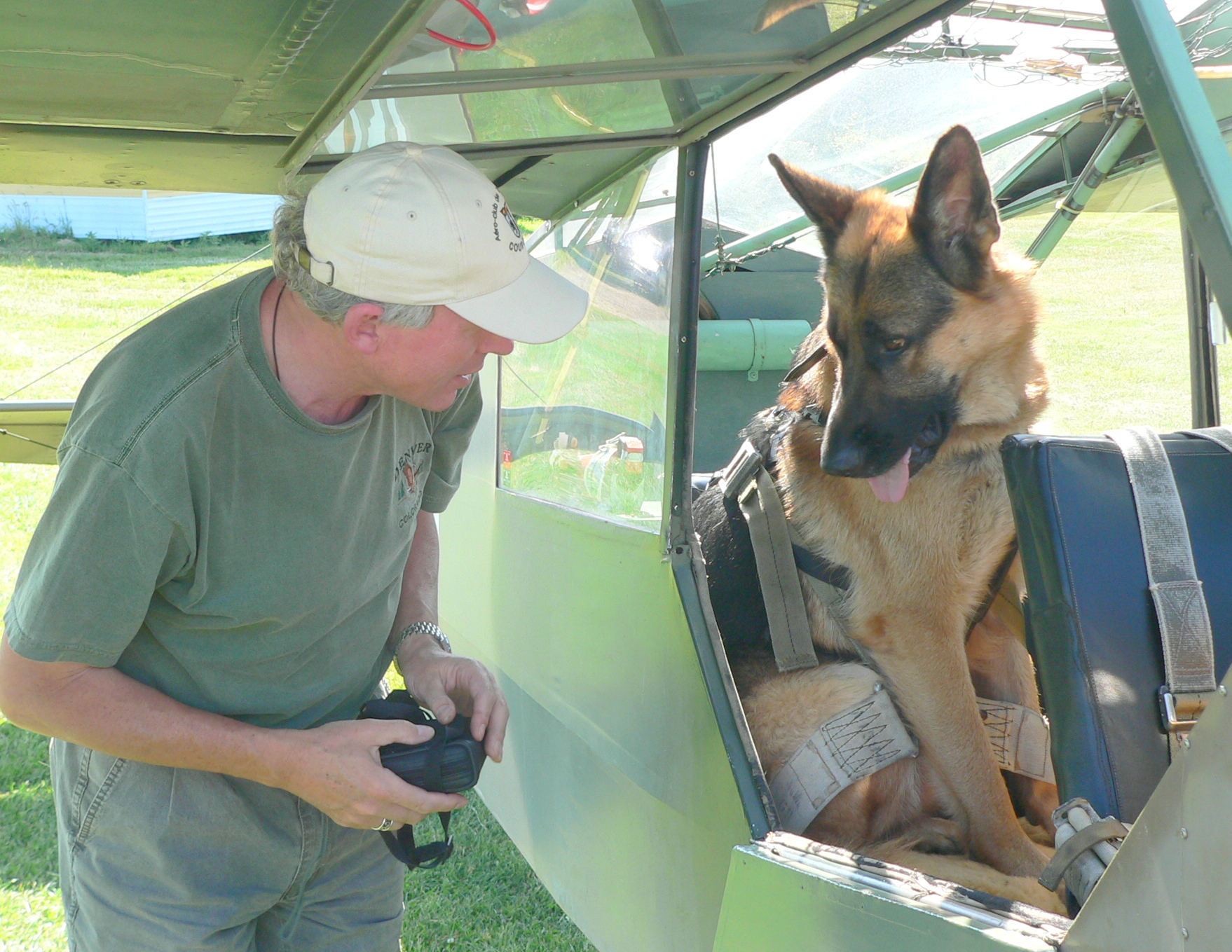
For many years I was a private pilot and in later days had the pleasure, the huge pleasure, of flying a Piper Super Cub, a group-owned aircraft based at Watchford Farm in South Devon. The aircraft, a Piper PA-18-135 Super Cub, was originally supplied to the Dutch Air Force in 1954 and was permitted by the British CAA to carry her original military markings including her Dutch military registration, R-151, although there was a British registration, G-BIYR, ‘underneath’ the Dutch R-151. (I wrote more fully about the history of the aircraft on Learning from Dogsback in August 2009.)
Piper Cub R151
Anyway, every time I went to the airfield with Pharaoh he always tried to climb into the cockpit. So one day, I decided to see if he would sit in the rear seat and be strapped in. Absolutely no problem with that!
Come on Dad, let’s get this thing off the ground!
My idea had been to fly a gentle circuit in the aircraft. First I did some taxying around the large grass airfield that is Watchford to see how Pharaoh reacted. He was perfectly behaved.
Then I thought long and hard about taking Pharaoh for a flight. In the Cub there is no autopilot so if Pharaoh struggled or worse it would have been almost impossible to fly the aircraft and cope with Pharaoh. So, in the end, I abandoned taking him for a flight. The chances are that it would have been fine. But if something had gone wrong, the outcome just didn’t bear thinking about.
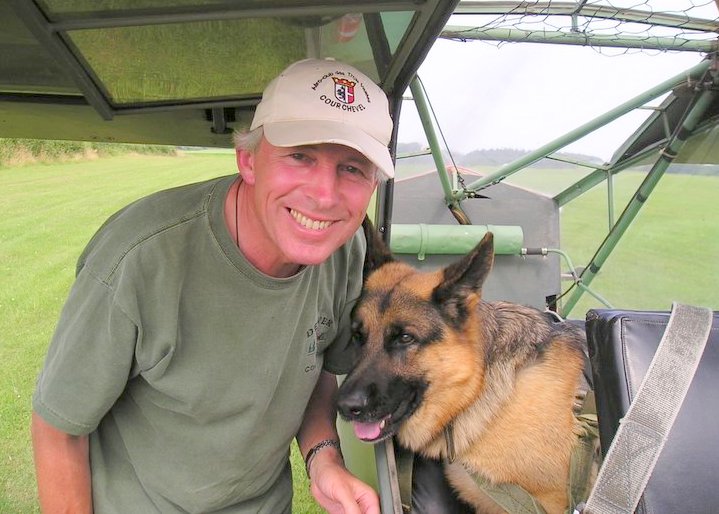
So we ended up motoring for 30 minutes all around the airfield which, as the next picture shows, met with doggie approval. The date was July 2006.
That was fun!
What a dear dog he has been over all the years and, thankfully, still is!
As if to reinforce the fabulous dog he still is, yesterday it was almost as though he knew he had to show how youthful he still was.
Because, when I took his group of dogs out around 7.30am armed with my camera, Pharaoh was brimming over with energy.
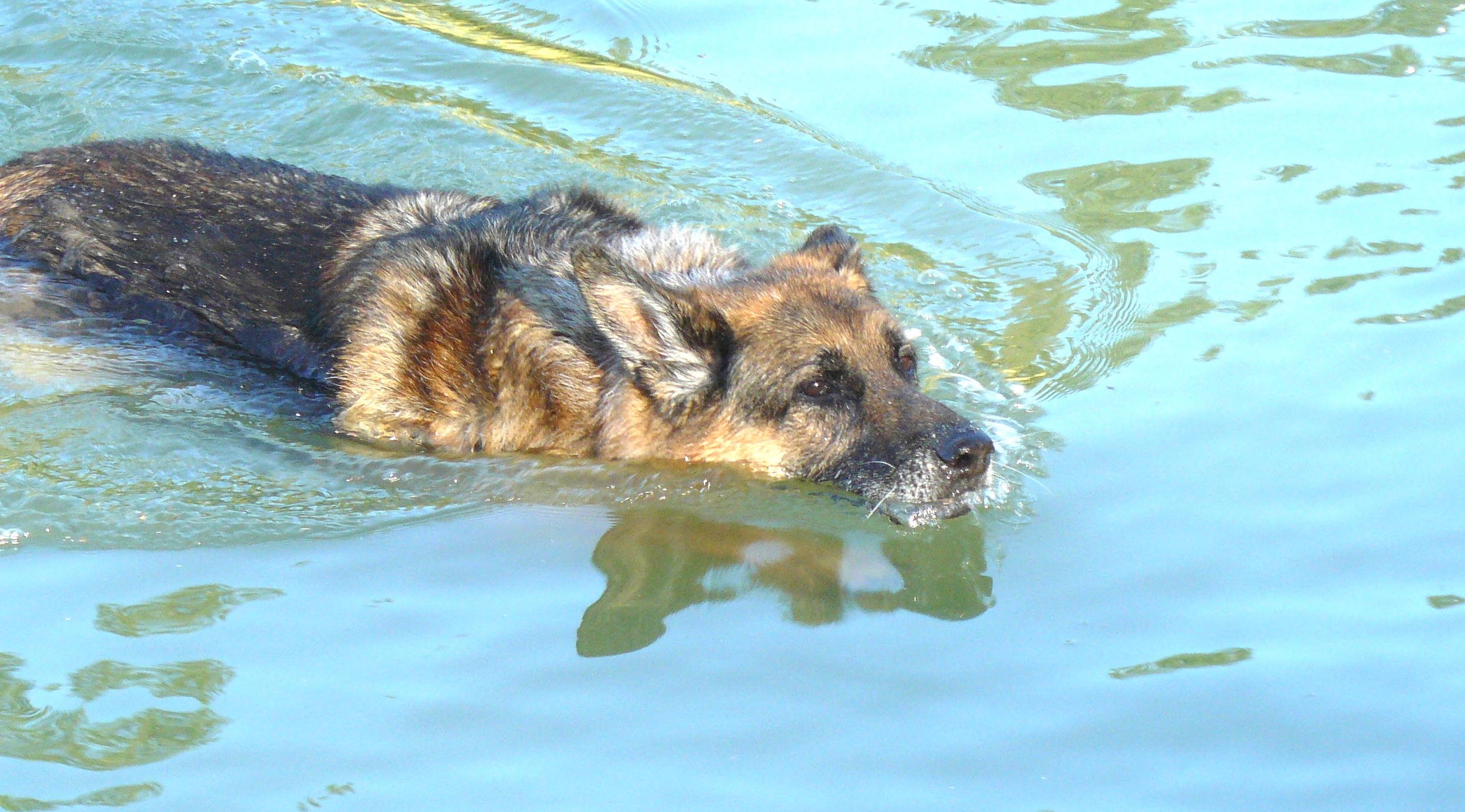
First up was a swim in the pond.
Ah, an early birthday dip! Bliss!
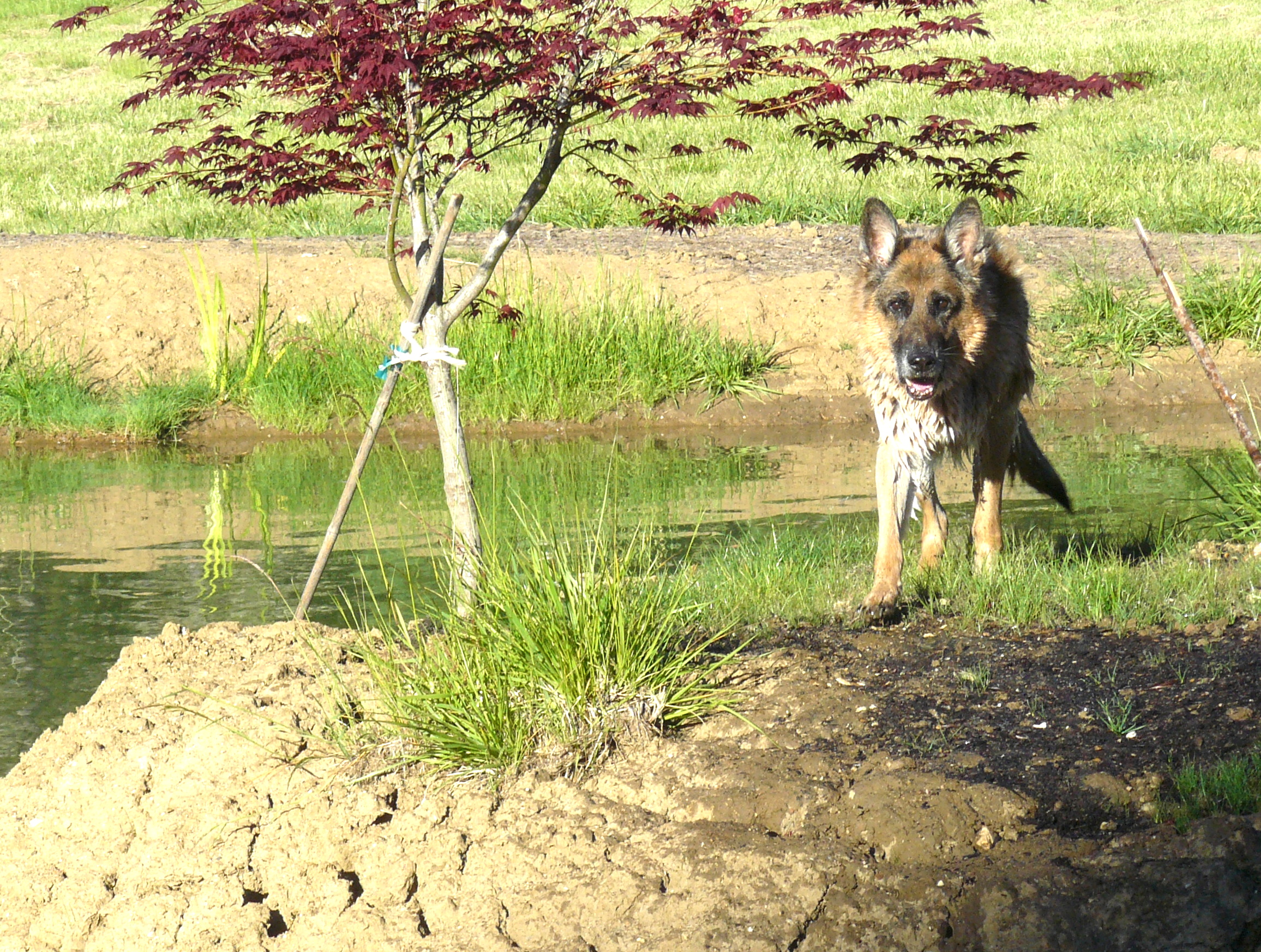
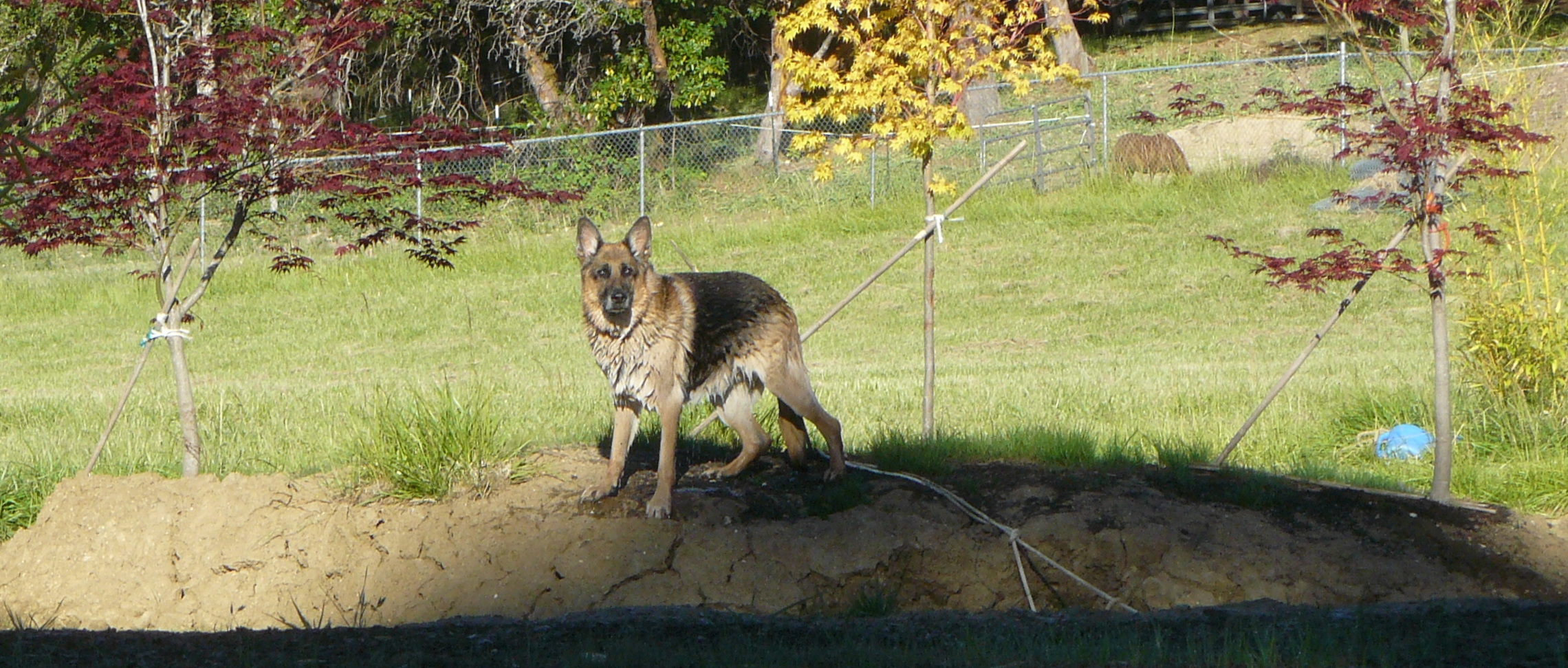
Then in a way he has not done before, Pharaoh wanted to play ‘King of my Island’, which is in the middle of the pond.
Halt! Who goes there!
ooo
This is my island! So there!
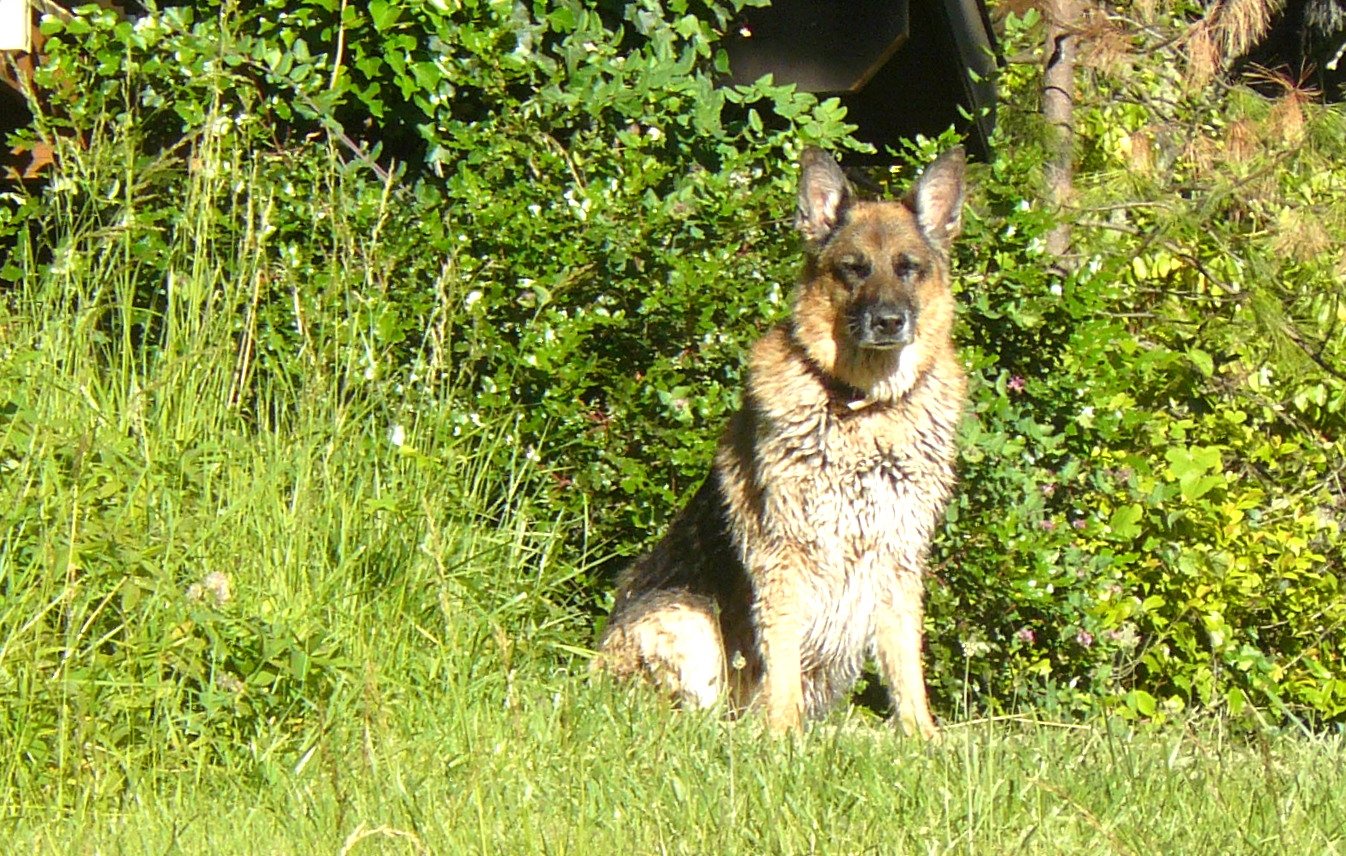
Then a while later, when back on dry land, so to speak, it was time to dry off in the morning sunshine.
Actually, this isn’t a bad life!
Long may he have an enjoyable and comfortable life.
ooOOoo
Pharaoh died of old age on June 19th, 2017. He was 14!
Despite the fact that we have six wonderful dogs including Cleo there is still a twinge of sadness when Pharaoh is mentioned. And now you know the origins of Pharaoh!
Let me close by sharing a photograph of Cleo.
Picture taken of puppy Cleo on the 13th April, 2012 when she was then aged 11 weeks.
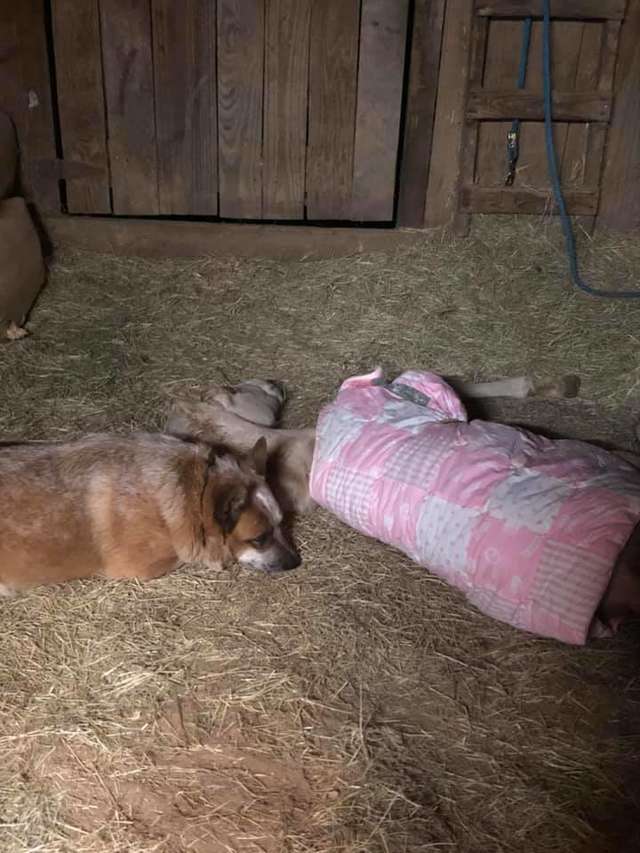
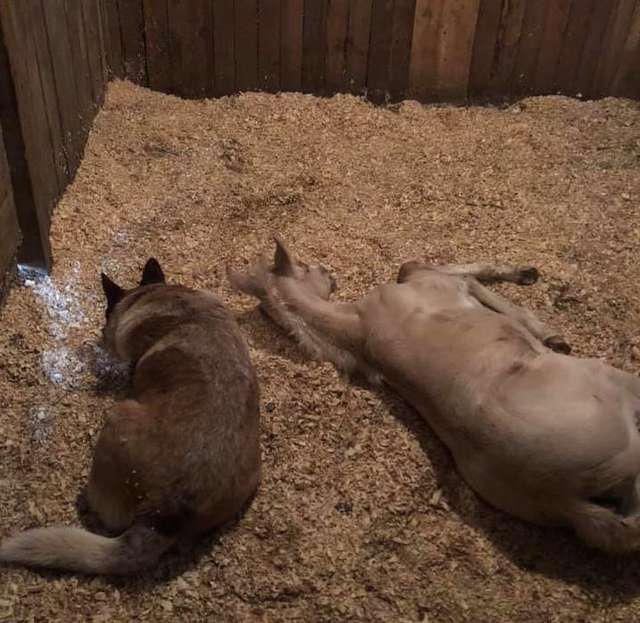
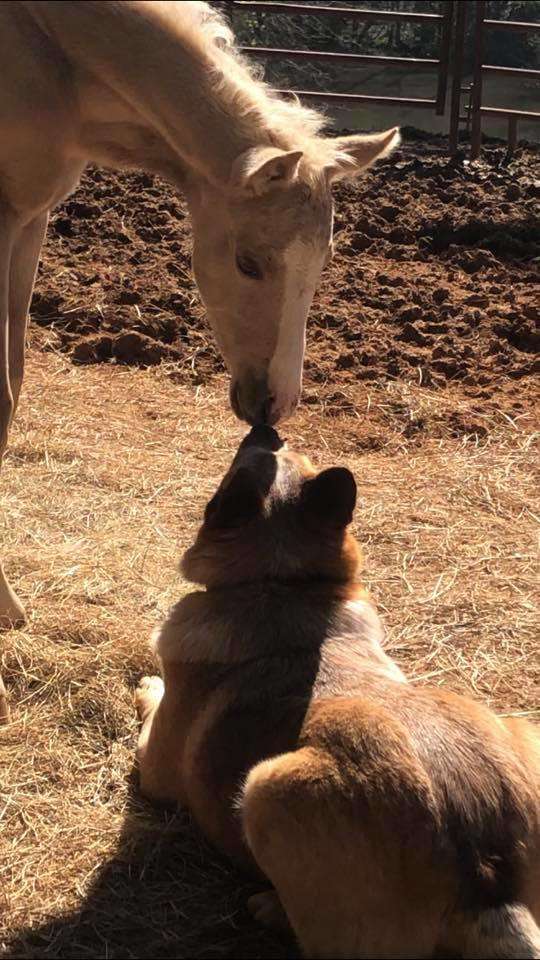
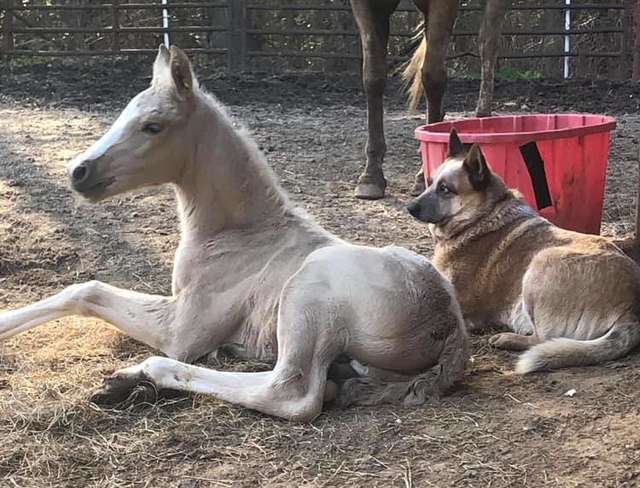
At only 9 days old, a foal named Tye lost his mother. But that same night he gained an unexpected friend — an Australian cattle dog named Zip.
Zip had never shown much interest in his horse siblings. “We raise foals every year, and he would kind of look in the door and just look at them,” Karla Swindle, Zip’s mom, told The Dodo.
But on that fateful night in March, it was as if the 5-year-old rescue dog could tell he was needed.
Facebook/Karla Swindle
Tye’s mother became sick days after giving birth, and despite treatment, quickly went downhill. When things looked their bleakest for the mother and baby, Swindle stayed by their side. As always, Zip tagged along after his owner.
“I spent the night at the barn taking care of the mama horse, hoping that I could pull her through,” Swindle said. “Zip stayed with me in the alley of the barn all night — the foal was laying in the alley, and he just lay there beside the foal.”
“He was whining,” Swindle added. “You could tell that Zip knew something was wrong that night.”
The next morning, Tye lost his mother, but he wasn’t alone.
Zip insisted on keeping the newborn horse company, comforting the little animal with his presence. When Zip was around, Tye was relaxed and happy. “It seemed to me that the foal knew that the dog was trying to help him,” Swindle said, “which is so sweet.”
Facebook/Karla Swindle
For six weeks, Zip wouldn’t let Tye out of his sight. Whenever Swindle went to feed the foal, Zip was first in line to greet the little horse. “Every time I would take off to the barn, Zip would run to the stall, and stand in front of the stall and wait for me to get there,” Swindle said. “He would beat me to the barn every time.”
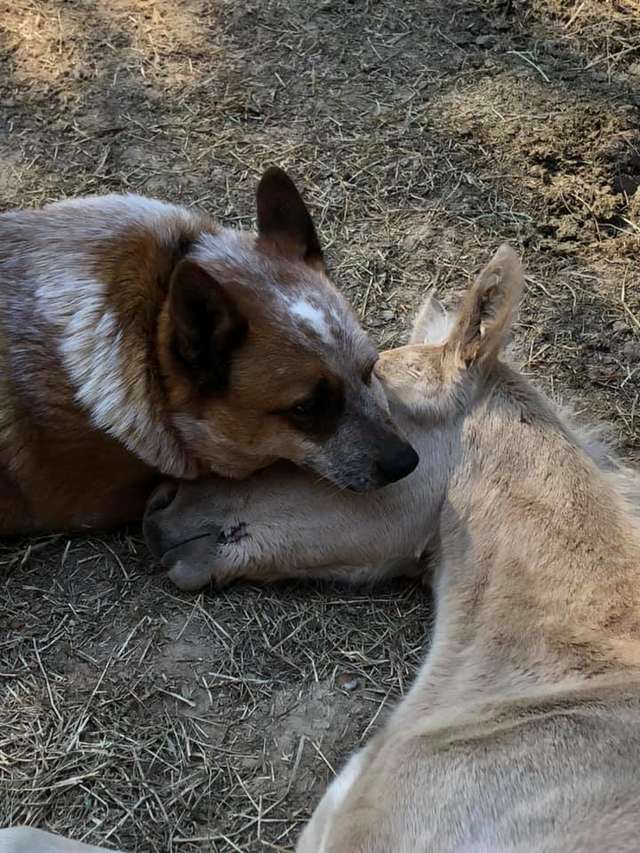
“As soon as I opened the door, he would about knock me down before I could get in there,” she added. “If the foal was laying down, he would go over there and lay his head on him.”
Facebook/Karla Swindle
As months passed, Tye quickly put on weight, growing into a healthy young horse — in part, thanks to his adoptive dad.
Now, Tye spends most days out in the pasture with his older sister, who is teaching him the ins and outs of being a horse. And while Zip still accompanies Swindle to the barn, he doesn’t beg to go in the stall with Tye anymore.
Facebook/Karla Swindle
“The foal is a little rough now,” Swindle said, “raring up, trying to play, so Zip kind of stays away from him now.”
The proud dad understands that Tye needs to test his independence, and it doesn’t make their relationship any less special.
“You could tell that when the foal needed Zip, Zip was there for him,” Swindle said. “And now Zip knows that the foal is OK, so they kind of went their separate ways.”
Facebook/Karla Swindle
But it seems the little horse has opened up room in the older dog’s heart — space that he has since filled with another baby.
“He loves my granddaughter,” Swindle said. “Whenever she comes over here, he goes directly to her. He treats her like he did the foal. He just loves to be around her.”
ooOOoo
We have mentioned it time and time before. That dogs are so special. And then one comes across an account of something that is even more special.
All of the photographs are delightful but that third one shows the intimacy that is in the relationship. The caring that is being shown by Zip!
I have said it before and no doubt will say it many times more: Dogs are incredibly wonderful.
Not all heroes wear capes — but when it comes to helping animals in need, some really do.
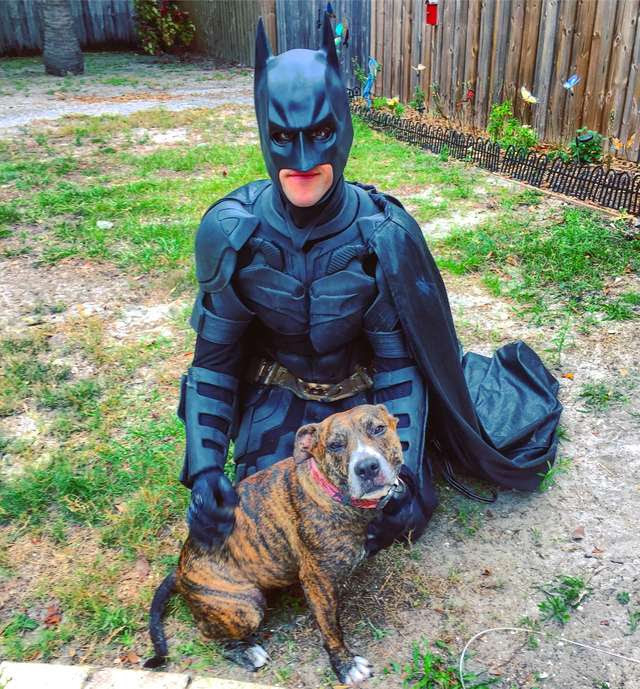
That’s what one homeless pit bull named Koko learned when the Caped Crusader himself changed her life forever.
Photo Credit: Batman4Paws
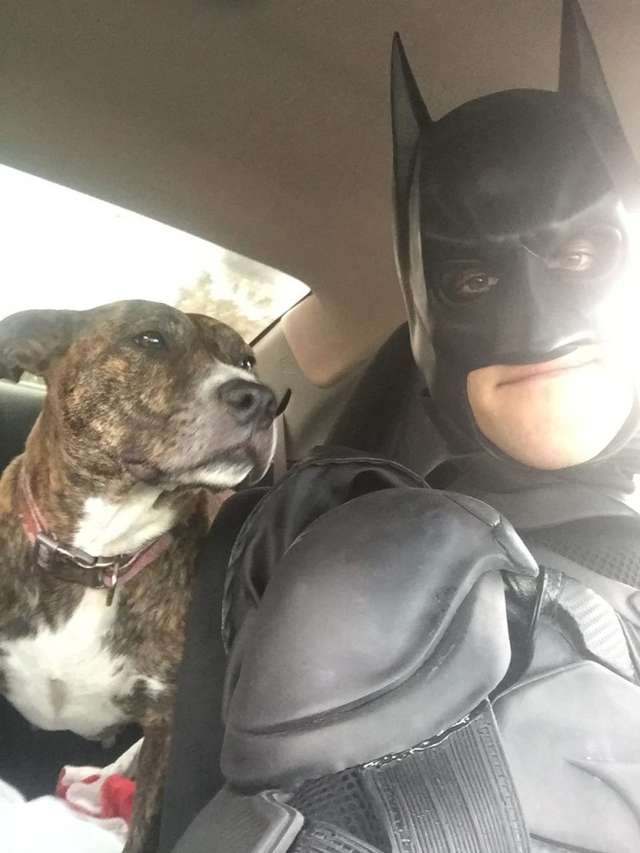
Koko arrived at the Pet Resource Center of Tampa as a stray. Day after day, she waited patiently for a family to choose her. But, before that day could come, she was put on the euthanasia list. With an hour left to live, Koko was pulled from the shelter by her foster mom and months later found a forever home in Gatlinburg, Tennessee.
The only problem? She had no way of getting there.
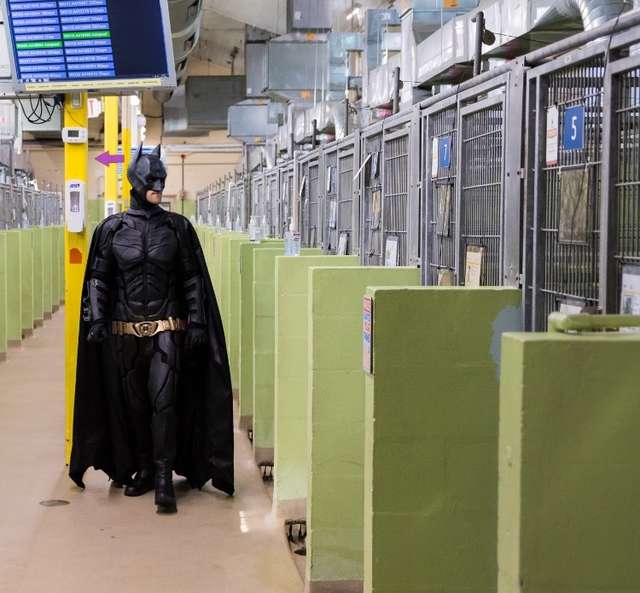
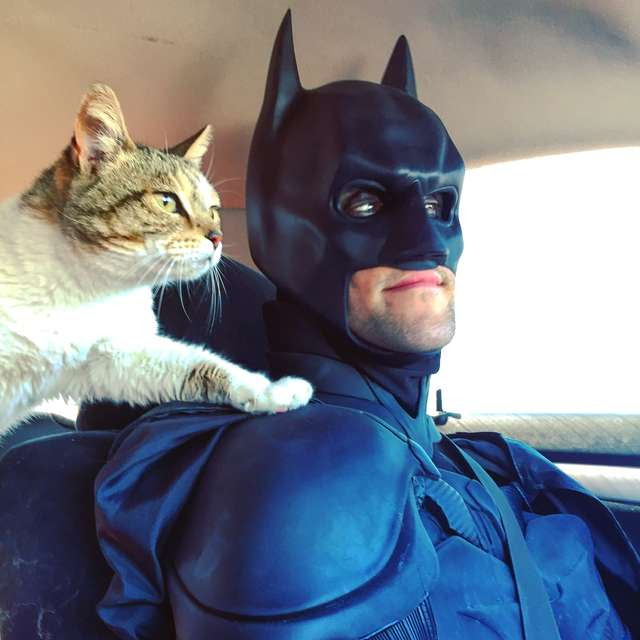
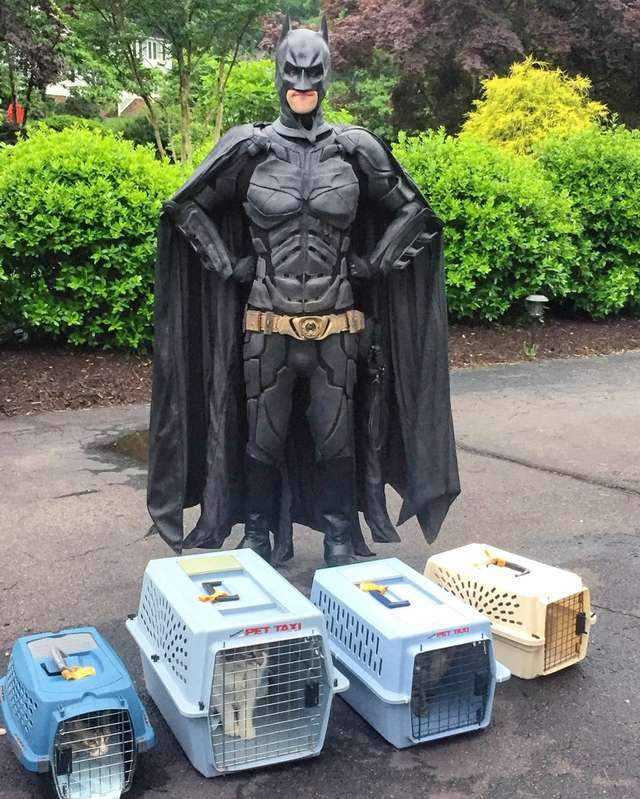
Enter the Dark Knight — otherwise known as Chris Van Dorn, founder of the animal rescue nonprofit Batman4Paws.
Batman4Paws
An eight-hour road trip dressed in an elaborate Batman costume is all in a day’s work for Van Dorn. “I would say I’m just the middleman,” Van Dorn told The Dodo. “The real heroes are the people giving these dogs a good, loving home.”
Koko is one of many dogs and cats whom Van Dorn has helped transport from overcrowded shelters to the safety of their forever homes.
And while dressing as Batman isn’t necessary to save an animal’s life, it has helped Van Dorn open up a dialogue about the importance of adoption and fostering.
Batman4Paws
The costume just makes everybody happy and smile,” Van Dorn said. “It’s special to see Batman walking around, and when they find out that he’s doing a good deed in the world they get even more excited.”
“It kind of just came as a way to embody all the good I wanted to do in the world,” he added, “and make it easy for people to talk to me right off the bat.”
Batman4Paws[/caption]
Van Dorn grew up watching the Batman animated series and began volunteering with animal rescues when his family adopted an Australian shepherd named Mr. Boots. When it came time for Van Dorn to start his own rescue organization, he decided to do it as Batman with, of course, Mr. Boots occasionally stepping in as Robin.
Batman4Paws
Every superhero has a secret identity, and for Van Dorn, wearing a mask was an intentional way of keeping the focus on his mission of saving animals.
“When I was first starting out, I was keeping everything really anonymous,” Van Dorn said. “I would sign everything ‘Bruce Wayne’ and not put my real name out there … My catchphrase is, ‘It’s not who I am underneath but what I do that defines me,’ and I still hold that true today.”
Batman4Paws
His cover was blown when GoFundMe honored his campaign, naming him as their GoFundMe Hero for May. Van Dorn hopes soon to put his private pilot’s license to good use by purchasing a plane so he can fly the animals to their forever homes every week.
But for the time being, he’s using his Batmobile, and making a difference whenever he can.
“Actions speak louder than words and I’m just doing my best to empty the cages,” Van Dorn said. “And I challenge anyone to go to their local shelter because it’s a depressing place, but if you can help out in any way — whether that’s to foster a dog or adopt a dog or just volunteer your time, then you should go out and do it.”
ooOOoo
This is one amazing guy. Simple and straightforward!
There was a simply lovely article on The Dodo about a service dog receiving a call from her Mom.
ooOOoo
Service Dog Has The Sweetest Reaction To Getting A Video Call From Her Mom
Photo Credit: Facebook/Adventures with Moxie: Service Dog
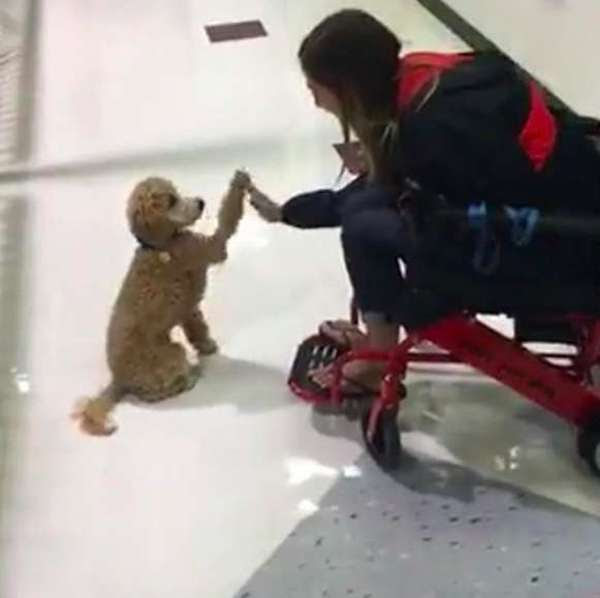
Meet Moxie — a very good girl who works every day to make her mom’s life a little bit easier.
Ever since Moxie met Katie Harris, the two have rarely been apart. Moxie accompanies her mom to work and is always by her side at home.
“Moxie helps me every day and truly has been such a huge blessing to me,” Harris told The Dodo. “Very often, when I would bend over, I would either injure myself from a dislocation or pass out from blood pressure issues. Moxie will pick up anything I drop, retrieve my shoes, clothes or anything else I need.”
Photo Credit: Facebook/Adventures with Moxie: Service Dog
Harris suffers from Ehlers-Danlos syndrome, a connective tissue disorder, and recently had surgery to help ease her symptoms. Unfortunately, that meant Moxie had to stay at home while she was in the hospital for an extended stay.
Harris knew it would be difficult to not be around Moxie — but she had no idea how the service pup would react to the separation.
“I hate being away from Moxie, especially during hard times,” Harris said. “When I knew I was going to be transferred to rehab, I kind of jokingly FaceTimed her, not knowing if she would have any reaction.”
Photo Credit: Facebook/Adventures with Moxie: Service Dog
After 12 days apart, it was clear that Moxie missed her mom, too. The pup seemed overjoyed to see her mom’s face again — even if it was just on a phone screen.
“She immediately recognized my voice and when she started licking the phone — I definitely teared up,” Harris said. “I didn’t quite see the full reaction until my stepmom sent me the video and I couldn’t believe it! I truly do believe she knew that was me.”
The next day, Moxie reunited with her mom, and the pup couldn’t contain her excitement. It was clear that though Moxie is a dog with a job, her love for her mom goes far beyond duty or training.
Even the way she greeted her mom shows just how much she cares.
Photo Credit: Facebook/Adventures with Moxie: Service Dog
“I couldn’t wait to see her, but I was a little nervous about my neck due to my cervical fusion,” Harris said. “But although she jumped in my lap and immediately started licking me, she didn’t hurt my neck at all. We eventually just paused in more of a hug as I just held her.”
Harris understands how life-changing a service dog can be and is now working to raise money to gift service animals to those in need.
“I can honestly say that having Moxie has ‘saved me’ and I am so incredibly thankful for her,” Harris said. “Not only does she help me physically, but we truly are a team as we navigate these challenges and hurdles together.”
ooOOOo
Katie Harris is unfortunate but also incredibly lucky. For her Moxie is the centre of her life and one can hardly imagine life without Moxie.
Moxie has developed an amazing relationship with Katie and it’s a lovely example of how close the bond between a human and a dog can get!
Posted by Deborah Byrd in ASTRONOMY ESSENTIALS | TODAY’S IMAGE|July 4, 2019
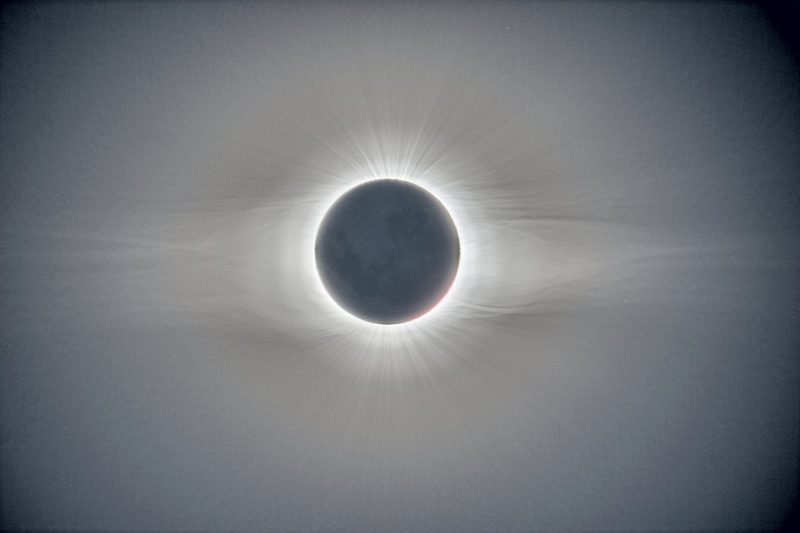
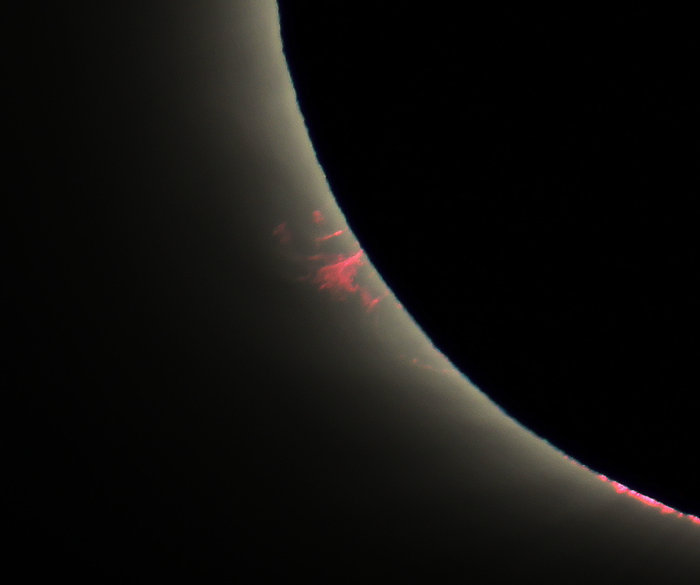
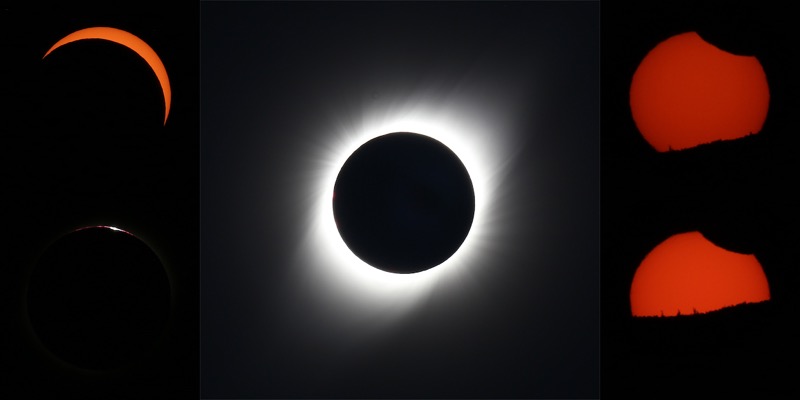
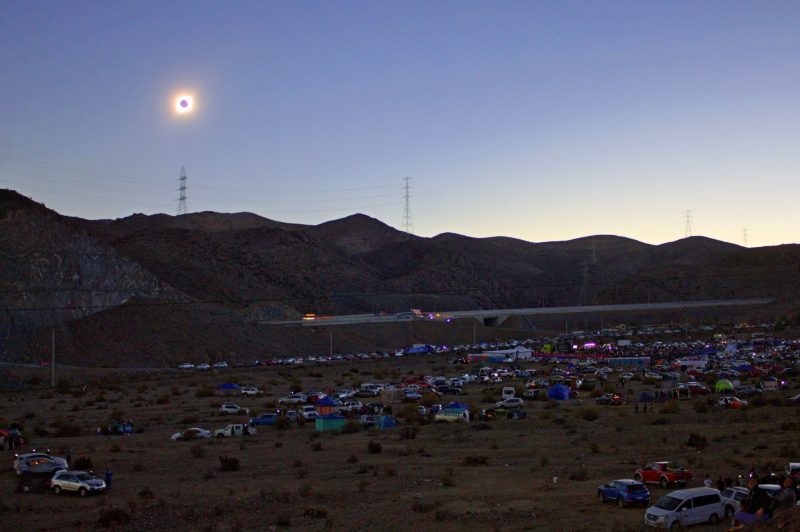
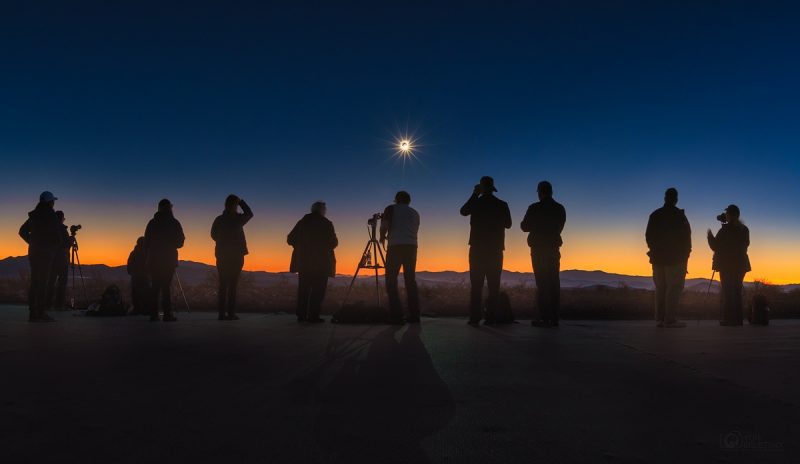
Some called it the “astronomer’s eclipse” because it passed near major observatories in Chile. Check out these beautiful images of the July 2, 2019, total solar eclipse.
This composite image captures the drama of totality during the July 2, 2019, total solar eclipse. When – as seen from Earth – the moon passes directly in front of the sun, the sun’s light is blocked and its extended atmosphere or corona can be seen. The processing of this image highlights the intricate detail of the corona, its structures shaped by the sun’s magnetic field. Some details of the lunar surface can also be seen. The image – via European Space Agency (ESA) – was created by the ESA-CESAR team observing the eclipse from ESO’s La Silla Observatory in Chile, South America.A prominence seen in the sun’s chromosphere during the July 2, 2019, total solar eclipse. Prominences are made of tangled magnetic field lines that keep dense concentrations of solar plasma suspended above the sun’s surface. They are anchored to the sun’s visible surface and extend outwards through the chromosphere and out into the corona. The red hue of the chromosphere is only apparent during an eclipse. This image – via ESA – was taken by the ESA-CESAR team observing the eclipse from ESO’s La Silla Observatory in Chile, South America.View at EarthSky Community Photos. | Total solar eclipse over Vicuna, Chile, on July 2, 2019 from Alexander Krivenyshev of the website WorldTimeZone.com.View at EarthSky Community Photos. | Pablo Goffard caught the July 2 total solar eclipse from Incahuasi, Chile. He wrote: “This is just a photo, a tiny part of the experience. Incahuasi is a small town in the Atacama desert. Here it’s seen the camp installed especially for the eclipse.”This image of eclipse-watchers was taken by a frequent EarthSky contributor, Yuri Beletsky, on the Chilean coast. It was chosen as an Astronomy Picture of the Day for July 4, 2019. Congratulations on a wonderful photo, Yuri! Note that diffraction spikes (apparent rays from the sun) are effects from the camera lens aperture.
While some observers on the southern part of Earth saw a total solar eclipse, the European Space Agency’s PROBA-2satellite’s SWAP imager in space saw a partial eclipse, as shown in the video below. The images are in ultraviolet light, revealing the turbulent nature of the sun’s surface and corona. ESA said:
During this eclipse the satellite was passing through the South Atlantic Anomaly at the time of the largest occultation [covering of the sun]. In this region the spacecraft is exposed to higher levels of radiation. The increased flux of energetic particles falling on the satellite’s detector is the cause for all the bright dots and streaks in the images.
Bottom line: More amazing images of the July 2, 2019, total solar eclipse.
Sean Coughlan wrote a most delightful piece on the BBC News website the other day.
No matter how many times dogs are referred to it always cheers me up to read about them, especially on a major news website.
ooOOoo
Dogs ‘prevent stressed students dropping out’
By Sean Coughlan, BBC News family and education correspondent
July 2nd, 2019
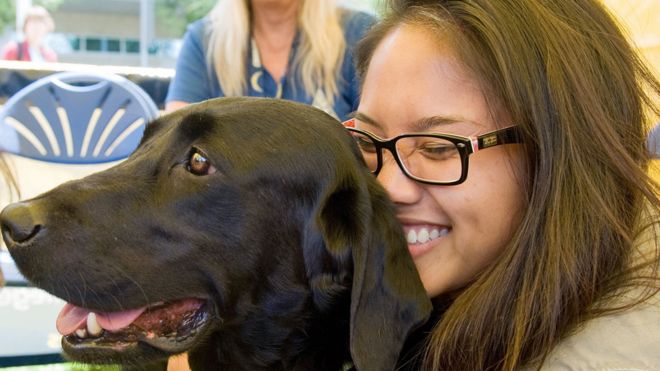
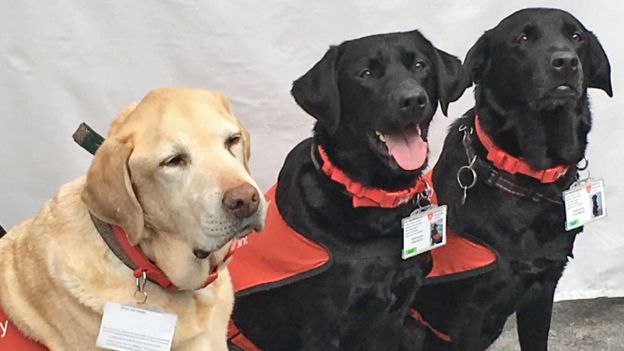
Therapy dogs are used in more than 1,000 universities and colleges in the US – Getty Images
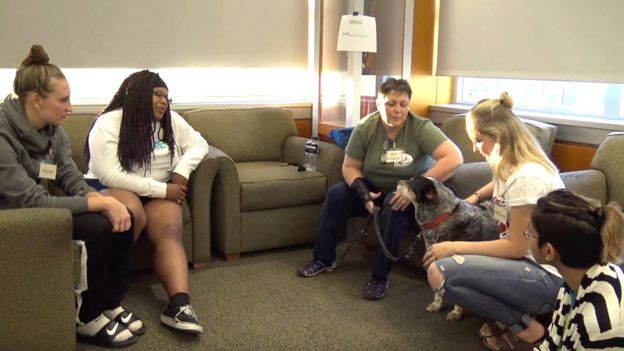
Stress among students really can be reduced by spending time with animals, according to research from the US.
It has become increasingly common for universities to bring “therapy dogs” on to campus – but claims about their benefits have often been anecdotal.
Now, scientists say they have objective evidence to support the use of dogs.
Patricia Pendry, from Washington State University, said her study showed “soothing” sessions with dogs could lessen the negative impact of stress.
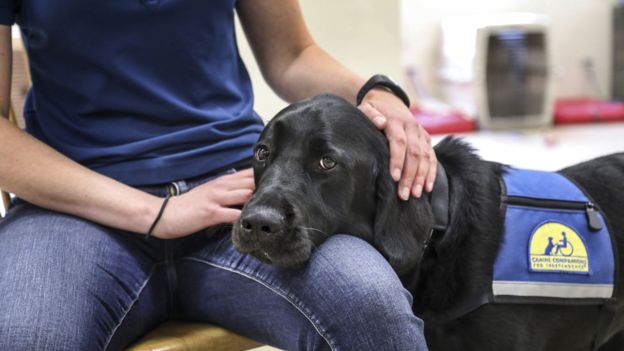
Dogs are also used to help people with post-traumatic stress disorder – Getty Images
The study of more than 300 undergraduates had found weekly hour-long sessions with dogs brought to the university by professional handlers had made stressed students at “high risk of academic failure” or dropping out “feel relaxed and accepted”, helping them to concentrate, learn and remember information, she said.
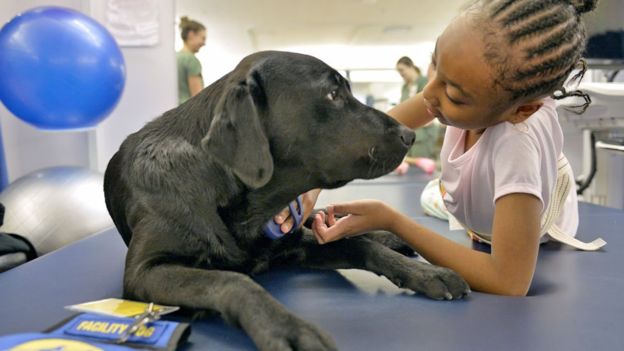
A children’s hospital in California got its first therapy dog this year – Getty Images
“Students most at risk, such as those with mental health issues, showed the most benefit,” said Dr Pendry.
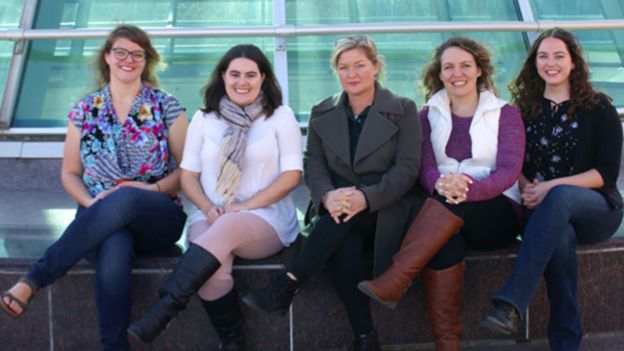
The dog therapy research team at Washington State University
It has also become more common in the UK, with Buckingham, University College London, Cambridge, Nottingham Trent, London Metropolitan and Swansea among those deploying dogs.
The University of Middlesex has even put “canine teaching assistants” on to the staff, to stop lonely students dropping out.
The university study involved 300 undergraduates at Washington State
Previous research has suggested stroking pets can reduce stress hormone levels.
Students spent an hour with dogs, brought to the university by professional handlers
“There does seem to be something specific about the reducing of anxiety from the petting of animals,” said Dr Pendry.
Middlesex University has put dogs on the staff as “canine teaching assistants”
“Do we fully understand the mechanism? No,” said Prof Nancy Gee, a psychologist at the State University of New York and researcher from the Waltham Centre for Pet Nutrition, also part of the project.
But students appeared to “feel calmer and more socially supported”, giving them more confidence in their studies.
Even just looking at animals could sometimes lighten the mood, Prof Gee added.
ooOOoo
This is such a lovely piece. Professor Nancy Gee sums up what we feel when we are close to a dog and yet ponders on the precise science of it.
It’s true! Even just looking at a dog, or more in our case, definitely lightens the mood.
Just look at the exchange of softness in that third photograph from the top. The one about a children’s hospital in California that took on its first therapy dog.









 Batman4Paws[/caption]
 Batman4Paws



 Learning from Dogs