For some time I have followed Ugly Hedgehog, (UHH) a photographic forum; I joined in July 2017. It is a terrific forum and I encourage all who have an interest in photography who don’t know of the forum to drop in and take a look.
For example, I chose my camera based on advice from UHH. I chose my photo-editing software, DxO Photolab, likewise. I am growing in confidence at using the camera based on UHH advice, and more.
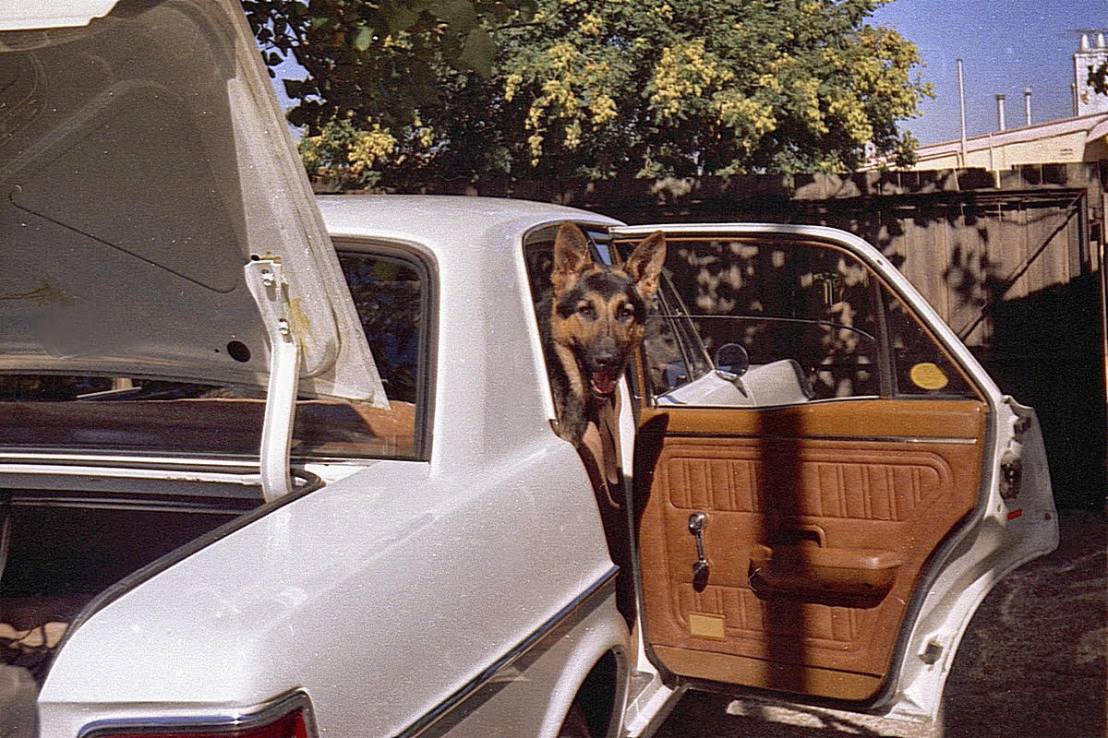
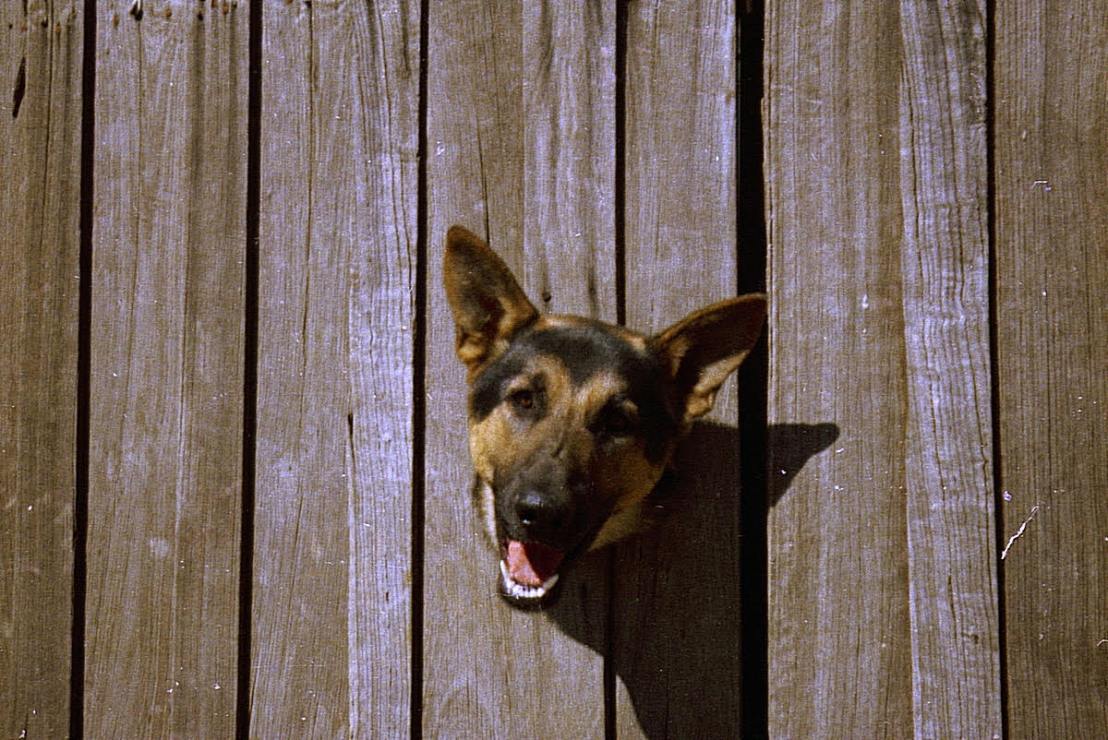
The other day, Dennis posted a photograph that his granddaughter took. I asked for permission to republish it and Dennis kindly said “Yes”.
First some background:
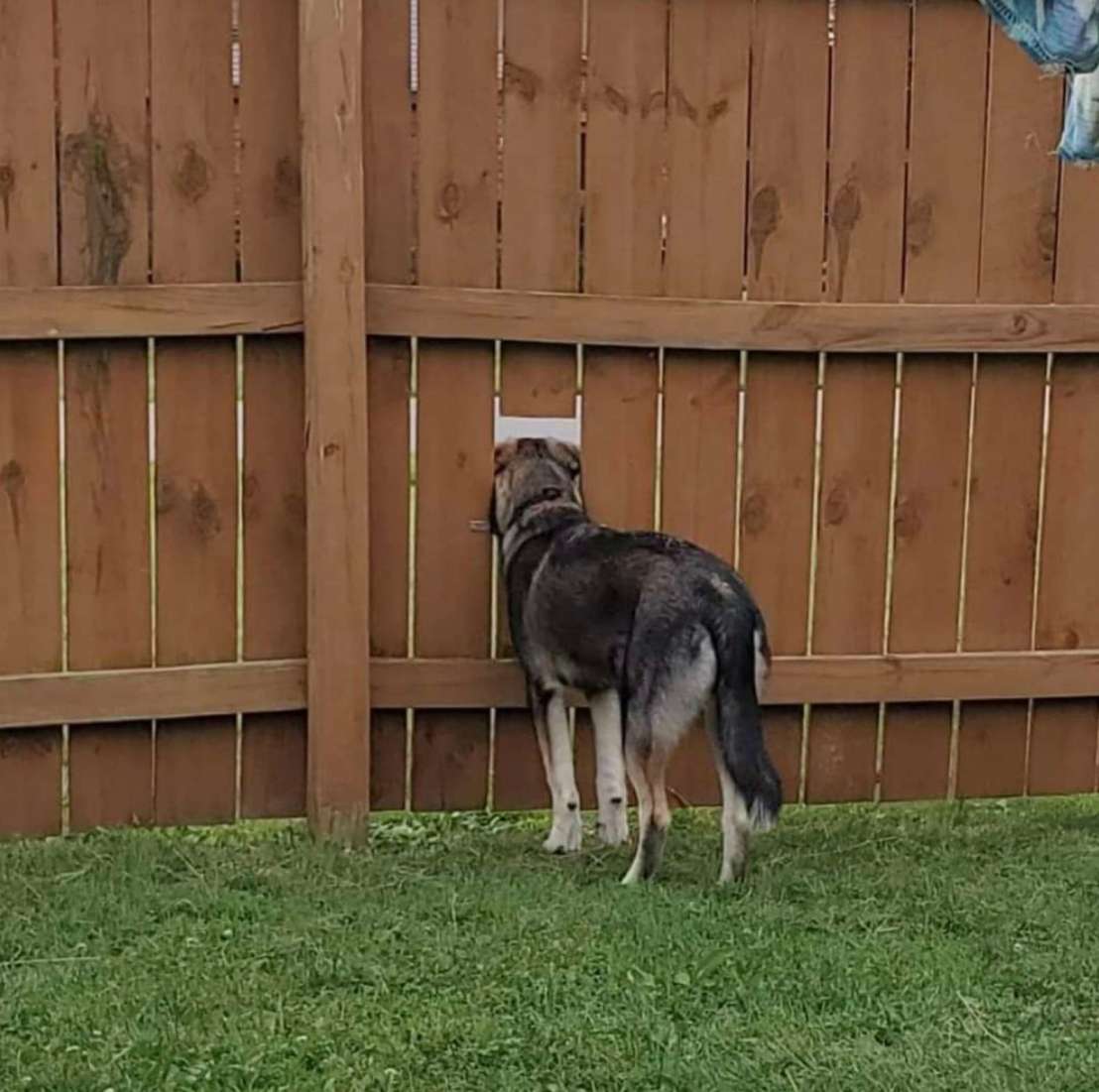
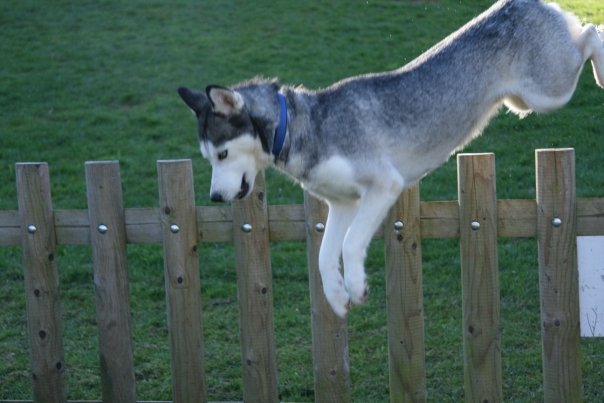
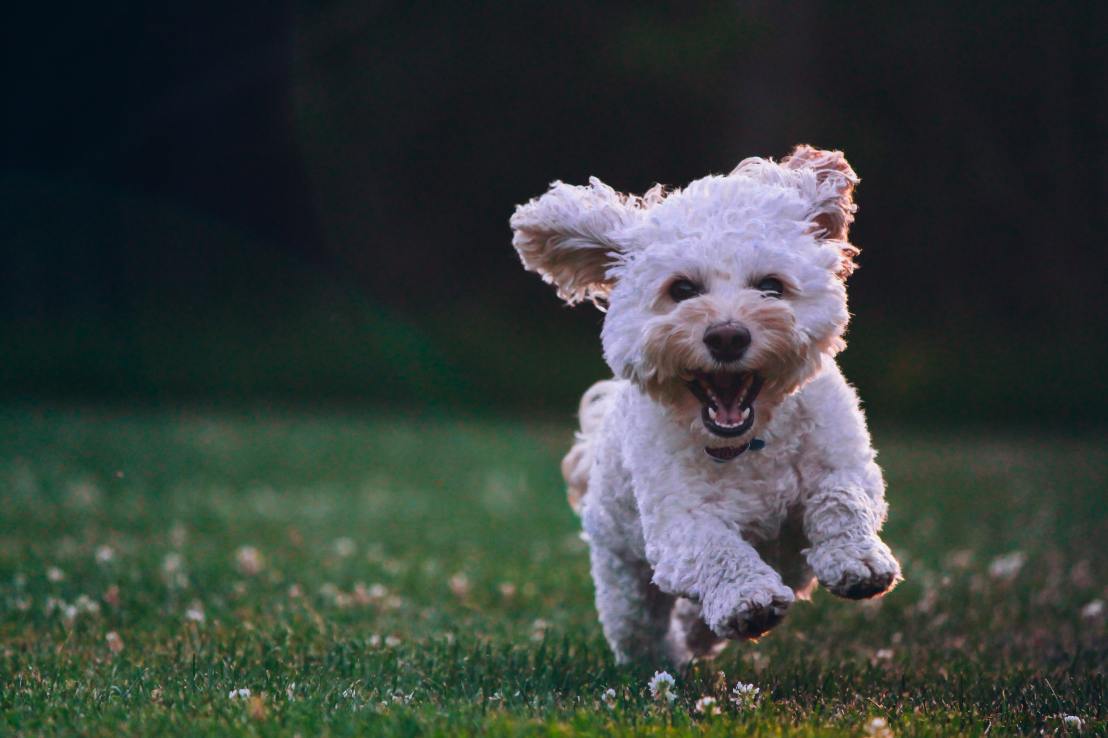
My 12 year old granddaughter took this photo of her dog recently. She used her dad’s iPhone in portrait mode. I complimented her in getting down low to take the image. And I thought it was interesting how she only captured the dog’s head. I am trying to encourage her to learn photography
The Moon is an astronomical body orbitingEarth and is the planet’s only natural satellite. It is the fifth-largest satellite in the Solar System, and by far[13] the largest among planetary satellites relative to the size of the planet that it orbits (its primary). The Moon is, after Jupiter‘s satellite Io, the second-densest satellite in the Solar System among those whose densities are known.
The Moon is thought to have formed about 4.51 billion years ago, not long after Earth. The most widely accepted explanation is that the Moon formed from the debris left over after a giant impact between Earth and a hypothetical Mars-sized body called Theia. New research of Moon rocks, although not rejecting the Theia hypothesis, suggests that the Moon may be older than previously thought.[14]
The Moon is in synchronous rotation with Earth, and thus always shows the same side to Earth, the near side. Because of libration, slightly more than half (about 59%) of the total lunar surface can be viewed from Earth.[15] The near side is marked by dark volcanic maria that fill the spaces between the bright ancient crustal highlands and the prominent impact craters. After the Sun, the Moon is the second-brightest celestial object regularly visible in Earth’s sky. Its surface is actually dark, although compared to the night sky it appears very bright, with a reflectance just slightly higher than that of worn asphalt. Its gravitational influence produces the ocean tides, body tides, and the slight lengthening of the day.
The Moon’s average orbital distance is 384,402 km (238,856 mi),[16][17] or 1.28 light-seconds. This is about thirty times the diameter of Earth. The Moon’s apparent size in the sky is almost the same as that of the Sun, since the star is about 400 times the lunar distance and diameter. Therefore, the Moon covers the Sun nearly precisely during a total solar eclipse. This matching of apparent visual size will not continue in the far future because the Moon’s distance from Earth is gradually increasing.
Venus is the second planet from the Sun. It is named after the Roman goddess of love and beauty. As the second-brightest natural object in the night sky after the Moon, Venus can cast shadows and can be, on rare occasion, visible to the naked eye in broad daylight.[15][16] Venus lies within Earth’s orbit, and so never appears to venture far from the Sun, either setting in the west just after dusk or rising in the east a bit before dawn. Venus orbits the Sun every 224.7 Earth days.[17] With a rotation period of 243 Earth days, it takes longer to rotate about its axis than any other planet in the Solar System and does so in the opposite direction to all but Uranus (meaning the Sun rises in the west and sets in the east).[18] Venus does not have any moons, a distinction it shares only with Mercury among planets in the Solar System.[19]
Venus is a terrestrial planet and is sometimes called Earth’s “sister planet” because of their similar size, mass, proximity to the Sun, and bulk composition. It is radically different from Earth in other respects. It has the densest atmosphere of the four terrestrial planets, consisting of more than 96% carbon dioxide. The atmospheric pressure at the planet’s surface is 92 times that of Earth, or roughly the pressure found 900 m (3,000 ft) underwater on Earth. Venus is by far the hottest planet in the Solar System, with a mean surface temperature of 737 K (464 °C; 867 °F), even though Mercury is closer to the Sun. Venus is shrouded by an opaque layer of highly reflective clouds of sulfuric acid, preventing its surface from being seen from space in visible light. It may have had water oceans in the past,[20][21] but these would have vaporized as the temperature rose due to a runaway greenhouse effect.[22] The water has probably photodissociated, and the free hydrogen has been swept into interplanetary space by the solar wind because of the lack of a planetary magnetic field.[23] Venus’s surface is a dry desertscape interspersed with slab-like rocks and is periodically resurfaced by volcanism.
As one of the brightest objects in the sky, Venus has been a major fixture in human culture for as long as records have existed. It has been made sacred to gods of many cultures, and has been a prime inspiration for writers and poets as the morning star and evening star. Venus was the first planet to have its motions plotted across the sky, as early as the second millennium BC.[24]
I included these excerpts from WikiPedia because many will find them of interest and quite a few, including yours truly, actually learnt something!
This is another story from The Dodo blogsite. And, yes, about a dog. But not any old dog; he used his sense of smell to protect us humans. He has, in my opinion, an unusual name but it is still his name: TTirado. TTirado was an explosive detection dog at Indianapolis Airport and after eight years of service he was retired.
Here’s the full story!
ooOOoo
TSA Detection Dog Gets A Huge Surprise Before He Retires
As an explosive detection canine, TTirado isn’t always allowed to play with tennis balls like normal pets. Tennis balls — his favorite toy — are used as a reward for a job well done at the Indianapolis Airport.
So when it came time for TTirado to retire after eight long years of service, his handler came up with the perfect way to celebrate — with a massive ball drop.
Keith Gray
“It’s a coveted item during their career,” Keith Gray, TTirado’s handler, told The Dodo. “They know that they have to work for it to get it and that’s what keeps them going and keeps their motivation up.”
Keith Gray
TTirado is top of the class when it comes to detection, and has passed every single evaluation and test. For TTirado, scent detection is a game, and he’s always been happy to go into work with his dad.
“He was the first dog that was assigned to me and the dog I kept my entire career,” Gray said. “He’s a black Lab, so he’s a fantastic, lovable pup. He’s been such a great dog to work with and I’ve learned so much from him over the years.”
Keith Gray
To surprise the pup on his special day, Gray ordered 200 tennis balls online and set up a special final search for him.
“We had a couple of handlers that were behind the scenes ready to drop the balls when he showed up,” Gray said. “The handlers knew what to do when the dog alerts, which is basically him coming around the corner, sniffing that bag like he’s supposed to and dropping his butt to sit down.”
Keith Gray
When TTirado signaled to his dad that he had found something, all 200 tennis balls dropped from the sky. TTirado was in heaven.
TTirado loves to play fetch, and everyone joined in throwing balls for the senior dog to chase.
After putting in countless 40-hour workweeks, TTirado is finally learning to enjoy his retirement. While TTirado was always part of the family, Gray has officially adopted him and plans on taking the pup on lots of fun trips in the future.
But perhaps the biggest change for TTirado is that he gets to hang out on the couch with his favorite toy every single day: “Now that he’s retired, he can have all the toys and tennis balls he wants and play around with them at home,” Gray said.
ooOOoo
It’s a wonderful story about a great dog. TTirado, you have a fantastic retirement and may you live happily for a long time to come!
Here’s an article about a dog that thinks he is a cat!
Dogs are amazing animals. Not only have they been associated with humans for, literally, thousands of years, in the main they bond so very closely with us. I should add that the lucky ones do.
But they are also independent animals and show it.
Here’s an article from The Dodo that shows how Mako demonstrated his own uniqueness of spirit; by thinking he was a cat!
ooOOoo
Rescue Dog Is Totally Convinced He’s One Of The Cats
“Whenever Mako sees the boys on the counters or cabinets he hops up to join them.”
When Bethany Castiller and her family went to a local rescue to adopt a dog, Mako immediately made it very clear that he would be the one going home with them.
“We joke that we didn’t really pick him, he picked us,” Castiller told The Dodo. “When we went to the rescue shelter he had his back against the cage so we started petting him and he looked over his shoulder and gave direct eye contact and we just fell in love with the little guy.”
Bethany Castiller
The family had been hoping to adopt a dog who would get along with their cats at home, Pecan and Gizmo. The shelter assured them that Mako got along with cats really well — and they quickly realized it was probably because Mako totally thinks he’s a cat.
Though they can’t know for sure, everyone thinks that Mako was probably raised with cats, because all of his favorite things to do are classic cat activities. He doesn’t bark, he loves cat treats and he absolutely adores sitting on top of counters and cabinets, just like his cat siblings do.
Bethany Castiller
When they first caught Mako climbing on top of tables and counters, his family thought it was a little weird — but quickly accepted that that’s just who Mako is, and that they’d basically adopted another cat instead of a dog.
Bethany Castiller
“We went online and found a dog toy that looks like a cat one so we go to the backyard and he chases and jumps after it like the cats,” Castiller said. “He also likes to lay on the tables with my cats and look out the window at the birds with them. When he sees one of my cats lay on their backs for a tummy rub he comes over and does the same thing!”
Bethany Castiller
Mako is obsessed with his cat siblings and loves hanging out with them every chance he gets, and his family can’t help but laugh whenever they come into the room and find Mako on top of something right alongside the cats, just one of the gang.
“Whenever Mako sees the boys on the counters or cabinets he hops up to join them,” Castiller said. “He really just wants to be around the cats all the time. If he is not in the room with one of us humans, he’s with the cats.”
Bethany Castiller
Mako is definitely a little different and will always be way more into cat activities than typical dog ones — and his family wouldn’t have him any other way.
ooOOoo
So, what to make of this! Seriously, it goes to show how at one level we really don’t have a clue as to what a dog is thinking of. Yet they are still our very best of companions and the fact that many of you will read this and enjoy it just proves my case.
Now for something completely different.
The International Dark-Sky Association (IDA) held its first annual Capture the Dark photography competition during May 2020. The goal was to portray the meaning of the night for people around the world. Participants were invited to submit images in five categories: Connecting to the Dark, International Dark Sky Places, Impact of Light Pollution, Bright Side of Lighting, and Youth. In two weeks, IDA received nearly 450 submissions from people around the world. An international panel of judges made the final selections. The winning entries in each category are on this page.
I’m not going to show you all the winning entries; you can go onto the website if you wish to see them. But what I am going to share is the winning entry.
Jean-Francois Graffand captured this image at the Pic du Midi International Dark Sky Reserve in France. It’s the winner in the International Dark Sky Places category. The photo is titled Dark Night in Pyrénées Mountains.
Potato the corgi never misses an opportunity to say hi to her neighbors. So when social distancing started in Portland, Oregon, Potato’s parents, Cee and Pan, knew their dog wouldn’t be getting the kind of attention she was used to.
Instagram/potato_corgo
“She loves everyone — any dog, any kid, any adult human, doesn’t matter,” Cee told The Dodo. “Even dogs who snarl at her she’s like, ‘It’s OK, I’ll check back in five minutes.’”
“She’s in a polyamorous relationship with all of the mail, UPS and FedEx delivery people but the UPS man is her primary partner,” Cee added. “If you’re having a picnic at the park she will invite herself to your blanket and join in on the gossip.”
Instagram/potato_corgo
Potato knows a number of tricks, including how to ring a bell when she wants to go outside to the yard and socialize with the passersby. Cee, who works from home running a web agency, is always there to keep an eye on Potato when she goes out. And they noticed right away how difficult it was for Potato when her friends started ignoring her.
“Potato takes her job of getting pats through the fence very seriously and honestly seemed depressed that people stopped saying hi to her when social distancing started,” Cee said. “People kept looking really guilty when we’d catch them patting Potato through the fence, or others would ask if they could still pat her.”
Instagram/potato_corgo
To put an end to the confusion, they decided to make a little sign letting everyone know that it was still OK to give Potato the pets she craved, along with a few facts about her. “She’d bark at people she knew who normally would pat her when they’d walk by without saying hi,” Cee said. “So we wanted to make it known that it was consensual for us to take that slight risk of exposure.”
They laminated the sign and tacked it above Potato’s favorite spot on the fence. Potato was instantly happier.
Instagram/potato_corgo
The sign reads: “This is Potato! She’s friendly and yes you can pet her, even now with the virus. She also loves every dog so feel free to intro your dog!”
The sign has done more than cheer up Potato — it’s helped to connect Cee and Pan with neighbors they hadn’t met before. “People approach us more if we’re in the yard, or they send us little notes on [Potato’s] Instagram account,” Cee said. “There’s also an older neighbor lady who specifically comes by every single day to give her treats. It’s pretty wholesome.”
Today and for the next two Sundays I am going to display more pictures of Utah. They are further to the photographs shown over six days back in October 2019.
To be honest these new photographs are more to show off the facilities of my new editing software DxO PhotoLab.
oooo
oooo
oooo
oooo
oooo
oooo
oooo
I sincerely hope you enjoy these; I’m conscious that I have become engrossed in the facilities of PhotoLab.
I can’t remember how long ago it was that I came across Alexandra Horowitz but the name stuck. For Alexandra is an author of many titles although many of them are about dogs.
But here’s a quote from someone who reviewed her book, On Looking: A Walker’s Guide to the Art of Observation.
“Horowitz writes like a poet, thinks like a scientist, and ventures like an explorer. Her book will have you looking in a new way at the world around you, and make you glad you did.” – Susan Orlean, author of Rin Tin Tin
If you haven’t already read some of her books then don’t delay!
Now I want to introduce a different side of Alexandra. That of her being a broadcaster, for want of a better description.
This is not a short video, it is 49 minutes long. But that’s a reason to sit down and thoroughly immerse oneself in her talk.
It is introduced thus:
To a dog, there is no such thing as “fresh air.” Every breath is full of information—in fact, what every dog knows about the world comes mostly through their nose. Dogs, when trained, can identify drugs of every type, underwater cadavers, cancer, illicit cell phones in prison, bed bugs, smuggled shark fins, dry rot, land-mines, termites, invasive knapweed, underground truffles, and dairy cows in estrous. But they also know about the upcoming weather, earthquakes before they happen, how “afternoon” smells, what you had for breakfast, and whether a cat touched your leg yesterday. And of course, they sniff their way home and know the distinctive odor of each spot of sidewalk as you travel there.
Alexandra Horowitz is a research scientist in the field of dog cognition and the New York Times bestselling author of “Inside of a Dog”. Her new book “BEING A DOG: Following the Dog into a World of Smell” explores in even greater depth what dogs know, delving into all of these remarkable abilities and revealing a whole world of experiences we miss every day. Alexandra visited Google Seattle to share her research and open eyes (and noses!) of pet parents everywhere.