Category: Photography

Wildlife Photo Tips

A response to the many who enjoy the regular Sunday photo parade.

Jean and I have recently joined the National Wildlife Federation partly because there are times when it really does seem ‘wild’!  Anyway, I was trawling the NWF website the other day and came across this very helpful advice: 7 Wildlife Photo Tips to Never Forget. In view of the popularity of Sunday’s regular Picture Parade on Learning from Dogs, it seemed appropriate to dip into that section for today’s post. [Note: you will have to go to the website to read the full article as it would be wrong to republish the entire item without permission.]

7 Wildlife Photo Tips to Never Forget

This guest post by Jim Goldstein is sponsored by BorrowLenses.com.

I’ve always felt great wildlife photography mapped well to the Chinese proverb “the journey is the reward.” While I obviously enjoy seeing the end result of my wildlife photography outings I get a great deal of satisfaction in the crafting of those images. My best images often rise to the top because of one of the following maxims:

1. Backgrounds are Equally Important as Your Subject

2. Embrace Serendipity When Photo Editing

3. Challenge Viewers with Anthropomorphism

4. Employ Non-Standard Compositions

5. Capture Your Subjects at Their Eye Level

6. Factor in Form and Pose

7. Utilize Negative Space

I am going to republish just one of these tips to give you an idea, because the advice is stunning, in my humble opinion.

2. Embrace Serendipity When Photo Editing

Arctic Hare. Canon 1D Mark II, Canon 500mm f/2.8 + 1.4x teleconverter, 1/640 sec, f/7.1, ISO 400

When behind the camera, focus carefully on your subject. But when photo editing look for unique and subtle differences that might enhance or transform the story within your image. Case in point: this example image of a mosquito biting the nose of an Arctic Hare. My attention was on obtaining a razor sharp image and composing carefully, but when photo editing I found a couple frames that captured the biting mosquito that had been invisible to me at the time I took the photo.

Arctic Hare Being Bitten By Mosquito on the Nose

Jim Goldstein is a San Francisco-based professional photographer and author who has been in numerous publications, including Outdoor Photographer, Digital Photo Pro, Popular Photography and has self-published a PDF eBook Photographing the 4th Dimension – Time covering numerous slow shutter techniques. Follow Jim Goldstein on Google+ | Twitter | Facebook | 500px

Do take a few moments and go across to the website and read the full set of tips.  If you have any interest in photographing nature and wildlife this is unmissable good advice.  Want to know more about the National Wildlife Federation?  More information here.

Picture parade two.

More photographs courtesy of Neil Kelly, Devon.

Time to hang on!
Time to hang on!

oooo

Is it a bird? A man?
Is it a bird? A woman? Take your guess!

oooo

Carbon copies??
Carbon copies??

oooo

All taped up and nowhere to go!

oooo

Belt tightening.
Belt tightening.

oooo

Snake Pass, maybe?
Snake Pass, maybe?


oooo

A bit of a fiddle!
A bit of a fiddle!


oooo

Your wish is my command.


oooo

Aren’t these stunningly wonderful pictures!  Another set of eight next Sunday. Oh, and if you missed last Sunday’s set please drop in here and admire them.

Picture parade!

Now becoming a regular Sunday feature!

Last week was set four of the Perfect timing pictures.

From now on, well at least for several weeks or more, a general selection of photographs that have grabbed my attention will be presented every Sunday.  Today, photographs sent to me by Neil Kelly in Devon.

Skeleton dog!
Skeleton dog!

oooo

Even seeing isn't believing!
Even seeing isn’t believing!


oooo

PPS3
Cool as a cucumber!


oooo

PPS4
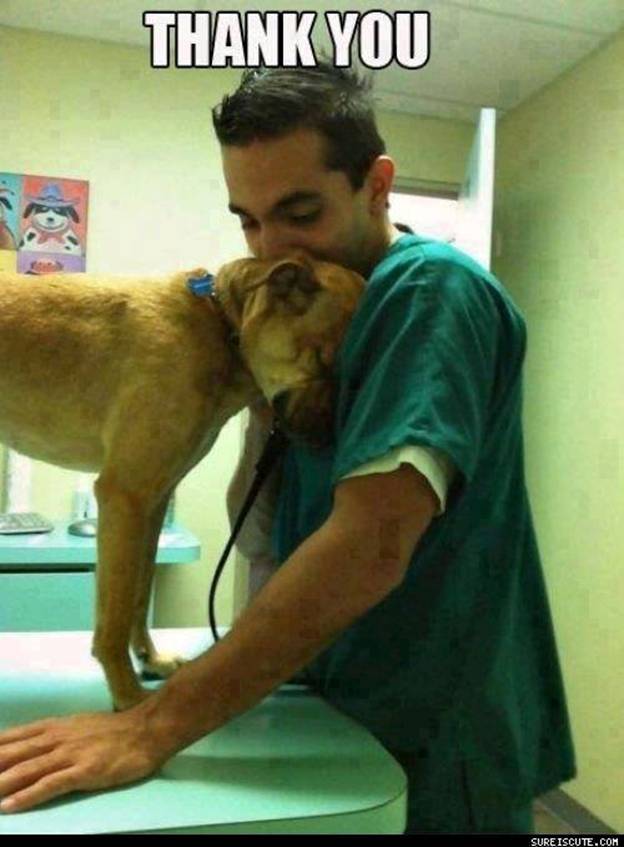
The mysterious kiss!


oooo

PPS5
Add your own comment!!


oooo

PPS6
Whole new meaning to a set of knives.


oooo

PPS7
Doggone cute!


oooo

PPS8
We must stop meeting like this!

oooo

The magic of clouds.

In appreciation of clouds.

Live with your head in the clouds.

In the wake of yesterday’s post about the power of meditation, this recent TED Talk seemed a perfect way to end the week.

Published on Jul 16, 2013

You don’t need to plan an exotic trip to find creative inspiration. Just look up, says Gavin Pretor-Pinney, founder of the Cloud Appreciation Society. As he shares charming photos of nature’s finest aerial architecture, Pretor-Pinney calls for us all to take a step off the digital treadmill, lie back and admire the beauty in the sky above.

Want to learn a little more about the different types of cloud?  Then go here.  Want to learn more about the Cloud Appreciation Society?  More details here.

And who knows, you may even see your dog in those clouds!

One is never far from a dog!

A very simple notion.

Our beautiful planet.

As is the way of things, two completely disconnected events rang out yesterday, as if in harmony.

The first was this stunning picture released by NASA.

A distant view of home!

The full description may be read here, but I have taken the liberty of republishing this extract:

Earth, which is 898 million miles (1.44 billion kilometers) away in this image, appears as a blue dot at center right; the moon can be seen as a fainter protrusion off its right side. An arrow indicates their location in the annotated version. The other bright dots nearby are stars.

Now it doesn’t take too much imagination to put that minute speck of light, our Planet Earth, into its scale of meaning and importance vis-a-vis the universe.  You get my message, I’m sure.

The second event was a comment left by long-term reader and supporter of Learning from Dogs, Patrice Ayme.  The comment was on yesterday’s post, The meaning of wildness, and I quote:

Excellent article. Clearly primary temperate rain forest, nearly gone everywhere except in the American North west, has to be reintroduced.

Sheep ought not to be removed by man, but be removed by wolf, bear, felids. Cows would feel whole, having to fight off lions. And man’s sense of what nature means, vital to insure our survival, would blossom in this hour of need, when we have arisen as the planet’s gods. gods of evil, or gods of wisdom? That is the most important question.

“gods of evil, or gods of wisdom?”

To everybody I say this.  (And I am most certainly not excluding me.) When you next look at yourself in the mirror will you make a decision?  Will you be a god of evil or a god of wisdom?

The meaning of wildness?

“Reality is merely an illusion, albeit a very persistent one.”

So said Albert Einstein.

The reason I went searching for a quotation on reality was that our, as in humans, ability to see the world in grossly distorted ways jumped ‘off the page’ at me when I was reading a recent essay from George Monbiot.  Followers of Learning from Dogs will know that Mr. Monbiot has featured before; most recently just under a month ago in a post Returning to Nature.  Before then in April when George gave permission for the full republishing of his essay The Great Unmentionable.

“Comfort the afflicted, afflict the comfortable.”

Why the notion of humans seeing reality in grossly distorted ways?  Simply because in George Monbiot‘s following essay he challenges what we mean by the word ‘wildness’ and I immediately realised that my own idea of wildness was badly corrupted.

See if you react the same way as you read The Naturalists Who Are Terrified of Nature by George Monbiot, republished in full with the kind permission of George.

oooOOOooo

The Naturalists Who Are Terrified of Nature

July 16, 2013

A radical challenge to British conservation and its bizarre priorities.

By George Monbiot, published on the RSPB’s website, 15th July 2013

I’m writing this on the train home, after visiting two places in the north of England celebrated for their “wildness”. One of them is Ennerdale in the Lake District, now officially known as Wild Ennerdale, a valley in which the river has been allowed to move freely once more, and in which native trees are succeeding naturally up the hillsides(1).

The other is the Sheffield Moors (in the Peak District), from which most of the sheep have been removed and where the structure of the vegetation has been allowed to change a little. I found both visits fascinating, not least because of the eruditon and enthusiasm of the people who walked me through these places.

But sitting on the train, watching the chemical deserts of the English lowlands flash past, I’m struck by how pathetically grateful I feel. For what? For the fact that, in two small conservation areas, located in national parks, a few natural processes have been allowed to resume.

Were I to explain to a foreigner that these places are now celebrated by conservationists in Britain for their radical approach, he or she would think I had gone mad. “What?,” they would say, “you are telling me that this is the cutting edge of nature conservation in your country? Where have you been for the past 50 years?”

I don’t know if there is any other country in which people – including conservationists – are as afraid of nature as they are in Britain. I don’t know if there is anywhere else in which conservationists are so convinced that if they relax their intensive management of the natural world, something dreadful will happen.

Nowhere else do conservationists subscribe more enthusiastically to the biblical doctrine of dominion: that we have a holy duty to control and corral nature, in case it gets out of hand. Nowhere else does conservation look more like a slightly modified version of the farming which trashed the land in the first place.

In my view most of our conservation areas aren’t nature reserves at all. They are museums of former farming practices, weeded and tended to prevent the wilds from encroaching. The ecosystem’s dynamic interactions are banned. Animals and plants are preserved as if they were a jar of pickles, kept in a state of arrested development, in which little is allowed to change.

But nature is not just a fixed assemblage of species, maintained as if it were a collection in a museum. It is also the ever-changing relationships between them, the successional processes, the shifting communities: all of which, in many of our reserves, are prohibited.

The problem begins with designation. The “interest features” of a site of special scientific interest – its species and habitats – must be kept in “favourable condition”. Often this means the condition in which they happened to be when the reserve was created. In most cases that’s a condition of dire impoverishment and depletion: ecosystems missing almost their entire trophic structure, most of their large herbivores, all their large predators, in many cases even the trees. They have to be kept like this by extreme and intrusive management, in order to sustain the impacts which reduced them to this woeful state.

In Wild-ish Ennerdale and on the Sheffield Moors, there has been a partial relaxation of this draconian regime. But even in these places, there is much that I question.

On the Sheffield Moors, for example, cattle are kept: at much higher densities and for far longer periods than large herbivores would exist in a self-willed ecosystem. In many parts of the moors, trees, if they have the temerity to return, are cleared. The effort, even here, is to ensure that the landscape remains farmed, open and bare.

This is done partly to favour breeding populations of wading birds(2). It’s likely that these species are being maintained at artificially high populations(3). A tendency I’ve noticed among some groups is to try to make all their target species common, even if they were naturally rare. Perhaps some species ought to be rare. Those which lived in open habitats – which would have been small and occasional before people started cutting and burning the forests – are likely to have been rarest of all.

Think of the varying fortunes of grouse populations in Britain. The palaeontological evidence is extremely sparse, so this is guesswork, but during the Boreal and Atlantic phases, 9,000-5,000 years ago, when closed-canopy forest covered most of Britain, the commonent grouse species in this country might have been hazel hen. Perhaps the second commonest would have been capercaillie, followed by black grouse, followed by red grouse, which are likely to have been very scarce.

That likely sequence has now been reversed. Hazel hen is extinct, capercaillie extremely rare, black grouse are sparse and in severe decline and red grouse are bloody everywhere. The red grouse is the magpie of the uplands: it benefits from human intervention, which in this case means the clearing of land.

Arbitrarily, conservation groups in the uplands of England and Wales have decided that their priorities are, for example, dunlin and curlew, rather than capercaillie and pine martens. I’m not insisting that this is always the wrong decision. But it’s a decision that should be rigorously questioned, especially if this intensive management means the destruction of habitats which would have sheltered a much wider range of species.

Spend a couple of hours in an open upland nature reserve, and count the diversity and abundance of the birds you see. Then spend a couple of hours in a bushy suburban garden and do the same thing. In my experience you’re likely to see more birds of more species in the garden. That’s hardly surprising: most birds – indeed most wildlife – require cover to survive. Am I the only one who thinks that something has gone badly wrong here?

It’s not just common species I’m talking about. Many of those excluded by our brutal upland management are not just rare in Britain; they are extinct.

Whenever I meet a conservation manager, I find myself acting like a 3-year old: I keep asking “why?”. Why are you preserving this and not that? Why is this site designated for moorland flea beetle and pearl-bordered fritillary, rather than blue stag beetle and lynx? Why are you protecting the wretched scrapings of life that remain here, rather than reintroducing the species which would once have lived here, but have been excluded by the kind of interventions that you – the conservationists – have sustained?

When I worked in the Amazon, the conservationists I met were fighting to defend the rainforest against cattle ranching. In Britain the conservationists are – literally – defending cattle ranching against the rainforest. Britain was once covered by rainforest: woodland wet enough for epiphytes to grow. (Epiphytes are plants which root in the bark of trees). Our closed-canopy rainforest was likely to have been richer in species than any of our remaining habitats. Given half a chance, it would return. But it isn’t given half a chance, even in conservation sites, because conservationists keep clearing the land and running cattle on it, in case the wayward and irresponsible ecosystem does something that isn’t listed in the rules. In doing so, they preserve a burnt, blasted and largely empty land with the delightful ambience of a nuclear winter.

Conservation groups in this country are obsessed by heather. Heather is typical of the vegetation that colonises land which has been repeatedly deforested. You can see similar vegetation – low, scrubby, tough, thriving on burnt ground and depleted soils – covering deforested land all over the tropics. There, the dominance of these plants is lamented by ecologists, for it is rightly seen as a symptom of ecological destruction. Here it is fetishised and preserved.

Even in the Eastern Sheffield Moors management plan, published by the RSPB and the National Trust, “cutting and burning” are listed as the requisite tasks for managing heather(4). Imagine what a tropical ecologist would say if she saw that. “You people have been telling us for decades that we should stop cutting and burning. You’ve been sending us money and lobbying our governments to discourage us from doing it. And all the while you’ve been telling yourselves that cutting and burning are necessary for the protection of wildlife.” If she concluded that we are hypocrites, that we are unambitious, irrational, anally retentive and ecologically illiterate, she would not be far wrong.

The same plan reveals that these two august conservation bodies will maintain cattle on the moors at their current level, but keep them there for longer. “Their grazing and trampling will manage the vegetation in a way which should improve the condition of the habitats and benefit wildlife.”(5) What does this mean? Yes, it might benefit some wildlife, but only at the expense of other species. Yes, it might “improve the condition” of a habitat, if by improvement you mean a better representation of the state of arrested development you’ve chosen. It sounds uncomfortably close to the 19th Century agricultural meaning of “improvement”: which means draining and clearing land to make it more suitable for farming.

It astonishes me to see statements like this left unpacked. Asserted without qualification, they create the impression that all wildlife benefits from management of this kind. Of course, all interventions (including a complete cessation of management), are better for some species than for others. But in my view, the losses inflicted by cattle ranching – here, as in the Amazon – outweigh any gains.

An even starker example is provided by a report commissioned by the RSPB on changing livestock numbers. It contends that “undergrazing and loss of vegetation structure is now occurring in some areas, with adverse impacts for some species such as golden plover and other waders.”(6)

“Undergrazing” is an interesting concept. The report seems to be referring to “undergrazing” by sheep. How can a native ecosystem be undergrazed by an invasive ruminant from Mesopotamia? Is our wildlife underhunted by American mink? Are our verges underinfested by Japanese knotweed?

I would question what undergrazing by any domestic animal means. “Not farmed enough” is what the term appears to signify, “or not sufficiently damaged”. Sure, the golden plover is among a small group of species that benefit from scorched-earth policies, but a far greater number are harmed by them. So why is the golden plover the priority? And how can a report for a conservation organisation blithely use the term undergrazing without qualification or explanation?

Another RSPB report advocates “the eradication of invasive tree species” from the bare uplands of Wales and claims, without citing any evidence or explaining what this means, that “extensive grazing, ideally mixed grazing, is important in maintaining upland pastures in a state that benefits upland birds and other wildlife.”(7)

A document published by the Welsh government revealed something I have never seen in the RSPB’s literature: that the society advises farmers “to cut down trees to discourage buzzards which kill other birds.”(8)

I checked with the RSPB in Wales and it confirmed that it does “at times provide advice to landowners on the management of trees to reduce available vantage points and nest sites for some avian predators.”(9)

Isn’t that more or less what the British government wanted to do to protect pheasant shoots? And didn’t the society contest those efforts?(10)

I wonder whether, in their arbitrary choice of target species and target habitats, British conservationists are influenced by the legacy of hunting. Many of the birds on behalf of which this extreme and brutal simplification of the ecosystem takes place are those which, in the 19th Century, were pursued by gentlemen with guns. Perhaps we should see conservation efforts in Britain as a form of gamekeeping, which regards some of our native species as good and worthy of preservation, and others (such as trees and buzzards) as bad and in need of control.

Sometimes I receive coherent answers from the conservation managers I speak to, which are debatable but at least consistent. Sometimes the only answer I receive is “that’s what the rules say.” But isn’t it time we began to challenge the rules? Isn’t it time we began to question the way sites are designated, and to challenge the ecological blitzkreig required to maintain them in what is laughably called “favourable condition”? Isn’t it time we began asking why we have decided to privilege certain species over others? Isn’t it time we started wondering whether the collateral damage required to support them is worth it?

After all, how did nature cope before we came along? To judge by the actions of British conservation groups, it must have been in a pretty dismal state for the three billion years before humans arrived to look after it.

George Monbiot’s book Feral: searching for enchantment on the frontiers of rewilding is published by Allen Lane.

References:

1. http://www.wildennerdale.co.uk/

2. National Trust and RSPB, 2012. The Eastern Moors Management Plan summary, page 15. Eastern Moors Partnership, Curbar.

3. This, of course, is speculative, as palaeontology gives us few indications of numbers. But the circumstantial evidence seems powerful: the habitat required for breeding populations of these birds, many of which need to nest several hundred metres from the nearest woodland edge to avoid predation, was in short supply. See for example:

NJ Whitehouse and D Smith, 2010. How fragmented was the British Holocene wildwood? Perspectives on the ‘‘Vera’’ grazing debate from the fossil beetle record. Quaternary Science Reviews Vol. 29, nos. 3-4, pp539–553. doi.org/10.1016/j.quascirev.2009.10.010

FJG Mitchell, 2005. How open were European primeval forests? Hypothesis testing using palaeoecological data. Journal of Ecology Vol. 93, 168–177

JHB Birks, 2005. Mind the gap: how open were European primeval forests? Trends in Ecology & Evolution Vol. 20, pp154-156.

R Fyfe, 2007. The importance of local-scale openness within regions dominated by closed woodland. Journal of Quaternary Science, Vol.22, no. 6, pp571–578. doi: 10.1002/jqs.1078

JC Svenning, 2002. A review of natural vegetation openness in northwestern Europe. Biological Conservation Vol 104: 133-148.

RHW Bradshaw, GE Hannon, AM Lister, 2003. A long-term perspective on ungulate-vegetation interactions. Forest Ecology and Management, Vol. 181: 267–280.
4. National Trust and RSPB, 2012, as above, p16.

5. National Trust and RSPB, 2012, as above, p11.

6. http://www.rspb.org.uk/Images/Final_Report_tcm9-340975.pdf

7. http://www.assemblywales.org/6_rspb_formatted.pdf

8. Welsh Government, 2010. Glastir: frequently asked questions, Section 13. This document is no longer available on the government site, but you can read it here:  http://www.fuw.org.uk/glastir-faq-miscellaneous.html

9. Emma Roberts, RSPB Wales, 10th August 2011. By email.

10. http://www.rspb.org.uk/media/releases/316283-back-off-our-birds-of-prey

oooOOOooo

Will leave you with the following picture.

Ennerdale Lake, Cumbria

Perfect timing, set four.

Another Sunday; another set of photographs.

Thanks to so many of you for your positive feedback.

Here are another few wonderful pictures.

oooOOOooo

Feb. 09, 2012 - Birmingham, England, United Kingdom - This is the incredible photo of an otter seeking guidance by praying. This once in a lifetime snap was taken by Hertfordshire based photographer Marac Andrev Kolodzinski. Marac had to wait over two hours in the freezing cold before he captured the divine moment. .(Credit Image: © Marac Kolodzinski/Caters News/ZUMAPRESS.com)
From Birmingham, February 2012

oooo

LL27
Picture of a lifetime?

oooo

LL29
Cuddling up!

oooo

LL28
Chilling out!

oooo

LL26
Take that!

oooo

LL31
Man or ….. cat!

oooo

LL30
Too cute for words.

oooo

Hopefully, more wonderful pictures in a week’s time. (But please do say when you have had enough!)

The King of dogs.

A reflection on the history of the German Shepherd dog.

Yesterday’s account of getting to know GSD Duke a little better caused me to find a post that had been sitting in my Drafts folder for a couple of years.  It was about a piece published in The New York Times, Sunday Review, October 8th, 2011 under the heading of Why German Shepherds Have Had Their Day.

Why German Shepherds Have Had Their Day

By SUSAN ORLEAN

SUCCESS can be a drag. You yearn for it, strive for it, and then, when it finally arrives, it sets off repercussions you never anticipated that sometimes undo that success.

Take the German shepherd. Originally bred to the exacting standards of a German cavalry officer, it became one of the 20th century’s most popular working breeds. But in recent years that popularity, and the overbreeding that came with it, has driven the German shepherd into eclipse: even the police in the German state of North Rhine-Westphalia, who had relied on the dogs for years, recently announced they were replacing them with Belgian Malinois, because the less-popular Malinois were hardier and more reliable.

But there is good news about this bad news, if you are a lover of the breed, because less visibility, especially in inspiring roles as public servants, is likely to mean less demand for the dogs. That means less reason to produce too many puppies, which is the best thing that can happen to any purebred dogs.

The article continued with the history of the breed.  But rather than stay with the NYT piece, for more about the breed history I’m going to cross over to the website of the British charity, German Shepherd Dog Rescue (GSDR). They have a comprehensive account of the History and Origins of the Breed.

History and Origins of the German Shepherd Dog

A brief insight into the development of the breed

blue-tudman

The German Shepherd breed appeared late at the end of the 19th century in Germany and they were first exhibited at a show in Hanover in 1882. They were not like German Shepherds as we know them today though being rough coated, short tailed and rather resembling mongrels. The German Shepherd Dog as we now know it didn’t really appear until after the Second World War.

The breed was actually created by the cross breeding of working sheep dogs from rural Germany by an ex cavalry officer called Max von Stephanitz whose aim was to create a working dog for herding which could trot for long periods.

A breed standard was drawn up and the first breed show took place in 1899 following which the GSD became firmly established across Germany. In 1906 the first dogs were exported to the USA .

Since then, the breed has grown enormously in popularity and is now one of the most popular pedigree breeds in the UK as a pet as well as being the favourite working breed for many forces, especially the police. They are widely used for security purposes because of their strong protective instincts.

Many people in the UK still call these dogs Alsatians which may partly be due to the fact that when they were first bred, the Alsace region of France, where these dogs were very popular, was part of Germany . I still get people who think that Alsatians are the traditional short coat black and tan dogs and that German Shepherds are the long coated dogs that have become popular.

GSD’s make wonderful family pets and will protect family and home.

These dogs are highly intelligent and will show undying devotion to their master but they are dogs that need company and stimulation to be at their best. It is however, important to remember that this is a working breed and that they do have certain characteristics that some people might find difficult to live with. The German Shepherd should be steady, loyal, self assured, courageous and willing and should not be nervous over aggressive or shy. Nervous aggression is something that we are now seeing more often as a result of bad breeding. It is sad but there has always been indiscriminate breeding of German Shepherds right from the start, which has lead to problems with temperament and health.

Before leaving the GSDR website, please read more about this important charity, “We are one of the longest standing and largest German Shepherd rescues in the UK.” and if there is any way at all that you can help, please, please, please!  (And fellow bloggers, consider a post spreading the word about this wonderful charity and these most magnificent of dogs.)

So a few memories of German Shepherds closer to home.

OLYMPUS DIGITAL CAMERA

Young Pharaoh 12th August, 2003 when he was just 10 weeks old.

OLYMPUS DIGITAL CAMERA

We are friends for life! Each for the other.

P1130439

Pharaoh, ten-years-old, and King of his Castle!  Taken on the 3rd June, 2013 at our home in Oregon.

P1110332

 The arrival of young Cleo!

I suspect Pharaoh is explaining to Cleo that there’s only rule of the house – his rule!

Picture taken April 7th, 2012

Little Sweeny and Cleo

From puppy to Big Dog!  Cleo resting where she shouldn’t be! February, 2013.

What magnificent animals they are!

Perfect timing, set three

Yet another Sunday with some breathtaking photographs.

I’m sure most readers will recall the background, but just in case not all of you, here’s what was posted on the 30th June.

Sit back and be amazed!

A friend from Payson, Arizona, Lew Levenson, recently sent across a set of 38 astounding photographs, all on the theme of perfectly timed shots.

They are so fabulous that I have decided that for today and the following four Sundays I will post a selection.

So today, the first set of 8 photographs. Trust me you will love them, so a big thank you to Lew.  Do say which are your best ones!

Then another set of incredible photographs last Sunday.  So to the third set.

oooOOOooo

LL20

oooo

LL24

oooo

LL17

oooo

LL18

oooo

LL22

oooo

LL21

oooo

LL19

oooo

And guess what?  Yes, more photographs next Sunday.

Love of nature

We are, above all, so intimately part of the natural world.

In yesterday’s post, I shared an email that I had sent to friend, Dan, that included:

I want to retreat from these areas and focus on what is most valuable to me.

Aspects of my life such as love, friendship with ‘old’ travelers, the natural world, being in the present, community, our animals (especially Pharaoh who is over 10), my writings, my book, our small world here at 4000 Hugo; you get my drift!

Well it didn’t take me long to come across an email that John Hurlburt had sent not so long ago recommending the following film.

Enjoy!

Published on May 5, 2012

Video by Scott Mckinley Productions, Produced for Rocky Mountain Elk Foundation for Ad campaign. Licensed music by Kenny G.. This short video won Best of Category at the International Wildlife Film Festival in Missoula Montana! The majority was shot on location in Yellowstone National Park, Grand Teton National Park and The National Elk Refuge in Jackson Hole, Wyoming.

Before you turn away from this, go across to the website of the Rocky Mountain Elk Foundation. Or do an image search on the ‘web’ where you will, for example, find this breathtaking picture:

Bull Elk on top of the World.
Bull Elk on top of the World. Copyright ©2011-2013 Vic Schendel Photography, all rights reserved.

Vic Schendel Photography may be found here and I do recommend having a leisurely browse through the website.